Coast Posts
- A Newsletter From FEC

July & August 2026

Monthly News Updates

News from Future Earth Coasts International Project Office
Shanghai | East China Normal University

Highlights:


  • FEC Co-hosts the Pugwash Coastal Futures Workshop at Thinkers Lodge, Canada
  • Following the Carbon Trail: FEC’s Coastal Wetland Flux Dynamics Webinar Recap
  • Navigating Justice in Delta Regions: Insights from Session 3 of the FEC Just Transitions Training Series
  • FEC Co-Executive Director Participates in the 2026 Global Conference of the International Decade of Sciences for Sustainable Development (IDSSD)
  • Anthropocene Coasts: Call for Papers – Tour de Coasts
  • FEC New Publication | Urban flood susceptibility modelling of Guwahati in India using GIS-based AHP-MCDM for sustainable disaster risk management
  • FEC New Publication | Ecology of the copepods in Ganges estuary of India
  • FEC New Publication | Reframing local empowerment for climate resilience through mutual aid
  • In Memoriam: Professor Michelle Mycoo


What have we been up to

FEC Co-hosts the Pugwash Coastal Futures Workshop at Thinkers Lodge, Canada

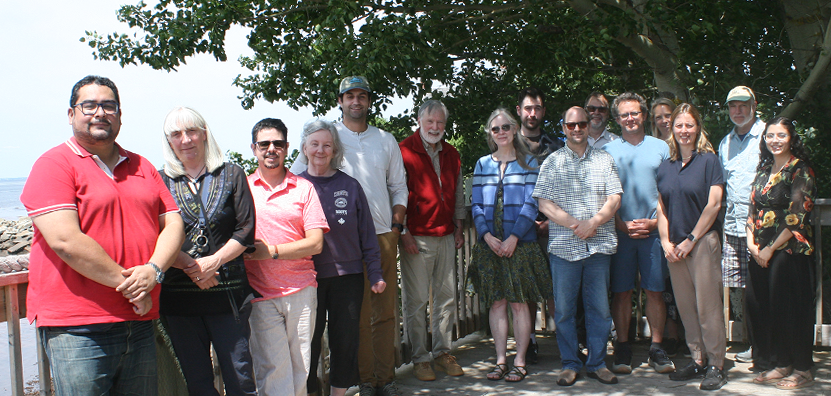
Future Earth Coasts (FEC) and the historic Thinkers Lodge co‑hosted the Pugwash Coastal Futures Workshop from 6–10 July 2026 in Pugwash, Nova Scotia, Canada, building on two previous meetings at the Lodge in 2024 and 2025. 

Group photo of the 2026 meeting participants.  (Source: https://ian.umces.edu/site/assets/files/33727/coastal-adaptation-in-a-changing-climate-1.pdf)

In keeping with the Thinkers Lodge tradition of convening leaders to address complex societal challenges, a small group of international adaptation experts met to consider guiding principles for successful coastal community adaptation, both across Atlantic Canada and in coastal regions worldwide. This year’s workshop brought together fourteen experts from academia and non‑profit organizations in Canada, Mexico, and the United States. With all Canadian participants based in the Maritimes, discussions placed particular emphasis on Atlantic Canada, drawing on firsthand observations of accelerating coastal change and the varied responses—effective or insufficient—seen across local communities.


The workshop explored six thematic areas of coastal adaptation, highlighting shared challenges, emerging opportunities, and the importance of equitable, community‑centered approaches to coastal resilience.


Click here to explore the ideas discussed across the workshop’s six adaptation themes. 


Following the Carbon Trail: FEC’s Coastal Wetland Flux Dynamics Webinar Recap

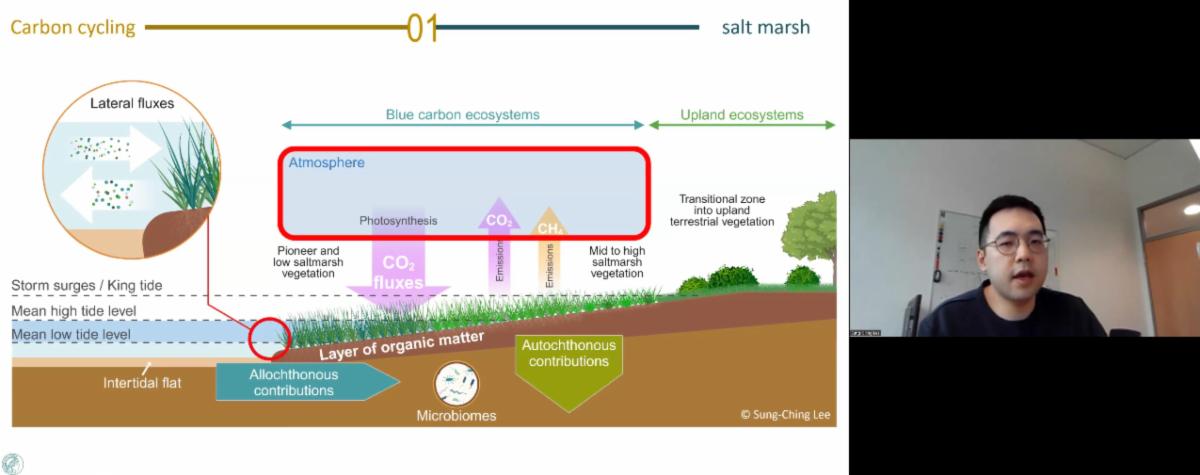
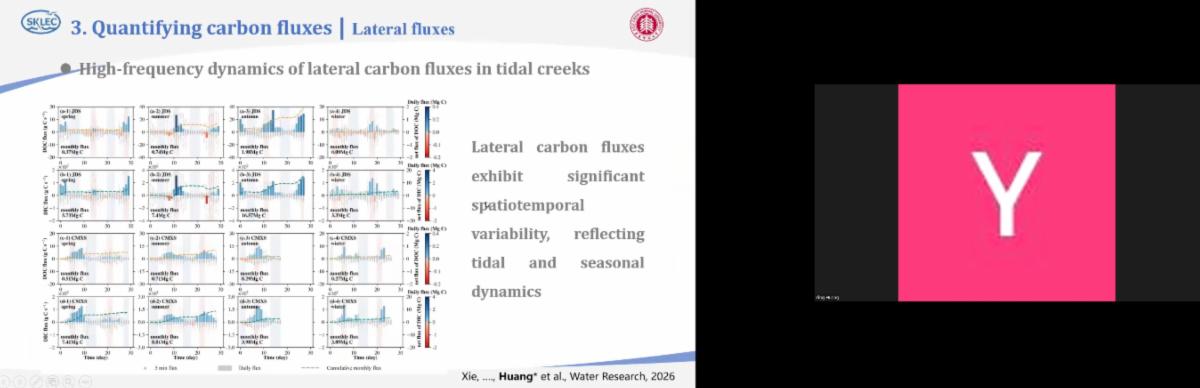
Future Earth Coasts (FEC), in collaboration with the C‑BLUES and Blue‑Seas initiatives, hosted the fourth session of the Innovation & Technology Transfer Webinar Series on 27 July 2026. The session convened researchers, practitioners, and Early Career Ocean Professionals (ECOPs) to examine biogeochemical flux dynamics in coastal wetlands and emerging approaches for advancing blue carbon assessments. Moderated by Dr. Sung‑Ching Lee, the webinar featured two expert presentations followed by an interactive discussion.


Dr. Lee, Group Leader at the Max Planck Institute for Biogeochemistry, opened the session with insights into how eddy covariance measurements provide continuous, ecosystem‑scale observations of carbon dioxide and methane fluxes in salt marshes. 


In the second presentation, Dr. Ying Huang of East China Normal University demonstrated how integrated field measurements and remote sensing can be used to quantify carbon fluxes in China’s coastal marshes.

Click here to read more.


Navigating Justice in Delta Regions: Insights from Session 3 of the FEC Just Transitions Training Series

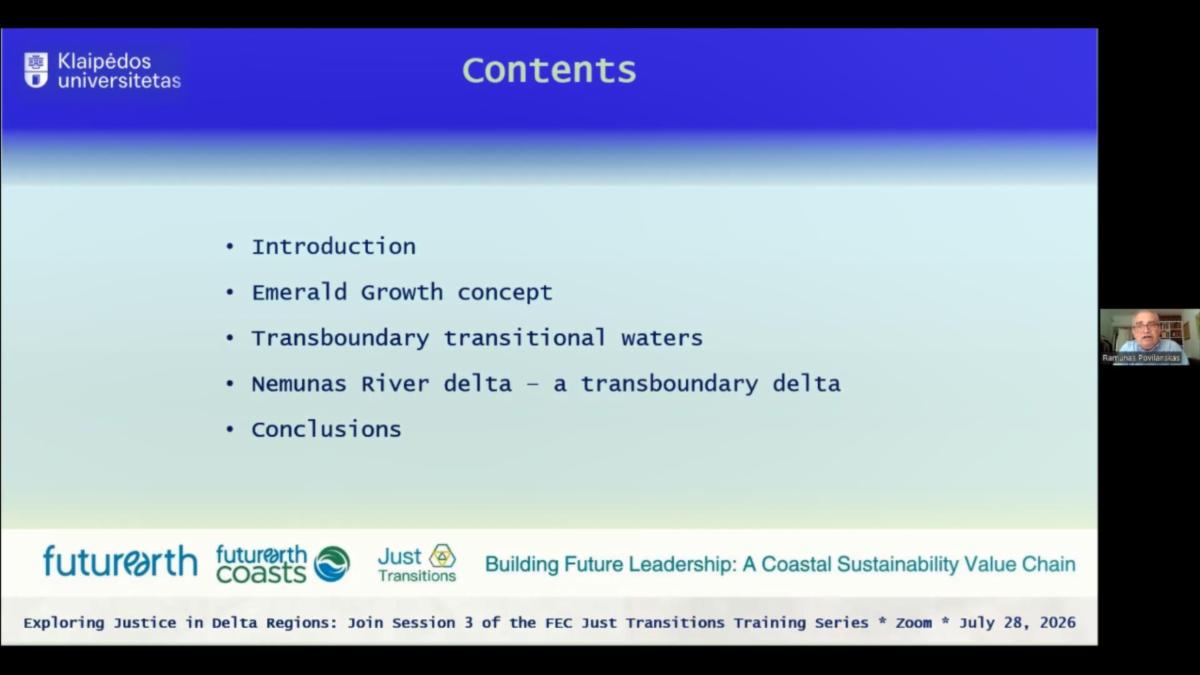
Future Earth Coasts (FEC) hosted the third session of the Just Transitions Online Training Series on 28 July 2026, turning attention to delta regions—dynamic environments where land-based and marine governance intersect. The session brought together researchers, practitioners, and community‑focused professionals to explore how overlapping jurisdictions, diverse livelihoods, and rapidly changing ecological conditions shape justice outcomes in deltas.

Understanding Deltas Through a Justice Lens


Prof. Ramūnas Povilanskas opened the session with an in-depth exploration of Emerald Growth, a framework that bridges terrestrial “green growth” and marine “blue growth” to better manage transitional waters such as deltas, estuaries, and lagoons. He explained that transitional waters occupy a unique ecological and governance space—shaped by freshwater inflows, salinity gradients, and complex socioeconomic pressures.

Whose Delta, Whose Future? Lessons from the GBM Delta


The second presentation, delivered by Mohammed Mofizur Rahman and Nurul Islam Biplob, shifted focus to the Ganges-Brahmaputra-Meghna (GBM) Delta, one of the world’s largest and most densely populated delta systems. Their contribution examined how biophysical, socioeconomic, and political transitions interact to reshape justice outcomes for delta communities.

Roundtable Reflections: Governance Gaps, Lived Realities, and Difficult Choices


The roundtable discussion invited participants to reflect on delta governance challenges in their own contexts. Echoing themes from the presentations, participants noted that:

  • Deltas face multi-layered transitions—ecological, demographic, agricultural, and governance-
  • Short‑term political cycles often clash with the long-term nature of delta planning, such as Bangladesh’s new 100‑year Delta Plan.
  • Protection measures can create false security, as seen with aging polder systems that now contribute to waterlogging and sediment starvation.
  • Justice requires confronting difficult realities, including where long-term protection may no longer be viable due to rapid erosion or sea-level rise.


Click here to read more.


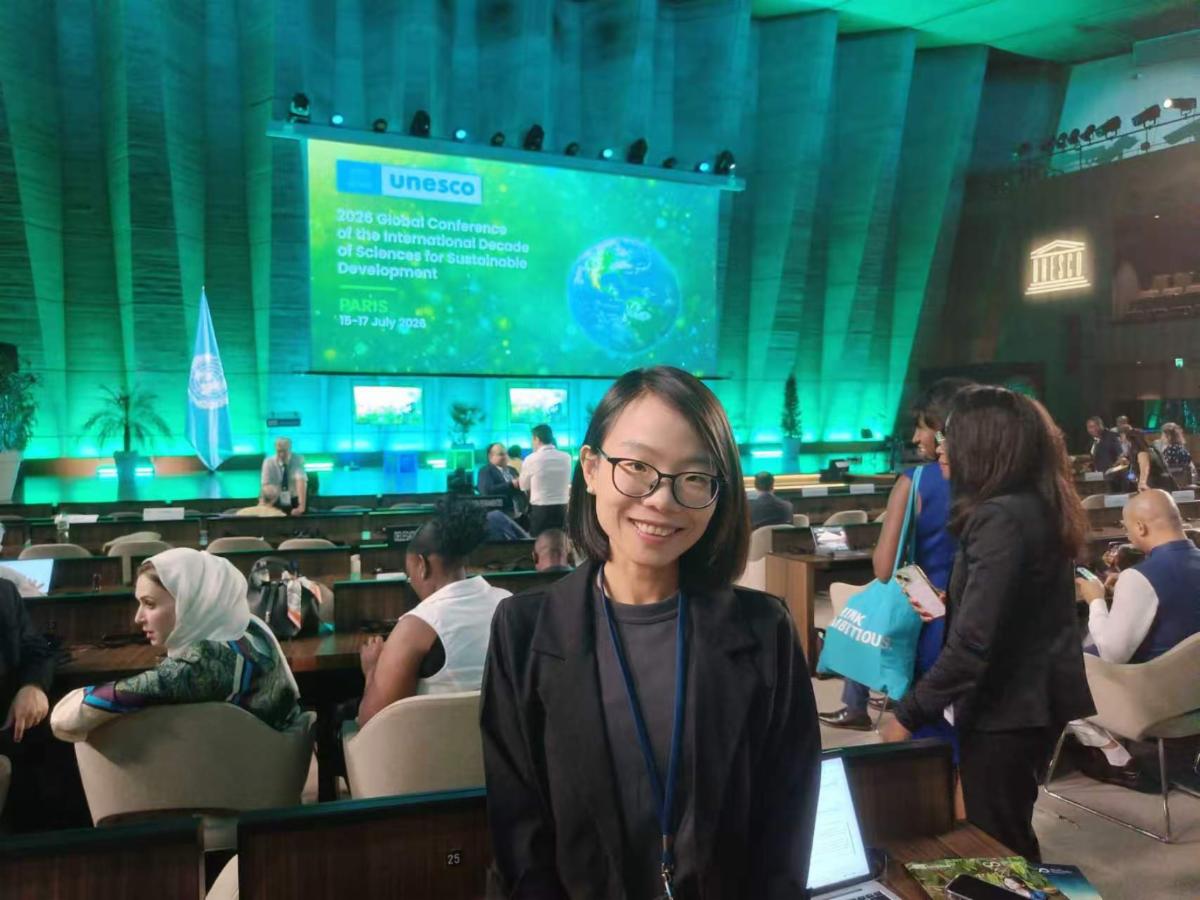
FEC Co-Executive Director Participates in the 2026 Global Conference of the International Decade of Sciences for Sustainable Development (IDSSD)

The 2026 Global Conference for the International Decade of Sciences for Sustainable Development (IDSSD) was held from 15–17 July 2026 at UNESCO Headquarters in Paris. Under the theme “Science in Action: Charting a Sustainable and Equitable Future for All,” the conference convened more than 800 participants from over 80 countries and regions, including government officials, leaders of international organizations, scientific experts, and representatives from industry. Discussions centered on strengthening the role of science in advancing the Sustainable Development Goals (SDGs).


Dr. Xiaoyu Fang, Co‑Executive Director of Future Earth Coasts, attended the conference and engaged in a series of high‑level activities related to the IDSSD. During the event, Dr. Fang held substantive dialogues with representatives from UNESCO, the International Science Council (ISC), the United Nations University (UNU), and the Geneva Science and Diplomacy Anticipator (GESDA).

These exchanges focused on key themes including the science–policy interface, science diplomacy, open science, international scientific cooperation, and mechanisms for implementing the International Decade of Sciences for Sustainable Development. The discussions underscored the importance of strengthening global scientific collaboration and ensuring that scientific knowledge effectively informs policy and action.


Anthropocene Coasts:

Call for Papers – Tour de Coasts

Anthropocene Coasts is launching a new special collection titled Tour de Coasts.  

This special collection is supported by FEC and provides a forum for knowledge exchange about priority coastal sustainability concerns and aims to create a comprehensive understanding of coastal sustainability challenges and opportunities from a global perspective.


For this Special Collection, Anthropocene Coasts invites manuscripts of all aspects of coastal sustainability challenges and opportunities globally including but not limited to: governance; individual, cultural, community, and ecological health; effective and inclusive communication; human behavioral change; food, water, and housing security; ecological analyses; economics and financial incentives; potential for managed coastal retreat; technology and increased connectivity; coastal disease threats and health benefits; use crises to inform; and modeling. 

The submission deadline for this collection has been extended to September 30, 2026. You can access the topical collection via this link. 


Guest Editors 


Dr. Katya Altman, Bureau of Ocean Energy Management, USA 


Dr. Dwayne Porter, University of South Carolina, USA  

Dr. Heath Kelsey, University of Maryland, USA

Dr. Anja Scheffers, Southern Cross University, Australia 

Dr. Xiaoyu Fang, East China Normal University, China  

New Article Published in This Special Collection


Dutta, S., Al Balushi, M., Al Harbi, F., & Paul, S. (2025). Fisheries management of the Arabian Peninsula region with special emphasis to the Sultanate of Oman: perspectives of climate change adaptations. Anthropocene Coasts, 8(1), 1-14.

https://doi.org/10.1007/s44218-025-00088-8

FEC New Publications

Urban flood susceptibility modelling of Guwahati in India using GIS-based AHP-MCDM for sustainable disaster risk management


Atasi Roy, Pankaj Roy

Abstract


Rapid, often unplanned urbanisation and intensified monsoonal regimes have significantly escalated the frequency and magnitude of urban inundation in the South Asian Indo-Gangetic-Brahmaputra plain. This study develops a granular, ward-level flood susceptibility assessment for the Guwahati Municipal Corporation (GMC), a strategic urban gateway in North-East India characterised by a complex mosaic of low-lying floodplains and Precambrian hillocks. Utilising an integrated Geographic Information System (GIS) and Multi-Criteria Decision Analysis (MCDA) framework, sixteen hydro-geomorphological and anthropogenic conditioning factors were synthesised via the Analytic Hierarchy Process (AHP). Statistical independence of the parameters was verified through a multicollinearity assessment, yielding Variance Inflation Factor (VIF) values below 3.636. The hierarchical weighting identified monsoonal rainfall (18.20%), elevation (13.11%), and slope (11.57%) as the dominant drivers of inundation. Spatial analysis reveals that approximately 47.35% of the GMC diagnostic expanse resides within ‘High’ or ‘Very High’ susceptibility zones, with the most critical vulnerabilities concentrated in the western and southern administrative wards (Wards 1, 2, 9, 23, and 24). The model's predictive reliability was empirically validated using a historical flood inventory (2014–2024) and Receiver Operating Characteristic (ROC) curves, achieving an Area Under the Curve (AUC) of 0.909 for the prediction dataset. These findings provide a robust scientific foundation for transitioning from reactive disaster response to proactive, evidence-based urban governance, emphasising the strategic conservation of natural detention basins and the implementation of ward-specific mitigation frameworks to align with Sustainable Development Goal 11.


Click here to read more.


Ecology of the copepods in Ganges estuary of India


Sourav Paul

Abstract


Estuarine plankton studies on often consider the estuary a single continuous habitat. The author hypothesized that a statistical analysis which captures ecological variabilities within a specific stretch of the estuary is more likely to yield statistically significant associations (both spatial and temporal) between copepods and physicochemical gradients than the same analysis targeted to analyze data when an estuary is considered as a single continuous habitat. Copepod assemblages and water were sampled monthly from November 2021 to October 2023 from the three contrasting stretches of the Ganges estuary, each having distinct physicochemical gradients and ecological communities. Copepod diversity was the highest near the estuary mouth, followed by mesohaline and oligohaline stretches.  Results suggested Ganges is a Phosphate limited estuary which has significant seasonal variations of Nitrate. Copepod abundance peaked in postmonsoon, but seasonal variability of total abundance was not significant. Bestiolina similis was the most abundant; however, in certain stretches and seasons, Acartiella tortaniformis and Paracalanus aculeatus were the most abundant species. Multivariate analysis could establish the relations between physicochemical gradients and species distribution only to a limited extent. Many temporal associations between copepod abundance,diversity indices with physicochemical gradients could only be established within certain stretches of the estuary but not when the estuary was taken as a single continuous habitat. Suggesting existence of microhabitats within the estuary, which may limit realised niches of certain copepod species. Under a resource limited condition, author recommends monitoring of the transitional zones of Ganges estuary during seasonal change and after any stochastic perturbation.


Click here to read more.


Reframing local empowerment for climate resilience through mutual aid


Carmen Elrick-Barr, Mark Pelling, Bruce C Glavovic, Timothy F Smith and Katrina Brown


Introduction


Locally-led climate adaptation is widely advocated yet can burden communities if engagement is not balanced with access to power and authority to act. In this Perspective, we argue that mutual aid provides a bridging mechanism between informal initiatives and formal governance, offering a powerful yet underexplored strategy to unlock local potential. Mutual aid describes the voluntary and collaborative exchange of resources and services for community benefit and operates across various scales and degrees of formality. In doing so, mutual aid bridges community action with formal governance processes. This offers scope to advance locally-led adaptation and consolidate co-benefits for democratic governance.


In this Perspective, we outline the benefits a mutual aid lens can bring to locally-led climate adaptation scholarship and praxis, inviting deeper enquiry into modes of collaboration, the outcomes of participatory processes, and the transfer of authority. We seek to promote dialogue regarding the diverse modes of governance through which locally-led climate adaptation can be delivered. This Perspective speaks to adaptation scholars seeking new conceptual tools, practitioners designing participatory processes, and policy makers shaping governance reform. Throughout, we use ‘locally-led adaptation’ as the umbrella term encompassing community autonomy (i.e. the capacity for local self-determination) and mutual aid (i.e. the reciprocal practices through which that capacity is enacted and sustained).


Click here to read more.


Coastal Radar

Updates from FEC Community

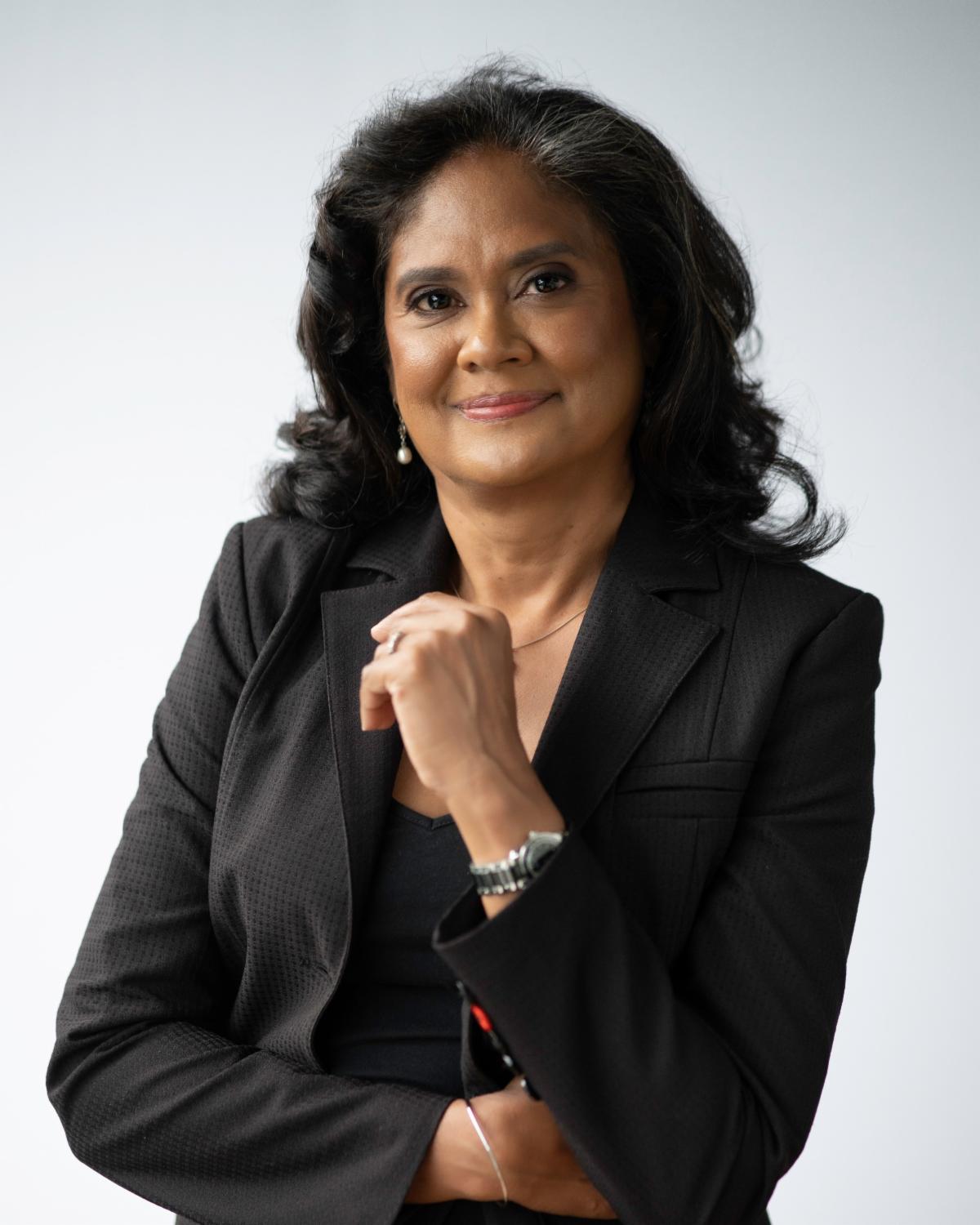
In Memoriam: Professor Michelle Mycoo

(Source: https://sta.uwi.edu/news/releases/release.asp?id=23169)

The Future Earth Coasts (FEC) community is deeply saddened by the passing of Professor Michelle Mycoo, a long‑standing collaborator and FEC Academy Member, whose work on climate change, urban development, and sustainable planning significantly advanced understanding of coastal vulnerabilities in the Caribbean and small island developing states.


Professor Mycoo passed away on August 12, 2026, at the age of 64. She was a widely respected scholar at The University of the West Indies, where she mentored generations of students and strengthened regional capacity in climate and development research.


Her contributions to global science were substantial. She served as a Coordinating Lead Author for the IPCC Sixth Assessment Report, and as a Lead Author for the Special Report on Cities and Climate Change. She later contributed as a Review Editor for the forthcoming Seventh Assessment Report. Through these roles, she ensured that Caribbean and small island perspectives were represented in global climate assessments.

Michelle also held leadership roles with UNESCO’s MOST Programme, UNEP, the International Science Council, and Future Earth Coasts. Over her career, she produced 147 publications, supervised more than 60 graduate projects, and secured nine international research grants, earning more than 6,000 citations. 


Her research informed policy and practice across CARICOM, the European Union, and the Inter‑American Development Bank, contributing to regional efforts in urban planning, disaster risk reduction, water security, and coastal resilience.


The entire FEC community will greatly miss Michelle’s presence, insight, and contributions. We are committed to carrying on her legacy and continuing the important work to which she dedicated her life.


Modified from the following link:

https://sta.uwi.edu/news/releases/release.asp?id=23169


New FEC Publications (Since April 2026)

○ Alfonso MB, Scordo F, Seitz C, Arias AH, Ronda AC, Mavo Manstretta GM, Chandra S, Perillo GME and Piccolo MC (2026) Microplastic contamination in remote mountain lakes of the americas: a baseline assessment from Patagonia and Northern California. Front. Toxicol. 8:1851245.

doi: 10.3389/ftox.2026.1851245

○ Charuka, B., Angnureng, D. B., Adhiambo, R. T., Tutu, G. O., Ekumah, N. O., Grace, A. E., ... & Aheto, D. W. Adaptation in Coastal Areas of Ghana: Opportunities and Challenges for a Just Transition. Just Transition and Climate Justice in Sub-Saharan Africa, 133-153.

https://doi.org/10.4324/9781003669593-12

○ Conner, W. H., Day, J. W., Day, R. H., Duberstein, J. A., Hunter, R. G., Keim, R. F., ... & Wolfe, B. T. (2026). Sustainable Management of Coastal Freshwater Forested Wetlands in the Mississippi River Delta. Forests, 17(4), 514.

https://doi.org/10.3390/f17040514

○ Elrick-Barr, C., Pelling, M., Glavovic, B. C., Smith, T., & Brown, K. (2026). Reframing local empowerment for climate resilience through mutual aid. Environmental Research Letters.

http://doi.org/10.1088/1748-9326/ae9564

○ Kharwar, K., Nair, P., Vaishnav, D. K., Bansal, A., & Amoss, L. D. (2026). Films as a Tool for Climate Education: A Quasi-Experimental Intervention amongst Middle School Children from the Indian Himalayan Region. Australian Journal of Environmental Education, 1-26.

https://doi.org/10.1017/aee.2026.10187

○ Lutalo, B., Matovu, B., Sarfo, I., Semakula, H. M., Mukwaya, P., Turyahabwe, N., & Mwangu, A. R. (2026). Sand mining in Africa: Value chains, sustainability dilemmas, and key lessons for extractive industries. The Extractive Industries and Society, 27, 101952.

https://doi.org/10.1016/j.exis.2026.101952

○ Matovu, B., Mammel, M., Lee, M. A., Beegum, S., Fatma, M., & Hsieh, Y. L. (2026). Co-creating a fisherwomen-led business empowerment model for sustainable seafood value chains and transformations: Takeaways from India. Cogent Food & Agriculture, 12(1), 2677229.

https://doi.org/10.1080/23311932.2026.2677229

○ Mwabvu, B., Matovu, B., & Viswanathan, P. K. (2026). Co-designing the future of smallholder farming amidst anthropogenic and environmental complexities: Critical options and narratives for sustainable agriculture practices in India. Sustainable Futures, 11, 101899.

https://doi.org/10.1016/j.sftr.2026.101899

○ Paul, S. (2026). Copepods of a creek and an inter-tidal beach: perspectives from Sagar Island of Ganges estuary, India. Community Ecology, 1-11.

https://doi.org/10.1007/s42974-026-00303-7

○ Paul, S. (2026). Ecology of the copepods in Ganges estuary of India. Aquatic Sciences, 88(4), 122.

https://doi.org/10.1007/s00027-026-01353-9

○ Roy, A., & Roy, P. (2026). Urban flood susceptibility modelling of Guwahati in India using GIS-based AHP-MCDM for sustainable disaster risk management. Progress in Disaster Science, 100649.

https://doi.org/10.1016/j.pdisas.2026.100649

○ Smith, T. F., Bell-James, J., Page, J., Scheffers, A., Cataldo, G., Corrin, J., ... & Wang, H. (2026). Beach law in the anthropocene. Ocean & Coastal Management, 278, 108213.

https://doi.org/10.1016/j.ocecoaman.2026.108213


FEC Publications (April, 2025 - March, 2026)

○ Adhiambo, R., Mensah, P. K., Koomson, A., & Acheampong, E. (2025). Navigating stress: Impacts of temperature, polycyclic aromatic hydrocarbons, and heavy metals on the diatom Thalassiosira weissflogii adapted to tropical waters of the Gulf of Guinea. Aquatic Toxicology, 107388.

https://doi.org/10.1016/j.aquatox.2025.107388

○ Celliers, L., Ferse, S., Bruns, A., Eisenack, K., Hornidge, A. K., Klepp, S., ... & Rölfer, L. New rationalities, inner logic, and hope for sustainable future coasts. Global Sustainability, 1-21.

https://doi.org/10.1017/sus.2025.10041

○ Cumming, G. S., Rogers, A. A., Collins, T. G., Cuttler, M. V., Elrick-Barr, C. E., Gliottone, I., ... & Wilson, S. K. (2025). Social-ecological contributions of protected areas to their surroundings. One Earth, 8(12).

https://www.cell.com/one-earth/abstract/S2590-3322(25)00288-X

○ Cunha, J., Elliott, M., Villasante, S., Balbi, S., Cabecinha, E., & Ramos, S. (2025). Assessing cumulative risks to coastal and marine habitats under management and climate change scenarios: The case of northern Portugal. Ocean & Coastal Management, 268, 107756.

https://doi.org/10.1016/j.ocecoaman.2025.107756

○ Davies-Vollum, K. S., Puttick, S., Agyekhumene, A., Amolegbe, T., Aneyo, I., Boateng, I., ... & Sohou, Z. (2025). A stakeholder-informed framework for the sustainable management of coastal lagoons in West Africa. Anthropocene Coasts, 8(1), 1-11.

https://link.springer.com/article/10.1007/s44218-025-00093-x

○ Day, J. W., Conner, W. H., Ewel, K. C., Hunter, R., Kemp, G. P., Lane, R., ... & Rybczyk, J. (2025). Integrating human and natural systems from a global systems perspective. Ecological Modelling, 510, 111351.

https://doi.org/10.1016/j.ecolmodel.2025.111351

○ Defeo, O., Corte, G., Barboza, C. A., Debiasi, P., Costa, L. L., Elliott, M., ... & McLachlan, A. (2025). Sandy beaches within meta-social-ecological systems: An integrated framework for ecology, management, and conservation. Estuarine, Coastal and Shelf Science, 109350.

https://doi.org/10.1016/j.ecss.2025.109350

○ Duan, Y., Sanchez-Azofeifa, A., Chen, C., Tian, B., Li, X., Sengupta, D., & Zhou, Y. (2026). S2Coast-2023: The first global 10-meter resolution coastline dataset derived from enhanced Sentinel-2 composite imagery using Google Earth Engine. Remote Sensing of Environment, 334, 115186.

https://doi.org/10.1016/j.rse.2025.115186

○ Dutta, S., Al Balushi, M., Al Harbi, F., & Paul, S. (2025). Fisheries management of the Arabian Peninsula region with special emphasis to the Sultanate of Oman: perspectives of climate change adaptations. Anthropocene Coasts, 8(1), 1-14.

https://doi.org/10.1007/s44218-025-00088-8

○ Elliott, M., Borja, Á., & Cormier, R. (2025). Managing marine resources sustainably–But how do we know when marine management has been successful?. Ocean & Coastal Management, 265, 107623.

https://doi.org/10.1016/j.ocecoaman.2025.107623

○ Elliott, M., Cormier, R., & Borja, Á. (2025). Making sense of marine management–The ten-tenets revisited. Marine Pollution Bulletin, 221, 118580.

https://doi.org/10.1016/j.marpolbul.2025.118580

○ Elrick-Barr, C. E., Smith, T. F., & Thomsen, D. C. (2025). Practitioner perspectives of wellbeing in rapidly changing Australian coastal communities. Ocean & Coastal Management, 266, 107668.

https://doi.org/10.1016/j.ocecoaman.2025.107668

○ Galparsoro, I., Montero, N., Mandiola, G., Menchaca, I., Borja, Á., Flannery, W., ... & Stelzenmüller, V. (2025). Assessment tool addresses implementation challenges of ecosystem-based management principles in marine spatial planning processes. Communications Earth & Environment, 6(1), 55.

https://doi.org/10.1038/s43247-024-01975-7

○ Genchi, S. A., Vitale, A. J., & Perillo, G. M. (2025). Coastal cliff erosion: a bibliometric analysis and literature review. Anthropocene Coasts, 8(1), 1-18.

https://doi.org/10.1007/s44218-025-00072-2

○ Gutierrez, D., Calado, H., Toor, F. v., Moreira, M., Paramio, M. L., Martins, F., Santos, N., Melo, N., & Newton, A. (2025). Empowering Maritime Spatial Planning and Marine Conservation Efforts Through Digital Engagement: The Role of Online Platforms. Sustainability, 17(14), 6371.

https://doi.org/10.3390/su17146371

○ Herrera-Silveira, J. A., Pech-Cárdenas, M., Cinco-Castro, S. G., Pech-Poot, E., Árcega-Cabrera, F., Iturria-Dawn, R., ... & Teutli-Hernández, C. (2025). Mangrove blue carbon in Laguna de Términos, México, a protected area: spatial variability, sources and factors related. Regional Studies in Marine Science, 104390.

https://doi.org/10.1016/j.rsma.2025.104390

○ Jiang, W., Huang, Z., Dai, Z., Luo, J., Zeng, W., & Liang, X. (2025). Attenuation of hydro‐sediment dynamics progradation over mangrove wetland. Journal of Geophysical Research: Oceans, 130(2), e2024JC021531.

https://doi.org/10.1029/2024JC021531

○ Li, Y., Donnelly, J. P., Gao, S., Gao, J., Bramante, J. F., & Kotra, K. K. (2026). Reconstructing 3100 years of extreme coastal flooding events from Emau Island, Vanuatu. Quaternary Science Reviews, 373, 109733.

https://doi.org/10.1016/j.quascirev.2025.109733

○ Li, Y., Robinson, S. V., Nguyen, L. H., & Liu, J. (2023). Satellite prediction of coastal hypoxia in the northern Gulf of Mexico. Remote Sensing of Environment, 284, 113346.

https://doi.org/10.1016/j.rse.2022.113346

○ Li, Y., Xia, Z., Nguyen, L., Wan, H. Y., Wan, L., Wang, M., ... & Liu, J. (2025). Spatiotemporal dynamics of coastal dead zones in the Gulf of Mexico over 20 years using remote sensing. Science of The Total Environment, 979, 179461.

https://doi.org/10.1016/j.scitotenv.2025.179461

○ Liang, X., Dai, Z., Mei, X., Wang, R., Zeng, W., & Fagherazzi, S. (2025). Hurricanes induced irreversible large‐scale loss of mangrove forests. Geophysical Research Letters, 52(9), e2025GL115692.

https://doi.org/10.1029/2025GL115692

○ Matovu, B., Bleischwitz, R., Lukambagire, I., Alkoyak-Yildiz, M., Tarek, R., Etta, L., ... & Hsieh, Y. L. (2025). Examining the perceptions and attitudes toward Women's employment and leadership in the blue economy: A case study of India. Social Sciences & Humanities Open, 11, 101537.

https://doi.org/10.1016/j.ssaho.2025.101537

○ Matovu, B., Mim, T. A., & Lutalo, B. (2025). Where and how can Africa and India leverage the blue economy opportunities of the Indian Ocean region as a driver for sustainable development and partnerships?. Sustainable Futures, 10, 101218.

https://doi.org/10.1016/j.sftr.2025.101218

○ Niu, D., Tan, Y., Ma, C., Qi, Y., Li, Y., Li, Y., & Tang, J. (2025). Reservoir artificial flood discharge is a critical driver for the compositional and functional shifts of dissolved organic matter in river mouth. Communications Earth & Environment, 6(1), 996.

https://doi.org/10.1038/s43247-025-02920-y

○ Niu, D., Li, Y., Tan, Y., Ma, C., Qi, Y., Li, Y., & Tang, J. (2025). The impact of water-sediment regulation scheme (WSRS) on the chemistry of dissolved organic matter in the Yellow River estuary and adjacent waters. Water Research, 123669.

○ Nogueira, S. F., Vitale, A. J., Genchi, S. A., Roth, A., Vargas, S. M., Siben, A., ... & Perillo, G. M. (2025). Design and development of a cost-effective buoy using 3D printing for coastal monitoring. HardwareX, e00657.

https://doi.org/10.1016/j.ohx.2025.e00657

○ Ogier, E. M., Pecl, G. T., Hughes, T., Lawless, S., Layton, C., Nash, K. L., & Morrison, T. H. (2025). Novel marine-climate interventions hampered by low consensus and governance preparedness. Nature Climate Change, 1-10.

https://doi.org/10.1038/s41558-025-02291-4

○ Ogier, E. M., Pecl, G. T., Hughes, T., Lawless, S., Layton, C., Nash, K. L., & Morrison, T. H. (2025). Enhance responsible governance to match the scale and pace of marine–climate interventions. Nature Climate Change, 1-2.

https://doi.org/10.1038/s41558-025-02292-3

○ Onwubiko, C. C., & Aheto, D. W. (2025). Assessing the Role of Coastal Habitats in Flood Reduction in Selected Communities of Rivers State. Coasts, 5(2), 17.

https://doi.org/10.3390/coasts5020017

○ Paul, S., Karan, S., & Bhattacharya, B. D. (2026). Short-term impact of cyclone Yass on the copepod community of Muriganga estuary of India. Discover Ecology, 2(1), 7.

https://doi.org/10.1007/s44396-026-00024-1

○ Salazar, Y. C. A., Genchi, S. A., Nuciari, L., Perillo, V. L., Piccolo, M. C., & Perillo, G. M. (2025). MiSMoS (MicroScale Morphology System): an inexpensive new method to survey 3D surface micromorphology. Latin American Journal of Sedimentology and Basin Analysis.

https://lajsba.sedimentologia.org.ar/lajsba/article/view/264

○ Valiela, I., Chenoweth, K., & Day, J. (2025). Meta-analysis of vegetation responses to experimental nitrogen enrichments done in salt marshes under different sea level rise regimes reveal interaction of N supply and sea level rise. Science of The Total Environment, 975, 179198.

https://doi.org/10.1016/j.scitotenv.2025.179198

○ Vivian, C., Boettcher, M., Elliot, M., Mengis, N., Merk, C., Oschlies, A., ... & Gupta, A. (2025). The State of the Science for Marine Carbon Dioxide Removal (mCDR)–A Scientific Summary for Policy-Makers.

https://doi.org/10.5281/zenodo.15490407

○ Wu, S., Hu, Y., Zhao, W., Gong, L., Song, Y., Li, C., ... & He, Q. (2025). Human flood adaptation characteristics: A comparative study of three global river deltas. Journal of Hydrology, 133531.

https://doi.org/10.1016/j.jhydrol.2025.133531

○ Yang, J., Dai, Z., Mei, X., Lou, Y., & Fagherazzi, S. (2025). Wetland gain and loss in the Mississippi River bird‐foot delta. Earth's Future, 13(6), e2024EF005003.

https://doi.org/10.1029/2024EF005003

○ Zhao, X., Kaniewski, D., Wang, Y., Marriner, N., Salem, A., Alassal, S. E., ... & Chen, Z. (2025). On the long and winding road: unravelling the late emergence of Neolithic agriculture in the Nile Delta. Quaternary Science Reviews, 359, 109368.

https://doi.org/10.1016/j.quascirev.2025.109368

○ Zhao, X., Kaniewski, D., Wang, Y., Marriner, N., Salem, A., Liu, Y., ... & Chen, Z. (2025). Holocene trends in Nile Delta fire regimes driven by cropland expansion and reduced precipitation. Quaternary Science Reviews, 361, 109412.

https://doi.org/10.1016/j.quascirev.2025.109412


FEC Official Journal

Anthropocene Coasts

special column

Anthropocene Coasts, the official journal supported by Future Earth Coasts, is archived by 17 databases, such as Emerging Sources Citation Index (ESCI), SCOPUS, Google Scholar, Catalogue of Chinese High-Quality Sci-Tech Journals (Geosciences), CLOCKSS, CNKI, Wanfang, CNPIEC, Dimensions, EBSCO Discovery Service, Naver, EBSCO Discovery Service, OCLC WorldCat Discovery Service, Portico, ProQuest-ExLibris Primo, ProQuest-ExLibris Summon, TD Net Discovery Service.


Official Website:

https://www.springer.com/journal/44218

Submission system:

https://www.editorialmanager.com/anth/default1.aspx

Online Resources

"World Large River and Delta Systems Source-to-Sink Online Talk Series" continue to update!

Links:

(1) Bilibili: https://space.bilibili.com/441864512

(2) YouTube:https://tinyurl.com/s2stalks


For more resources in 2022: https://meas.ncsu.edu/sealevel/s2s/talks.html

Most of our subscribers are coasts-related researchers. If you would like to put some recruitment information or share some latest news about coastal research in FEC monthly newsletter, please feel free to contact us through fecchina@ecnu.edu.cn.

FEC IPO is supported by:
 
Follow us on Wechat !
「FEC微信公众号」


FEC IPO-China

联系方式:

FEC 国际项目办公室(中国)| 河口海岸学国家重点实验室
华东师范大学
东川路500号 上海 | 200241

邮箱 | fecchina@ecnu.edu.cn
Contact details:

FEC IPO (China)
State Key Laboratory of Estuarine and Coastal Research
East China Normal University
No.500, Dong Chuan Rd. Shanghai | 200241

Email | fecchina@ecnu.edu.cn
 
 
Facebook  Twitter  Linkedin