Diversity, Equity & Inclusion | A Newsletter to Reflect, Inform, and Inspire | | Self-Care Tools & Techniques | | |
This is a hard time for our country, and a hard time for our profession. There are laws being proposed in other states that could criminalize the simple act of giving a child a book about a family with two parents of the same gender. In our own library system, we’ve seen challenges regarding these materials, and more are likely to arise.
As library staff sometimes our self-care during these difficult times falls short. I would like to offer you a couple of skills for your toolbox after you’ve had a difficult moment with a staff person, a patron, or even your own board.
The 5, 4, 3, 2, 1 Grounding Technique
Often this tool is used by therapists and counselors to assist clients who are dealing with anxiety, but this technique is also very useful to help you ground or recenter yourself after you’ve had an upsetting interaction.
To start, take a couple of steadying breaths.
Next name 5 things you can see (The stapler on my desk, my wall calendar, my pencil, my yellow highlight, my spoon from lunch)
Take a breath,
Name 4 things you can feel (The breeze from the HVAC, my shirt on my skin, my feet on the floor, my chair on my back) Take a breath,
Name 3 things you can hear (A car driving through the parking lot, someone typing on a keyboard, story hour)
Take a breath,
Name 2 things you can smell (My co-worker's perfume, ink from the stamp pad)
Take a breath,
Name 1 thing you can taste (My coffee)
This technique of connecting with your senses allows you to quickly reconnect with the present moment, feel your body again, and can help to short-circuit the fight, flight, faun, and freeze response.
The Shake It Off Technique
This next technique comes from polyvagal theory (a therapy framework focused on helping to regulate the nervous system).
Find a space where you can have a moment of privacy.
Stand still, allow yourself to feel the extra “energy” in your body at the moment; it might be connected to a feeling like anger, sadness, etc.
As you feel that extra energy, gently but firmly shake your arms and hands, You can visualize the “energy” shaking off like water off a duck,
Or when a dog shakes off water.
After you feel that “energy” has left your body, you can take a moment to take a couple of deep breaths.
This technique again allows you to reconnect with your body and gives you a moment to re-regulate from the experience that had you upset.
Hopefully, these two techniques will provide you new ways to help you to rebalance after dealing with something difficult in both your work life and your personal life. Remember that no matter what is going on, you are not going to be able to access all the tools you have in every situation. Part of the process of self-care is allowing yourself the grace to accept that you can try to do better next time. Remember that you did the best you could with the skills you could access in that moment.
| |
Collections Development:
Asian American and Pacific Islander Heritage Month
| | |
By Kelly Povero, Watkins Glen Public Library
MIDDLE GRADE FICTION
-
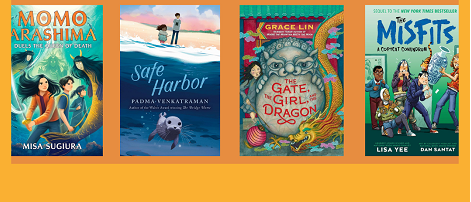
The Gate, the Girl, and the Dragon by Grace Lin (May 2025)
-
Vanya and the Wild Hunt by Sangu Mandanna (March 2025)
-
Momo Arashima Series by Misa Sugiura (2024-present)
-
The Misfits Series by Lisa Yee (2024-present)
-
Safe Harbor by Padma Venkatraman (Jan 2025)
PICTURE BOOKS
-
Goodbye Spring, Hello Summer by Kenard Pak (May 2025)
-
Little Bird Laila by Kelly Yang (April 2025)
-
Home is a Wish by Julia Kuo (Feb 2025)
-
Cranky Makes a Friend by Phuc Tran (Feb 2025)
-
Waiting for Hanami by J.P. Takahashi (Feb 2025)
-
Mai’s Áo Dài by Thai Nguyen and Monique Truong (Jan 2025)
| | |
GRAPHIC NOVELS
-
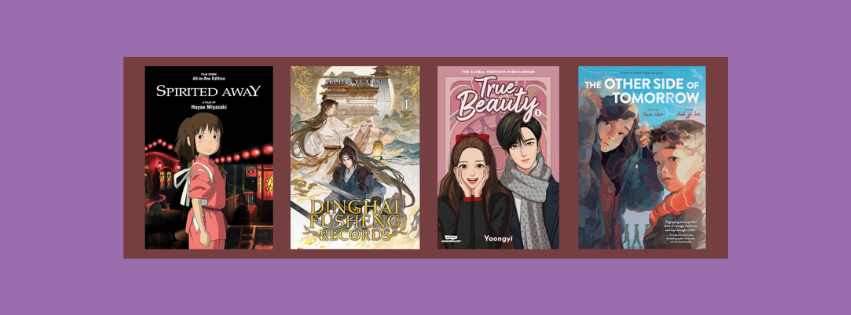
Spirited Away by Hayao Miyazaki (Feb 2025) – Fun fact! Studio Ghibli has released several of its famous anime films as part of an All-in-One Comic series. These would make a great addition to any collection.
-
Dinghai Fusheng Records by Fei Tian Ye Xiang (2025)
-
True Beauty Series by Yaongyi (2022-present)
-
The Other Side of Tomorrow by Tina Cho (Oct 2024)
| | |
YOUNG ADULT FICTION
-
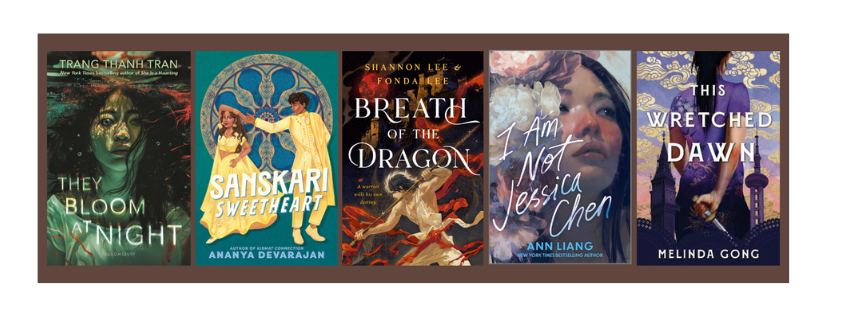
This Wretched Dawn by Melinda Gong (July 2025)
-
The Nightblood Prince by Molly X. Chang (July 2025)
-
Sanskari Sweetheart by Ananya Devarajan (May 2025)
-
They Bloom at Night by Trang Thanh Tran (March 2025)
-
Breath of the Dragon by Shannon Lee and Fonda Lee (Jan 2025)
-
I Am Not Jessica Chen by Ann Liang (Jan 2025)
| | |
ADULT FICTION
-
Alice Chen’s Reality Check by Kara Loo and Jennifer Young (June 2025)
-
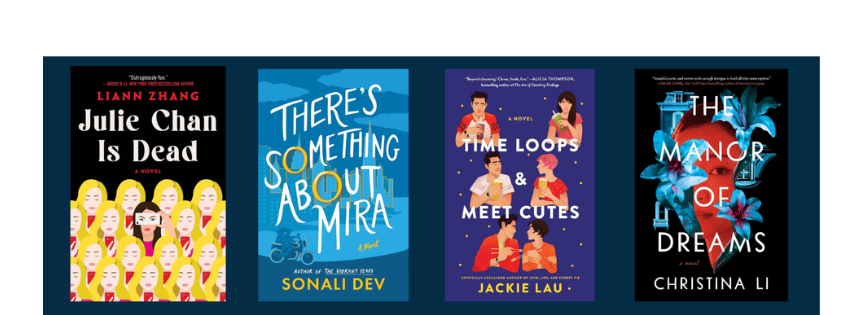
The Manor of Dreams by Christina Li (May 2025)
-
Time Loops & Meet Cutes by Jackie Lau (May 2025)
-
Julie Chan is Dead by Liann Zhang (April 2025)
-
The Serpent Called Mercy
-
The Serpent Called Mercy by Roanne Lau (March 2025)
-
There’s Something About Mira by Sonali Dev (Feb 2025)
-
We Do Not Part by Han Kang (Jan 2025)
-
Homeseeking by Karissa Chen (Jan 2025)
-
Voices of Fallen Heroes: And Other Stories by Yukio Mishima (Jan 2025)
| | |
ADULT NON-FIC
-
So Easy So Good: Delicious Recipes and Expert Tips for Balanced Eating by Kylie Sakaida (April 2025)
-
L.A. Story: Shohei Ohtani, the Los Angeles Dodgers, and a Season for the Ages by Bill Plunkett (April 2025)
-
Umma: A Korean Mom’s Kitchen Wisdom & 100 Family Recipes by Sarah Ahn and Nahm Soon Ahn (April 2025)
-
Asian/Other: Life, Poems, and the Problem of Memoir by Vidyan Ravinthiran (Jan 2025)
-
Korea Travel Guide by Lonely Planet (Dec 2024)
-
Chinese Enough: Homestyle Recipes for Noodles, Dumplings, Stir-Fry and More by Kristina Cho (Oct 2024)
| | |
By Kelly Povero, Watkins Glen Public Library
Civic Season is a countrywide initiative that bridges our nation’s oldest and newest federal holidays - July 4th and Juneteenth - by encouraging reflection on our past and engagement in shaping our future. Launched in 2021, Civic Season fosters a deeper understanding of freedom, equality, justice, and opportunity, inviting people of all ages, especially Gen Z, to participate in learning, dialogue, and action.
As we approach the 250th anniversary of the Declaration of Independence in 2026, Civic Season serves as a springboard for libraries, museums, and cultural institutions to engage their communities in meaningful conversations about history and democracy. Through a variety of tools, including Youth250, this movement empowers young people to critically examine our nation’s evolution and actively contribute to a more inclusive future.
Consider participating in Civic Season this year by hosting a program! Registration is open now. Whether hosting Slice of History events, local history programs, or other civic engagement initiatives, your library can be a catalyst for learning and action. By participating in Civic Season, we help our communities connect with history in a way that is relevant, engaging, and inspiring.
Find out more and register for Civic Season. Check out the partner Toolkit for program ideas.
| |
DEIA in Action: Curating a Children’s Collection
| |
By Sarah Trumpp (she/they), Friendship Free Library
When I was in high school, we were tasked with writing a persuasive essay about a simple thing that could change the world. I was an odd kid (who grew up to be an eccentric weirdo), so my impassioned plea was to make every day a holiday of some sort, that celebrating something every day would make people too happy to be engaging in silly stuff like wars. I laugh, looking back, at such a simplistic solution to something as heavy as World Peace, but I never truly stopped believing in the premise of every day being a celebration/remembrance.
Over the past few weeks, I have been spending grant money on a needed update of our children’s collection, specifically working towards more diversity to the kiddos’ shelves. I’ve been asking myself how I could do this if I were on my usual shoestring book budget. If I could only afford to buy 10 books, how could I do my best to offer diverse titles? The answer comes back to my high school term paper: the holiday. Unlike my high school days in the Jurassic period, there are now hundreds of websites dedicated to daily holidays and weekly/monthly remembrances, and a savvy librarian can use these as a diversity tool. Many libraries are already thinking in this direction, offering Black History Month displays in February and Pride displays in June, for example, but we can start even smaller than that.
January, for instance, is Slavery and Human Trafficking Awareness Month. While you wouldn’t necessarily do a display about human trafficking next to the Dr. Seuss, you could add Henry’s Freedom Box: A True Story from the Underground Railway by Ellen Levine, Follow the Drinking Gourd by Jeanette Winter, or What Was the Underground Railroad? by Yona Zeldis McDonough to your January book order.
January is also Child-Centered Divorce Awareness Month, so books like We Are Family by Patricia Hegarty, Momma Days, Mommy Days by Isabella Moreno, and Was It the Chocolate Pudding? by Sandra Levins could be brought to the shelves in January. To acknowledge Poverty in America Awareness Month, one could consider Those Shoes by Maribeth Boelts, No Fixed Address by Susin Nielsen, and Saturday at the Food Pantry by Diane O’Neill.
January also hosts National Braille Literacy Month, National Hobby Month, and National Tea Month. All of those topics can bring diverse authors and ideas to the table. A small sign on or near the book noting the observance is an easy and unobtrusive way to call attention to the new materials, rather than a full-blown display, but this is an entirely optional step!
I’ll list just a few observances of the many out there for each month below if you’re interested in exploring this idea as a tool to bring more diversity into your collections. Above all, I hope you continue to celebrate the diverse voices in your community, our STLS community, and the world at large.
-
February: Black History Month, National Cancer Prevention Month, Low Vision Awareness Month, Library Lovers’ Month, National Children’s Dental Health Month, and National Embroidery Month.
-
March: Women’s History Month, Developmental Disabilities Awareness Month, National Brain Injury Awareness Month, Irish-American Heritage Month, National Nutrition Month, National Noodle Month.
-
April: National Autism Awareness Month, Limb Loss and Limb Difference Awareness Month, Parkinson’s Awareness Month, National Volunteer Month, Scottish-American Heritage Month, Month of the Military Child.
-
May: Jewish-American Heritage Month, Better Speech and Language Month, ALS Awareness Month, National Foster Care Month, National Mental Health Awareness Month, National Get Caught Reading Month.
-
June: LGBTQIA+ Pride Month, National Portuguese Heritage Month, National Migraine and Headache Awareness Month, National Caribbean-American Heritage Month, National PTSD Awareness Month, African-American Music Appreciation Month.
-
July: Make a Difference to Children Month, Alopecia Month for Women, World Watercolor Month, National Anti-Boredom Month, Cell Phone Courtesy Month.
-
August: Get Ready for Kindergarten Month, National Wellness Month, Black Business Month, International Peace Month, Family Fun Month, National Sandwich Month.
-
September: Hispanic Heritage Month, ADHD Month, National Spinal Cord Injury Awareness Month, National Suicide Prevention Month, National Library Sign-Up Month, Self-Care Awareness Month, National Rice Month.
-
October: National Sensory Processing Awareness Month, Breast Cancer Awareness Month, World Blindness Awareness Month, Polish-American Heritage Month, National Work and Family Month, Down Syndrome Awareness Month.
-
November: Native American Heritage Month, World Vegan Month, National Family Literacy Month, Inspirational Role Models Month, National Diabetes Month, National Adoption Month, Epilepsy Awareness Month.
-
December: Learn a Foreign Language Month, Universal Human Rights Month, Spiritual Literacy Month, National Pear Month, Safe Toys and Gifts Month, and at least 18 religious holidays during the month.
| |
AI’s Impacts on DEI in the Workplace
and on Hiring Practices
| | |
By Erika Jenns, Southern Tier Library System
The landscapes around Artificial Intelligence (AI) and Diversity, Equity, and Inclusion (DEI) are rapidly changing and evolving. Following 2020 social movements like #BlackLivesMatter and #StopAAPIHate, organizations applied renewed focus to addressing social injustices and sped up initiatives to incorporate DEI into hiring practices, workplace policies, and services. With the near-simultaneous rise of AI, some organizations saw this tool as a pathway to further DEI initiatives and enhance hiring practices.
There are a few ways AI can help automate aspects of the hiring process and (hopefully) help eliminate human biases. When writing job descriptions, AI can offer alternatives to biased language and help source candidates from underrepresented groups. These tools can scrub candidate names, addresses, and other identifying information, which might yield a fairer evaluation of each applicant. However, when it comes to evaluating candidate materials, AI has the potential to automate the process but these tools lack the ability to interpret context and nuance. Additionally, AI models are trained on human data, which includes historical biases, thus creating the potential for AI to perpetuate these biases.
For example, ChatGPT is a large language model chatbot that can engage in conversations and generate human-like text based on the input it receives. In one study, Dr. Rohini Anand asked ChatGPT to complete two ideas: “men are…” and “women are…” Here are the responses Dr. Anand received from the platform:
Men are…
With their unique qualities and experiences, men play roles that range from nurturing caregivers to pioneering leaders. They navigate life's challenges and opportunities, often displaying courage and determination.
Women are..
Their inclusive and collaborative approach often fosters strong team dynamics and innovative solutions. Women leaders tend to prioritize diverse perspectives, creating environments that value everyone's contributions.
Dr. Anand points out that the words selected by ChatGPT to describe men are “action and achievement-oriented” and include qualities associated with leadership. The words selected by ChatGPT to describe women focus on soft skills like collaboration and inclusion. This example highlights the need for human supervision to evaluate and select AI tools that are trained using data that is diverse and unbiased to avoid perpetuating stereotypes like these.
In another example, GLADD, the world’s largest Lesbian, Gay, Bisexual, Transgender and Queer (LGBTQ) media advocacy organization, is working with the Jigsaw division of Alphabet to “train AI with positive LGBT-related content and distinguish between phrases that are offensive to the LGBT community and those that are acceptable” (Artificial Intelligence, ALA). “A.I. has the potential for amazing benefits, but also has the potential to widen social divisions and further harm marginalized communities like LGBTQ people,” said Jim Halloran, Chief Digital Officer at GLAAD. It is essential that users continue to implement checkpoints for AI implementation to ensure that the tool is having the desired outcome, without undesired consequences.
Artificial Intelligence can also be used to provide DEI training in the workplace. AI platforms can provide virtual experiences for participants mimicking real-world scenarios, giving participants a window into other lived realities, as well as a platform for difficult conversations and a safe space to practice responses and inclusivity. At the same time, just as is the case with AI and hiring procedures, using AI tools in DEI training may lack the full range of human interaction necessary to combat biases, introduce empathy, and allow for dialogue.
Another use for AI in the workplace centers on communication and accessibility. Platforms like ChatGPT can offer assistance with drafting and revising emails and policies. At the same time, these tools can also be helpful for employees who are neurodivergent, have dyslexia, or who struggle with spelling and grammar. AI also has the ability to increase accessibility by helping to scan materials to identify color schemes that are not accessible to visually impaired audiences, to convert spoken words into text, to evaluate websites for accessibility, and more. In these ways, AI can enhance workplace accessibility and inclusivity and can support the diverse needs of employees and customers.
As we consider these potential implementations of AI, it is important to remember that these tools are only as good as the data that they were trained on. DEI is based on human experiences and AI is not at the point of replacing them. Right now, there is no definitive answer on whether incorporating AI into DEI practices is good or bad. Instead, the answer is nuanced and depends on how AI is developed, used, and monitored. The individuals involved at all stages from development of the AI model to implementation in the workplace must be aware and constantly engaged in monitoring and risk mitigation. Urban Libraries Council President and CEO Susan Benton points out, “As beacons of trust, innovation and information, public libraries are perfectly positioned to lead this work and to establish blueprints for how AI can augment our futures without sacrificing our core democratic values.” As libraries begin to incorporate AI into the work that we do, librarians must come together to create guidelines and ensure that these tools are being used ethically and equitably.
Author’s Note:
If you are wondering whether I used AI to write this, I did not. I read the articles linked below and wrote the paragraphs above on my own, without AI assistance.
Sources:
| | |
New DEI Rotating Collection Coming Soon
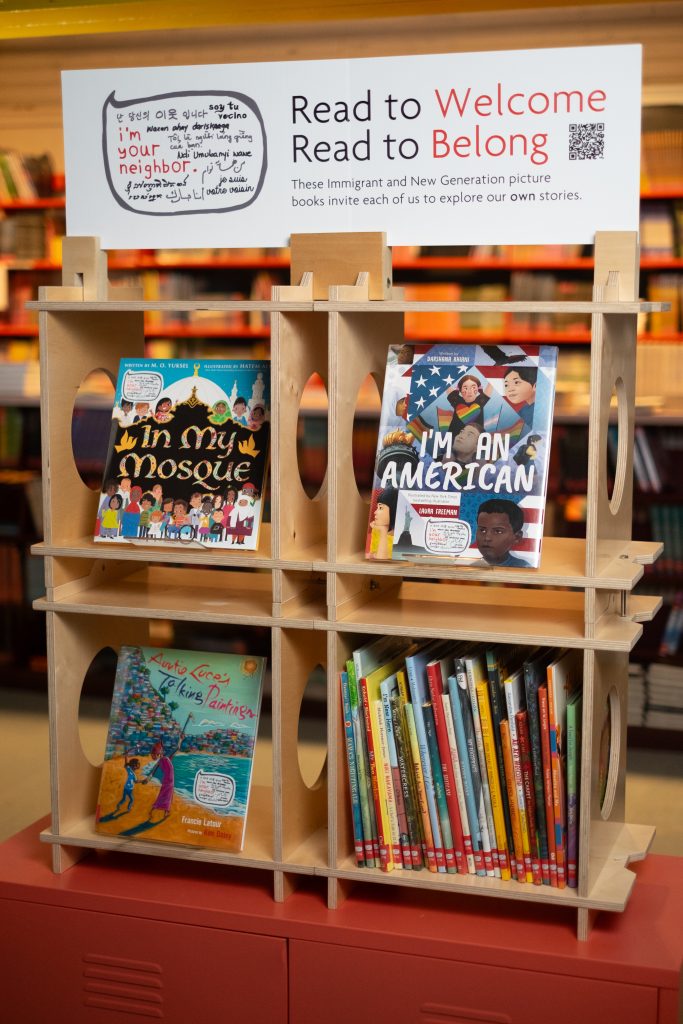
In partnership with the DEI Committee, STLS is excited to announce a new rotating collection! The I’m Your Neighbor Collection includes 30 illustrated juvenile and young adult titles that celebrate our immigrant neighbors and families. Set in communities that have migrated to the US since 1970, each acclaimed book invites readers into the lives of the featured Immigrant or New Generation family. See the complete list of included titles and sample lesson plans on the collection website: Welcoming Library: Toolkit - I'm Your Neighbor Books.
Collections will begin rotating the first week of May and will move monthly. Each collection will move in two red plastic totes; one tote will contain the books and the other will contain a wooden bookshelf that can be constructed to display the collection. Since there are only three of these collections, they will move on normal delivery days rather than on specialized runs.
| | |
Our next Discussion Group will meet via MS Teams on Wednesday, April 30 at 1:00 pm. We are excited to announce that we have heard your feedback and will be working to tie our discussion group topics more closely with library work.
To that end, ournext discussion group will be on "Supporting Trans Staff and Patrons," and will be led by Sarah Trumpp.
Also mark your calendars for these upcoming Discussion Group dates: August 27 at 9:00am, and October 29 at 1:00pm.
| | |
| |
Are you interested in working with other Southern Tier Library System folks on diversity, equity, inclusion, accessibility, and social justice initiatives? Consider joining the DEI Committee!
We will be holding an upcoming Virtual Open House on Thursday, April 10, from 1-2 pm. Join members of the STLS DEI Committee to learn more about the committee's activities and how to join!
Attendees will have the opportunity to ask questions of current committee members.
Register online.
| | More Resources Brought to You by the DEI Committee | | |
If you’re looking for social media content, the DEI Committee has created a series of Read-A-Likes to promote reading diversely. Share these on your social media or print them out for a display or shelf-talker.
The Southern Tier Library System has also created a DEI LibGuide. This guide is full of information on various topics related to diversity, equity, inclusion, and accessibility.
| | | | | |