|
In This Issue
Health Policy in Action: Pharmacogenetics Testing Data
Upcoming Events: Lessons Learned from the CDRP Program
Education: Margolis Scholars 2025-2026 Cohort
| | |
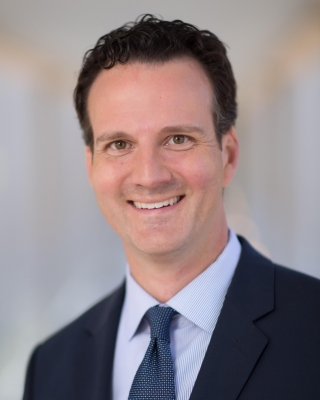
Chan Harjivan joins Duke-Margolis as a Visiting Fellow
Visiting Fellows provide key health policy insights through their participation in Duke-Margolis working groups and activities that support research on a number of initiatives in health care delivery and payment reform, biomedical innovation for pharmaceuticals and devices, and health policy education and workforce development.
With more than 25 years of experience spanning public health, government, and the biopharmaceutical industry, Chan Harjivan has worked with the leadership of nearly every major pharmaceutical company, U.S. health agency, and global health organization to accelerate the development and delivery of lifesaving vaccines, therapeutics, and diagnostics. His last full-time position was as a Special Assistant to the President in the White House, where he reported directly to the President. He oversaw vaccines, therapeutics, diagnostics, R&D, supply chain and response plans to strengthen the nation’s readiness for biological threats through strategic policy coordination, interagency collaboration, and public–private partnerships. At Duke-Margolis, Chan will be working with the Biomedical Innovation team to advance research on the drug supply chain.
To learn more about our Visiting Fellows, please visit healthpolicy.duke.edu/visiting fellows.
| | |
Learning from Population-Based Health Care Systems
Policy Research Associate Montgomery Smith, Senior Research Director Rob Saunders, Institute Director Mark McClellan, and former Duke-Margolis researcher Jonathan Gonzalez-Smith co-authored a paper with the Future of Health in NEJM Catalyst Innovation in Care Delivery. This article highlighted global examples of population-based health care systems, illustrating successful implementations and the challenges faced during this shift toward more comprehensive care. Read more here.
| |
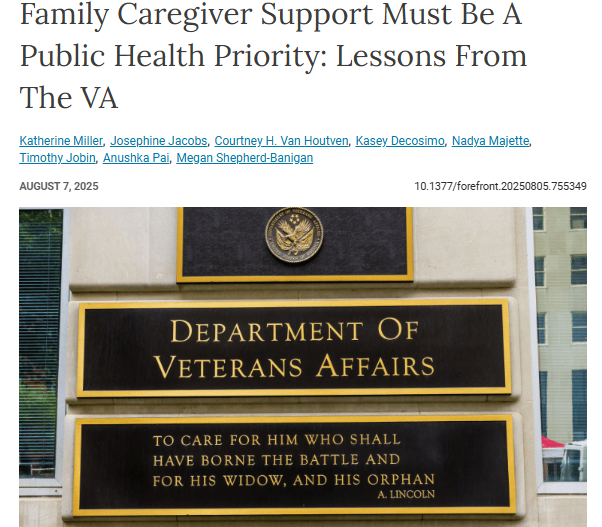
Supporting Family Caregivers
A new Health Affairs Forefront article, co-authored by Core Faculty members Courtney Van Houtven and Megan Shepherd-Banigan, urged policymakers and health systems to provide greater support to family caregivers and better integrate them into care planning. Since the care that most older adults receive tends to come from unpaid family caregivers, better support can help improve health outcomes for both the older adults and their caregivers. Read their recommendations here.
| | |
Investment in Home Health Agencies
Core Faculty member Kate Bundorf and Postdoctoral Associate Kun Li co-authored a research letter in JAMA Network Open to study health system and corporate investment in home health agencies and found that many markets had only one or two owners controlling most of the market share. This evidence can help inform policy that addresses increasing industry consolidation. Read more about their findings here.
| |
Cell and Gene Therapies
Director Mark McCllelan and Visiting Fellow Will Shrank co-authored an article in Health Affairs Forefront to discuss the role of the private sector in cell and gene therapies. While these therapies have shown great promise, funding, affordability, and access are unreliable. The authors advised that broader collaborative efforts in the private sector could help unlock cell and gene therapies’ potential.
| |
Pharmacogenomics Testing Data
Policy Analyst Patrick Rodriguez, Policy Research Associate Nora Emmott, Research Director Rachele Hendricks-Sturrup, and former intern Emma Kikerkov co-authored a paper in the Journal of Pharmacy & Pharmaceutical Sciences that studied pharmacogenomics (PGx) testing data. Health care providers use PGx data, which shows how a patient’s genes interact with certain drugs, to tailor individual treatments. The authors noted that improving racial and genetic ancestry data, and increasing interoperability with electronic health records, could make PGx data more clinically actionable. Read more here.
| | |
Drug Repurposing
Inside Health Policy reported on Health and Human Services Secretary Kennedy's plans to address chronic disease through drug repurposing and referenced research that Policy Research Associate Beth Boyer and the University of Chicago Market Shaping Accelerator have done to propose a pull mechanism for drug repurposing. Read more about Duke-Margolis’ drug repurposing work here.
| | |
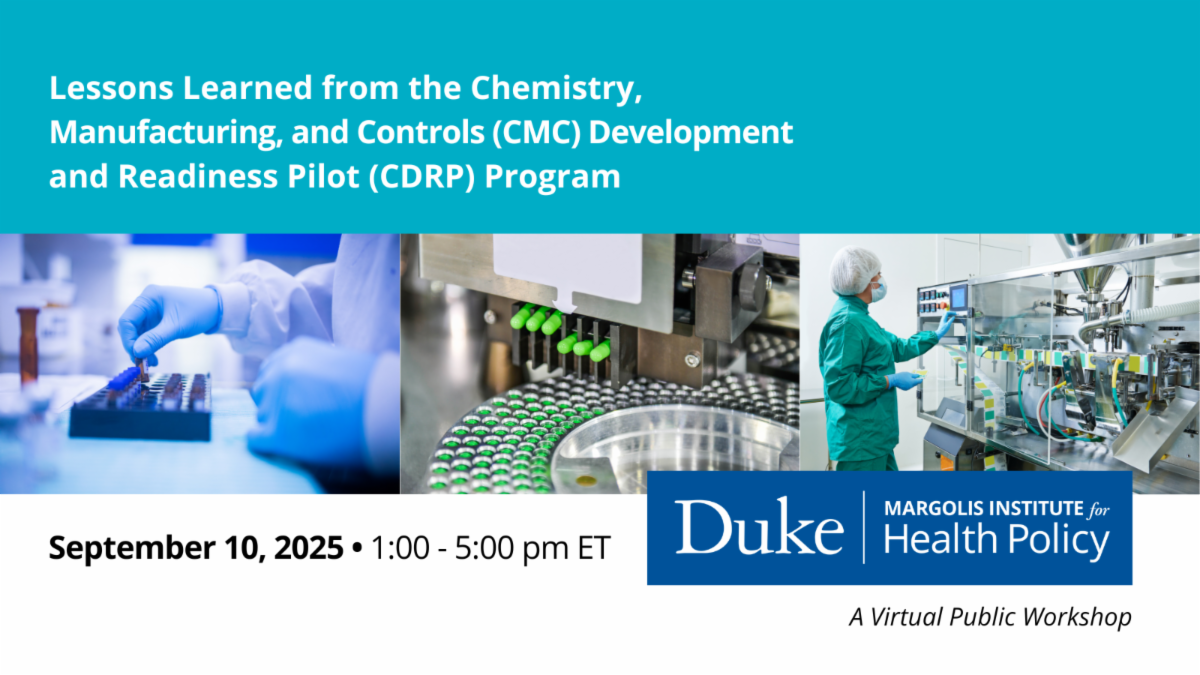
Lessons Learned from the Chemistry, Manufacturing, and Controls (CMC) Development and Readiness Pilot (CDRP) Program
September 10, 2025 | 1:00 – 5:00 pm ET
Location: Virtual via Zoom
Duke-Margolis is hosting a virtual workshop in collaboration with the U.S. Food and Drug Administration (FDA) that will delve into the challenges and strategies for expedited chemistry, manufacturing, and controls (CMC) development. The meeting will feature perspectives from both industry leaders and FDA regulators, who will discuss best practices and lessons learned from the CMC Development and Readiness Pilot program.
Learn more and register here.
| |
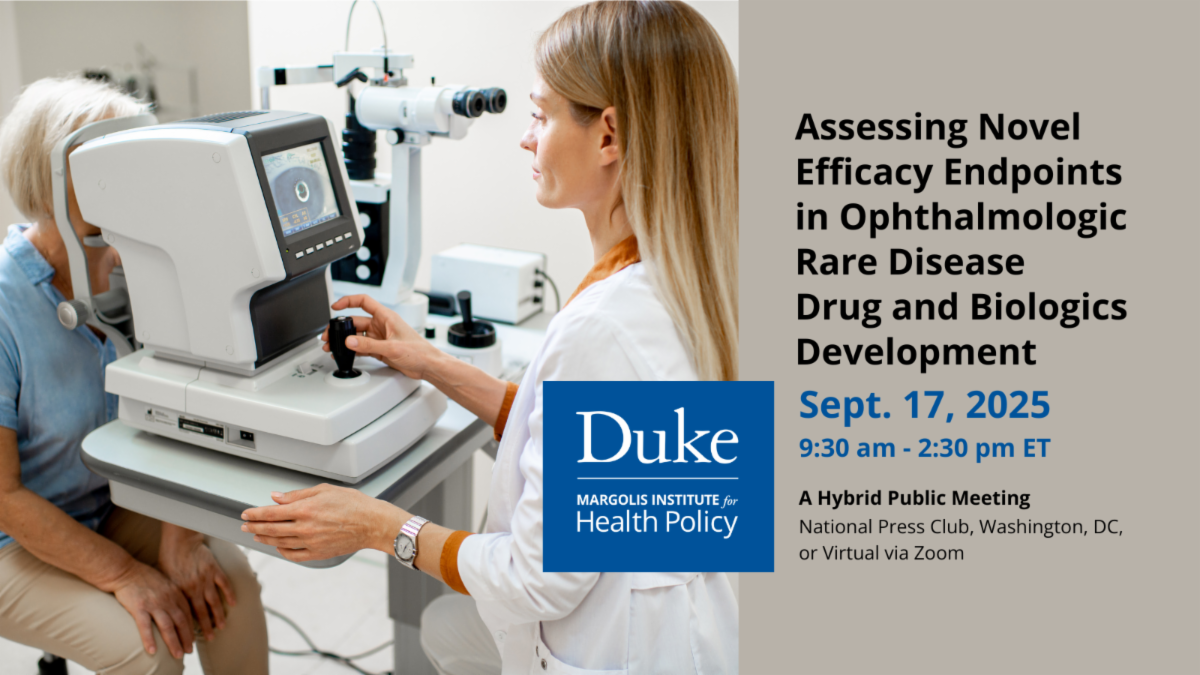
Assessing Novel Efficacy Endpoints in Ophthalmologic Rare Disease Drug and Biologics Development
September 17, 2025 | 9:30 am – 2:30 pm ET
Location: National Press Club, Washington, DC (or Virtual via Zoom)
Under a cooperative agreement with the FDA, Duke-Margolis is convening a public workshop focused on novel efficacy endpoints used in interventional clinical trials for drugs and biological products intended for patients with severe vision loss. In particular, the workshop will focus on full-field stimulus threshold testing and ellipsoid zone data. Researchers, clinicians, and others will discuss evidence and data that may support the use of these tools in regulatory decision-making, and will explore current limitations and potential strategies to advance the use and implementation of these tools.
Learn more and register here.
| |
Regulatory Submissions with Real-World Evidence: Successes, Challenges, and Lessons Learned
September 23, 2024 | 9:30 am – 4:00 pm ET
Location: National Press Club, Washington, DC (or Virtual via Zoom)
The FDA, in collaboration with Duke-Margolis, is hosting a hybrid public meeting on the use of real-world evidence (RWE) in regulatory submissions and will discuss successes, challenges, and lessons learned. Drawing on real case examples to illustrate the practical application of RWE in regulatory submissions, experts will discuss rationales for particular approaches, share lessons learned to inform future efforts, and highlight key challenges.
Learn more and register here.
| | |
The Nexus of Climate Change, Policy, and Health: A Duke Climate Collaboration Symposium
October 1, 2025 | 9:30 am - 3:45 pm ET
Location: Geneen Auditorium, Duke Fuqua School of Business (or Virtual Via Zoom)
Interested in the nexus of climate change, policy, and health? Duke-Margolis and the Duke University School of Medicine are co-hosting the fourth installment in the Duke Climate Collaboration Symposia to explore potential health policy reforms to improve health system sustainability and population health. This event will feature a keynote presentation from Mark McCellan and Bill Frist, MD (The Nature Conservancy and Former Senate Majority Leader) as well as expert panel discussions and a networking lunch. Other Duke-Margolis speakers will include Assistant Research Director Stephen Colvill, Core Faculty member Mike Pignone, and Research Director Rebecca Whitaker.
Join us in-person on Duke University campus or participate virtually! Learn more about the event and register here.
| | |
This hybrid public workshop is co-convened by Duke-Margolis and the FDA Rare Disease Innovation Hub, under a cooperative agreement with the FDA. Speakers will explore considerations when choosing a control in rare disease clinical trials, discuss existing and innovative control options internal and external to the trial, and identify how these controls can be used to generate evidence that supports regulatory decision-making.
A recording will be available here in the coming days.
| | |
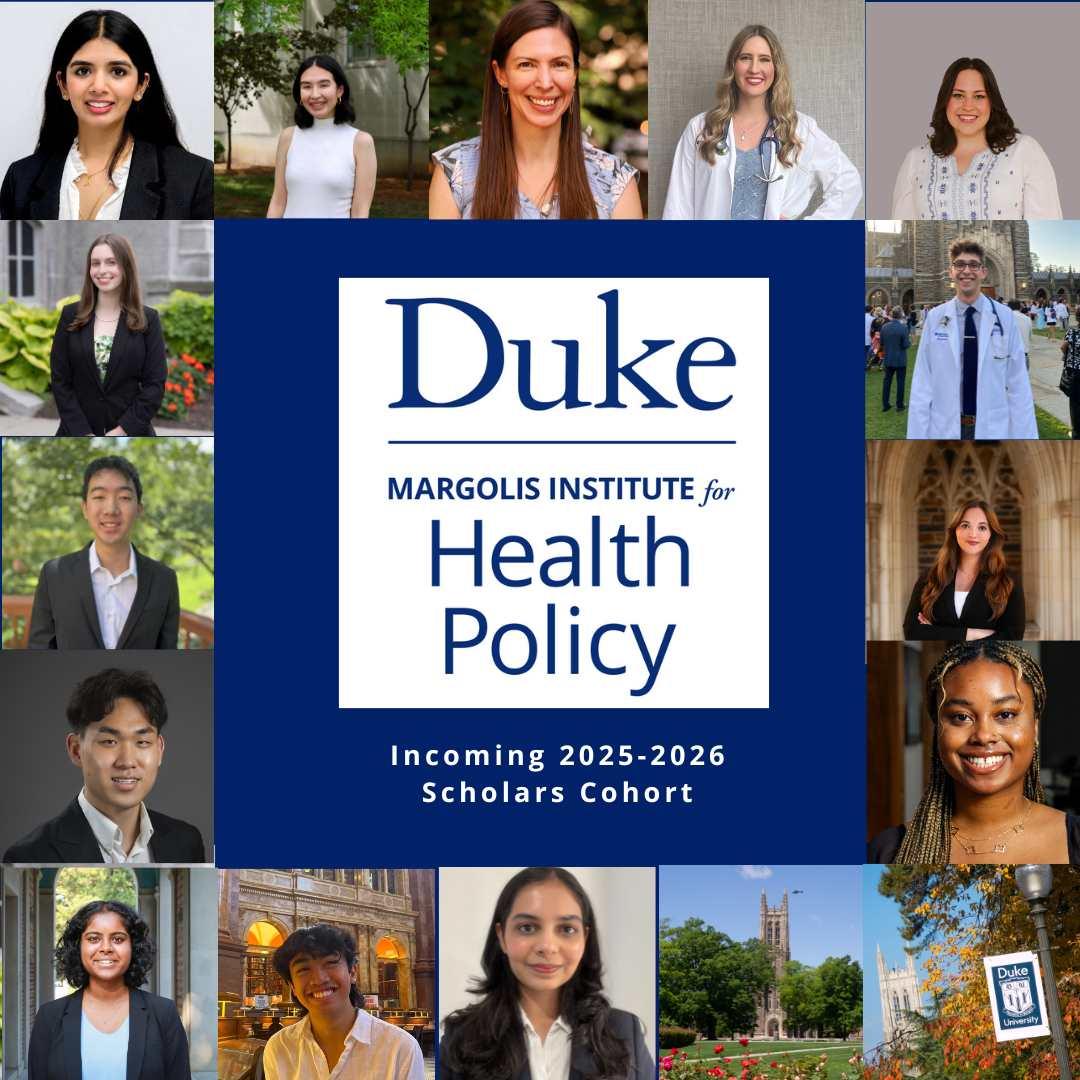
Margolis Scholars 2025-2026 Cohort
We are excited to announce the incoming 2025-2026 Scholars Cohort! The Margolis Scholars are an interdisciplinary cohort of Duke University students, from undergraduate to doctoral, who are interested in pursuing careers in health policy and management. The Scholars represent a range of schools at Duke, including Fuqua, Law, Medicine, Nursing, Pratt, Sanford, and Trinity. See the Scholars Book for a short bio of each Scholar.
| | |
Bass Connections
In the 2025-2026 academic year, we have 18 Bass Connections Health Policy and Innovation Theme teams administered by Duke-Margolis. These teams will be working to address pressing health policy topics in their work, including community-based care in North Carolina, antimicrobial resistance, data science in clinical care, maternal and child health, and more.
Read more about the exciting projects these teams are working on here!
| | |
Rachele Hendricks-Sturrup co-authored three articles this month:
-
The Evidence Base—Authors explored how personalizing rare and ethnicity data might improve real-world evidence relevance and reliability. This article followed up on the panel discussion Rachele spoke at during ISPOR 2025.
-
JMIR AI—This paper provided comprehensive guidance on the role of race and its use in artificial intelligence and machine learning, offering key points to consider at each data life cycle stage.
-
Clinical Pharmacology & Therapeutics—Authors characterized clinical trial use cases with pragmatic elements during the design and conduct of trials and discussed clinical trials that have utilized real-world data for long-term follow-up during clinical trial extension phases.
| | Medical Economics interviewed Mark McClellan for an article on the 10-year impact of the Medicare Access and CHIP Reauthorization Act, where Mark discussed the challenges and successes of value-based care. Read the story here. | | Stephen Colvill spoke at Angels for Change’s event, “Summit One,” which is designed to bring together leaders in the drug supply chain to discuss ways to end drug shortages. Stephen moderated a panel on international harmonization to address drug shortages on a global scale. | | Senior Policy Analyst Kristin Podsiad, as well as former Duke-Margolis researchers Andrea Thoumi and Gaby Plasencia, co-authored an article in Health Affairs Forefront that explored how states might improve Medicaid outreach among Latine communities. In particular, they recommended states use auto enrollment and renewal processes, collaborate with community-based organizations, expand medical-legal partnerships, and encourage multilingual care delivery. | | Core Faculty member David Ridley was quoted by The Economist in an article on the challenges surrounding rare disease treatments and their regulation. Policymakers have been exploring ways to expedite the development and approval process but instability in policy and federal staff have complicated the issue. Read more here. | | Do you want to be part of health policy in action? Do you want to work on the leading health policy issues confronting cities, states, the nation, and the globe? The Duke-Margolis team is a dynamic, high impact national leader in leveraging policy to ensure high quality, affordable care for all. Multiple positions are currently available with new ones added frequently. Click here to view all of our career opportunities. | | | | |