Slavery and Freedom in Northampton

and in the Colonial North Lecture Series


An Introduction to

Transatlantic Slavery and Canadian Slavery


Dr. Charmaine A. Nelson

University of Massachusetts Amherst and

Founding Director, Slavery North Initiative


Wednesday, March 19, 2025

7 pm on Zoom

 
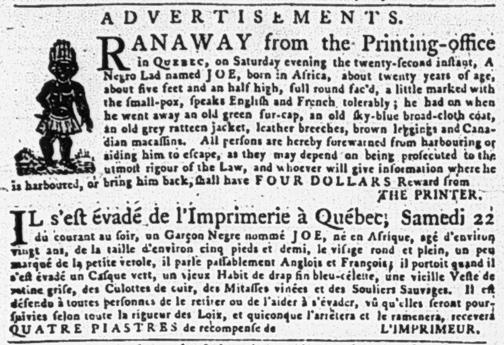
"RANAWAY from the Printing-office," Quebec Gazette, 27 November 1777, ​no. 639, p. 3

If you're unfamiliar with slavery in Canada, you’re not alone. Most people have never had the opportunity to learn about the 200-year history of Canadian participation in Transatlantic Slavery under the British and the French.


This lack of knowledge is principally because scholarship on Canadian Slavery falls far short of the research that has been produced about the U.S. South, the Caribbean, and northern South America.


This talk explores various dimensions of Canadian Slavery within the broader context of transatlantic histories with attention to how scholars conduct research on unfree people using archival and cultural sources. It also connects the dots between histories of slavery and ongoing anti-Black racism.


Learn More

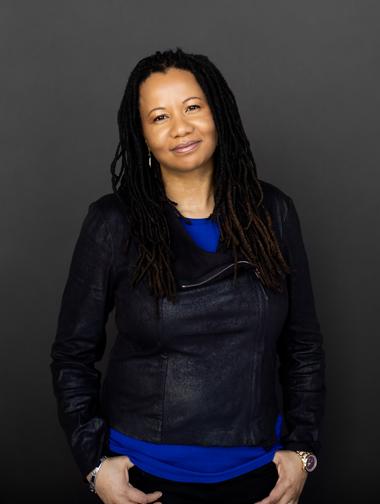
Photograph of Dr. Charmaine A. Nelson

Dr. Charmaine A. Nelson has been a Provost Professor of Art History in the Department of the History of Art and Architecture at the University of Massachusetts Amherst since 2022. She is the Founding Director of Slavery North, an initiative that supports scholarship and research creation on Canadian Slavery and slavery in the U.S. North. She is also the founder and editor-in chief of the award-winning Black Maple Magazine, one of the only national magazines or platforms directed at Black Canadians. Nelson has made ground-breaking contributions to the fields of the Visual Culture of Slavery, Race and Representation, and Black Canadian Studies. She has published nine books.

Register
 

Lecture 4

Living and Laboring in the Business of Slavery in Rhode Island

Dr. Christy Clark-Pujara, University of Wisconsin-Madison

Thursday, April 10, 2025 at 7 pm on Zoom

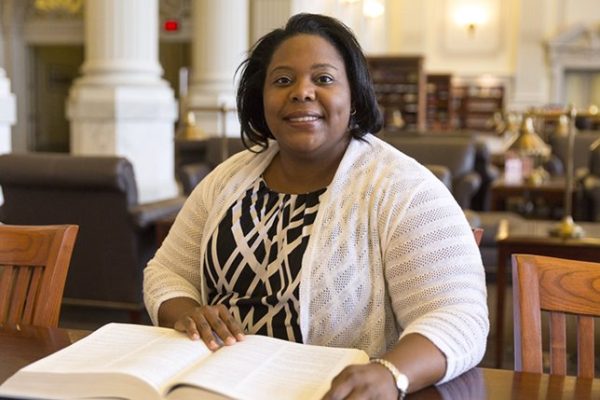
Photograph of Dr. Christy Clark-Pujara

The Business of slavery—specifically the buying and selling of people, food, and goods—shaped the experience of slavery, the process of emancipation, and the realities of Black freedom in Rhode Island from the colonial period through the American Civil War. In the colonial period, Rhode Islanders dominated the American trade in African slaves and provided the slave-labor-dependent West Indies with basic necessities. In the post-colonial period, as slavery was legally dismantled, Rhode Islanders became the leading producers of slave clothing. Black people resisted their bondage, fought for their freedom, and strove to build a community in a racially hostile colony and state; their assertions of humanity shaped Rhode Island society, politics, and economy. The erasure of this history has allowed for a dangerous myth—that the North has no history of racism to overcome and that white northerners had no substantive investments in race-based slavery.


Learn More and Register

Learn more about the

Northampton Slavery Research Project

Image Credits


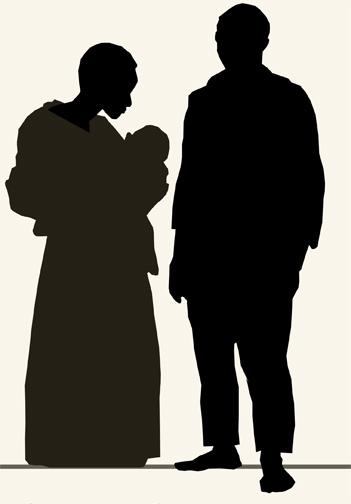
Graphic Silhouette of Hannah, her baby, and Mingo (Design Division, 2025).

In 1692, Hannah was unmarried and enslaved in Northampton. She bore a child, and in court she named Mingo as the father. The court called their act a “heinous crime against the light of nature” and sentenced both Hannah and Mingo to 15 lashes. Their baby was born into slavery. The court decided that Samuel Parsons (Mingo’s enslaver) and Timothy Baker (Hannah’s enslaver) would be “joint + equal in charge of the child” until the child was nine years old. At age nine, either Parsons or Baker could buy out the other for the value of the child or they could arrange to jointly own him. In this case, the child’s wages if hired out, or the child’s value if sold, would be “divided betwixt them.”


THE PRINTER (William Brown), ​"RANAWAY from the Printing-office," Quebec Gazette, 27 November 1777, ​no. 639, p. 3.


Photograph of Dr. Charmaine A. Nelson by Meghan Tansey Whitton.

In partnership with the

Northampton Reparations Study Commission


HISTORIC NORTHAMPTON

46 Bridge Street Northampton, MA 01060

info@historicnorthampton.org | 413-584-6011

www.historicnorthampton.org