Hey WRAP Community,
Nothing Ends Homelessness Like a Home: the People’s Housing Platform
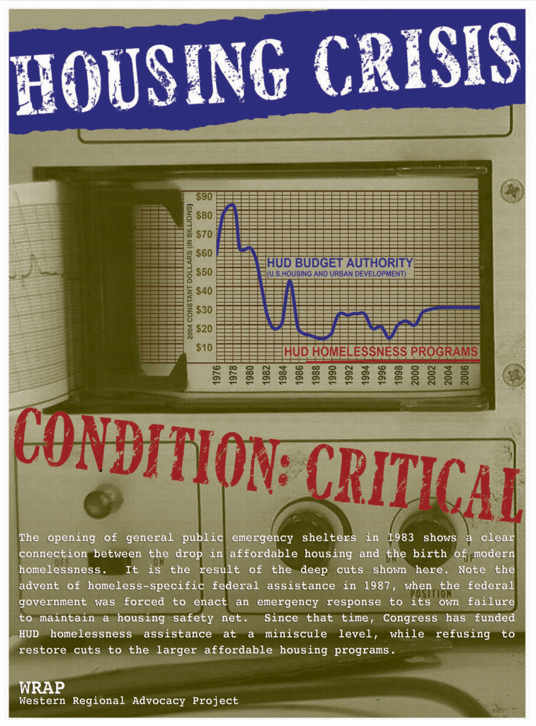
On January 29th, seven Congressional Representatives announced a set of proposals to address homelessness and housing poverty in the United States. Together, these proposals re-assert the federal government’s responsibility to provide safe and affordable housing for all. Named “the People’s Housing Platform,” the proposals were introduced by representatives Pramila Jayapal (D-WA), Chuy Garcia (D-IL), Alexandria Ocasio-Cortez (D-NY), Ayana Pressley (D-MA), Ilhan Omar (D-MN), Rashida Tlaib (D-MI), and Earl Blumenauer (D-OR).
“The People’s Housing Platform Proposal consists of seven separate bills, each addressing a different aspect of the affordable housing and homelessness crisis. Representative Ocasio-Cortez’s bill, ‘A Place to Prosper Act of 2019’ (H.R. 5072) strengthens tenants’ rights and ties highway funding to equitable development. Representative Omar’s ‘Homes for All Act of 2019’ (H.R. 5244) would improve and significantly expand public housing and affordable apartments built with the national Housing Trust Fund (HTF) while preventing displacement. Other members’ plans have yet to be introduced but would provide significantly increased funding for the HTF, strengthen public housing resident councils, provide new grants to create community land trusts and land banks in disinvested communities, combat homelessness by increasing funding for services, create a monthly tax credit for renters and first-time homebuyers, and fight real estate speculation. Through these proposals, the members aim to create a framework that declares housing as a human right.”
– National Low Income Housing Coalition
READ MORE>>>>>
2020 HUD Budget Fact Sheet 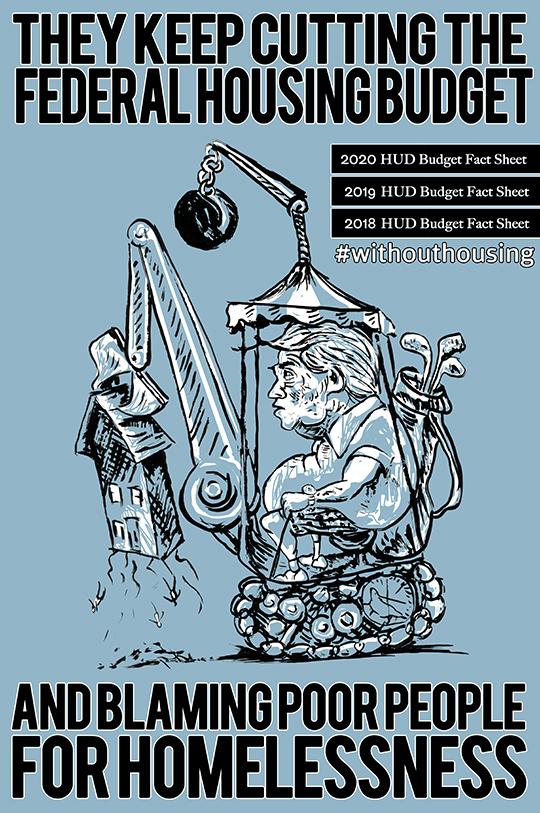
Trump’s 2020 Proposed HUD budget
The administration is proposing to cut HUD’s budget by $8.6 billion to $47.9 billion, 15% below 2020 enacted levels. Public Housing Authorities had an estimated capital needs backlog of $56 billion in 2019. In response to this deficit, Trump's budget cuts all funding for public housing capital repairs and cuts public housing operating funds by 21%, to $3.6 billion. The Rental Assistance program for rural areas through the Department of Agriculture (USDA) sees a $75 million increase in funding. This increase is more than offset by $138 million in cuts to other housing programs through the USDA. Programs that would be completely eliminated include the Farm Labor Housing Loans, Farm Labor Housing Grants, Rental Housing Direct Loans, and Multifamily Preservation and Revitalization programs. For Tenant Based Rental Assistance (TBRA), or Section 8, the proposed budget cuts funding by $5 billion, to $18.8 billion. At this funding level, an estimated 100,000 - 160,000 households would lose rental assistance.
READ FULL FACTSHEET HERE>>>>>
2020 Presupuesto propuesto del Departamento de Vivienda y Desarrollo Urbano HUD Hoja de Hechos
Presupuesto del Departamento de Vivienda y Desarrollo Urbano (HUD) propuesto por Trump 2020
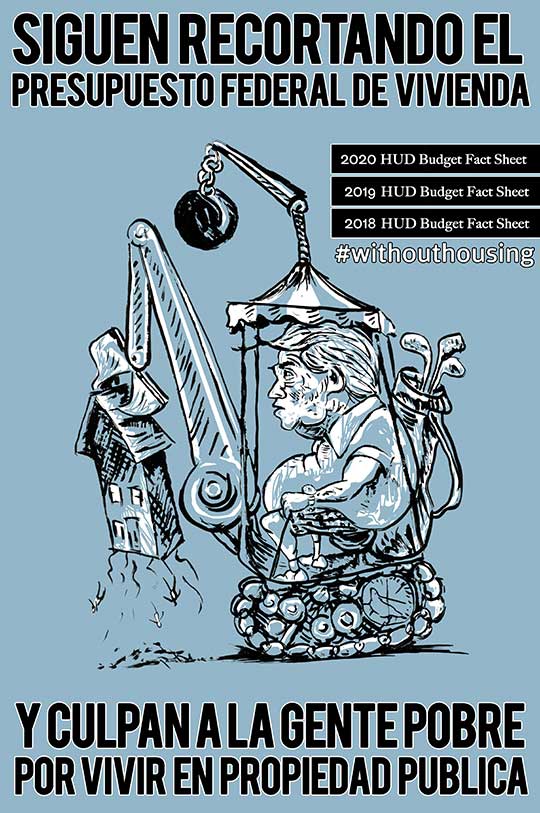
La administración propone reducir el presupuesto de HUD en $8.6 billones de dólares a $47.9 billones de dólares, un 15% por debajo de los niveles promulgados en 2020. Las autoridades de vivienda pública tenían un atraso estimado en las necesidades de capital de $56 billones de dólares en 2019. En respuesta a este déficit, el presupuesto de Trump reduce todos los fondos para reparaciones de capital de vivienda pública y reduce los fondos de operación de vivienda pública en un 21%, a $3.6 billones. El programa de Asistencia de Alquiler para las zonas rurales a través del Departamento de Agricultura (USDA) ve un aumento de $75 millones en su presupuesto. Este aumento se compensa con más de $138 millones de dólares en recortes a otros programas de vivienda a través del USDA. Los programas que serían completamente eliminados incluyen los Préstamos de Vivienda para Trabajo Agrícola, Las Becas de Vivienda para Trabajo Agrícola, Préstamos Directos de Viviendas de Alquiler, y Programas de Preservación y Revitalización Multifamiliar.
Para la Asistencia de Alquiler Basada en Inquilinos (TBRA) o la Sección 8, el presupuesto propuesto reduce la financiación en $5 Billones de dólares, a $18.8 Billones de dólares. A este nivel de financiación, se estima que entre 100.000 y 160.000 hogares perderían asistencia de alquiler. LEA LA HOJA DE HECHOS AQUI>>>>> Nothing Ends Homelessness Like a Home: the People’s Housing Platform 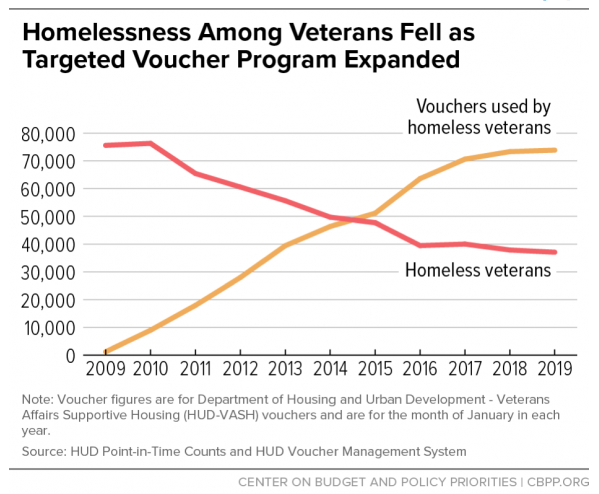
The Trump Administration has said that it wants to help communities address the nation’s serious housing affordability challenges, but the President’s 2021 budget would do the opposite, slashing housing assistance and community development aid next year by $8.6 billion, or 15.2 percent (not counting the impact of inflation). The President last fall reportedly called for a “crackdown” on homelessness in Los Angeles and threatened federal intervention, seemingly intending to abandon proven, evidence-based strategies to help reduce homelessness. More recently, the Administration defended its proposal to roll back the enforcement of communities’ fair housing obligations by declaring that expanding the supply of affordable housing would better advance such goals. But, for the Department of Housing and Urban Development (HUD) — much like in the President’s first three budgets — the budget proposes massive cuts in rental housing aid, which would leave hundreds of thousands more seniors, families with children, and other low-income households struggling to afford their rent and, in turn, likely worsen homelessness.
The budget would:
READ MORE>>>>> Public Housing Has Been Woefully Underfunded. That Could Change in 2020. 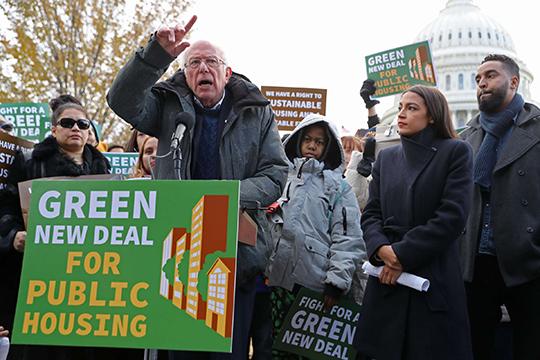
Public housing has been utterly neglected, underfunded and politically demonized for decades. It's faced attacks beginning with Richard Nixon and continuing through the Bill Clinton-era, with the creation of the draconian Faircloth Limit.
The Faircloth Limit effectively stopped any new public housing construction by legally capping the total number of public housing units that can exist at its 1999 level. Clinton also instituted a new program called Hope VI, whose purpose was to demolish and rebuild dilapidated public housing. Without a 1-for-1 replacement requirement for the demolished housing, it led to displacement.
The George W. Bush administration continued Hope VI, using it as a way to land grab, such as with four major housing developments in New Orleans post-Katrina.
The Obama administration continued the trend towards privatization with two programs. One is Choice Neighborhoods Initiative, which prioritized razing public housing in “struggling neighborhoods” to replace it with mixed-income housing. It’s been criticized for prioritizing demolition over building new affordable housing in neighborhoods that need it. The other is PETRA, which allows public housing agencies to mortgage their public housing to banks, essentially privatizing the housing.
READ MORE>>>>>

|


