Welcome to the University of Oklahoma Carceral Studies Consortium Newsletter. The Carceral Studies Consortium strives to build a community for intellectual exploration that includes faculty, staff, graduate students, community members, practitioners, and organizers.
Carceral Studies is concerned with the independent function and nexus of the political and social systems that organize, shape, sustain, and entrench practices of punishment, surveillance, incarceration, and harm.
|
|
Carceral Studies Conversations Podcast |
|
"Detention and Deportation" with Dr. Jessica Ordaz |
|
|
|
On this episode, Dr. Jessica Ordaz discusses the detention and deportation regime, the violence in the detention process, and the transnational migrant politics that formed in opposition to this violent regime. Jessica (Yesika) Ordaz is Assistant Professor of Ethnic Studies at the University of Colorado Boulder. Ordaz studies Chicanx/Latinx history, US/Mexico border studies, radical social movements, migration and migrant politics, labor history, the carceral state, the detention and deportation regime, and food justice
|
|
|
|
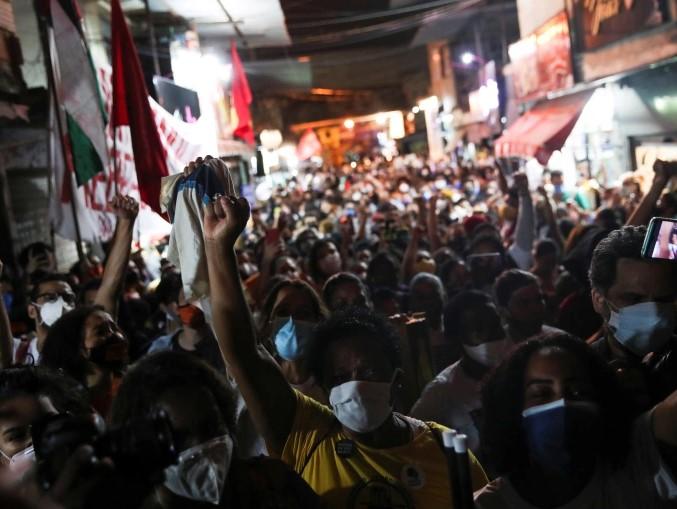
The police in Brazil carried out the deadliest raid in the Rio de Janeiro’s history—killing 28 people. Authorities claimed that the raid targeted drug traffickers. Jurema Werneck, executive director of Amnesty International Brazil said: “The number of people killed in this police operation is reprehensible, as is the fact that, once again, this massacre took place in a favela. Even if the victims were suspected of criminal association, which has not been proven, summary executions of this kind are entirely unjustifiable.” According to the United Nations High Commissioner for Human Rights, the favelas are home to poor, marginalized, and predominantly Afro-Brazilian residents. Human Rights groups and residents have called for an independent and impartial investigation into the deadly raid.
|
|
|
|
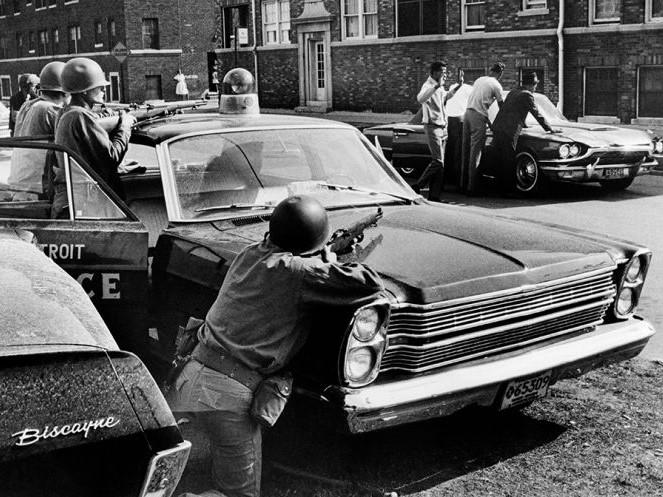
Between 1967 and 1973, Detroit law enforcement officers killed more than a hundred unarmed people, most of whom were young Black males, and all of which were declared justifiable homicides by the Wayne County Prosecutors. This violence was part of a broader political confrontation between law enforcement and the Black community in this era. This history of police violence in Detroit reveals a continuity that demonstrates the ineffectiveness of individualized reforms and policy changes to stop this problem. “Racially targeted police violence,” Matthew Lassiter argues, “continues to be excused by deliberate, and deliberately secretive, internal processes under which law enforcement agencies self-investigate and cover their tracks.” The state has devised ways to excuse and obfuscate its violent actions, yet a full accounting of police violence, according to Lassiter, “is essential to proving continuities in how and why the police deploy racialized violence and then evade accountability” and to “demanding accountability and change.” Lassiter concludes: “The systems of concealment, unaccountability, and preemptive authorization of discretionary deadly force, put in place in response to civil rights activism of the 1960s and ’70s, are the foundation of the policing systems that continue to operate to this day.”
|
|
|
|
Rachel Barkow’s review of Emily Bazelon’s Charged: The New Movement to Transform American Prosecution and End Mass Incarceration agrees with the book’s argument that prosecutors are critical actors in administering criminal justice policy and that electing prosecutors committed to decarceration is an improvement over the status quo. Barkow argues, though, that for progressive prosecutors to succeed, they need “to successfully achieve key institutional reform” such as imposing checks on their own power by “actively pursuing reforms that limit the leverage they have in criminal cases, such as seeking the elimination of mandatory minimum sentences, promoting open-file discovery laws, pursuing the end of cash bail and the dramatic curtailment of pretrial detention, accepting limits on their use of state-prison resources, pushing for judicial discretion in sentencing, advocating for robust second looks of sentences by actors other than prosecutors, and downsizing their offices.” Who is elected as district attorney is simply an incremental step toward reducing prison and jail populations. The institutional reforms required center on limiting the scope and authority of the prosecutor. Transforming punishment in America, Barkow argues, will require more than a change in prosecutors; it requires transforming police departments, the judiciary, the legislature, governors’ offices, and the public’s understanding of crime control.
|
|
|
|
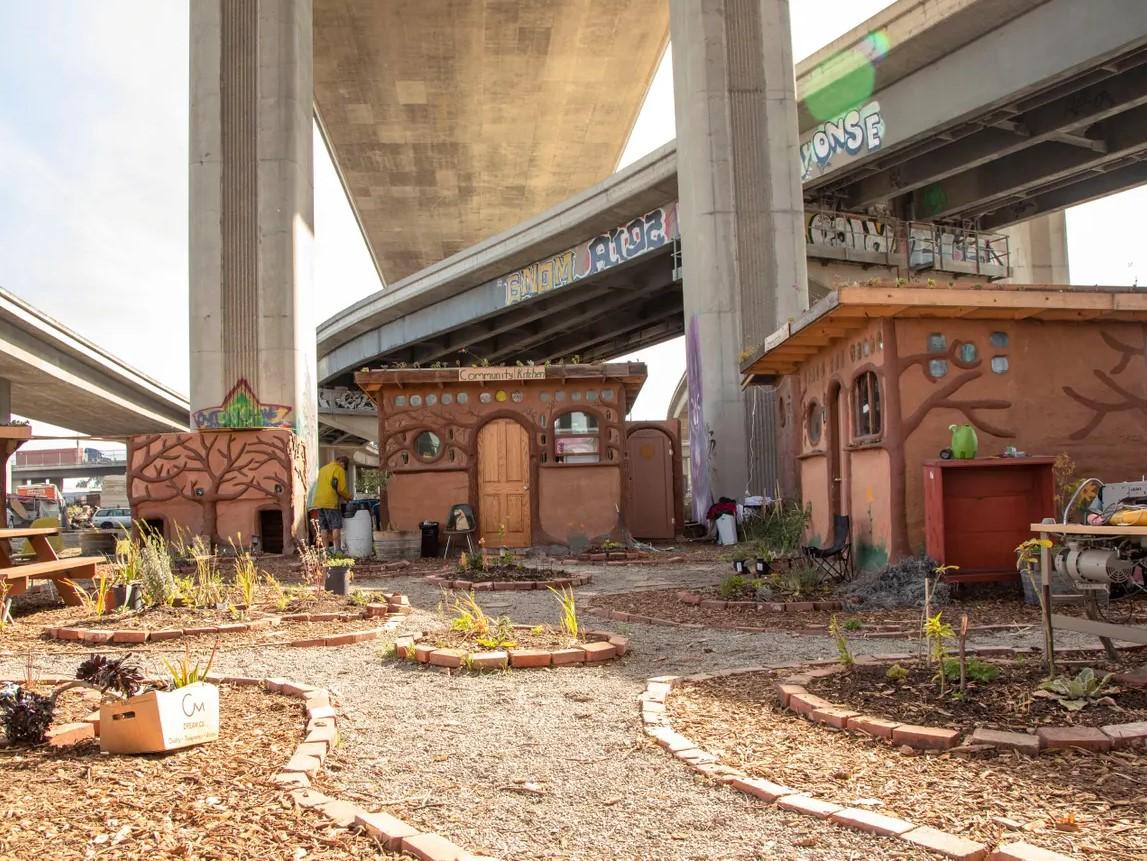
Under a highway overpass in West Oakland, residents have used foraged materials to build “Cob on Wood,” a mutual aid community with hot showers, a stocked kitchen, a health clinic, a free ‘store’ and vegetable gardens. Cob on Wood, Canon writes, is “fostering a sense of community and dignity, according to the unhoused and housed residents who came together to build it.” This community emerged from the parallel crises of Oakland’s rising rate of homelessness and the Covid pandemic, which, according to Ashel Seasunz Eldridge, “exposed those pre-existing cracks in the infrastructure of how we take care of our people, our communities, our neighbors.” Although Oakland has tried to address the rising homeless population, critics say “the programs are plagued with safety issues and do little to address the underlying causes of housing instability.” Leajay Harper, the kitchen manager at Cob on Wood, argues: “This is empowering us and making us feel good about ourselves again. Helping us earn our living, and not have to get for it, or steal it, or commit crimes.”
|
|
|
|
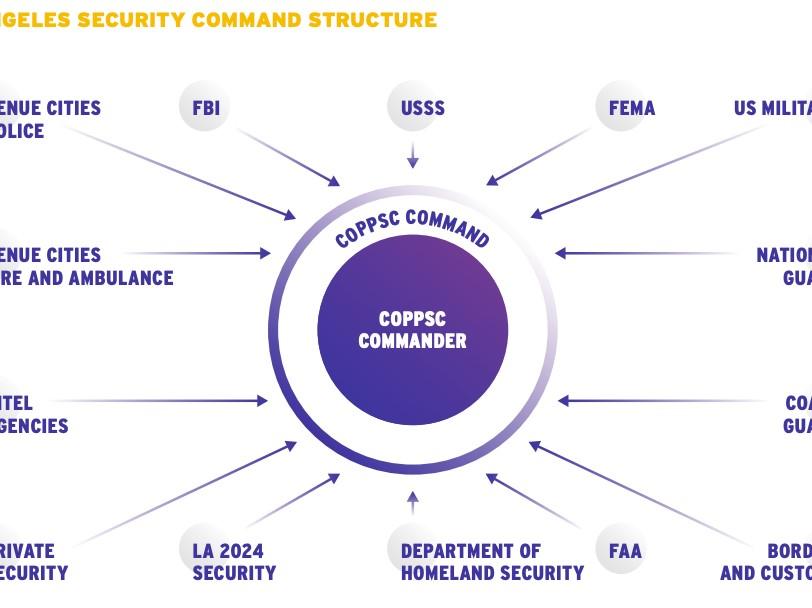
As Los Angeles prepares to host the 2028 Olympics, it is entering into a memorandum of understanding to join the California Olympic and Paralympic Public Safety Command that, according to Max Felkner-Kantor, “threatens to greatly expand police power, resources, and authority in the city.” The 2028 Olympics’ security plans argue for the expansion of policing, which “are in fundamental contradiction to the desires of Angelenos to reduce funding to the LAPD and reimagine public safety in the wake of the Summer 2020 protests.” The 2028 Olympics, moreover, “will result in the continued targeting of the city’s immigrant and unhoused populations that are in need of protection not policing.” The 1984 Los Angeles Olympics are illustrative of the ways the city used the game’s security plans to expand police power. The 1984 games brought numerous law enforcement agencies to the city, bolstered the LAPD’s plans to expand its intelligence-gathering unit, and provided LAPD with resources to buy new police equipment.
|
|
|
|
This anonymous narrative of a disabled and chronically ill individual incarcerated in county jail reveals the author’s experience during the COVID-19 pandemic that has exacerbated inequalities. He writes about the way that jail exacerbates mental health crises as staff uses suicide and/or isolation cells in response to signs of mental health crises: “If you have a mental health crisis, they respond with force and shoot you with pepperballs. I haven’t had the chance to talk to a therapist since I’ve been in here, but I guess I’ll keep asking. I don’t know how I’m supposed to be 'rehabilitated’ like this.” He notes that there’s no handicap showers and only two bathrooms with grab bars and “guys have to buy their way in” to those bathrooms. In response to the violence and hurt he has experienced from police and jail staff, he writes: “There’s no accountability when it comes to police or jail staff. In order for any society to function, there has to be accountability on both sides.”
|
|
|
|
Amazon’s Ring video doorbells, according to Lauren Bridges, “pose a serious threat to a free and democratic society.” Ring users release the video content to law enforcement without any way to revoke access and few limitations on how that content can be used, stored, and with whom it can be shared. Bridges writes: “Ring is effectively building the largest corporate-owned, civilian-installed surveillance network that the US has ever seen.” Amazon has brokered over 1,800 partnerships with local law enforcement agencies that allow law enforcement agencies to obtain recorded video content without a warrant, and the number of police partners is growing. As of now, one in ten police departments have the ability to access recorded content. Bridges found that in the last year law enforcement made more than 22,000 individual requests for content from Ring cameras. Ring offers law enforcement a “backdoor entry into private video recordings of people in residential and public space that would otherwise be protected under the fourth amendment.” Concerns about this surveillance network are compounded by facial recognition technology with its racial and gendered biases.
|
|
|
|
Since the 1930s, selling prison-made goods has generally been illegal except in the case of agricultural products. The agricultural exemption has spawned a multi-million dollar industry relying on prison labor. At least 650 correctional institutions in the U.S. have some sort of food processing, landscaping, or farming operation. H. Claire Brown argues: “In some ways, the small world of prison food production is a microcosm of the American food system, which has roots in slave labor and all too often functions as a race to the bottom: Fueled in part by cheap labor and low overhead, the drive toward production and profit leaves behind the people who plant the seeds and butcher the beef.” The idea of work as punishment and rehabilitation has justified the system that forces incarcerated people to work in these industries with little or no pay and without basic labor protections. In many cases, it is difficult to link prison food buyers and producers with the retailers and restaurants they supply, yet private businesses contract with prisons to use prison-grown food in restaurants and at supermarkets. The profits from prison labor have driven administration to privilege clients’ needs at the expense of incarcerated people’s health. There have been efforts to protest supermarkets such as Whole Foods that sell products produced in prisons, yet, as Brown argues, “In general, boycotting food companies that purchase food from prisons may ultimately have little impact on the labor conditions on prison farms—much less any broader impact on the criminal justice system.”
|
|
"Reclaiming the Power of Rebellion, Elizabeth Hinton and Derecka Purnell (Boston Review, 5/20/21) |
|
|
|
Elizabeth Hinton’s America on Fire: The Untold History of Police Violence and Black Rebellion Since the 1960s recounts the everyday Black resistance and rebellion to the fact of the police and their representation of a system of oppression. Derecka Purnell interviewed Hinton about this history and its significance. Hinton uses the term “rebellion” for these uprisings rather than “riot” to emphasize the socioeconomic demands behind the incidents: “They’re in response to incidents of police violence and the way that police themselves represent a system of oppression. But they’re also about decent housing. They’re about jobs. They’re about educational opportunities. They’re about resources. They’re about community control. They’re about not being treated like second-class citizens and they’re a call to fulfill the promises of the freedom struggle and the civil rights movement.” Using the terminology of riots to describe political violence ensures that policing has to be the response to inequality. Hinton discusses the progression from nonviolent direct action to the uprisings: “I think part of what we’re seeing is young people responding to the lack of concrete change in their daily lives—despite all of the promise of the civil rights movement. Despite the commitment among the mainstream movement to nonviolent protests, these tactics hadn’t worked to bring about the changes that Black people wanted.” The timeline in the book reveals that many Black Americans ended up worse off in the 1980s than in the 1970s, which she argues is due to the continued embrace of police as the only solution to socioeconomic problems.
|
|
Announcements & Opportunities |
|
Congratulations Student Work Prize Winners...
First Prize: Victoria White (AFAM) "Oklahoma! Where the Sin Comes Sweeping Down the Plains" (advised by Jermaine Thibodeaux)
First Runner Up: Lilly Amechi (Anthropology) "Criminal Justice Reform Includes Ethnic Minorities: An Anthropological Perspective into Reforming the Criminal Justice System with the Cultural Defense Test" (advised by Paul Spicer)
Second Runner Up: Johanna Hilmes (Architecture) "Light at the End of the Tunnel: Importance of Color and Lighting in Carceral Facilities" (advised by Marjorie Callahan)
Honorable Mention: Justin Durham (Psychology) "Tulsa Race Massacre: Affective and Cognitive Influences on Blame and Punishment" (advised by Scott Gronlund)
Honorable Mention: Johanna Greenwood (AFAM) "Convict Labor: How the Rich Become Richer and the Poor Become Homeless" (advised by Jermaine Thibodeaux)
|
|
|
Carceral Studies Graduate Student Fellowship
Application Deadline Extended
The Carceral Studies Consortium offers an outstanding graduate student with interest in advancing Carceral Studies a 12-month, .20 FTE position (8 hours per week). This CSC Graduate Student Fellow serves as the student representative on the Carceral Studies Board of Directors, as well as provides critical support for CSC initiatives throughout each academic year (July 1 to June 30).
|
|
|
ABOUT
The Consortium Newsletter will offer a roundup of a few selected articles that reflect today’s news, organizing, and thinking related to the carceral state. We understand that freedom work is built on education and engagement. Education requires an understanding of contemporary issues informed by their historical context. We hope that these curated articles will help you analyze the issues that we face and understand the community that we strive to construct.
Join the conversation!
We encourage feedback, suggestions, and article suggestions. Please reach out to carceralstudies@ou.edu with any ideas, thoughts, or recommendations.
If anyone you know is interested in receiving this newsletter and other information from the Carceral Studies Consortium, please forward them this email and they may click this link to subscribe.
|
|
Land Acknowledgment
The University of Oklahoma is on the traditional lands of the Caddo Nation and the Wichita & Affiliated Tribes. This land was also once part of the Muscogee Creek and Seminole nations. It also served as a hunting ground, trade exchange point, and migration route for the Apache, Cheyenne, Comanche, Kiowa, and Osage nations. Today, 39 federally-recognized Tribal nations dwell in what is now the State of Oklahoma as a result of settler colonial policies designed to confine and forcefully assimilate Indigenous peoples.
|
|
The University of Oklahoma is an equal opportunity institution. ou.edu/eoo |
|
|
|
|
|
|