Volunteer Newsletter - November 2026 | | |
VOLUNTEER SUPPORT GROUP
MONDAY, NOV. 2 (5:00-6:30 pm)
Please mark your calendars to attend our Monday, November 2nd meeting. These monthly meetings provide in-service education to enhance specific skills, knowledge and competencies. They support your well-being TOO! Come gain insights from our shared experiences about the deeply rewarding we provide. Active patient volunteers are encouraged to attend whether or not you currently have a family/patient assignment. Light refreshments will be provided. RSVPs are appreciated. Location: Kauai Hospice Conference Room.
| | |
ARTICLE: PRESENCE AS HEALING: WHY HUMAN CONNECTION MATTERS IN GRIEF CARE
BY: BARB PICCIANO CARANCI, MSN, RN, HN-BC, NCPA, RM
(Beginnings Magazine of the American Holistic Nurses Association (AHNA) Sept. 2026)
After nearly three decades in nursing and years working in holistic care, education, and hospice, the author writes: “We can become so focused on what we need to DO that we sometimes forget the profound impact of simply BEING. Being beside someone. Listening. Allowing silence. Slowing down. Using their name. Returning when we said we would. Holding space when there is nothing that can be “fixed.” These small human actions can create connection, trust, steadiness, and reassurance—particularly when someone is experiencing grief, fear, loss, or uncertainty. Presence doesn't replace clinical care. It doesn't replace treatment. It doesn't replace expertise. It strengthens them. And sometimes, when there is nothing else to do… PRESENCE is enough." FACEBOOK: What if one of the most powerful healing tools in healthcare is something we already have?
| | |
BELATEDLY, LETS CELEBRATE GLOBAL HANDWASHING DAY (OCTOBER 15TH)
In 2008, Global Handwashing Day was celebrated for the first time to promote handwashing with soap. Some of the founding entities included the US Centers for Disease Control & Prevention, UNICEF, Unilever, Procter & Gamble and the World Bank Water & Sanitation Program. The day aims to raise awareness about this critical practice for health and hygiene that can significantly reduce the risks of certain diseases and infections. The movement has built momentum, garnering support from governments, schools, NGOs, private firms, and to generate continued research on handwashing habits and practices. It also plays a key role in emphasizing its importance for children. On October 15, 2014, the Indian state of Madhya Pradesh, won the Guinness World Record for the most massive handwashing program, with 1,276,425 children in 51 districts in India participating!
| | |
ARTICLE: STUDY SHOWS MARKED INTERNATIONAL DIFFERENCES IN HOW PATIENTS WITH CANCER AND THEIR CAREGIVERS DESCRIBE A GOOD DEATH
BY: TERESA HAGAN THOMAS, PhD, RN (Cancer Nursing Today, Oct. 14, 2026)
An international research team recently published their findings in JAMA Open Network, highlighting the significant variability in how patients with advanced cancer and their primary family caregivers perceived what constitutes a good death. They polled 1,059 participants (640 patients and 419 caregivers) in five countries (Hong Kong, mainland China, Turkey, Greece, and Gaza) between 2023-2025, using the 54-item Good Death Inventory. Priorities varied across settings, but emotional peace, dignity, and family harmony were consistently highly valued. “What constitutes a “good death” depends on the patient and is shaped by cultural, spiritual, and familial norms that we are not always aware of.” Understanding how patients from multiple backgrounds describe a “good death” can help care providers better support patients near the end of life. Click to read more.
| |
ARTICLE: THE PAIN OF PROLONGED GRIEF DISORDER
BY: ALISON McCOOK
Psychologists are beginning to understand that for some people, intense and sustained feelings of loss are symptoms of a serious condition — one that can last for years and erode wellbeing. Prolonged grief disorder (PGD), sometimes called “complicated grief” was recently added to the Diagnostic and Statistical Manual of Mental Disorders (DSM). The article explains that "characteristic features include an inability to shake thoughts of their loss, leaving them in a state of chronic mourning, which can severely affect their ability to function — to work, parent or be a partner — and puts them at risk of suicide. Emerging research suggests that they may also exhibit unique patterns of brain activity. They don’t respond to antidepressant medications or therapy directed at normal grief but can get some relief from newer treatments tailored specifically to PGD." The article includes a list of diagnostic criteria to help families and individuals understand what normal grief looks like, and what might indicate a long-term problem. Click to continue reading this insightful article.
| |
BLOG: HYDRATION VS DEHYDRATION DURING THE DYING PROCESS
BY: BARBARA KARNES, RN
"On the journey toward physical death, as the body stops eating food, it also stops drinking water... When a person has entered the dying process, their body begins letting go of its hold on the physical, first letting go of food, then letting go of water. The entire physical body is shutting down. As it shuts down it stops functioning normally. The kidneys that process liquids are not performing their job so if you begin IV fluids often times the fluid stays trapped in the body cells and the lungs causing increased discomfort.
The body doesn’t want the nutrition or hydration, food or water. When a person has entered the dying process and they are not eating any food and not drinking sufficient fluid to keep them hydrated they are days to a week or so from death. From a medical standpoint, the calcium in their blood will begin to rise because of dehydration, not enough water in the body to operate efficiently. When the calcium gets high enough a person just goes to sleep and doesn’t wake up. If left to its own devices the body itself gives comfort in sleep. A sleep that allows us to leave this world and begin our new journey. This is the normal natural way to die."
SOURCE: Something to Think About: a blog on end of life
| | |
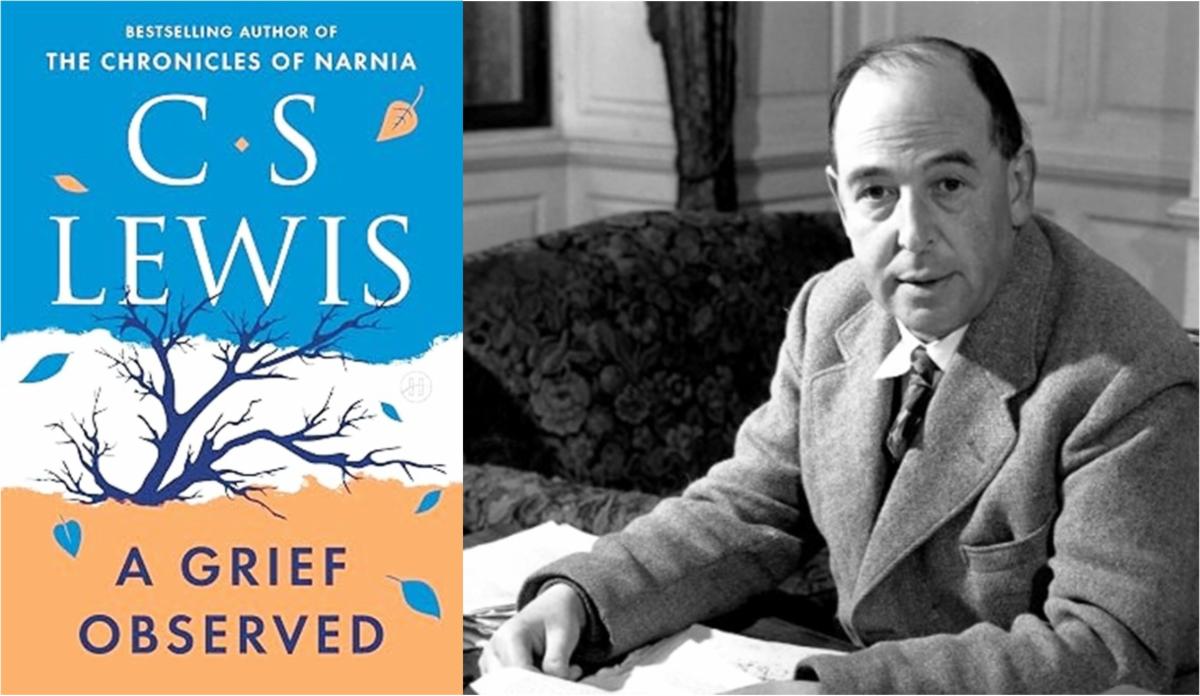
BOOK: A GRIEF OBSERVED
BY: C.S. LEWIS
Influential British writer, Clive Staples Lewis, a brilliant thinker, scholar and professor of English literature with positions at Oxford and Cambridge, is perhaps best known for his children’s fantasy book series, The Chronicles of Narnia. But in 1960, after the death of his wife Joy Davidman at age 45, he published A Grief Observed, one of his most intimate works. A truthful, unflinching account about loss – not about overcoming grief, but a journal of living through it as he processed the loss of his wife to cancer. It is a reluctant guide through the "mad midnight moments" of mourning and coming to recognize that "bereavement is a universal and integral part of our experience of love." The book reminds us that, “Grief is like a long valley, a winding valley where any bend may reveal a totally new landscape.”
| | |
CANDLE LIGHTING MEMORIALS
JOIN KAUAI HOSPICE at these profound services where candles are lit in memory of loved ones. Watch as the dimly lit sanctuary fills with beautiful candlelight as everyone present holds a glowing symbol of the relationship that still exists. Patient volunteers are encouraged to bring a hospice family if you can, regardless of when the death occurred. Three evening services will be held (free of charge).
DATE: Monday, Dec. 7, 2026; 6:00-7:00 pm
WHERE: Immaculate Conception Church; 4453 Kapaia Road, Lihue
DATE: Thursday, Dec. 10, 2026; 6:00-7:00 pm
WHERE: Hanapepe Hawaiian Congregational Church; 3815 Hanapepe Road, Hanapepe
DATE: Monday, Dec. 14, 2026; 6:00-7:00 pm
WHERE: Saint Sylvester Catholic Church; 2390 Kolo Road, Kilauea
| |
CONTACT: Rayne Regush, Volunteer Coordinator
| |
| | | |