The American Society of Le Souvenir Français Inc.
Bulletin Mensuel - Vol. 1. No 5 - June 2021
|
|
ON THE FOOTSTEPS OF ROCHAMBEAU'S ARMY IN CONNECTICUT:
240th anniversary, June 1781-2021
|
|
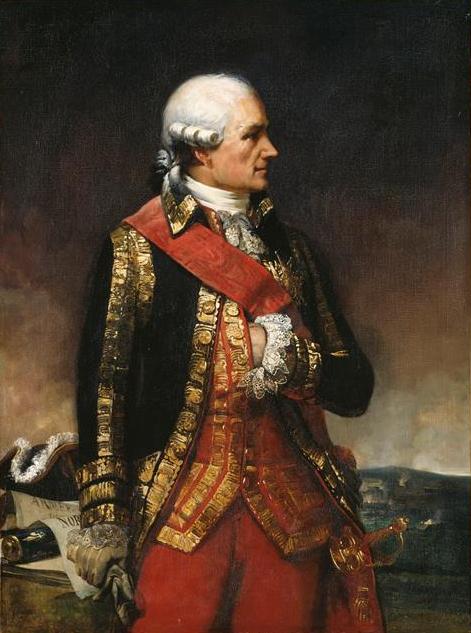
Charles-Philippe Larivière: Jean-Baptiste-Donatien de Vimeur, Comte de Rochambeau, Maréchal De France (1725-1807), Public domain, via Wikimedia Commons
|
|
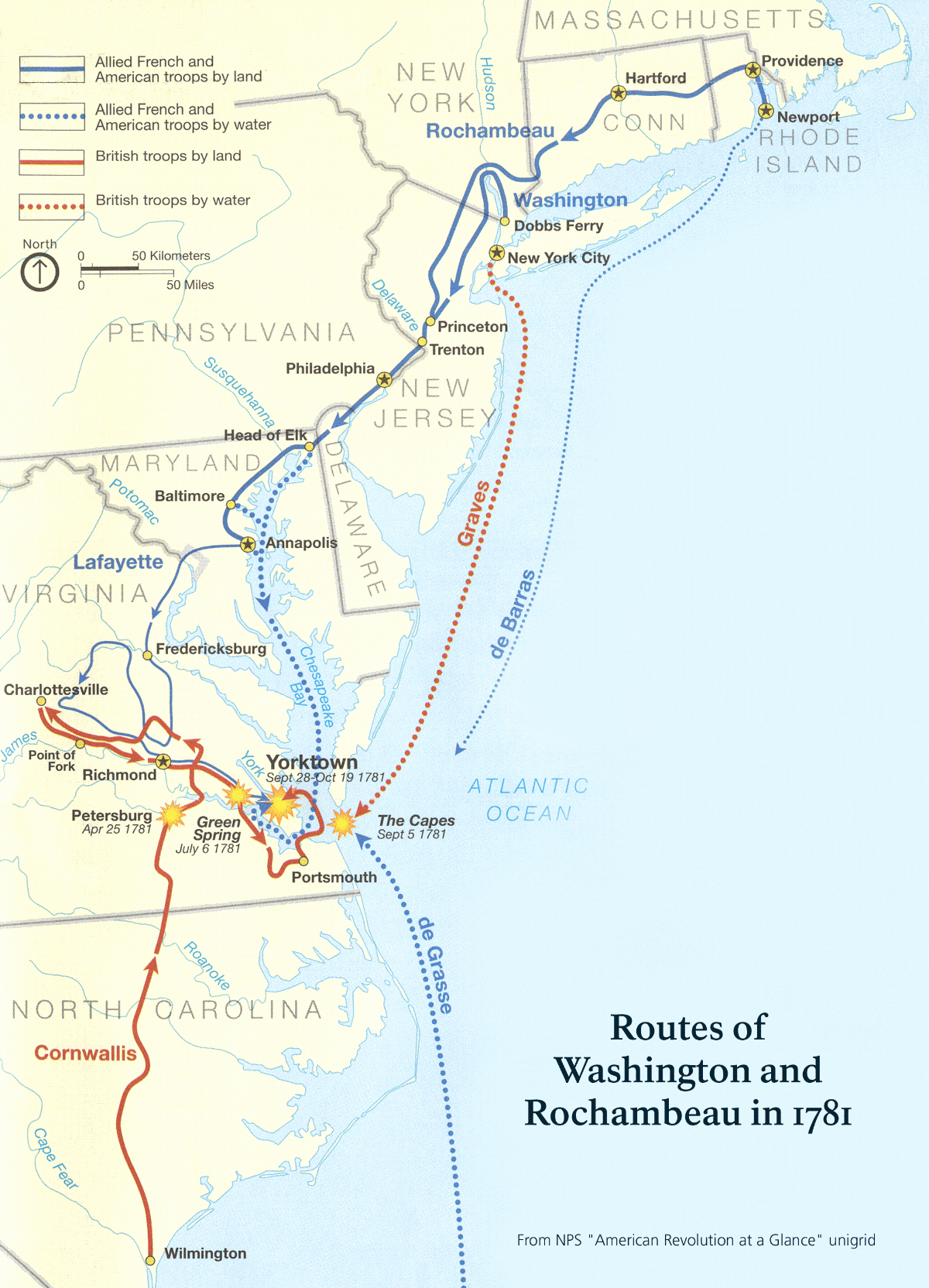
FROM MARCH TO SEPTEMBER, 1781,
THE FRENCH EXPEDITIONARY CORPS, 6,038 STRONG, MARCHED FROM NEWPORT, RHODE ISLAND TO YORKTOWN, VIRGINIA
MANY PORTIONS OF THE ROAD THEY TOOK HAVE BEEN DESIGNATED NATIONAL HISTORICAL LANDMARKS AND
CAN BE SEEN TODAY VIRTUALLY UNCHANGED
|
|
A LONG MARCH TO THE VICTORY THAT CEMENTED AMERICAN INDEPENDENCE
IN THIS FIRST OF A SERIES,
WE TAKE YOU FOR A TOUR THROUGH CONNECTICUT
In June of 1781, General Rochambeau led the French armed forces in a 14-week epic march from Rhode Island to Virginia to aid General Washington and ultimately deliver a resounding victory over the British in Yorktown on October 19 of that same year.
We wish to acknowledge the work done by the National Washington-Rochambeau Revolutionary Route Association Inc. (W3R) and the National Park Service (WARO) as we quoted several excerpts from their research in the paragraphs below.
After Rochambeau's army sailed from Newport to Providence, the First Division of French forces started the march on Monday, June 18, 1781. Three days later French cavalry Legion under the duke de Lauzun left its winter quarters in the town of Lebanon, Connecticut,
followed a route some 10 to 15 miles to the south-east of the infantry, protecting its flank.
Rochambeau, who rode in the First Division, had established the following order for the march:
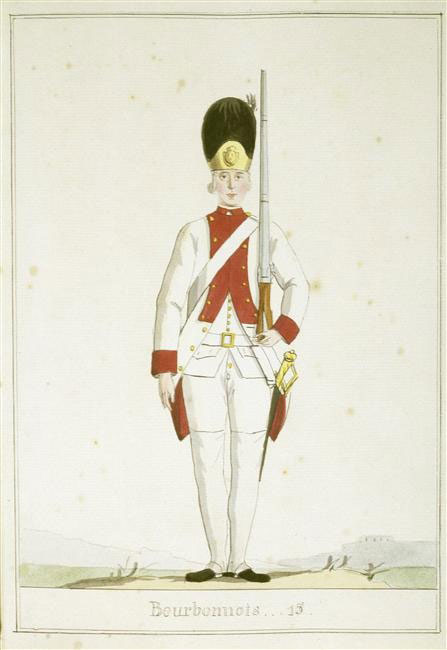
• The regiment Bourbonnois commanded by Marquis de Laval de Montmorency (second in command of the regiment was Vicomte de Rochambeau, son of Comte de Rochambeau) left on June 18;
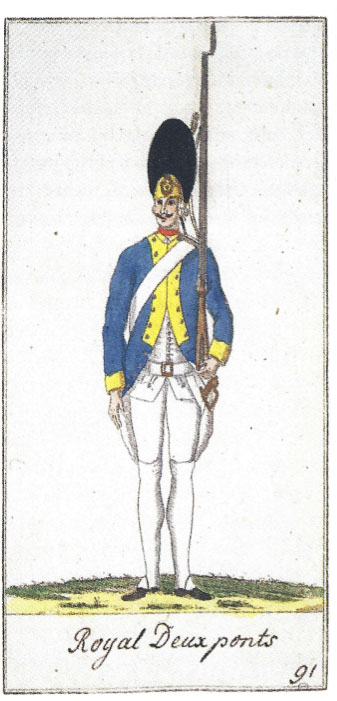
• The regiment Royal Deux-Ponts under the command of Comte Christian de Forbach de Deux-Ponts, Colonel, left on June 19;
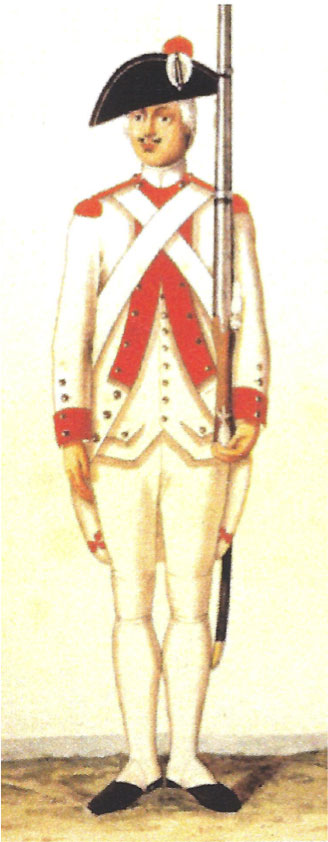
• The regiment Soissonnois commanded by Comte de Saint-Maisme (second in command was Vicomte de Noailles, brother-in-law of the Marquis de Lafayette), left on June 20; and
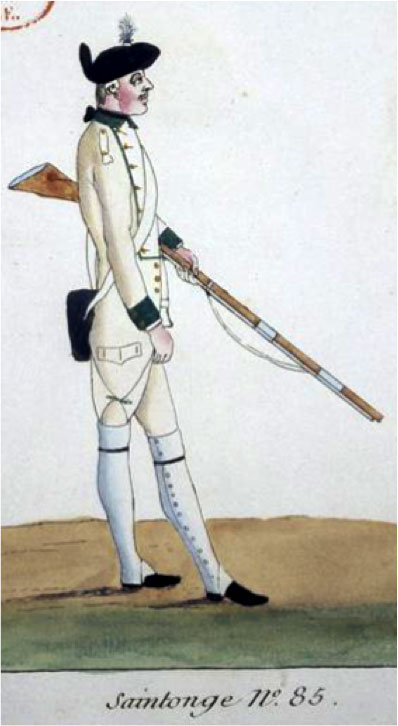
• The regiment Saintonge under the vicomte de Custine, left on June 21.
Each regiment consisted of between 1,000 and 1,500 men, as well as oxen-drawn artillery and baggage carts, and stretched about 3 miles on the road.
|
|
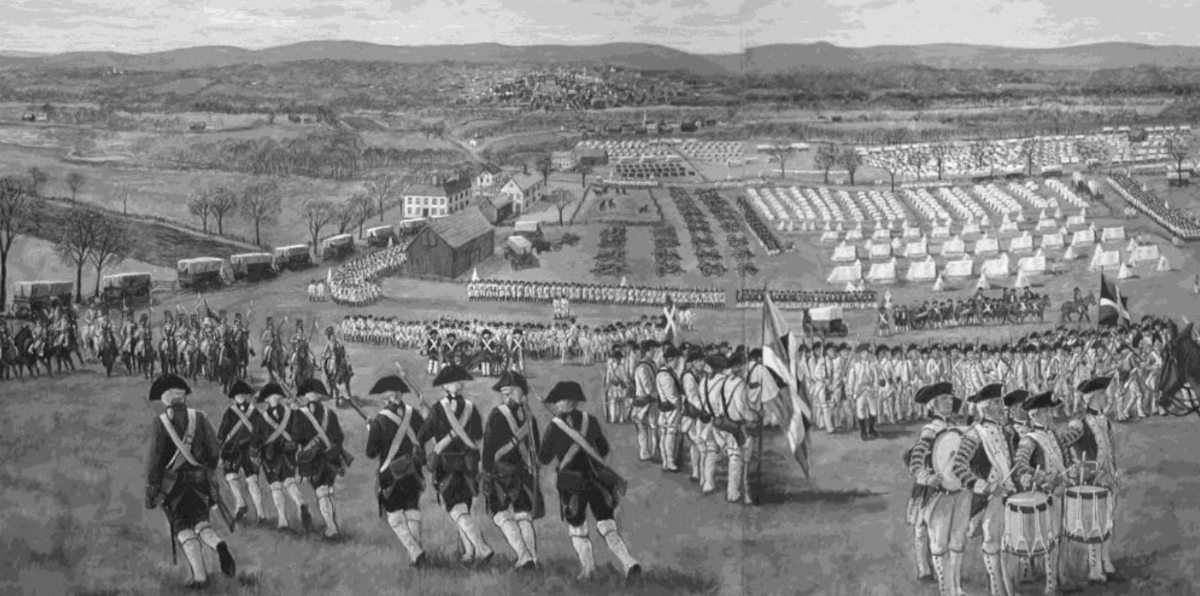
The French Army in East Hartford by David Wagner. It shows Rochambeau on horseback surveying all the regiments of his army. It is the only time during the march that all of the French troops camped together. The troops are on East Hartford land near the Connecticut River looking west with Hartford in the distance |
|
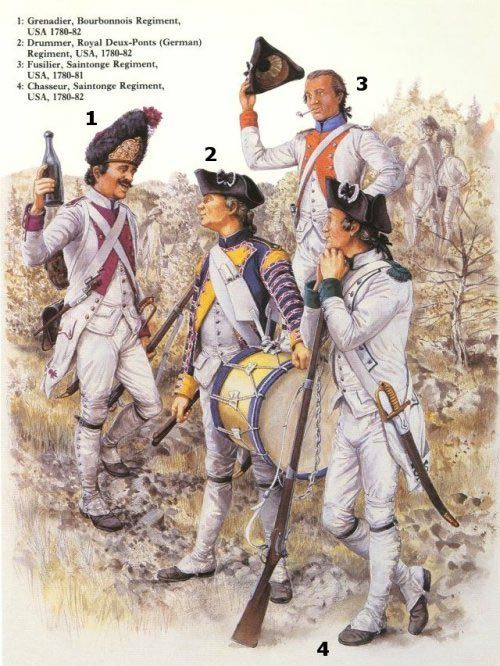
Clockwise/top to bottom: Fusilier, Saintonge Regiment of Infantry Grenadier, Soissonnois Regiment of Infantry, Fusilier, Bourbonnais Regiment of Infantry (Courtesy Anne S.K. Brown Military Collection, Brown University, Providence), RI - Grenadier Royal Deux-Ponts Ms 850, f52 recto. (Courtesy Bibliothèque Municipale Valenciennes, France) |
|
"Rochambeau and his Army are in battle attire with white woolen uniforms gleaming in the light of the new day. I stand here in awe of their multi-colored jackets with contrasting lapel facings, collars, cuffs, piping , and other trim, not to mention their many buffed buttons and shiny buckles.
Each regiment proudly displays its flag. I cannot help but notice the officers’ gold braid and medals glinting on the chests of the officers in the low straight-line rays of the rising sun. Their tricorne hats have been freshly brushed and are adorned with appropriate cockades, some with tall plumes floating in the breeze. I am thrilled at the sight!!!
Oh, and look at their newly-powdered hair! Ladies, if you are watching as I am, ooo la la, those French! What an amazing sight, and just think of it, after the blistering month-long march from New York to the mouth of the Chesapeake Bay!"
(Excerpt of "Rochambeau, Washington's Ideal Lieutenant" by Jini Jones Vail)
|
|
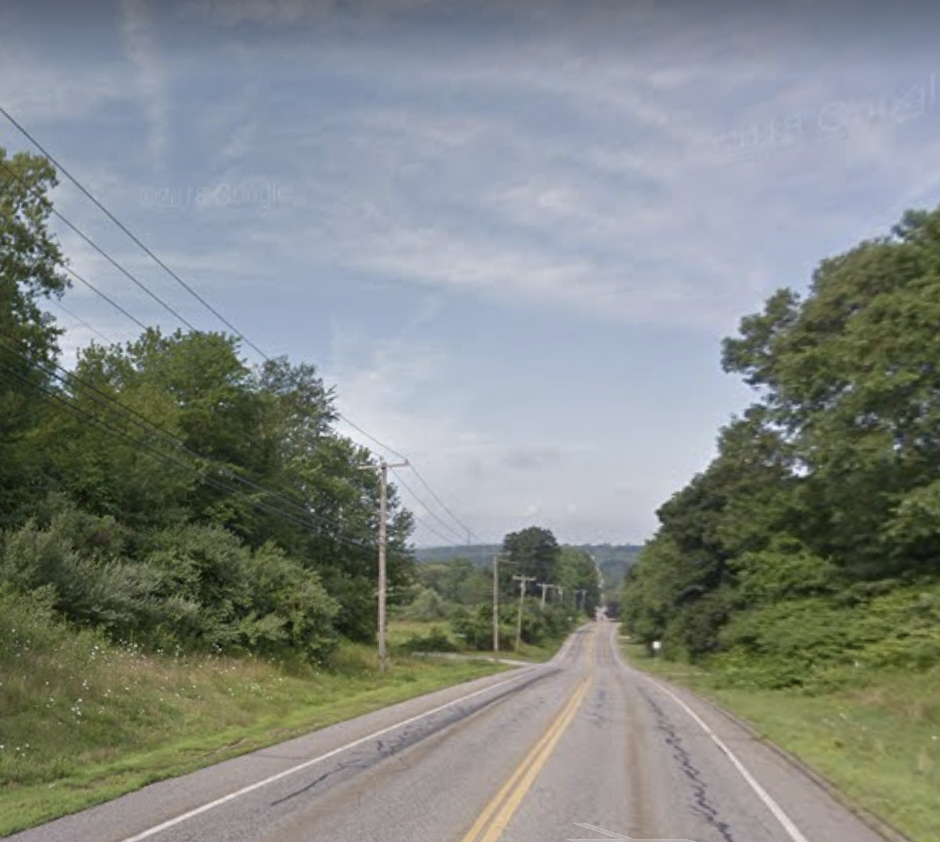
March Route of Rochambeau's Army: Scotland Road (CT 14), Windham, Connecticut.
|
|
The Regiment Bourbonnois was the first French unit to cross into Connecticut from Rhode Island on its way to its camp in Plainfield. The remaining regiments, the Royal Deux-Ponts, Soissonnois and Saintonge followed over the next three days.
The French troops camped beside the road within this segment in June 21-24, 1781 in what is known as the 4th encampment of the French Army. It was listed on the National Register of Historic Places in 2003.
This notable section of the road is about 1,700 feet (520 m) in length, running roughly from Ballamahack Road in the west to Back Road in the east. The roadway is now paved, but the stone walls and views of countryside are much as it would have been in 1781-82.
|
|
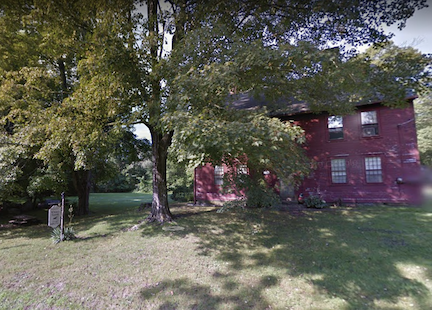
White Tavern, 61 Hutchinson Rd, Andover, CT 06232
|
|
Hutchinson Road in Andover, Connecticut is a 2-acre (0.81 ha) historic site in Andover, Connecticut along the 1781-82 march route of Rochambeau's army. It was listed on the National Register of Historic Places in 2002. It is primarily a section of roadway and includes White’s Tavern.
The historic section of the roadway consists of the portion south of Hendee Road. It is an asphalt-paved roadway, with a right of way 22 feet (6.7 m) wide, lined for most of its distance by stone walls.
The segment includes just one building: White’s Tavern, which is historically associated with the Rochambeau march. This road is identified on maps prepared by French engineers who determined the Rochambeau army's march route in 1781.
White's Tavern is known to have quartered French officers during both the southward march in 1781 and the northward march in 1782.
The Marquis de Chastellux, who served on Rochambeau's staff in charge of liaisons with Gen. George Washington, was among the French officers who stayed here.
|
|
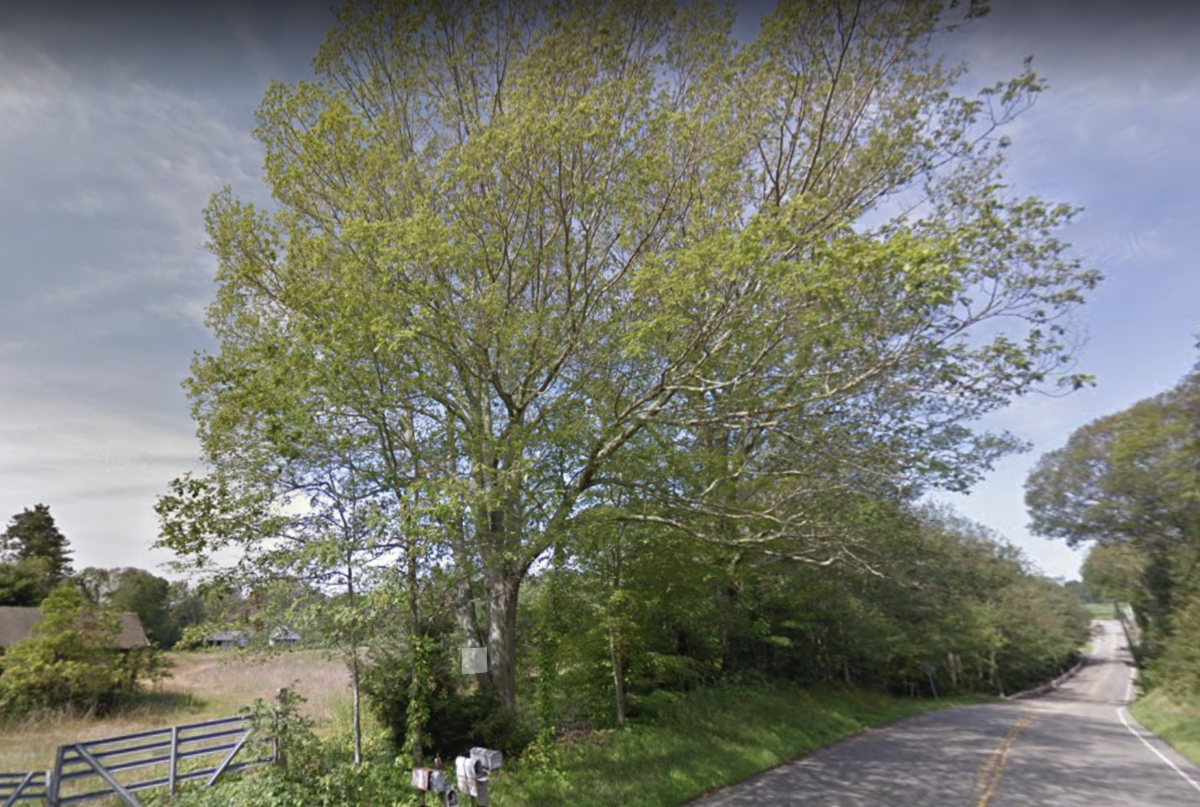
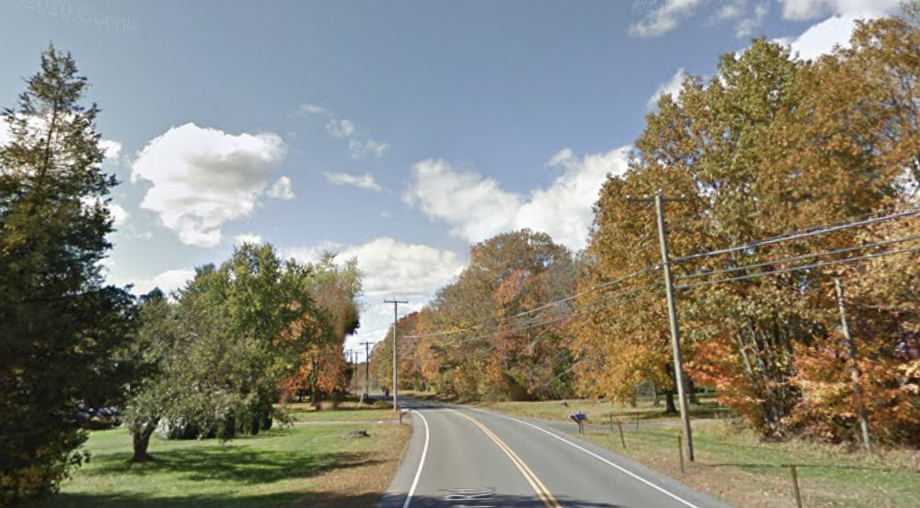
Scotland Road: French chroniclers of the march described the portion of this road, east of Scotland, CT, as a narrow, steep, stony road. Their baggage wagons arrived late at their camp in Windham on the westward march in 1781.
The road is now a modern paved two-lane road, but its characteristics are very much as described by the French in 1781, rising steadily and sometimes steeply. Typical New England fieldstone walls line significant portions of the road, another feature commented on by French chroniclers. Views from the road are across hundreds of acres of farmland, lined by stone walls and trees, again very typical of the march period.
|
|
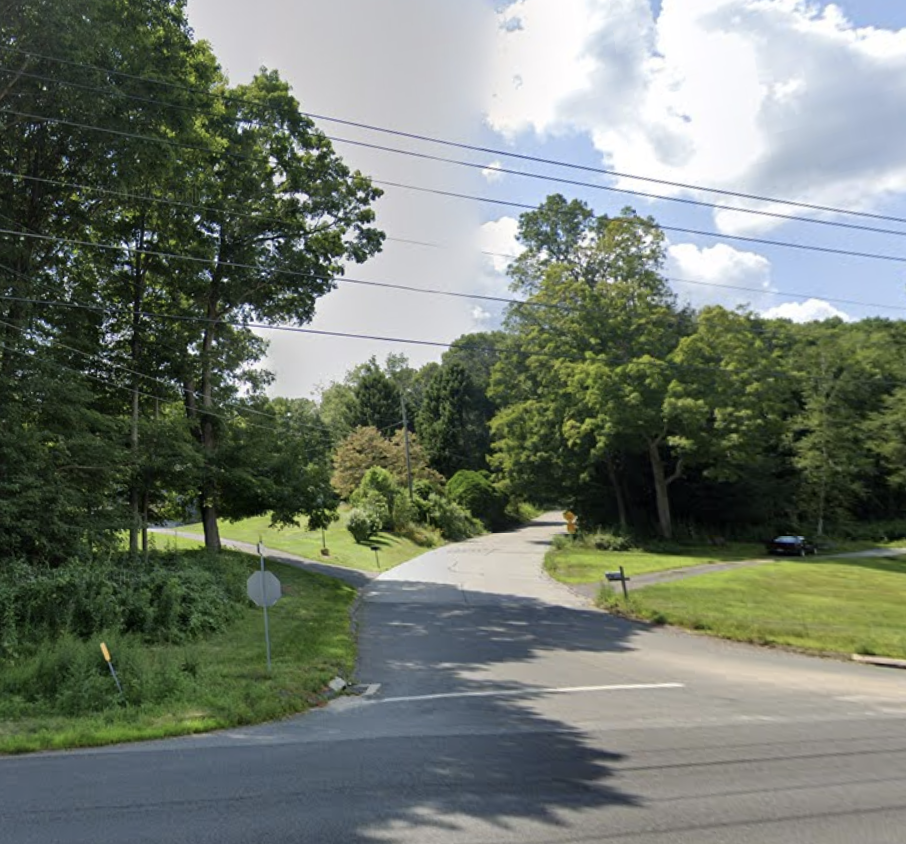
Photo taken a few hundred yards from Bailey Road, at informational sign discussing the March Route of Rochambeau's Army |
|
Bailey Road: It is a section of abandoned, old roadway that is a historic site in Bolton, Connecticut. It was listed on the National Register of Historic Places in 2003. The roadway is one of the most intact sections in Connecticut of the march route taken by French troops.
Both sides of the road were historically lined with stone walls; that on the south side is now in better condition than that to the north. There are two short stone slab bridges along this road section, which are little more than stone slab box culverts. Unlike many other surviving Rochambeau Route segments, this one is completely devoid of subsequent development.
French chroniclers of the Rochambeau army's trek were highly critical of the road conditions in Connecticut. They described the route between their fourth and fifth camps ( Windham and Bolton, respectively) as being "frightful", with "mountains and steep ridges", that one writer said they traversed "with the greatest difficulty imaginable". The road was originally laid out in 1710 and was in the 1790s bypassed by more suitable routes. The eastern end is now marked by an interpretive sign.
|
|
Encampment site of Rochambeau's army on the March to the battle of Yorktown in 1781. Located on Bolton Center Road, Bolton CT USA |
|
The Fifth Camp of Rochambeau's Infantry, also known as Site 12-25, is a historic site and an archeological site in Bolton, Connecticut, on the march route of the French Army on its way to the Hudson River and ultimately to Yorktown, Virginia. It was used on four successive nights, the 22nd through the 25th of June 1781, by the four regiments of the French army (the Bourbonnais, the Royal Deux-Ponts, the Soissonnais, and the Saintonge). In the evenings, the French entertained locals by playing music and dancing with local women, on Bolton Green.
• About 1 mile (1.6 km) before the Fifth Camp is Bailey Road and about a mile before that is Hutchinson Road, both on the way from Andover, and both also NRHP-listed. The road to the Fifth Camp was described as "frightful". The Bourbonnais division had to bivouac without its tents, as its supply wagons were delayed on the poor roads.
This site is listed due to its archeological potential. According to a study completed in 2001, the site "is an open field that retains its visual qualities, with stone walls marking the same field lines as shown on the map prepared by the French engineers. The camp was occupied for four nights in a row, one night by each regiment, in June 1781. A large number of artifacts have been recovered to date, including numbered regimental buttons, .66 caliber musket balls, period coins, and a lead bar.”
|
|
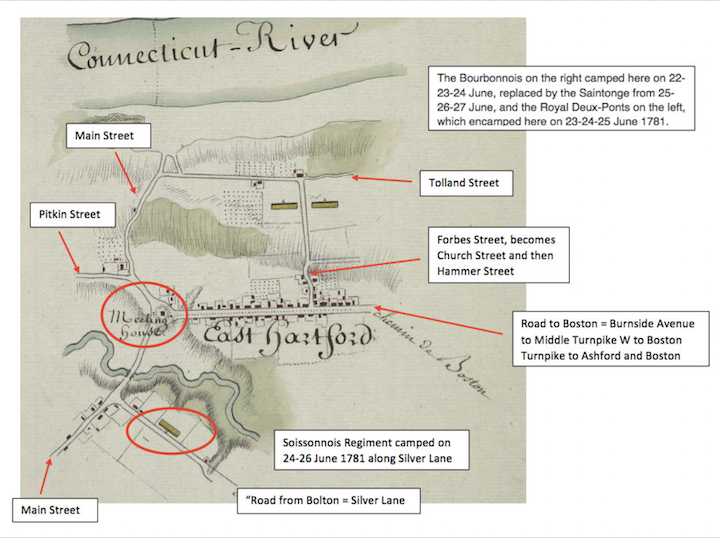
Map drawn by Louis-Alexandre Berthier, then Colonel serving on Rochambeau's staff, who later become one of Napoleon's most trusted and able Marshall, serving as his Chief of Staff. Photo from Princeton University Library. |
|
Following the camp in Bolton, the 6th camp of French forces on their way to White Plains was in East Hartford, where the troops enjoyed a few days of rest. The Bourbonnais occupied the campsite near the Connecticut River from June 22 through June 24; the Saintonge used the site from June 25 through 27. The Royal Deux-Ponts camped beside them from June 23 through June 25, while the Soissonnois camped along the road from Bolton from June 24 to June 26 on today’s Silver Lane.
Stories of the dances, barbecues, and cattle roasts were told locally for many years. The Abbé Robin, a Catholic chaplain with the French army, reported that during this encampment he said the first Catholic Mass in the State of Connecticut, on Sunday, June 24, 1781.
As the comte de Lauberdière wrote in his memoirs: "The province of Connecticut abounds with pasturage; the animals here are of the greatest beauty. They also grow wheat here of which they ship the flour to the Antilles.”
|
|
The march was a huge logistical feat, organizing men, supplies, water, food, and shelter along a route more than 680 miles long. The allied Continental and French forces comprised a diverse group. French troops were well-dressed, and professionally trained. The Continental Army, however, included soldiers who ranged in age from boys who were barely teens to men who were grandfathers. Some had been trained while others had never fired a shot. A man’s social or political status often determined his military rank.
The average French soldier carried his musket and equipment weighing almost 60 pounds. A baggage train of ox-drawn wagons, and horses, accompanied the troops. For the French troops, those carried the coats, haversacks and tents of the soldiers, and the luggage of the officers: 300 pounds for a captain, 150 pounds for a lieutenant. In addition to supply wagons, one wagon was designated for stragglers, the others were assigned to hospitals and craftsmen such as butchers, and wheelwrights.
The troops avoided marching in the hottest parts of the day, so days started early. Reveille was around 2:00 a.m., and the last regiments would leave camp by 4:00 am. The next campsite, 12 to 15 miles away, was often reached between 8:00 a.m., and noon. If the roads or weather was bad, however, it could be evening before the next camp was reached. Officers often lodged in local taverns or private homes, while the enlisted men slept in tents and cooked their meals over a fire.
|
|
As the French troops crossed into New York state, the Connecticut Courant of July 3, 1781 reported that “A Finer body of men were never in arms, and no army was ever better furnished with every thing necessary for a campaign. The exact discipline of the troops, and the attention of the officers to prevent any injury to individuals, have made the march of this army through the country very agreeable to the inhabitants, and it is with pleasure we assure our readers that not a single disagreeable circumstance has taken place.”
|
|
END OF PART I IN A SERIES
WE WILL KEEP WALKING NEXT MONTH ALONGSIDE ROCHAMBEAU!
We encourage you to drive (or bike, or walk!!) through these segments of this Historic Road in Connecticut, please visit these 2 wonderful websites for more details:
|
|
INAUGURATION OF LAFAYETTE TRAIL MARKER
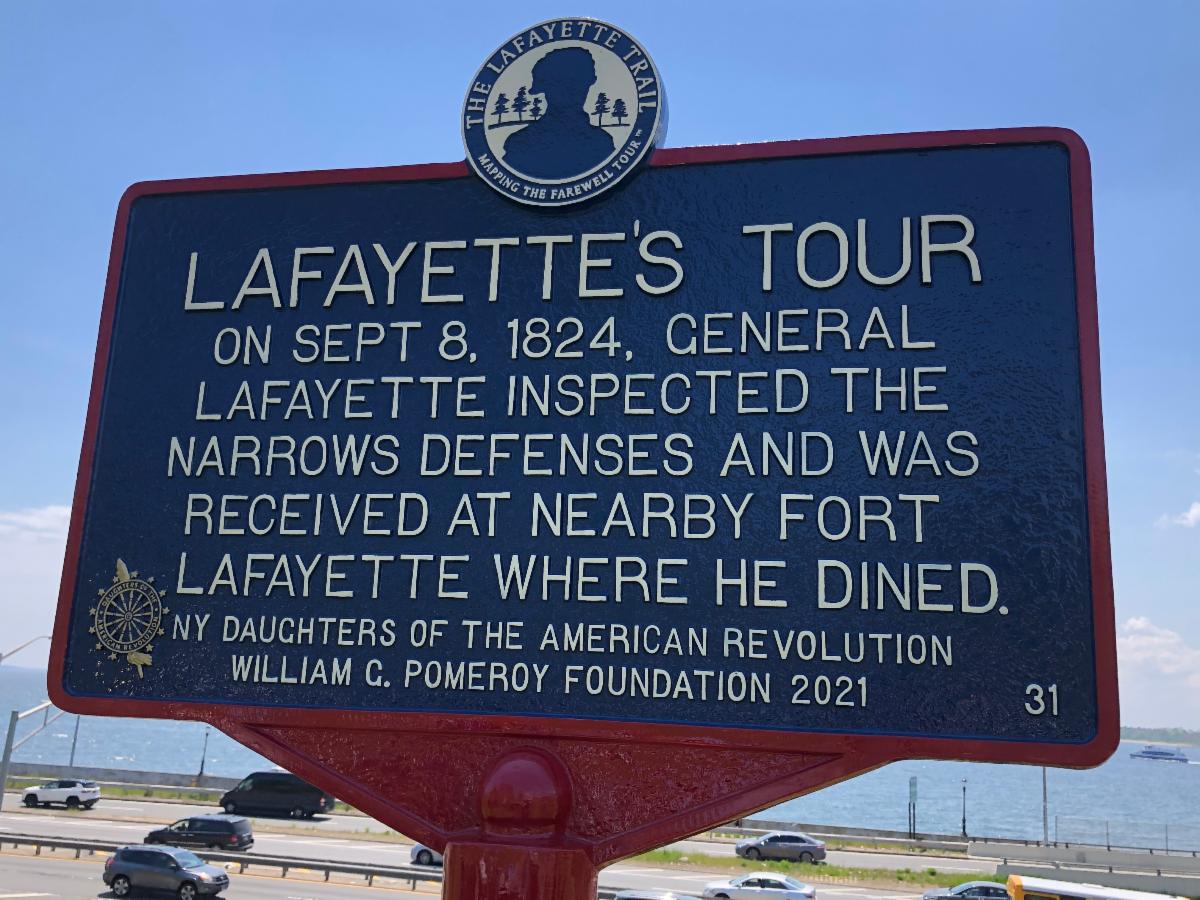
Our association is pleased to share the impressive work done by TheLafayetteTrail.org in view of the 200th anniversary of his triumphal tour of 1824 as "Guest of the Nation" throughout 24 States.
|
|
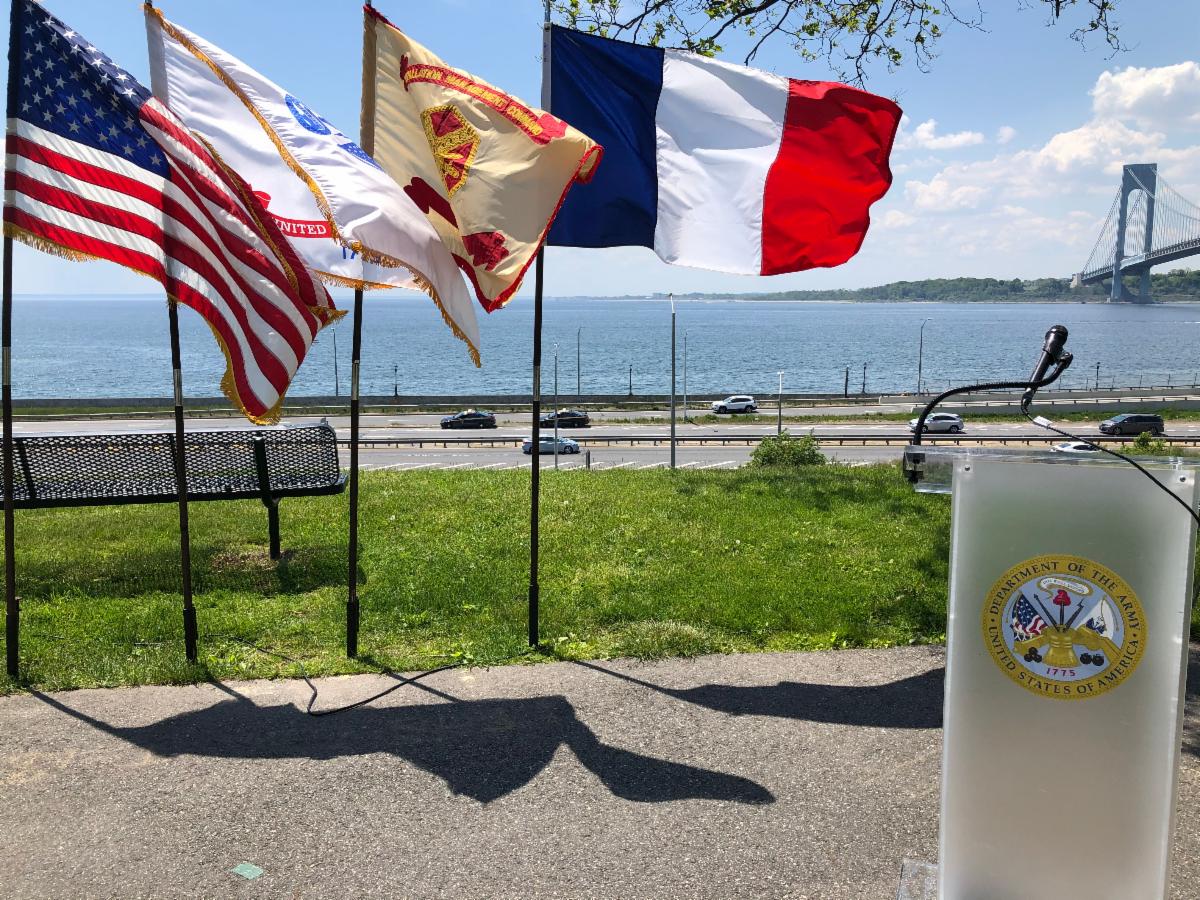
A bronze plaque was dedicated on May 17, 2021 at Fort Hamilton, NYC, to mark General Lafayette's arrival in New York harbor, by Mr. Julien Icher president TheLafayetteTrail.org. in the presence of Mr. Damien Laban, Deputy Consul General of France in New York, Alan Hoffman, president, and Chuck Schwam, VP, of The American Friends of Lafayette, Alain Dupuis, president of the Federation of French War Veterans, Thierry Chaunu, president of the American Society of Le Souvenir Français, several distinguished representatives of the NY Daughters of American Revolution, and US Army commanding officers (attendance restricted due to Covid).
A visit of the Museum was graciously hosted by Mr. Justin Batt, Director/Curator, Harbor Defence Museum, which we highly recommend to visit:
Many, many more markers inaugurations of markers in every city visited by General Lafayette in his 13-month triumphal "Farewell Tour" are planned by TheLafayetteTrail.org. The American Friends of Lafayette is also planning dozens of commemorations for the bicentennial of this historic visit, which has no equivalent, before or since, in history!
For more information and donations, contact:
|
|
PARTICIPATION IN SEVERAL CEREMONIES COMMEMORATING THE SACRIFICE OF US AND ALLIED SOLDIERS DURING MEMORIAL DAY WEEKEND
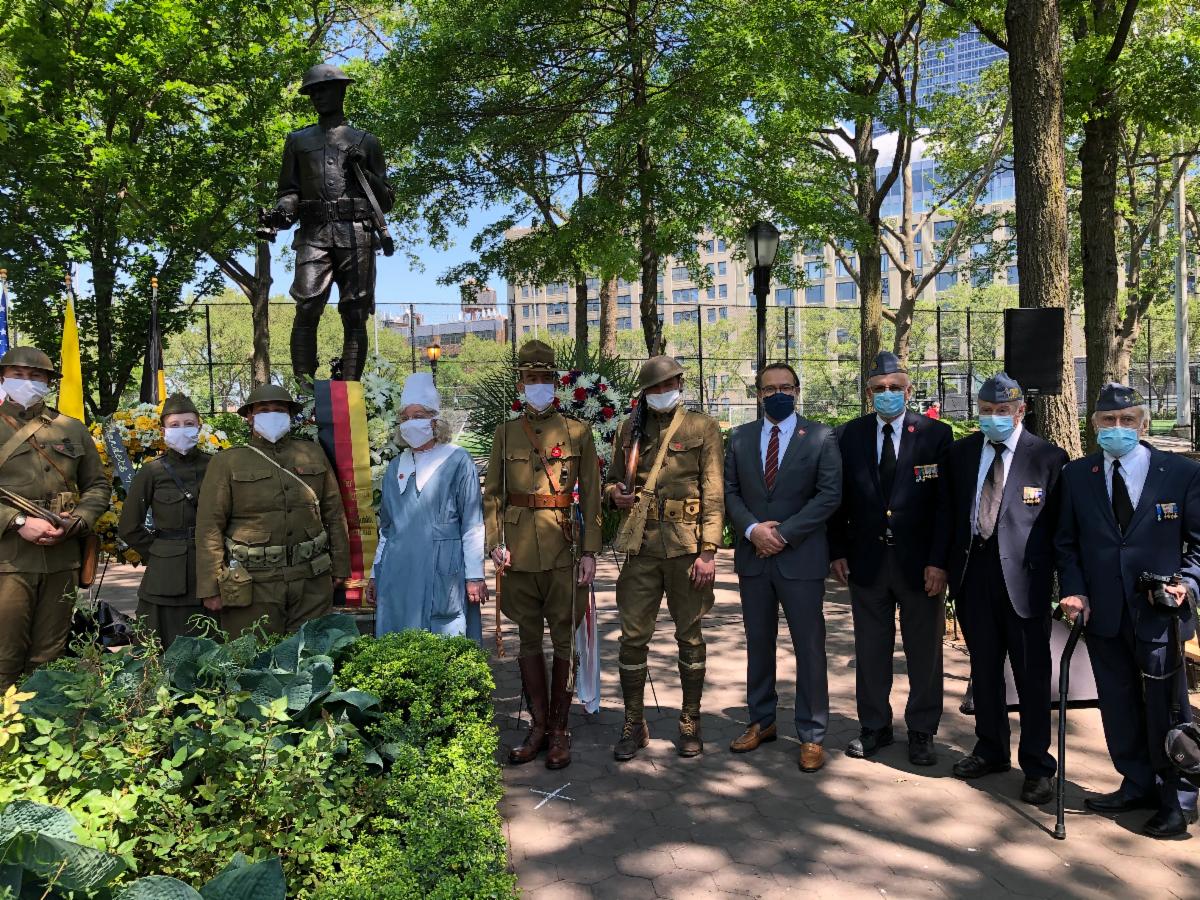
At the invitation of the Consulate of Belgium and Mr. Yves Wantens, General Representative of the Government of Flanders, the Federation of French War Veterans and the American Society of Le Souvenir Français, Inc. participated on May 18 in the moving annual commemoration held at Clinton Park, Manhattan, of the Battle of Flanders, where hundreds of thousands French, British, US and Allied soldiers died in the famous "poppy fields".
FROM 'FLANDERS FIELDS' / IF YE BREAK FAITH / WITH THOSE WHO DIED /
WE SHALL NOT SLEEP / THOUGH POPPIES GROW / ON FLANDERS FIELDS /
|
|
|
|
Commemorating the Centennial of the
Return Home of America’s World War I Fallen
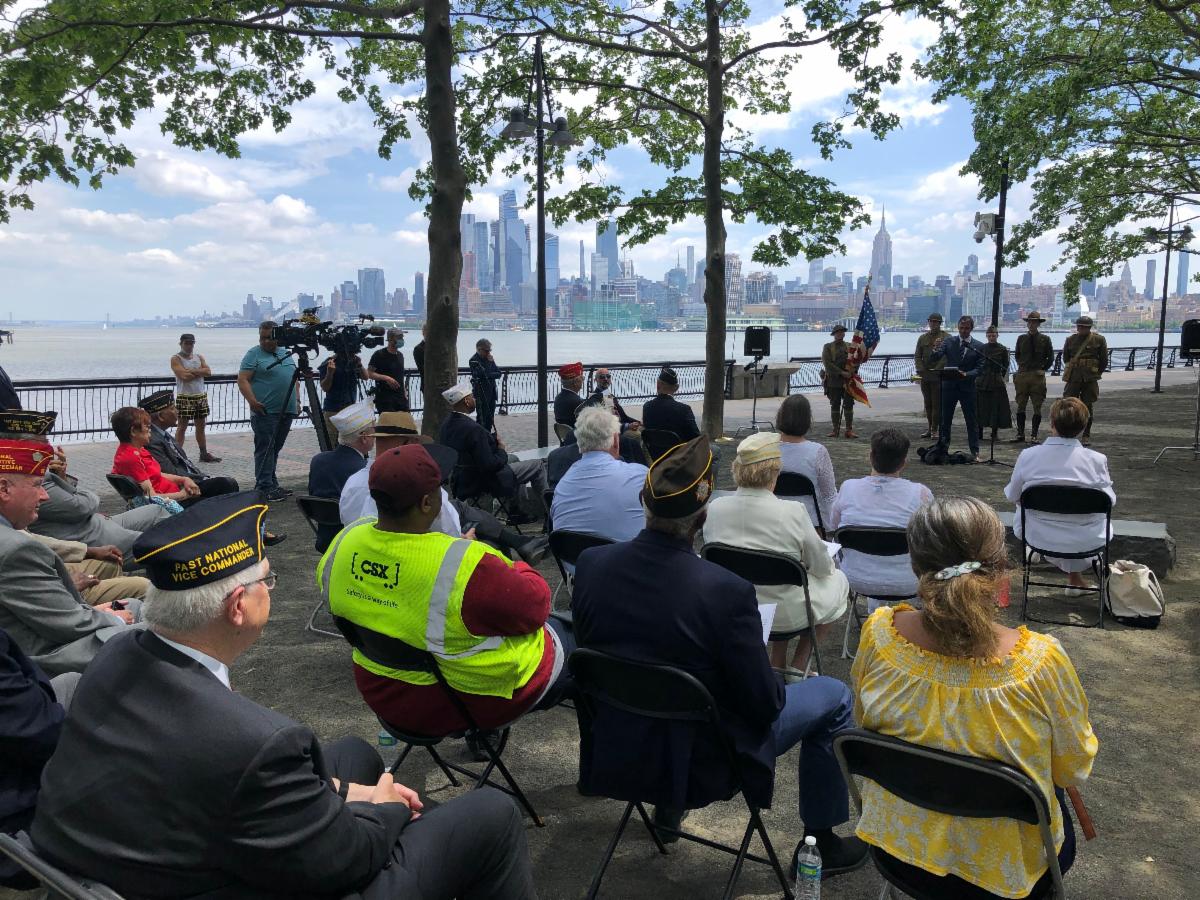
On May 23, 1921, in Hoboken, New Jersey, President Warren Harding welcomed home over 5,100 American fallen, brought back from Cherbourg, France and Antwerp, Belgium aboard the USAT Wheaton.
|
|
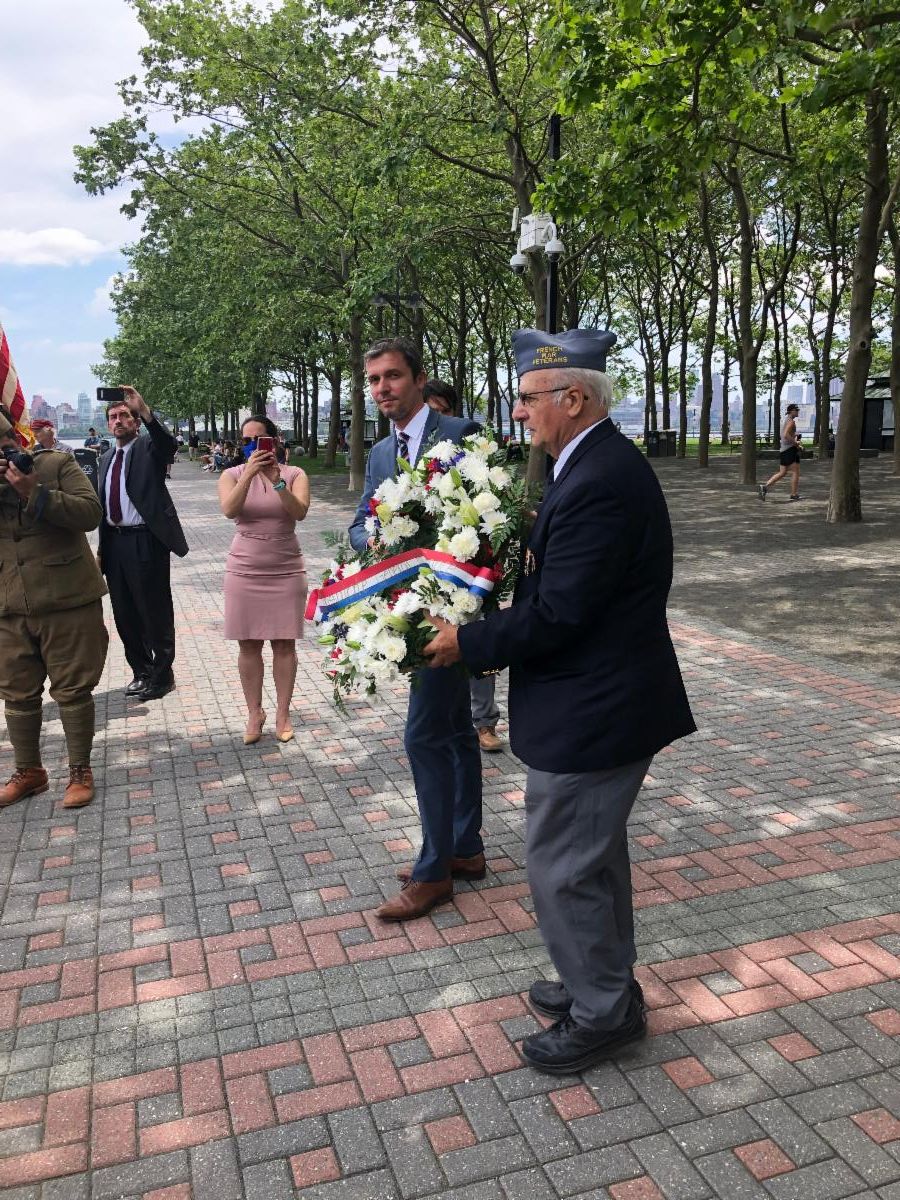
French General Consul in New York Mr. Jérémie Robert and Alain Dupuis, president of the Federation of French War Veterans about to throw a commemorative wreath in the waters of New York Harbor, where the USAT Wheaton docked in 1921. In the presence of the National Leadership, The American Legion, National Leadership, the American Gold Star Mothers, the Consul General of France, the Consulate of Belgium and the General Representative of the Government of Flanders. Our thanks to Ryan Hegg, Director of Legacy & Education, United War Veterans Council (UWVC) for his steadfast support.
This Centennial celebration was hosted by Hoboken History Museum • City of Hoboken • Hudson County, NJ
With uniformed re-enactors and music from the era, presented by the East Coast Doughboys – In Their Footsteps – United War Veterans Council
|
|
|
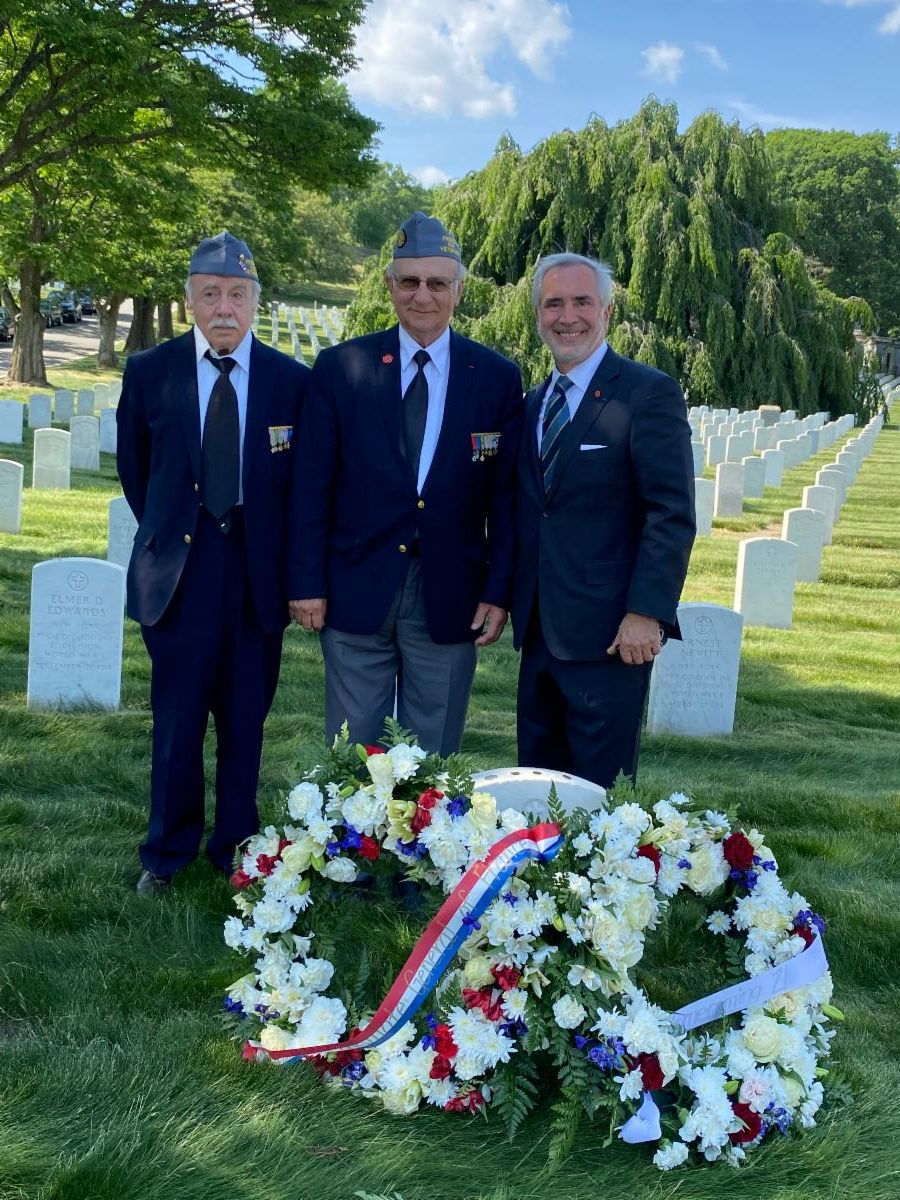
On the same day, May 23rd, we paid tribute to the 25 French WWI Sailors buried at Cypress Hills National Cemetery, along thousands of their American comrades-in-arms, in the presence of Mr. Jérémie Robert, Consul General of France in New York.
Cypress Hills is one of the oldest Federal cemetery in the Nation, founded after the Civil War. Although Cypress Hills was established to honor Civil War veterans, its grounds include the graves of soldiers who fought in the American Revolution, Spanish-American War, Korean and Vietnam wars. Cypress Hills National Cemetery was listed on the National Register of Historic Places in 1997.
The 12-foot granite French Cross monument was erected in memory of 25 French sailors who died while on duty in American waters during World War I. Of the sailors who died, 22 are buried in the cemetery and three were returned to France for burial.
|
|
MEMORIAL DAY MAY 29 AT WOODLAND CEMETERY, BRONX
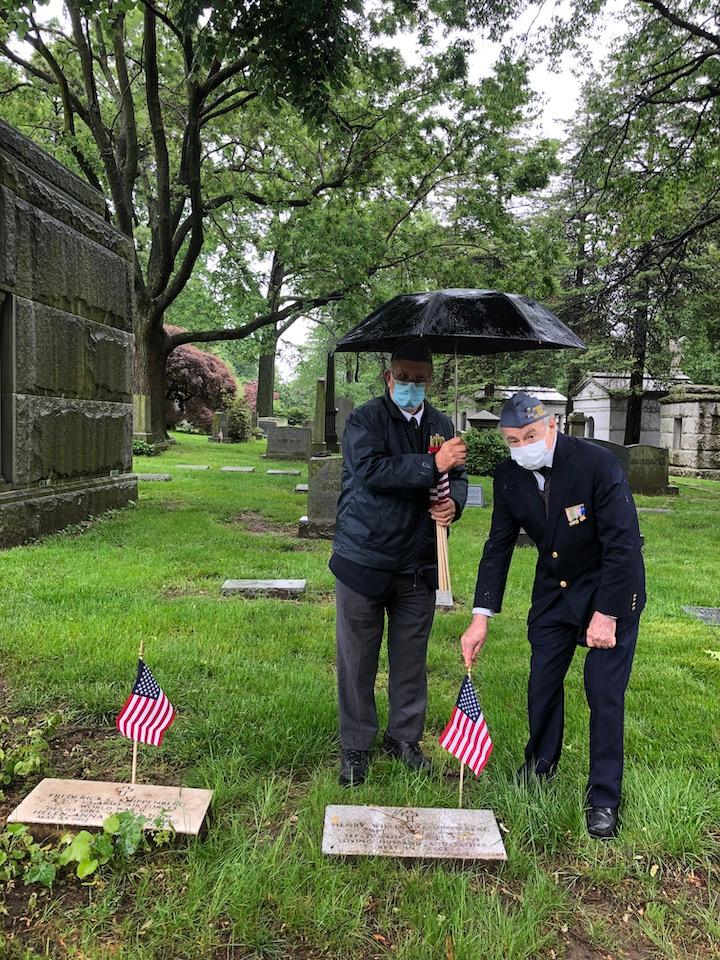
At the invitation of the New York City Department of Veterans Services, the Federation of French War Veterans, represented by Alain Dupuis and Henry Dubarry, and the American Society of Le Souvenir Français, represented by Thierry Chaunu, along with Mr. Damien Laban, Deputy General Consul of France, attended this important ceremony, along with New York City Council Member, and Chair of the Committee on Veterans, Eric Dinowitz, State Senator Jamaal T. Bailey, Council Member Kevin C. Riley, Congressman Jamaal Bowman, Rear Admiral Charles Rock and other dignitaries. The Bob Woodruff Foundation donated flags placed on the 8,500 veteran graves at Woodlawn Cemetery, thanks to many volunteers cadets.
|
|
Photo: French War Veterans Henry Dubarry and Alain Dupuis planting a US Flag under the intense rain. |
|
WREATH LAYING AT THE SEVENTH REGIMENT MEMORIAL, FIFTH AVENUE & 67TH STREET, MAY 30, 2021
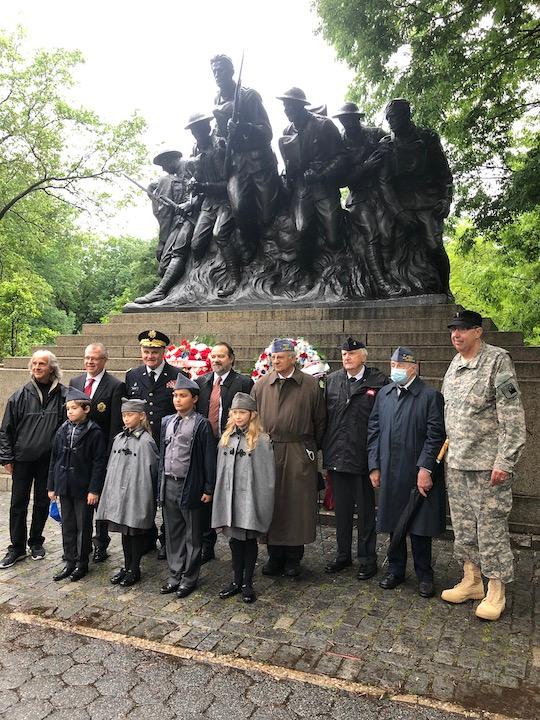
At the invitation of Brig. Gen. Thomas Principe, President of the Veterans of the Seventh Regiment, the Federation of French War Veterans, represented by Alain Dupuis, Henry Dubarry, Yves Busnel, and the American Society of Le Souvenir Français, represented by Thierry Chaunu, along with Mr. Damien Laban, Deputy General Consul of France, attended this ceremony. After laying a wreath, we proceeded to plant US Flags inside Central Park at the 307th Infantry Memorial Grove nearby.
The 7th Regiment is the first unit to be called "National Guard" in our nation, so named in honor of the Marquis de Lafayette, during his visit in New York in 1824 as a tribute to its French counterparts the "Garde Nationale". Every other US State followed suit and called their State militia "National Guard" henceforth. The 7th Regiment was beloved by our entire nation. They were the only military unit trusted to occupy Washington, D.C. during the Civil War by President Abraham Lincoln.
The very first Medal of Honor recipient, COL Bernard Irwin, was a member of the Seventh Regiment, followed by many other recipients.
This monument was erected by the Seventh Regiment in memory of those members lost in World War I and those who served what was supposed to be “the war to end all wars”.
|
|
NEWPORT, R.I.
Since our last bulletin, we have learned that H.E. Philippe Etienne, Ambassador of France to the United States, will dedicate the two grave markers for the two French Navy Officers buried in Trinity Church, Newport, RI, on Friday Sept. 10 at 2:00 PM.
Stay tuned for more details, as several patriotic and historical associations will host a number of events in Newport throughout the weekend.
|
|
HONORING THE
FRENCH UNKNOWN SOLDIERS at the French Cemetery
in Yorktown
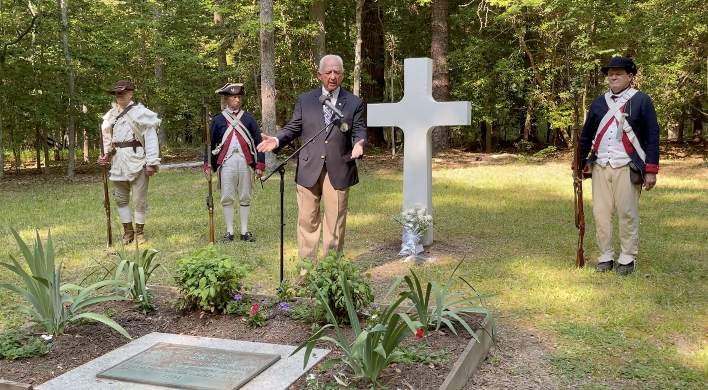
Richard Azzaro, of the Society of the Honor Guard / Tomb of the Unknown Soldier, along with an Honor Guard held a moving ceremony this past May 23rd for the 50 unknown French soldiers and sailors buried in a mass grave on the battlefield. We salute with gratitude Richard Azzaro and all the participants. We hope this will become an annual event where French and American patriots can pay their respects to those who gave their life for the cause of Freedom.
You can listen to Richard Azzaro's inspiring comments on his interview by NBC News Lester Holtz on Memorial Day: https://youtu.be/Xh2DSMH2Z10
As you know from our past bulletins, we will celebrate the Centennial of the transfer of the US Unknown Soldier from France to the United States on board the USS Olympia on October 25, 2021.
A simultaneous ceremony is also planned in Le Havre, France, to commemorate this poignant event. On that day in 1921, the population of Le Havre lined up in total silence to pay its final respect to a brave American Soldier who made the ultimate sacrifice to defend France and for the cause of Freedom. Mr. André Maginot, then Minister of Pensions, affixed a Legion of Honor on the Stars & Stripes draped coffin, before it was raised on the deck of the USS Olympia for the last crossing.
Please visit:
https://tombguard.org/ to learn more about the awe-inspiring Tomb Guards and their unique dedication to service. We salute you with utmost respect.
|
|
A NEW GRAVE MARKER FOR WWI AMERICAN HERO EUGENE BULLARD
Recognized by the US Air Force as
"The First African American fighter pilot in history"
Following our February 2021 Bulletin, which recounted the incredible story of Eugene Bullard, buried in the French War Veterans lot at Flushing cemetery, NY, Mr. Alain Dupuis, President of the Federation of French War Veterans and 2nd Vice-President of the Souvenir Français USA has procured two authentic, period-correct medals of the Legion of Honor and the "Croix de Guerre" with palm, and had them incorporated into a grave marker with new technology which allows for the medals to be inserted within the stone and covered by a special type of transparent resin, which should last for decades.
A re-dedication ceremony will be held, on or around next Armistice Day, November 11, 2021.
|
|
• To preserve the memory of the French soldiers, sailors and airmen who gave their lives for freedom, and who are buried in the United States.
• To honor French Citizens who did great deeds in the United States, or with a strong connection with the United States,
• To promote esteem for French military heritage in the United States,
• To strengthen the long-standing traditional bonds of friendship between the American and French peoples, and to this end: erect or maintain memorials and monuments and encourage historical research, public presentations and publications in the media.
Le Souvenir Français, a French association under the high patronage of the President of the Republic, was born in 1872 in occupied Alsace-Lorraine, and was founded in 1887 in Paris by Professor Xavier Niessen. The association has more than 300,000 members in France and in more than 45 countries.
In the United States, the American Society of Le Souvenir Français (Souvenir Français USA) has been represented since the First World War by a General Delegate, among whom were Dr Jules Pierre, MM. Bruno Kaiser, Colonel Roger Cestac, Christian Bickert, Mathieu Petitjean, and Jean Lachaud. The association is presided since November 2020 by CF(H) Thierry Chaunu (H) Lt Cdr., French Navy.
The American Society of Le Souvenir Français, Inc. is a 501(c)3 corporation established in 1993 in NY.
|
|
OUR PAST MONTHLY BULLETINS
May Bulletin honoring the WWII French aviators who died in the United States
April Bulletin celebrating the annual commemoration of “French Alliance Day” in Valley Forge, PA
March newsletter honoring two French Navy officers from Rochambeau’s army buried in Newport, RI.
February Bulletin honoring Eugene Bullard, America's first Black Fighter Pilot:
|
|
Help us implement several historic commemorative projects celebrating the 243-year-old Franco-American friendship and alliance!
Contact: Thierry Chaunu, Président
132 East 43rd Street #341 The Chrysler Building New York, NY 10017
|
|
|
|
|
|
|