|
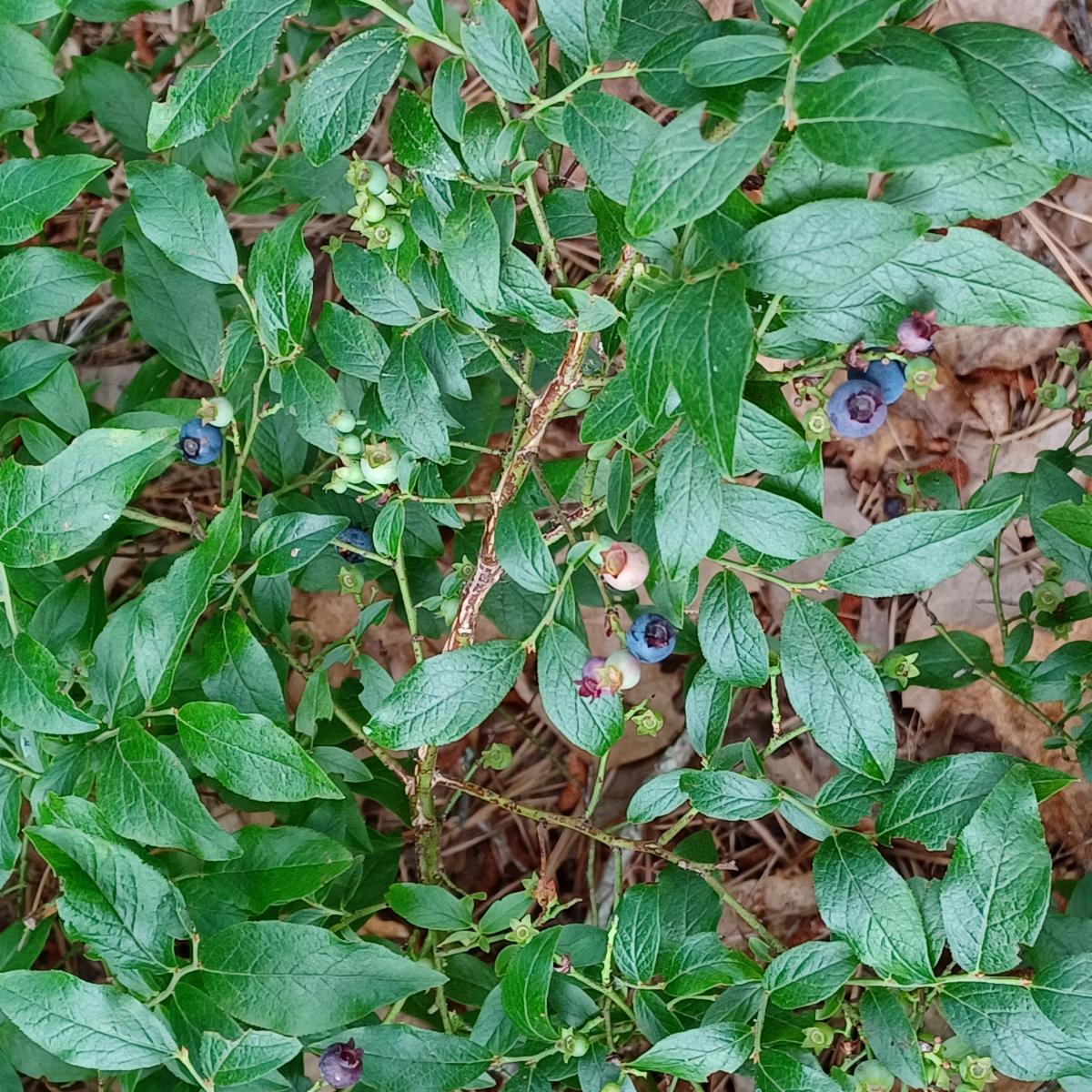
Lowbush blueberry is a hardworking little shrub—just six inches to two feet high—that delights a host of creatures, including humans.
It prefers chilly climates. Its US range includes all of New England and extends west as far as Minnesota. South of the Mason-Dixon line, however, it is generally only found in the wild in Maryland and in the mountains of Virginia and West Virginia.
Within this range, lowbush blueberry thrives on sandy or rocky balds and in open woodlands dominated by pines or other conifers. In Orleans, it luxuriates in areas with dappled sunshine and pine needle beds, where it can form large colonies.
These colonies provide a lush ground cover of glossy foliage in spring and summer that turns vibrant shades of red and maroon in the fall. The pink-tinged white blossoms in spring and the berries in summer provide further visual interest.
Lowbush blueberry provides important sustenance to native bumblebees, who feed on the nectar in its blossoms, and to the caterpillars of several moth and butterfly species, who nibble its leaves. The Native Plant Trust classifies the shrub as a “pollinator powerhouse plant.”
We humans must stoop to pick the small sweet berries. If we tire of this labor, however, the birds will be happy to eat the berries we leave behind, as will chipmunks, squirrels, foxes and raccoons.
Every month, Meg Voorhies profiles a different native plant for the Mayflower Point Association in Orleans, where she lives. Thank you, Meg, and Orleans Pond Coalition, for sharing this month's native plant.
|