6 More Weeks of Winter?
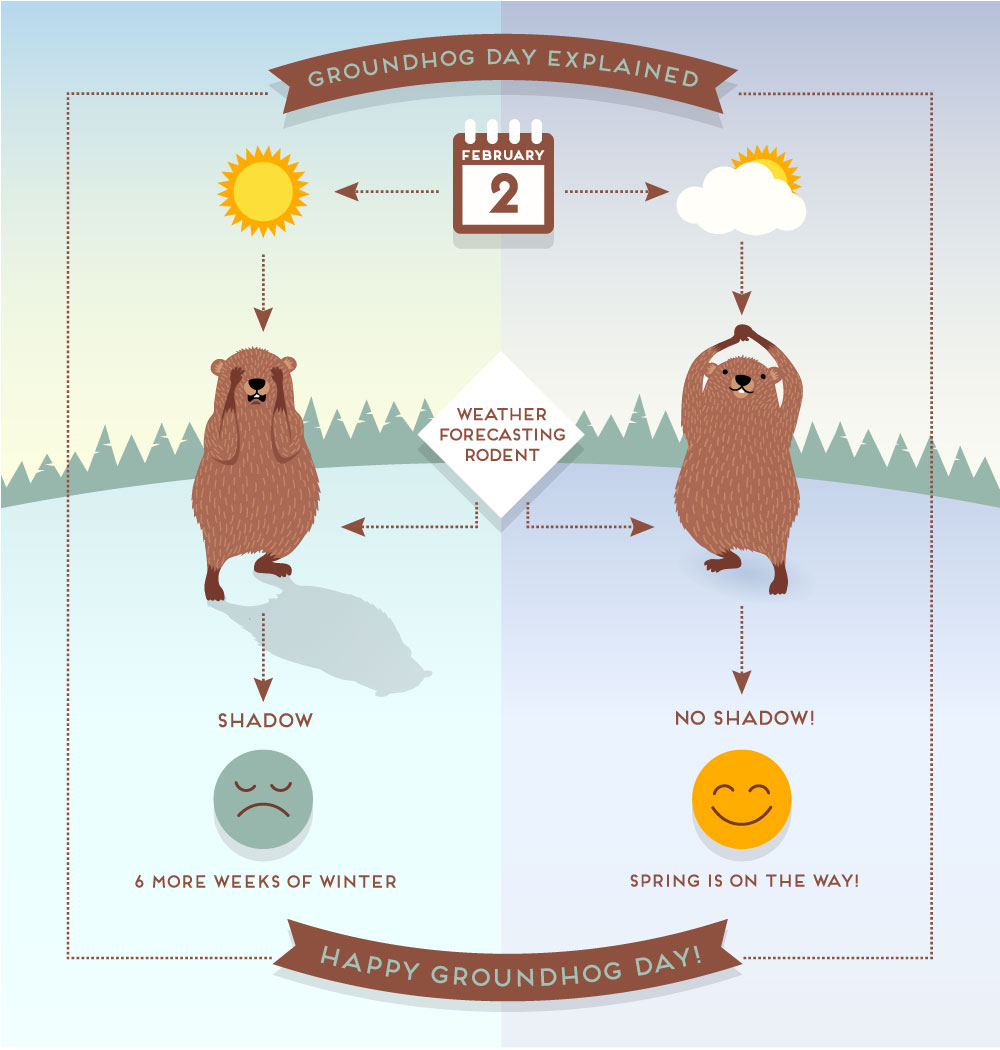
On February 2, 1887, Groundhog Day, featuring a rodent meteorologist, is celebrated for the first time at Gobbler’s Knob in Punxsutawney, Pennsylvania. According to tradition, if a groundhog comes out of its hole on this day and sees its shadow, it gets scared and runs back into its burrow, predicting six more weeks of winter weather; no shadow means an early spring.
Groundhog Day has its roots in the ancient Christian tradition of Candlemas, when clergy would bless and distribute candles needed for winter. The candles represented how long and cold the winter would be. Germans expanded on this concept by selecting an animal–the hedgehog–as a means of predicting weather. Once they came to America, German settlers in Pennsylvania continued the tradition, although they switched from hedgehogs to groundhogs, which were plentiful in the Keystone State.
While sunny winter days are indeed associated with colder, drier air, we probably shouldn’t trade in our meteorologists for groundhogs just yet. Studies by the National Climatic Data Center and the Canadian weather service have yielded a dismal success rate of around 40 percent for Punxsutawney Phil.
Staten Island Chuck, on the other hand, is reportedly accurate almost 70 percent of the time.
Read more Fun Facts about Groundhog Day
here.