|
BLA Escalates Insurgency with Mass Hostage Execution and Military Convoy Bombing
In a stunning escalation of its insurgency, the Baloch Liberation Army (BLA) has carried out two of its most significant and coordinated attacks to date within the span of a week, demonstrating an unprecedented level of operational sophistication and boldness.
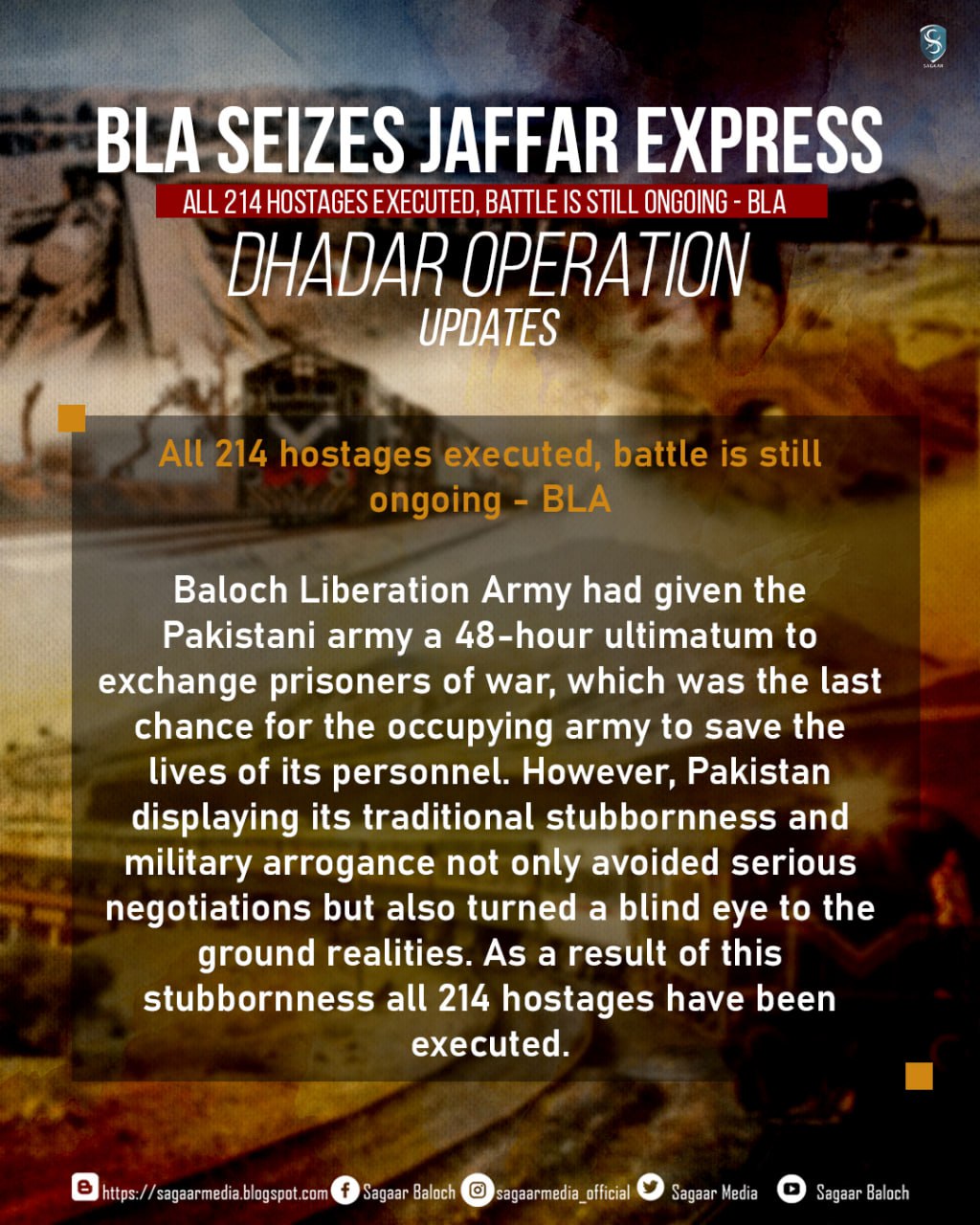
The first significant attack unfolded on 11 March 2025, when BLA militants hijacked the Jaffar Express near Sibi, Balochistan, carrying over 400 passengers. The group, operating under the banner of Operation Dar-e-Bolan, demanded the release of Baloch political prisoners within 48 hours, threatening to execute the hostages if their demands were not met. Over the next three days, negotiations failed. On 14 March, BLA militants executed 214 of the hostages—the largest single execution carried out by any Baloch separatist group in history. While 212 civilians, including women, children, and elderly individuals, were released, the BLA claimed that those executed were all Pakistani security or state-affiliated personnel.
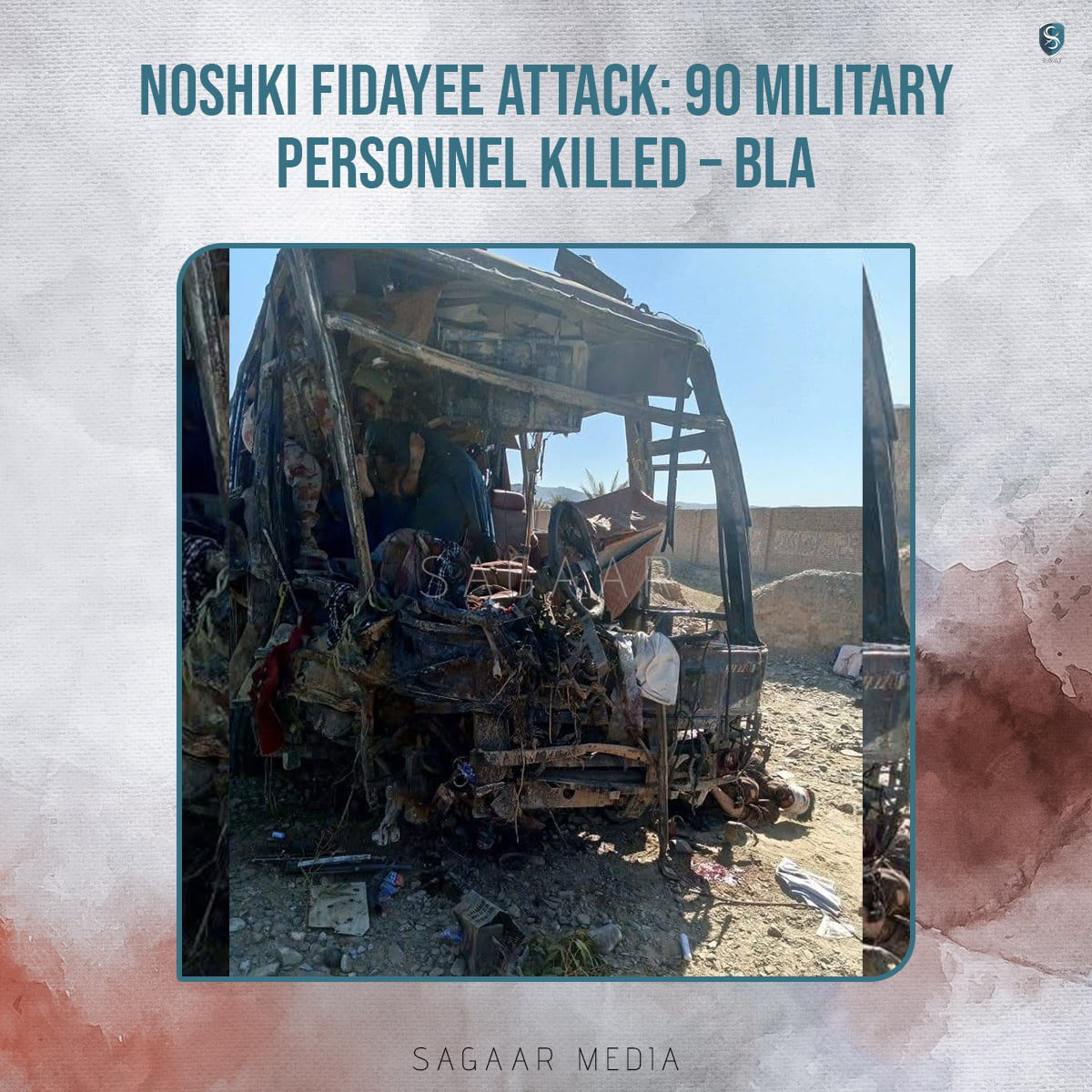
Just two days later, on 16 March 2025, BLA launched yet another high-profile assault, attacking a Pakistani military convoy near Rakshan Mill on the RCD Highway in Nushki, Balochistan. The attack, orchestrated by the Majeed Brigade and Special Unit Fateh Squad, involved a suicide Vehicle-Borne Improvised Explosive Device (VBIED) strike that targeted a convoy of eight military buses, killing 90 Pakistani army personnel. The attack was also claimed under Operation Dar-e-Bolan, further signalling a long-term, coordinated insurgency campaign.
Significance of the Attacks: A New Phase in the Baloch Insurgency
These back-to-back high-casualty operations mark a turning point for the BLA, signifying a departure from sporadic guerrilla warfare towards a more organised, large-scale, and lethal campaign. The mass execution of hostages not only highlights the group's strategic resolve but also its growing intelligence and logistical capabilities. At the same time, the convoy attack showcases its ability to launch precision suicide missions against heavily guarded targets.
The symbolism of Nushki as the chosen battleground is significant. The region is a strategic military transit hub, linking Quetta to Iran and broader trade routes. By targeting the RCD Highway, the BLA sought to cripple military logistics and inflict a psychological blow on Pakistani forces. Furthermore, the attack mirrors tactics seen in global insurgencies, particularly the use of suicide VBIEDs, a hallmark of the Majeed Brigade.
The Majeed Brigade and Special Unit Fateh Squad represent the BLA’s most elite and fanatical wings, specialising in suicide attacks, high-profile hostage-taking, and precision strikes. This is not the first time these units have executed major assaults—past operations include the 2018 Karachi Chinese consulate attack and the 2021 suicide bombing at Quetta’s Serena Hotel—but these latest attacks eclipse anything previously seen in scale and impact.
What’s Next? The Growing Threat of Baloch Militancy
With Operation Dar-e-Bolan still in motion, BLA has openly warned that more large-scale attacks are imminent. The group’s growing confidence, resources, and intelligence indicate that Baloch militancy has entered a new phase—one that could destabilise not just Balochistan but the broader security landscape of Pakistan.
These attacks also align with the recent Baloch Raji Aajoi Sangar (BRAS) meeting, where Baloch militant factions, alongside the Sindhudesh Revolutionary Army (SRA), vowed to escalate their campaign against the Pakistani state. If Islamabad fails to curb this wave of intensifying violence, BLA’s momentum could embolden other separatist groups, triggering an unprecedented insurgency crisis.
With Pakistan reeling from these devastating strikes, the real question remains: what’s coming next?
| | | TRAC Incident Report: Iraq and United States (US) Led International Coalition Claimed to Have Killed Islamic State (IS) Commander Abu Khadija, Anbar Governorate, Iraq | | |
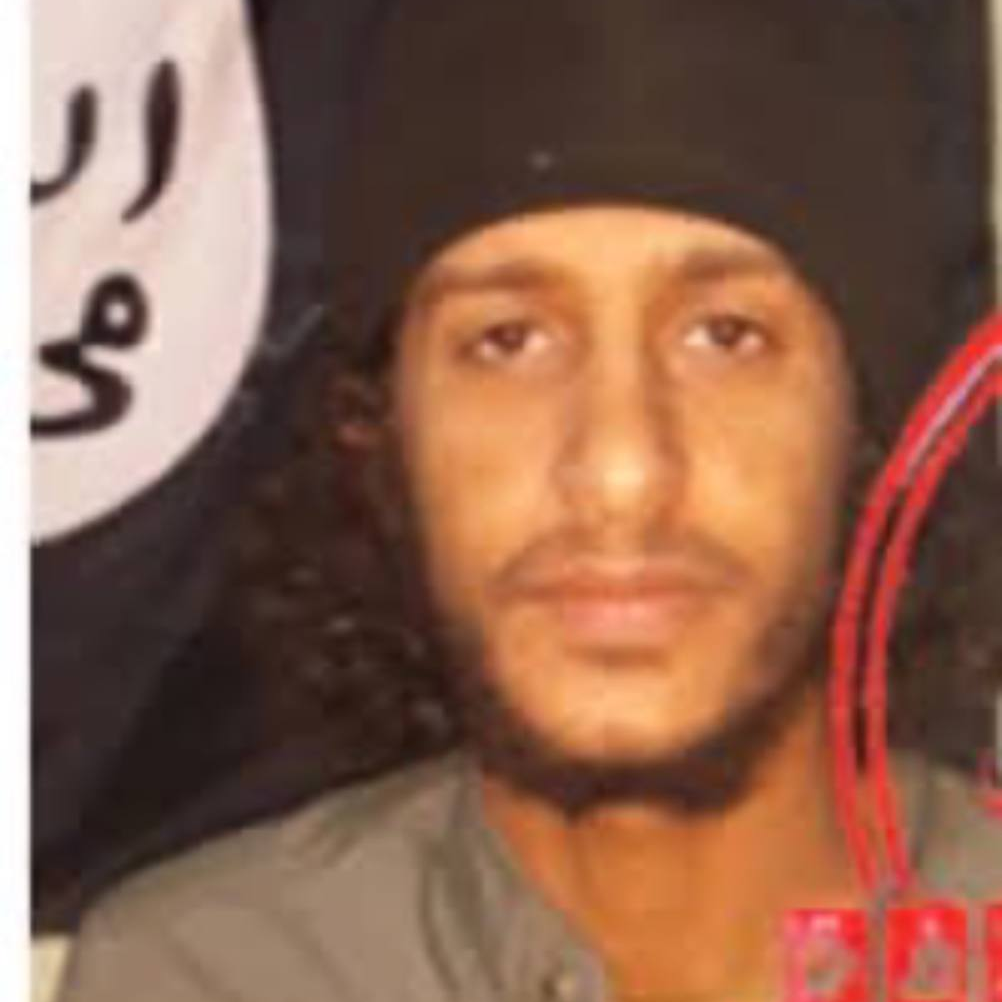
On 14 March 2025, Iraqi Prime Minister Mohammed Shia al-Sudani announced that a joint operation by the Iraqi National Intelligence Service and the International Coalition successfully eliminated IS deputy caliph Abu Khadija (Abdallah Makki Muslih al-Rufay’i) in an airstrike in Anbar. Abu Khadija, a long-time IS figure, previously served as Diyala Governor and later as deputy governor of Iraq before ascending to IS’ top leadership in 2021.
Anbar’s Strategic Importance for IS
The location of Abu Khadija’s death is significant. Anbar Governorate has long been a strategic stronghold for IS, providing a critical logistical hub for the movement of fighters, weapons, and resources between Iraq and Syria. Despite the reported decline of IS activity within Iraq, this does not necessarily indicate a weakening of the group. Instead, IS has repeatedly shown its ability to go underground, maintaining operational security and leveraging the porous Iraq-Syria border to reorganise and replenish its forces. Intelligence reports from Iraqi and Iranian officials continue to warn of thousands of IS fighters in Deir Ezzor, Syria, further confirming that the group remains active and far from defeated.
Abu Khadija’s Role in IS Leadership
Abu Khadija was not a minor figure within IS. His name had circulated among top leadership circles since at least 2020, and he was one of 11 individuals identified as potential successors in the event of IS leadership decapitation. He was mentioned alongside high-profile IS figures, such as Abu Muslim (Anbar governor), Abu Salih (a close associate of Baghdadi), and IS military strategist Abu Yassir al-Issawi. TRAC had previously tracked Abu Khadija as the leader of IS’ Diyala sector, confirming his status as a high-ranking operative.
Doubts Over the Impact of His Death
Despite his known leadership roles, there are questions regarding the extent of Abu Khadija’s actual influence. While he held senior positions, labelling him “deputy caliph” may be an exaggeration, as IS typically maintains a tight veil of secrecy over its leadership structure. The organisation has also demonstrated a remarkable ability to replace fallen leaders without significantly disrupting its operations. Additionally, previous reports of Abu Khadija’s death have proven inaccurate, raising doubts about the finality of this latest claim.
Potential Role in IS’ External Operations
New intelligence suggests that Abu Khadija was not only a senior figure in IS’ Iraq leadership but also responsible for overseeing the group’s external operations in Europe and Africa. This revelation contradicts previous Iraqi government claims that IS had been neutralised within the country and instead suggests that Iraqi IS militants remain capable of orchestrating global attacks.
This aligns with TRAC’s earlier warnings (June 2024) regarding the rising number of Iraqi-origin IS militants surfacing in Europe. In that month alone, two suspected IS operatives with ties to the group’s caliphate in Iraq were arrested in the EU, indicating that IS’ External Operations division (Emni) may have been shifting its focus back to Iraq-based cells for Western attacks. If Abu Khadija led this external branch, it raises a key question: Was he also involved in managing IS Khurasan’s (ISK) European operations? If so, this suggests a significant restructuring within IS’ external operations, with Iraq potentially reclaiming its role as the central hub for global IS attacks.
Iraqi Government’s Dilemma
The Iraqi government now faces an awkward predicament. If officials acknowledge Abu Khadija’s role as the head of IS’ global operations, it contradicts their previous assertions that IS had been eliminated as a serious threat inside Iraq. On the other hand, if they downplay his role, it could weaken their credibility regarding the effectiveness of counterterrorism efforts. Either way, this situation exposes the fragile state of Iraq’s security environment and indicates that IS remains a formidable force despite claims of its decline.
Strategic Implications and Future Threats
The broader implications of this strike cannot be overlooked. Abu Khadija’s elimination coincides with IS’ ongoing efforts to shift fighters and resources from eastern Syria back into its strongholds in western Iraq. The fall of the Assad government has further enabled IS to clandestinely reinforce its presence in Anbar, suggesting that these movements are part of a long-term strategy rather than isolated incidents.
Moreover, IS has historically used periods of silence to regroup and plan its next major offensive. For example, during Ramadan 2023, IS launched a major campaign in Anbar targeting Iraqi forces and government officials, even temporarily controlling the M1 highway before abruptly disappearing for four months. Many assumed IS had suffered a setback, but the group was using the time to rearm and prepare for future attacks. A similar pattern could be playing out now, reinforcing the concern that this is not the end of IS in Iraq but rather a prelude to a renewed insurgency.
| | TRAC Incident Report: Suspected Militants Detonate an Improvised Explosive Device (IED), Targeting a Section of the Niger-Benin Oil Pipeline in the Dan-Kassari Area, Dosso, Niger | | |
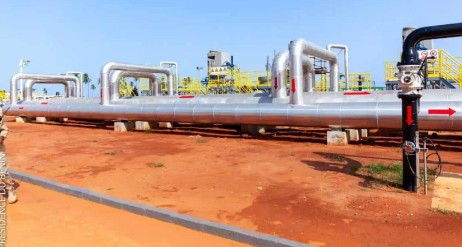
On the night between March 11 and 12, 2025, unknown assailants carried out an Improvised Explosive Device (IED) attack on the Niger-Benin oil pipeline in Dan-Kassari, Dosso Region, Niger. The sabotage caused structural damage to a section of the pipeline, marking a major disruption to Niger’s oil infrastructure. This is the tenth attack since January 2024, when the China National Petroleum Corporation (CNPC) began operating the pipeline. Given the history of targeted attacks on this infrastructure, multiple actors could be responsible, with jihadist and insurgent groups operating in Dosso being primary suspects.
Both Jama’at Nusrat al-Islam wa al-Muslimin (JNIM) and Islamic State in the Greater Sahara (ISGS) operate in the Dosso Region, making them key suspects. However, their primary areas of activity differ. JNIM, an Al-Qaeda affiliate, is active near Gaya, a town close to the Niger-Benin border, where they have previously carried out ambushes and raids. Islamic State Greater Sahara (ISGS) operates mainly in western Niger, particularly in areas between the Niger River and the Burkinabe-Nigerien border, where they seek to control natural resources such as gold. Despite the presence of these jihadist groups, TRAC does not rule out the involvement of the Patriotic Liberation Front (FPL) in this latest attack. The FPL previously claimed responsibility for an attack on the same pipeline in June 2024.
The Patriotic Liberation Front (FPL), known in French as Front Patriotique de Libération, was founded in August 2023 by Mahmoud Sallah with the stated objective of restoring democracy in Niger following the military coup and subsequent installation of a junta-led government. Initially inactive for several months, the group emerged as an armed faction in northern Niger by May 2024, focusing on the Niger-Libya-Chad border region.
Mahmoud Sallah, a well-known militant figure in Niger, previously led the Union des Forces Patriotiques pour la Refondation (UFPR). This military-political group opposed corruption and Chinese resource exploitation. Following the August 2023 coup, Sallah was expelled from the UFPR, prompting him to form the FPL, which has since integrated various political and militant factions. The FPL’s growing influence within anti-junta resistance networks and its past sabotage of the Niger-Benin pipeline strongly indicate that it remains a key suspect in the March 12 attack. Furthermore, the group’s alliances with militant entities such as the Council of Resistance for the Republic (CRR) and the Movement for Justice and the Rehabilitation of Niger (MJRN) suggest a broader insurgent network capable of targeting strategic infrastructure.
The Niger-Benin pipeline represents a critical economic lifeline for Niger’s oil exports, making it a high-value target for both jihadist and anti-junta insurgent groups. The repeated targeting of the pipeline since January 2024 suggests an escalating campaign aimed at:
- Disrupting Niger’s economic stability, mainly its oil revenue.
- Challenging the military government's legitimacy, prioritising securing vital infrastructure.
- Demonstrating operational strength to garner local support or pressure international stakeholders.
Given the pattern of previous attacks, TRAC anticipates further pipeline sabotage and increased activity from both jihadist and non-jihadist armed factions in the coming months. The attack underscores Niger’s fragile security landscape, where multiple actors—from jihadist insurgencies to political resistance movements—compete for influence and control over the country’s resources.
| | TRAC Incident Report: Clashes Between Islamic State East Asia (ISEA) Militants and Security Forces Results in the Killing of Four Jihadists of the Maute Group, Barira, Maguindanao del Norte, Philippines | | |
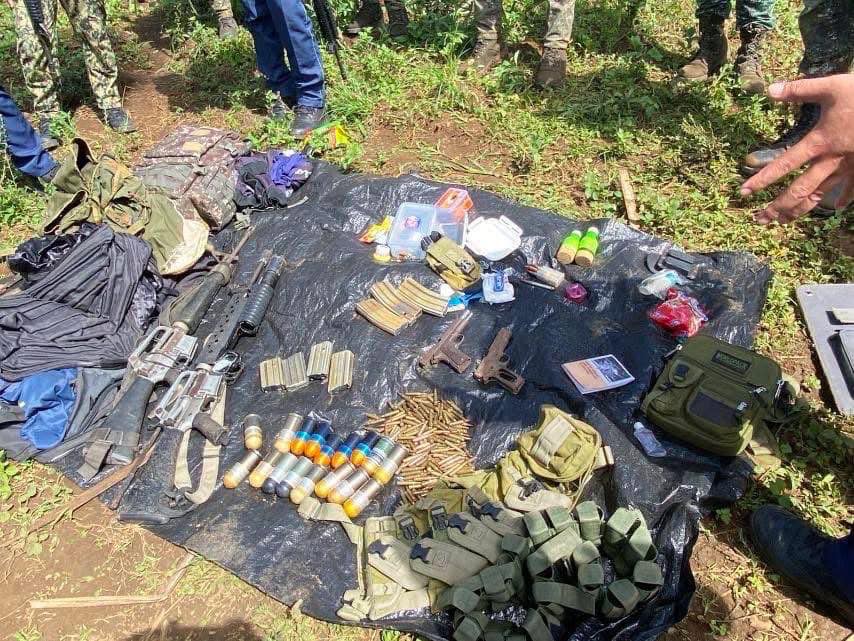
On 17 March 2025, militants of the Maute group, aligned with the Islamic State East Asia (ISEA), engaged in a firefight with Philippine Marines in Sitio Palao, Barangay Barira, Maguindanao del Norte. The confrontation resulted in the deaths of four Maute militants and the wounding of at least three others. Security forces, responding to reports from residents, had been dispatched to the area following intelligence suggesting that Maute militants were planning attacks on police and military outposts along a key highway in the municipality.
During the retreat of the Maute jihadists, security forces seized a significant cache of weapons and explosives, including two improvised .45 calibre pistols, two rifles, ammunition, one component of an Improvised Explosive Device (IED), and more than a dozen 40-millimeter grenades.
The presence of IED components and heavy munitions suggests that the militants were not only preparing for direct combat but were also likely planning terrorist attacks or bombings against security forces and civilian targets in the region.
The clashes occurred near Highway 1, which runs southward toward Parang Municipality. This highway is vital for security forces and commercial transport in Maguindanao del Norte. In November 2024, 22 ISEA militants from both the Maute and Bangsamoro Islamic Freedom Fighters (BIFF) factions surrendered in Parang, signalling a temporary weakening of jihadist influence in the area. However, the latest clash in Barira suggests that Maute militants remain active north of Parang, particularly in rural strongholds where they can regroup and launch attacks.
Both the Maute and BIFF factions have a history of bombing businesses and passenger buses, using such attacks as leverage to extort money from business owners. Their operations are not solely ideological but also financially motivated, with extortion as a key funding mechanism. The group’s continued presence in Barira raises concerns that it may be attempting to reassert its control following the November 2024 mass defection.
One notable discovery from the 17 March skirmish was an Islamic State (IS) flag among the seized weapons and explosives. The presence of IS insignia indicates that this Maute cell was militarily active and engaged in propaganda efforts, likely aimed at recruiting new fighters. Given the recent defections of ISEA members in November, this faction was probably attempting to rebuild its ranks and maintain its connection to IS’ global network.
The 17 March encounter underscores the continued resilience of ISEA-aligned groups in the Philippines, particularly in Maguindanao del Norte. Despite recent militant surrenders, the presence of heavily armed Maute fighters north of Parang suggests that the threat has not been neutralised. The recovery of IED components and IS propaganda materials further indicates that the group remains committed to both kinetic attacks and ideological warfare, making further clashes with security forces highly likely shortly.
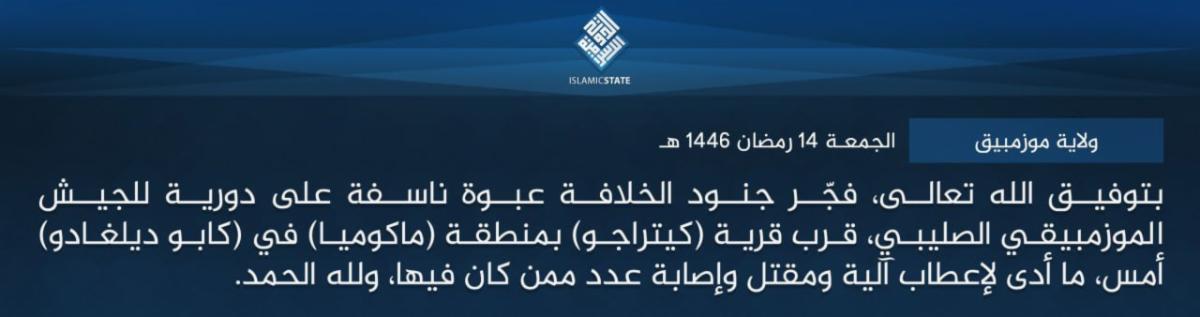
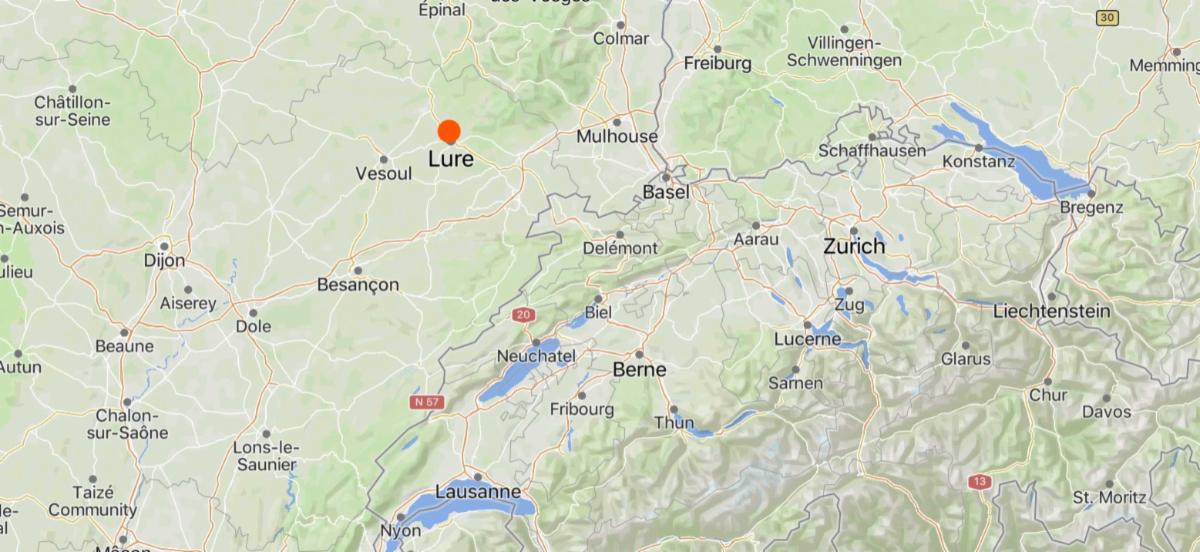
| | TRAC Incident Report: Islamic State Mozambique (IS-M/Shabaab Cult/Wilayat Muzinbik) Militants Detonated an IED on Mozambican Army Forces in Kitrago, Macomia District, Cabo Delgado Province, Mozambique | | TRAC Incident Report: Gunshots Fired at Tesla Dealership Amid Nationwide Protests Against Musk’s Role in Trump Administration, Tigard, Oregon, United States | | TRAC Incident Report: Islamic State (IS)-Linked 17-Year-Old Teenager Arrested for Plotting a Mass Knife Attack During Ramadan Outside His High School, Lure, Haute-Saône, Bourgogne-Franche-Comté Region, France | | | | |