Connecting

Nov. 24, 2026


Click here for the sound of the Teletype

Top AP News

Top AP Photos

AP Merchandise

AP Emergency Relief Fund

AP Newsletters

AP Donations

AP News Tips

Colleagues,


Good Tuesday morning on this Nov. 24, 2026,


Today’s Connecting features beloved AP colleague Polly Anderson.


Known and respected - both in New York, where she worked on the General Desk for 25 years, and throughout the AP system, Polly died Sunday after battling Alzheimer’s Disease. She was 75.


We lead with a personal remembrance written for Connecting by her longtime friend and fellow GEN Desk editor Stephanie Nano.


The AP moved a fine story by Jeffrey Collins that appeared on the AP wires late Monday. We follow it with memories of Polly submitted by her Connecting colleagues.


Colleague Jacqui Cook wrote:


"This news hits hard. When I was a young pup on the GEN Desk, Polly was the North Star. She and Marty Steinberg taught so many of us what it means to work together under tremendous pressure while never wavering in the commitment to getting it right, even before getting it first. Polly will be missed by those who knew and loved her, and journalism itself is worse for not having desks full of Pollys demanding accountability and accuracy. Rest in peace, Polly."


If you have a memory to share, please send it along. If you would like to drop a note to her family, let me know and I will share an address.


Meantime, more sad news arrived with news of the death of longtime International Desk editor Ellen Nimmons. An obituary is being prepared and will be in tomorrow's Connecting. If you have a favorite memory to share of Ellen, please send it along.


Finally, a breath of good news - a Happy Birthday to the newest member of the 80s Club, my wife Linda, who has been my best friend and my companion through our life's journey of six decades.


Here’s to a great day – be safe, stay healthy, live it to your fullest.


Paul


Polly Anderson – ‘Queen of obits’ and a journalist dedicated to her craft

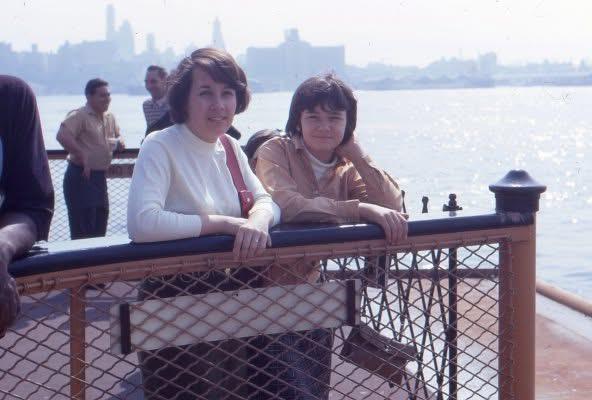
TOP PHOTO - Polly (left) with her sister Sara Hassan in the '70s with New York in background.

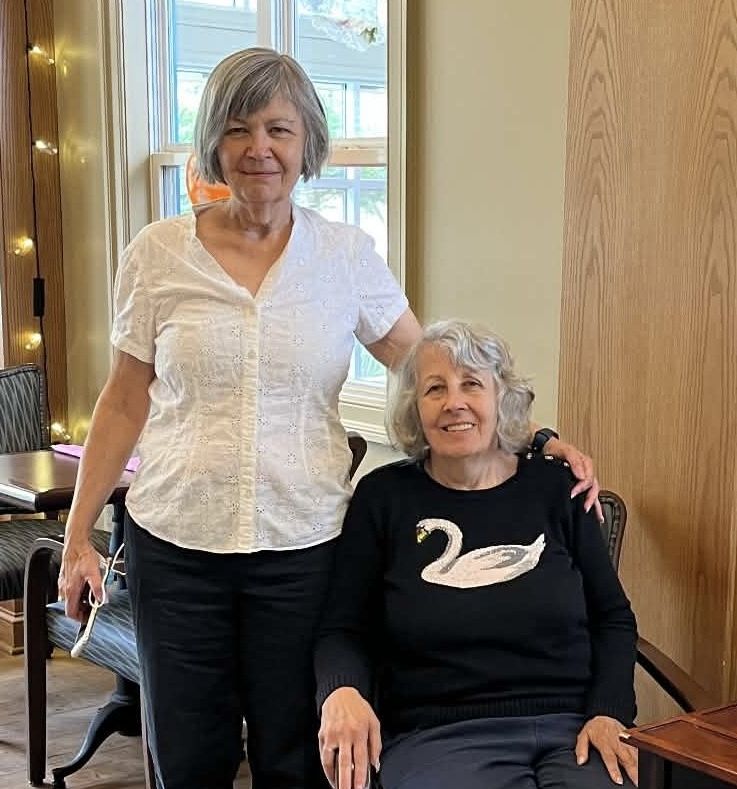
BOTTOM PHOTO - Polly (seated) and Sara in 2022.


Stephanie Nano - If anyone deserves a decent send-off, it's Polly Anderson.


Polly was a longtime editor on the General Desk in New York. But for a decade or more, she juggled her daily duties with another important task: prepared obits. Known affectionately as the "Queen of obits," Polly researched, wrote and shepherded advance obits for the wire. She made meticulous lists of newsmakers and celebrities and cajoled - or begged - others to help her tackle the list. (A few of her bylined obits are still awaiting use.)


"She was utterly devoted to maintaining AP's file of advance obits and making sure silent film stars and other celebrities who had their heyday decades ago and were in danger of being overlooked received their due in death," said her former colleague Pete Brown.


Polly, 75, died Sunday of Alzheimer's disease in suburban Richmond, Virginia, where she had moved in recent years to be close to family.


During her nearly 25 years at 50 Rock, her "day job" was primarily as the late PMs editor, handling breaking news on her early morning shifts for afternoon newspapers. During those hours, she dealt with some of the biggest stories, her colleague Marty Steinberg recalled, including the Sept. 11, 2001, World Trade Center terrorist attack.


"Despite the overwhelming tragedy unfolding in front of our eyes, she hunkered down to provide moment-by-moment updates," he said.


Other former colleagues also noted her devotion to her craft. Her role put her in contact with reporters all over the U.S.


"Polly was scrupulous about accuracy, interrogating reporters about the smallest detail, and it seemed to cause her physical pain if a story fell short in some way," wrote Brown. "She was sweet and kind in a brusque and cynical business."


The intensity of any given day could be measured in the number of empty Diet Coke cans piled up at her keyboard.


"She was a dedicated journalist who brought news to millions of readers," Steinberg said.


Born in Chicago, Polly grew up in the village of Itasca, Illinois, and studied journalism at the University of Illinois Urbana-Champaign. She started her journalism career at the News-Gazette in Champaign and joined the AP in 1985.


On the personal side, Polly loved silent films and stamps and especially cats. She once rescued a kitten - or maybe kittens - on her way to work and tucked it away in a box under a desk for the day. During retirement, she fostered kittens. If you received a card from Polly, it was likely mailed with an array of stamps from her collection. She was a silent film buff - Buster Keaton was her favorite from that era.


Polly is survived by sisters Sara Hassan (Alex) and Karen Anderson; nieces Rachel Hassan and Amy Redmond and nephews Andy Hassan and Jonah Nuttgens. The family suggests donations to the Humane Society.


Polly Anderson, longtime AP editor who steered many of the biggest US stories, dies

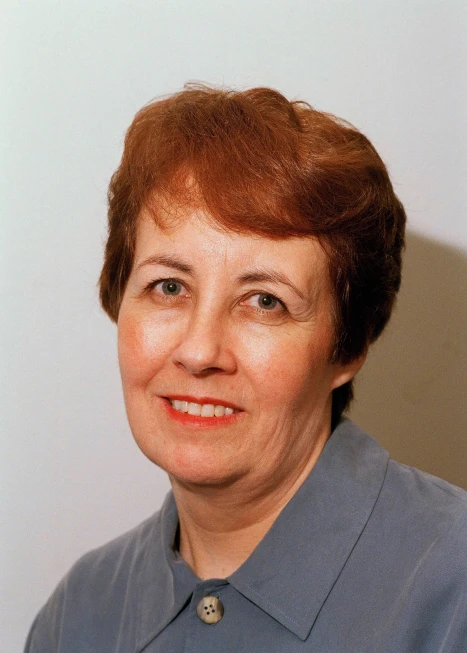
AP staffer Polly Anderson of the General Desk is pictured in New York, Oct. 25, 2001. (AP Photo/Marty Lederhandler, File)


By JEFFREY COLLINS

The Associated Press


Former Associated Press editor Polly Anderson, who shaped breaking news coverage of some of America’s biggest stories and researched and wrote advance obituaries for many celebrities during a 25-year run on the company’s national desk, has died.


Anderson died Sunday morning after battling Alzheimer’s disease, said her niece, Rachel Hassan. She was 75.


Anderson was remembered for her relentless work editing breaking news stories including 9/11 or the Oklahoma City bombing, her dogged demands for accuracy and quality, and the seemingly endless supply of diet colas at her desk in New York.


“She was a dedicated journalist who brought news to millions of readers. Like many wire reporters and editors, she tirelessly toiled without recognition from the general public,” said her longtime friend and colleague Marty Steinberg.


Hassan said her aunt knew how important her job was but never bragged about it.


“She was incredibly smart. She knew something about everything,” Hassan said.


Anderson led the US news report through the day


Anderson joined the AP in 1985 on the company’s General Desk, which was renamed the National Desk in 2005. Until she retired in 2010, her job was to supervise U.S. news starting before the sun came up.


That put her in the hot seat during historic events like when a rental truck full of explosives destroyed a federal building in Oklahoma City in 1995, or the Sept. 11, 2001, attacks.


Anderson suggested the AP send out a “flash” when the twin towers fell in New York — something the organization only used for transcendent news events.


“Polly was an unforgettable colleague. She brought meticulous care to her job as the national editor on the 6 a.m. shift and as the steward of AP’s obituary coverage, and our preparation in coverage of major deaths still bears her fingerprints years later,” said Josh Hoffner, AP Global Sports Editor and former colleague on the national desk.


A diligent, caring and sensitive editor


Anderson had her quirks. She didn’t have a phone, so she would call in news tips from a pay phone at the train station in Queens, near her home. She loved cats and may have kept a few in or under her desk. She named one cat after the inventor of the copying process that led to the Xerox machine. And there were all the diet colas.


She was remembered as diligent, caring and sensitive. During the crucible that was editing the 9/11 stories, she kept talking about all the people who likely lost their lives that day, Steinberg said.


She was tough but fair to those learning from her.


“I cannot say enough about the impact Polly had on editors like myself who worked the overnight shift on the General Desk and passed the reins to her when she came in at 6 a.m. If your copy wasn’t up to par, she’d rewrite it and show you how much better it could be. If she approved, it was validation of a job well done,” Hoffner said.


She cared deeply about people’s obituaries


Anderson also made sure AP was ready when famous people died, often staying at the end of her shift to prewrite some of those stories herself, including for such celebrities as cable TV tycoon Ted Turner, actor Kirk Douglas, PBS newsman Jim Lehrer, singer Eartha Kitt, economist Paul Samuelson and the stars of the silent movie era, something she knew a lot about.


“She was vigilant — from preparing for their deaths to writing new ones and staying on top of the ones she had written. And she did this at the end of a long and exhausting news day,” Steinberg said.


Born in Chicago, Anderson grew up in Itasca, Illinois, and studied journalism at the University of Illinois Urbana-Champaign. She began her career at The News-Gazette in Champaign, where she worked as a police reporter. She joined the AP at its national headquarters in New York City in 1985.


Anderson was living in Richmond, Virginia, when she died. She is survived by two sisters — Sara Hassan in Richmond and Karen Anderson in Romsey, England.


Anderson spent nearly 25 years making AP’s news stories the best they could be and bringing light to those who worked with her, said Paula Froke, who as a news editor in Michigan was often edited by Anderson. She later worked alongside her as AP’s deputy national editor.


“Her tremendous spirit and devotion to her work were a model for all of us,” Froke wrote in an email. “She was a great journalist and an even better person.”


Click here for link to this story.


Memories of Polly Anderson


Pete Brown - former editor on the General Desk and Top Stories - How sad that Polly had Alzheimer's, because she was a major part of AP's -- indeed, all of journalism's -- institutional memory. For decades, she worked on nearly every major domestic news story: hurricanes, plane crashes, mass shootings, O.J. Simpson, 9/11. She was also utterly devoted to maintaining AP's file of advance obits and making sure silent film stars and other celebrities who had their heyday decades ago and were in danger of being overlooked received their due in death.


What a character she was. Polly was scrupulous about accuracy, interrogating reporters about the smallest detail, and it seemed to cause her physical pain if a story fell short in some way. She was sweet and kind in a brusque and cynical business. She was known to keep motherless kittens in a box under her desk at work. Not long after she left AP, she sent me a copy of Sandy Koufax's autobiography that she found in a used bookstore, remembering that the Dodgers pitcher was an idol of mine.


I hope her own obit does her justice, because Polly may have been unknown to the outside world but exerted great behind-the-scenes influence on the news with her commitment to the craft.


-0-


Howard Goldberg - Back when AP boasted 1,500 member newspapers, Polly was hired directly from a newspaper to the General Desk, where editors historically had transferred in from an AP bureau. She took serving those member newspapers very seriously, understanding their needs and requests, while balancing them against sometimes competing priorities within AP. Despite the grim determination often evident on her face amid the relentless demands of the job, Polly had a great sense of humor. “Yesterday’s news tomorrow,” she would mutter when struggling with a demand to give the fading readership of evening newspapers a belated “turn” of a story that nowadays would be buried in the 24-hour news cycle. I never asked Polly how she became what she called “the obit lady,” but the bank of prepared obituaries she left was a great legacy.


-0-


Margaret Lillard - I first encountered Polly when I was a temp in the AP's Nashville bureau. I was the first person in the bureau one morning and trying desperately to track down reports of a tornado. Someone on GEN called to get what few details I had, and as soon as that call ended, another GEN desker called - a melodic voice that I later came to know well. "I just told you guys all I know!" I said, and Polly being Polly, apologized and said she'd get the answers from whoever called first.


As I came to see when I joined GEN in 1992, Polly was a treasure in many ways. Marty Steinberg already spoke about her prowess as an editor, and her impressive accumulation of Diet Coke cans on every shift. I still smile whenever I see AP give her a well-earned byline on one of the many obits she researched scrupulously and wrote eloquently.

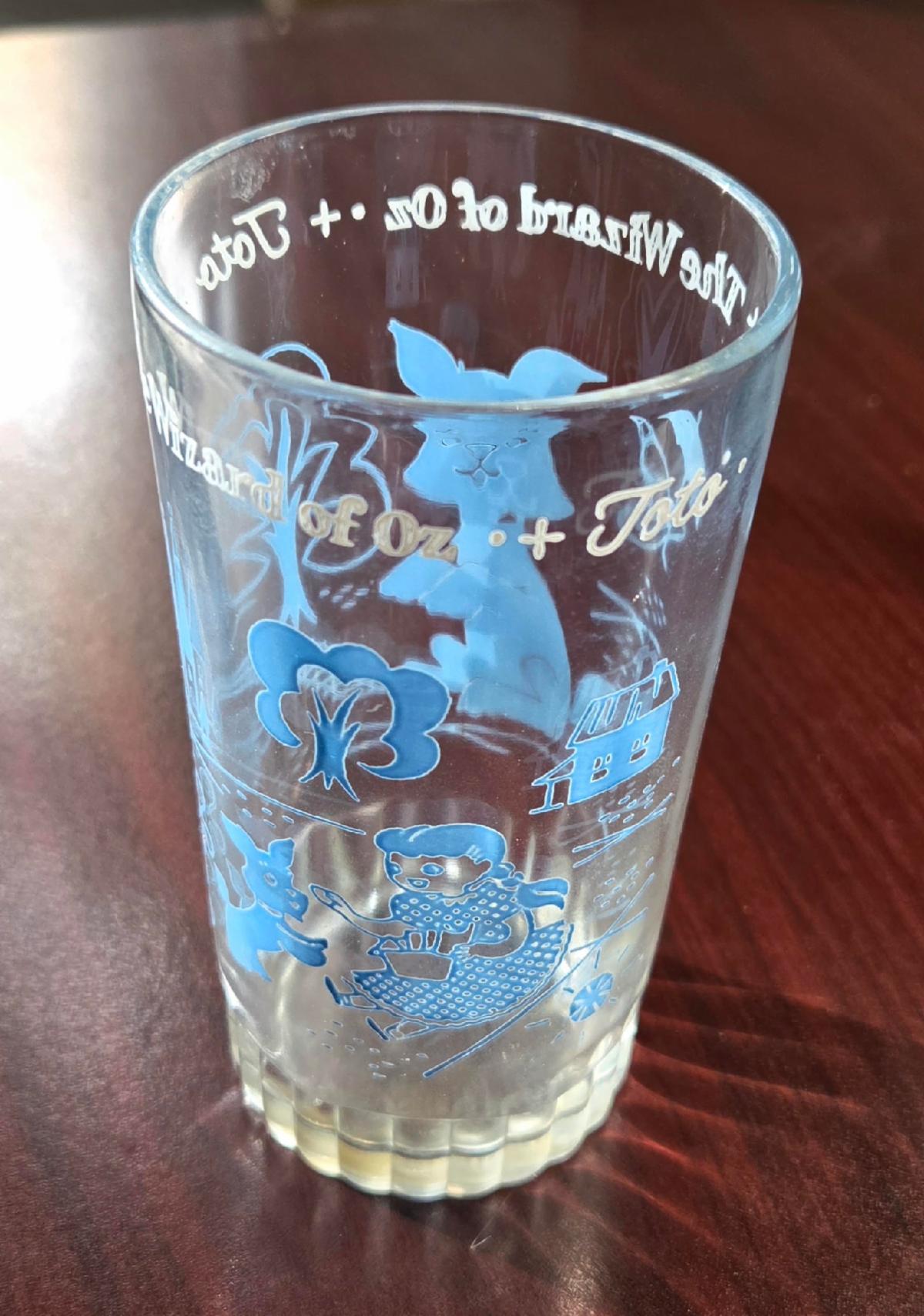
She was also one of the kindest people I ever met. She knew I had a longstanding fondness for "The Wizard of Oz," dating from childhood and through college, when I studied it while working on a cinema studies minor. At my going-away part when I left GEN for North Carolina in 2000, she gave me a 1950s collectible Wizard of Oz "character" glass featuring Toto - appropriate for dog-loving me. I can't imagine where she found it, and I was touched that she remembered such a minor bit of my life's trivia. It's still on my bookshelves to this day.


-0-


Kathy McCormack - I enjoyed working with Polly during my time on the General Desk years ago. She always made my copy better. She was an AP style maven!


It's because of her that I developed an appreciation for well-researched, well-written obituaries. She had a great talent for putting them together and she encouraged me to profile a couple of folks.


I remember exchanging Christmas cards with her through the years. I looked forward to getting them in the mail -- she collected small-denomination postage stamps, so they had a decorative as well as utilitarian purpose!


-0-


Mark Mittelstadt - I knew Polly only through the calls she made to the Des Moines bureau seeking clarification or correction on a story we had submitted for use on the AAA wire.


The introduction was a little rocky, as I recall. I joined AP after editing a small daily newspaper that had won several awards. While I was still fairly new as bureau news editor, I felt I could edit and polish stories well enough for national or foreign wires. But Polly often seemed to have a nit to pick or a phrase she felt wasn't very clear. At first our conversations were not exactly what an editor who also was running the state news report at the same time wanted to have.


Gradually, though, I realized many of her questions were valid, her suggestions good, that our stories could have been better and that we needed to re-focus our stories for national or world-wide consumption. Her input and our back and forth helped make me a better editor, I believe, and to see AP's universe beyond the boundaries of the Mississippi and Missouri rivers.


Thank you, Polly, for being a great editor and mentor. Rest in peace.


-0-


John Rogers - I was deeply saddened to hear of Polly Anderson’s passing.


I first met Polly by phone in the 1980s when she would call from the General Desk to the Los Angeles bureau almost daily with questions about stories. Although she’d be meticulous, she was also always fun to talk to, and we soon learned we had a lot of common interests involving trivia; everything from who was the original Bozo the Clown to obscure movies.


We first met in person a couple years later when she spent a week in the LA bureau, and news editor Steve Loeper, wanting to show her some of the fun side of LA, had me escort her around town. We met in front of historic Grauman's Chinese Theatre where Polly had arrived on her own to check out the footprints of famous movie stars. From there it was off to a taping of the Arsenio Hall Show where we saw Patrick Dempsey, years before he became known as Dr. McDreamy, show off his juggling skills that included tossing flaming torches. I told Polly I had actually seen him do that a few years before when he was just a street artist trying to get an acting job. Then it was on to my favorite Japanese restaurant where Polly had AP pick up the bill.


When I arrived at the General Desk a year or so later, Polly - pretty much joking, I believe - asked me why I would want to leave LA for this place. Over the next seven years we sometimes worked side-by-side when our schedules overlapped and I got to witness how Polly famously got through every shift with a lifeline of Diet Cokes. Too busy to stop editing to drop them one-by-one in a recycling container, she often had six or eight empties lined up by the time she headed home.


Later, when I moved on to become the Springfield, Mo., correspondent, she’d often call me looking for a brief offbeat story on some Branson entertainer to fill that day’s celebrity column. Or when Brad Pitt, who grew up in Springfield, returned to visit his family she absolutely had to have something on that. Later, it was back to Los Angeles for me. Polly, after going through the obit preps on file in New York, would sometimes call me to say we didn't have one she was sure I'd want to do, and she was right. What's more, I wouldn’t be surprised if there are still a couple of her own in the archives.


But in addition to her skills as a reporter and editor, Polly was just a wonderful person, one of the nicest you would ever meet, and I offer my condolences to her family.


-0-


Lindsey Tanner - I worked frequently with Polly from afar during my early years as a general assignment reporter in the AP's Chicago bureau. Getting assigned to A-wire stories was always a thrill and hearing Polly's familiar voice on the line when she was assigned to edit my stories was often a comfort. I can still hear her saying "Hiya Lindsey" when I picked up the phone. She often shared personal stories and factoids about Chicago - sometimes outdated or but nevertheless welcome. She was always friendly, professional and respectful - a consummate editor.


On donations to the AP


Jim Carlson - I am another one of the AP retirees thinking twice about donating to help AP through its financial struggles. But I have to agree with the latest reactions of colleagues who defend the choice to chip in.


The latest big changes in coverage, including the cuts of photo editing jobs to shift them to India, follow many that started even before I retired in 2009. Just think, I remember when we stayed closely linked with our AP member newspapers for coverage of state news, and we maintained three reporters covering the state Capitol and another in northern Wisconsin.


Yes, the AP has very little in common with the AP I left -- except for the basic goal of fair, accurate journalism to serve as many people as possible. And now it's in a totally new world of competition.


Donations support those who carry out that journalism.


But like Jim Reindl, I worry that the outsourcing has its own dangers, on top of the human toll from the cuts. I compare it to dependence on AI for tasks once done by humans. Every day I read stories with dropped words, misused phrases, even entire lines left out, all of which I suspect are from overreliance on AI copy editing.

Connecting wishes Happy Birthday

Linda Stevens

Stories of interest


Turning the Lens Around: Bob Woodward Takes On Bob Woodward


By Peter Baker

The New York Times


He has interviewed presidents and kings and spies and generals. Along the way, he has extracted some of the most revelatory and enduring stories of the past half-century about the power players who run Washington. So what would Bob Woodward ask if he were interviewing Bob Woodward?


He was sitting in the sunroom of his Georgetown house on a bright autumn day when the question was put to him. He paused a moment before answering. “What is the internal turmoil?” he suggested. Which sounds like a good question. But what would his answer be? Mr. Woodward has long been more comfortable asking the questions than answering.


Perhaps the most renowned journalist of the modern age, Mr. Woodward has turned the lens on himself after 55 years of examining others, with a new memoir called “Secrets” recounting the story of his celebrated career. It may not exactly be a tell-all, but it is a tell-much and has already set Washington buzzing about the revelations it promises when it is published on Tuesday.


Read more here. Shared by Dennis Conrad.


-0-


A Congress concerned about accountability should save local news


Brier Dudley | Seattle Times Free Press editor


Democrats who will soon control Congress want to pursue accountability and strengthen democracy.


I’m all for it, if they’re serious and effective.


To prove it, strengthen the local news industry. That will bring more accountability and civic engagement in every state and congressional district — perpetually, if the industry is revitalized.


A good start is the Community News and Small Business Support Act that would provide refundable tax credits supporting newsroom jobs. It also supports economic growth in local communities, with tax credits for Main Street businesses that advertise locally.


U.S. Rep. Suzan DelBene, a Medina Democrat, told me she’ll reintroduce the bill next year. She co-sponsored it last year with U.S. Rep. Claudia Tenney, an upstate New York Republican.


DelBene said the timing is good because there’s an influx of new lawmakers. There’s also widespread concern about the prevalence of “myths and disinformation” during the campaign season, and appreciation of the importance of trusted news.


Read more here. Shared by Mark Mittelstadt.


-0-


States sue Musk companies over flood of sexualized images made with AI chatbot Grok


By Sarah Rankin

The Associated Press


Elon Musk’s businesses harmed consumers by avoiding safeguards when they designed and launched an artificial intelligence chatbot capable of creating sexualized images, two Democratic attorneys general argued in lawsuits filed Monday.


The choices that went into building Grok led to a proliferation of child sexual abuse material and other nonconsensual intimate imagery on the companies’ platforms, the lawsuits said. The companies prioritized their business model over the safety of millions of people, Virginia Attorney General Jay Jones said in his state’s lawsuit.


“To push its lagging product, Grok, to tens of millions of new users, it stripped out industry-standard safeguards and marketed a ‘spicy mode’ built to produce nudity,” Jones said in the lawsuit. “For these Defendants, weak safeguards were not a failure but a feature.”


Read more here. Shared by Doug Pizac.


-0-


I Couldn’t Imagine Working With a Photo Editor on a Different Continent


By Matt Growcoot

PetaPixel


Long before I worked on the PetaPixel news desk, I was an agency photographer covering breaking news, features, and sports.


I was young and in need of guidance. I found that in the form of my photo editor, whom I’m going to call Gary. I would speak to Gary every morning when he assigned me jobs for the day, talking me through what was expected and the specific set of photos I needed to produce.


After I wired him the photos, he would let me know whether I had done a good job or a terrible one. He would often edit my photos, reframe them slightly, change the crop, cull some of them, or call me up and ask if I had a different angle.


But Gary did far more than that. He was a leader in the newsroom, worked closely with the news editor to shape stories and come up with ideas, and was an excellent salesman.


I thought of Gary this week when the Associated Press officially cut all eight of the remaining photo editor positions in the U.S. AP has moved the positions to its hub in Noida, India. The agency says it has plans to grow the Indian operation to 100 staff members, including video producers.


AP photo editors are legendary: Consider the famous Napalm Girl photograph, for example, when Horst Faas and Hal Buell overruled Carl Robinson’s decision not to wire Nick Ut’s photograph.


Photo editors have played a crucial role in the fortunes of photographers for a very long time, advocating for us while seeing the bigger picture.


Read more here. Shared by Doug Pizac.


-0-


Photographer Who Hid His Photos Behind Wall Returns to Syria a Decade Later to Find Them


By Pesala Bandara

PetaPixel


A Syrian photographer has finally been reunited with his personal photo archive more than a decade after hiding it behind a wall he built during the country’s war.


Photographer Ahmed al-Bekkar fled Syria more than a decade ago, seeking refuge in Turkey amid widespread destruction, looting, and attacks by the terrorist group ISIS (Daesh) and forces loyal to Syria’s now-topled Assad regime, according to a report by Anadolu Agency.


Before leaving Syria, Bekkar built a wall to conceal the entrance to his personal library in the northern city of Raqqa, hoping to protect his extensive photographic archive. The archive contains approximately 3,000 printed photographs of Raqqa, as well as a much larger digital collection documenting historical sites, cities, and markets across Syria.


Read more here. Shared by Doug Pizac.


-0- 


‘They can just ignore requests and delay student journalists and get away with it’


By Miranda Morgan

Poynter


The 1966 Freedom of Information Act was meant to combat governmental secrecy and ease access to public or “open” records for citizens.


Journalists in particular use FOIA and state open records laws to watchdog the government, investigate government claims and provide fact checks and context for audiences.


But they often face barriers to information access: resistance on the part of government agencies, chronic understaffing among records custodians and redactions that render their records toothless or functionally nonexistent.


Collegiate journalists bear additional burdens, such as balancing classes and student media jobs; navigating the barriers imposed by FERPA, a federal law designed to protect the privacy of educational records; and the awareness that they’re only covering campus for a few years until they graduate.


For student reporters, making open records requests at their public universities can feel like an exercise in futility.


Read more here. Shared by Doug Pizac.


-0-


Marcia Ann Gillespie Has Died. She Led Two Pioneering Women’s Magazines


By Ama Sarpomaa

The New York Times


Marcia Ann Gillespie, an editor who was a guiding force in shaping Essence as a dynamic publication for Black women in the 1970s and who later became the first Black editor in chief of the feminist publication Ms., died on Oct. 30 at her home in Manhattan. She was 82.


Her niece, Kim Mitchell, said the cause was respiratory disease.


After four years as a researcher on Black history at Time-Life Books, Ms. Gillespie was hired as second-in-command at Essence in 1970, the magazine’s first year in circulation. The magazine struggled with staff turnover and low circulation, and Ms. Gillespie, who was quick to diagnose how the magazine could be improved, was promoted to the top editing role at 26.


During the next nine years as editor in chief, she was widely credited with helping give Essence a clearer identity and mission and boost its circulation to more than 750,000.


Read more here. Shared by Doug Pizac.


-0- 


CBS News Buyouts: Fewer Than 10% of Employees Accept Skydance Offers


By Garrett Searight

Barrett Media


CBS News employees are showing limited interest in Skydance’s buyout offers as the network evaluates its staffing structure. Fewer than 10% of employees have reportedly accepted the company’s offer.


According to Puck’s Dylan Byers, fewer than 10% of CBS News staffers have accepted buyout offers from Skydance. Notably, none of the high-profile figures at 60 Minutes have reportedly agreed to leave the network. However, the response has varied across the company’s international operations. Several employees at foreign bureaus have accepted the offers, including a significant number at the London bureau. One report indicates nearly 33% of employees there have chosen to take the deal.


Read more here. Shared by Doug Pizac.


-0-


Three Photographers Sue Police Over Use of Tear Gas and Pepper Spray During ICE Raid


By Pesala Bandara

PetaPixel


Three photographers have sued the St. Paul Police Department in Minnesota over its alleged use of chemical munitions against them during an ICE raid, with their own photographs documenting the incident.


Aaron Nesheim, a photographer for Sahan Journal, MPR News photojournalist Kerem Yücel, and freelance photographer Timothy Evans filed the lawsuit against the St. Paul Police Department on Tuesday. The photographers accuse officers of firing pepper balls at them, pepper-spraying them at close range, and deploying tear gas against them while they were covering a demonstration.


The lawsuit stems from an incident on November 25 last year, when U.S. Immigration and Customs Enforcement (ICE) agents attempted to arrest a man at his home in the Payne-Phalen neighborhood of St. Paul, Minnesota. A growing crowd of protesters gathered outside the property as federal agents attempted to detain the man.


Read more here. Shared by Doug Pizac.

Today in History - Nov. 24, 2026

By The Associated Press

Today is Tuesday, Nov. 24, the 328th day of 2026. There are 37 days left in the year.


Today in history:


On Nov. 24, 1963, Jack Ruby shot and mortally wounded Lee Harvey Oswald, the accused assassin of President John F. Kennedy, in a scene captured on live television.


Also on this date:


In 1859, British naturalist Charles Darwin published “On the Origin of Species,” which explained his theory of evolution by means of natural selection.


In 1865, Mississippi became the first Southern state to enact laws that came to be known as “Black Codes” aimed at limiting the rights of newly freed Blacks; other states of the former Confederacy soon followed.


In 1947, a group of writers, producers and directors, who would become known as the “Hollywood Ten,” was cited for contempt of Congress for refusing to answer questions about alleged communist influence in the movie industry.


In 1971, a hijacker calling himself “Dan Cooper” (but who became popularly known as “D.B. Cooper”) parachuted from a Northwest Orient Airlines 727 over the Pacific Northwest after receiving $200,000 in ransom; his fate remains unknown.


In 1974, the bone fragments of a 3.2 million-year-old hominid were discovered by scientists in Ethiopia; the skeletal remains were nicknamed “Lucy.”


In 1991, Queen singer Freddie Mercury died in London at age 45 of AIDS-related pneumonia.


In 2012, fire raced through a garment factory in Bangladesh that supplied major retailers in the West, killing 112 people; an official said many of the victims were trapped because the eight-story building lacked emergency exits.


In 2014, it was announced that a grand jury in St. Louis County, Missouri, had decided against indicting Ferguson police officer Darren Wilson in the death of Michael Brown; the decision enraged protesters who set fire to buildings and cars and looted businesses in the area where Brown had been fatally shot.


In 2017, a terrorist attack on a mosque in Egypt's Sinai Peninsula killed at least 235 people. The attack was ascribed by authorities to a local Islamic State affiliate.


In 2021, three white men were convicted of murder in the killing of Ahmaud Arbery, the Black man who was running through a Georgia subdivision in February 2020 when they chased and shot him.


In 2023, Derek Chauvin, the former Minneapolis police officer convicted of murdering George Floyd, was stabbed by another inmate and seriously injured at a federal prison in Arizona. He was subsequently transferred to another prison.


Today’s Birthdays: Basketball Hall of Famer Oscar Robertson is 88. Rock drummer Pete Best is 85. Actor-comedian Billy Connolly is 84. Basketball Hall of Famer and former Detroit mayor Dave Bing is 83. Basketball Hall of Fame coach Rudy Tomjanovich is 78. Filmmaker Emir Kusturica is 72. Actor Conleth Hill is 62. Actor Danielle Nicolet is 53. Author Arundhati Roy is 65. Actor Colin Hanks is 49. Actor Katherine Heigl (HY’-guhl) is 48. Actor Sarah Hyland is 36. Actor Saoirse-Monica Jackson is 33.

Got a photo or story to share?

Connecting is a daily newsletter published Monday through Friday that reaches more than 2,000 retired and former Associated Press employees, present-day employees, and news industry and journalism school colleagues. It began in 2013. Its author, Paul Stevens, retired from the AP in 2009 after a 36-year career as a newsman in Albany and St. Louis, correspondent in Wichita, chief of bureau in Albuquerque, Indianapolis and Kansas City, and Central Region vice president based in Kansas City.


Got a story to share? A favorite memory of your AP days? Don't keep them to yourself. Share with your colleagues by sending to Ye Olde Connecting Editor. And don't forget to include photos!


Here are some suggestions:


- Connecting "selfies" - a word and photo self-profile of you and your career, and what you are doing today. Both for new members and those who have been with us a while.


- Second chapters - You finished a great career. Now tell us about your second (and third and fourth?) chapters of life.


- Spousal support - How your spouse helped in supporting your work during your AP career. 


- My most unusual story - tell us about an unusual, off the wall story that you covered.


- "A silly mistake that you make"- a chance to 'fess up with a memorable mistake in your journalistic career.


- Multigenerational AP families - profiles of families whose service spanned two or more generations.


- Volunteering - benefit your colleagues by sharing volunteer stories - with ideas on such work they can do themselves.


- First job - How did you get your first job in journalism?


- Most unusual place a story assignment took you.


Paul Stevens

Editor, Connecting newsletter

paulstevens46@gmail.com