| | |
Research and Evaluation
Quarterly Highlights
| | Welcome to the Quarterly Highlights | | |
Dear Colleagues,
You are receiving this email to share key findings, accomplishments, and updates from Comagine Health’s Research and Evaluation Team. Our goal is to disseminate quarterly results of our work, highlight successes, and maintain transparency about our research and collaborations.
As we closed out 2025 and entered the new federal fiscal year in October, we want to acknowledge the challenges faced across our team, partners, and communities. Shifting federal priorities, administrative transitions, funding delays, and the government shutdown tested our collective resilience and adaptability. Despite these hurdles, our shared commitment to the individuals and communities we serve remained strong.
We are pleased to share that, with the start of FY26, our team was awarded two federally funded grants in partnership with RTI International and Oregon Health & Science University as prime awardees. We also celebrated the publication of several new peer-reviewed papers.
Please look for our upcoming 2025 Annual Summary, which will highlight the breadth of our work from the past year. We look forward to continuing collaboration and learning from the impactful work ahead.
Warm regards,
Christi Hildebran
If you no longer wish to receive these updates, you may unsubscribe from this email using the link at provided at the bottom of this page.
| | Comagine Health Research & Evaluation: Q1 FY26 | | |
Newly Awarded Projects
-
Oregon Bridge to Intervention and Treatment (ORBIT)
Partners: RTI International (lead)
Timeline: Sept. 15, 2025 - May 31, 2030
Funder: National Institute on Drug Abuse (NIDA)
Project goal: To assess the reach, effectiveness, adoption, implementation, and maintenance of Oregon’s new deflection programs.
-
Peer Assisted Telemedicine for Health in Substance Users – Comprehensive Care (PATHS CC)
Partners: Oregon Health & Science University (lead)
Timeline: Sept. 29, 2025 - Sept. 30, 2028
Funder: Substance Abuse and Mental Health Services Administration (SAMHSA)
Project goal: Develop a statewide, integrated, status-neutral program to provide same-day services utilizing peer-assisted telemedicine through piloting same-day HCV and HIV screening and same-day access to peer-assisted telemedicine for HCV treatment and HIV treatment/prevention, mental health care, and SUD care in 20 of Oregon’s 36 counties.
| | |
Peer-Reviewed Publications
Chronic Opioid Use After Implementation of Oregon’s Medicaid Back Pain Policy. Authors: Hartung DM, El Ibrahimi S, Livingston CJ, Charlesworth CJ, McConnell KJ, Choo EK. (2025). American Journal of Preventive Medicine.
One Voice and Vision: How the RISE Network Built a Collective Identity as the Foundation for Strategic Dissemination. Authors: Adams ET, Lefebvre RC, Christopher MC, Stack E, Peng L, Becker M, Behrends CN, Goldman J, Guzman Herrera MM, Hassan H, Kapler S, Jeremiah A, Augustine E, Borquez A, Wagner KD, Sherman SG, Wilson JD, Kral AH, Jordan A, Oga E, Southwell BG, Zibbell JE, Duncan Cance, J. (2025). Harm Reduction Journal.
Impact of a Multi-Factorial Primary Care Intervention on Opioid Use Disorder Treatment and Overdose Outcomes. Authors: Morgan-Barsamian AR, El Ibrahimi S, Hendricks MA, Blalock KL, Stack E, Wyss R, Hatch BA, Sánchez V, Fischer MA. (2025). Journal of Primary Care & Community Health.
Reason to Expand the Contingency Management Workforce: Coaching-to-Criterion Results for Addiction Professionals and Peer Specialists. Authors: Hartzler B, Peng L, Cooke A, Kunkel L, Stack E, Leahy JM, Cook RR, Hildebran C, Hoffman K, Verbeck J, Nugent M, Leichtling G, Smith Payne K, McIlveen JW, Korthuis PT. (2025). Substance Use & Addiction Journal.
Impact of Prescription Drug Monitoring Program Integration in the Electronic Health Record on High-Risk Opioid Prescribing in Primary Care. Authors: Hartung DM, El Ibrahimi S, Hendricks MA, Kassakian SZ. (2025). Pain Medicine.
| |
- Oregon Conference on Opioids + Other Drugs, Pain + Addiction Treatment (OPAT) in Sunriver, OR. November 3-5, 2005.
Presentations included:
-
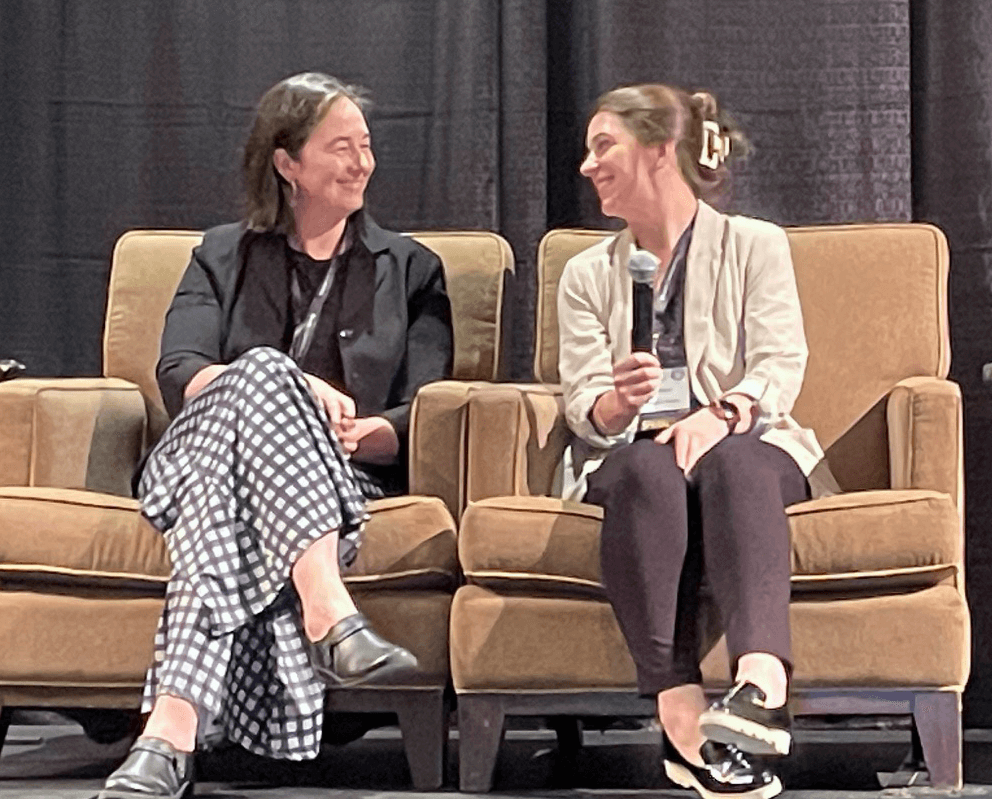
“Building a Culture of Care: State-Local Partnership to Expand Access, Equity and Overdose Prevention in Oregon” - Co-presenters: Savanna Santarpio, Diana Flores, Tyler Swift, Alexander LaVake, Apryl Herron.
|
-
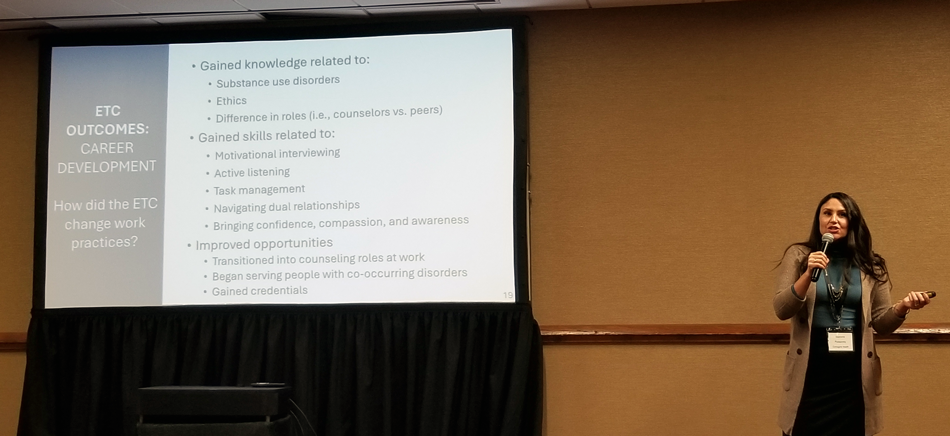
“Education Toward Certification: Description and Outcomes of a Rural Workforce Development Model” – Podium presentation. Co-presenters: Stephanie Pustejovksy, Janice Crawford.
|
-
“Statewide Impacts of Oregon’s State Opioid Response (SOR) Grant” – Podium presentation. Co-presenters: Brooke Evans, Caitlyn Jasumback, Kelsey Smith Payne.
|
 | |
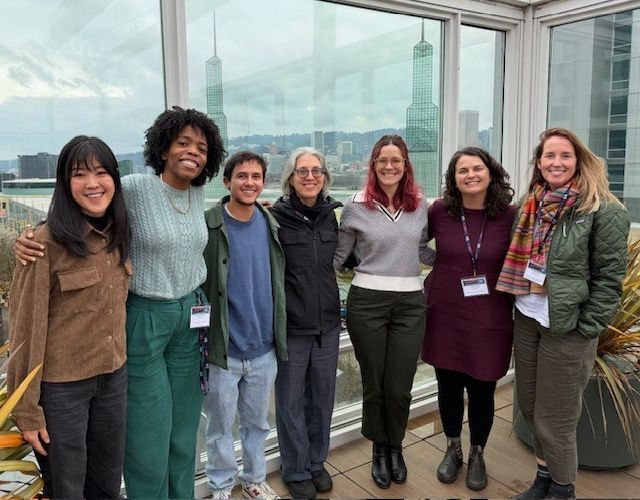
- Association for Multidisciplinary Education and Research in Substance Use and Addiction (AMERSA) in Portland, OR.
November 13-15, 2025.
Presentations included:
-
Patterns and Predictors of Incentivizing Peer Visits Among People Using Stimulants - Poster presentation. Lead author: Devin Gregoire. Co-authors: Ryan Cook, Erin Stack, Linda Peng, Bryan Hartzler, Todd Korthuis.
-
Job Satisfaction and Workforce Dynamics of Peer Recovery Specialists in Oregon - Podium presentation. Lead presenter: María Alías-Ferrí. Co-authors: Devin Gregoire, Gillian Leichtling, Christi Hildebran, Eric Martin, Sanae El Ibrahimi, Hunter Spencer, Kim Hoffman, Todd Korthuis.
-
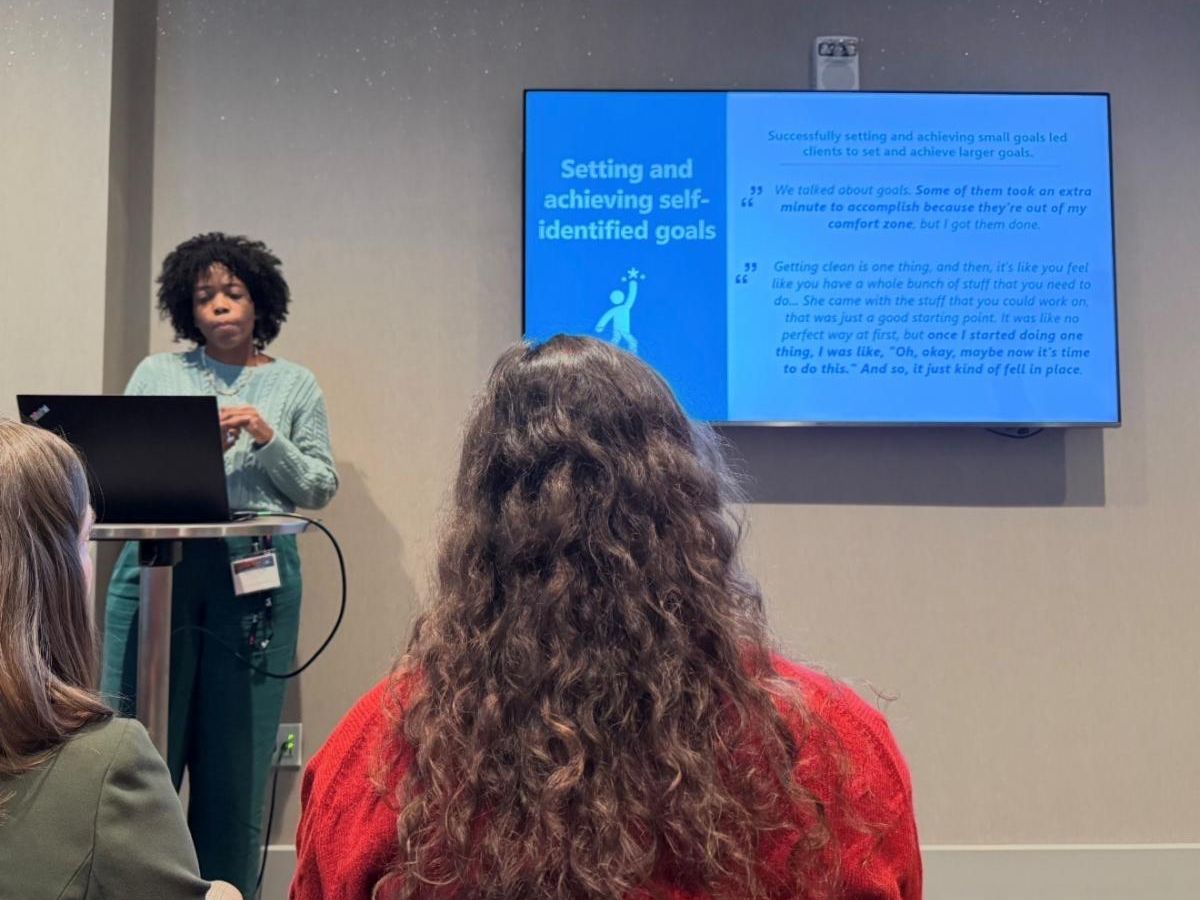
Impacts on Peer-Delivered Contingency Management on Peer-Client Relationships and Client Goals - Podium presentation. Co-presenters: Erin Stack and Alexis Cooke. Co-authors: Kim Hoffman, Megan Alcantar, Devin Gregoire, Sarann Bielavitz, Linda Peng, Todd Korthuis.
-
Barriers to Hepatitis C Treatment: Thematic Analysis of Peer Support Specialists’ Observations - Poster presentation. Lead author: Colter Voss. Co-authors: Hunter Spence, Tonhi, Gailey, Kim Hoffman, Gillian Leichtling, Ann Thomas, Jude Leahy, Todd Korthuis.
Additionally, our research policy and peer work was highlighted by partners during the open plenary sessions, including “The Impact of Oregon’s Measure 110: Insights from Research, Care, and Community” and “Building Community and Expanding the Reach of Substance Use Care through Rural Peer Networks.”
| | | | |