Whether you are a long-time Tahoe resident or a returning visitor, if you have been to the beach lately then you likely saw an unfamiliar and unforgettable sight. Aside from the very wide beaches that occur every time lake level is low, you would have seen algae. Lots of algae. More algae than long-term researchers have ever seen in their careers.
The type of algae you may have experienced varies all around the lake and changes week by week. What is it? What is causing it? Need you be concerned? What can be done to return Tahoe’s shorelines back to what they once were?
Attached algae (periphyton)
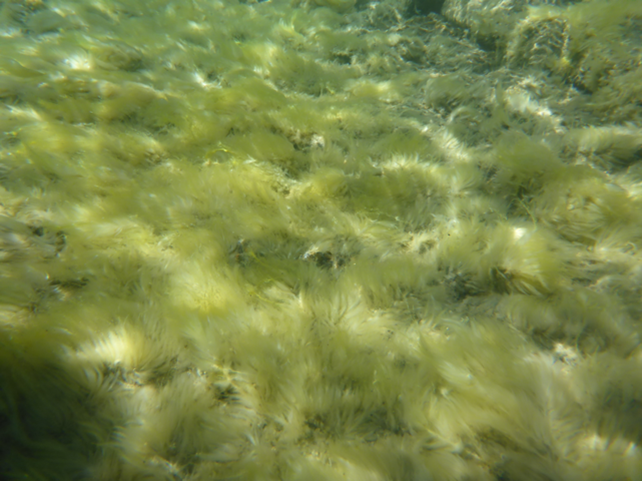
Earlier in the summer, around June, the algae near the shoreline were periphyton, or attached algae. These algae are attached to rocks and gravel and can often appear as yellow-brown stalks. They occur around the lake every year (or at least observed for the last 30 years). What was different in 2022, were the vast areas covered by these algae and the thickness of the growth.
|
|
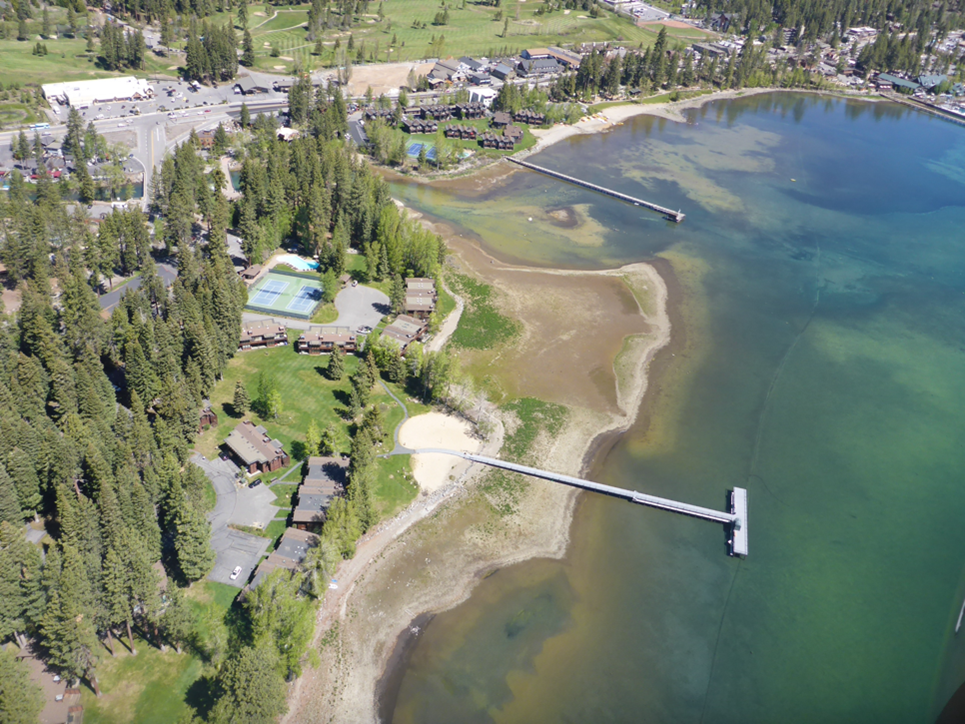
One of the thousands of helicopter images of the Lake Tahoe shoreline. Photo: Mike Bruno
|
|
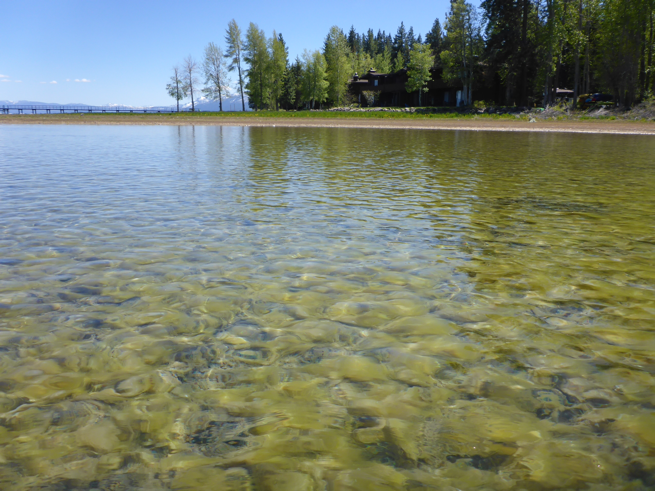
Using monthly helicopter flights, the UC Davis Tahoe Environmental Research Center (TERC) has been able to track the extent and seasonal changes of periphyton. For example, in June, extremely heavy growth was seen on the north shore extending from Homewood to Dollar Point. The photo above shows the area south of the outflow of the Truckee River and in front of Common’s Beach near Tahoe City. The yellow-brown patches along the shore show the extent of the periphyton. The two photos below were taken on the same day from the lake and show the appearance above and below the water. As these algae age in early summer, they erode off the rocks and can end up washing up on beaches.
|
|
The causes of periphyton “blooms” are still not fully understood. Nutrients from runoff and from groundwater are important. Low lake levels, such as we have in 2022, are also believed to play a role. The periphyton are not harmful, but they decrease our enjoyment of the lake and its shore. Slippery, slimy rocks are rarely fun.
Filamentous algae
The second kind of algae seriously impacting the lake this summer are metaphyton. These stringy, filamentous, green algae were increasingly found around the shoreline starting in mid-summer. These are the algae that most people notice and ruin a day at the beach. They leave the water looking like pea soup, cling to swimmers, and easily wash up on the beaches. On the beach, they slowly decompose, producing noxious odors and attracting flies.
The cause of the green algae is directly linked to the presence of invasive Asian clams. The clams appeared at Lake Tahoe 15 years ago and have spread from the south shore up the east shore to Sand Harbor, NV. Wherever the clams appear, the algae follow soon after. They are not harmful, unless you value losing the enjoyment of Tahoe’s clear water and clean beaches.
|
|
Harmful Algal Blooms
The third kind of algae that are posing a threat to our beaches are freshwater harmful algal blooms (FHABs) or more simply, HABs. These are known scientifically as cyanobacteria or blue-green algae. These have rarely been seen at Tahoe’s beaches, but the frequency of warning signs and potential sightings is increasing. In other lakes where they occur intensely, they produce thick algal scums, noxious odors, have the potential to cause severe skin irritation and to even be toxic.
HABs are very serious and agencies in both California and Nevada keep a close watch on them. The California Water Board maintains an interactive map showing routine monitoring locations and event-reports: bit.ly/ca-hab-map. In Nevada, suspected HABs are tracked by the state’s Department of Environmental Protection: bit.ly/nv-hab. |
|
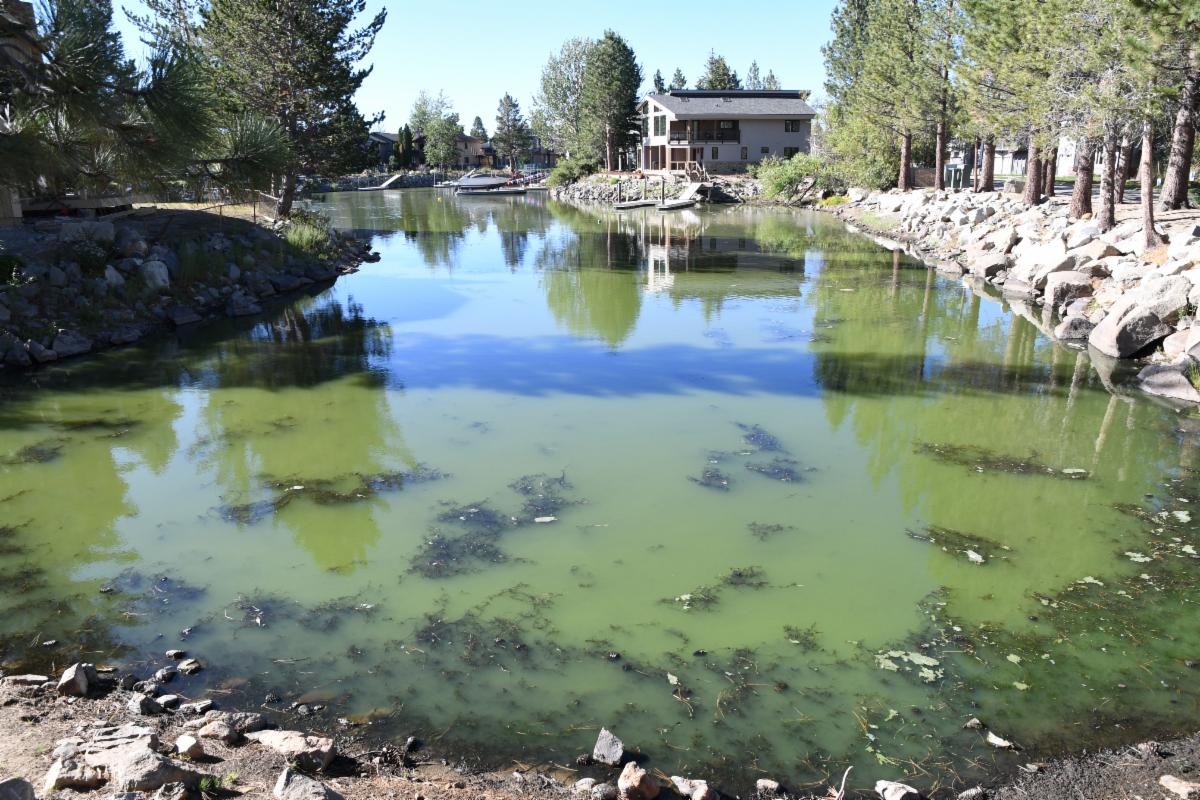
A harmful algal bloom, or HAB, in the Tahoe Keys lagoons, August 11, 2022. Photo: League to Save Lake Tahoe |
|
Should you be concerned?
Absolutely. Even putting aside the risk of toxic HABs, the growing intensity and spread of other types of algae is changing Lake Tahoe in a way that nobody benefits from. Whether you enjoy going to the beach, work in a tourism-dependent job, or simply love Tahoe, these changes are putting much of this at risk.
What needs to be done?
If we had all the answers, then the problem would not exist. But we don’t. It has only been in the last few years that scientists are able to demonstrate how to measure the extent of the algae using helicopters and drones. Quantifying the size of the problem we are dealing with is an important first step, and continuing these measurements will be important as conditions change every year.
The long-term fixes also require work. Controlling the growth and spread of Asian clams are possible using methods pioneered at Lake Tahoe. But it is expensive and requires continued effort year after year. Other, more cost-effective methods need further experimentation. One possibility is to form an alliance of sorts with the Asian clams. As the clams grow, they concentrate nutrients from the lake and these support the green algae that are ruining our beaches. If we were to harvest the algae as it was growing adjacent to the clam beds, we would be simultaneously stopping the algae from washing up on the beaches and removing nutrients from the lake. That might help with the attached algae too.
|
|
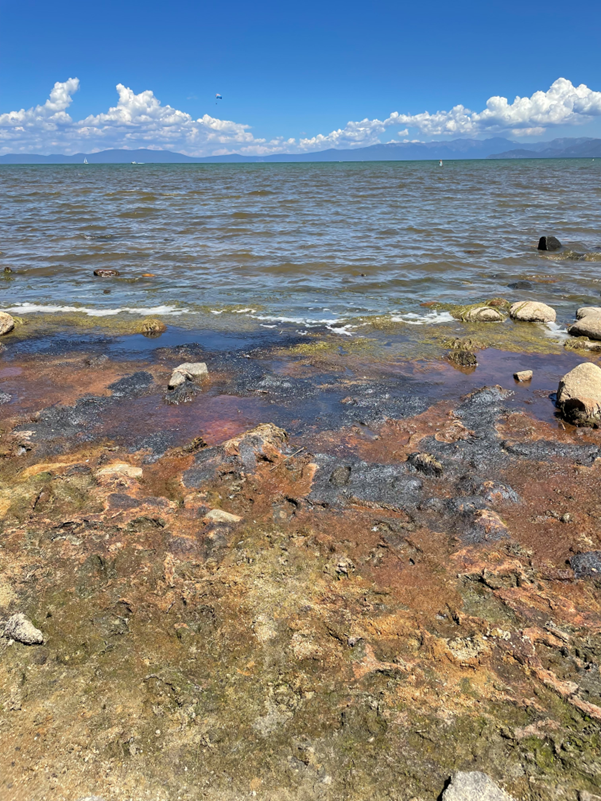
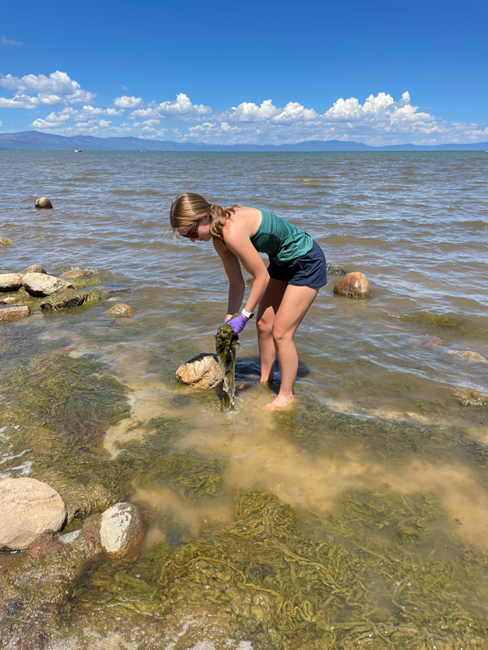
Regan Beach, where low oxygen forms stinky pools with iron-reducing bacteria (left) and TERC summer inter Kate Hoffman collects filamentous algae from Regan Beach (right) Photos: Katie Senft
|
|
TERC and the League to Save Lake Tahoe’s Beach Clean Up program are making a start on these actions. Future beach clean-ups, organized by the League to Save Lake Tahoe to remove the algae from the beaches will be coming soon. TERC scientists are taking the collected algae and analyzing just how much nutrient is removed with every bagful of algae. Trying to determine the best way to remove the algae and finding innovative ways to use it (for example, as compost or soil amendments) is a next step.
Another way to get involved, is to let us know just where you are seeing algae and how it is impacting you. Such data are vital to “ground truth” what the helicopter is observing and helping us quickly locate emerging hot spots. A simple way to do this is to use the Citizen Science Tahoe App at https://citizensciencetahoe.org, where you can submit your images and experiences in the “Algae Watch” survey.
Learn more and help out
You can learn much more about algae, what the UC Davis Tahoe Environmental Research Center is doing to study its impacts to Lake Tahoe, and how you can help at https://tahoe.ucdavis.edu/algae. |
|
Share this story on Facebook or Twitter:
|
|
|
|
|
|
|