RETIREMENT SECURITY MATTERS
A forum for retirement innovation information sharing focused on
states, supporters, and service providers.
|
|
Greetings! welcome!
to Retirement Security Matters – where we talk about retirement readiness innovation by states, supporters, and servicers.
What's on deck:
- What's happening in state programs - fresh data
- Are states still moving retirement security legislation – check this out
- John Mitchem: Workplace savings, Treasurers, and the world – what’s up
- How to get closer to states innovation around retirement security
- And, pix of the week! Scroll to enjoy.
View as Webpage. Comments or content suggestions?
Yes please!
. Have something about your program you’d like to share? We are all ears.
|
Auto IRA States in Rollout Mode
|
On May 20,
Illinois
and
California
joined the
National Institute on Retirement Security
for an update on state sponsored retirement savings programs. You can watch the replay
here
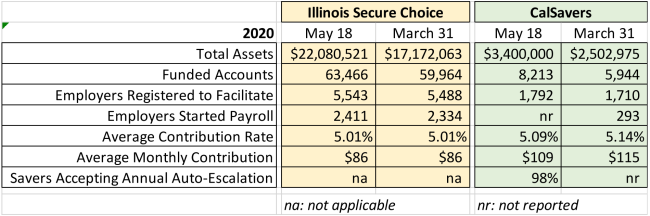
. We also pulled out a few fast facts for your interest.
|
A couple of things we noticed:
- despite the pandemic, more employers have registered to facilitate and started payroll deductions
- funded accounts are up – 6% in Illinois and 38% in California
- assets are up significantly – 29% in Illinois and 36% in California
- average monthly contributions held steady in Illinois and declined slightly in California
Note, this data will not reflect employers who have paused deductions or even their business operations due to COVID-19. In aggregate, however, it does reflect the overall savings activity of the covered, participating workforce.
|
On May 28 as part of a presentation hosted by
Georgetown’s Center for Retirement Initiatives,
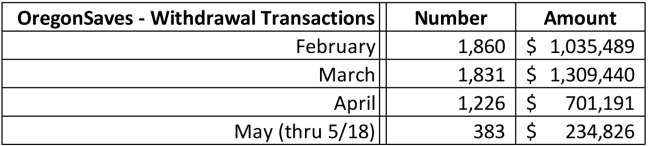
Oregon shared some information on pandemic-related impact. The number of employers adding new employees to the program has declined significantly – probably not surprising as jobs have slowed. Saver withdrawal transactions “spiked a little” as the pandemic took hold, but have tailed off since to levels lower than Oregon saw before stay-home orders took effect in the state.
|
|
MarylandSaves’
investments and program administration RFP closed on
April 30
. Oral presentations are scheduled for this month.
|
|
The
Connecticut
Retirement Security Authority's Design and Investment Committee met on
May 15
and
May 28
to discuss the bid proposal for Record Keeper RFP pursuant to 1-200(6)( E) and 1-210(b)(24). The Authority is set to meet again on
June 19
.
|
|
States Innovation - Active Legislation
|
|
States are on the move again.
|
|
Colorado
(workforce 2.6 million) – Colorado’s retirement security legislation
passed the Senate
on May 26 and is now in Appropriations.
|
|
Ohio
(workforce 5.2 million) – introduced
House Bill 645
on May 19, “to establish an auto-enrollment retirement savings program for private sector employees”. The bill appears to describe a defined benefit-style program, which, if effected, would be a new flavor in this space. The bill was referred to the House Commerce and Labor Committee on May 27.
|
|
What Do Workplace Savings, Treasurers and the World Have in Common: an Interview with John Mitchem
|
|
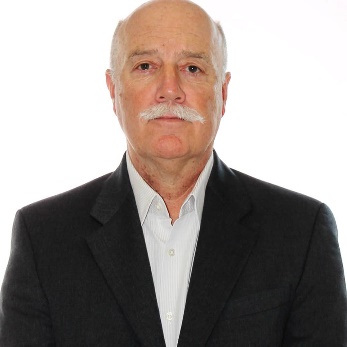
This week we catch up with John Mitchem of JM3 Projects. If you’ve ever met John, you’ll know he is an enthusiastic proponent of retirement savings innovation around the world. He focuses on thought leadership strategies and communications for financial services organizations and has authored a wide range of relevant works.
|
|
John Mitchem, Principal
JM3 Projects
|
|
Once you get John chatting, you’re going to get a wealth of resources and information. Here’s an excerpt of some of the goodies he shared.
John, you are a busy guy – what have you been up to?
Yes, I’ve got a bunch of things going here. Of interest to Treasurers and providers in the savings innovation space, for the past two years I've been researching Global Defined Contribution systems and the creation of, and public policies aimed at the creation of, those systems.
That’s interesting – so there’s a global connection to what we’re doing - tell us more
When I look around I see models of workplace savings that are analogous to the CalSavers-style secure choice effort. The closest one we all know about is probably
NEST – the National Employment Savings Trust in the UK. Because it is a sort of a government administered plan that is alongside private plans. So they have a master trust for private investment in the UK. And then beneath that they have NEST for the same reasons that we have CalSavers: small companies, low income workers, generally don't have traditional private sector DC or 401(k). It's probably unrealistic to expect fully private solutions for everyone. And that's where these things like NEST and CalSavers can step in.
Now in Australia is a little bit different. I mean, Australia, it's corner to corner mandatory. Every employer has to provide a
superannuation plan. So they went with one big plan that covers the sections that we cover in both the secure choices and the private sector.
What have you learned about what these programs have in common?
Behavioral finance tells us the way you get middle class workers to accrue real assets is through payroll deduction. We just know this, right? It's automaticity. I’ve heard people say, “well IRAs are not like that because they're personal.” But experts will tell you that a very very large percentage of IRAs began life as 401(k)s. So behavioral finance and American historical experience suggests that it's got to be in the workplace and it's got to be through payroll deduction.
The advent of state IRAs and NEST-type of structures -- they're going to be replicated all over the world, for the same reasons we have them here. Because the private industry can't really profitably service the very low income, very small company market. And in very many cases state or government-based auto-savings programs will be a backstop for a private solution like a 401(k) or master trust and they're going to be everywhere.
So states are important, but what does this mean for service providers
I think that global defined contribution systems could be a big export market for the US financial services industry. You know, these guys know how to build these portfolios. They know the operations, they know how to use behavioral finance, they know how to build really cool phone-based apps that enable savers to see right where they are, that give them a sense of connectedness and competence.
So, the DCIIA and SPARK membership are interested in knowing what's happening globally. We’re working together on a
Summer Policy Series where I’ll be presenting, with others, some of this global perspective. Participation is free – the series starts July 15 – and you can sign up
here. Free.
|
|
Be There! NAST TMTS - Next Week+
|
|
If you’re looking for a great place where you can go deep and learn a lot about states’ innovation, and more, the
Treasury Management Training Symposium (TMTS)
offered by the National Association of State Treasurers is the place for you. Yes, no offense, it is a little bit nerdly. And there’s a cost - $350 or $550 depending on whether you’re a member. But at that rate you’ll get 70 hours of livestreaming content between now and August, with an opportunity to engage, ask your own questions, meet people, and access all the content afterward. As a NAST veteran, I can’t say enough good things. And you can
join Colorado, Illinois, Oregon, Pennsylvania, Vermont and I on
June 10
for a kickoff session focused on Retirement Security. Take a peek, you’ll be glad you did.
Register here
.
|
|
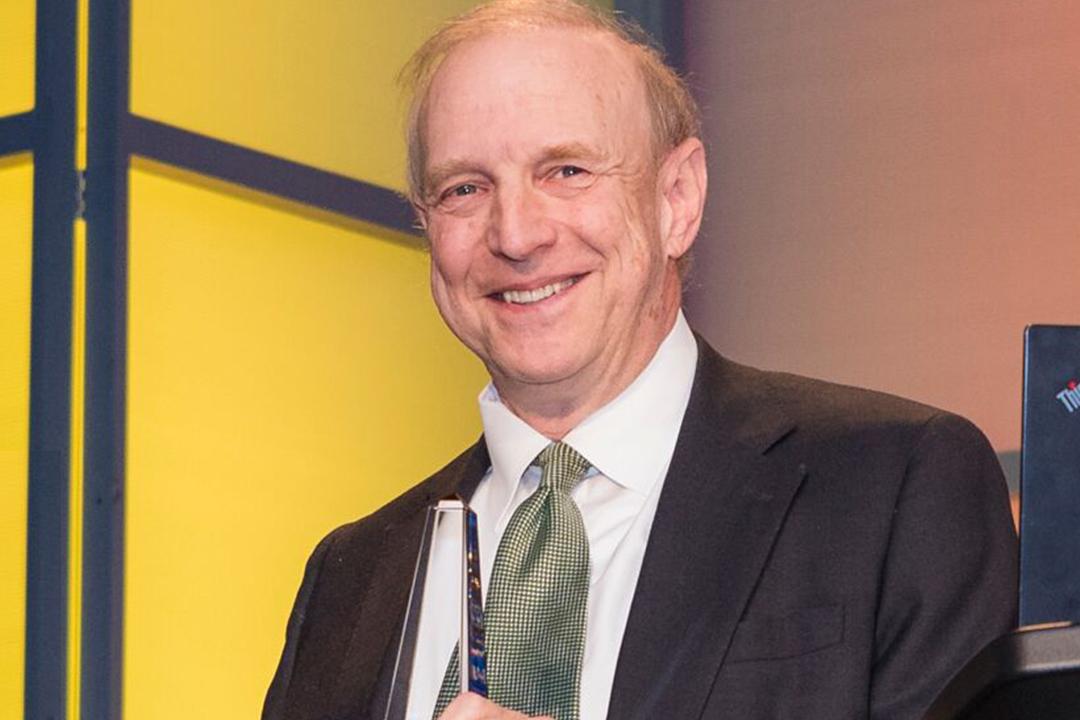
Hear here - Well deserved recognition
|
|
... And, you made it to the photos!
|
|
We think we can agree, John Mitchem looks very serious in his official photo, above. But it wasn’t always that way.
|
|
 |
Once upon a time, just like you and me, John was alternatively a sheriff and a bad guy, blasting around Virginia in his Jeep.
|
|
|
|
When we asked John how he is faring in the pandemic, he says not too bad – he’s got a pretty pleasant remote office.
We agree!
|
|
|
|
And if you look closely we think you’ll see that John appears to be surfing our website and reading about Treasurer Torsella in
Retirement Security Matters.
John’s pandemic silver lining? Networking. Yes, networking. “I've made a much more proactive effort to reconnect with people. And it's been very productive.”
|
|
Back in Oregon, adventures abound. We found our favorite-named Oregon town and made a few bad jokes about it. Yes there was a T-Rex lurking nearby.
|
|
Neighbors send friendly greetings: it’s good to be home.
|
|
We get excited about LaunchAmerica and go crazy over astronauts … thank goodness someone else was driving!
|
|
♥♥♥
This is not a political space, but this feels like the right way to sign off this week.
Let’s be the change we want to see in the world. Opportunity is everywhere.
If you like this piece, please stick with us. We’ll be back in about two weeks. If you don’t like it, please unsubscribe. Comments for us? Please
let us know. Want your own subscription? Request one
here. All information shared is from public sources or used with express permission.
|
|
|
|
|
|
|