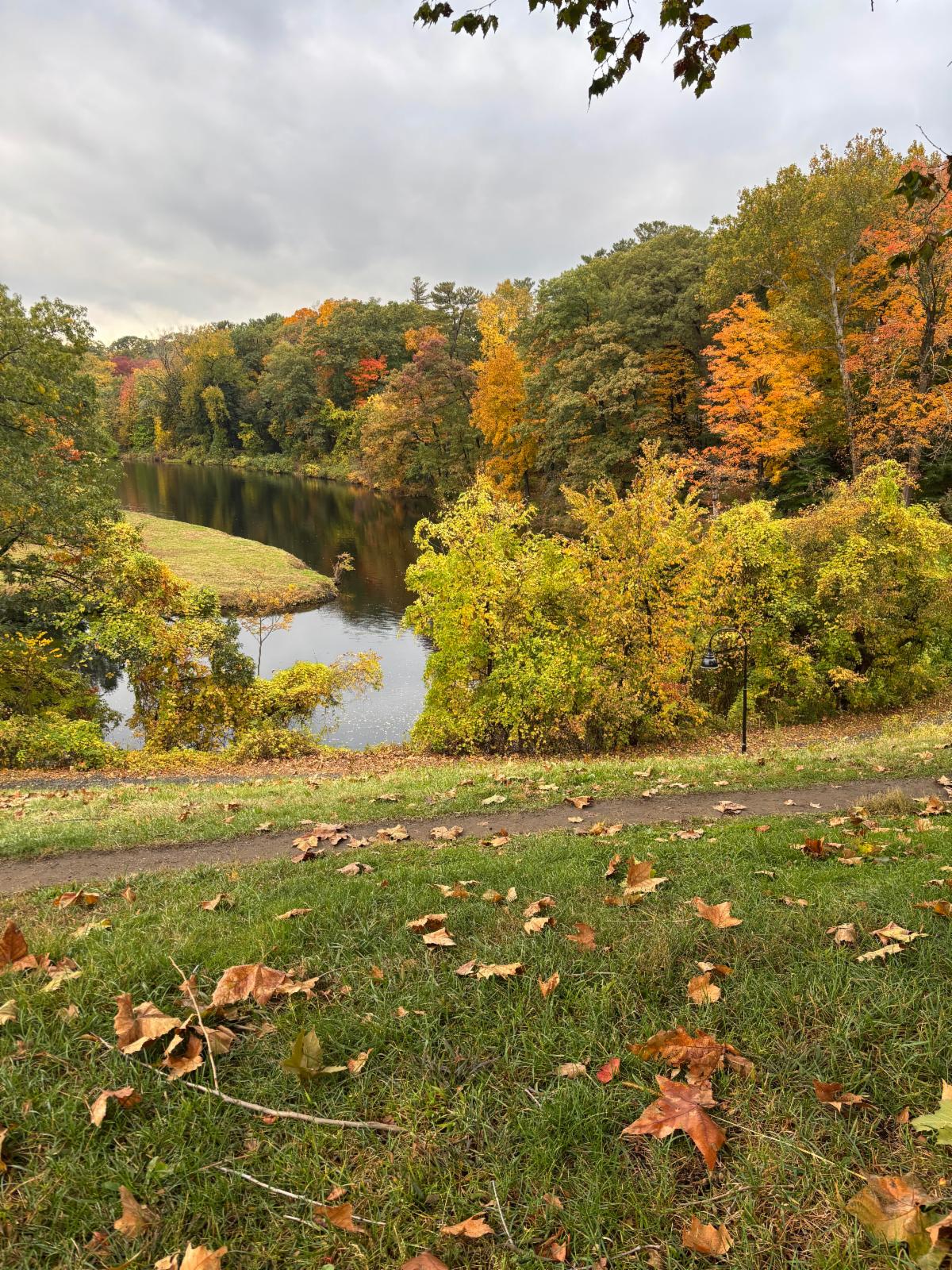
The foliage is a special time of year in the cycle of life. Some people view it as a time of loss while others see it as a profound time of beauty in nature. This picture of Paradise Pond on the Smith campus was taken in mid-October when Autumn colors are rich and vibrant. Paradise Pond and the Mill River trails bring memories of nostalgia to students, thoughts of joy and moments of happiness! - Photo by Sis Kim

Religious and Spiritual Traditions and Civic Engagement


“Seek the welfare of the city where I have sent you into exile,

and pray to the Lord on its behalf, 

for in its welfare you will find your welfare.” Jeremiah 29:7


There was often little difference between religion and government in most places until the Enlightenment. The monarch directly or symbolically led the religion or sometimes the religious leader led the government. In some countries, there is still a blending of religion and government in some form. Part of what changed during the Enlightenment is the start of what we would now call secular government. This allows for religions to engage with civic society through official representatives or as individual adherents. The nature of community engagement encouraged by religious traditions vary greatly based on the type of political system and whether a particular tradition is a religious majority or minority.


Still, many traditions at their core espouse a version of the Golden Rule to act towards others as you would expect to be treated.


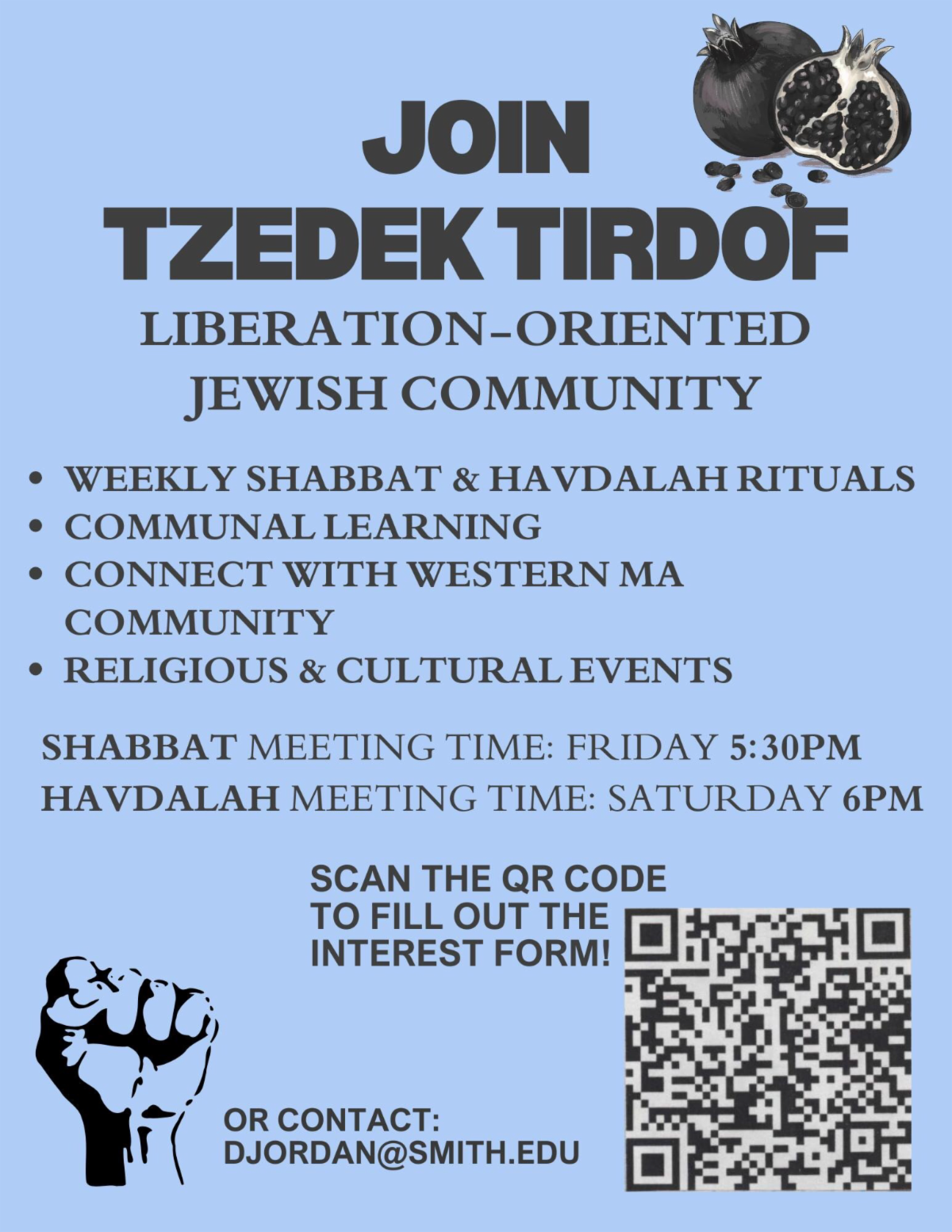
For almost two thousand years, Judaism was a religion and culture that always lived as a minority within larger groups (the vast majority of Jews lived in Christian Europe or under Muslim rule in the Middle Ages). Judaism post-biblical texts beginning with the Mishnah are all written under the rule of other political and religious systems with uneven balance of power. Engagement with the majority was important, ever-present, but often perilous. This often lends texts a more contingent nature than they might otherwise have in a different context. In Pirkei Avot, the Sage Hillel the Elder offers a powerful saying that gets to the heart of the complicated balance: "If I am not for me, who will be for me? And when I am only for myself, what am I? And if not now, when?" (Mishnah, Ethics of the Ancestors 1, 14)


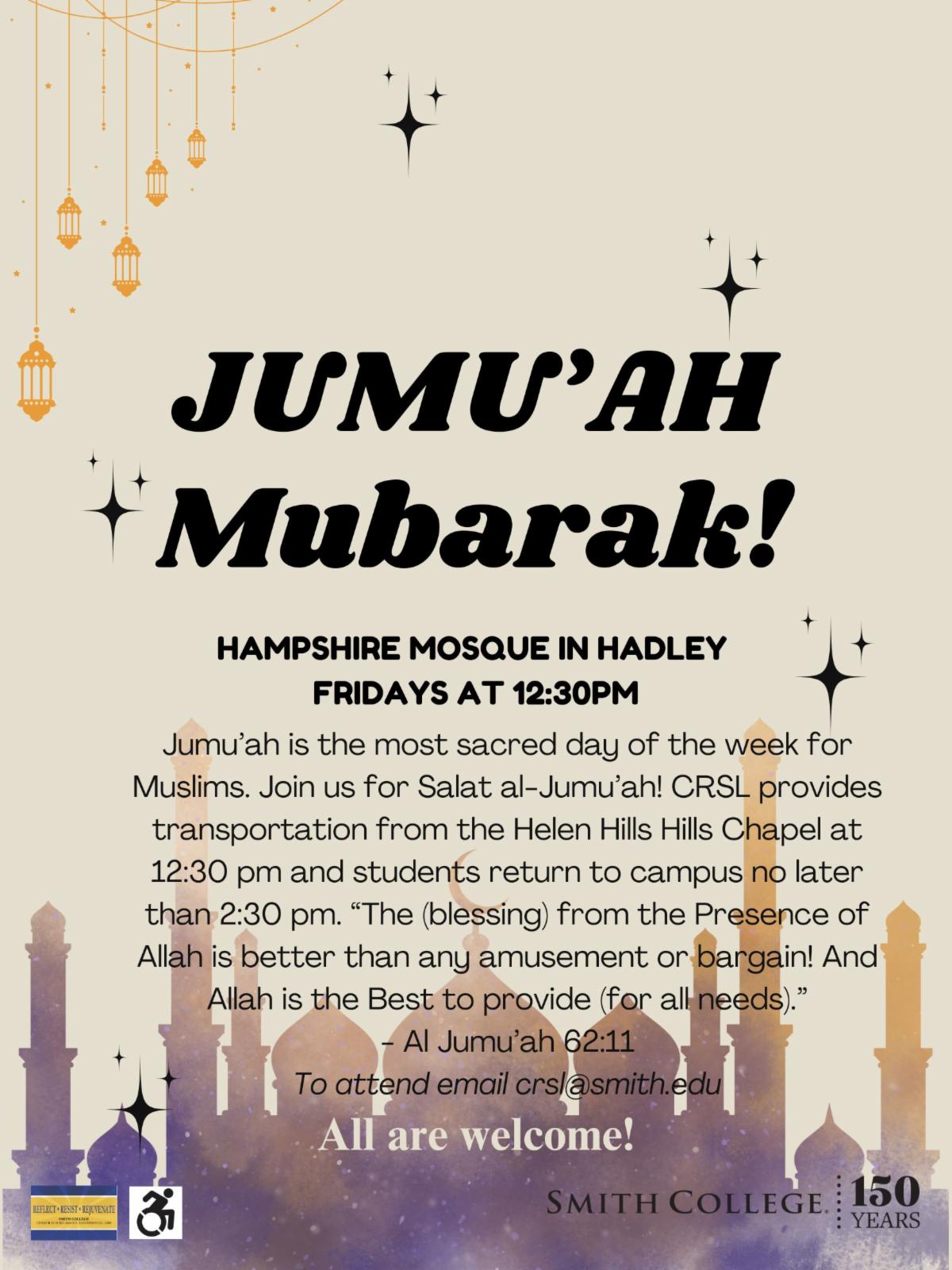
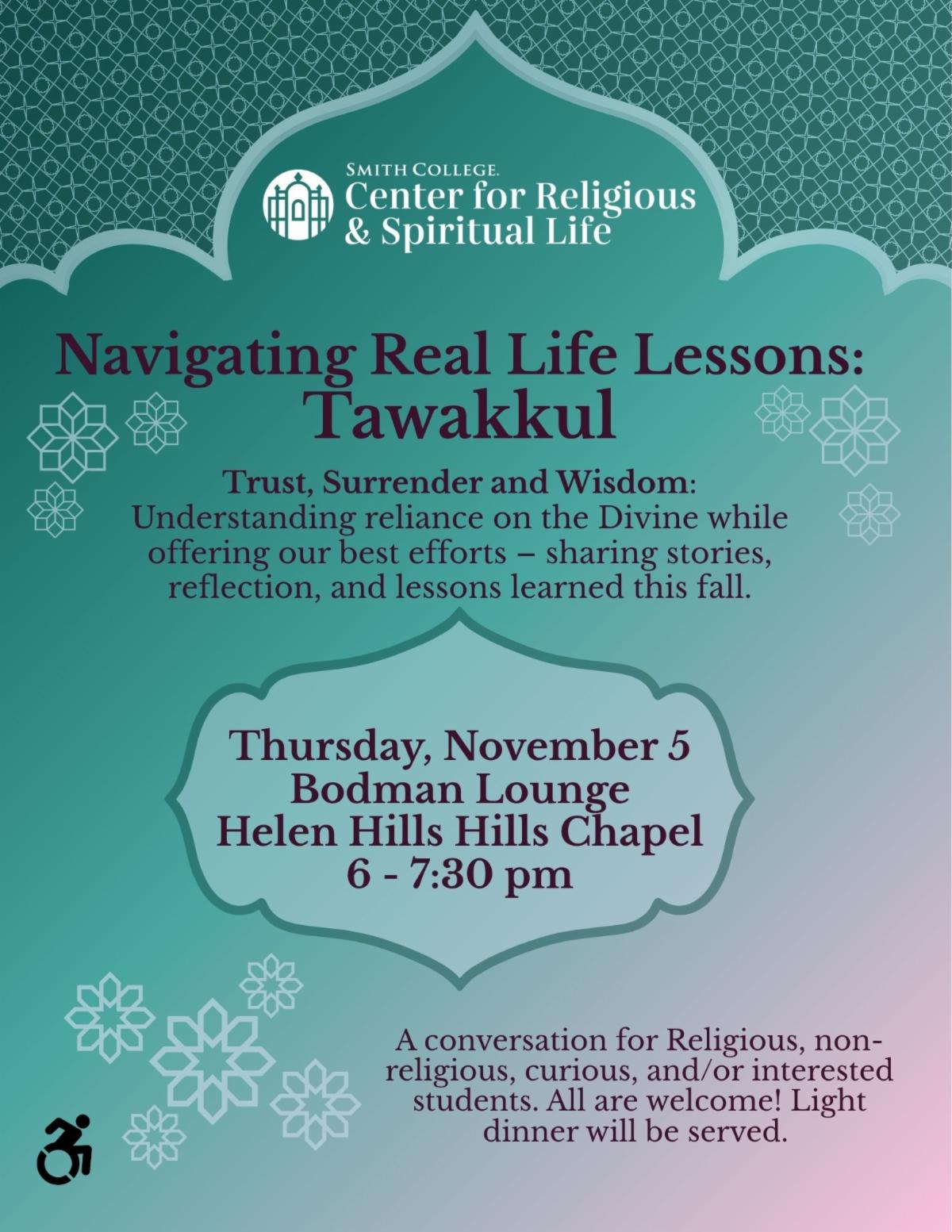
Sister Kim Alston also offers reflections on the importance of community engagement in Islam including a hadith of Prophet Muhammad (SAW): "Muslims are taught to visit the sick, give back in regular charity, and make the masjid a community center for upliftment. Charity is one of the five principles of Islam. It is not just monetary, but good deeds are considered an essential form of charity. In fact, no charity is too small and all charity will be rewarded. A smile is considered a charity. Prophet Muhammad (SAW) gives important guidance around community engagement. One hadith (saying) states: 'The most beloved people to Allah are those who are most beneficial to people. The most beloved deed to Allah is to make a Muslim happy, or remove one of his troubles, or forgive his debt, or feed his hunger…”’ -Al-Mu’jam al-Awsat lil-Tabarani 6026


We look forward to continuing to examine Civic Engagement at our next Generating Justice and Joy program. Bring a friend as we build community around reflection, discussion, and action.


By Rabbi Bruce Bromberg-Seltzer, Jewish Student Advisor in the Center for Religious and Spiritual Life

Generating Justice & Joy (GJJ) is a community gathering program sponsored by the Center for Religious and Spiritual Life (CRSL) in collaboration with students and other Smith departments. GJJ is a gathering in recognition that we all need a place to share concerns and learn what is on the hearts of our fellow community members. We gather with the understanding that gathering in solidarity is an active—not passive—activity, and that doing so can elicit joy, and joy inspires us toward connection, justice, and hope.


Join us on the steps of the Campus Center (also known as Chapin Deck) on November 19, 6 pm, for a short reflection led by Reverend Matilda Rose Cantwell, College Chaplain, and then back to the Helen Hills Hills Chapel for the program. The start time of the first part of the program is at 6 pm, dinner and program at 6:30 pm, program end time is 7:30 pm.


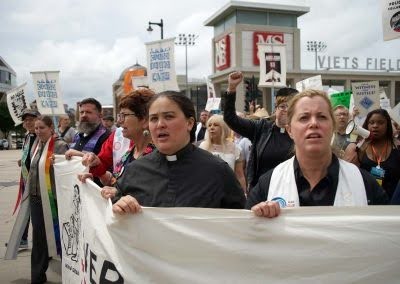
To vigil is to stay awake. The Latin root of the word, vigilare, means to “stay vigilant” and to pay attention. Vigils are public expressions of shared concerns, wherein a community to mourn together, to express collective shock and outrage together, to bear witness to things that matter, so these things - and the people these things affect- are not forgotten. Whether held in silence, singing, dance, or stillness, vigils prepare our hearts to take the next step.


Since 2016, the CRSL has led a regular GJJ vigil, held this year on the third Thursday of each month, to serve as a container for concerns and griefs and hopes—institutional, social, structural, and global. We began holding these because of the many disruptive events that affect members of our community. The ubiquitous climate disasters, state-sponsored violence, structural violence, and hate crimes are made visible to us day in and day out.


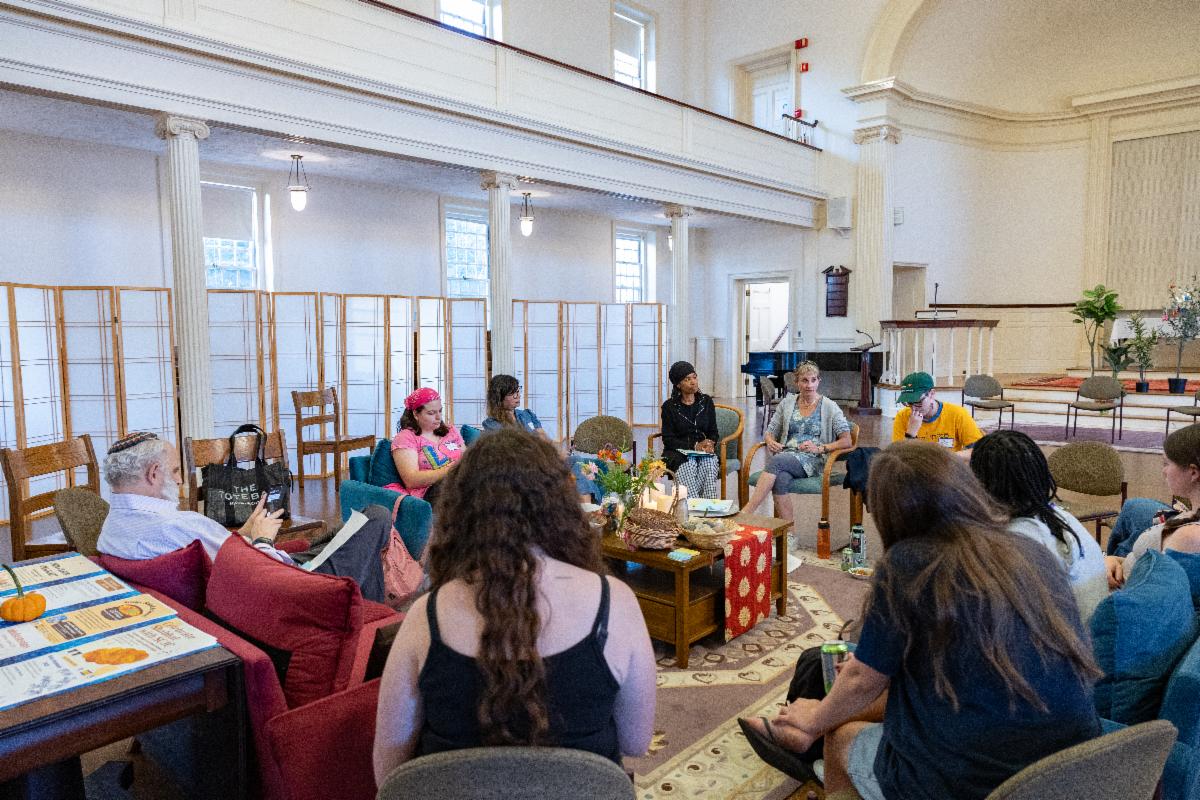
GJJ is also a place for the personal hopes and fears on our hearts. We may have lost someone, we may have gone through a breakup, or we may be struggling with something that affects our community at home or elsewhere. After the candlelight vigil, at which the chaplain or another campus leader offers some words, attendees are welcomed back to the Helen Hills Hills Chapel for a program, which will consist of a warm meal (we will have food for 30) and more personal dialogue, using a model drawn from Loretta Ross’s 5 Cs human rights framework or something similar. There are no grades, no evaluations, and no work or assignments—just, if useful, a small action toward justice and joy that the evening may have inspired.


Generating Justice and Joy

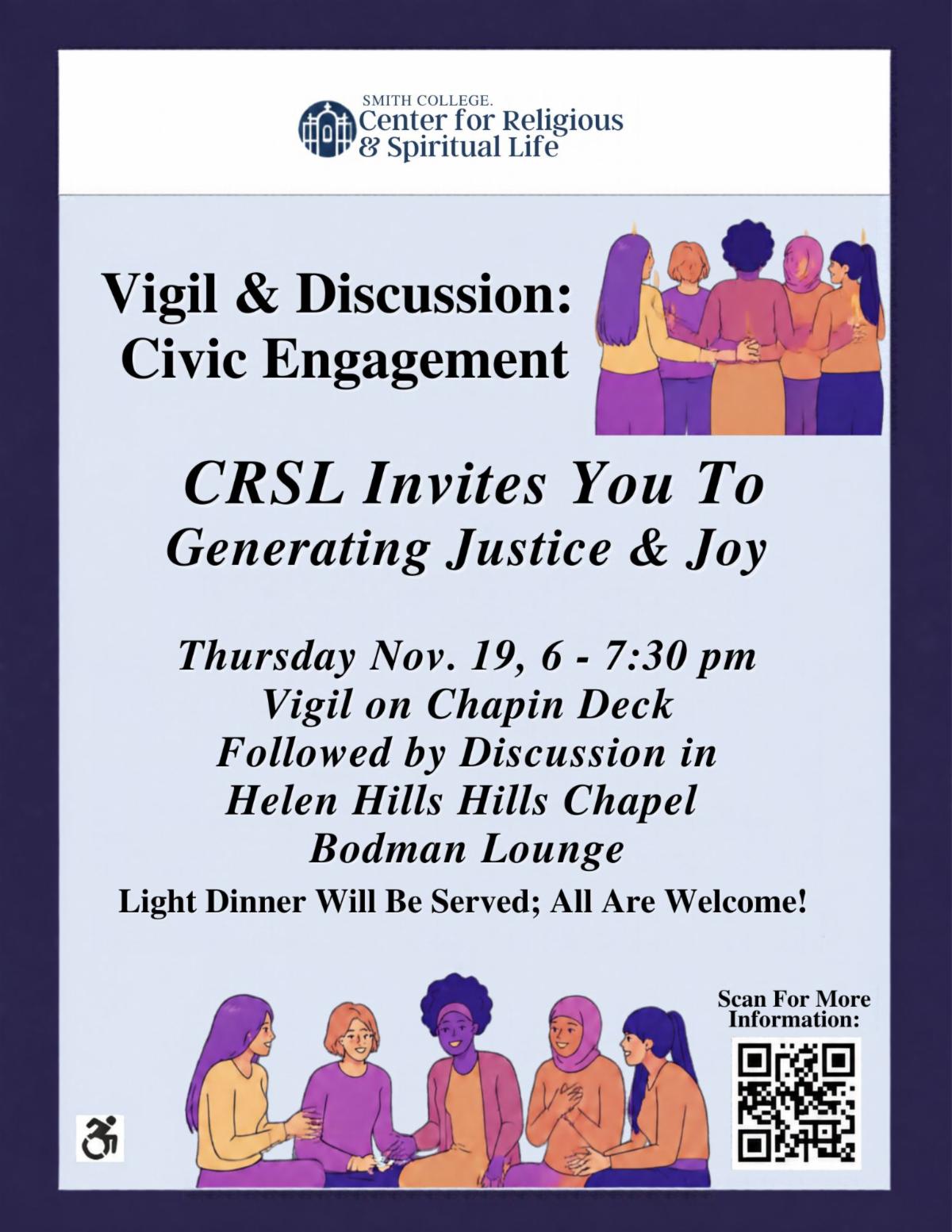
Vigil & Discussion: Civic Engagement

Thursday, Nov. 19, 2026

6:00 – 7:30 pm


CRSL invites you to Generating Justice & Joy. Vigil on Chapin Deck followed by discussion in Helen Hills Hills Chapel Bodman Lounge. Light dinner will be served. All are welcome! For more information scan the QR code on the flyer.


Sponsored by the Center for Religious and Spiritual Life

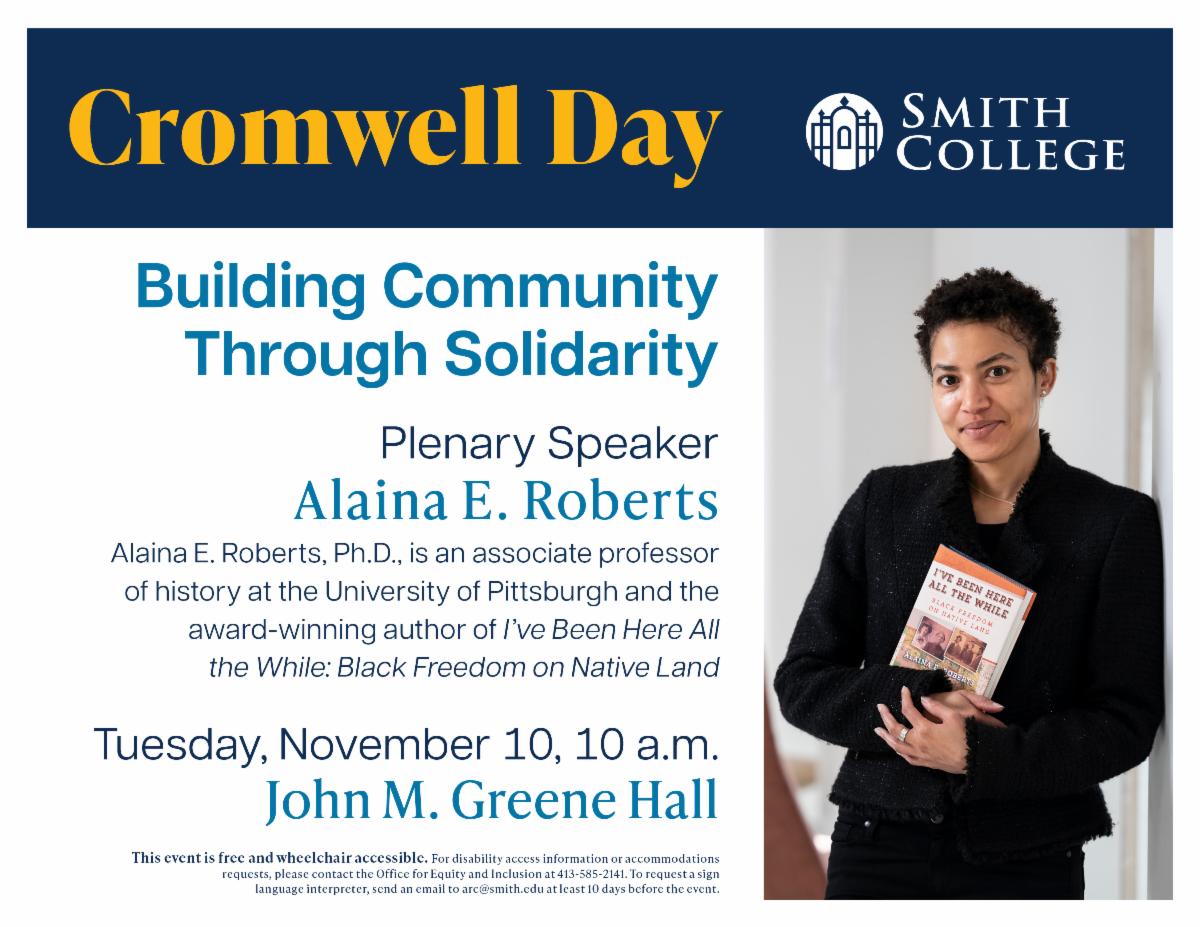
Cromwell Day

Building Community Through Solidarity


Plenary Speaker Alaina E. Roberts

Alaina E. Roberts, PhD., is a associate professor of history at the University of Pittsburgh and the award-winning author of "I've Been Here All the While: Black Freedom on Native Land."


Tuesday, November 10, 10 a.m., John M. Greene Hall


This event is free and wheelchair accessible. For disability access information or accommodations requests, please contact the Office for Equity and Inclusion at 413-585-2141. To request a sign language interpreter, send an email to arc@smith.edu at least 10 days before the event.