Weekly Digest Number 36 - September 7th, 2021 |
|
(Editor's Note: As with any strike in basic industry, rail workers have a key role to play in solidarity by not delivering and pulling cars from struck facilities. Solidarity is a two-way street. When we eventually strike the rail industry, we will need lots of friends and allies to support us. We reap what we sow ...) |
|
No Contracts, No Snacks: Everything You Need to Know About the Nabisco Strike |
|
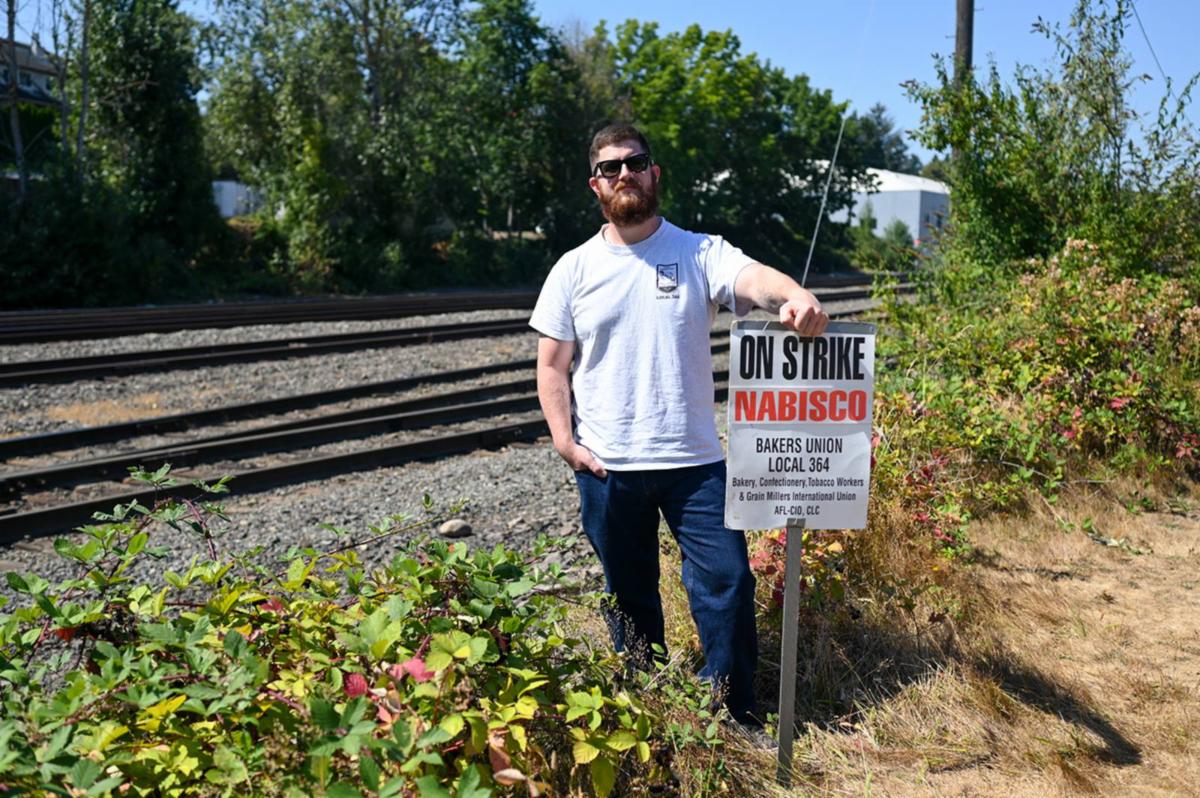
Earlier this month, "It's Always Sunny in Philadelphia" actor Danny DeVito tweeted out what has become a common refrain among labor advocates: "NO CONTRACTS, NO SNACKS." The tweet, which was shared almost 38,000 times, continues to gain traction. It's a virtual reminder of the ongoing strikes taking place at Nabisco factories in five states across the country.
On Aug. 10, about 200 workers represented by the Bakery, Confectionary, Tobacco Workers and Grain Millers (BCTGM) union went on strike in Portland. They were followed by workers in Colorado, Virginia, Illinois and — most recently — Georgia.
According to union representatives, Nabisco — which has seen record profits amid the pandemic — is asking its workers to put in extra hours while paying less overtime. Darlene Carpenter, a business agent of BCTGM local 358 in Richmond, chalked up the company's refusal to offer more compensation to greed ...
.... The Nabsico strike is still ongoing — and other union workers are acting in support. As Laura Wadlin, the co-chair of the Portland Democratic Socialists of America, posted on Twitter, union railroad workers delivering baking supplies to the Nabisco factory in Portland backed up the train when they saw picketers on the tracks. "[G]ood luck making cookies without the flour and sugar they were going to deliver," Wadlin wrote. The Railroad Workers Union responded online: "No contract. No snacks. Flour and sugar stays on the tracks."
|
|
(Editor's Note: Looks like the CN overplayed their hand. Will CP win the day after all? Will KCS remain independent? Will other suitors join the fray? What a fiasco. While millionaires and billionaires play financial war games, the nation's railroads cannot even do the day-to-day job of moving the nation's freight. What a farce. ) |
|
STB Unanimously Rejects CN-KCS Voting Trust |
|
The United States Surface Transportation Board—as expected by many industry observers and financial analysts—on Aug. 31, 2021, by unanimous vote, rejected the CN-Kansas City Southern voting trust, effectively killing the merger, and opening the door for Canadian Pacific to re-engage with KCS on the CPKC (“Canadian Pacific Kansas City”) deal it struck with KCS on March 21, albeit with a sweetened offer. “The Board finds that the proposed use of a voting trust in the context of the impending control application does not meet the standards under the current merger regulations and therefore denies the applicants’ motion for authorization to establish and use the proposed voting trust,” STB said in Docket No. FD 36514 (downloadable below). “The Board has determined that the proposed voting trust is not consistent with the public interest standard under the Board’s merger regulations.”
|
|
(Editor's Note: Railroad Workers United and the Nevada Rail Coalition are working closely with On Track North America to boost rail traffic - freight and passenger - in the Southwest.) |
|
Western States Rail Coalition to Address Supply Chain Issues |
|
CARSON CITY, Nev. – The Nevada Governor’s Office of Economic Development (GOED) is partnering with OnTrackNorthAmerica to create the Southwest Supply Chain Coalition that will better connect markets and lower costs, while at the same time addressing urgent climate change, safety, and congestion issues
“Supply chains extend beyond individual companies, beyond individual industries, and beyond state borders,” said Kris Sanchez, GOED Deputy Director. “The supply chains of California, Nevada, Utah, and Arizona are inextricably linked and growing chaotically.”
The purpose of the Coalition is to develop a regional approach to coordinating planning of and investment in the supply chain transportation infrastructure that serves the commercial activities of each jurisdiction, which are mutually dependent for the production, import, export, delivery, and utilization of goods.
GOED and OnTrackNorthAmerica will work with counterparts in California, Utah, and Arizona to promote the Southwest Supply Chain Coalition. Landowners, developers, realtors, transportation and energy service providers, government agencies, economic development professionals, shippers, ocean carriers, legislators, regulators, planners, and local elected leaders are all expected to participate.
“Connecting Nevada, Utah, and Arizona businesses with California’s ports and markets by rail boosts economic development, trade, and supply chain efficiencies in all four states,” said Michael Sussman, OnTrackNorthAmerica Chairman and CEO.
The Southwest Supply Chain Coalition intends to create a breakthrough in multi-state, results-producing transportation planning. Economic development can then advance more sustainably, informed by productive engagement among each state’s public agencies, port authorities, economic developers, business, communities, and transportation providers.
“California’s supply chains have expanded into Nevada, Arizona, and Utah for warehousing, distribution and production,” Sanchez said. “Yet, there is only one warehouse in Nevada that is receiving or shipping goods by rail. Meanwhile, 70 percent of all trucks traveling in Nevada are coming from or going to California.”
The goal of the OnTrackNorthAmerica effort is to adopt whole-systems, regional, and common-sense approaches to logistics and land use that will benefit all stakeholders. A huge benefit of this program would be to stage certain logistics activities in Nevada, Utah, and Arizona rather than the densely populated California metro and port areas, thereby alleviating congested highways and improving the balance of truck and rail transportation for systemwide efficiency.
“Supply chains need to be redesigned to support reshoring of manufacturing and colocation of processing and distribution facilities within the region,” said Sussman. “The trucking industry benefits from more short-haul movements. Short haul trucking drives efficiency, eliminating costly layovers due to hours-of-service regulations. Short haul drivers have a better quality of life and are easier to retain.”
|
|
Intermodal Summit: Precision Scheduled Railroading ‘All About Doing More With Less’ |
|
Matt Parker, a legislative chairman with the Brotherhood of Locomotive Engineers and Trainmen (BLET) in Nevada, discusses with FreightWaves’ Kevin Hill why precision scheduled railroading (PSR) isn’t about precision, but about profit.
SPEAKER: Matt Parker, chairman of the Nevada State Legislative Board for the BLET
BIO: Parker has worked as a train engineer and conductor since 2004. He also focuses on issues concerning safety, sanitation and political education in his position as chairman for state legislative issues for the BLET in Nevada. Besides informing its members, his board works with elected officials to educate them about issues affecting the rail industry.
About PSR: “I am concerned about what I see with regard to the state of rail because I just do not see a focus on service that I believe needs to be out there with this precision scheduled railroading the railroads have gone to. What everybody needs to understand is it has nothing to do with either precision or scheduling. It’s all about doing more with less, which has produced some great financial results for the carriers. But we’ve seen a tremendous degradation in service out here.”
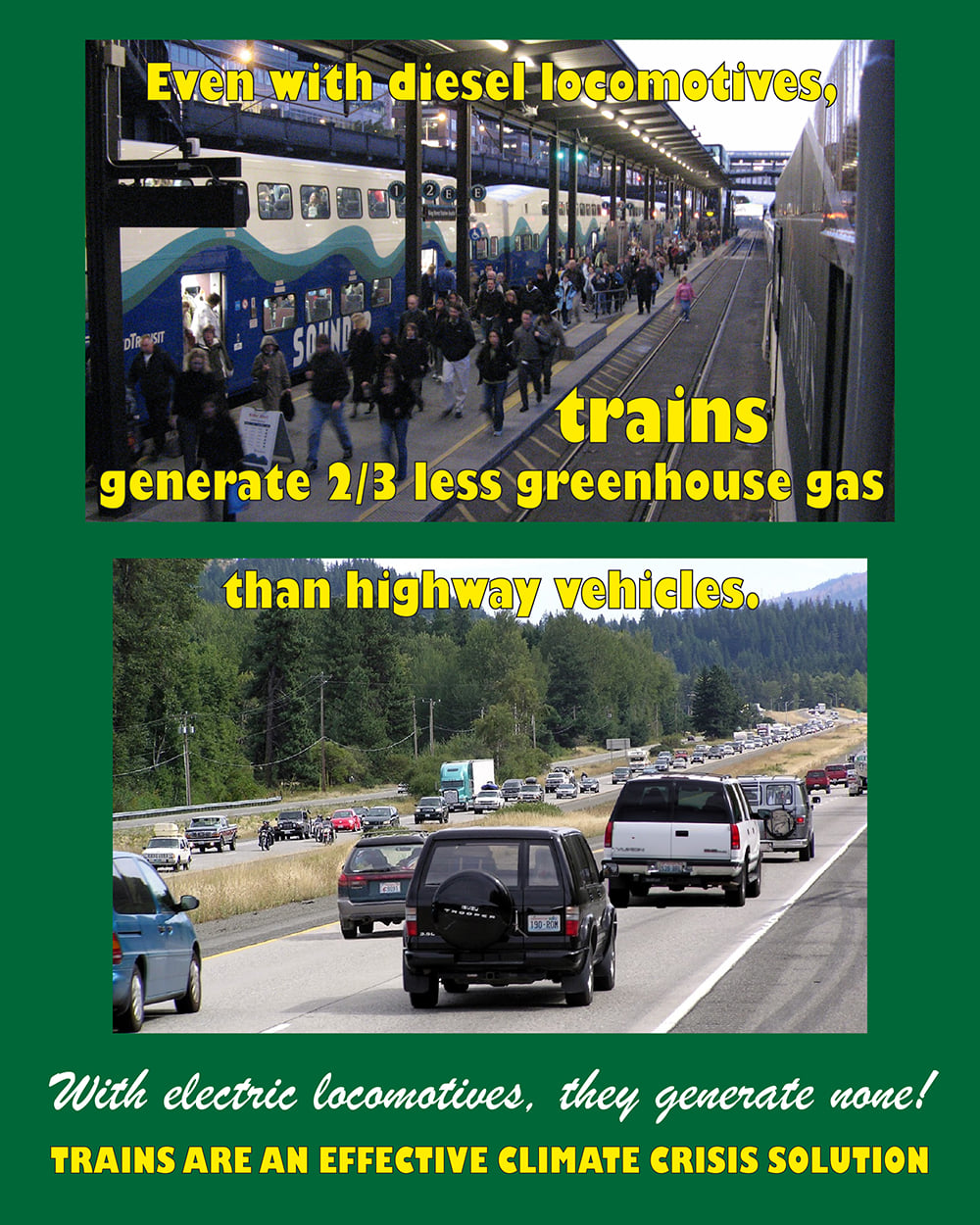
About persuading businesses to switch to rail: “Everybody’s talking about rail being the green alternative as we look at climate initiatives, addressing climate change and such moving more of that freight to rail because it’s more fuel-efficient because it generates less emissions. But, in order to encourage that business to come to rail, in order to keep that business there, there needs to be a reasonable level of service that I’m just concerned with.”
|
|
Editor's Note: Labor Notes - a close ally of RWU - does great workshops and trainings. Any rail worker active in the struggle whether inside or outside of their union can benefit greatly from them. Sign up!) |
|
Secrets of a Successful Organizer: September Sundays Series |
|
Join us for our Secrets of a Successful Organizer training series. These are based on our widely-acclaimed book, Secrets of a Successful Organizer. These trainings will be held via Zoom. The sessions will run Sundays from 1pm-3pm ET (10am-12pm PT) on September 12, 19, 26, and October 3.
We are asking you to attend all four workshops in the series, including the fourth workshop session, in which we'll cover topics that come up in the other sessions and talk about what all of this looks like in practice. Bring your challenges workplace and union organizing challenges to the group to problem-solve.
Once you register, you will receive a link to join via Zoom. We will send emails weekly with links to sessions on the day of the event. Be sure to check all of your email folders, including your spam folder, for the session links and to download and update Zoom beforehand.
Sign up early—space is limited.
Cost: $15 for the whole series. Includes access to all workshops until space is filled. No one will be turned away due to lack of funds.
Subscription offer valid only for U.S. addresses. Click here to purchase an international subscription.
WORKSHOP DESCRIPTIONS
|
|
(Editor's Note: Rail advocacy groups like this one, the Nevada Rail Coalition, Solutionary Rail, and others are popping up all across the country. It would behoove rail workers and our unions to support them and get involved. We have a lot of technical insights and experience to offer.) |
|
Introducing: The Climate Rail Alliance |
|
The Climate Rail Alliance provides a platform for people who value our existing rail networks and want to expand, improve, electrify, and innovate both passenger and freight service, toward the following goals and objectives:
*Climate emissions reduction
*Respecting the climate emergency
*Air pollution reduction
*Jobs and economic equity and recovery
*Environmental and mobility justice
*Optimal utilization
*Community connectivity with transit and multimodal
*Excellence in user experience
*Increased speeds, frequency, reliability
*Increased training, expertise, and safety
*Public education, outreach, advocacy
We explore why and how this expansion should take priority over investment in highway development, and over ‘ultra’ high speed trains or ‘bullet' trains, which may not be operational for several decades. We believe that rail plays a vital role in transportation and climate policy when integrated effectively with transit and other modes. We engage in local, state, and nationwide rail advocacy and projects.
|
|
WEBINAR: Freight Automation --
Dangers, Threats and Opportunities for Health & Equity
|
|
Please join the Labor Network for Sustainability on Wednesday, Sept. 22 at 7 p.m. Eastern (6 p.m. Central, 5 p.m. Mountain, 4 p.m. Pacific) for a discussion on an important topic, automation in freight. You can register here.
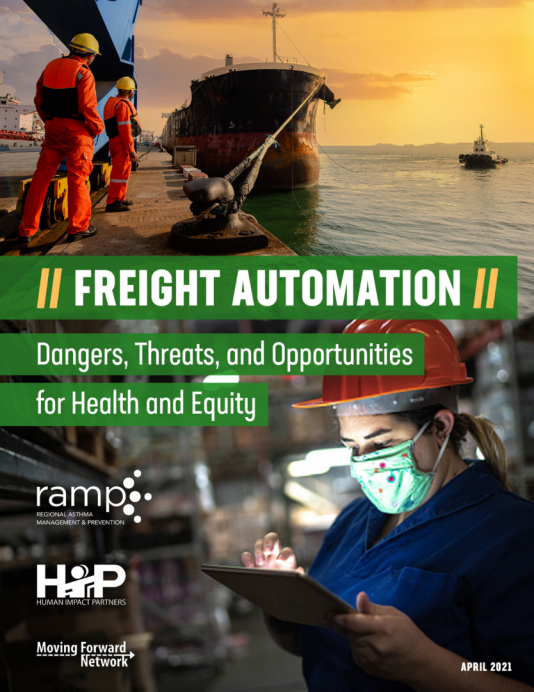
Presented by our allies, the Moving Forward Network (MFN), we will discuss "Freight Automation: Dangers, Threats, and Opportunities for Health and Equity," a report released earlier this year by Regional Asthma Management and Prevention, MFN, and Human Impact Partners. It explores how freight automation affects the health of workers and communities as well as threatening local economies by eliminating jobs.
If you have questions, please let contact Judy Asman at judy@labor4sustainability.org. We look forward to seeing you! Again, please register using this link.
|
|
JOIN ENVIRONMENTAL, LABOR AND TRANSIT GROUPS: DEMAND CONGRESS INCLUDE $10 BILLION IN TRANSIT FUNDING |
|
Transit is essential to our communities, local economies and the lives of millions of people across the country. And yet, Senate Republicans threatened to withhold their support from the bipartisan infrastructure bill unless Democrats accepted cuts to critical public transit investments. Thankfully, there’s still a chance to change that through the ten-year $3.5 trillion budget, which will only require a simple majority to pass the Senate. Join the National Campaign for Transit Justice as we work alongside our allies in organized labor and environmental organizations to demand Congress include the $10 billion in transit funding in the Build Back Better Act that was stripped at the last minute from the bipartisan infrastructure bill.
|
|
No-Fly Zone Set Over Train Derailment Site Near New Hampton |
|
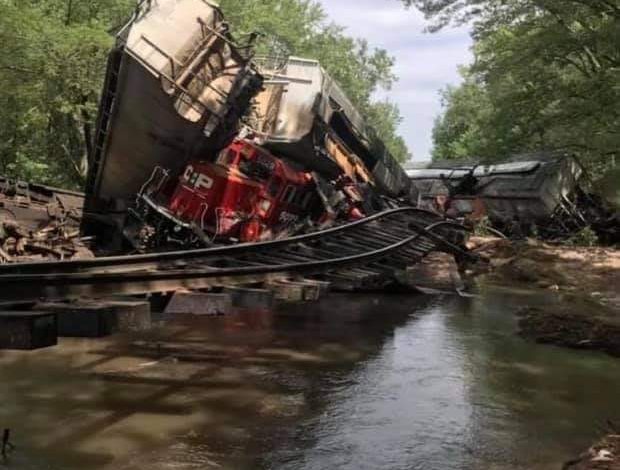
As many as six locomotives and four rail cars, including a tanker containing anhydrous ammonia, were involved when the trail derailed shortly after 4 p.m. about three miles southwest of New Hampton. The wreck caused a leak in the anhydrous ammonia tanker, leading to the evacuation of residents in the immediate area. Those residents were allowed to return to their homes late Sunday morning.
In a media release Sunday afternoon, Chickasaw County Emergency Management Coordinator Jeff Bernatz said “Our current weather modeling including wind speed and direction continues to show no danger to the City of New Hampton and its residents. The Iowa DNR is on scene monitoring water quality downstream.”
In an update late Monday morning, the New Hampton Fire Department says, “CP crews are continuing to work to mitigate the incident that occurred near the intersection of 220th Street and Ivanhoe Court. At this time 220th Street remains closed to thru traffic due to heavy truck operations in the area. We are still asking the public to avoid this area. Additional signage is being placed informing the public of the closure and how to detour.”
|
|
(Editor's Note: Just as with the proposed merger of KCS to another larger Class One carrier, a merger offers various advantages including access to capital, seamless service, economies of scale, etc. BUT the drawbacks often outweigh the advantages. Is it possible in a privately held, largely unregulated industry, to keep the "pros" and not the "cons" in a merger? The short answer is NO.) |
|
CSX/Pan Am Merger: Pros and Cons |
|
As a series of Surface Transportation Board comment periods continues for the CSX’s proposed acquisition of Pan Am Railways, letters both for and against the combination have been filed with the STB.
CSX, in a media release, pointed to several letters of support ranging from Maine’s U.S. Senators to passenger rail advocates and agencies. Canadian Pacific called for the STB to impose conditions. Amtrak reiterated its opposition. And, perhaps curiously, the U.S. Department of Transportation, on behalf of the Federal Railroad Administration, filed comments that took no position either way, but instead chose to “highlight some of the issues that are of particular interest to the USDOT, which we urge the Board to consider carefully in the course of its review of the proposal.”
ON THE ‘YES’ SIDE:
On the support side, several additional letters of support were recently filed with the STB, bringing the total to more than 100 pro-merger comments, CSX reported on Aug. 30. .....
ON THE ‘NO’ SIDE:
Canadian Pacific on Aug. 27 filed comments by attorneys David L. Meyer and Jeffrey J. Ellis asking for specific conditions to be imposed on the merger, in particular, the Hoosac Tunnel route on the Pan Am Southern (PAS), the joint venture of Pan Am and Norfolk Sothern ....
|
|
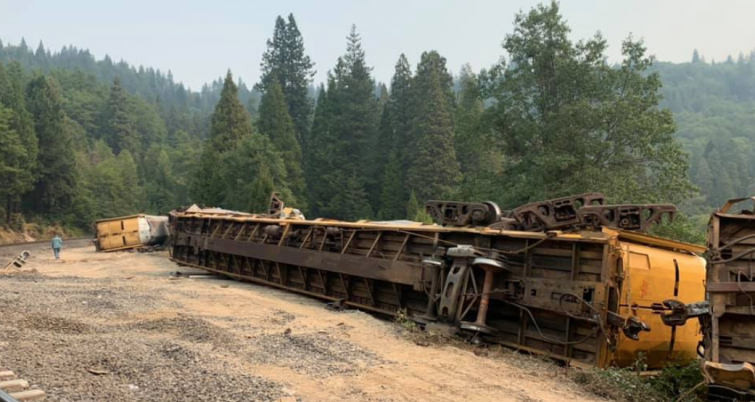
(Editor's Note: By the looks of the derailed cars in the photo, the cause of the wreck appears suspiciously to be "stringlining", whereby too much tonnage being pulled up the grade puts tension on the inside rail of such a sharp uphill curve, pulling the cars into the straight line of least resistance, the inner flanges jumping the inside rail. This is what happened 30 years earlier at this exact spot. Why does railroad management never learn how to run the railroad, making the same old mistakes again and again?) |
|
Three Decades Later California Site Produces Another Derailment, But this Time it’s Not Lethal |
|
Officials are trying to figure out how a Union Pacific train derailed in Siskiyou County, Calif., at the same site of one of the worst ecological disasters in state history.
The derailment 30 years ago resulted in a chemical spill that destroyed miles of the Sacramento River. The most recent accident did not cause any chemical leaks and no one was hurt.
A total of 18 cars left the rails and 11 were on their sides. Two tanker cars were involved in the accident but they were empty. The Siskiyou County Office of Emergency Services confirmed there were no punctures in the tanks and nothing entered the river. Later, the California Department of Fish and Wildlife’s Office of Spill Prevention and Response also confirmed the river was clean.
Back on July 14, 1991, a Southern Pacific train derailed on a hairpin curve crossing the upper Sacramento River. A tanker fell into the river and leaked 19,500 gal of herbicide that turned the water green and killed all water life for more than 40 miles downstream to Lake Shasta.
Residents and railway workers at the scene said they suffered from respiratory and other health issues from inhaling the fumes.
|
|
The Battle of Blair Mountain Was the Largest Labor Uprising in U.S. History (One Hundredth Anniversary) |
|
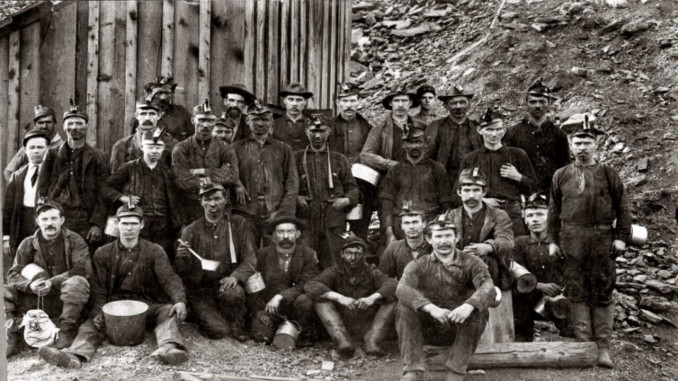
In the first decades of the 20th century, desegregation seemed like a distant dream. Bombings, lynchings, and other acts of brutal racist violence were all too common, and schools and other public spaces were largely segregated by race. Yet deep in the coal mines of West Virginia, an integrated militia of coal miners was forming, and they had little in common except for their enemy: oppressive coal barons. White hill folk, European immigrants, and African Americans were fed up with life-threatening working conditions, terrible wages, crushing debt, and corrupt mine operators. They were the original rednecks, and their interracial coalition was ahead of its time.
On August 25, 1921, anger boiled over and miners marched toward Mingo County, West Virginia. They were held up by a local sheriff, backed by hired local deputies, who defended key passes in the hills. They were told to “kill all the rednecks” they could, and the opposing forces fought for days at Blair Mountain in Logan County, according to West Virginia Mine Wars Museum director Kenzie New-Walker. The standoff lasted until September 2, when federal agents were called in. According to Chuck Keeney, historian and great-grandson of Blair Mountain leader Frank Keeney, the miners weren’t willing to fire on federal troops, because many were themselves veterans. They laid down their weapons and surrendered, thus ending the Battle of Blair Mountain. Although it would take several more years for coal miners to win the key labor victories they sought, the battle holds important lessons about organizing — particularly that even the biggest, most-entrenched bad guys can be toppled when the disenfranchised work together.
|
|
Spotlight: 8 Rail Lines Being Planned in Mexico |
|
Mexico’s railway regulator (ARTF) has launched several pre-investment studies to enable construction start on five passenger train projects, and it confirmed studies for three more projects next year. Overall, the studies will cost 270mn pesos (US$13mn) by 2022, according to the finance ministry’s (SHCP) investment portfolio. ARTF may still add more. BNamericas looks at eight projects that are planned so far. ....
Tehuantepec isthmus passenger train
- Location: Veracruz and Oaxaca
- Studies: January-October 2021
- Length: 302km
The passenger rail is the most important in the portfolio. It is planned along the 20bn-peso Tehuantepec isthmus rail corridor between Salinas Cruz port in Oaxaca and Coatzacoalcos port in Veracruz.
While work on the interoceanic freight corridor has started, the government is seeking a solution for passenger use. Studies started in January and will be completed by October.
This train would use of the existing rights-of-way for the 300km line Z between the ports. Of the total, 213km are concessioned to Tehuantepec state operator FIT and the rest to private operator Ferrocarriles del Sureste (Ferrosur). ...
|
|
Germany: Strike at Deutsche Bahn to Continue Until Tuesday Morning |
|
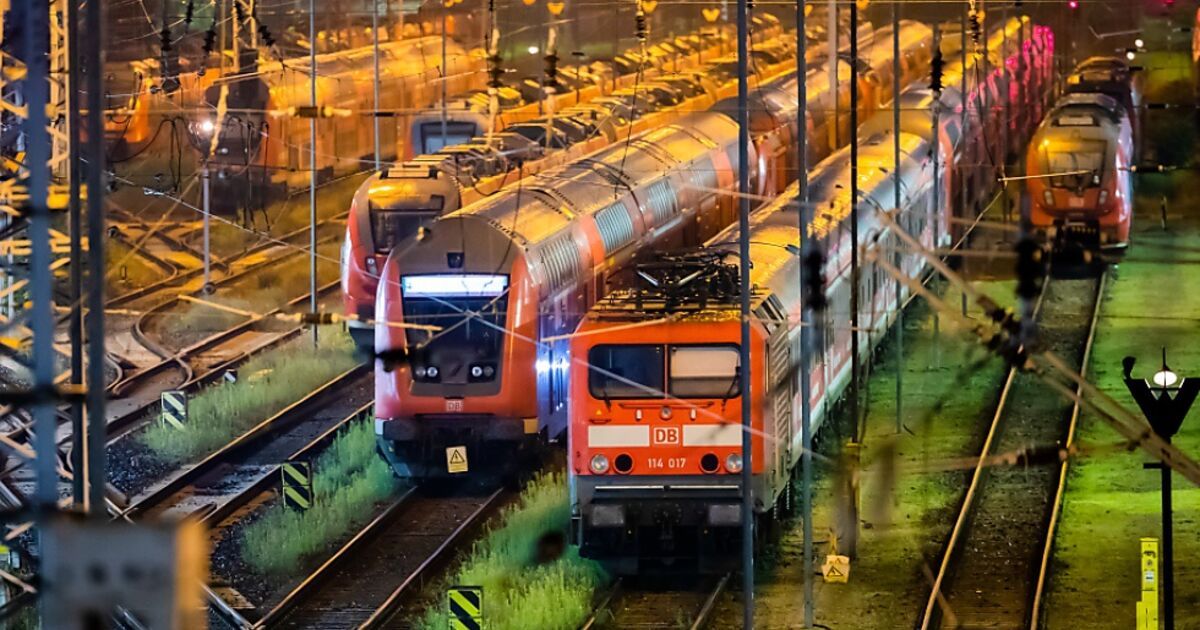
Locomotive engineers at Deutsche Bahn have been on strike since Wednesday. Things will not improve until Tuesday. The walkouts affect Berlin’s public transport too.
Berlin, September 5th, 2021 (The Berlin Spectator) — Since Wednesday, Deutsche Bahn’s freight trains are not moving. Freight is a big business. In 2019, the turnover DB Cargo reported was almost 4.5 billion Euro. The walkouts do have an effect here too. In regard to passenger trains, about two in three are not in service due to the strike. Long distance trains, including international connections, regional trains and local ones are either not running at all or they are on emergency schedules.
‘Ringbahn’ Out of Service
Germany has nine neighbors. Of course, there usually are regular trains to all of them as well as to European countries the Federal Republic does not share borders with. Deutsche Bahn says especially connections to Belgium, the Netherlands, France, Switzerland, Austria, Italy, Czechia, Hungary, Poland and Denmark are affected by the strike. So are all bullet train connections (Intercity Express, ICE).
|
|
|
|
|
|
|