The CRE urban landscape may be forever changed. Year-over-year declines in demand for office space have transformed the sector, giving rise to a new wave of converting existing structures for other purposes—the adaptive reuse of office buildings. Flexible workspaces, medical facilities, and data centers have gained traction as viable reuse solutions, while office-to-residential conversions are topping the trend. Here we look at pros and cons. | |
|
|
TRENDING UP: OFFICE CONVERSIONS
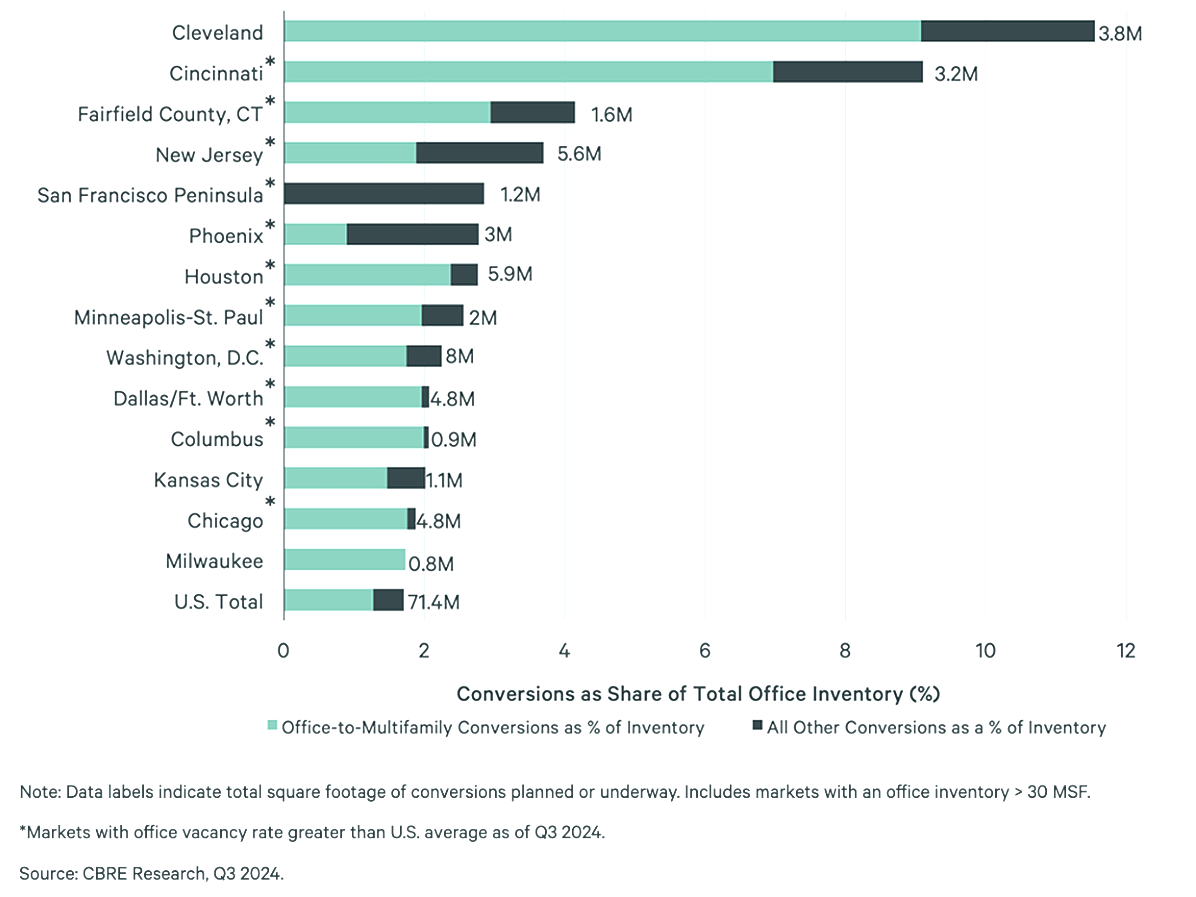
From 2019 to 2023, a significant portion of former office buildings were retrofitted, creating over 151,000 residential units nationally. In 2023 alone, office-to-residential conversions accounted for nearly 30% of all adaptive reuse projects in the U.S. Adaptive reuse offers innovative strategies for evolving urban challenges, but it’s not without drawbacks.
Adaptive Use Advantages
-
Answering the housing shortage. Many metropolitan areas face acute deficits, particularly for affordable units. The National Low-Income Housing Coalition estimates that the US has a shortage of 7.3 million rental homes for the lowest-income renters. Repurposing existing office buildings into multi-unit residences provides much-needed inventory without the burden of lengthy new construction timelines. Cities like New York and San Francisco, where demand far outstrips supply, stand to benefit greatly.
-
Revitalizing downtown districts. As remote work has reduced traditional office use (the national vacancy rate reached 19.4% at the end of October, an increase of 160 basis points yoy), urban business districts risk becoming ghost towns–with reverberations across the local ecosystem. Transforming offices into residential units or co-working spaces injects new life into hurting neighborhoods, supporting local businesses and boosting local economies.
-
Improving sustainability. Upcycling existing structures and materials conserves energy, reduces construction waste, and lowers carbon footprints compared to demolishing and rebuilding or building from the ground up. Leveraging existing infrastructure, like plumbing and electrical systems, may save building costs.
-
Meeting market demand. Office conversions can respond to immediate market needs, solving the rising demand for other uses like healthcare services and digital infrastructure.
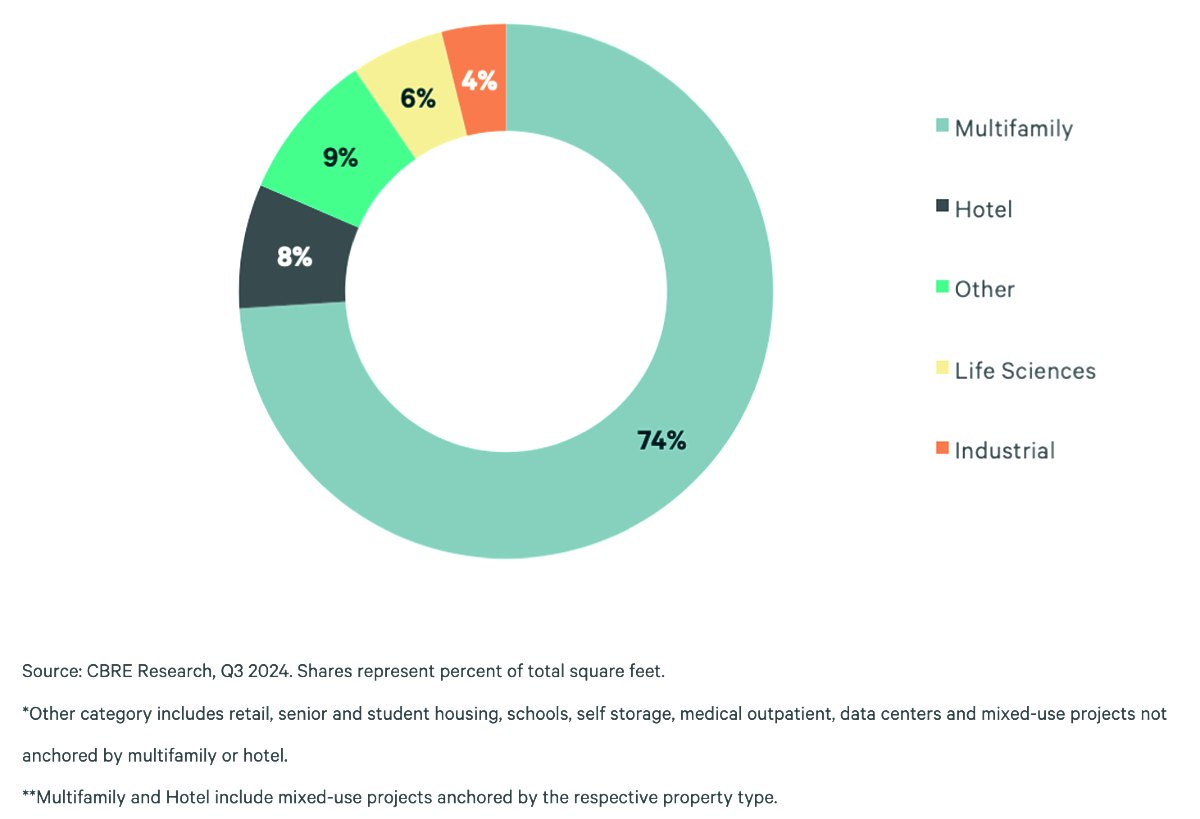
| Property Type Share Underway & Planned Office Conversions | |
Top Markets: Underway & Planned Conversions as % of Total Office Inventory | |
|
Adaptive Use Disadvantages
-
Structural limitations. Office buildings aren’t designed for residential or specialized use. Converting them may require dramatic structural makeovers and costly modifications to meet an array of new standards, from lighting and ventilation to exterior renovations and utility upgrades. Class A, as newer construction, is the hardest to convert due to the design and size of their floor plates and other structural and HVAC implications compared to Class B and C, which offer more flexibility for conversion.
-
Regulatory hurdles. Zoning laws and building codes often differ for offices versus other types of spaces. Meeting use codes for residential, life sciences, or healthcare services may delay projects and drive costs up.
-
Quality of life and affordability. Converted spaces may not live up to their intended use. Awkward layouts, low ceilings, and inoperable windows, for example, may compromise livability or functionality. Poorly executed projects risk creating subpar facilities. Additionally, while conversions can address housing shortages, many changeovers focus on developing high-end units, contributing to gentrification. Policymakers must ensure affordable options are included to benefit the broader community.
| |
Office conversions offer creative solutions to urban economic, social, and environmental challenges, big and small. With thoughtful execution, adaptive reuse can provide immense opportunities for revitalizing neighborhoods, promoting increased sustainability, and solving the housing crisis. However, structural, regulatory, and social challenges must be carefully considered and managed. By balancing innovation with inclusivity, office conversions could redefine urban living and working now and for the foreseeable future. | | | |
|
Sources
· CBRE Research, Q3 2024
· JLL Research. (2022). Office Market Trends: Adaptive Reuse in Major Cities
· Lester, Parker A. Fall, 2023 Evidence Matters: Office to Residential Conversions
· Salmonsen, Mary, February 22, 2024. Smart Cities Dive: 5 of the Largest Office-to-Residential Conversions Underway Across the US
· Urban Land Institute. (2023). The Potential and Pitfalls of Office-to-Residential Conversions
| |
WE'RE ATTENDING. LET'S SCHEDULE TIME TO MEET! | |
|
About The Henley Group
We are expert CMBS Borrower Advocates with extensive experience partnering with clients to catalyze loan resolutions. Dedicated to service excellence and outstanding outcomes, we have worked out over $14 billion in CMBS, CRE-CLO, and balance sheet deals to date. We are proud of the deep relationships The Henley Group has forged with Special Servicers for 15 years. Our unique skill set, patient negotiating style, and understanding of Special Servicing allow us to get results that may not be available to you.
| |
David Goldfisher
(617) 320-0284
| |
Tammy Goldfisher
(617) 512-1135
| |
David Arthur
(617) 719-1087
| | | | |