Hello happy framers!!
April has finally come along, and maybe we just might see a spring here in Missoula after a very long winter.
|
|
We have lots of fun things happening this spring at our shop, so read on to learn about our spring sale, our art supply store Easter Egg hunt, some tips from the art supply experts, and more! |
|
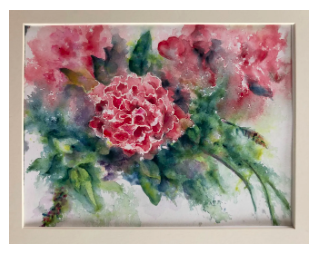
Only a few days left before our April Art Classes start.
Over the course of 6 weeks/18 hours of instruction, you will learn how to better understand and control your composition. Local artist and educator Kathleen Wills will teach you why, how, when, and where to apply water and pigment. Classes will also include demonstrations, visual reference materials, examples, questions, and individual attention. Those attending will choose their own subject, complete paintings demonstrating the concepts taught, and then explain and self-critique their paintings.
|
|
Learn more about this class here. If you're interested check on availability by calling the Frame of Mind Art Supply Store 406-549-8589, or online at www.frameofmindmt.com |
|
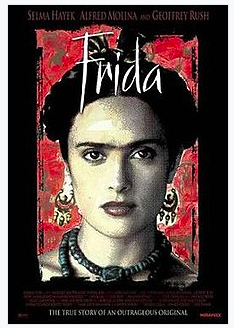
Frida
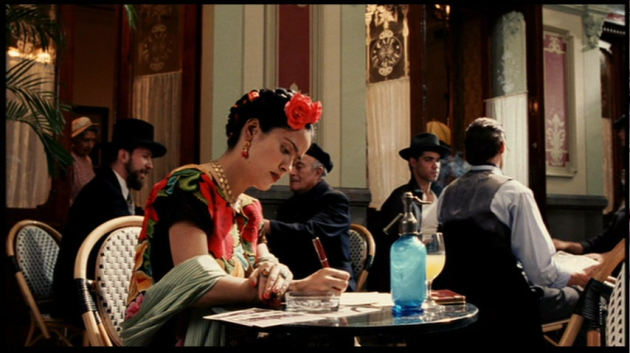
This film tells the story of her debilitating accident that occurred in her young adulthood, her early paintings, her marriage to artist Diego Rivera, and her activism in later years. Frida is played by actress Salma Hayek, who does a phenomenal job of capturing the artist’s passion and intelligence. Diego Rivera is played by wonderful character actor Alfred Molina, and he’s absolutely fantastic as the fiery politico artist who causes so much happiness and pain in Frida’s life. Several actors make cameos as famous figures, such as Geoffrey Rush as Leo Trotsky and Edward Norton as a young Nelson Rockefeller, but it’s really Hayek and Molina who carry the film.
|
|
Frida, directed by Julie Taymor, was the winner of two Academy Awards, for music (Elliott Goldenthal) and makeup (John E. Jackson and Beatrice De Alba), respectively. It was also nominated for six Academy Awards. Taymor does a great job of finding exactly the right visual language to tell Frida’s story.
|
|
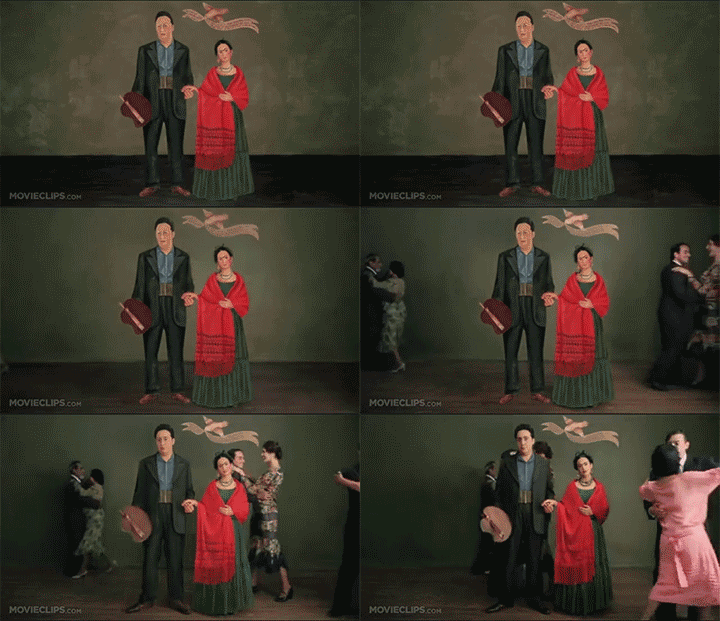
When Taymor sticks to inventing her own Frida-esque imagery, this film is truly awe-inspiring. To suggest Frida and Diego’s wedding, for which the artist famously borrowed a housemaid’s dress, Taymor starts with a painted, doll-like image of the couple—obviously inspired by Kahlo’s 1931 painting Frida and Diego Rivera. Real people dance into the background behind them, until the couple comes to life.
This film is truly a must see by any fans of Frida Kahlo, feminist artists, and Mexican inspired folk art!
|
|
🐣 The Art Supply Store 🐰
Easter Egg Hunt is BACK!!
|
|
Can you find our colorful eggs full of prizes hidden throughout the art supply store?
If you find one, lucky you! Open it up to see your prize, and save big on your entire purchase!
This event will run from now through April 8th, so come by and find those eggs before someone else snaps them all up!!
|
|
👩🎨Art Tip from our Art Store Manager Patrick!🎨
|
|
Sizing and Gesso and Grounds, Oh My!
A Primer Primer by Patrick D
Sooo…
which is which, why do you need them, and just what the heck is this stuff made of anyway? The terms size, primer, gesso, and ground are often recklessly interchanged, even by manufacturers, and that sure don't help none. Well....ok, they are interchangeable, but one must interchange responsibly. I aim to clear the air once and for all, or at least make things a little less hazy.
All of the above terms basically refer to some type of adhesive that either seals or prepares your surface to accept your medium. If you want your work to last, preparing your support is every bit as important as the painting itself. Good surface prep will provide stability, longevity, increase adhesion, reduce absorption, and generally give you a better control of your medium.
Size
In essence, a size is a type of glue used for sealing surfaces, leveling, and/or reducing absorption. Sizes are typically made from animal gelatin, PVA (polyvinyl acetate), or acrylic and casein. Paper mills such as Arches use gelatin sizing in their watercolor papers. IT minimizes absorption and allows your watercolors to flow over the surface. For those who paint on wood, sizing the wood before priming evens out the grain, keeps water out, and helps prevent support induced discoloration. Sizing will also stiffen raw canvas and keep oil paint from damaging fibers.
|
|
Primer
This term is a little less specific, but basically it refers to some sort of adhesive that acts as an ambassador between your paint and your support. It keeps your paint from rubbing or flaking off with casual contact and fortifies against the elements or any of life's hard knocks. The most common primer is acrylic gesso. AKA acrylic primer, AKA acrylic dispersion ground if you want to artsy and fancy. This can serve the roles of size, primer, and ground all by itself. This is what you'll see on most pre-stretched and pre-primed canvas (Yes, you can use oil paint over acrylic primer). There are also primers available that are made specifically for hard substrates like wood, glass or metal (DO NOT use those on canvas or paper).
Gesso
There’s gesso (Italian, sounds like “jesso”), then there’s “true” or “genuine”
gesso. Most of us use this term in reference to acrylic primer. Indeed, this is how acrylic primers are labeled by the manufacturer. However, true gesso is actually warmed animal skin glue (usually rabbit) with gypsum or chalk. That advantage of true gesso is its extra absorption, the disadvantage being, well, its extra absorption. Its ideal for encaustic or egg tempera, but water and
moisture are its fatal weakness. This is where acrylic “gesso” or oil primers
come into play.
Ground
Here's where things get a bit dodgy. Ground refers to the surface that your
paint and brush interact with. This could be gesso, acrylic “gesso," or primer,
but not necessarily any of those three. There are specialized grounds that prep your surface to take watercolor or pastels, but these are not necessarily primersor gessos, and are definitely not sizes. These nonpriming grounds are available in different colors, textures, and varying degrees of absorption. Other common
examples would be acrylic texture pastes and oil grounds (white oil paint with
gypsum or chalk).
The rabbit hole goes deeper still, but hopefully this gives you a decent baseline.
We, at the Art Supplies Store, love to get our geek on and answer juicy
questions like these, so don’t be shy about asking. Give us a shout via phone,
email, or just come on by and see us!
Happy painting! -Patrick D
|
|
Tune in next time where we talk about all the great happenings in Missoula and at our store!
Thank you Missoula for your support of a
small local business like ours!
|
|
1706 Brooks Street
Missoula, MT 59801
406-549-8589
|
|
|
|
|
|
|