|
Sunday Presenter
Sunday, August 23, 2026
11:00 AM – 12:30 PM
(1.5 Contact Hours)
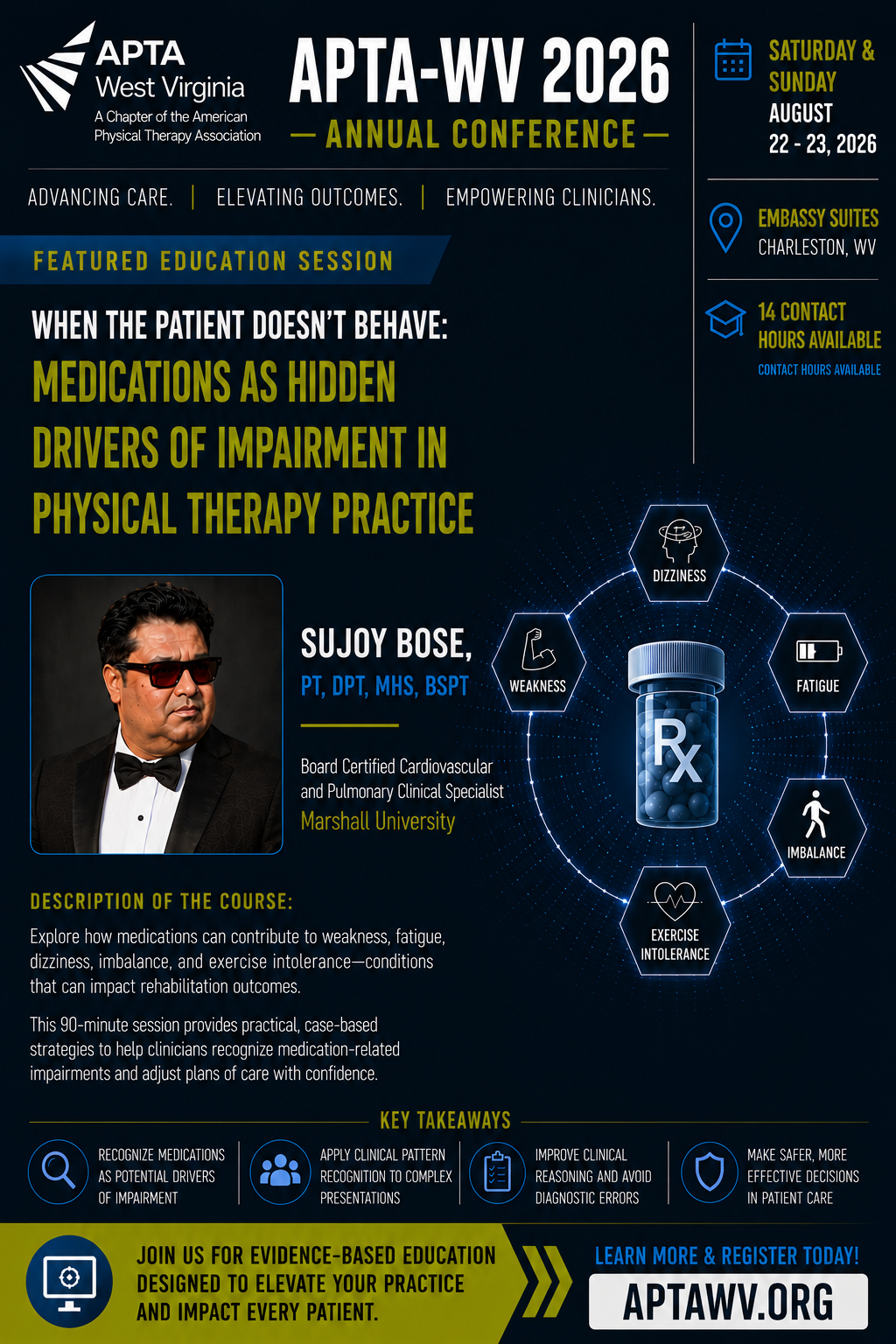
When the Patient Doesn't Behave: Medications as Hidden Drivers of Impairment in Physical Therapy Practice
Sujoy Bose, PT, DPT, MHS, BSPT, Board Certified Cardiovascular and Pulmonary Clinical Specialist
Course Description:
Physical therapists frequently encounter patients whose presentation does not align with the expected diagnosis—manifesting as unexplained weakness, dizziness, imbalance, exercise intolerance, or failure to progress. While these findings are often attributed to musculoskeletal or neurologic pathology, medications are increasingly a primary or contributing driver of these impairments.
This 90-minute session reframes pharmacology as an essential component of physical therapy clinical reasoning. Rather than reviewing medications in isolation, the session is organized around common clinical failure patterns: patients who do not respond to exercise as expected, patients with unexplained balance or fall risk, patients presenting with non-mechanical weakness, and patients whose overall presentation does not “add up.”
Through focused clinical vignettes, participants will examine the functional implications of commonly encountered medication classes, including cardiometabolic agents, incretin-based therapies, fall-risk–increasing drugs, and medications associated with neuromuscular impairment. Emphasis is placed on recognizing medication-related patterns that alter physiologic response, confound examination findings, and influence plan of care decisions.
The session concludes with a brief forward-looking discussion on emerging pharmacologic trends, including RNA-based therapeutics, to prepare clinicians for evolving practice considerations.
This course is designed to enhance the physical therapist’s ability to integrate pharmacologic context into differential assessment and clinical decision-making, improving diagnostic accuracy and patient outcomes in everyday practice.
Course Objectives:
At the conclusion of the session, attendees will:
1. Identify common clinical scenarios in which medications contribute to or mimic impairments encountered in physical therapy practice.
2. Recognize the effects of cardiometabolic and rate-limiting medications on physiologic response to exercise and implications for exercise prescription.
3. Describe medication-related contributors to fall risk, dizziness, and balance dysfunction, including the impact of polypharmacy.
4. Differentiate pharmacologically induced weakness and fatigue from primary musculoskeletal or neurologic conditions.
5. Integrate medication-related considerations into clinical reasoning, examination, and plan of care development for improved patient outcomes.
|