WEL NEWSLETTER June 2026, Vol. 16, No. 3 | | |
Hello,
June is always a wonderfully busy month in the legal profession with OBA and CBA events, the Advocates’ Society dinner, parties, firm events, award celebrations, the STEP National Conference, and other gatherings filling the calendar. As the days grow longer and brighter, it is also a welcome reminder to make room for a little fun alongside professional commitment. I hope you are finding time to enjoy those moments—they are the ones we never get back.
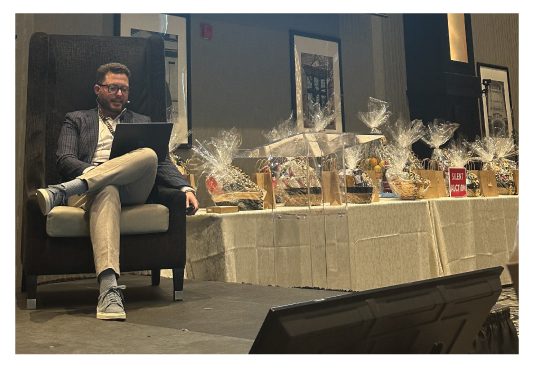
This past month, I had the real pleasure of attending the CBA New Brunswick Estates & Trusts Continuing Professional Development Day in Fredericton. I spoke on decisional capacity to an especially warm and welcoming group of lawyers. The conference took place at the Wu Conference Centre on the UNB campus, which is, absolutely beautiful. One unexpected highlight was visiting the law building: with exams having wrapped up the day before, an exceedingly kind janitor took the time to show me around and unlock a few doors, making the visit even more memorable. A link to my presentation, “DECISIONAL CAPACITY IN NEW BRUNSWICK: AN OVERVIEW FOR WILLS & ESTATES PRACTIONERS, CBA New Brunswick, Wills, Estates and Trusts Section, May 29, 2026” prepared with the grateful assistance of Emily Caza can be accessed here.
I also had a lovely dinner with Jodi Lee-White, Monica Barley, Emily Wooder, Patrick Windle, Ian Girard, Emma, and Scott Belliveau—such a fun evening at a terrific local spot. I co-presented with Fred Welsford K.C., who spoke about his recent case (Maclntyre v. Cooper, 2024 NBCA 141), and it was a genuine pleasure to share the program with him.
Interestingly, New Brunswick is expected to announce an update its Wills Act on or about December 1, 2026, repealing sections 15.1, 16, and 17 to modernize the legislation and prevent wills from revocation by marriage: An Act to Amend the Wills Act - Legislative Assembly of New Brunswick.
Sammi came with me and we rented a car to follow the end of the conference day and drove to St. Andrews by-the-Sea. This trip left a real impression on me. Driving down on Friday evening and back on Saturday afternoon, a few things stood out right away. First: the complete absence of traffic. Google estimated the drive at 1 hour and 39 minutes, but I made it in just 1 hour and 15. On the return trip, it was much the same—I saw only one vehicle until I was about 3 kilometres outside Fredericton, and it was a logging truck. That kind of no-traffic luxury feels almost unimaginable. Second: and just as striking was how green and beautiful the province is, with all the charm you hope for on the East Coast: friendly people, delicious seafood, and a wonderfully relaxed pace of life. The contrast with my last trip to Fredericton could not have been greater. I was there on February 9, 2013, in the depths of winter, with stormy skies, snow, and miserable weather—and I did not leave the hotel once.
Jodi Lee-White of Lee-White Law tells me that on my next visit, I simply must make time for Grand Manan Island, a ferry ride from St. George in Charlotte County. It sounds far too lovely to miss, and I fully intend to go.
I also spoke with a colleague about the possibility of mediating in NB, and I would be delighted to have the opportunity as would my partner, Bryan Gilmartin.
The 28th STEP National Conference was a tremendous success, sold out, record-breaking attendance, and an exceptionally strong and substantive program lineup. Congratulations to STEP Canada, the national conference committee, and of course Janis Armstrong and her team for such an impressive event. The gatherings surrounding the conference, including the evening reception, were equally enjoyable and beautifully done. I was also pleased to attend events hosted by MNP and Solus Trust, and I am grateful for the kind invitations and such lovely evenings to close out the conference on a sizzling summer night. There was a fun curated breakfast the next morning hosted by Estatesearch and Blair Botsford. The French-Toast and fresh berries rocked, and the discussion was even better!
I am happy to share by way of update that I received my certificate from the Toronto Commercial Arbitration Society for my arbitration course that spanned September through April and thereafter have since been awarded my Q. Arb. Designation by ADRIC.
I enrolled in the Gold Standard Arbitration Course because, within the context of my Mediation practice, I have received requests to conduct combined Med-Arb style dispute resolution and/or to Arbitrate the matter should the mediation not result in a settlement.
I had initially completed mediation training at the School of Conflict Management in the early 2000’s and later completed the Harvard Mediation Intensive on Negotiation at Harvard Law School. Prior to my training at the School of Conflict Management, I had experience in mediation and arbitration in the context of construction litigation in the U.K.
Following the completion of my mediation training, from in or around 2002 onward, I have regularly participated in hundreds of mediations as an independent mediator facilitating the dispute resolution. I have also participated likely in the thousands more mediations as counsel representing my client’s interests. In my experience, mediation is truly an effective and compelling model to resolve estate and related disputes.
Presently, the arbitration of estate and estate-related disputes is less common in Ontario but increasing in volume. The frequency of estate arbitrations is likely to increase as a viable method of dispute resolution in the future.
Given the inherent approach to matters concerning the treatment of a deceased person’s estate or trust by our courts, especially where minors or those under disability are concerned, the arbitration of estate and trust related disputes is especially complex. Nonetheless, arbitration is a compelling form of dispute resolution despite obvious limitations which, with some collaboration, can often be overcome. Arbitration agreements and clauses must be drafted with care and with experience.
I will keep you apprised of my arbitration journey. For those of you wishing to learn more, check out: Arbitration Matters, which is a great way to keep abreast of arbitration decisions across Canada as they are released and summarized. Currently, this useful resource is edited by TCAS member and Course instructor, Lisa Munro with named contributions of other contributors. I recommend it highly if you are interested in following the development of court decisions informing arbitrations.
The TCAS also frequently posts arbitration articles, which you can find on their website. For those who are interested, check out: TCAS Articles. The TCAS also list several arbitral institutions in Canada and internationally and are an excellent resource for getting familiar with the federal and provincial legislation in Canada. For those interested in getting familiar with the Canadian and international institutions, check out TCAS Institutions.
In my course I was informed by the Arbitration Act, 1991 (Ontario); the International Commercial Arbitration Act, 2017 (Ontario) and the ULCC Final Draft Uniform Arbitration Act. I was also expected to become familiar with the International Arbitration Rules; ADRIC Arbitration Rules 2025, ICC Arbitration Rules, ICDR Canadian Dispute Resolution Procedures; LCIA Arbitration Rules; UNCITRAL Arbitration Rules 2010; and IBA Rules on the Taking of Evidence in International Arbitration 2020.
I was introduced to the works of many well respected and expert Arbitrators in Canada, their teachings and resources which is vast and impressive, like W. G Horton and Joshua Karton. I was also required to read and elicit principles governing an Arbitrator’s practice from the fundamental case law affecting arbitration. I was immersed in commercial cases, rulings, cybersecurity, fundamental principles, governing regulations, guidelines from international sources, jurisdiction, arbitration governing agreements and clauses, rules of evidence, process, procedure, tribunal constitution, enforcement and more.
All this to say, I had an excellent group of instructors and the content to say the least extensive if not overwhelming. Arbitration is a complex form of dispute resolution with many factors to consider, yet a very valuable one to consider in client resolution processes.
Next Month at WEL, we will be joined by Conor Cushley, a student from the U.K. who completed a Classics degree and a law conversion course in London. Conor will shadow our team for two weeks to learn about our practice and the Canadian legal system. Conor is the son of my LLM Mate (Declan Cushley), a partner in Commercial IP Law at Browne Jacobson’s London office. Declan heads up corporate strategy and leads the IPO team in the UK and Ireland Declan Cushley | Commercial Law | Browne Jacobson. Watch this space as Conor will provide a piece for the July newsletter on his time spent at WEL Partners.
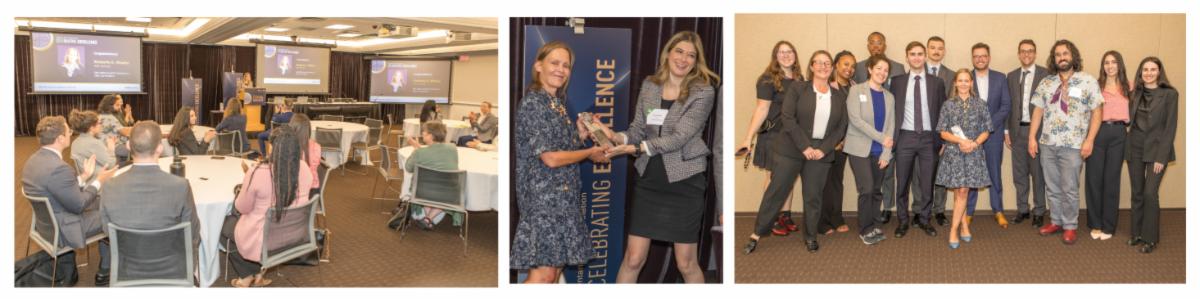
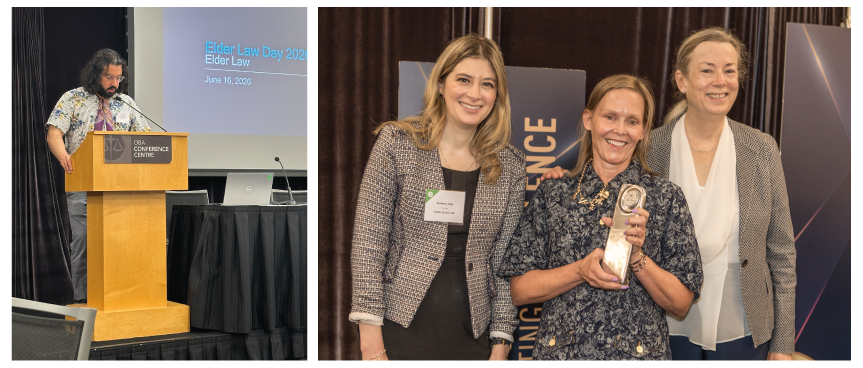
On June 16th, I was so chuffed to have received the Ontario Bar Association Award of Excellence in Elder Law. I received this award on Elder Law Day after the program concluded. See Kim’s Elder Law Day speech here. Thank you to the OBA and those who attended.
| | |
My dad, Wesley is in hospital having suffered a few infections so there have been many visits to Oakville of late to add to the flurry and chaos of the month. He is progressing slowly. I hope he continues to improve and gets out of there soon!
I hope all the dads out there had a wonderful Father’s Day!
Until Next Month, as ever enjoy the read,
Kim
| | 1. PARLIAMENTARY COMMITTEE RECOMMENDS AGAINST MAID EXPANSION FOR MENTAL ILLNESS | | |
Source: CBC News, posted on June 16, 2026, last updated June 17, 2026
News broke lastweek that the Special Joint Committee on Medical Assistance in Dying (“MAID”), will recommend that the federal government indefinitely pause the expansion of MAID for those whose sole underlying condition is a mental illness. Currently, this expansion is set to take place on March 17, 2027.
According to the CBC, a source advised that all the Committee’s Liberal and Conservative MPs, and the joint chair Senator Yonah Martin, agreed that there ought to be an indefinite pause. Most Senators on the Committee, however, reportedly want to see the expansion go ahead. It is understood that there is at least one dissenting report, which likely contains a request for a Supreme Court reference.
The government’s response, led by Justice Minister Sean Fraser, is expected by July 11, 2026, the deadline for feedback on the Committee’s report.
Especially because there is litigation currently before the Court(s) on this issue, it may be that irrespective of the Government’s response, the Supreme Court of Canada will ultimately decide whether MAID eligibility ought to extend to those whose sole underlying condition is a mental illness.
| | 2. OSGOODE HALL LAW SCHOOL CERTIFICATE IN CONSENT, CAPACITY & SUBSTITUTE DECISION MAKING – INTERPERSONAL RELATIONSHIPS | | |
On June 2nd Kimberly Whaley and Jane Meadus taught at Osgoode Hall Law School for the Certificate in Consent, Capacity and Substitute Decision Making on interpersonal relationships. This certificate program aims to provide a practical and equity-informed exploration of consent, capacity, and substitute decision-making laws, focusing on developing legal knowledge, practical skills, and ethical frameworks.
Consent, Capacity and Substitute Decision Making - OsgoodePD
| | 3. LAW ENFORCEMENT AGENCIES & PARTNERS PROTECTING SENIORS (LEAPPS) | On June 3rd, Bryan Gilmartin spoke on predatory marriages at the Law Enforcement Agencies & Parters Protecting Seniors Conference in Ajax, Ontario. This conference is designed to assist law enforcement in supporting investigations and court processes while working collaboratively with community partners to support vulnerable persons. Law Enforcement Agencies and Partners Protecting Seniors (LEAPS) Conference 2024 - Elder Abuse Prevention Ontario | | WEL Partners takes great pleasure in congratulating our colleagues on their achievements, and to our delight there are many accomplishments of note this month. | | OBA ELDER LAW DAY & AWARD | | |
On June 16th WEL Partners attended the Ontario Bar Association Elder Law Day program. Chaired by Michelle Wen Xiao Kang, Hannah Zip, and Nima Hojjati, the program featured insight into the most pressing issues impacting our aging population. WEL had the pleasure of cheering on our own Kimberly Whaley as she received the 2026 Award of Excellence in Elder Law in recognition of her exceptional leadership, advocacy, and lasting contributions to the Ontario elder law community! Congratulations Kim!
The Canadian Bar Association : Elder Law Day 2026
| | HER EXCELLENCY THE RIGHT HONOURABLE LOUISE ARBOUR NAMED CANADA’S GOVERNOR GENERAL | | |
WEL Partners wishes to congratulate a most fitting Governor General, Her Excellency The Right Honourable Louise Arbour, on her appointment as Canada’s 31st Governor General! The Governor General of Canada is responsible for swearing into office the Prime Minister, Cabinet Ministers, and the Chief Justice of Canada, summoning, proroguing, and dissolving Parliament, granting Royal Assent to acts of Parliament, appointing members of the Privy Council, signing into effect official documents, representing Canada in domestic and international ceremonies and events, and acting as the commander-in-chief of the military, to name only a few.
A reminder of the Role and Responsibilities | The Governor General of Canada.
Cute anecdote from Kim: “When I was called to the bar in Ontario (previously called as a solicitor of the Supreme Court of England and Wales), I had just given birth to Sammi, and all of my Bar Ad colleagues insisted that I bring Sammi to the call ceremony and walk across the stage with her since they were of the view that Sammi also completed Bar Ads. The Honorable Justice Louise Arbour (as she then was), with obvious affection for babies, took Sammi in her arms and held her as I received my certificate, only to very reluctantly return her as I exited the stage. It was a fun interaction for all of us! I reminded the Governor General of this interaction more recently when I saw her at an award dinner, and she graciously relished in the memory with me.”
To learn more about the many achievements of the Honourable Louise Arbour, see this CBC article on her career.
Canada's incoming GG Louise Arbour brings rich palette of experience to Rideau Hall | CBC News
| | WEL Partners wishes to congratulate Kimberly Whaley on the successful completion of her certificate granted by the Toronto Commercial Arbitration Society in April! Kim was later granted the Q.Arb. designation by the ADR (alternative dispute resolution) Institute of Canada. | | BEYOND COMMON INTENTION: ALIGNING THE SHAM TRUST ANALYSIS WITH EQUITY’S MAXIMS, ESTATES & TRUSTS JOURNAL, (2026) 45:2 E.T.J. 248 | | WEL Partners congratulates our very own Grant Swedak on his first legal publication! His article on sham trusts is in the most recent ETJ. Well done, Grant, we are so proud of you! | | (i) ENFORCEMENT OF ORAL TRUST OF LAND | | |
By Albert H. Oosterhoff
1. Introduction
Persons often enter into dubious understandings about rights to property and eschew seeking legal advice to record their understandings in writing. Heaven forfend that they should do so! In the end the parties usually have to resort to the courts to have their rights determined. That was the case in Meehan v Swartzentruber.[1] It was a case in which the intended purchaser was unable to obtain mortgage financing and arranged to have title taken in his brother-in-law’s name on the understanding that the brother-in law would hold the title in trust for him. The brother-in-law ultimately denied the alleged trust.
The case raised issues about the formalities of a trust of land and about the principle that one may not use a statute as an instrument of fraud.
2. Facts
The applicant, Mr Meehan, made an offer to purchase a parcel of real property for $187,000 in 2012 but was unable to qualify for a mortgage. He asked the respondent, his brother-in-law, Mr Swarzentruber, to acquire the property for him and take on the mortgage. His sister encouraged her husband to do this. The applicant’s parents provided the down payment of $47,000. The respondent did not pay any of the expenses of the purchase, and the applicant was to pay all ongoing expenses. It was understood that when the property was sold the applicant would receive the net proceeds. Alternatively, the property would be transferred to the applicant when he or his children became eligible for a mortgage. Meanwhile, the applicant lived on the property and made all payments associated with it, either directly or by reimbursement to the respondent.
The applicant’s sister died in 2017, and the respondent then no longer wanted to hold title to the property for the applicant. Therefore, the applicant arranged to have the property transferred from the respondent to two friends, who we were to hold the beneficial interest for him, just as the respondent had done. The purchase price was $180,000 and the respondent received none of the proceeds. In August 2018 the applicant asked his friends to re-transfer the property to the respondent for $197,000. The respondent paid the downpayment of $42,512.03 and again became the mortgagor. The applicant understood that the agreement between them was the same as during the respondent’s first period of ownership. But the respondent deposed that he no longer wanted to hold the property for the applicant and instead intended to own the property outright. Because he lived on the property, the lender required the applicant to sigh a tenancy agreement with the respondent, as well as a tenant acknowledgement. The documentation required the applicant to pay future rental payments to the respondent. The applicant deposed that the documents did not reflect the true relationship between himself and the respondent, but the latter alleged later that it was a true tenancy agreement. Meanwhile, the applicant made substantial improvements to the property. In 2023 the parties discussed renewal of the mortgage, but it was only in August 2024 that the respondent told the applicant that he intended to sell the property and retain the proceeds of sale. He took the position that the applicant was merely a tenant with no equity position in the property.
The applicant then brought these proceedings to determine who was entitled to the equity in the property. He brought an application in which he sought a declaration that the respondent held title to the property in trust for him, as well as an order for subsidiary relief. In the alternative, he sought damages based on unjust enrichment or breach of contract.
3. Analysis and Judgment
3.1 Factual Dispute
Justice Reid first considered the factual dispute and found that the parties understood that during the first period of ownership by the respondent, he held title in trust for the applicant. And he found that the facts surrounding the transfer to and from the applicant’s friends were also consistent with their holding title in trust for him. He found that a similar set of facts existed during the respondent’s second period of ownership and that, until August 2024, the correspondence between the parties was consistent with the understanding that a trust relationship existed between them. Therefore, his Honour did not accept the respondent’s evidence that he always intended to have full legal and beneficial ownership in the property. He also held that the tenancy agreement and tenant acknowledgement did not indicate the applicant’s true status but that they were made solely at the demand of the lender. That conclusion was supported by the fact that the applicant did not pay a fixed rent to the respondent. Accordingly, his Honour found that the relationship between the parties during both the first and second periods of the respondent’s ownership was not that of a landlord and tenant. Instead, there was an oral agreement between the parties that the applicant was the beneficial owner of the property even though the respondent held the legal title.
3.2 Legal Dispute
Justice Reid first considered the requirements of an express trust. He found that the parties had capacity and that the three certainties for an express trust were satisfied. However, he agreed with the respondent that the formalities for establishing an express trust had not been met because the trust was not made in writing or signed by the party making or assigning it. Thus, that requirement of section 11 of the Statute of Frauds[2] was not met.
However, section 10 of the statute provides that section 11 does not apply to trusts that arise by operation of law. And therefore, it was possible to argue that the trust between the parties was a constructive trust. His Honour referred to Soulos v Korkontzilas.[3] At paragraph 39 of that case the court seems to suggest that a constructive trust is available to redress only the wrongful acquisition of property and unjust enrichment. However, by reference to Oosterhoff on Trusts,[4] his Honour noted that in commenting on Soulos this text states:
Those two categories sometimes are said to exhaust the topic, but in truth, a great deal remains. Constructive trusts also arise in connection with specifically performable contracts of sale, oral trusts of land, incomplete gifts, proprietary estoppel, secret trusts and mutual wills. . . .
[The] constructive trusts in question are perfectionary. They arise because, in some circumstances, equity wants to ensure the perfection, or fulfilment, of stated intentions. Constructive trust is a means by which people are held to their words. [Emphasis in the original.]
Thus, the reach of the constructive trust is quite broad.
Justice Reid then went on to refer to the well-recognized exception to the requirement of the Statute of Frauds that trusts of land must be in writing, which is that the Statute itself may not be used as an instrument of fraud. He noted that this means:
It would be inequitable if a party who acquires legal ownership in a property, with knowledge of the intended trust of the beneficial interest in another, could deny the existence of the trust based on the Statute of Frauds. [para 46]
His Honour then referred to and applied Wai-Keung Kwan v Kalsang,[5] which recognized the exception. He also referred to and followed Pahara v Pahara,[6] in which the Supreme Court of Canada also recognized the exception, and which relied on the leading case on point, Rochefoucauld v Boustead.[7]
Thus, his Honour concluded that it would be inequitable for the respondent, who knew that the legal title was being transferred to him on a trust for the applicant, to permit him to rely on the Statute of Frauds. Therefore, he concluded that the conditions for the imposition of a constructive trust on the property had been established and granted a declaration that the applicant is the beneficial owner of the property. He also granted a further declaration that the applicant is entitled to require that the property be transferred to him on demand. At that time the applicant must pay the respondent any costs or debt obligations incurred by him arising from holding the legal title, including the costs of transfer and the down payment made by the respondent plus interest. It followed that it was not necessary to consider the applicant’s alternative claim of damages for unjust enrichment.
--
[1] 2026 ONSC 736.
[2] RSO 1990, c S.19.
[3] 1997 CarswellOnt 1489, [1997] 2 SCR 217.
[4] 9th ed by Albert H Oosterhoff, Robert Chambers, and Mitchell McInnes (Toronto: Thomson Reuters, 2019), pp 811-812. See now 10th ed (2024), pp 855-856.
[5] 2025 ONSC 124, paras 145-151.
[6] [1946] SCR 89, para 30.
[7] [1897] 1 ChD 196 (CA). For further discussion of this point see Oosterhoff on Trusts 10th ed, footnote 4, supra, §12:5 Oral Trusts of Land.
| (ii) DEFAULT ROLE OF FIDUCIARY PROTECTORS | | |
By Albert H. Oosterhoff
1. Introduction
A and 6 others v C and 13 others,[1] the recent Privy Council decision, is a very interesting case for at least two reasons. The first is that the Board heard the appeal from the decision of the Bermuda Court of Appeal in camera, a most unusual event. The second is that the Board was asked to resolve and did resolve a longstanding issue concerning offshore trust law, namely, what is the precise role of the trust protectors, the question being whether they have a broad (or wider) role or a narrow role in reviewing proposed decisions of the trustees, or as the Board phrased the question raised by the parties more specifically in para 1, the question is “whether the protectors are limited solely to reviewing the lawfulness of the trustees’ proposed exercise of their power, or whether the protectors are empowered also to use an independent discretion in deciding whether or not to consent, by reference to their own view of the merits of the trustees’ proposal.”
With respect to the first reason, the judgement was introduced by these reporting restrictions:
In accordance with the procedure followed under Bermudan law when these proceedings were before the courts in Bermuda, this appeal concerned with the administration of a family trust is being heard in private in order to protect the privacy and safety of the beneficiaries under the trust, who include children.
That was followed by this statement:
This appeal was heard in private. THE COURT ORDERED THAT nobody shall publish or reveal the name or address of any of the persons (including any companies) who are the subject of these proceedings or publish or reveal any information which would be likely to lead to the identification of those persons or any member of their family in connection with these proceedings.
With respect to the second reason, the Board noted that the issue to be determined is properly described as a default role because (1) the parties acknowledged that, in principle, a settlor may specify either role, and (b) it is typical of most offshore settlements, including the ones in this case, that they do not specify the role of the protectors when they are asked to consider a proposal of the trustees. So the issue was truly what the default role of protectors is when considering whether to consent or refuse to consent to a proposed exercise by the trustees of their powers.
It was common ground that the protectors in this case were all fiduciaries. And it was also common ground that the issue of which role the protectors have depends on the true construction of the settlements.
In its introductory comments, the Board also noted that the office of protector is commonly made part of offshore deeds of settlement but are uncommon in domestic settlements. The Board also explored the reasons why settlors of offshore settlements find the use of protectors advisable. In para 8 the Board noted that it is not difficult to understand why settlors, especially of family settlements, like protector provisions. While trustees of domestic settlements, who are often family members or trusted friends and are therefore familiar with the settlor’s family and can be expected to act in their best interests, trustees of offshore trusts often know little of the family. In contrast, protectors are typically closer to the settlor and the beneficiaries and can be counted on to ensure that the trustees will administer the trust for the benefit of the beneficiaries.
2. Facts
In the 1950s and following, Mr X and his relatives established a series of discretionary trusts. They are now held for the principal benefit of A and B and their families. The trusts have at least one of two Bermuda resident trust corporations as their trustees (“the X Trusts” and “the Trustees”). Some are governed by English law, some by Bermuda law, and one by Jersey law.
All except one of the X Trusts have broadly identical provisions for the appointment of one or more protectors, collectively referred to as “the Protector” or “the Protectorate”. The Trusts gave the Protectors two main powers. The first is to approve or refuse to approve the appointment of capital to the beneficiaries as proposed by the Trustees. The second is the power to approve or disapprove any dealing with, or exercise by the Trustees of voting powers derived from “Specified Securities”. The most important of those are shares in a company (“OpCo”), and the X Trusts own a large holding of them. The Trusts prohibit the Trustees from making such appointments or engage in such dealings unless the Protectors give their written approval. Subject to those requirements, the Trusts confer very wide discretionary powers of appointment of capital and income on the Trustees.
In the mid-1990s provisions for the appointment of protectors (“the Protector Provisions”) were added to all existing X Trusts, except one. This was done under a scheme (“Operation Protector”) in which the Trustees exercised their discretionary powers to move the administration of the X Trusts offshore from England, mainly to Bermuda. As a result, all the X Trusts with Protector Provisions have one of two companies as protectors, both of which were incorporated in Jersey.
In 2017 the Trustees of the X Trusts made proposals for the future of the Trusts that would allocate the aggregate property of the X Trusts as to 2/3 on A and A’s family (“the A Branch”) and 1/3 on B and B’s family (“the B Branch”) (“the Scheme”). Aspects of the proposals required the consent of the Protectors. In their opinion the Scheme did not serve the best interests of the beneficiaries. In reaching this opinion they assumed that theirs was the Wider Role.
In 2020 the Trustees issued a summons in the Supreme Court of Bermuda seeking approval of the court to their proposals on the ground that these flowed from a proper exercise of their powers. The B Branch opposed the application. So did the Protectors on the ground that they were inclined to refuse their consent to the Trustees’ proposals. The Supreme Court granted the orders sought by the Trustees.
In 2021 the Trustees issued a summons in the Supreme Court in which they sought declarations about the basis on which the Protectors are entitled to withhold their consent. They suggested three possibilities: (a) the Protectors are entitled to exercise an independent discretion, so that they may withhold their consent even if the exercise of the power by the Trustees is one that a reasonable body of properly informed trustees is entitled to make (the Wider Role); (b) the Protectors must satisfy themselves that the proposed exercise of the power by the trustees is one that a reasonable body of informed trustees is entitled to undertake, and if they are so satisfied, to consent to it (the Narrow Role); or (c) some other role.
The A Branch argued in favour of the Narrow Role, while the B Branch favoured the Wider Role. Kawaley AJ, sitting as Assistant Justice of the Supreme Court, held that the role of the Protectors was the Narrow Role and made a declaration accordingly. In a judgment in 2023, the Court of Appeal dismissed the appeal of the B Branch. Gloster JA delivered the lead judgment on the appeal. The B Branch appealed to the Privy Council. Lord Briggs and Lord Richards delivered the reasons of the Board.
3. Analysis and Judgment
Since the written terms of the X Trusts were substantially similar, the parties were able to present their arguments on construction of the Protector Provisions by reference to a single original deed of settlement and invited the Board to proceed on the basis that the true construction of that deed, made in 1951, should apply to all.
The Board began by setting out in redacted form the Schedule to the amended deed which contains the Protector Provisions. I shall not reproduce the provisions here but shall refer to them as necessary in the course of examining the Board’s reasons.
The Board considered the reasons of the Bermuda Court of Appeal and of other decisions on the role of protectors at length. It also considered several articles and texts that considered the issue.
Then the Board considered the relevant legal principles governing the construction of trust deeds. These were uncontentious and accepted by the parties. So also, the principles that apply to the implication of terms in an instrument were uncontentious. Therefore, I shall say no more about these matters at this point but will address them as they arise in the reasons. In any event, they are worth reading.
The Board then turned to the construction of the trust deeds in this case. The Board noted that commentaries and the parties in their presentation suggested that the Board must assume that the settlor must have had one or the other of the two roles (Narrow or Wider) in mind and that it is up to the Board to decide which. However, the Board considered this to be the wrong approach. In its view the question is not which of the two rules the settlor specified. Rather, as it stated in para 83, it must determine “what if any restraints did the trust instrument actually impose, construed in its context and with regard to any constraints imported by the general law?”
The Board disposed of two matters at the outset. The first is that the use of the words “protectors” of “protectorate” as labels is not helpful in answering the question. The second is that while the Protector Provisions in most of the settlements were introduced by the trustees rather than the settlors, this cannot be material to their construction. That is because the Protector Provisions were designed to introduce a common scheme of Protectors across all the X Trusts, and thus they had to be construed and used in the same way regardless of who introduced them into the settlements.
As mentioned above, the protectors were fiduciaries. Therefore, they had to exercise their powers (including the powers to veto proposals of the trustees) in that capacity and had to observe all constraints imposed on fiduciaries by the general law. The Board observed notably, “These are not constraints or duties imposed by equity, but rather they are taken by equity to be voluntarily undertaken by those who assume, accept or arrogate to themselves a fiduciary role.”[2] The main constraints, as the Board noted are the well-known no-profit and no-conflict duties,[3] and the duty to exercise their powers for proper purposes.[4] The Board went on to describe these well-known duties as follows in para 89:
Those constraints are formidable. In relation to the Protectors the first two require, in effect, that they exercise their powers selflessly, with single-minded loyalty to and regard for the interests of the beneficiary class, rather than to serve their own interests, or those of anyone else, such as the settlor. The proper purpose duty ensures for example that protectors do not use (or abuse) their powers of veto to cajole the trustees into accepting their views about other aspects of the administration of the trust about which the trustees have not sought, or may not even be obliged to seek, the protectors’ consent.
The Board did not accept the submission of counsel for the A Branch that the fiduciary status of the Protectors suggests that they are subject to the Narrow Role, because the rights and expectations of the discretionary beneficiaries under the settlement derive from the design and operation of the settlement as a whole. Since the settlor created a structure that requires the trustees and protectors to work together, it would be wrong to treat the beneficiaries’ rights as merely those that flow from the lawful performance of their role by the trustees alone. Thus, the Board went on to state in para 94:
… the fiduciary status of the Protectors does impose significant constraints upon the way in which they have to exercise their powers to approve or disapprove proposals for appointments and for dealings with Specified Securities put to them by the Trustees, but those constraints all operate within, and in harmony with, the Wider Role. They come nowhere near confining the Protectors to the Narrow Role, within any of the X Trusts.
The Board noted that the Protectors are paid professionals and are therefore required to act with reasonable care and skill under a professional duty of care. But this also does not confine them to the Narrow Role.
The Board went on to address the fact that the settlement confers many powers con the Trustees that are exercisable in their “discretion”. Further, the Protectors are given a power exercisable “in their absolute discretion” to determine whether an emergency exists before they can exercise their power to remove and appoint trustees. The Board noted that a wider reading of the settlements, in particular the Protector Provisions, shows that the word “discretion” is not at all used invariably in the description of what are clearly discretionary powers.
The Board summarized the question of construction as follows:
(i) The 1951 Settlement did not by any express language impose any constraints upon the Protectors in the exercise of their powers of veto over Trustees’ proposals for appointment or dealings with the Specified Securities.
(ii) By appointing Protectors as fiduciaries, the 1951 Settlement imported from the general law the usual fiduciary constraints affecting fiduciaries, encompassed by the no-profit, no-conflict and proper purpose duties. In relation to proposed “pick and choose” appointments, the Protectors were not constrained by a general duty to act in the interests of the beneficiaries as a whole from considering such proposals on their merits.
(iii) The 1951 Settlement contemplates, without necessarily requiring, the appointment of paid professionals as Protectors who would owe a professional duty of care in the exercise of their powers of veto, as is in fact the case, but this does not impede their consideration of relevant trustee proposals upon their merits.
(iv) The precise delineation of the Protectors’ powers of veto coupled with the absence of any wider constraints upon their exercise suggests that, as a matter of construction, no wider constraints were imposed.
(v) The constraints thus identified, though substantial, do not confine the Protectors to the Narrow Role.
The Board noted that the iterative process of construction now required it to check the above summary (which is based on the natural meaning of the words (or absence of words) of the Protector Provisions) against the wider considerations of the contextual background and against considerations of business efficacy and common sense. It concluded that there are no terms in the trust deeds or the Protector Provisions that support the Narrow Role. On the other hand, there are terms that provide significant support for the Wider Role. The Board considered some of those terms and noted in para 107:
107. The matters requiring the Protectors’ consent thus represent particularly important decisions by the Trustees. It is readily apparent why the settlor might in those circumstances wish the Protectors to fulfil the Wider Role in the exercise of their power to give or withhold consent. What is not readily apparent is why, if the Narrow Role were intended, it should be restricted to those matters. If the Narrow Role were intended, it would more likely apply to a wider range of actions, or all actions, by the Trustees as any potential breach of trust is likely to be of concern to a settlor.
The Board noted that there are also other factors that support the Wider Role. It mentioned specifically the following. First, if the Narrow Role were intended, one would expect that appointment as a Protector would be restricted to those most qualified to assess the Trustees’ proposed action, such as a trust lawyer. Second, if only responsible persons would be appointed as Trustees, who could be relied upon to take advice from Protectors, why would the settlor want to provide for a Protector whose role would be limited to ensuring that the Trustees were acting lawfully?
The Board went on to consider whether a restraint limiting the Protectors to the Narrow Role could be identified under an implied term. It held that no such implied term could be recognized. Therefore, the Board concluded in para 119:
119. Those responsible as settlors for implementing Operation Protector introduced into the X Trusts common form, carefully and professionally drafted Protector Provisions which conferred upon the Protectors, as fiduciaries, a power of veto over certain types of decision making by the Trustees. They chose not to set out expressly how (in terms of role) the Protectors were to decide whether to approve or disapprove proposals submitted to them by the Trustees for approval. The settlors must be taken to have known or been advised as to the constraints upon decision-making undertaken by the acceptance by the Protectors of fiduciary responsibilities in carrying out their allotted tasks. It must be inferred, as a matter of construction, that no further or narrower restraints were intended to be imposed. If the absence of a more precisely specified role for the Protectors may be seen by some as a gap in the Protector Provisions, it must be taken to have been a deliberate gap. It is not a gap which needs to be, or can be, filled by any implied term. And the Narrow Role cannot as a matter of construction be identified as having been imposed by any language used in the Protector Provisions, or in the X Trusts containing those provisions, viewed as a whole. There is simply no peg on which to hang the Narrow Role.
---
[1] [2026] UKPC 11.
[2] Citing Hopcraft v Close Bros Ltd [2025] UKSC 33, paras 82-110.
[3] Citing Rukhadze v Recovery Partners GP Ltd [2025] UKSC 10.
[4] Citing inter alia Grand View Private Trust Co Ltd v Wong [1922] UKPC 47.
| | (iii) SHERMAN V. SHERMAN, 2026 ONSC 3115: PRECATORY LANGUAGE V. THE CREATION OF A TESTAMENTARY TRUST | | |
By Jessica Homer
Sharon Elizabeth Sherman died on July 21, 2018 (the “Deceased” or “Estate”), with a holographic Last Will and Testament dated July 11, 2018 (the “Will”).[1] The salient terms of the Will are as follows:
My RBC investments have been transferred within this last week to my TD bank account, so I have no remaining investments. As to the funds in my TD bank account, … my home at 1033 Crawford Road, Bracebridge, Ontario, and all the contents therein, I leave solely and completely to my son William Alexander Gabriel Sherman. I trust him to care in whatever way he sees fit to provide for his brother, Joshua James Orion [sic] Sherman.[2]
The Deceased was survived by her two sons, Joshua Sherman (the “Plaintiff”) and William Sherman (the “Defendant”).
The Plaintiff, inter alia, sought a declaration that the Will created a testamentary trust in his favour.[3] The Defendant brought a motion for summary judgment on the basis that there was no genuine issue to be tried. Among the Defendant’s assertions, were that the Will does not form a testamentary trust, but rather the clause in question was precatory in nature; and the will does not require interpretation thus there was no need to invoke the “armchair rule”.[4]
Importantly, the Will has not been challenged and no application for a certificate of appointment of estate trustee had been made.[5]
Summary Judgment
When it comes to responding to a summary judgment motion, the court makes it clear that the opposing party “put their best foot forward”, mere reliance on denials in pleadings or repetition of defences laid out in an affidavit are not enough.[6]
On a motion for summary judgment, the Court will look to Rules 20.04.(2) -(2.2) of the Rules of Civil Procedure (the “Rules”). Accordingly, the court shall grant summary judgment if:[7]
(a) the court is satisfied that there is no genuine issue requiring a trial with respect to a claim or defence; or
(b) the parties agree to have all or part of the claim determined by a summary judgment and the court is satisfied that it is appropriate to grant summary judgment.
According to the Supreme Court of Canada in Hryniak v Mauldin, 2014 SCC 7, “there will be no genuine issue requiring trial when the judge is able to reach a fair and just determination on the merits”.[8]
In arriving at a determination, the Court will consider the evidence submitted by the parties[9], and if the determination is being made by a judge, they may exercise the following powers:[10]
- Weighing the evidence.
- Evaluating the credibility of a deponent.
- Drawing any reasonable inference from the evidence.
Further, for the purpose of exercising the above, a judge may order that oral evidence be presented.[11]
The Court in Hryniak outlined that the “judge should first determine if there is a genuine issue requiring trial based only on the evidence before her, without using the new fact-finding powers”.[12] However, should the judge tend toward there being a genuine issue, “she should then determine if the need for trial can be avoided by using the new powers under Rule 20.04(2.1) and (2.2).
Application
The Court determined that there was no genuine issue for trial with regards to whether a testamentary trust was formed by the Will.
In doing so, the court outlined the three certainties that must be present for the creation of a testamentary trust:[13]
1) the language of the settlor must be imperative;
2) the subject matter of the trust property must be certain; and
3) the objects of the trust must be certain.
The Court found that the language of the Will was in fact precatory and articulated a mere wish that the Defendant ‘care in whatever way he sees fit to provide for his brother’. This language “fell short of showing an intention for the recipient to hold property in trust”.[14] It was not imperative. Further, the Court found that the inclusion of the words “I trust” was not sufficient to create a binding obligation.
The court noted that the caselaw over the past 110 years has been clear. The Ontario Court of Appeal in Johnson v Farney (1913) CanLII 546 (ON SCAD) held that “mere expressions of a testator’s wishes should not be viewed as mandatory”.[15]
Similar to the within case, in Smith v Patterson (1912), 4 DLR 89 (Ont. HCJ), the will in question provided that property distributed to a spouse “was to be disposed of by her as she may deem just and prudent in the interest of my family”, and the Court of Appeal held that this language did not create a trust.[16]
The Plaintiff argued that the armchair rule ought to be invoked to determine the Deceased’s intentions. However, the Court found the Will to be unambiguous, thus not requiring interpretation. The clause in question simply reflected a wish of the Deceased, which again, was not binding.
As such, there was no genuine issue to be tried on this issue of whether a testamentary trust was formed by the Will, and the Plaintiff’s action was ultimately dismissed.
Takeaways
This case serves as an important reminder that where the three certainties for the creation of a testamentary trust do not exist, a trust will not be formed. While precatory language such as “I trust” in a will serves to outline the Deceased’s wishes, it does not create a binding obligation to satisfy the first certainty of imperative language by a settlor.
--
[1] Sherman v. Sherman, 2026 ONSC 3115 (CanLII), at para 2 & 3.
[2] Ibid at para 3.
[3] Ibid at para 6.
[4] Ibid at para 7.
[5] Ibid at para 4 & 5.
[6] Ibid at para 12.
[7] R.20.04(2) of the Rules.
[8] Hryniak v Mauldin, 2014 SCC 7, at para 49.
[9] R.20.04(2.1) of the Rules.
[10] Ibid.
[11] R. 20.04(2.2) of the Rules.
[12] Hryniak at para 66.
[13] Footnote 1, at para 14.
[14] Ibid at para 16.
[15] Ibid at para 17.
[16] Ibid at para 18.
| | (iv) TRUST FOUND OVER RESP FUNDS INTENDED FOR GREAT-GRANDCHILDREN: GRIGHTMIRE V. GRIGHTMIRE-GRIESBACH, 2026 ONSC 3416 | | |
By Emily Caza
In Grightmire v. Grightmire-Griesbach[1], the Ontario Superior Court of Justice considered whether funds placed into Registered Education Savings Plans ("RESPs") for a deceased grandfather's great-grandchildren were held in trust for their educational benefit. The case arose after the subscriber of the RESPs, who was also the deceased's daughter, refused to release funds for a beneficiary's post-secondary education, later closed two of the plans, and transferred the proceeds to herself. The Court found that the RESP funds were impressed with an express trust, that the subscriber had breached her fiduciary obligations, and ordered the restoration of the funds and her removal as subscriber.
Facts
In 2017, $200,000 belonging to Hugh Grightmire was transferred into four RESP accounts, with each of his four great-grandchildren named as beneficiary of a separate plan.[2] Each RESP received an initial contribution of $50,000. Hugh's daughter, Tracey Grightmire-Griesbach, was named subscriber and managed the accounts.[3]
After Hugh's death in 2023, the dispute arose when Xavier Grightmire, the oldest beneficiary, enrolled in a post-secondary program and sought access to RESP funds to assist with tuition and educational expenses.[4] Tracey refused to release funds unless various conditions were met, including the production of budgets and proof of payment.[5] When those conditions were not satisfied to her liking, she took the position that Xavier had forfeited his entitlement to funding for that academic year. She subsequently closed Xavier's RESP and another RESP benefiting Lex Grightmire, transferring the funds to herself.[6]
The beneficiary applicants sought declarations that the RESP funds were held in trust for their benefit, repayment of the withdrawn funds, Tracey's removal as subscriber, and the appointment of a replacement subscriber.[7] Tracey opposes the application on the basis that she is the legal owner of the originating funds, the funds were gratuitous, and she is therefore able to take whatever steps she sees fit in managing the RESP accounts.[8]
Issues
The following issues were before the court on this application:
- Were the funds deposited in the four RESP accounts impressed with a trust in favour of the Applicants?
- Is this claim statutorily barred?
- If the court finds a trust, has Tracey breached her fiduciary duty as trustee?
- If Tracey breached her fiduciary duty, what amount should she repay for the two closed RESPs?
- Should Tracey be removed as subscriber on the RESP accounts?
- Should a tracing order be made for the funds Tracey diverted to herself when she closed the RESP?
Analysis
The Court began by observing that an RESP is not automatically impressed with a trust merely because a beneficiary is named.[9] However, an express trust may arise where the three certainties – intention, subject matter, and objects – are established.[10]
Justice Hooper found that Hugh intended to create the RESP accounts for the educational benefit of his great-grandchildren. The Court rejected Tracey's evidence that she had independently funded the plans or that the $200,000 became her property after passing through a joint account. The evidence demonstrated that the funds originated from Hugh, that there was no gift to Tracey, and that Hugh personally advised his great-grandchildren of the RESP accounts after they were established.[11] Further, a 2021 email from Tracey expressly stated that "Hugh put in $50k each" for the beneficiaries, establishing certainty of intention.[12]
The Court also found certainty of subject matter, as the $200,000 used to fund the RESPs was readily traceable, and certainty of objects, as each beneficiary was specifically identified through separate RESP accounts.[13] Accordingly, the RESP funds were held in trust for the applicants' post-secondary education.
The Court rejected the respondent's limitations defence. Unlike cases involving historic transfers of property, there was no dispute requiring litigation when the RESPs were established.[14] The cause of action arose only when Tracey asserted ownership over the funds and refused to use them for their intended purpose. [15]The application, commenced in July 2025, was therefore timely.
Having found the existence of a trust, the Court held that Tracey breached her fiduciary obligations by closing two RESP accounts and appropriating the funds.[16] The Court noted that she had taken this step after receiving a demand letter and without any legitimate explanation.[17]
In fashioning a remedy, the Court ordered Tracey to restore the original $50,000 principal to new RESP accounts and to compensate for the lost investment growth.[18] The value of the highest-performing remaining RESP was to be used as the benchmark for calculating the additional amount owing.[19]
The Court further removed Tracey as subscriber from the remaining RESPs. In addition to her breach of fiduciary duty, the Court found that she had exercised her discretion in an unreasonable and overly restrictive manner by imposing unnecessary conditions before releasing educational funds.[20] Rather than appointing the applicants' father as replacement subscriber, as requested by the applicants, the Court directed that a neutral third party be appointed to administer the plans.[21]
Finally, the Court declined to grant a tracing order, finding it premature given the absence of evidence that Tracey lacked the financial means to satisfy the repayment obligations.[22]
Conclusion
Grightmire v. Grightmire-Griesbach serves as a reminder that the legal structure of a RESP will not necessarily determine the beneficial ownership of the funds it contains. While subscribers generally retain control over RESP accounts, that control may be constrained where the surrounding circumstances demonstrate an intention to create a trust for the benefit of a child or student. The decision illustrates the Court's willingness to look beyond formal account ownership and enforce equitable obligations where funds have been set aside for a specific purpose. It also underscores that individuals entrusted with managing educational funds for beneficiaries will be held to fiduciary standards and face significant consequences where they attempt to divert those funds from their intended use.
--
[1] 2026 ONSC 3416.
[2] Ibid at para 2.
[3] Ibid.
[4] Ibid at paras 3, 4.
[5] Ibid at para 4.
[6] Ibid.
[7] Ibid at para 5.
[8] Ibid at para 6.
[9] Ibid at para 9.
[10] Ibid at para 10.
[11] Ibid at para 14-22.
[12] Ibid at para 16.
[13] Ibid at paras 19, 20, 22.
[14] Ibid at paras 25, 26.
[15] Ibid at para 27.
[16] Ibid at para 29.
[17] Ibid.
[18] Ibid at para 33, 35.
[19] Ibid.
[20] Ibid at para 36, 27.
[21] Ibid at para 38.
[22] Ibid at para 43.
|
| (v) ONTARIO TRIBUNAL CONFIRMS CORRECT VENUE FOR POWER OF ATTORNEY DISPUTES | | |
By Oliver O'Brien
In the recent decision rendered in J.M. (Re),[1] the Ontario Consent and Capacity Board provided an important reminder that the Superior Court of Justice is the correct venue for Power of Attorney disputes.
Consent and Capacity Board Decision
Background
J.M. (Re) concerned the requisite decisional capacity of JM, an elderly man with two children: FM and LC. JM was admitted to a care facility on the consent of his son, FM, who was his attorney for personal care pursuant to a Power of Attorney for Personal Care dated November 27, 2014 (the “POAPC”).[2]
JM applied to the Consent and Capacity Board (“CCB”) to review a finding made by Ontario Health at Home that he was incapable of making his own decisions regarding admission to a care facility. The procedure to review a finding in this regard is found in section 50(1) of the Health Care Consent Act (“HCCA”).[3]
LC applied to the CCB with a “Form C” application (pursuant to section 51(2) of the HCCA) seeking to be appointed as JM’s representative for decisions relating to admission to a care facility. She disagreed with the decision made by her brother, FM.[4]
The CCB flagged an issue from the start: due to the existence of the POAPC the tribunal was precluded from appointing LC as representative for JM. LC argued that the execution of the POAPC was flawed and it ought to be declared invalid.[5]
Threshold Issue
At the hearing, the central threshold issue for the CCB was whether it had jurisdiction or authority to invalidate or disregard a POAPC that appears, on its face, to be a valid instrument. The CCB ultimately concluded it did not have the requisite authority to do so.[6]
First, the CCB noted that the POAPC was granted in accordance with the statutory formalities for execution pursuant to the Substitute Decisions Act (“SDA”).[7] It was signed by JM, in the presence of two witnesses and even notarised by a notary public in Ontario. There were no technical deficiencies in its execution.[8]
At paragraph IV the POAPC specifically referred to JM’s wish “to remain in my residence for as long as the same is medically and practically possible. I do not wish to be put in a Nursing Home unless there is no alternative type of care that is practical in the circumstances.” It was evident that the POAPC was intended to cover decisions regarding admission to a care facility.[9]
LC alleged that FM had breached the condition expressed in JM’s POAPC and therefore ought to be replaced as JM’s substitute decision-maker. Therefore, LC had applied to be appointed as JM’s representative. LC also alleged that JM was unduly influenced by FM at the time the POAPC was signed and, due to language and cognitive barriers, was not fully aware of what he was signing. Furthermore, LC suggested that the notary who arranged the signing of the POAPC was in breach of her professional code of conduct. For all these reasons, LC urged the CCB to invalidate or disregard the POAPC.[10]
CCB lacks inherent jurisdiction
The CCB began by outlining the following procedural principles of its Board as a tribunal:
It is a foundational principle of our legal system in Ontario that administrative tribunals like the Board lack inherent jurisdiction to settle any kind of dispute among parties. Such inherent jurisdiction belongs only to the courts. In contrast, tribunals are restricted to the decision-making domains conferred on them explicitly by statute. This principle is recognized in s. 3 of the Statutory Powers Procedures Act which states (in part): “…this Act applies to a proceeding by a tribunal in the exercise of a statutory power of decision conferred by or under an Act of the Legislature….”.[11] [emphasis added]
For Power of Attorney for personal care disputes, the SDA confirms that the court (specifically the Superior Court of Justice) is the appropriate forum to bring any dispute: this regard, section 68 of the Act is clear:
Directions from court
68 (1) If an incapable person has a guardian of the person or an attorney under a power of attorney for personal care, the court may give directions on any question arising in the guardianship or under the power of attorney.[12]
The CCB confirmed that its own enabling legislation is the HCCA, the same statute that creates the framework for bringing a Form C application. There is no provision within the HCCA (or any other statute) that explicitly grants the CCB the requisite power or authority to revoke a POAPC or question its validity if the technical signing requirements appear to be met.[13]
Further still, the CCB confirmed it had no authority to question whether the grantor of a POAPC possessed the requisite capacity to grant the power of attorney for personal care at the time it was granted or explore the validity of a POAPC for any other reason like duress, fraud, undue influence. Rather, the CCB is explicitly given authority to review findings of incapacity for treatment, admission to care and personal assistance services (HCCA) and for incapacity to manage property (SDA), but not to review capacity to grant a power of attorney, which is a very separate domain of capacity. The Board has no specialized expertise in this domain.[14]
Concluding Comments
The CCB provides a helpful reminder of the appropriate venue to determine Power of Attorney and related capacity disputes. Litigation and disputes concerning decisional capacity are becoming increasingly common and its being dealt with in many areas of law including at specialised tribunals.
As such, it is important remember that in Ontario, specialised tribunals are neither legally empowered nor equipped to assess the validity of Powers of Attorney. The Ontario legislature is clear that these are matters are properly brought before the courts.
--
[1] J.M. (Re), 2026 CanLII 52195 (ON CCB) (“J.M. (Re)”)
[2] J.M. (Re) at para 1.
[3] J.M. (Re) at para 2; Health Care Consent Act, 1996, S.O. 1996, c. 2, Sched. A, section 50(1).
[4] J.M. (Re) at para 3.
[5] J.M. (Re) at para 4.
[6] J.M. (Re) at para 25.
[7] Substitute Decisions Act, 1992, S.O. 1992, c. 30.
[8] J.M. (Re) at para 9.
[9] J.M. (Re) at para 10.
[10] J.M. (Re) at para 12.
[11] J.M. (Re) at para 15.
[12] SDA at section 68(1).
[13] J.M. (Re) at para 17.
[14] J.M. (Re) at paras 21 – 23.
|
| |
By Mark Polese
In Perriam v. Pereira,[1] the Ontario Superior Court of Justice recently had to grapple with what evidence is required to rebut a presumption of capacity in relation to the granting of a power of attorney for property in 2012.
Background
Grace Perriam (“Grace” or the “Applicant”) initially brought the application in 2023, with a primary focus on the care and management of property of her father Jose Pereira (“Jose”). The application was brought against her brother, Robert Pereira (“Bob” or the “Respondent”), alleging significant financial abuse toward Jose since in or around 2009, when Bob had moved in with Jose. Jose had two other daughters who, while they did not participate in the litigation, swore evidence in support of the Applicant.
Jose suffered a stroke in 1999 that left him significantly debilitated and unable to work. Since then, he had been living in his home with the support of his family. His late wife managed his banking and finances along with Grace following Jose’s stroke. Jose’s wife passed away in 2009, with Grace taking over the bulk of his finances. However, in 2009, Bob, after losing his house, moved in with Jose along with his partner. It is also important to note that Jose had a limited ability to speak English, which caused an additional reliance on his family when dealing with financial institutions.
In her application, Grace submitted that thereafter Bob gradually excluded Grace and her sisters from Jose’s life, going as far as changing the locks on Jose’s home.
In 2012, Jose appointed Bob as his sole attorney for property. Immediately following this appointment, Bob removed Grace from Jose’s bank account. In 2022, Jose was admitted into a long-term care facility with barely enough money to cover his expenses. As such, Grace claimed that her brother had misused the power of attorney in breach of his fiduciary duties toward his father to divert approximately $90,000 from Jose’s bank account over an eight-year period for his own benefit, while also living rent free.
Grace further claimed that Jose was in fact incapable of granting the 2012 power of attorney for property (the “POA”) because of Jose’s stroke. She further submitted that her father was vulnerable to the undue influence of Bob, and as such was induced to spend money for Bob’s benefit beyond his personal means.
Bob, on the other hand denied Grace’s allegations, claiming that Jose was capable of granting the POA in 2012 as there is no hard evidence to show his incapacity during that time. He submits that, while he did take his father to his father’s lawyer to execute the POA, this was done at his father’s direction. Additionally, Jose had previously executed a power of attorney naming his late wife as his attorney for property, with Grace being named as the alternate attorney. The same lawyer prepared the POA and clearly had no capacity concerns when doing so.
An additional wrinkle in the proceedings arose in April of 2025, when Jose passed away. Grace had commenced her application in 2023, with a focus on the care and management of her father’s property. Now that Jose has passed, Bob argued that Grace is only continuing on with her application to get a larger “cut” of her inheritance and that an order for Bob to pass his accounts at this stage would be of little value and would be a disproportionate and financially burdensome exercise to impose upon their father’s modest estate.
Analysis
The application was heard on a record of affidavits, transcripts of cross-examinations, and submissions of counsel, including Section 3 counsel which was initially appointed to present Jose’s position on the issues. However, Section 3 counsel here concluded that Jose did not demonstrate a consistent or correct understanding about what had been done with his property, and as such Jose never swore an affidavit.
Another key piece of missing evidence concerned the files and records of the lawyer who had executed the POA. The lawyer, Mr. Reiss, had since passed away at some point since the 2012 meeting with Jose, and although inquiries were made, no records could be made available for the court to review. All that is known about the circumstances of the 2012 meeting with Mr. Reiss is that Bob had taken Jose to meet with the lawyer.
Section 3 counsel relayed that Jose had advised that he liked having Bob manage his property since they lived together and thought Grace was busy with her own life.
The Applicant argued that there was ample evidence to suggest that Jose was incapable of granting a power of attorney because of his stroke, pointing to records provided by the long-term care facility that Jose resided in showing a MMSE score of 7/30 that was completed in March of 2022.
Grace also submitted that the suspicious circumstances surrounding the execution of the POA add further weight to the conclusion that Jose lacked the capacity to grant it. She points to Bob’s dominant position in his father’s isolated life and the fact that Jose named only Bob as the sole attorney with no alternate, contrasting his previous power of attorney that appointed both the Applicant and her mother. Also of note, is that Jose’s will, executed in 2004, appointed Bob and Grace as joint estate trustees.
Despite these submissions, the Court was not prepared to find that Jose was incapable of granting the POA. Citing sections 2(1) and (3) of the Substitute Decisions Act,[2] the Court noted that the law presumes that Jose was competent at the time he executed the POA in 2012, as such, the Applicant must rebut this presumption of capacity with clear evidence on a balance of probabilities.[3]
While the evidence raised by the Applicant highlighted questions about Jose’s capacity, none of it was determinative, even on a cumulative basis. The fact that Jose suffered long-term consequences from the 1999 stroke and may have demonstrated symptoms consistent with dementia in the years preceding his death does not establish that he lacked capacity in 2012.
The Applicant pointed to a report made by Dr. Daniel Leung, who had been Jose’s primary care physician since 1984. In this report, Dr. Leung noted that he never made a capacity assessment but did identify that Jose had a “mental function” limitation in 2012. The Court found that, while this was an opinion of a qualified health care provider that Jose was markedly restricted in performing mental functions because of the 1999 stroke, and that the impairment was noted in the same year the POA was granted, this did not automatically translate to a determination of incapacity. Further, Dr. Leung did not testify or clarify what this mental function impairment might signify.
Notably, there was no assessment made by a qualified capacity assessor that offered an opinion of incapacity. There were additionally very limited medical records and information that could give the court any insight into Jose’s ability to grant the POA or manage his property in 2012. Section 3 counsel reported that Jose would not authorize the release of his records during the litigation.
The court did not lightly discount the circumstances in which Bob had assumed responsibility for managing his father’s property. However, given the application commencing over a decade after the event, it was too challenging to marshal reliable and credible evidence to show whether Jose lacked capacity to grant the POA. Justice Tranquilli opined that the outcome may have been different with the benefit of Jose’s lawyer’s files, but unfortunately, they were simply not before the court.
Although the Court was unwilling to make a declaration terminating the POA, an order was made for the Respondent to pass his accounts in respect of the POA for the period between March 2012 and Jose’s death. The Court seemed convinced that while the Applicant could not rebut the presumption of Jose’s capacity in 2012, there were certainly sufficient grounds to garner concern for Bob’s conduct as POA and therefore made the order for him to pass his accounts.
Final Thoughts
In my view, the tone that Justice Tranquilli delivers her decision in denotes some skepticism regarding Jose’s capacity to grant the POA in 2012, and suspicion around the circumstances in which it was executed. Despite that, she was still unwilling to make a declaration that the POA was invalid as a result of Jose’s lack of capacity. Additionally, while the Applicant mentions undue influence as being a concern, the Court did not undergo any analysis regarding whether the POA should be set aside based on undue influence. In any event, knowing the historic evidentiary hurdles involved in challenging powers of attorneys for undue influence, it is likely that the Court would have come to same conclusion in any event. This case is yet another prime example of how a decision largely will turn on how much actual evidence there is, rather than reported testimony of the litigants. It is yet another stark reminder that significant care should be always taken to document and record as much as possible, as failing to do so can be the difference between a successful application and a failure.
--
[1] Perriam v. Pereira, 2026 ONSC 3180
[2] Substitute 20 Decisions Act , 1992, S.O. 1992, c. 30
[3] See Lewis v. Lewis, 2019 ONCA 690 at para. 3.
| | (vii) BEYOND THE LABELS: DEMYSTIFYING "ELDER LAW" AND "ELDER ABUSE" IN ONTARIO LITIGATION | | |
By Grant Swedak
World Elder Abuse Awareness Day shines a spotlight on the vulnerabilities faced by older adults. However, despite the increasing awareness of "elder abuse" and "elder law," there remain many misconceptions surrounding this area of law; namely, that these terms represent a distinct cause of action and a pre-defined area of practice.
Introduction
Each year on June 15, communities around the world mark World Elder Abuse Awareness Day, an international observance established by the United Nations to draw attention to the physical, psychological, and financial harms experienced by older adults. The Day was formally recognized by the United Nations General Assembly in 2011,[1] and has since served as a rallying point for governments, legal practitioners, health professionals, and advocates who work to protect vulnerable seniors.
For lawyers and litigators, the rise in prominence and awareness of elder abuse has raised broader questions regarding what areas of law are actually implicated by the term elder abuse. The answer is not as straightforward as it might seem.
What is Elder Abuse?
While the term elder abuse has ascended into the popular and professional vernacular, it is important to acknowledge that presently, at law and at least insofar as Ontario is concerned, there is no discrete cause of action or recognized tort of “elder abuse”. Rather, elder abuse is merely a convenient shorthand for a wide and overlapping set of legal issues that disproportionately affect older adults.
Understanding this distinction matters and the failure to appreciate the same may lead to practical adverse outcomes for both public and litigators alike. For the public, it is important to recognize that there is no distinct tort of elder abuse; consequently, unkind or unconscionable conduct toward an elderly individual is not automatically grounds for a lawsuit.
Similarly, because there is no distinct tort of elder abuse, practitioners are required to think about how the facts presented slot into existing causes of action. For litigators, a fact pattern involving elder abuse means evaluating whether the conduct gives rise to claims of undue influence, breach of fiduciary duty, misuse of a power of attorney, fraudulent conveyance, unjust enrichment, or an established tort.
What is Elder Law?
There is no statutory definition of Elder Law in Ontario, nor is it a recognized doctrinal category in the common law. Similarly to the term elder abuse, elder law is best understood as a convenient shorthand and is not confined to a single traditional practice area; rather, it is defined by the population it serves and encompasses a wide range of legal issues that impact their rights and welfare.[2]
While elder law in Ontario is commonly associated with the below set of core practice areas: namely,
-
Capacity and Substitute Decision-Making: Proceedings concerning decision-making capacity, guardianship applications, powers of attorney, and the statutory regime established under the Substitute Decisions Act, 1992, S.O. 1992, c. 30;[3] and
-
Wills, Trusts, and Estates: Estate planning, testamentary capacity challenges, undue influence, will validity proceedings, dependant support claims under Part V of the Succession Law Reform Act, R.S.O. 1990, c. S.26, and disputes arising during estate administration.[4]
A comprehensive view of elder law must also account for systemic and structural issues that are just as vital to an aging population but often siloed into other practices. This includes advancing human rights claims under the Ontario Human Rights Code,[5] to combat age discrimination in housing, employment, and services. Because an aging client's challenges rarely fit into a single legal box, the discipline resists neat doctrinal categorization, frequently requiring a single file to bridge the gap between private estate disputes and public law remedies.
Elder Abuse & Estate Litigation
For estate litigators, elder abuse most frequently surfaces in the form of financial exploitation as procured through undue influence and/or breach of fiduciary duty.
The doctrine of undue influence is perhaps the most commonly invoked ground for challenging testamentary validity, where said document is alleged to have been executed through circumstances amounting to coercion. In the landmark Supreme Court of Canada decisions of Vout v. Hay,[6] and Goodman Estate v. Geffen,[7] the Court affirmed that undue influence may be either actual (requiring proof of coercive conduct) or presumed (arising from certain relationships of dependency or trust).[8] Where suspicious circumstances are demonstrated, a presumption arises and the burden shifts to the donee or beneficiary to demonstrate that the transaction was the product of the donor’s free and independent will.[9]
Financial abuse of older adults also frequently involves the misuse of a power of attorney for property. An attorney for property owes fiduciary obligations to the grantor and must act in the grantor’s best interests, keep proper accounts, and avoid self-dealing.[10] Where an attorney misappropriates assets, the grantor (or the grantor’s estate) may seek an accounting, disgorgement, and damages in the Superior Court.
Historically, Courts have shown little tolerance for attorneys who have misused a power of attorney for personal enrichment.
In terms of judicial remediation where financial exploitation has occurred, Ontario Courts have the use of resulting trusts and unjust enrichment as tools to unwind gratuitous transfers made by vulnerable elderly individuals. In Pecore v. Pecore,[11] the Supreme Court of Canada confirmed that gratuitous transfers to adult children (other than dependent minor children) are presumed to create a resulting trust in favour of the transferor’s estate, unless rebutted by evidence of a contrary intention.[12] This presumption is a powerful tool for estates litigating the recovery of assets transferred under circumstances consistent with exploitation.
Final Remarks
Ultimately, the takeaway for both the public and practitioners is that “elder abuse”, and “elder law” are not standalone legal categories or distinct causes of action, but rather helpful shorthands for an overlapping web of existing legal issues affecting older adults.
In Ontario, addressable misconduct does not rely on a specific elder-focused tort; instead, it demands that litigators creatively and strategically fit the facts into established frameworks like undue influence, breach of fiduciary duty, or resulting trusts under the Substitute Decisions Act and the Succession Law Reform Act. Effectively advocating for an aging population requires moving past these conversational labels and masterfully bridging the gap between private estate disputes and broader public law remedies to protect vulnerable seniors.
--
[1] UN General Assembly, Follow-up to the Second World Assembly on Ageing: resolution adopted by the General Assembly on 19 December 2011, at provision 21, (A/RES/66/127, December 19, 2011, available at: https://undocs.org/A/RES/66/127).
[2] Elder Law - WEL Partners - Toronto Estate Litigation Law Firm
[3] Substitute Decisions Act, 1992, S.O. 1992, c. 30 (“SDA”).
[4] Succession Law Reform Act, R.S.O. 1990, c. S.26 (“SLRA”).
[5] Human Rights Code, R.S.O. 1990, c. H.19.
[6] Vout v. Hay, 1995 CanLII 105 (SCC) (“Vout”).
[7] Geffen v. Goodman Estate, 1991 CanLII 69 (SCC).
[8] Ibid.
[9] Vout, at paras 19-21.
[10] SDA, at sections 32–38.
[11] Pecore v Pecore, 2007 SCC 17 (“Pecore”).
[12] Ibid., at paras 21-22.
| | |
REVIEW OF AGNES AUBERT’S MYSTICAL CAT SHELTER BY HEATHER FAWCETT
By Sam Henderson-Whaley
This month I finally got the chance to read Heather Fawcett’s newest book, and I am pleased to report that it saved me from a reading slump that was beginning to threaten the fate of my 2026 reading goal. It is for this reason that of the towering stacks of unread books in my bedroom, I chose Agnes Aubert’s Mystical Cat Shelter, not because I am particularly fond of cats, but because Heather Fawcett’s distinct voice and use of language is so spellbinding that I knew she’d be the cure. A couple of years ago I read Heather Fawcett’s Emily Wilde trilogy and was completely disarmed by how quickly the series became a favourite. Fawcett’s new book certainly has all the charm and whimsy of her previous works, with bonus points because this story is set in 1920’s Montréal, Quebec. I’m always excited to find stories set in Canada, especially in my favourite genre!
In the wake of a catastrophic magical incident, Agnes Aubert is left with a great many cats, dwindling funds, and a shelter missing essentials such as walls and bits of roof due to said magical incident. Agnes must find a new shopfront quickly, if not for the sake of her own survival, then at least for the survival of the shelter cats who depend on her. The only landlord willing to rent to her has a spotty track record with tenants, alarmingly affordable rent, and is cloaked in rumours and speculation that say he might be a magician operating an illegal shop trading in magical artifacts from the basement. Agnes hates magic, magicians, and anything to do with them, but desperate times call for desperate measures. Agnes’ suspicions about her landlord come to a head when a rival magician pays the shop a visit and puts the shelter in jeopardy all over again. In order to save her cats, Agnes must call into question everything she thinks she knows about magic, deceive the local police force, and team up with the notorious, cantankerous, magician who almost ended the world.
I truly believe that no matter what Heather Fawcett is writing about, be it a grocery list, commentary on a local golf tournament, or the instruction manual for a satellite dish setup, I would read it with rapt attention and admiration. Her masterful use of language is so satisfying that it has the ability to outshine the plot and characters she writes about. It is really only icing on the cake that this book is full of layered characters with developed interpersonal relationships, unique approaches to family, friendship, and romance, expertly written witty banter and humour, an interesting and quirky magic system, a fitting and ambient setting, and an adventurous plot. The side characters in this book were just as lovable as the main cast, some of those side characters were even cats with developed personalities and storylines. If I’m being honest, I wish there was a little bit more coverage of some of the cats. There were some twists that were predictable, and there were a couple of jumps in plot consistency which somewhat impacted the “why” of the plot and the urgency of the conflict, but overall, this was a comforting, cozy fantasy book with lots of heart. I would recommend this to anyone looking for a little magical adventure, and to any fans of Howl’s Moving Castle – there’s some Howl parallels here!
Available at Indigo: https://www.indigo.ca/products/agnes-auberts-mystical-cat-shelter?variant=46719086821586
| | |
ACTEC Fall Meeting
Denver, Colorado, USA
Attending: Kimberly Whaley
Canadian Lawyer Webinar Series
AI for Lawyers - Building Your AI implementation Plan
September 22, 2026
Speaking: Kimberly Whaley, Bryan Gilmartin, Ian Hull & Suzana Popovic-Montag
Law Society of Ontario Probate Essentials 2026
September 25, 2026
Speaking: Bryan Gilmartin
Sudbury Colloquium
October 2026
Estates Section Chair: Bryan Gilmartin
National Estates & Legacies Summit
October 15, 2026
Mississauga, ON
Speaking: Kimberly Whaley
Summit 2026 - National Estates & Legacies Summit
Thunder Bay Law Association Continuing Education Program
October 29, 2026
Thunder Bay, ON
Speaking: Kimberly Whaley
Toronto Police Guest Speakers
November 16-28, 2026
Speaking: Kimberly Whaley and Bryan Gilmartin
STEP Global Congress
November 17-18, 2026
Bermuda
Conference Chair: Kimberly Whaley
Speaking: Bryan Gilmartin
Canadian Lawyer Webinar Series
January 28, 2027
Speaking: Kimberly Whaley and Bryan Gilmartin
Cambridge Forum Bangkok
March 17-19, 2027
Bangkok, Thailand
Attending: Kimberly Whaley
Cambridge Forum B.C.
April 11-13, 2027
Victoria, B.C.
Attending: Kimberly Whaley
AIETL Annual Meeting Berlin
May 23-27, 2027
Berlin, Germany
Attending: Kimberly Whaley
| | VI. IN CASE YOU MISSED IT - RECENT BLOG POSTS | | WEL NEWSLETTER June 2026, Vol. 16, No. 3 | | | | |