|
Source: Federal Reserve Bank of St. Louis2
Then there’s consumer sentiment as measured by the University of Michigan’s popular index. In a preliminary estimate from early June, the University of Michigan’s consumer sentiment index fell to 65.6 from May’s 69.1 reading, which was well below economist expectations for sentiment to improve to 72.0. A separate gauge of consumer sentiment surrounding personal finance also fell to its lowest level since October 2023, and consumers also expressed concern about broad economic conditions. These concerns seem to be growing alongside the growing economy.
In my view, the picture that emerges of concerned, largely skeptical U.S. households is bullish for equity markets. It highlights a disconnect between economic fundamentals and sentiment about the economy, which over time I’ve tended to identify as part of the ‘wall of worry’ that stocks like to climb.
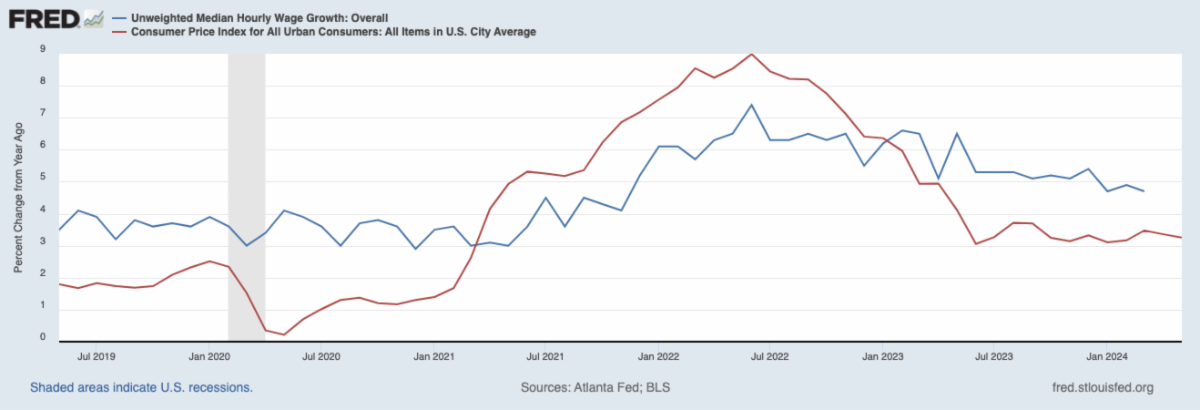
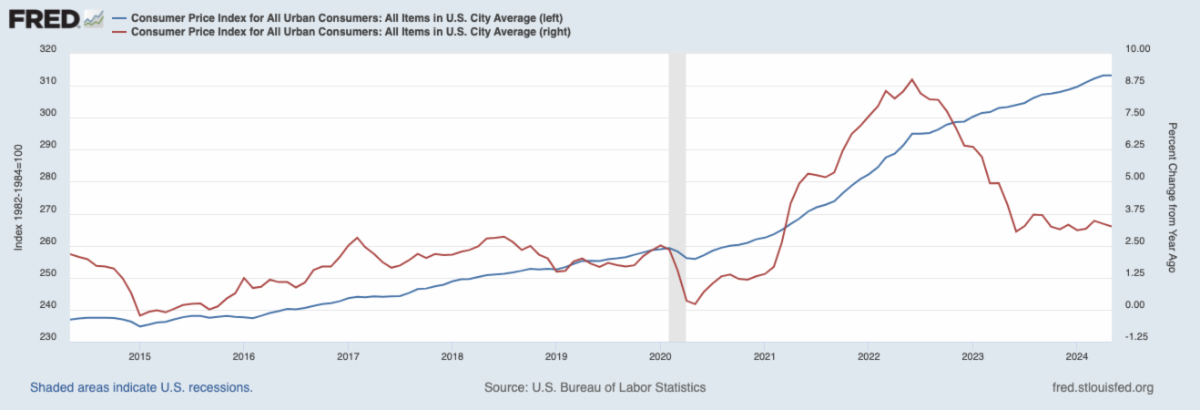
A case-in-point comes from the TransUnion survey. U.S. households expressed high levels of concern about interest rates and inflation, but they also reported optimism about personal finances given the stable jobs market and wage increases over the past year. It is almost as if to say, “The economy is in trouble, but our personal situation has been improving.”
The reality—as evidenced by the economic data we track closely—is that the economy and household balance sheets are both getting better at the same time, which is also why I think the stock market has been rallying this year
Bottom Line for Investors
John Templeton famously said that “bull markets are born on pessimism, grow on skepticism, mature on optimism, and die on euphoria.” Measures of consumer and investor sentiment, as detailed above, indicate that there’s still plenty of skepticism about the economy and markets—even as fundamentals tell a different story. This disconnect, which is also an indication that the U.S. economy and corporate profitability are being underappreciated, keeps me optimistic about this bull market having more room to run.
These are all constructive views on the outlook for the U.S. economy, even as investors seem to grow more pessimistic about what the year ahead holds. In my opinion, that’s bullish.
As always, we welcome the opportunity to discuss these ideas and how they relate to your personal investing strategy.
1 FA Mag. June 12, 2024. (CLICK HERE)
2 Yahoo Finance. June 14, 2024. (CLICK HERE)
4 Fred Economic Data. April 10, 2024. (CLICK HERE)
5 Fred Economic Data. June 12, 2024. (CLICK HERE)
|