|
Habitat Stewardship Project,
Monterey Bay
Our mission is to bring nature closer to people, and people closer to nature through hands-on experiences in community based habitat restoration and environmental education.
| | |
November Chill
Finally, a chill is in the air and we can start to get a sense of the cold nights and crisp mornings to come. November is a time to be thankful for what we have and begin to plan for the winter ahead. Our seedlings are tucked nicely into the greenhouses getting ready for out planting in the coming months.
| | October was a fun month, we were glad to have the bits of rain that came in between those beautiful sunny fall days. The "DONS" have been transplanting away at the greenhouse and the student staff, College Corps, and Service learners have kept busy with field trips and a couple of community events. We had a great Make a Difference Day and some of our team were able to represent HSP at Ciclovia in Salinas. Ciclovia is always a fun and vibrant community event, we were happy to be a part of it! | | Upcoming Community Events | |
Everyone is welcome to our family-friendly FREE community events.
We provide gloves, tools, and supplies.
Sun protection, reusable water bottle, and closed-toe shoes are recommended.
Keep checking our "Community Events Calendar" for updates or join us at DONS which runs year long!
Sunday, November 9th - Monterey Bay Half Marathon 11:30-3PM
Location: Monterey
HSP is looking for volunteers on Sunday, November 9 (11:30-3:00) to help sort trash/recyclables/compostables from the hundreds of bags of waste that is generated by the Monterey Bay Half Marathon. Register here.
Saturday, November 15th - Veterans Day Service Event 10am-1pm
Location: Veterans Memorial Park, Salinas
Join us for this annual event where we will be cleaning up around Veteran's Memorial Park and Gabilan Creek in Salinas. Gabilan Creek runs through the park and is part of the Salinas Watershed that eventually flows to Monterey Bay. Tools and Snacks provided. Visit our website to register for this event!
EVERY TUESDAY
| Email Christina McKnew at cmcknew@csumb.edu
10:30AM-12:30 PM
DONS (Docents of Native Species), native plant volunteer group
Location: Greenhouses near the CSUMB Watershed Institute: 4100 B St, Seaside, CA 93955
Click the Community Events button to learn more and sign up for an event!
| | | |
HSP’s Biggest MCGIVES
Fundraising Campaign Starts on November 13th, be a Contributor!
By Laura Lee Lienk, HSP Director
| | | |
This year, our MCGIVES! Big Idea is called “The Habitat Stewardship Project Depends on Volunteers". Habitat Stewardship Project volunteers get their hands dirty restoring nature and inspiring others-they need to be supported!
We restore habitats (dunes, grasslands, chaparral, riparian) which are responsible for multiple ecosystem services while HSP people are agents of social responsibility and change. HSP depends on stewardship volunteers and we know that “volunteers are free but they don’t work for nothing,” so MCGIVES funding will support bringing volunteers out into nature!
| | |
Your giving will support...
Our many weekend projects:
· Welcoming HSP stewards to Big Sur Land Trust's Ensen Community Park
· Creek Clean-ups in the Creeks of Salinas with the City
· “Vamos Afuera”, family nature explorations for farmworker families in Salinas and elsewhere in Monterey County.
· Dunes plantings with CA State Parks, Monterey Peninsula Regional Park District and
Central Coast Wetlands Group
· Multiple plantings on the Ft. Ord National Monument
· Propagating, planting and protecting unique pollinator habitats on Ft. Hunter Liggett
in South Monterey County with the Resource Conservation District of Monterey County
| | |
Monday through Friday HSP programs:
· “Eco-Ambassador” field trip programs to Ft. Ord National Monument and the Marina
Dunes for 4th-6th graders from the Monterey Peninsula Unified School District as well as
“Flows to the Bay” and “Vamos Afuera” classroom programs and educational field trips for 4th-6th grade classes in Salinas' Alisal School District
· Our greenhouses propagating those 15000+ natives, including pollinators for our
restoration plantings with our Docents of Native Species Volunteer Team and our Greenthumbs Program Volunteers.
· Training and supporting 15 HSP paid student assistants, 4 College Corps members
and 30+ CSUMB Service Learning students
Our 2025 MCGIVES! goal is to raise $25,000+, significantly above last year's $17,000 goal. Every contribution is significant!
| | |
Winter Berries—Not For Human Consumption
By Laura Lee Lienk, HSP Director
HSP’s primary work with our many partners is propagating and then out planting native plants to restore native habitats. This winter, our rainy season, HSP volunteers will plant about 10,000 natives on the lands of Ft. Ord National Monument, Marina Dunes Preserve, and several CA State Park beachesWe
hope that you can join us. Each of the restored landscapes will provide an abundance of food for insects, birds and mammals. Winter berries are a main source of nutrition for our local and migrating native animals. Most are not
for human consumption. Here are a few that I encounter on my walks:
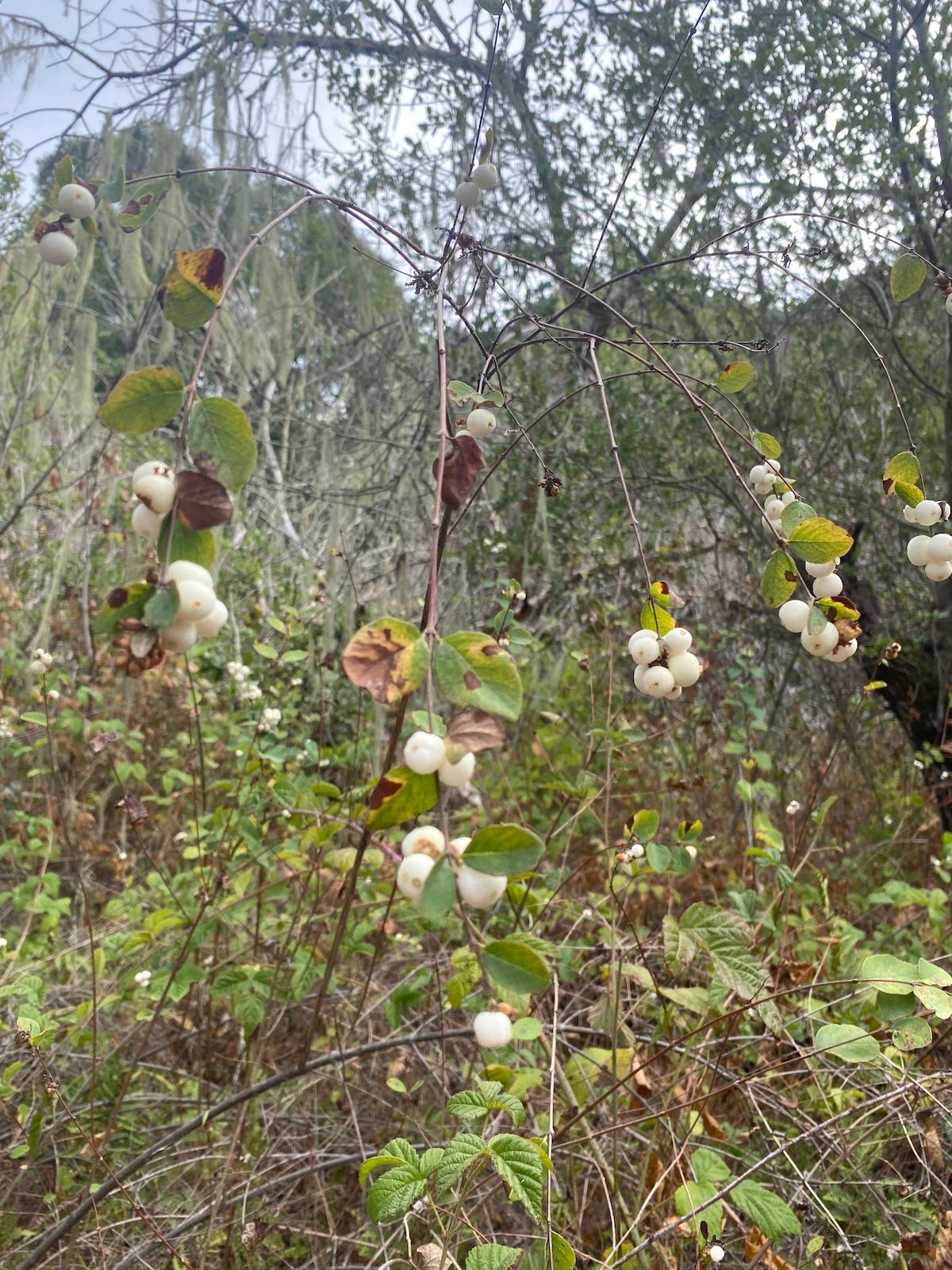
1. White Snowberry (Symphoricarpos albus): Mildly poisonous to humans (vomiting, dizziness and other gastrointestinal problems), birds and bears eat the berries. When I see these little berries, I think of tiny snowballs.
| | |
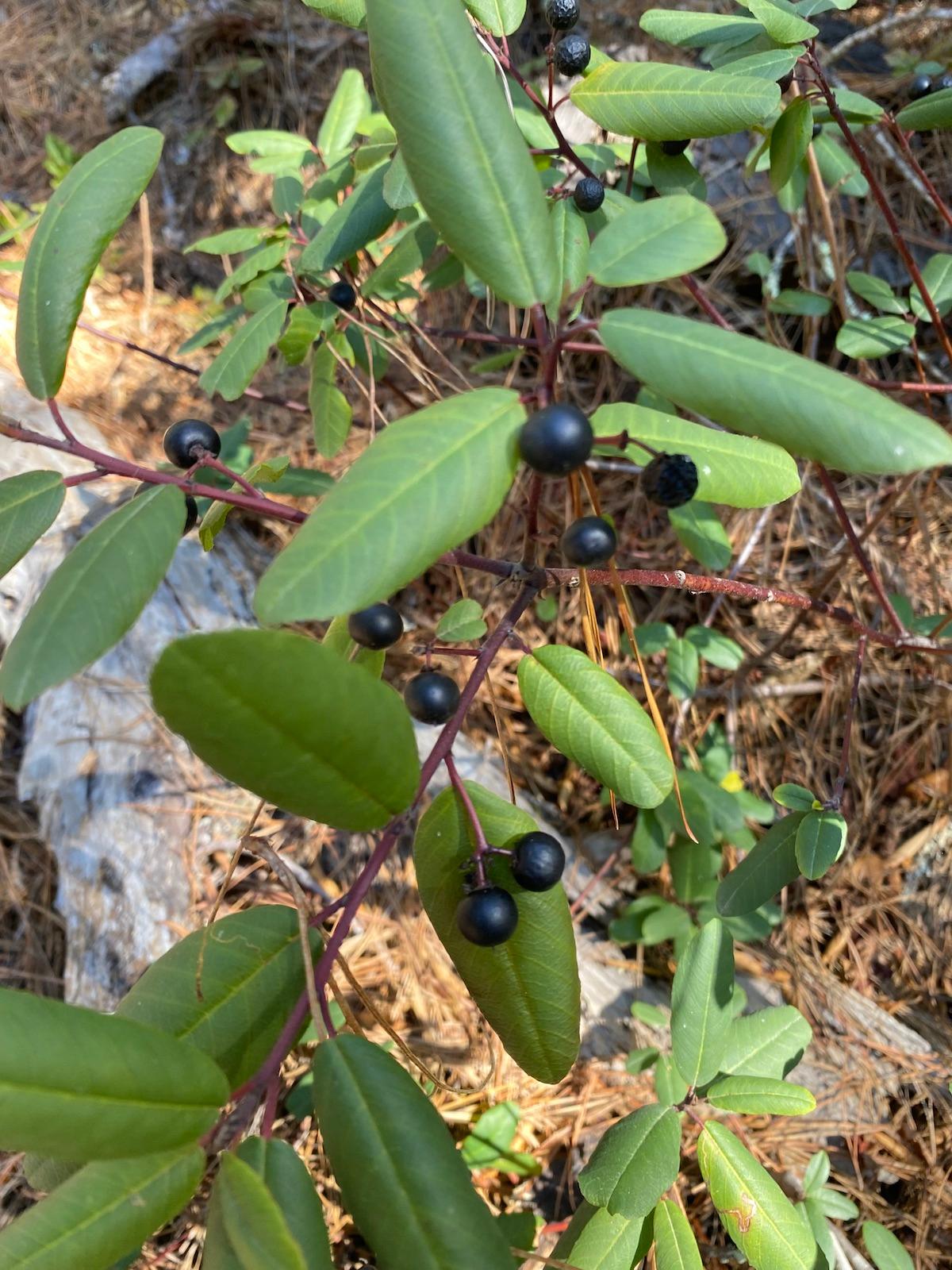
2. Coffeeberry (Frangula californica): In late summer and fall, coffeeberry plants will adorn
themselves with berries in varying shades of red and purple. They generously provide these juicy gifts to birds, deer, and other animals, who return the favor by spreading their seeds (which superficially resemble coffee beans) far and wide. However, we don’t recommend the berries for human consumption - they can cause vomiting and diarrhea in larger amounts! Though the Ohlone and other indigenous peoples use the inner bark as a laxative and a treatment for poison oak rashes.
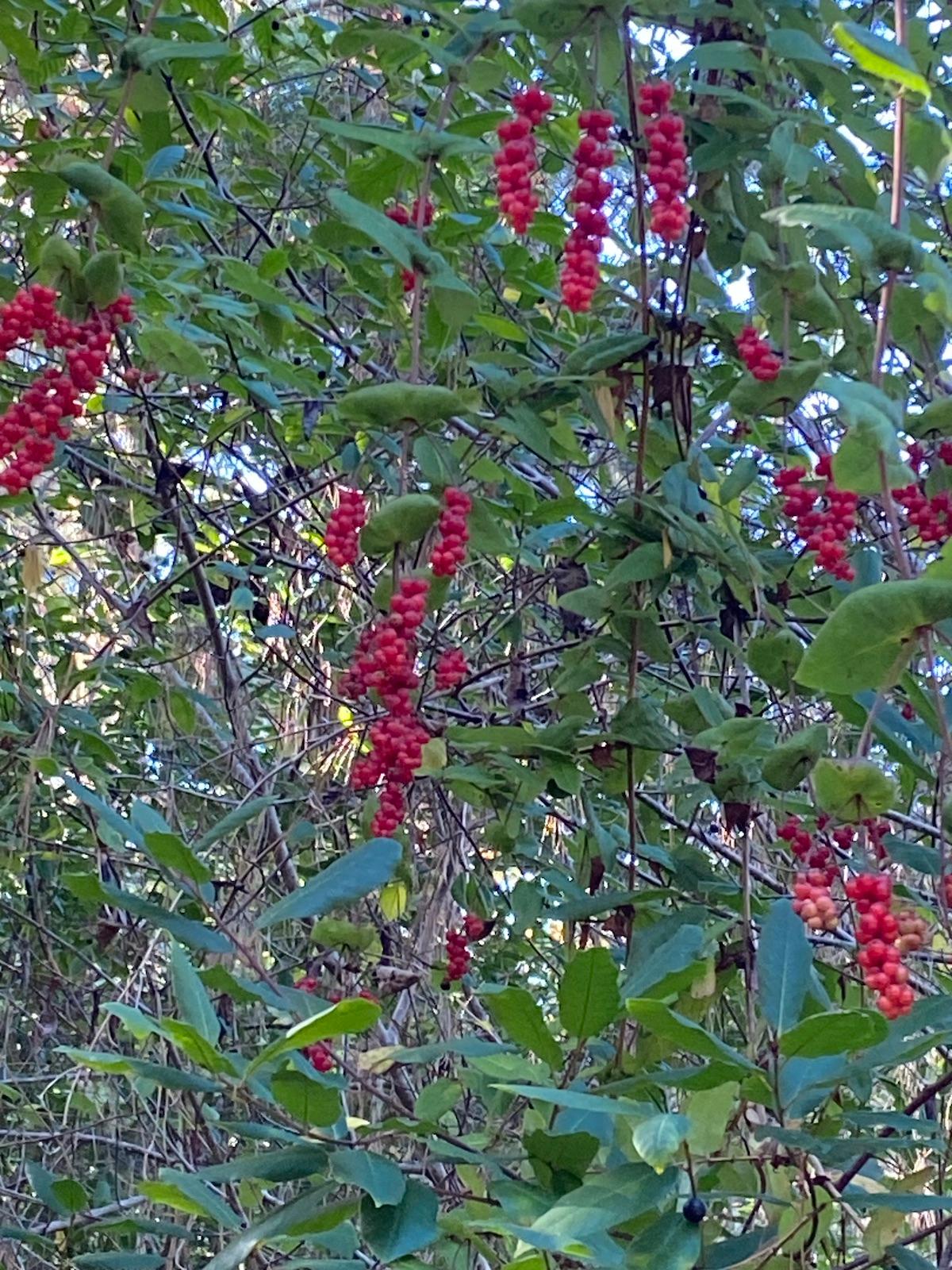
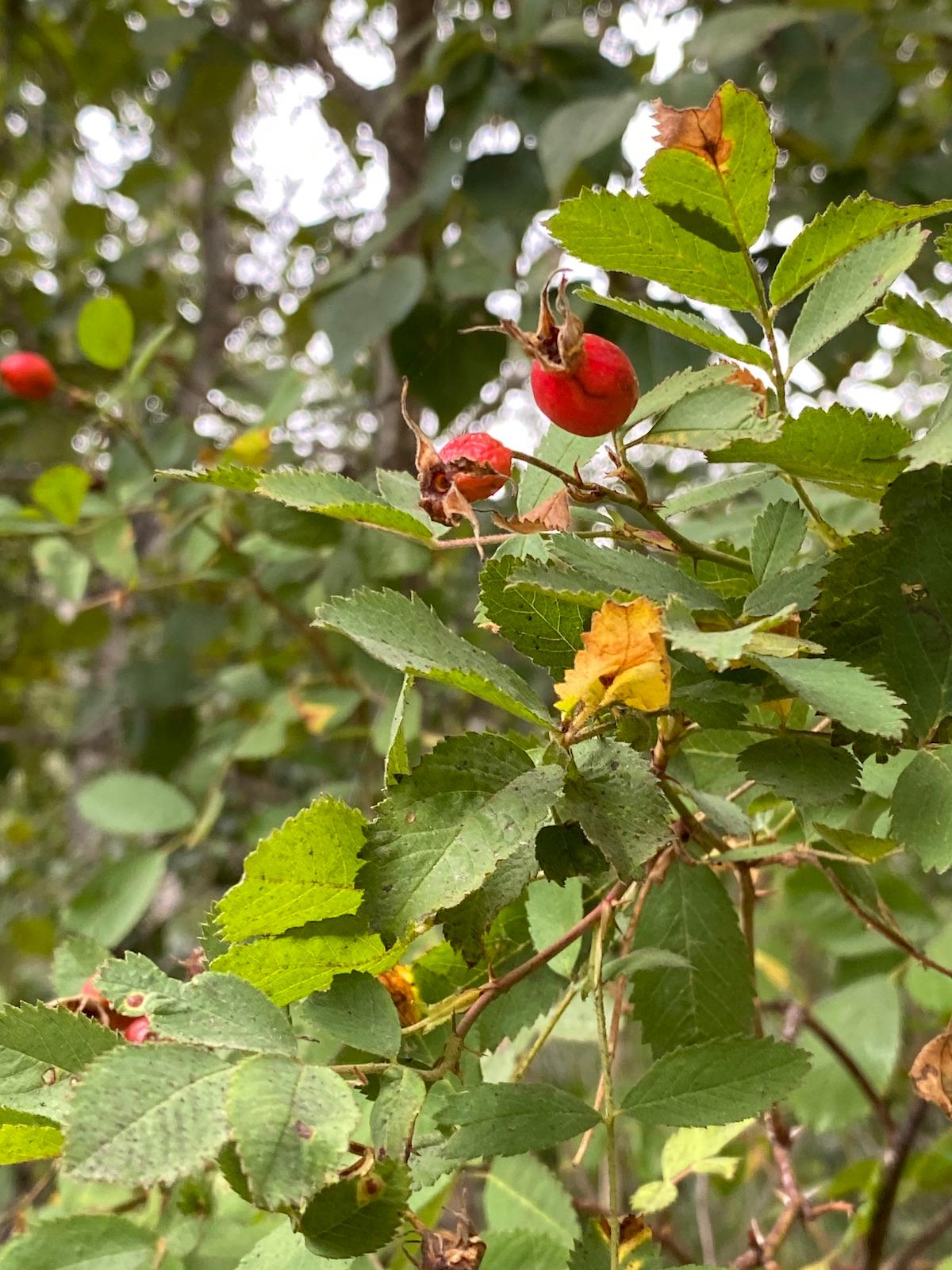
| | 3. CA Honeysuckle (Lonicera hispidula) produces red berries that are a favorite of birds, but are poisonous for humans. | | 4. California Wildrose (Rosa californica) produces deep red rose hips (fruits) that are a favorite of birds. Indigenous peoples use the fruits for food, drink, medicines. Left photo. | | |
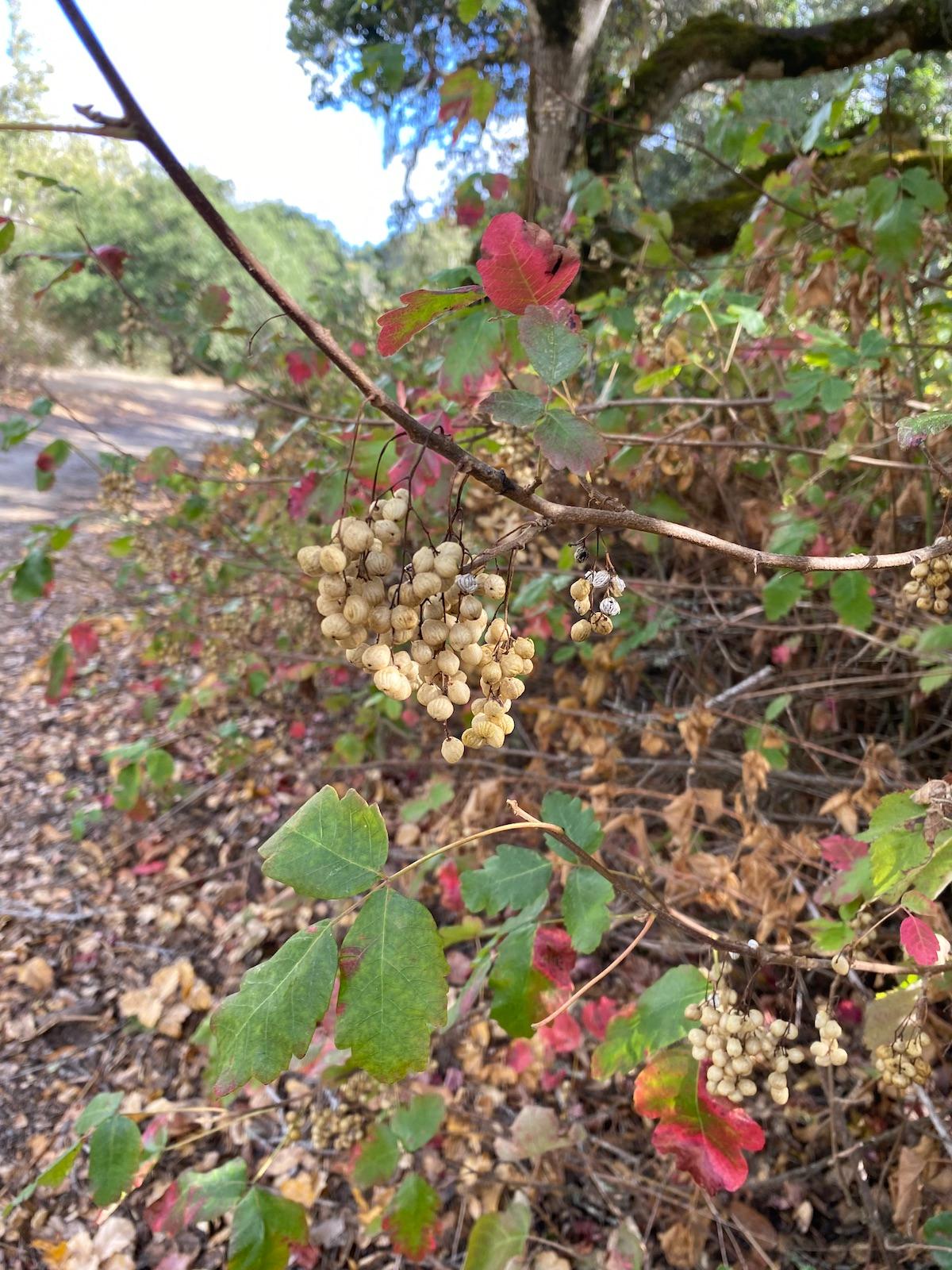
5. Poison Oak (Toxicodendron diversilobum) berries look like little bunches of dried grapes and are a favorite and important food for migrating songbirds. For humans, however, the berries and indeed all parts of the plant can cause painful rashes. Leave these berries for the animals. Right photo.
For my part, I recommend leaving native Winter Berries for the wildlife and do your berry foraging at your local organic farmers markets.
| | |
Little Hands, Big Impact: Restoring And Creating More Resilient Dunes
By Samuel Anaya-Alvarez, Education Program Coordinator
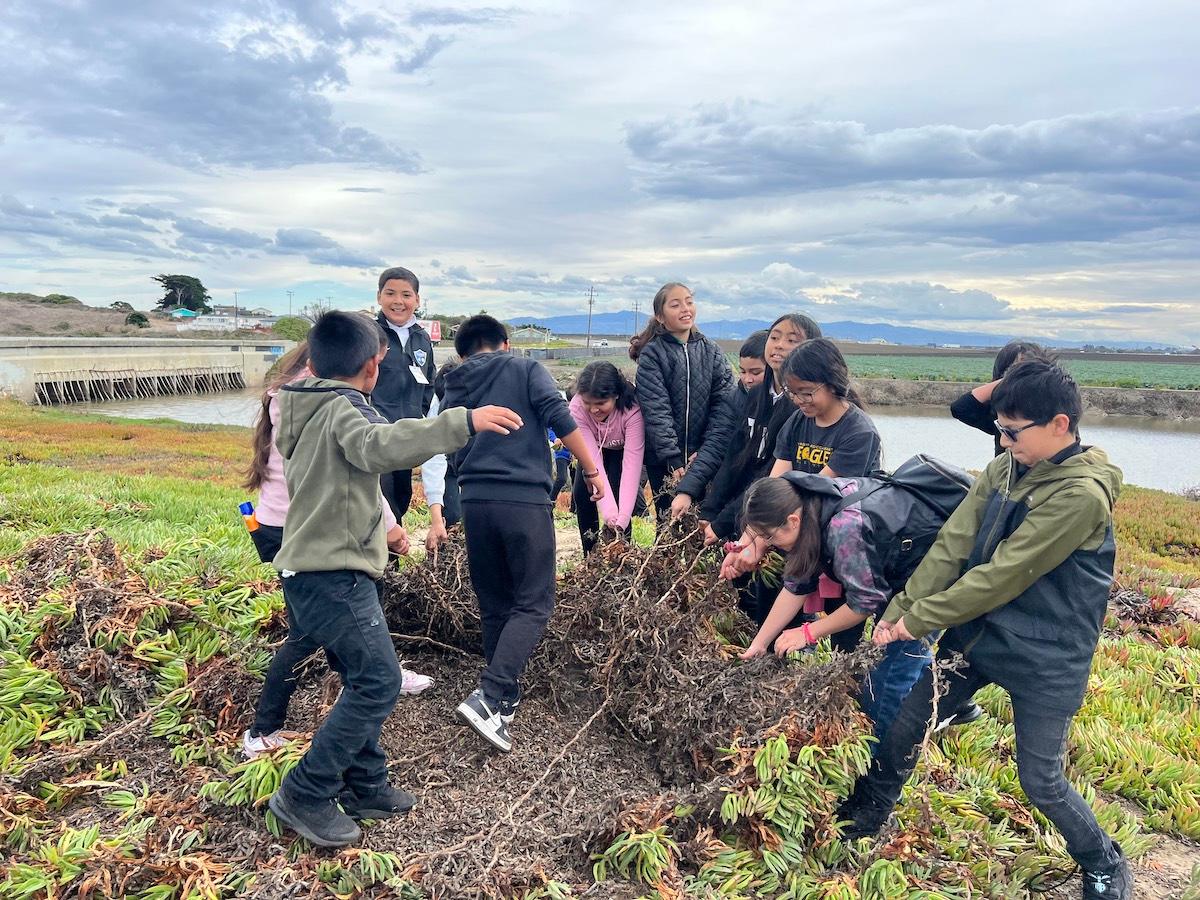
Along our coastline, young elementary school students are helping bring life back to our dunes. These sandy areas are home to many local animals and plants, but over time they have been damaged by erosion, human pollution and invasive plants. Now, the next generation is working hard to restore them.
With trowels, gloves, and lots of enthusiasm, the students are preparing our restoration area by removing ice plant - a fast-spreading invasive species that takes over native habitats. In its place, we are preparing the area to plant native dune plants that help hold the sand together and provide food and shelter for local wildlife like the endangered Snowy Plover and the Smith's Blue Butterfly.
Through this hands-on experience, the students are learning how important native plants are for keeping the dunes strong and healthy. They also see how small actions, like pulling out ice plant or planting a plant, can make a big difference for the environment.
Their teamwork and care show that even at a young age, people can make a real impact. Together, these students are helping create more resilient dunes and a better home for the animals and plants that depend on them.
| | |
Wild Cousins of the HSP Greenhouse Rat
By Laura Lee Lienk, HSP Director
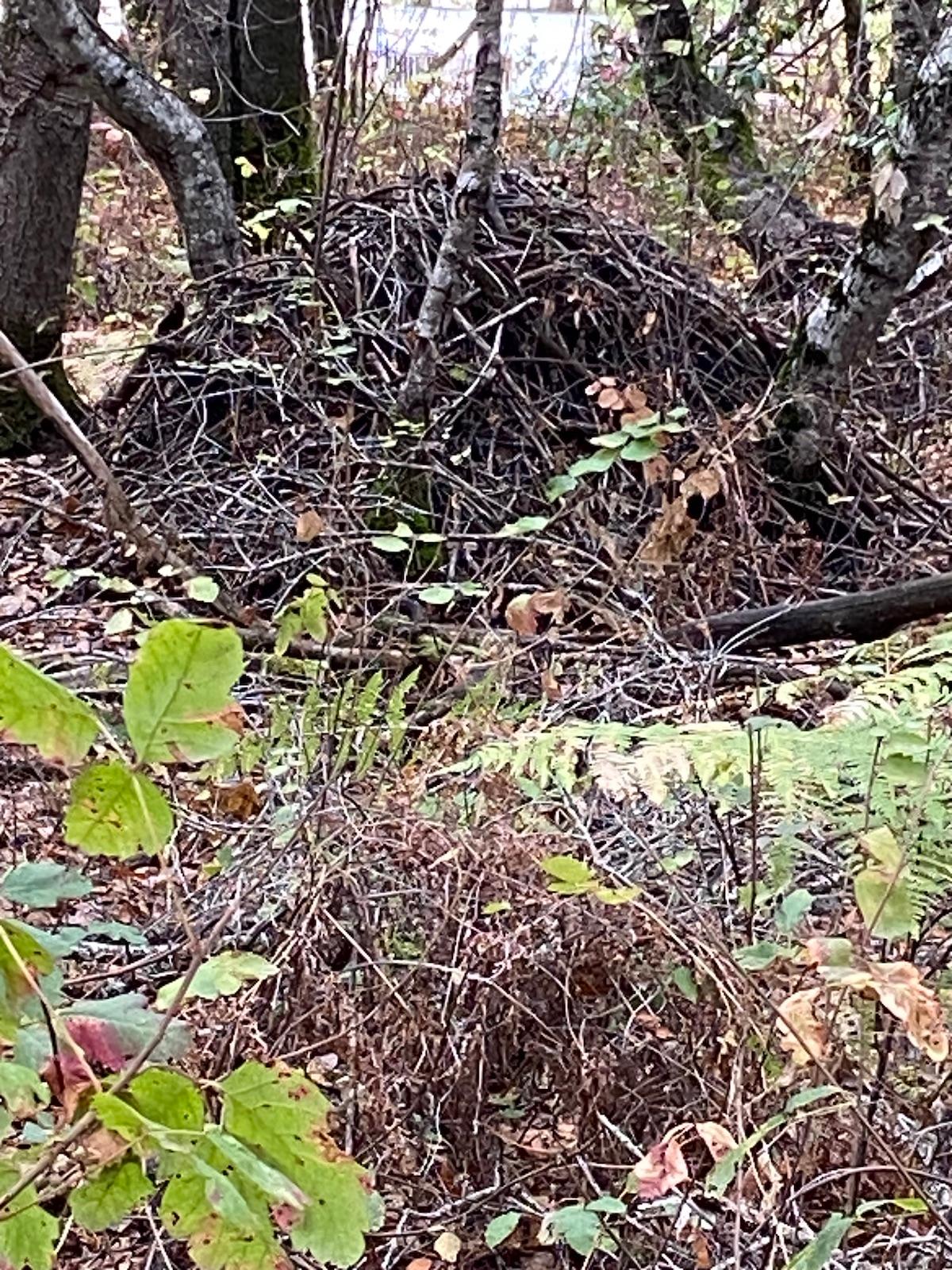
For years, several times a week, my dog Banner and I, have been walking Garland Park’s River Trail. But, it wasn’t until early October when the leaves started to fall that I REALLY noticed the many mounds of sticks along the trail. I knew that they were woodrat nests but little more. So, I started to count them and in one ¾ mile section of the trail, I saw 39 nests within 50 feet of the trail. Wow! The HSP Greenhouse woodrat has some truly industrious wild cousins.
| | |
So here is some information, I gleaned from Wikipedia:
"The dusky-footed woodrat (Neotoma fuscipes) is a species of nocturnal rodent in the family Cricetidae. [2] Nicknames include "packrats" or "trade rats"because of their tendency to hoard things, build large domed dens, and trade by dropping then picking up another object for it. Coyotes and other predators will attempt to prey on these rodents by laying waste to the dens, but the sheer volume of material is usually dissuasive. Occasionally, dusky-footed woodrats will build satellite dens in trees. Although these animals are solitary, except in the mating season (when they are most vulnerable to predation), dens are frequently found in clusters of up to several dozen, forming rough communities The mating system in this species appears to be variable, with promiscuity most generally at high population densities and monogamy at lower
densities.
Woodrats build extensive nests in trees, on the ground, and on bluffs with dense vegetation or rock cover. The conical shaped nests can be two to eight feet tall and are made of sticks, bark, and various plant matter. One nest can house successive generations of woodrats, with offspring adding to nests making them larger. The nests can have many rooms used for food storage, resting, nurseries, and protection. Nests can be built in harsh, inaccessible places such as thorny brush or poison oak patches
Dusky-footed woodrats are chiefly herbivorous, but will eat insects, especially mealworms and crickets if offered. Their main diet consists of cuttings from branches, inner bark, fungi, leaves, seeds, greens, fruits, and nuts. Woodrats store food cuttings in their nests; with nestsaveraging 4.5 species of herbivorous vegetation, though they tend to have a dominant food source making up the majority of cuttings, oak ( Quercus ) is preferred if available."
My husband and I count ourselves lucky because we have our own woodrats living in the woodpiles around our property. Or, perhaps it is just one woodrat moving between hiding places. Perhaps one day I will find a shiny spoon which has gone missing!
| | |
An opportunity for service and fundraising!
By Laura Lee Lienk, HSP Director
HSP is still looking for volunteers on Sunday, November 9 (11:30-3:00) to help sort trash/recyclables/compostables from the hundreds of bags of waste that is generated by the Monterey Bay Half Marathon. HSP receives a donation on behalf of the number of volunteers we register. Register at Half Marathon Volunteer for HSP being sure to register to help Habitat Stewardship Project.
| | Learn about Restoration in Monterey County | |
Check out our social media sites!
Learn more on native plants and invasive species, future events, and see past event photos on our social media accounts: @hspmontereybay
| | | |
eq231Habitat Stewardship Project Monterey Bay | Contact Us | FAQs | Privacy Policy |
| | | |