|
PLM Road Map & PDT NA 2026
The Westfields Marriott (metro Washington D.C.)
May 6 & 7
AI in PLM: A Disruptive Opportunity and Challenge
Turning AI disruption into enterprise value:
Strategic insights for the PLM professional
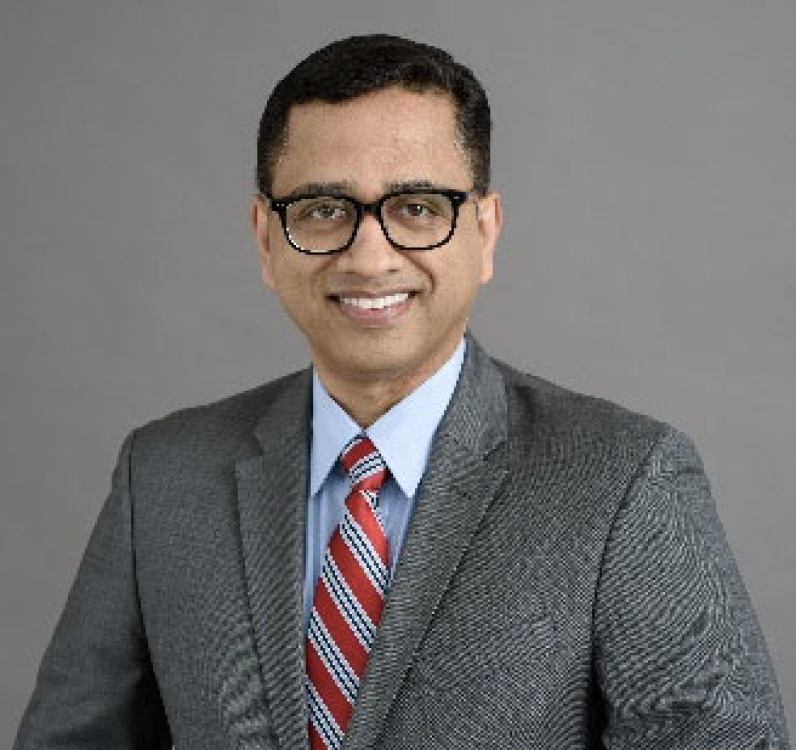
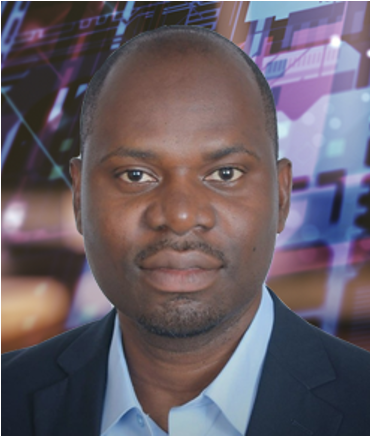
| | We are getting excited about the upcoming PLM Road Map & PDT NA 2026 event, which will be held in the Washington, D.C., area on May 6 and 7. Over the next couple of weeks, we will share more about how each day is shaping up for the PLM Professionals planning to attend. | | Keynote: AI in PLM: Beyond all the Hype | Artificial intelligence (AI) has been present in PLM for years, but the impact of newer generative AI or yet-to-be-defined applications of AI remains unclear. While practical benefits exist, companies are still working to understand, integrate, and optimize AI. CIMdata expects AI in PLM to bring both challenges and opportunities, with the potential for significant, disruptive gains if managed well. Big data within PLM, for example, can now be used to develop new AI applications that deliver actionable insights. However, like most emerging technologies, AI is often hyped before its real value is proven. The task for PLM professionals is to turn AI’s disruptive power into enterprise value. So, where are we today with AI’s support for PLM? Has AI’s enablement of PLM reached its tipping point? What is available and what is potentially next? CIMdata's President & CEO, Peter Bilello, will examine the emergence of these topics within the product lifecycle. | | | Keynote: Artificial Intelligence: From Disruptive Challenge to Strategic Advantage | Vishwa Uddanwadiker, Chief Artificial Intelligence Officer for Engineering, Test & Technology at The Boeing Company, will present the breadth of AI at Boeing, encompassing optimization, computer vision, reinforcement learning, simulation, and embedded machine learning. Vishwa will highlight concrete product and process examples, such as an AI-driven auto-taxi, the Safe Runway hazard detection system, and computer vision tools for part verification and factory defect detection, which speed inspections and reduce rework. Vishwa will also showcase process-focused assistants augmented with Boeing data that streamline complex workflows, improve draft quality, and accelerate corrective action planning.Vishwa will also explain how Boeing will continue to embed AI across products, production, and support while prioritizing system-level safety assurance through rigorous verification and validation, collaboration with regulators, meaningful human oversight, and iterative validation in real operational conditions to ensure explainable, certifiable, and dependable AI. | | | If I Only Had a Brain: How Cummins Is Engineering AI for PLM & Beyond | Industrial companies do not lack AI tools—they lack connected product knowledge to make those tools truly intelligent. At Cummins, we asked a different question: what if our AI actually had a “brain”? Rather than starting with chat interfaces or isolated pilots, we began by engineering the foundation—systematically connecting our product and engineering knowledge, including core PLM systems, into a trusted, governed knowledge layer. We approached this the same way we approach product development: with rigor, controlled experimentation, and measurable validation. What began as a structured proof-of-concept across real-world engineering workflows evolved into a production platform that provides AI with structured memory grounded in authoritative enterprise data. In this presentation, Oliver "Scott" Beard will share how Cummins is building that brain. By focusing first on the foundation rather than the features, Cummins is enabling AI to move beyond novelty toward durable capability. With this base in place, the company is beginning to unlock broader digital-thread and advanced AI opportunities across the product lifecycle. | | | Embracing Artificial Intelligence in Product Design & Lifecycle Management – Siloed Initiatives vs Enterprise Transformation | Over the last three years, Large Language Models (LLMs) and other AI advances have swept through everyday human tasks, transforming creative arts, scientific research, and software development. In software development alone, AI can now write, analyze in context, and optimize 30,000+ lines of code, guide intelligent agents through complex tasks, and orchestrate near-autonomous workflows at an unprecedented pace. Yet within product design and lifecycle management, these advances remain largely in the realm of promising but siloed initiatives; generative design, ML-enhanced simulations/Physics AI, or isolated AI-driven systems engineering efforts. Is enterprise transformation through AI in product design and lifecycle management attainable today, or does it remain just beyond our reach? In this presentation, Eaton's Dr. Uyiosa Abusomwan will contrast existing scattered efforts with the true potential impact of AI in enterprise transformation. Hindrances to achieving this vision, such as persistent data silos that fragment knowledge, limited AI governance frameworks, disjointed toolchains that impede integration, and cultural resistance stemming from AI anxiety, will also be considered. Finally, the presentation will explore how embedding AI into the fabric of enterprise-wide product development processes and decision-making can unlock impactful, lasting transformation. | | | KEYNOTE: Engineering at the Speed of Mission: The Next Era of Defense Systems | This keynote presentation by Daniel Hettema will outline a strategic vision for the Department of War (DoW) to transition from its traditional acquisition processes to a modern, agile framework capable of delivering operational capabilities with "continuous acceleration." To maintain military superiority and counter systemic inefficiencies, the presentation posits that the Defense Acquisition System must be fundamentally transformed. The core of this transformation lies in empowering the systems engineering discipline to lead the charge. The proposed solution advocates for a Continuous Integration/Continuous Delivery (CI/CD) pipeline, built on a foundation of digital threads, modern systems engineering methodologies, and a Modular Open Systems Approach (MOSA). Key initiatives detailed in the presentation include modernizing systems engineering practices to incorporate value engineering and agile design; evolving standards into machine-interpretable content, such as SysML v2 and the Unified Architecture Framework (UAF); and leveraging strategic collaborations with academic and industry research centers, such as SERC and AIRC. The systems engineering community is a critical opportunity to drive the department's digital transformation by prioritizing speed, integration, and mission-focused outcomes to shape future strategy and ensure the rapid delivery of solutions to the warfighter. | | | The Business Value of Becoming Data Driven – Insights from KONGSBERG | How do you turn decades of product knowledge, complex value chains, and demanding global customers into a true data-driven advantage? In this presentation, Pål Gunnar Conradi shares the inside story of KONGSBERG's long-term transformation toward a fully data-centric way of working. As a major system integrator serving clients such as the U.S. Department of Defense and NATO, KONGSBERG operates in an environment where requirements grow more complex every year. To manage this, KONGSBERG has built its operations on Product Lifecycle Management (PLM) principles and international standards such as ISO 15288 and ISO 10303—while investing strategically to prepare product data for the future. | | | The Navy’s Digital Evolution: Leveraging a Focused AI | So, you have a Cloud filled with applications, or you have implemented a few applications across your organization. Now what? How do you get the most out of that investment? How do you convert your data from analog to digital? How do you move to digital-first operations? How do you make the most of Artificial Intelligence (AI) within your environment? This presentation from Robert Lamanna will provide insight into the US Navy’s Industrial Base Cloud Hosting Environment, the applications integrated within, and, taking the next logical step, the utilization of AI to align mission-first, optimize functions, flatten hierarchies with fiscal discipline to ensure that every dollar is tied to warfighter outcomes. | | | Evaluation of SysML v2 for use in Collaborative MBSE between OEMs and Suppliers | The new SysML v2 Model-Based Systems Engineering (MBSE) standard has been assessed by the AD PAG MBSE Collaboration working group as a potential solution to improve collaboration in engineering models and avoid tool-vendor lock. SysML v2 is a new standard approved by the Object Management Group in 2025. The AD PAG working group comprises major aerospace & defense Original Equipment Manufacturers and Tier 1 suppliers who are interested in SysML v2 as a potential enabler to work together more effectively within the engineering modeling environment. This presentation by Moog's Darren Reiter, on behalf of the AD PAG, will provide a summary of the project report, highlighting the benefits of SysML v2, the gaps that challenge collaboration, and external considerations that need to be addressed in the adoption and roll-out of SysML v2. SysML v2 tools were not yet available at the time of this investigation; therefore, the conclusions are based on analysis of the SysML v2 standard and engagements with major SysML v2 solution providers. | | | Democratizing PLM with Low Code Extensions that Enable AI Data Readiness and Implementation | Many teams try to add AI to PLM, even as engineering and manufacturing data remain fragmented across systems. The result is slow adoption and outputs that are difficult to trust, limiting impact beyond isolated productivity gains. This presentation outlines an approach to AI-ready PLM that makes data readiness a design goal of the implementation: governed interoperability, strong data foundations, and a digital thread that connects engineering with manufacturing, assembly, and test. In this presentation, Denise Fitzgerald, Group Leader of the Digital Engineering Center at MIT's Lincoln Laboratory, will show how low-code extensions can expand PLM beyond engineering and connect it with MES and ERP, enabling AI agents to reason across requirements, configurations, processes, and outcomes to support better decisions and cost performance. The presentation will also touch on how low-code changes delivery expectations for software providers, integrators, and client SMEs, shifting effort from heavy customization toward faster configuration, iterative feedback, and sustainable upgrades. | | | | | |