Friends:
January weather is perfect for reading---no garden to weed; no beach to visit; no trail to hike. Just the wood stove, a good cup of coffee in the morning and a fine glass of single malt Scotch in the evening, and of course, a terrific book to read while curled up on the couch with my dear wife.
Here are the books I read in January:
- Postcards: Matthew Wong, Winnie Wong
- Humanly Possible: Seven Hundred Years of Humanist Freethinking, Inquiry, and Hope, Sarah Bakewell
- In the Electric Mist with Confederate Dead, James Lee Burke
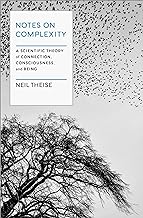
- Notes of Complexity: A Scientific Inquiry into Connection, Consciousness, and Being, Neil Theise
- Holly, Stephen King
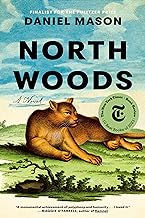
- North Woods, Daniel Mason
- So Late in the Day, Claire Keegan
- The Hive and the Honey, Paul Yoon
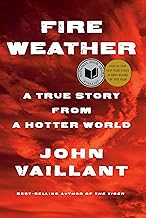
- Fire Weather: A True Story from a Hotter World, John Vaillant
- Stranger by Night: Poems, Edward Hirsch
The end of the year always brings two events that exacerbate my 'so many books, so little time' problem. First, there are the nearly infinite number of "Ten Best" lists that pop up in every newspaper, magazine, and web site. Second, there are the major book awards--the Pulitzers, the New York Book Critics Circle Awards, and the National Book Awards. A quick on-line review of the award winning books and the New York Times 'Ten Best' yielded 25 titles in fiction, non-fiction, poetry, criticism, biography, and memoir. Interestingly, none of the ten books selected by the NYT won one of the awards, speaking to the richness of writing these days.
Despite spending what my wife and friends call an "inordinate amount of time reading", I have only read three of these 25 books, though if you include books that were long-listed, the total increases to seven. Once again, there are so many high quality reading options waiting out there.
Among the ten books I did read in January, three stand out. 'Fire Weather' is simply one of the best and most important books I've read in years. John Vaillant is a Canadian writer who uses the catastrophic Fort McMurray, Alberta fire of 2016 as the narrative thread to address climate change and the coming global catastrophes due to the burning of fossil fuels. Weaving stories of individual acts of heroism and losses in the 2016 fire into lessons about petroleum, the physics of combustion, and the new phenomenon of fire weather, i.e. the deadly combination of record high temperatures and record low humidity combined with fuel and topography, Vaillant has written a great book which was one of the NYT's Ten Best.
While I found the entire book superb, two of Vaillant's insights made a deep impression on me. In explaining why experienced firefighters and senior managers in emergency management so misjudged the threat from the Fort McMurray fire, Vaillant cited what he called the 'Lucretius problem'. Lucretius, the 1st C author of 'De Res Natura', pointed out that man can't imagine an object or situation greater or more serious than the greatest or most serious object or situation he's faced. Vaillant's second insight comes from his citation of the conclusion of the U.S. Senate Commission on 9/11 that the greatest failure was one of imagination. Because we can't see the inexorable buildup of carbon dioxide in the atmosphere or sense the one or two degree rise in average temperature and since few of us live on coral atolls which are dying or on Pacific islands that are being submerged, we have failed as a society to realize the severity of climate change and the need to wean ourselves from fossil fuels. This 'failure of the imagination' and the Lucretius Problem have led to the present disastrous paralysis of world governments around climate change. Read this book and imagine.
The second great book I read this month is 'North Woods' by Daniel Mason, a NYT Fiction best. Speaking in voices as varied as a young couple who flee into the north woods to escape their Puritan colony in the 17th C., to a runaway slave and her pursuer in the 19th C, to a 21st C scientist born in Cambodia, Mason uses a house built along a stream in the woods as the fulcrum around which these stories unfold. Using poems, songs, letters, and even medical records, he keeps the reader's intent interest from beginning to end. It's a great read and a more subtle but powerful reminder of what we can lose from climate change.
The third book I loved this month is 'Notes of Complexity: A Scientific Theory of Consciousness, Connection and Being'. Written by Neil Theise, a pathologist at NYU, it combines the latest in scientific theories of how the universe is organized with a historical deep dive into what has been labeled 'the problem of consciousness', i.e. how do we know what we think? Theise rejects the materialist notion that it is the brain that provides this insight and also rejects the pantheism theory that everything in the universe has consciousness, He finally ends up with an "idealist theory", i.e. Plato's Forms as the substance in the Universe that organizes everything including our sense of ourselves. From subatomic quarks to Plato, Buddhism, Hasidism, and Hinduism, this is a fascinating and engaging read.
The remaining seven books are my usual monthly random reading stroll. There were two short story collections, a disappointing one by Claire Keegan and a wonderful one by the Korean-American writer Paul Yoon. Two mysteries provided much-needed light entertainment, though neither was very light-hearted. I've managed to avoid Stephen King's books in the past, but 'Holly' was a NYT Notable book, and when it appeared on the Mary L. Blood Memorial Library's 'New Books Shelf' in Brownsville, Vermont, I grabbed it and loved it. It's a macabre, weird tale and a real-page turner. In James Lee Burke's 'In the Electric Mist with Confederate Dead', we again encounter Dave Robicheau, a terrific character. Robicheau is an ex-New Orleans homicide detective, Vietnam vet, and a part time deputy sheriff in small town Louisiana, and he tracks down a serial murderer and busts up a Mob gang and makes it look easy. This is a fine series by Burke though one of the weirdest titles ever.
I loved Sarah Bakewell's first book on Montaigne, and her most recent book, 'Humanly Possible' is just as good. Tracing the history of humanism over 700 years, she defines it as an approach that places the individual at the center of a universe imbued with tolerance, diversity, respect, and morality where one can achieve a good life in this world, not in some afterlife. Freethinking, inquiry, and hope are humanism's key pillars, and Bakewell finds their source in a plethora of individuals from Plato through Erasmus, Dante, Rousseau, Hume, Mill, Bentham, Arnold, up to the 20th C with Bertrand Russell and the inventor of Esperanto, Lejzer Zamahoff. Surprisingly readable and engaging, I'd recommend it to anyone interested in intellectual history.
Finally, a book of poetry (see below) and one devoted to a painter rounded out the month's reading. The slim volume of Matthew Wong's paintings introduced me to a painter who I had not known. Wong was a 31 year old Chinese-Canadian who committed suicide in 2019 after a successful one man show of his work in NYC. A self-taught artist, his work which was selling for a few thousand dollars prior to 2018 is now selling for millions. This book reproduces some of his beautiful colorful paintings, often compared to Van Gogh's. For those of you in the Boston area, there is an exhibit of Wong's work at the Museum of Fine Arts which closes on February 18th.
The Poetry Tree on the Charles this month is devoted to the work of Edward Hirsch, a near contemporary who also grew up in the Chicago area and went to the same high school as my wife. Through years of teaching at Wayne State and then the University of Houston, he has written ten volumes of poetry and five prose books about poetry including a surprise best seller, "How to Read a Poem and Learn to Love Poetry". The first four poems below are from earlier work while the last two are from this month's 'Stranger by Night'. I love his use of poetry for memoir and for honoring his friends and mentors who have died.
- Self-Portrait, Edward Hirsch
- Early Sunday Morning, Edward Hirsch
- Late March, Edward Hirsch
- Branch Library, Edward Hirsch
- My Friends Don't Get Buried in Cemeteries Anymore, Edward Hirsch
-
The Unveiling, Edward Hirsch
In closing, here are some wise words from Vita Sackville-West: "It is necessary to write, if the days are not to slip emptily by. How else, indeed, to clap the net over the butterfly of the moment." And then there's the introductory sentence in one of my all time favorite books, 'Speak Memory' by the incomparable Vladimir Nabokov: "The cradle rocks above an abyss, and common sense tells us that our existence is but a brief crack of light between two eternities of darkness."
Good reading and good travelling!
|
|