Greetings from the MIT Center for International Studies (CIS). m3mena brings you news about MENA-related research and programming at CIS and across campus. This issue includes seed fund updates, recent events, publications related to the current regional crisis, and student highlights. | | Learn about our activities across the MENA region | | Global Seed Funds winners announced | | |
It was a strong year for MIT Global Seed Funds in the MENA region with $467.2K awarded to 16 projects bringing the total of active grants across the region to 40 in Egypt, Israel, Jordan, and the UAE.
For the 2025-2026 cycle, a total of 115 faculty international research projects received over $2.65 million in funding. These projects were selected from among 247 proposals submitted by faculty and research scientists across the Institute.
| | See the full list of Global Seed Funds awardees for the 2025-2026 cycle | | | |
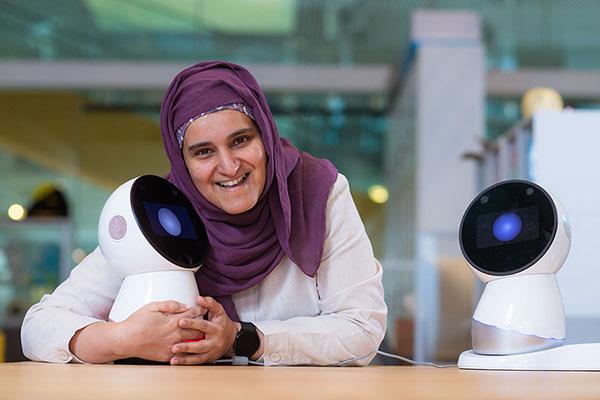
In 2024, Cynthia Breazeal (MIT) and Mohammad Aljayyousi (Philadelphia University, Jordan) were awarded an MIT-Jordan Abdul Hameed Shoman Foundation Seed Fund grant for "Games and Socially Assistive Robots for Arabic-Speaking Learners and Refugees."
What began as a shared curiosity about how technology could serve Arabic-speaking children has grown into a cross-continental collaboration across the Middle East.
The project explores how socially assistive robots and AI-powered educational games can support literacy, language learning, and social-emotional development for Arabic-speaking children – including refugee populations. The robot interacts with learners in both Arabic and English, using personalized AI algorithms that adapt to each child's emotional state, language level, and learning preferences. It is designed not only as a teaching tool, but also as a companion that meets children where they are.
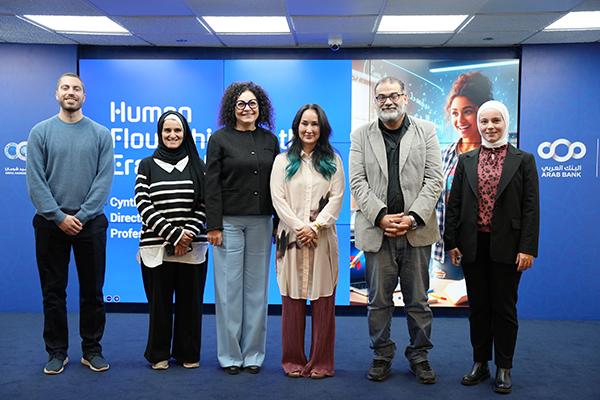
| | MIT team members, Cynthia Breazeal and Sharifa Alghowinem with Mohammad Aljayyousi and Abdul Hameed Shoman Foundation leadership: Valentina Kassisieh, CEO, Muna Zaqsaw, scientific research sections head, and Hashem Qashha, scientific research specialist, in Amman, Jordan | | |
The seed fund grant brought Mohammad Aljayyousi to MIT, where the teams worked together on shaping the educational content and game design, informed by Mohammad's expertise in curriculum design and his understanding of the cultural context.
The MIT team then traveled to Jordan, visiting the Shoman Foundation and meeting with officials from the Ministry of Education's digital transformation office and led a workshop for 200 people (in person and online).
These interactions opened up opportunities for funding and collaboration across the region. The team is now exploring how MISTI's internship program and Global Teaching Labs could play a role in expanding this engagement, through training students at MIT and then deploying them to help implement programs on the ground in the region.
| | |
The MIT-Israel Zuckerman STEM Fund Seed Fund project "MRI Biometrics for Fetal Assessment," led by Polina Golland (MIT) and Leo Joskowicz (The Hebrew University of Jerusalem), brings together two long-standing leaders in medical image analysis and computer-aided medicine.
While this collaboration builds on years of overlapping research interests and prior familiarity, the MIT Global Seed Funds call provided the timely catalyst to formalize and deepen their partnership.
By developing advanced tools to better interpret fetal MRI data, they aim to improve early assessment and ultimately patient care.
Beyond the technical goals, the partnership highlights the value of international collaboration in healthcare research, bringing together different clinical systems, perspectives, and problem-solving approaches.
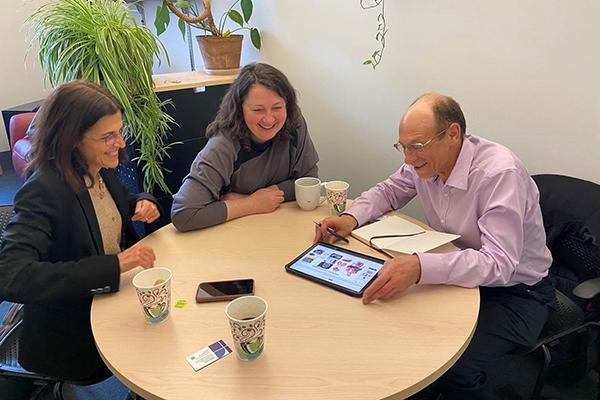
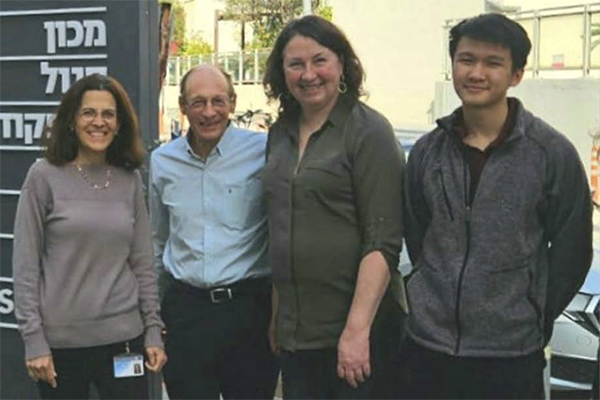
| | Polina Golland, Leo Joskowicz, and Dafna Ben Bashat at MIT | Jason Adhinarta (far right), an MIT graduate student, in Israel | | In the near term, the seed funding has enabled a joint proposal to the US-Israel Binational Science Foundation. In the long term, it is expected to foster deeper scientific engagement and generate innovative solutions emerging from sustained, cross-cultural scientific exchange. | | Over the past several months we have facilitated a series of conversations with MIT faculty and program leadership on how MIT can engage with the region in the following ways: leveraging technology to tackle regional challenges, including employment and energy needs; the future of climate mitigation and adaptation in the region; frameworks for strengthening ties with MIT colleagues to enhance research, understanding of and collaboration with others in the region; and funding resources. More details on our conversation in March can be found here. MIT faculty interested in joining these conversations can let us know here. | |
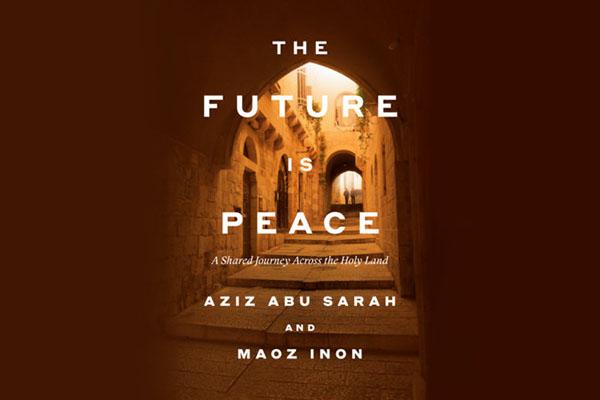
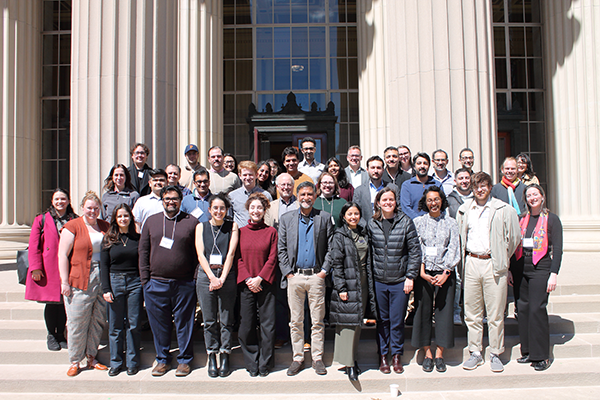
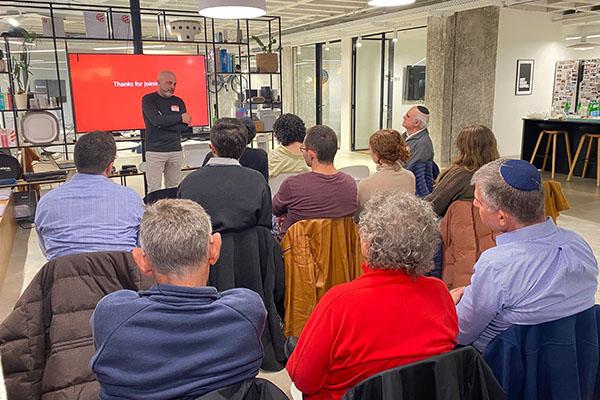
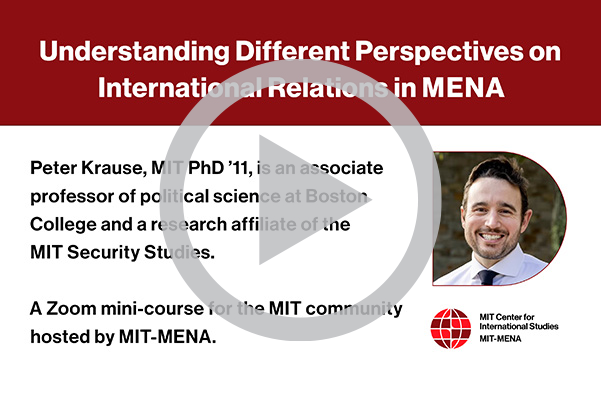
The Future Is Peace — lunch discussion with authors Aziz Abu Sarah & Maoz Inon | The 3rd Space at MIT and MIT-MEET were honored to be joined by Aziz Abu Sarah and Maoz Inon for a discussion on the theme of their new book, The Future Is Peace. | | | AALIMS-MIT Conference on the Political Economy of the Muslim World | On April 10 and 11, MIT-MENA co-hosted the annual conference of the Association for Analytic Learning about Islam and Muslim Societies (AALIMS). The conference brought together scholars from economics, political science, sociology, history, and other cognate fields to present cutting edge research. The topics included the rise of Salafi Islam in Africa, the impact of ending Saudi Arabia's driving ban for women on the labor force, and the politics of mosque construction in Egypt and Turkey. MIT co-sponsors included the Center for International Studies, IDSS, MIT Political Science, and the MIT School of Humanities and Social Sciences. | | The AALIMS conference attendees at MIT | | MIT Club of Israel alumni event | On January 13, the MIT Club of Israel event of 2026 highlighted several inspiring MIT-Israel collaborations: MIT-Israel Seed Fund awardees, Eran Ben-Joseph, MIT-Israel faculty director and professor Tali Hatuka, LLUD Leventer Urban Design Laboratory, Tel Aviv University, MIT Postdoctoral Fellow (2004-2008); Dan Grotsky, MS /MBA '02, co-founder of Groundwork BioAg and MISTI internship host. The event was sponsored by the MIT-Israel Program. | | | Research workshop on Middle Eastern politics | This forum provided an opportunity for graduate students, postdoctoral fellows, and faculty working in the broad area of Middle Eastern politics to present and receive feedback on works in progress. The workshop was cohosted by Tarek Masoud (Middle East Initiative), Melani Cammett, (Weatherhead Center for International Affairs, Harvard University), and Richard Nielsen. The forum welcomes membership from across departments at Harvard and MIT, as well as other institutions by invitation. This year's series, hosted at MIT, included nine talks. | | Mini-Class: Understanding Different Perspectives on International Relations in MENA with Professor Peter Krause | |
Session 1: US Foreign Policy under Trump
Session 2: US, Gaza, and the Future for Palestinians
Session 3: Past, Present, and Future of Iran-Israel relations
Session 4: Abraham Accords and Arab-Israeli relations
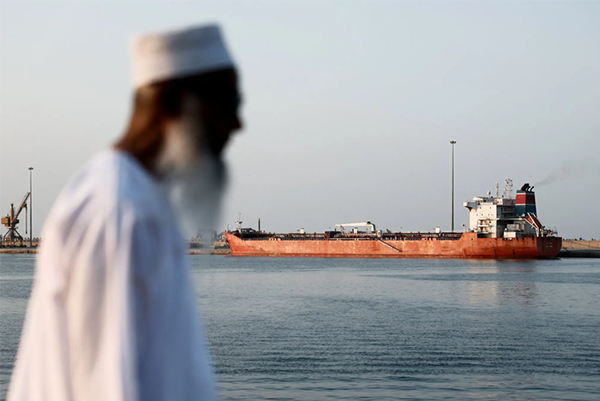
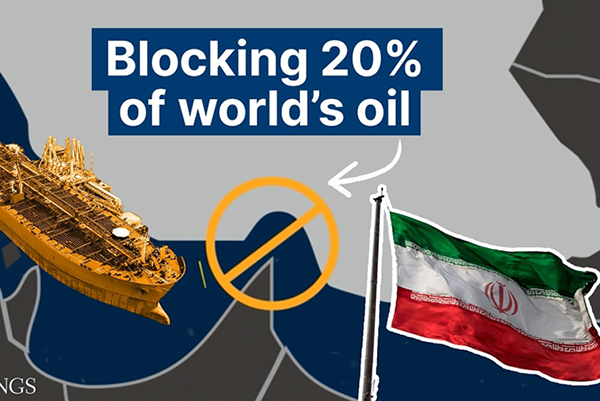
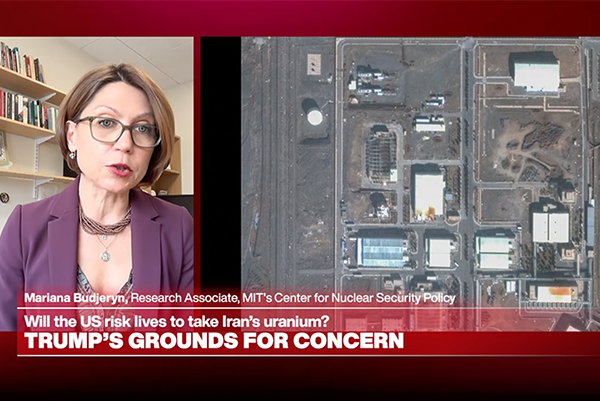
| | | Caitlin Talmadge offers expert commentary on the Iran war in a series of interviews across multiple media outlets. | | | Why Iran's disruption of the Strait of Hormuz matters | Caitlin Talmadge discusses the disruption of commercial operations in the Strait of Hormuz during the Iran war. | | | Trump's grounds for concern: Will the US risk lives to take Iran's uranium? | Mariana Budjeryn analyzes what could occur if the Trump administration moves to seize Iran's stockpile of enriched uranium. | | | More ASEAN states could negotiate with Iran on letting their ships cross Strait of Hormuz, but at what cost? | While Iran's selective approach to allowing access to the Strait of Hormuz could push more countries to the negotiating table, the bigger issue is having to engage on Tehran's terms rather than on the basis of a purely commercial right of passage, analysts say. | | | The war with Iran, 1 month in | |
The Wall Street Journal reports that the Pentagon is considering sending up to 10,000 additional troops to the Middle East. And Saturday marks a month of the US and Israel's war with Iran.
Here & Now's Indira Lakshmanan discusses where things stand with Jim Walsh.
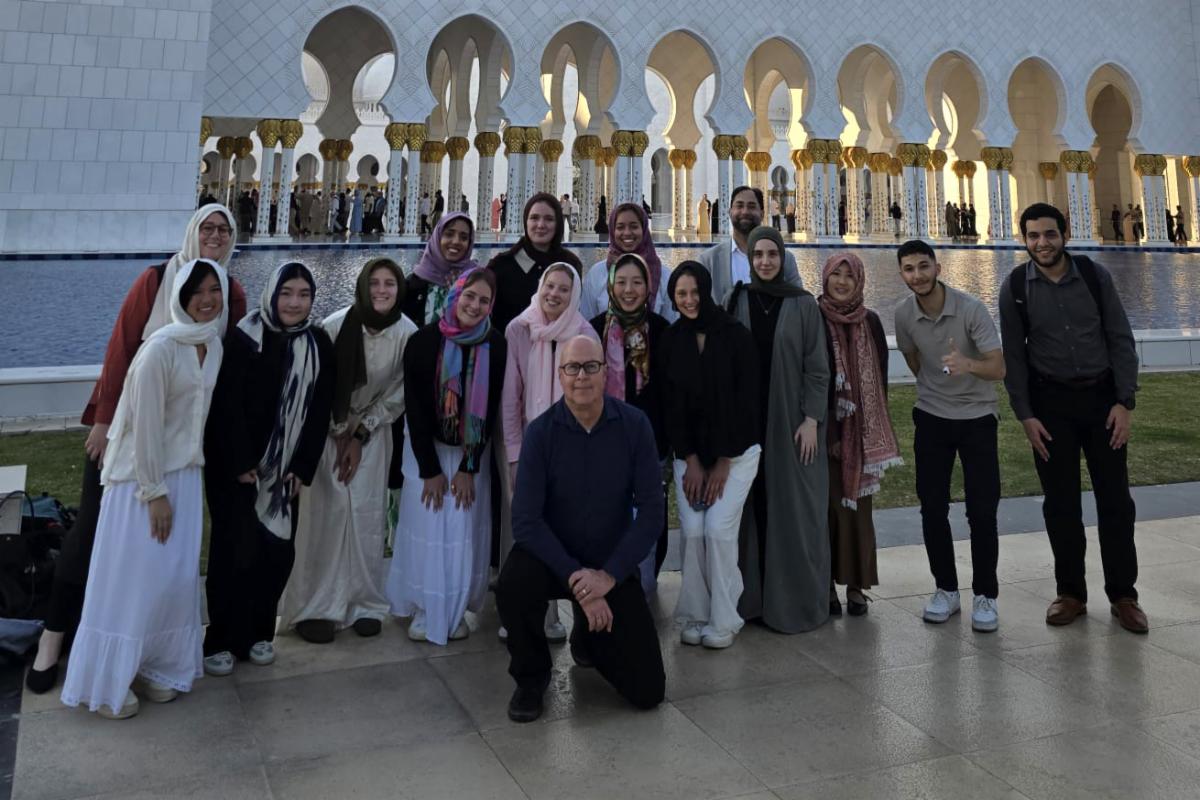
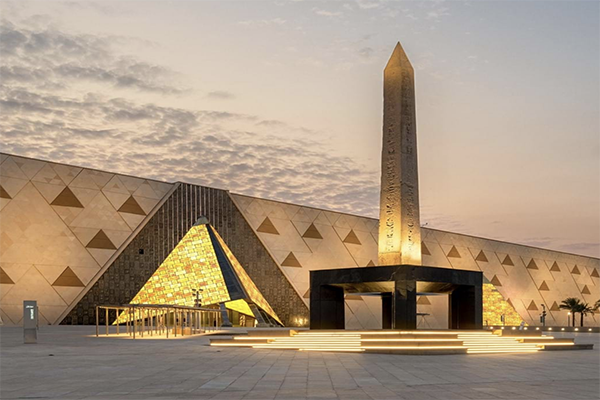
| | | This past IAP, 31 MIT students brought their expertise and energy to the UAE and Bahrain while gaining a deeper understanding of this complex region. | | MISTI Arab World students visiting the Sheik Zayed Grand Mosque | | This upcoming summer we're launching an internship program in Egypt! | |
| Grand Egyptian Museum, Cairo | |
| |
Tiffany Louie '24, MEng '25 shares how her passion for teaching led her to MISTI's Global Teaching Labs and ultimately to five international experiences, with particularly impactful work across the Middle East.
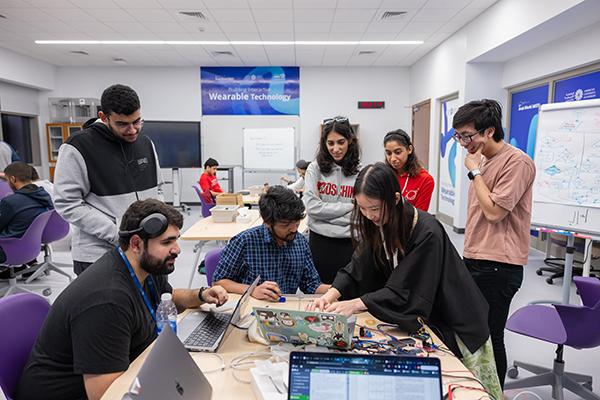
As a team lead in Bahrain and Jordan, she designed and delivered interdisciplinary, hands-on workshops in areas such as robotics and wearable technology, working closely with university students and local partners. These experiences deepened her appreciation for the region's diversity, culture, and history — from daily customs to the personal stories of her students — while also strengthening her ability to adapt across different cultural and professional environments.
| | Tiffany Louie participating in GTL in Jordan at AlHussein Technical University in 2024 | | |
Through her time in countries such as Bahrain, Jordan, Oman, and the UAE, she developed a strong sense of global citizenship and a commitment to education with real-world impact.
She describes MISTI as one of MIT's most transformative opportunities and encourages students to explore MENA programs, emphasizing that they offer not only meaningful professional experiences but also lasting personal growth and connection to the region.
| | |
Caroline Shinkle '15, who majored in economics and minored in management and French, developed an early interest in global financial regulation.
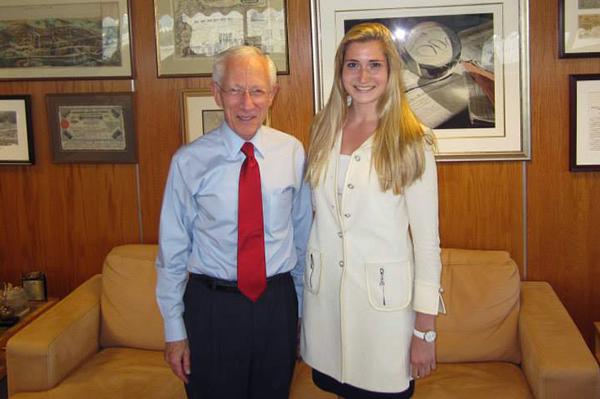
Drawn to the Bank of Israel's role in navigating the 2008 Global Financial Crisis, she pursued a transformative MISTI internship in Jerusalem, where she gained firsthand experience at the country's central bank.
| | Caroline Shinkle with Stanley Fischer PhD '69 at the Bank of Israel | | |
While at the Bank of Israel, Caroline conducted research on systemic risk and financial regulation under the mentorship of leading economists, while also immersing herself in the country's history, culture, and intellectual life. She engaged with figures connected to Israel's economic leadership and even attended a milestone celebration for Shimon Peres.
Living and traveling across Israel deepened her global perspective and allowed her to forge lasting personal and professional connections that have continued well beyond her time in the program.
This experience proved pivotal in shaping her trajectory — from roles at the Federal Reserve and international financial institutions to a career in law and ultimately a run for public office, grounded in the economic insights, confidence, and global outlook she first developed through her time in Israel.
| | Anchored in the MIT eco-system, the mission of Middle East Entrepreneurs of Tomorrow (MEET) is to educate and empower tomorrow's most promising Palestinian and Israeli leaders to help create positive social and political impact in the Middle East. | | | |
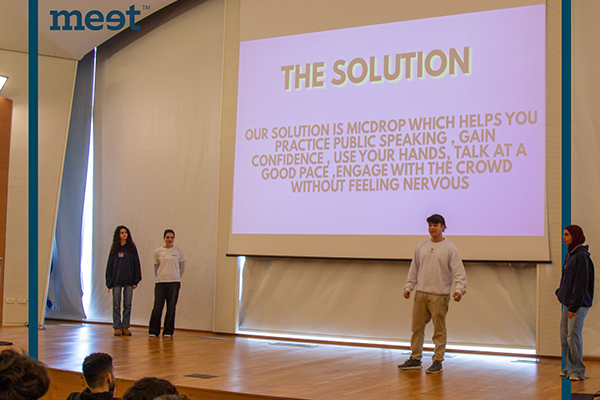
During the summer program in Jerusalem, MEET students from the region designed full multi-page websites combining front-end development with Python backends. They divided into groups, selected a real challenge affecting teenagers, researched it deeply, and built a practical digital solution. They engaged in the full process: defining the problem, thinking critically, and taking responsibility for turning ideas into working products.
Each team presented their project to a panel of judges and received thoughtful, professional feedback, giving them valuable insight into both product development and real-world pitching that pushed their thinking further and strengthened their projects.
Finally, we are excited to welcome two new MEET alumni as admitted MIT students in this upcoming academic year. This will bring the total of MEET alumni on campus to five, with fifteen overall who have been accepted to MIT.
| | Questions or news to submit? Contact MENA lead David Dolev. | | | | |