You may have heard of Ozone before in reference to the ozone layer up in the stratosphere that we’ve been working to rebuild since the 1980s. Ozone also unfortunately exists down here in the troposphere, where it has harmful effects on our health and the health of the environment around us. Let’s dive in! | | |
Here at the TRP, we talk about ozone as being a very bad pollutant and something we want to reduce. That is true, but only when it is here on the ground. Ozone in the stratosphere, also called the ozone layer, is the good kind of ozone we are working to recover, thanks to the Montreal Protocol. The ozone layer helps diffuse and block the harmful UV rays constantly sent to the Earth from the Sun. To learn more about good ozone, watch this video.
Blocking more of those UV rays is extremely important for those of us in Arizona. In 2022, Arizona recorded 42.3 melanoma diagnoses per 100,000 residents compared to the national average of 29.9 cases. The elevated rates are likely due to our unique environmental conditions, such as our arid desert and granite surfaces. (Skin and Cancer Institute).
| |
How is it Formed?
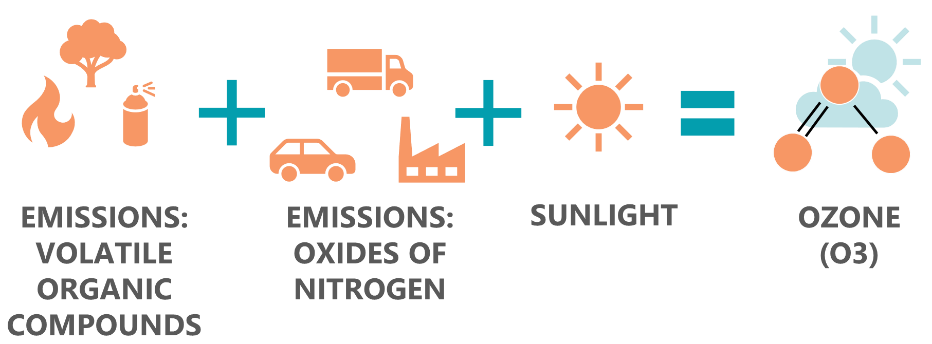
Over the past year, we have spent time discussing pollutants we aim to reduce through participation in the Pinal County Travel Reduction Program and through smart purchasing choices. Every mile spent commuting in an alternative mode, i.e., not driving alone in a gasoline- or diesel-powered vehicle, is another mile that reduces the release of those pollutants. Two of the pollutants we discussed, Nitrogen Oxides (NOx) and Volatile Organic Compounds (VOC), can combine with sunlight to form Ozone (O3).
| | Weather plays a substantial role in the formation of ground-level ozone. Warm or hot days with light or nonexistent wind and low humidity are ideal conditions for ozone formation. Our ozone season is year-round, but is highest from April through October. | |
How Can it Affect Your Health?
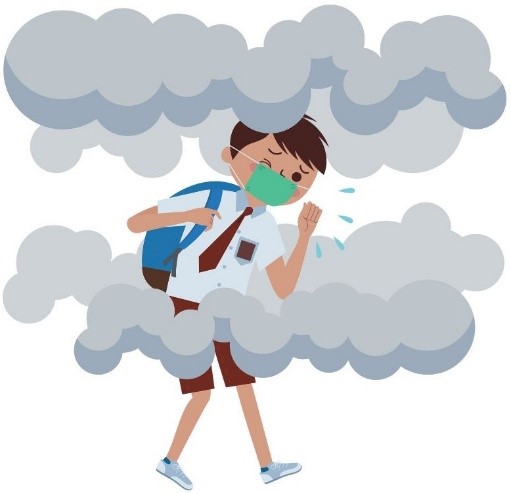
Ground-level ozone can:
- Cause shortness of breath and pain when taking a deep breath
- Inflame and damage the airways
- Make the lungs more susceptible to infection
- Continue to damage the lungs even when symptoms have disappeared
Healthy adults may believe they are immune to the effects of ozone, but even they can be affected on days when ozone concentrations are high. Most at risk for damage from ozone pollution include children, older adults, and people with lung diseases like asthma, emphysema, and chronic bronchitis.
A study published on November 17, 2004, in the Journal of the American Medical Association found that changes in ground-level ozone were significantly associated with an increase in deaths, even below levels of the EPA clean air standards (it is worth noting that those standards have been updated since the study was published). That study, conducted by researchers at the Johns Hopkins Bloomberg School of Public Health and the Yale University of Forestry and Environmental Studies, is titled Ozone and Short-term Mortality in 95 US Urban Communities, 1987-2000.
| |
How Can it Affect the Environment?
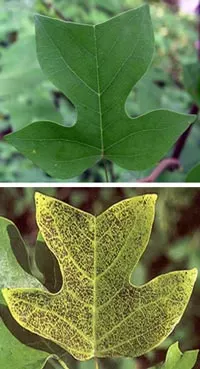
When a large amount of ground-level ozone permeates the leaves of a sensitive plant, it can:
- Reduce photosynthesis, which is how plants create energy to live and grow
- Slow the plant’s growth
- Increase the risk for sensitive plants to disease, insect damage, effects from other pollutants, and harm from severe weather.
This photo shows the difference in appearance of a healthy (top) and ozone-injured (bottom) tulip tree (yellow poplar) foliage.
You can read about ozone pollution research in our National Parks by viewing the Ozone Effects on Plants page on nps.gov.
| | Do Your Part to Reduce Ozone | |
- Reduce driving by carpooling, biking, or using public transit when it’s available.
- Avoid idling in drive-thru lines. Park your car and go inside coffee shops, fast food restaurants, and banks. If you’re doing an order pickup at a store, turn your car off in your parking spot while waiting for your order to be delivered.
- Refuel your vehicle while it’s dark out to reduce the chemical reaction that can occur between fuel fumes and sunlight.
- Use low-VOC or water-based paints, stains, finishes, and paint strippers.
- Make sure containers of household cleaners, garage and yard cleaners, and other solvents are sealed properly.
- Use electric-powered lawn equipment instead of gas-powered.
-
You can see your daily air quality forecast by visiting azdeq.gov/forecast. If you’re in Area A, make sure to select the Phoenix forecast.
| | |
This newsletter may be shared as needed to keep your employees and driving-age students updated. Feel free to forward it to those who may have an interest.
To have Pinal County Air Quality alerts delivered directly to your email inbox, click the subscribe button.
| | | | |