|
|
We ask that you consider making a payment, as little as $1, to any writer or each writer. Select one or more whose work you are impressed with, and drop some coin into their cup. These folks are pros, and they have things to say, about art and more, that we think you want to read about. And ponder. And compensate them for. 20% of your contribution will be added to support our staff that produces and administers the Weekly Newsletter and the VAS website.
Hundreds of you have clicked through to the Payment Window. . .but so far precious few of you have actually paid our writers. Believe me, anything you chip in MEANS A LOT. Yes, even a buck! We are in a new world. . .and this is a new solution. We all thank you!
|
|
|
This Week's Contents
(scroll to see the full content of each article; click the cup to compensate the writer):
|
|
|
|
Coming Soon to Your VAS
Gallery and Museum Announcements:
|
|
Our Antinomian Time
by DeWitt Cheng
|
|
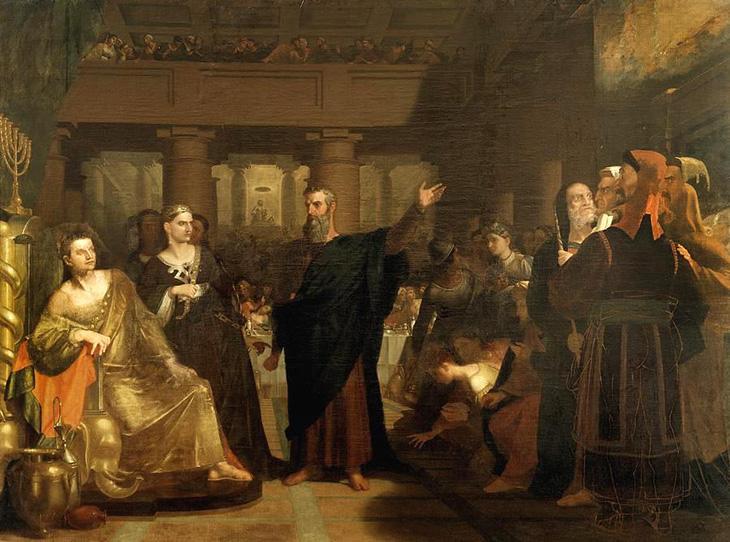
Washington Allston, “Belshazzar’s Feast,” 1817-1843, oil on canvas, 144 1/8 x 192 1/8”. Courtesy of the Detroit Institute of Arts |
|
|
If you, like me, have been spending the last few months doing all you can to oppose our mad king and his suicidal minions while fighting off nagging doubts informed by 2016, mine are probably amped up by too much YouTube time with Epic History and The Fall of Civilizations. What if Trump, the real life version of Biff Tannen, endowed with federal superpowers, and aided by the bullet-headed thugs of his Republican Guard, wins re-election? What if we cannot find solutions for the pandemic, for economic decline, and for global climate catastrophe? |
|
The end of the world (as we know it) is a trope of science fiction movies, and the post-apocalyptic era is a kind of survivalist fantasy world of Wild West anarchy with mighty-man warlords. It is actually the story of much of human history, once you remove the trappings of state and the regalia of royalty and religion. Shakespeare’s history plays bedeck royalist gangsterism in ineffable verse. Coppola’s ‘Godfather” trilogy depicts ruthless organized crime as business less the usual hypocrisy, and a corrupt pathway to quasi-legitimate power. Vito tells his son, now following in his footsteps: “I don't apologize — that's my life — but I thought that, that when it was your time, that you would be the one to hold the string. Senator Corleone; Governor Corleone.” All bow to President Corleone.
Western civilization represents, at least in name, an advance from the barbarism into which we seem to be backsliding. It is trendy these days to disparage Enlightenment liberalism as an ideological fig leaf for capitalism, colonialism and exploitation. It has been those things, but at its best represents, as it did for Lincoln, the last best hope for mankind. Can America gets its mind right, and live up to its stated ideals, or do we cede the planet, with supine realism, to nakedly authoritarian rival regimes?
We are currently in a great transition. The global digital economy is wreaking havoc on traditional norms, awakening dark forces — “dark shadows” in the words of our oracular maximum leader. A book from my freshman Western Civ class comes to mind: Norman Cohn’s “The Pursuit of the Millennium” examined how the social chaos wreaked upon feudal society by the incipient industrialization of Western Europe created the context for radical millennialist movements.
|
|
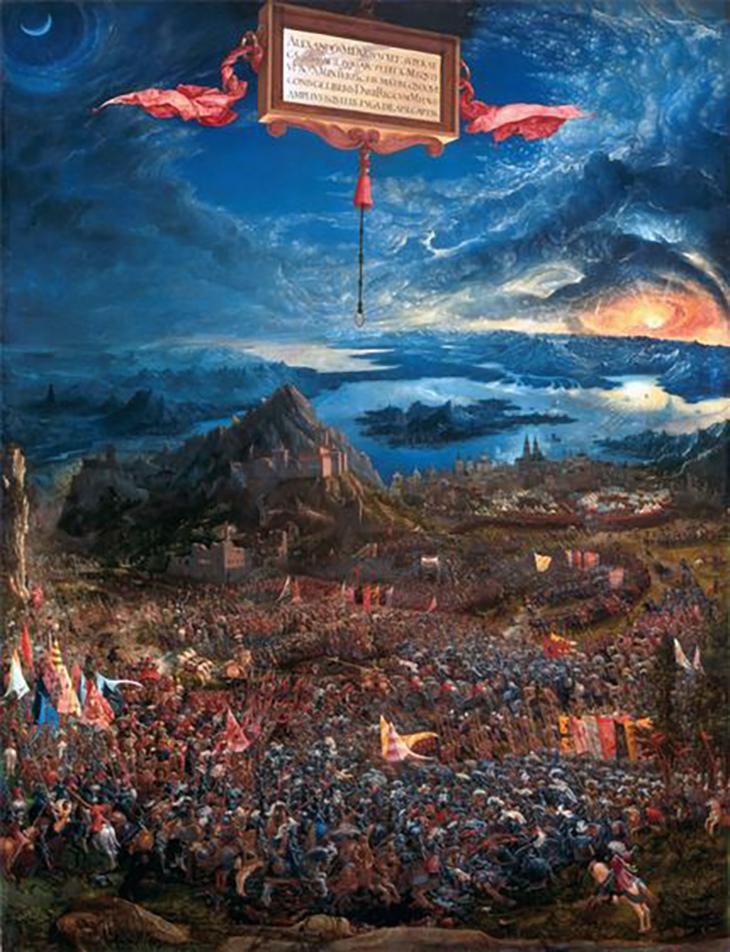
Albrecht Altdorfer, “the Battle of Alexander
at Issus,” 1529, oil on canvas
|
|
Many believed the end of the world was imminent as they approached the year 1500. These groups rampaged across Europe, goaded by charismatic prophets, who assured them of inevitable success in establishing a true holy kingdom, no matter how many priests had to be beaten or beheaded. It’s a rollicking tale, nicely encapsulated in a few antinomian chapter headings: “The Saints Against the Hosts of Antichrist;” “An Elite of Self-Immolating Redeemers;” “An Elite of Amoral Supermen.” |
|
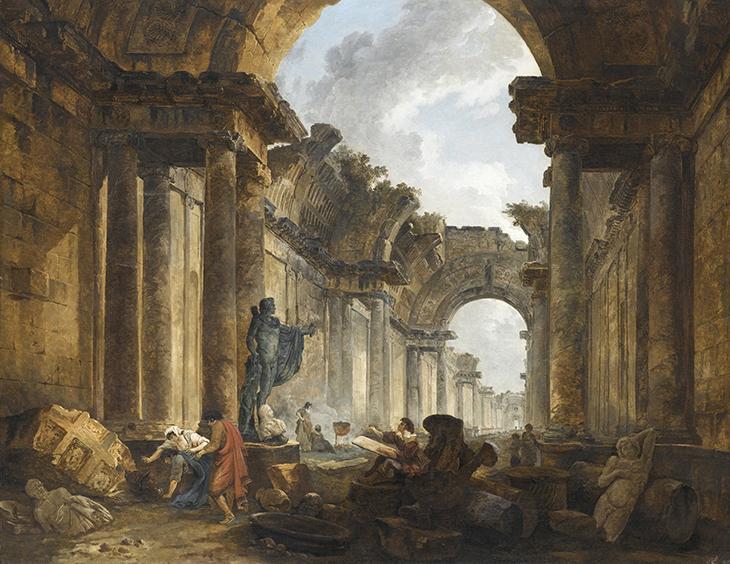
Hubert Robert, “View of the Grande Galerie
in Ruins,” 1796, oil on canvas, 45 x 57 1/2”
|
|
Clearly we are in a similar moment of crisis. Perhaps Q, the supposed Deep Throat of QAnon, is familiar with the story’s conclusion, even if his warrior-citizens are not. Church and state put aside their usual bickering and united, the mailed fist within the velvet glove, to burn the heretics and suppress their impious, populist aspirations.
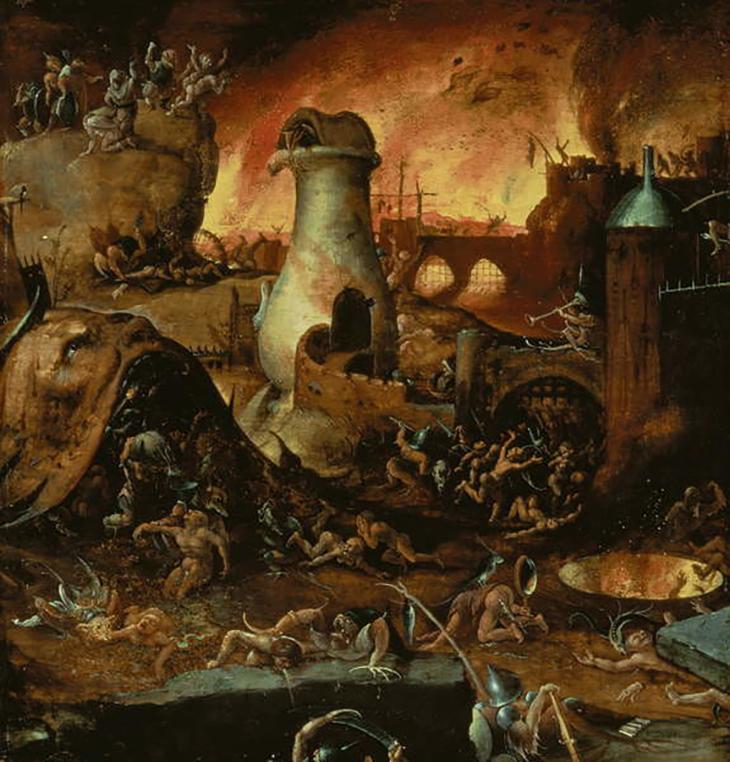
The Judaeo-Christian tradition’s eschatological concept of linear time, climaxing with the return of an angry/rewarding God, however loony in real life, paradoxically inspired great works of art. But do Bosch’s sublimely weird visions balance the suffering inflicted by the “christianizing and civilizing” (William McKinley) conquerors outfitted and enriched by the artist’s pious collectors? The Founding Fathers, heir to both Christian belief and Enlightenment rationalism, tried, brilliantly if imperfectly, to balance the better aspects of both, while turning a blind eye to their dark side: the slavery and genocide necessary to the myth of Manifest Destiny.
|
|
I wonder how much that supposedly necessary hypocrisy cost the leadership in psychic terms. The long history of fallen empires were often in their thoughts, and some of the painting of the era depicts those fears, while attempting to discharge or displace their energy into the safely remote past — object lessons for New World’s Best & Brightest. JMW Turner’s paintings of doomed civilizations, Hubert Robert’s paintings of ruins, and Piranesi’s paintings and etchings of imaginary prisons testify to a fascination with decline and decay. Some would now deem such visions simply morbid; others accept them as the inconvenient truths of philosophical realism. |
|
David Bjelajac wrote a memorable study of Washington Allston’s painting “Belshazzar’s Feast,” the biblical account of the hand of God delivering a fiery written warning to the Babylonians that their glorious empire would fall (as it did, in 539 BCE). Rembrandt had painted it earlier, dramatically, and the Romantic John Martin showed his contemporaneous version in England to great success. But for Allston, working decades after the American Revolution, it was a pictorial reminder that the new republic — the new Israel, not the new Rome — would have to be godly. He thus imbued the painting with a stentorian, moralistic feel. Allston, who worked on the painting from 1817 to 1843, was planning to work on the obstinate Babylonian king on the day he died. Maybe America’s royals can learn from the writing on the walls of Portland and Kenosha before our money-centered, death-dealing empire is given to the new Medes and Persians, whoever or whatever they turn out to be.
[Just to save you the time looking it up, “antinomian” is any view which rejects the rule of law and argues against moral, religious or social norms.—Ed]
|
|
Hieronymus Bosch (or school of), “Hell,” ca. 1490, oil on canvas |
|
|
|
Dewitt Cheng is an art writer/critic based in the San Francisco Bay Area. He has written for twenty years for regional and national publications, in print and online, including: SanFranciscoArtMagazine.com, DailyGusto.com, ArtBusiness.com, VisualArtSource.com, Artweek, Art Ltd., Artillery, East Bay Express, East Bay Monthly, Sculpture, Modo, Artomity, and his blog, ArtOpticon.us, with articles archived at Authory.com. He has written dozens of catalogue essays for artists, galleries and museums, and is the author of “Inside Out: The Paintings of William Harsh.” In addition, he served as the curator at Stanford Art Spaces from 2013 to 2016, and later Peninsula Museum of Art, from 2017 to 2020.
|
|
Street Galleries
by Lynn Trimble
|
|
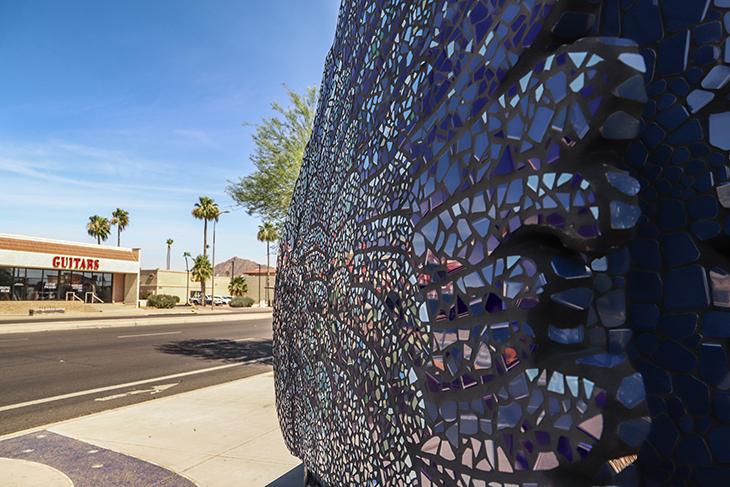
Laura Spalding Best, "Rise" (detail), outdoor installation. Photo: Claire A. Warden |
|
Long before I started writing about art, I was captivated by it — especially the pieces of public art I stumbled on during my everyday travels. Instead of hitting more formal art spaces like galleries and museums, I made my way along urban streets and neighborhood pathways, searching out works of public art that signaled the creativity in my midst. When someone needed directions to a bookstore or restaurant, I told them which sculpture to watch for, instead of giving them exact crossroads. I learned my way around new cities by following the art, and fostered friendships with people who found a similar joy in serendipitous discoveries. |
|
Most traditional art spaces have been closed for six months, in part because of an unwritten social contract that says it’s best to isolate when you have the luxury of doing so, as a way to help keep the people who aren’t nesting in a world of privilege safe. For a time, I observed regular gallery-goers going without art, thinking the virus that still dominates our lives would be short-lived. Now, even as some art spaces like the Metropolitan Museum in New York City and the Heard Museum in my home town of Phoenix have reopened, it’s clear that most people don’t feel safe rushing back with wild abandon.
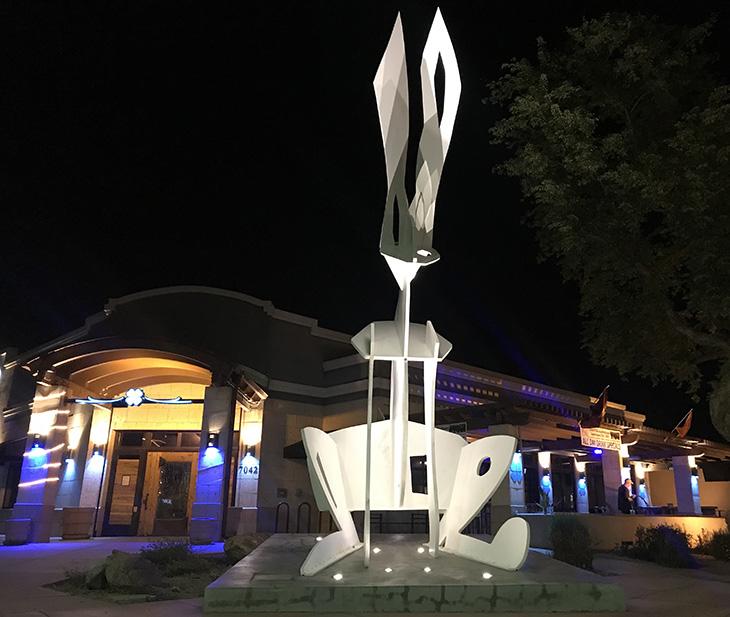
Public artworks that people once took for granted have become poignant markers of the cultural vitality that still undergirds our communities. Neighbors gathered around the sculpture of a mythical Phoenix in the Garfield neighborhood recently, affirming the need to wear masks with the simple act of placing a giant fabric mask over its beak. For a time, a giant white jackrabbit sculpture on a Scottsdale street dotted with galleries donned a mask, as well. More than a mere gimmick, it reflected the ways pieces of public art can feel like members of our extended family, especially when the peril of something like a pandemic is in our midst.
|
|
Cherie Buck-Hutchison and Curtis Hutchison,
"#bluewing." Photo: Scotssdale Arts
|
|
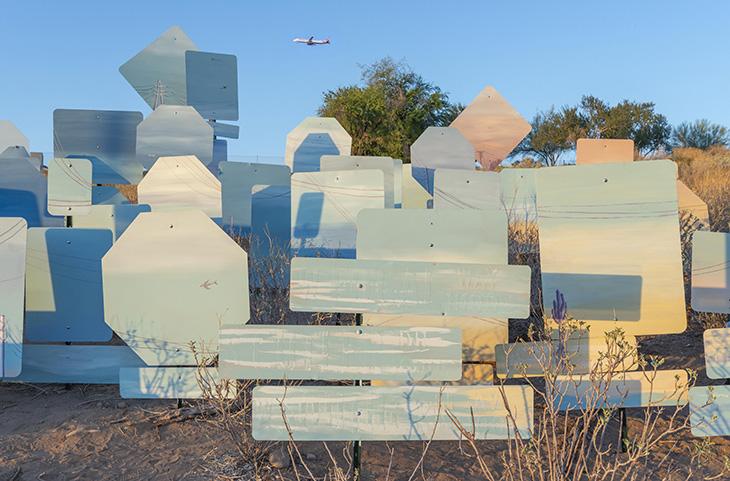
People who once sought recommendations about which exhibits to see are asking instead about ways to organize small tours of public art offerings. I can feel their desire to experience connections to art, and to each other, as their sense of isolation grows. Some are taking friends along to see murals painted in public spaces, or printing maps of sculpture walks posted on websites for nearby cities or towns so they can follow along with their footsteps. Works that once felt like strange aberrations, such as Laura Spalding Best’s field mural comprising a mirage landscape painted on decommissioned traffic signs and installed near an urban lake in Tempe, have become a lifeline for those mourning the loss of regular art encounters. While people are out exploring art, they’re restoring lost connections to the public spaces they once occupied with a completely different mindset. They are seeing parts of the landscape they hadn’t noticed before. |
|
John Randall Nelson, "One-Eyed Jack." Photo: Lynn Trimble |
|
For a time, artists hit the pause button, expecting life would return to normal soon enough. Some grew frustrated when exhibits got canceled. It became clear that technology, while important, wouldn’t be the cure-all. It turns out that posting images of artworks on a website, then calling it an exhibit, falls far short of fulfilling the compulsion to be physically in art’s presence. So artists like the Phoenix-based ArtFarm collaborative found new ways to take their art to the people, organizing temporary art installations in outdoor spaces where people could safely explore them alone or in small, socially-distant groups. Dozens of artists took part in a “Roadside Attraction” project, making paintings, ceramics, mixed media pieces, and other works that could be shared outside for a brief span of several weeks. Organizers created a map to help people find them and added in other types of media and performance. Films would be projected onto neighborhood walls, dance works performed in building storefronts beautifully lit to create silhouettes of shadows after sunset. I hear there will soon be a new crop of works for a “Roadside Attraction” public art intervention with a political twist. |
|
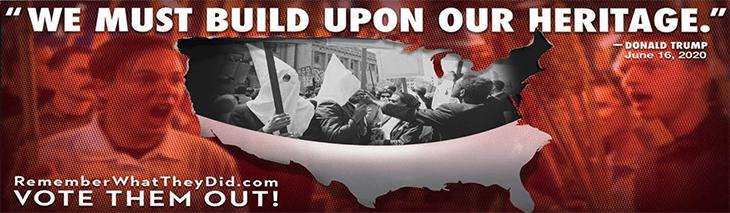
Other art interventions are aimed at shifting public policy, inspired by the “Black Lives Matter” street mural in Washington, D.C., and the “Remember What They Did” initiative that’s rolling out billboards and posters with designs by renowned artists such as Shepard Fairey and Swoon. These and other projects are centering art as a catalyst for community transformation. It’s telling that so many backdrops for the Democratic National Convention roll call vote featured works of street art. If you thought art during a pandemic would be reduced to a mere frivolity, think again. Clearly, public art is having a moment. But we'll have to keep it front and center in our conversations and community art practices if we want to sustain its cultural significance in a post-pandemic art world. |
|
Nekisha Durrett, "Stoking hatred and Racism," 2020, billboard, Remember What They Did project.
“While I and much of America grieved the murder of another unarmed black man by police, protestors took to the sites of confederate monuments to reject the violence and white supremacy embodied in these statues. These defiant acts of courage felt galvanizing and served as tangible evidence of a long overdue reckoning with systemic racial oppression. Meanwhile, standing in the White House Rose Garden, Donald Trump defended the confederacy declaring that, “We must build on our heritage not tear it down.” Cloaked with thin veils and echoed through dog whistles, these words charge me with the sense of urgency to vote them out!“
-Nekisha Durrett
|
|
|
|
Lynn Trimble is a Phoenix-based art writer whose work ranges from arts reporting to arts criticism. During a freelance writing career spanning more than two decades, over 1,000 of her articles exploring arts and culture have been published in magazine, newspaper and online formats. Follow her work on Twitter @ArtMuser or Instagram @artmusingsaz.
|
|
A Surprise Awaits
by JD Beltran
|
|
A couple of days ago, I pulled out a fortune from a fortune cookie that read, "A SURPRISE AWAITS." I started to wonder what that surprise could be.
My younger sister called. I’d just visited with her — she lives three hours away. I didn’t expect a call. “Is everything okay?” “Yeah, I’m fine.” Although close, we don’t talk all that often. And our mom isn’t young; many years ago, dad had died suddenly. “Oh, that’s good …” I caught my breath. “I’m always worried when you call that it might be ‘that call.’”
“Well … it’s that call,” she said.
|
|
Al Bello/Getty Images News via Getty Images |
|
My mom had unexpectedly passed away. She lives in Hawaii so I hadn't been able to visit her recently. It also had been awhile since I’d actually seen her. She never got the hang of using a computer or smartphone (despite my purchasing for her multiple iPhones, iPads, and a special Jitterbug model). The only time I’d get to see her remotely was if she hit the Facetime call button by accident.
I was able to talk with her one last time, a few weeks earlier. Nothing special — she’d called for our usual check-in, and I asked her what she’d eaten for dinner (chicken). Before all the lockdowns, we’d even contemplated a visit. I could grab a flight all my daily obligations could be accomplished remotely, anyhow. But COVID-19 testing wasn’t available at that point, and the science was starting to indicate the hazards of flying. I didn’t want to accidentally expose her with the virus if I was somehow asymptomatic. She agreed.
So, I never did get to see her. Her disintegrating health had happened in a matter of days. My sister had flown to Hawaii the night before her call to me; the caretaking neighbor had contacted her, mom had fallen again and needed to be hospitalized. Her condition might be serious. But Hawaii mandated my sister quarantine at my mom’s house, so she never got to see her at the hospital. It had just happened. Sudden cardiac arrest, they said.
|
|
|
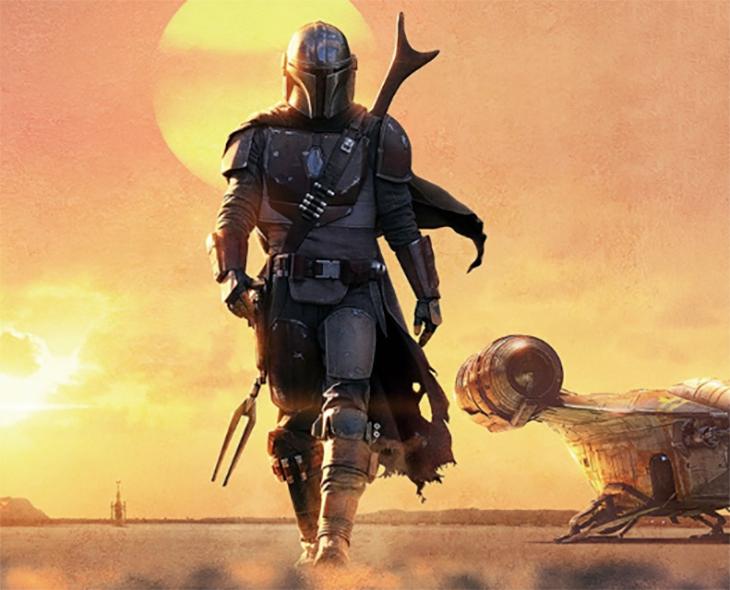
The Mandolarian, Disney Corporation promotional illustration |
|
She couldn’t visit the mortuary to view mom after she’d died, either. Two days later, after conferring with them, she called me and laid out my choices. “They can give you a fingerprint — on a keychain.” Ugh — no, thanks. I opted for a tiny urn with a few ashes (“The smallest one, please.”) Even that will be so odd, when the box arrives in the mail.
I think she was cremated yesterday morning.
It’s not like this was entirely unexpected. Ever since my father died, twenty years ago, I’d be careful to take a selfie with my mom every time I dropped her off at the SFO curb for her return flight to Honolulu. Just in case. She always wore the same departure outfit: black knit slacks and a bright red sweater topped by her omnipresent wide-brimmed sun hat. After that phone call, I went through my photos and collected all of those shots. The series looked akin to Nicholas Nixon’s “Brown Sisters,” except I was the only one in the photo who changed.
|
|
It’s all so strange. How does one grieve remotely?
We’ve been witnessing the world’s steep learning curve of translating everything we do to its remote version. Virtual cocktails and fourteen windows of people singing “Happy Birthday” in unison at that long-distance birthday party. Actually seeing and talking with people backdropped by their homes — from around the world — has its endearing novelty. But eventually the flat 2-D screen personas have blurred and disappeared into the coagulated memories of my other 16:9 windows: dozens of webinars on remote learning solutions, the nightly news, and all eight episodes of “The Mandalorian.” We’ll probably plan some sort of Zoom service, at some point. But I know this virtualizing of my mom’s death will only prolong my denial. I posted about her passing on Facebook, but can’t bring myself to return to my page to see the responses. I still don’t want to be reminded that she’s gone.
My mom and I were close at the end. We weren’t always — there were a good three or four years when I refused to even speak to her. We’d had a checkered history, since I was a child. Her eccentric, MacGyverish approach to doing things didn’t always agree with me. She once told me that as a baby, when I’d cry too much she’d sometimes put Phenobarbital in my milk. Years later, however, while a young adult, something happened between us such that anyone observing probably wouldn’t have blamed me if I never to spoke with her again. (I’ll leave it at that.) Our bond was fraught, sometimes fleeting, and oh, so complicated.
|
|
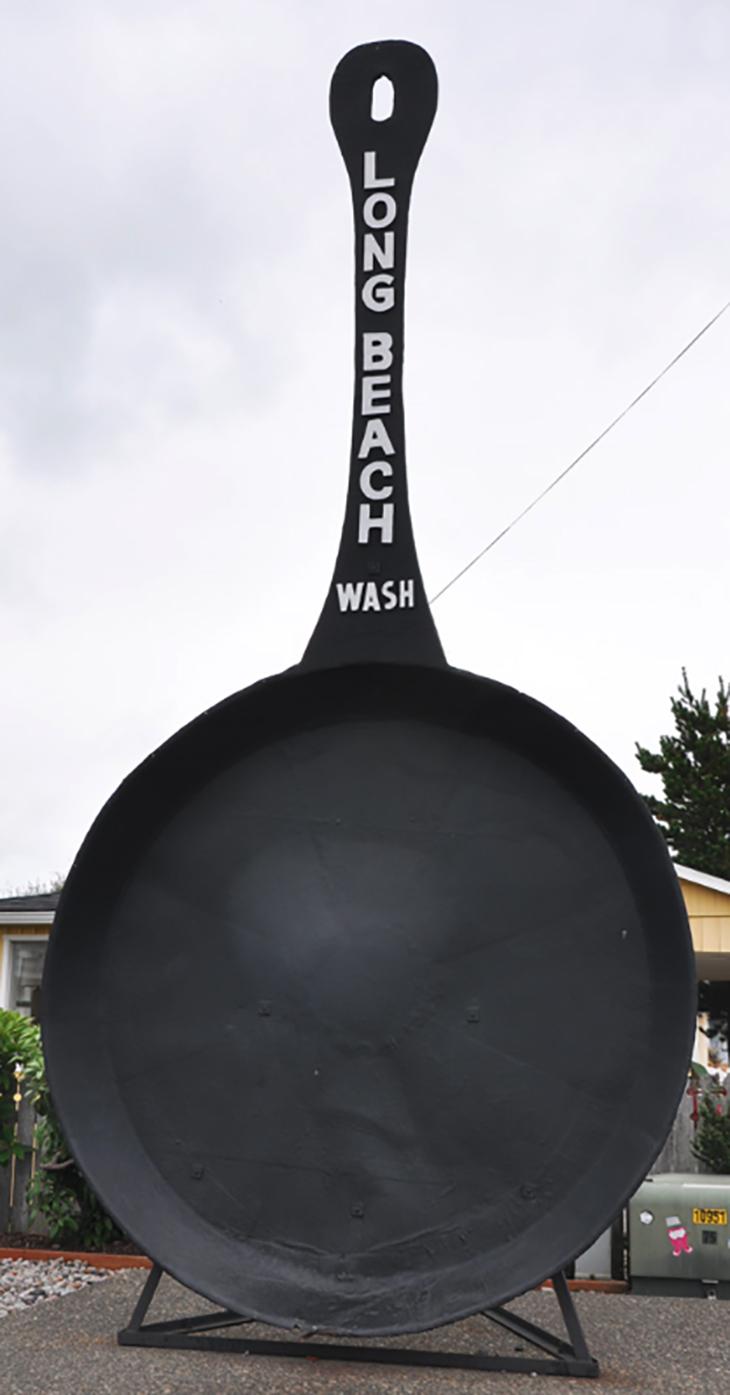
The World’s Largest Frying Pan, Long Beach, Washington |
|
But after our breakdown, I knew I’d regret not having some sort of communication with her. What if she suddenly died? Would I be at peace?
I reached out, and gradually, we reconnected. After my father died, she called me every week for the months during which I’d become dysfunctional with grief. I told her I wasn’t sleeping, and in my mailbox would arrive her long, chatty letters. She’d tuck small packets of Xanax tablets (my stash, she said), each one wrapped carefully in a square of her white note paper. She loved to write letters. I kept all of them. And every once in a while, I’d pop a Xanax.
Right before she died, my family had returned from our annual summer road trip. We’d driven north from the Bay Area to Washington, checking out national parks, mountains, lakes, craters, the world’s largest frying pan and, reputedly, the country’s largest oyster (not really). As was our tradition, we curated a goodie bag of souvenirs for Grandma at stops along the way. Aplets & Cotlets (her favorite). A canvas bag from Crater Lake. A tiny music box that played “Amazing Grace.” A glittery postcard of the Space Needle (never sent). Mom would always call after receiving these tokens of our travels, clearly delighted we’d been thinking of her during our journey. We arrived home only a few weeks before that phone call, and promptly consumed ourselves in our routines. The package of souvenirs was still sitting by my computer, waiting to be mailed, when my sister called.
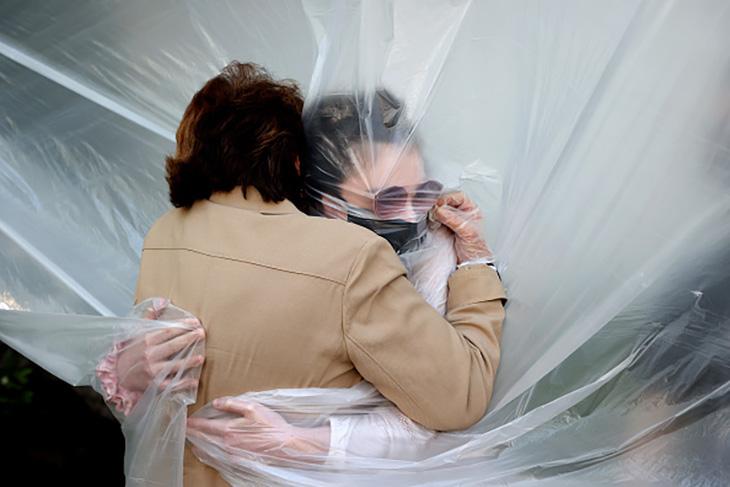
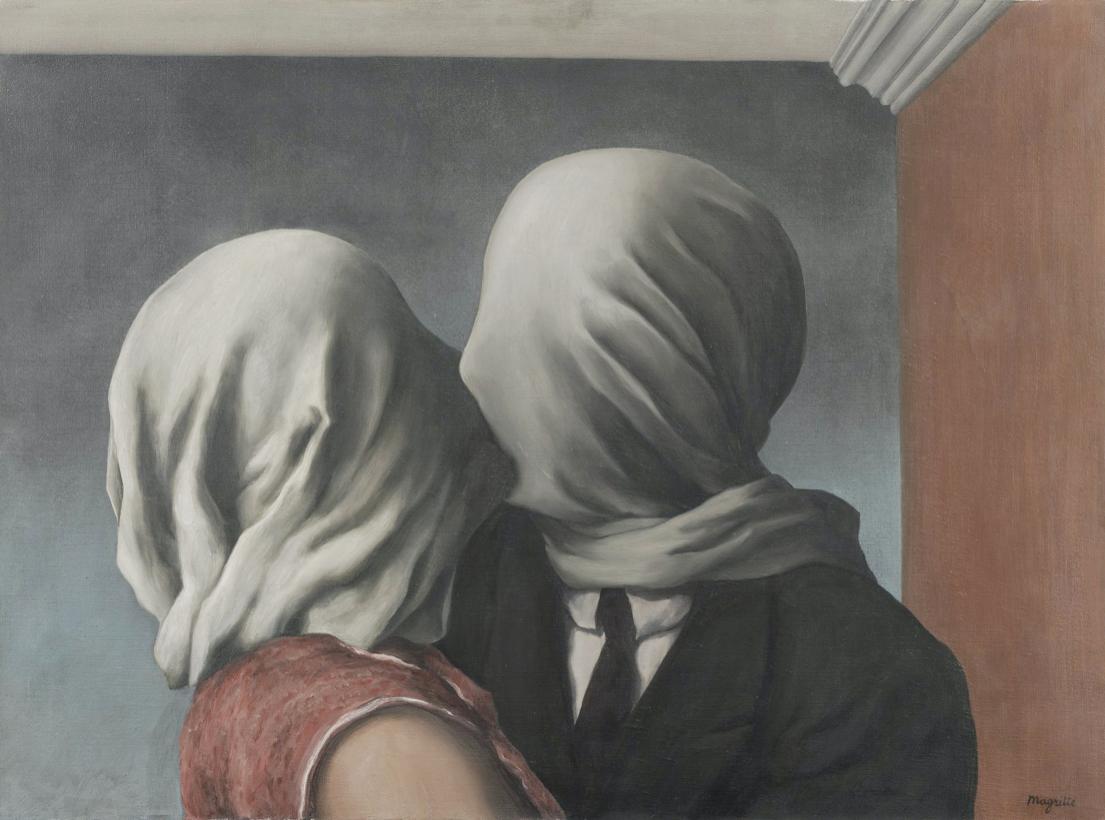
Shortly before all of this happened, I’d come across Al Bello’s stunning, heartbreaking newspaper photo of an elderly woman covered in plastic, being hugged tightly by what looks like her daughter. The woman reminded me of my mom. The photo also brought to mind that tension of separation in Magritte’s “The Lovers.” Even though it’s through thin plastic, though, it’s still a hug.
Remote hugs don’t work at all — remote anything, it seems. What is the last Zoom memory that you treasure?
|
|
I grasped to recall my last memory of actually being with her. She used to visit us and see her grandson every few months, but during one Christmas visit, she fell and fractured her hip and ended up staying for three months to recuperate. After that, she couldn’t travel because of her worsening mobility. So, we went to see her. My sister’s family also coordinated joining us for that trip, and at one point, we all went picnicking and snorkeling at Hanauma Bay. Under the coolness of the expansive tree under which we’d staked out our blankets, my mom was relaxing in her metallic red wheelchair, napping, reading, and watching us all shout and play in the water. I remember coming out of the waves and plopping down on the beach towels spread around her. We didn’t say much. But I remember laying down to dry off and looking up at the sky through the high, dense branches of the seaside heliotrope tree, glimpsing at her out of the corner of my eye. She was quietly reading a newspaper.
I tried consciously to create a memory. As the moment unfolded, I remember working very, very hard to concentrate, to visualize, eyes open then closed, each sensation I was experiencing at that exact moment — the smells, the sky, what was being said to me, the surrounding shades of colors and sounds. It failed. I don’t even remember what I was trying to remember.
|
|
I don’t know what last memory I’d want to have of my mom, had I the power to choose. I know I wouldn’t have wanted it to be of her final, frail, unconscious moments in the hospital. Sitting quietly together at the beach while she read a newspaper isn’t bad.
This year has been a year of constant surprises. Unpredictable developments. Uncertain futures. And of how we trick ourselves into the fiction of believing we can truly control what happens in our lives, or in our futures.
I'm grateful that my family had that visit with my mom in Hawaii, that final time. If there's anything that I've been trying to concentrate on this past year, it's been trying to stay mindful of how I'm spending my moments, my time, and my life, and how it's making me feel. Really being present and expressing love and gratitude to those I'm spending my life with. And figuring out how to deflect, if I can, what brings me down. So much of what might happen tomorrow, or even tonight, is beyond our control, anyhow. My mom was an incredibly complicated person, as was our relationship. But I'm glad that the last thing I told my mom was that I loved her.
|
|
René Magritte, “The Lovers,” 1928, oil on canvas, 21 3/8 x 28 7/8”. © 2020 C. Herscovici, Brussels / Artists Rights Society (ARS), New York |
|
|
|
JD Beltran is a writer, filmmaker, and award-winning artist based in San Francisco, California, where for four years she was an art & culture columnist for SFGate. For five years, she also covered art & culture for the Huffington Post. JD Belran's website. Photo: Sebastien Bachar
|
|
|
|
Contact Information:
PO Box 2029, Thousand Oaks, CA 91358 • Ph: (213) 282-3444
|
|
|
|
|
|
|
|