Welcome to the CMSF updates newsletter! In this issue, you will find
updates from our programs including marine protected areas (MPAs),
water quality, technology and fiscal sponsorship.
|
|
|
|
Over the past few months, CMSF has been working in several program areas including agricultural plastic pollution prevention, sea level rise communications, water quality solutions in Morro Bay, community volunteer opportunities with First Flush and Team OCEAN, partnerships with the recreational fishing community and MPA education and outreach. The team continues to enhance in-house scientific expertise to evaluate success of projects and programs in reaching their intended audiences and goals. Read more below to learn about specific achievements in more detail. |
|
Welcoming Our New Executive Director |
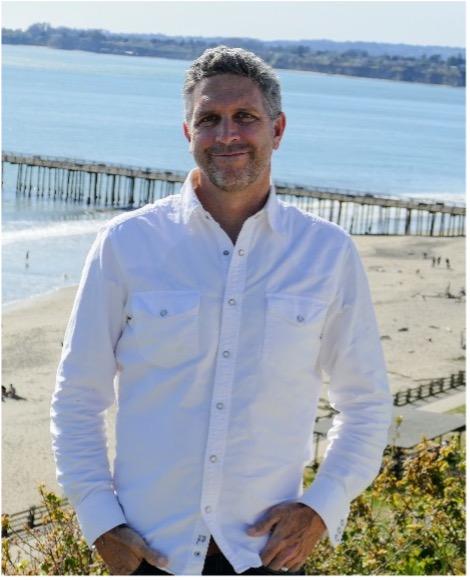
Please welcome Robert Mazurek, our new Executive Director as of April 1, 2021. Robert has spent over two decades leading national and international efforts to strengthen ocean governance, enhance marine policy, and create resilient coasts. He has turned his life-long passion for ocean conservation into a career spanning the globe. Internationally, Robert's work with Pew Charitable Trusts helped create some of the largest marine reserves in the world including Australia's Coral Sea Marine National Park, Chile's Easter Island Marine Reserve, and the U.K.'s Pitcairn Island Marine Reserve. Robert worked to strengthen maritime governance and fight illegal fishing by starting the Secure Fisheries program across ten Indian Ocean countries. Additionally, he is also a maritime expert for the United Nations Office on Drugs and Crime's Global Maritime Crime Program.
Here in California, Robert helped create the California Ocean Alliance, developed the management plan for the Elkhorn Slough National Estuarine Research Reserve, helped launch the Monterey Bay Aquarium's world-renowned Seafood Watch Program, and spent more than a decade on CMSF’s Board of Directors.
Robert said, "I can't be more honored to help lead this amazing organization. For 25 years the Foundation has been at the forefront of California's coastal resilience work, fusing science with education and outreach. I feel like my whole career has been in preparation to take on this important role. I look forward to working with the Board, our staff, and all of our partners as we continue to grow our work while advancing the understanding and stewardship of ocean resources in California and beyond.”
Scott Hennessy, President of the Board, commented, "We are fortunate to continue our over 25-year history of commitment to California's communities, coast, and ocean with the appointment of Robert. The entire staff and Board participated in an extensive search and are delighted with the results. We are all looking forward to many years of continued growth and positive impact under Robert's leadership."
|
|
Tackling Agricultural Plastic Pollution in the Central Coast |
A recent assessment by CMSF estimated that 10,000 tons of plastic per year are currently used on agriculture fields in Monterey County alone. Together, we have partnered with MBNMS to work on solutions that prevent agricultural plastic from entering the ocean. Irrigation tubing, mulch, hoop house and fumigation films, strapping tape, and fertilizer pellets are a few of the most common plastics uses. Prevalently used in open fields, the plastic is exposed to sun, water, and wind, where it can leach into the Pacific through rivers, streams, and watershed runoff. CMSF staff, Pam Krone and Jazmine Mejia-Muñoz, lead our efforts to study the extent of the problem and solutions to plastic pollution. They are partnering with a diverse set of coastal agricultural leaders and key stakeholders to test and study the effectiveness of several approaches to reduce plastic consumption. |
|
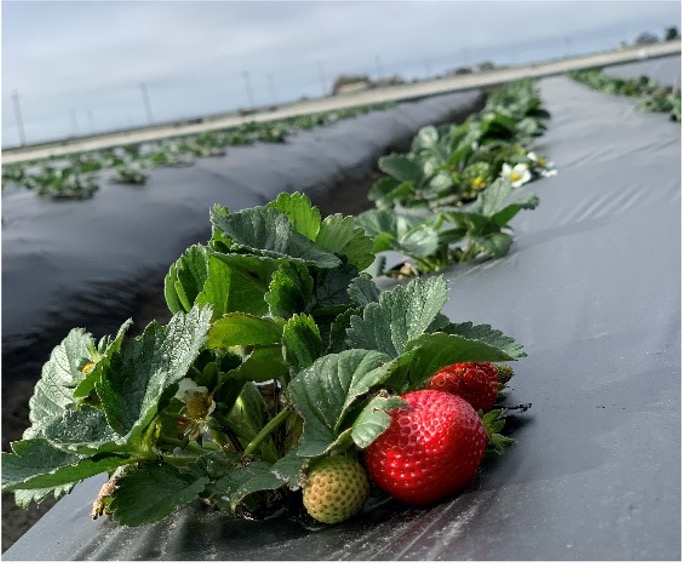
Taking a proactive approach, CMSF is partnering with local growers, researchers from Washington State University, and California Polytechnic State University (Cal Poly) to conduct trials using biodegradable mulch on strawberry fields. Trials are currently underway. The technology has been well received by growers, and we look forward to evaluating the results. CMSF has also partnered with The Nature Conservancy to pursue strategies to increase recycling of drip irrigation tape among local growers. |
|
Trials of biodegradable mulch, as an alternative to polyethylene mulch, are underway. |
|
Evaluating Effectiveness and Success |
Scientifically rigorous evaluation and monitoring is essential to ensure that limited resources are allocated efficiently and directed at the most critical aspect of a problem. Without an evaluation framework, it is difficult to know whether programs are achieving their goals. CMSF staff Katelyn Sprofera has been using quantitative and qualitative methods to study the effectiveness of different tools that are used to communicate with anglers, ocean recreation users, and enforcement officials about the MPA network. Results from this study will be used to inform the future creation of products for these unique audiences and can also be utilized to help inform funding priorities. CMSF looks forward to applying these skills to all future programs and products to ensure greater success in achieving our goals. |
|
Marine Protected Area Outreach to California's
Fishing & Ocean Recreation Businesses
|
|
Over the past 8 years, CMSF has been committed to establishing long term relationships with ocean recreation businesses and anglers across the state, in the hopes of better understanding their challenges, needs, and concerns when it comes to California’s network of MPAs. |
|
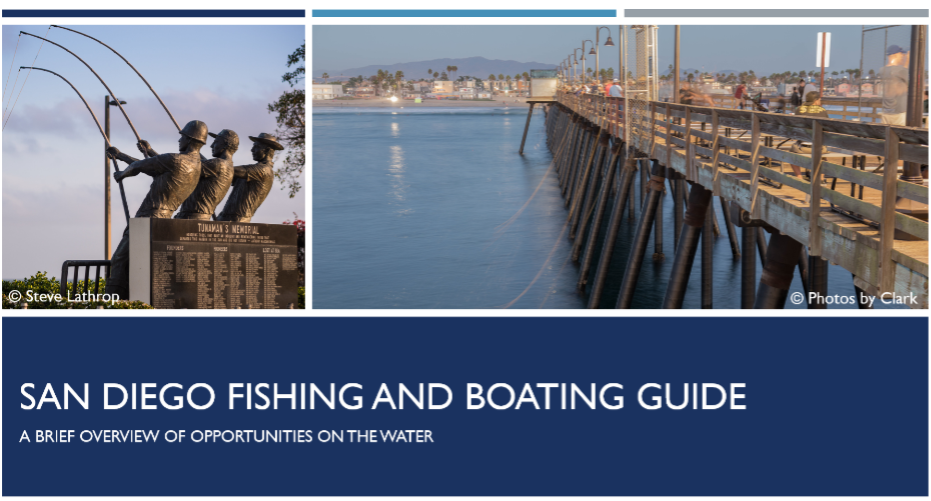
As part of an Ocean Protection Council (OPC) funded project, in 2020 CMSF disseminated MPA toolkits containing resources such as brochures, posters and maps to over 500 ocean recreation businesses, bait and tackle shops and interpretive outlets across the state.
CMSF has also been hosting webinars with the recreational anglers and ocean recreationists, sharing information about the MPA network, associated regulations, fishing and recreating in local waters, and topic of interest such as changing oceanographic conditions and species range shifts. These interactive webinars are capturing invaluable perspectives and feedback from the fishing community
|
|
|
Snapshot Day and First Flush:
Healthy Watersheds, Healthy Ocean
|
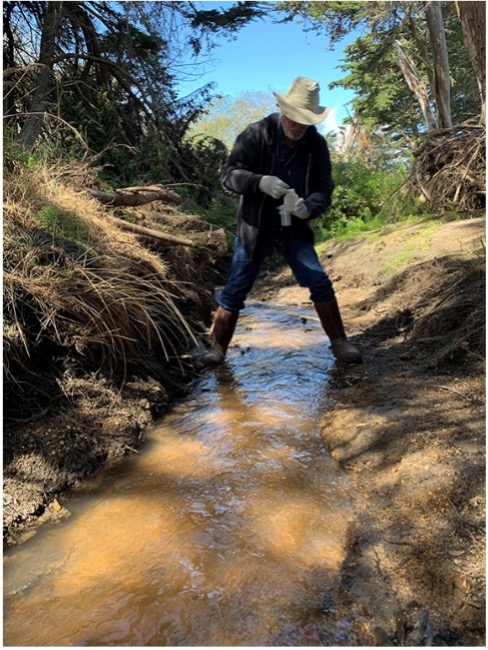
For the past 21 years, on the 1st Saturday of May, water quality is monitored from San Mateo to San Luis Obispo, in every major watershed flowing into the Monterey Bay National Marine Sanctuary (MBNMS). Volunteers help monitor watershed health by collecting field measurements and lab samples. Volunteers are recruited, trained and then deployed into the field on the sample morning each year. Plans are underway to make this a safe event on May 1st, 2021.
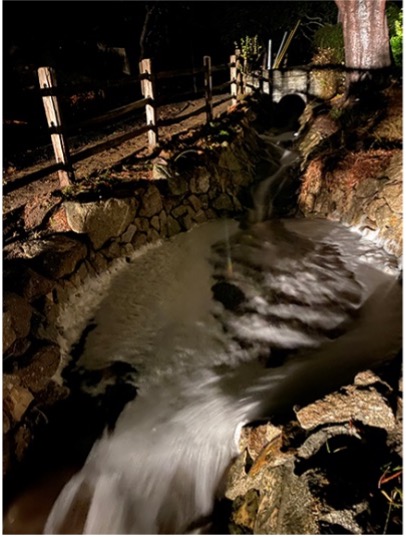
Another program called First Flush samples storm drain outfalls (where the water flows to the Pacific) before (the Dry Run) and during (the First Flush) the first major rainstorm of the winter season. Working together with the Monterey Regional Storm Water Management Program and Monterey Bay National Marine Sanctuary (MBNMS), volunteers and CMSF staff collect water samples to analyze for common urban pollutants: methylene blue activated substances (MBAS) detergents, E. coli, enterococcus, total copper, total lead, total zinc, total suspended solids, turbidity, color, potassium, hardness, ammonia, urea, nitrate and phosphate. First Flush sampling in December 2020 marks a 21-year history of First Flush sampling. Levels at several sites were high for bacteria, total copper, MBAS detergents, phosphate, total suspended solids and turbidity. This long-term monitoring helps inform policy and better management for ocean, coastal and human health.
|
|
Sea Level Rise Communications for California |
|
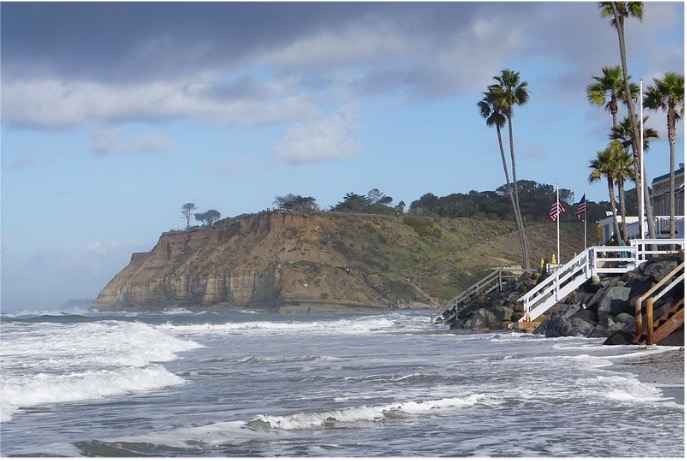
Californians’ safety, local and state economies, critical infrastructure, and natural resources face increasing threats from sea level rise (SLR). Every scientific assessment since California’s 2009 Climate Adaptation Strategy has revealed that coastal impacts from SLR will occur more quickly and will be more severe than previously projected. In response to the significant threats posed by SLR, the State of California is taking action to make the state’s coastline more resilient. By acting decisively now to mitigate ongoing SLR impacts, we can protect and improve the state economy and preserve future quality of life. |
|
Image from the California Coastal Commission |
|
CMSF, in partnership with communications firm May77 and OPC, are assisting in this effort by developing a statewide SLR communications and outreach campaign. A new website, messaging, opportunities for engagement and a social media campaign are in development. In the coming months, a statewide campaign to build awareness of SLR across California will be publicly launched. |
|
|
|
|
|
|