Reach Us At: 864-236-4371

Free Consultation
 

Problem Solving in Leadership: Opportunities in Disguise


As a leader, you may feel overwhelmed at times by the complexity or the sheer volume of problem solving in leadership that comes your way.


To truly thrive at problem solving, consider a paradigm shift, where problems are viewed as opportunities in disguise, not obstacles. It turns out, problems are not the problem!


Viewing problems as opportunities can reduce our stress response. Stress can shut down our ability to pause to truly understand the problem, be able to listen to the input of others, and have bandwidth to find a creative solution.


If our resistance to problems is lessened, our ability to successfully address the problem with a calm and creative mind increases.


Discover three time-tested practices that you can employ to nurture problem solving in your organization by reading this month's blog and considering the numerous resources provided below!

Read HPA's blog on Problem Solving in Leadership
 

Tools & Tips: Articles on Problem Solving


Why Leaders Solve the Wrong Problems


Dr. Roger Firestien with Thought Leaders, LLC challenges our perception of problems, claiming that 99% of our problems are not the real problem.


We are taught to jump to answers/solutions and not question the problem since it often comes to us from our boss. It's important to question the problem in order to reach the right solution.


Creative questions help us to redefine the problem with a mindset that is not stuck in assumptions.

Read More

Why Problem Solving Skills are Essential for Leaders in Any Industry


Regardless of your industry, if your business is offering a product or service, you're in the business of solving problems.


A couple key tools for uncovering solutions include design thinking and creative problem solving.


Having problem solving skills are essential for leaders because they need tools to empower their employees to solve problems as they arise.

Read More

Problem Framing and Why It Matters


Problem framing is the art of finding a better problem to solve.


Through asking the right questions and reviewing context, we can better understand the actual problem we're trying to solve.


Problem framing tools can include first principles thinking and the 5 Whys, with the goal being finding the root cause, instead of focusing on the proximal cause.


Read More

How to Solve a Problem Like a Leader


Many leaders think they'll get real problem-solving results by simply providing their employees with good tools and problem-solving objectives.


The more important elements should be: getting the right behaviors and building the right capabilities.


Rushing to solve problems without investing time in these elements can lead to creating even bigger problems.

Read More
 

Study: Cognitive Diversity

and Psychological Safety


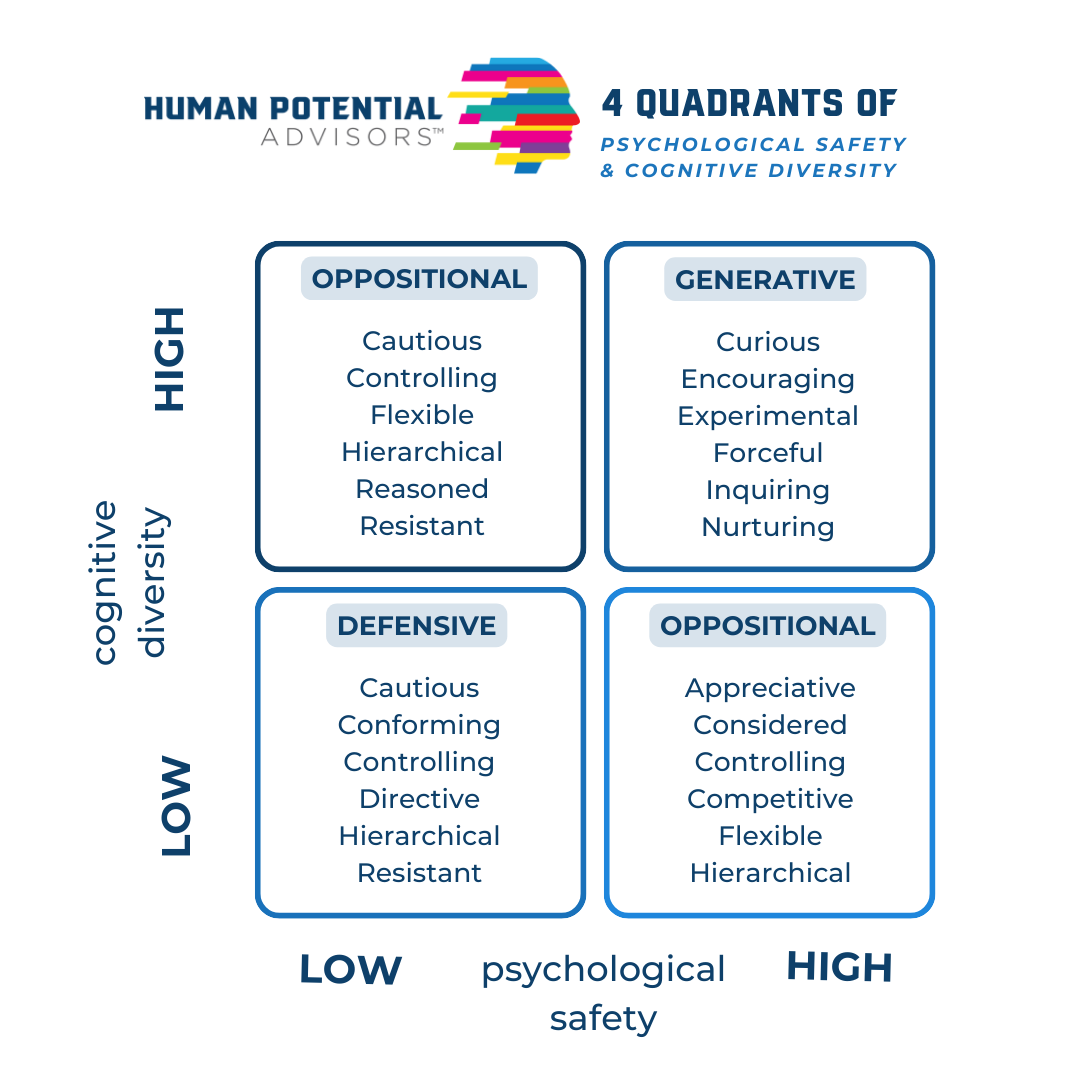
An analysis of 150 senior teams found that teams need both cognitive diversity and psychological safety to best solve problems. So what does that mean, what does that look like, and what should leaders do with this information?


What it means:


  • Cognitive Diversity: A blend of different problem-solving behaviors, like collaboration, identifying problems, applying information, maintaining discipline, breaking rules, and inventing new approaches.
  • Psychological Safety: The belief that one will not be punished or humiliated for speaking up with ideas, questions, concerns, or mistakes.


What it looks like:


In the study, 150 senior executives were asked to "rate their organizations in terms of cognitive diversity, psychological safety, and the extent to which they consider their organization able to anticipate and respond to challenges and opportunities." Those words are highlighted below based on low vs. high cognitive diversity or psychological safety.

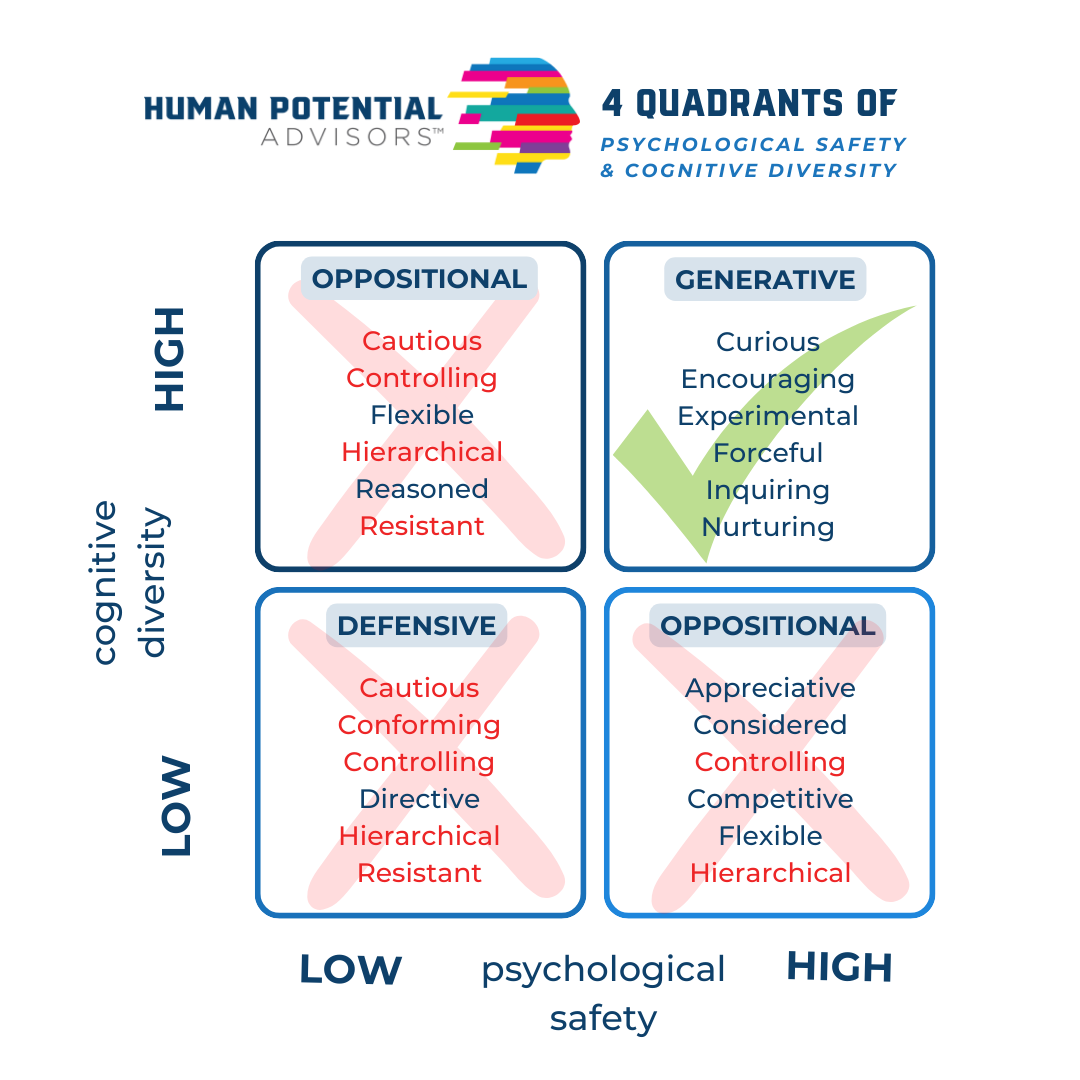
As a leader, you may look at these quadrants and want to know "which one is bad and which one is good?". To help with this, we highlighted in red the negative behaviors found in three quadrants, including negative emotions, control, and constraint.


Negative behaviors are in each quadrant except for the Generative quadrant, which is high in both cognitive diversity and psychological safety. Even the word "forceful" was considered positive in the Generative category, since this referred to having the confidence and psychological safety to communicate important ideas.


So, what can you do with this? As a leader, you can prioritize forming problem-solving teams that are both cognitively diverse and psychologically safe.


Wondering "how" to do this? Read more about this study, scroll down for more resources, or contact us at any time to help maximize your human potential.

 
Read the Study
 

TEDx: Solving the Right Problem


In this TEDx Talk by Dr. Roger Firestien, he challenges leaders with this statement: "Creativity is not finding a great idea, but solving the right problem."


Building on his claim that 99% of the problems we seek to solve are not the real problem, he gives examples of ways problems were solved incorrectly by focusing on symptoms instead of the root cause of a problem. Instead, we should ask "what's stopping me?" and ask creative questions. Note: this would be a great one to watch with your team!

Watch TEDx Talk
 

Tools & Tips: Books about Problem Solving


Solve the Real Problem


Dr. Roger Firestien wants us to learn how to tackle the correct problems — specifically by asking the right questions and taking the time to redefine the problem.


Research shows that taking even 5 minutes to redefine problems through creative questions can provide more original and higher quality solutions.

Thinking Fast and Slow


Daniel Kahneman takes us on a groundbreaking tour of the mind and explains the two systems that drive the way we think.


Engaging the reader in a lively conversation about how we think, Kahneman reveals where we can and cannot trust our intuitions and how we can tap into the benefits of slow thinking. 

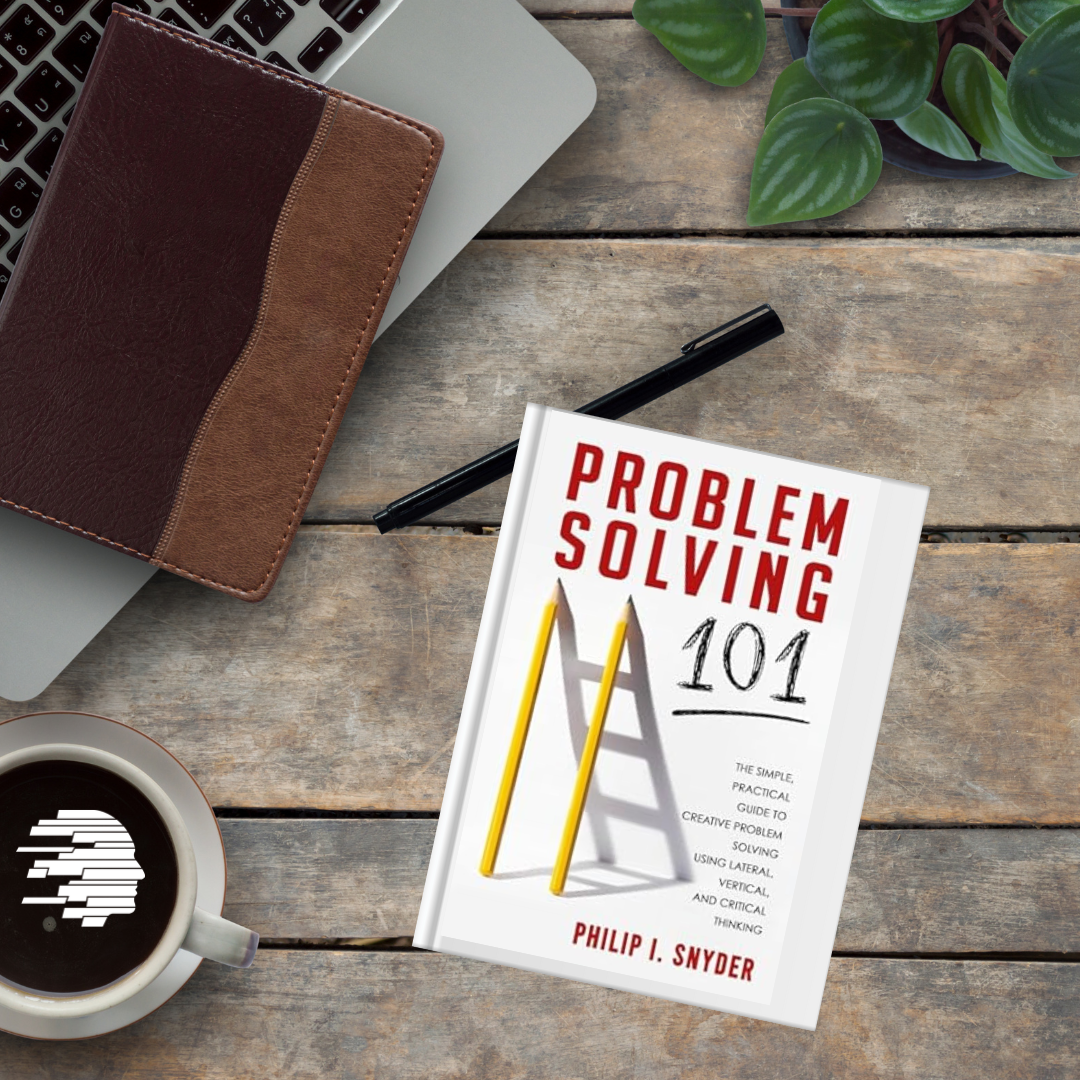
Problem Solving 101


Philip Snyder teaches strategies, insights, and techniques to transform those challenges into stepping stones toward growth and achievement.


This hands-on guide shows that stepping stones can lead to success in both a career and your personal life.

Bullet Proof Problem Solving


Charles Conn and Robert McLean share a seven-step systematic approach to creative problem solving developed in top consulting firms that will work in any field or industry.


The problem-solving technique outlined in this book is based on a highly visual, logic-tree method that can be applied to everything from everyday decisions to strategic issues in business to global social challenges. 


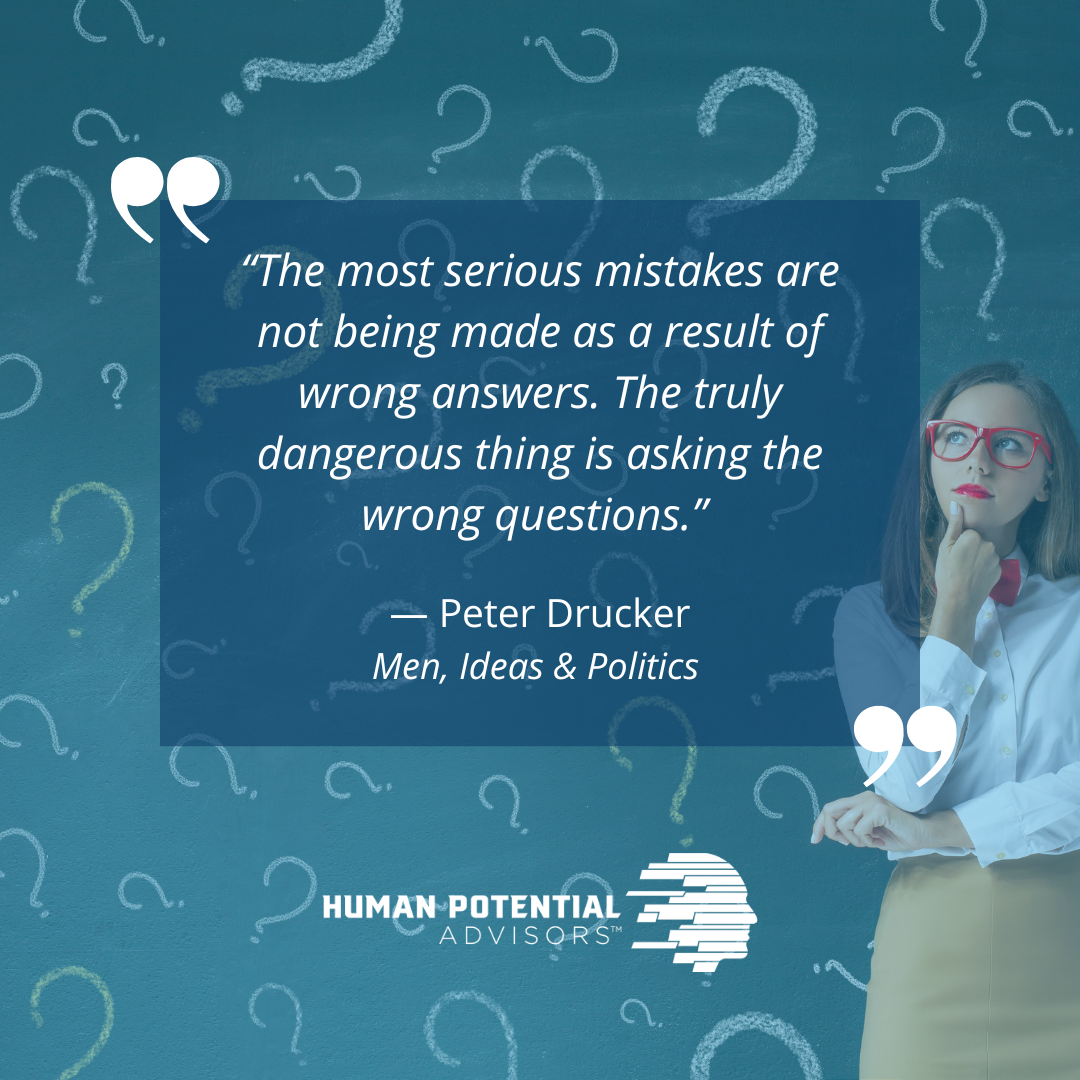
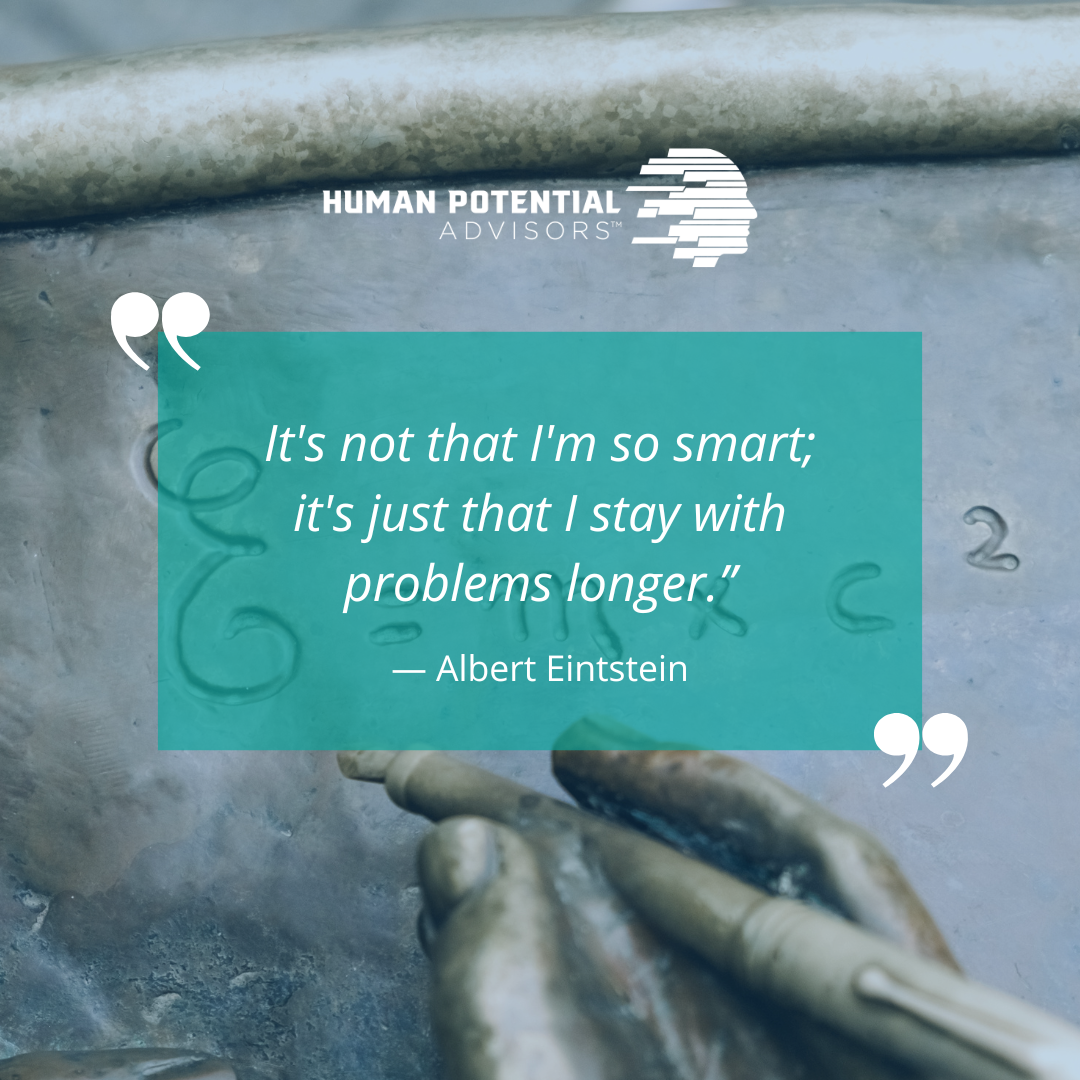
Tips & Tools: Quotes to Consider


Are you or your team feeling stuck? Now is the time to discover and learn how to best utilize your strengths.


Contact us today! We're here to help.


Human Potential Advisors

PO Box 627

Taylors SC 29687

864-236-4371

Contact Us
 
Facebook  Instagram  LinkedIn