ECONOMY
Putting a price on pointless
Stuck in another unnecessary meeting? It could be costing your boss tens of thousands of dollars
| |
|
ANECDOTALLY, MANY WORKERS will tell you they think that the bulk of their meetings are a total waste of time. And that is likely true.
But they’re also a waste of money, and a new study from transcription tool Otter.ai attempted to put a dollar figure on it — and that dollar figure is substantial.
The report, written with organizational science professor Dr. Steven Rogelberg, estimates that every year companies could save an estimated $25,000 USD per employee by reducing unnecessary meeting attendance.
“For companies of 100 people, cutting unnecessary meetings would save nearly $2.5 million each year, and for companies of 5,000 that savings rises to over $100 million,” the report found.
The report states that of the average 17.7 meetings scheduled per weeks, only about 12 of them were actually important and most employees could probably be left out of around five of them, provided they were kept sufficiently in the loop. (Of course, this is where Otter’s implicit pitch begins: the best way to be kept in the loop, they say unsurprisingly, is to use Otter to record and notate all of your meetings.)
The study puts a dollar figure on what has become a contentious battleground in office management over the course of the pandemic. During Covid, when people could easily beam into meetings from their living room, the length of meetings actually tended to increase rather than become more efficient.
In the quest for greater workplace wellness, some managers have tried things like no-meeting Fridays, or a stricter guestlist to meetings. One CEO even suggested that eliminating meetings could have the same benefits as the four-day workweek. But overall, employees believe that there needs to be bigger cultural changes. Employees will accept nearly all meeting invites that come their way, mostly out of habit and workplace expectations.
“Employees say that a change in organizational culture would be needed to make them feel differently about declining meetings,” the survey found. “To stay in the loop, employees would prefer a summary of key decisions, dates and action items.” Kieran Delamont
| |
REMOTE WORK
Is productivity paranoia solvable?
Employers and employees remain divided about the effectiveness of hybrid work ― and the distrust and tension is mounting
| |
|
IF THERE’S ONE reason why some of these findings about meetings might be unlikely to lead to change, it is because even years into a remote work era, employers are chronically paranoid about what it’s doing to productivity.
The latest instalment of Microsoft’s Work Trend Index found that 85 per cent of managers don’t think their employees are being productive, even if 90 per cent of workers insist that they still are. Only 12 per cent of leaders have full confidence in their team.
“You end up with workers saying, ‘I’m doing just great,’ and leaders saying, ‘I’m not sure you are,” said Microsoft’s VP of modern work, Jared Spataro, in an interview with Forbes. “There’s real tension that is developing. Every company is working through that.”
Microsoft wasn’t stopping there. This isn’t just a chronic tension in the workplace, but a fundamental misalignment that was harming firms. “Productivity paranoia risks making hybrid work unsustainable,” they write. “Leaders need to pivot from worrying about whether their people are working enough to helping them focus on the work that’s most important.”
Amidst plenty of empirical evidence backing up the idea that productivity hasn’t really been harmed, many managers, Microsoft found, are resorting to calling their workers back to the office for no other reason than to soothe this anxiety. They suggest that it might be why the return-to-office push is being met with pushback.
“The data reveals a better way to bring people back together to engage and energize them: connecting with colleagues is a key motivation for working in person,” the report found.
People, in other words, enjoy the social aspect of in-person work — the exact things that many managers may view as unproductive chit-chat. Abandoning old ideas of people management might just be the best way forward.
“Now is the time for every organization to re-recruit, re-onboard and re-energize employees,” the report read. “In a still-tight labour market, leaders who were hoping for the tide to turn have so far been disappointed.” Kieran Delamont
| |
|
|
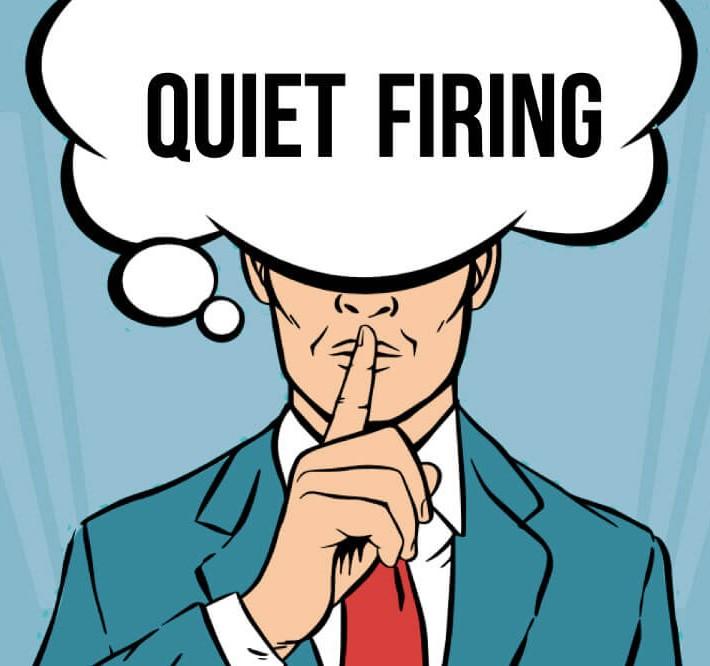
Terry Talks: Quiet firing is not the antidote to quiet quitting
| Despite a buzzy new catch phrase, quiet firing, like quiet quitting, is nothing new. But while ignoring an underperforming employee might seem appealing because it feels easier than addressing the issue directly, it’s a dangerous approach to termination ― and a strong signal that your workplace culture is in trouble. | | | |
DESIGN
Working in a box!
Designed for the pre-Covid era, is there a place for the mod-pod in a post-pandemic world?
| |
|
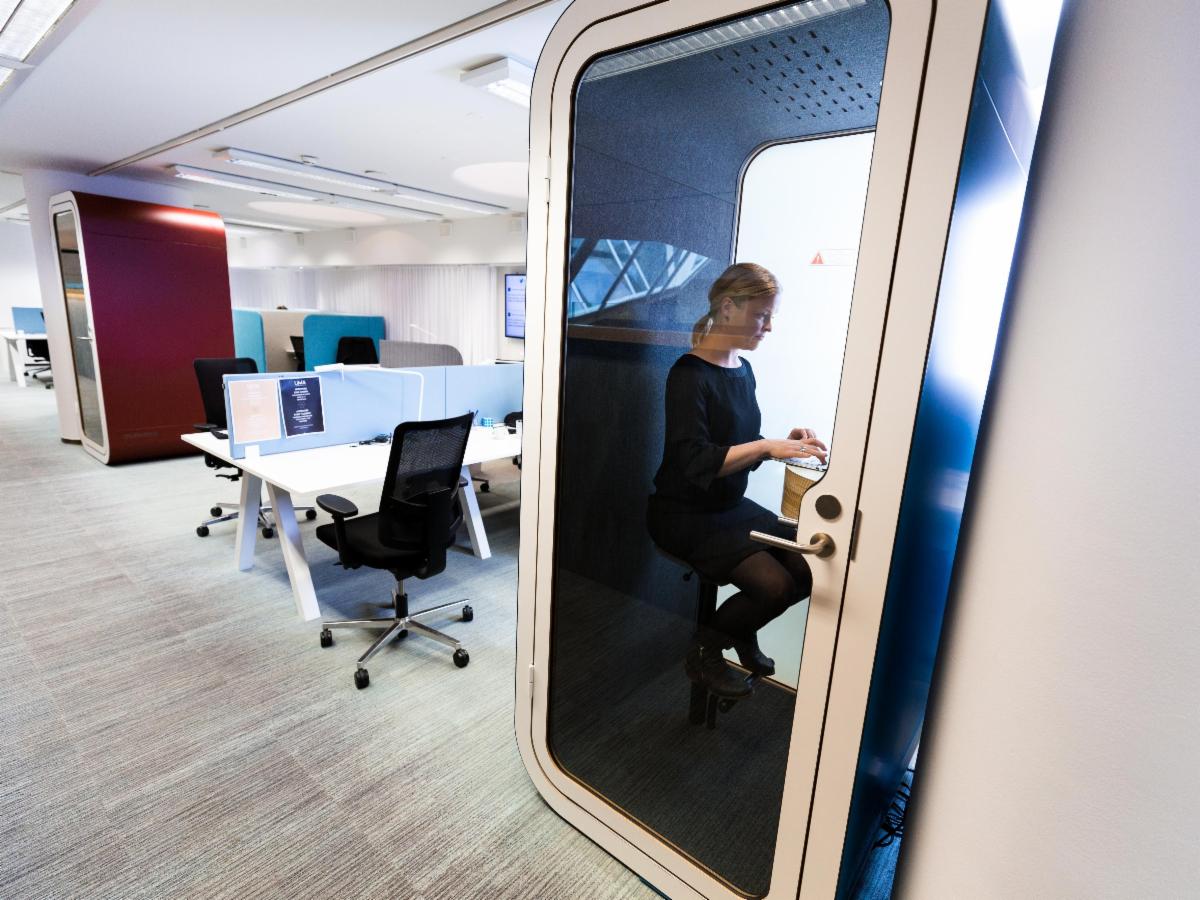
ONE CURIOUS NEW addition to the open-concept offices of the late 2010s was what is now generally called the modular pod: a small, phonebooth-like box in which you take a call, do some work, etc.
They were originally conceived as little privacy boxes for employees to deal with personal calls, take video calls in quiet or just get a little work time to yourself. They also appeared in public spaces like airports, where they were conceived as a bit of physical infrastructure to support an increasingly on-the-go workforce.
Then Covid happened, and everyone suddenly had to work from a little privacy cube called home. So, does the modular pod have a future in this new hybrid work world?
“They still serve as places for discretion, but they’ve gotten an infusion of technology and are increasingly used for seamless video calls and meetings, since odds are at least one attendant is remote,” writes Tara Weiss.
Some pods are getting bigger, growing into private spaces for small groups. Others are beefing up on functionality, with one pod being set up to sync with your calendar — swipe your ID, and it loads up your next meeting automatically. The pod industry, at least, has not backed down from hybrid work, and in fact see a place for themselves there.
Consider the experience from the perspective of one Jeremy Gordon, a skeptical writer who quite literally stumbled across one of these pods in an airport back in 2019.
“There was something sad about having to pay a sort of exorbitant amount of money to get away from the world for 30 minutes — to value my privacy over the chance of having a spontaneous human interactions,” he wrote. “But inside the pod, these concerns faded. The wifi was speedy; the lights were soothing; the photo booth was charmingly functional. It was quiet, an underrated thing in an airport.” Kieran Delamont
| |
LEADERSHIP
Size does matter
You know what they say about bosses with big signatures...
| | |
|
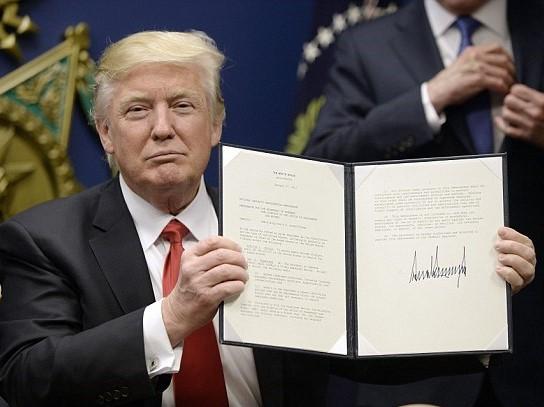
IF YOU’RE CURRENTLY signing off on documents with a big, swooping behemoth of a signature, then you may want to reconsider — and maybe book a therapy session — since a huge body of research has tied the size of your signature to the extent of your narcissistic characteristics.
“We find that CEO signature size is positively associated with a number of proxies for overinvestment, and that abnormal investment by narcissists destroys firm value via reduced sales growth and future revenues,” one paper found.
Some caution is probably warranted here: handwriting analysis is, at best, a science of correlations more than causations, and has in general fallen out of fashion. So, no point committing your boss to the dustbin if his signature is too big.
But what is more in fashion is a consideration of personal qualities among company leaders, and signature size is just one of a few ways into that discussion. There is more interest in whether a boss is narcissistic these days, because of the impact that has on the workplace, good and bad.
Studies of CEO’s personal traits (particularly overconfidence) have shot up among academics in the last decade, but others — like looking at how happy CEOs are or how frequently they speak in first-person — have also been tried.
“Obviously, we can’t say that everyone with a large signature is a narcissist and therefore a bad leader,” said one of the authors, in an interview with HBR. “But the study does show that when an annual report has a big CEO signature on it — as measured by the area of a box drawn around the signature’s end points and controlling for name length—a firm will, on average, spend more on capital goods, R&D and acquisitions than its industry peers, yet show worse sales and sales growth over the next three to six years.”
He pointed, by way of example, to Rupert Murdoch, whose autocratic management style is infamous. “Sure enough, his signature is quite large.” Kieran Delamont
|
| | | | |