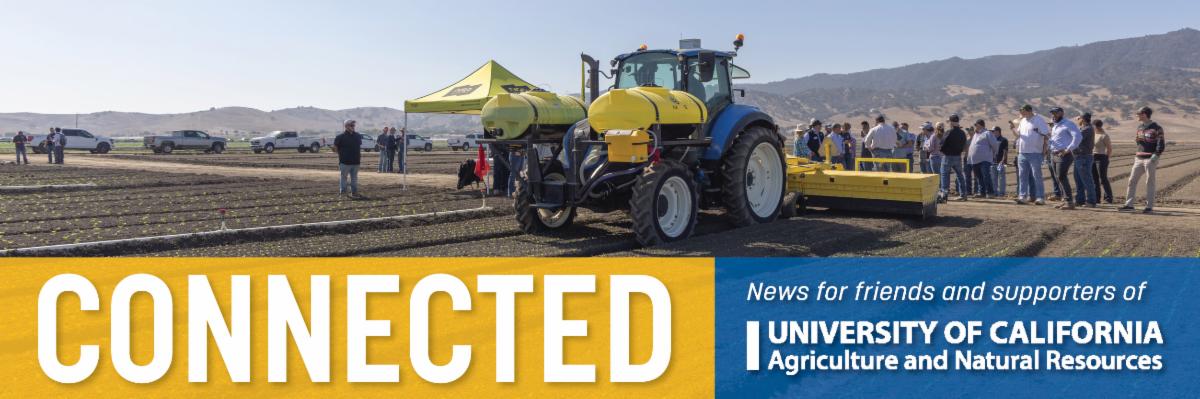
Ag tech field day attendees watch a demonstration of an automated thinning machine on a Salinas Valley field

August 2026 | Volume 10, Number 8

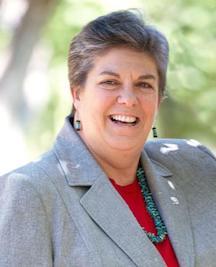
Headshot of Glenda Humiston

The Vantage Point


Glenda Humiston 

Vice President

UC Agriculture and Natural Resources 


This week the Legislature and Gov. Newsom concluded the 2026 legislative session and reached agreements on multiple pieces of legislation and final compromises for the 2026-27 state budget. I am happy to share that UC ANR is receiving an 8.6% increase in ongoing funding alongside the campuses. The Legislature also approved AB 1486, which would release Prop. 4 funding for Agricultural Experiment Station research.


Additionally, UC ANR joined partners to advocate for autonomous ag equipment reform; while our push did not lead to a legislative and budget agreement, we thank our partners and colleagues for their support and look forward to continuing this work next year. A compromise was reached for SB 895, the CA Science and Research Bond Act, which will now set a $7.5 billion bond for the March 2028 ballot. I would like to thank Gov. Newsom, Budget Chairs John Laird and Jesse Gabriel, Assembly and Senate leadership, and everyone at UC who elevated the importance of investing in research, education and extension.


In other good news, last week we announced that UC ANR, Valley Vision, Sierra College and other partners were collectively awarded $7.3 million through the California Jobs First Regional Investment Initiative to launch the Capital Biomanufacturing Alliance (CAPBIO), aimed at boosting the biomanufacturing industry in the greater Sacramento area. UC ANR will lead the production infrastructure component of this exciting collaboration.


With $4.2 million of the total award, we will accelerate development of The Plant, a state-of-the-art center that will be the first of its kind in California and, to my knowledge, the U.S. The Plant will integrate cutting-edge agri-food and biomanufacturing facilities and foster partnerships among academia, industry and government to advance and commercialize innovations in agriculture and the bioeconomy.


Earlier this month, Valley Vision CEO Evan Schmidt and I had the pleasure of hosting in Sacramento the latest meetings of the California Stewardship Network (CSN) Exchange. Given CSN’s emphasis on regionally focused solutions for California communities, UC ANR had a lot to share with this gathering of civic leaders about our locally based initiatives.


On Aug. 4, UC ANR Chief Innovation Officer Gabe Youtsey presented on The Plant, and on the following day, I was proud to introduce several outstanding UC ANR leaders who outlined how CSN Exchange attendees can partner with us. Aaron Wilcher, UC Cooperative Extension community and economic development (CED) advisor for the Eastern Sierra, provided an excellent example of how our CED team functions as a vital catalyst throughout the state. After listing the challenges facing his unique and geographically isolated area, Aaron highlighted how UCCE is adding essential capacity as a technical assistance provider and supporting the Eastern Sierra Council of Governments as a key convener.


UC ANR Policy Institute Interim Director Anne Megaro laid out the vision for the new Policy Institute as a conduit between scientists and policymakers, and then Lauren Cartwright, UCCE area director for Marin, Napa and Sonoma counties, outlined the benefits of our “area director” model. Area directors connect community-driven ideas with UC expertise, regional collaborations, and the essential resources and structures that can bring them to fruition. My great thanks to Lauren, Anne, Aaron and Gabe for representing some of the best of what UC ANR has to offer for California’s prosperity and sustainability!


In the crucial quest to apply and extend the latest research for the benefit of our communities, we must seek experts and partners from every corner of the globe. On Aug. 10-11, I was honored to attend joint meetings of the Lawrence Livermore National Laboratory and the Korean Institute of Science and Technology (a research institute based in Seoul) at the Livermore Valley Open Campus.


It was invigorating and inspiring to hear from scientists – working on both sides of the Pacific – on a wide variety of topics, including advancements in hydrogen power, robotics, AI and climate science. Alongside UC ANR’s Gabe Youtsey and Josh Viers and Erin Hestir of UC Merced, I participated in a breakout session focused on agriculture. I want to thank the moderators, Cody Madsen of Livermore Lab and Nakian Kim of the Korean institute, for leading an excellent discussion on a host of potential ag applications.


Finally, I encourage everyone to attend at least one of the upcoming webinars commemorating Hispanic Heritage Month (Sept. 15–Oct. 15). Organized by our News and Information Outreach in Spanish team and the Latinx & Friends Affinity Group, the series is themed around the “Three Sisters” – corn, beans and squash – which symbolize collective strength, connection and growth. I hope you’ll take this opportunity to learn more about Latino identity, outreach, resilience and enduring contributions to agriculture and community nutrition. Their efforts – as well as yours – are deeply appreciated by all who strive for a future where everyone thrives!

Banner image above: Attendees of the UC ANR Innovate ag-tech field day in the Salinas Valley watch a demonstration of an AI-powered thinner; photo by Rosy Spencer

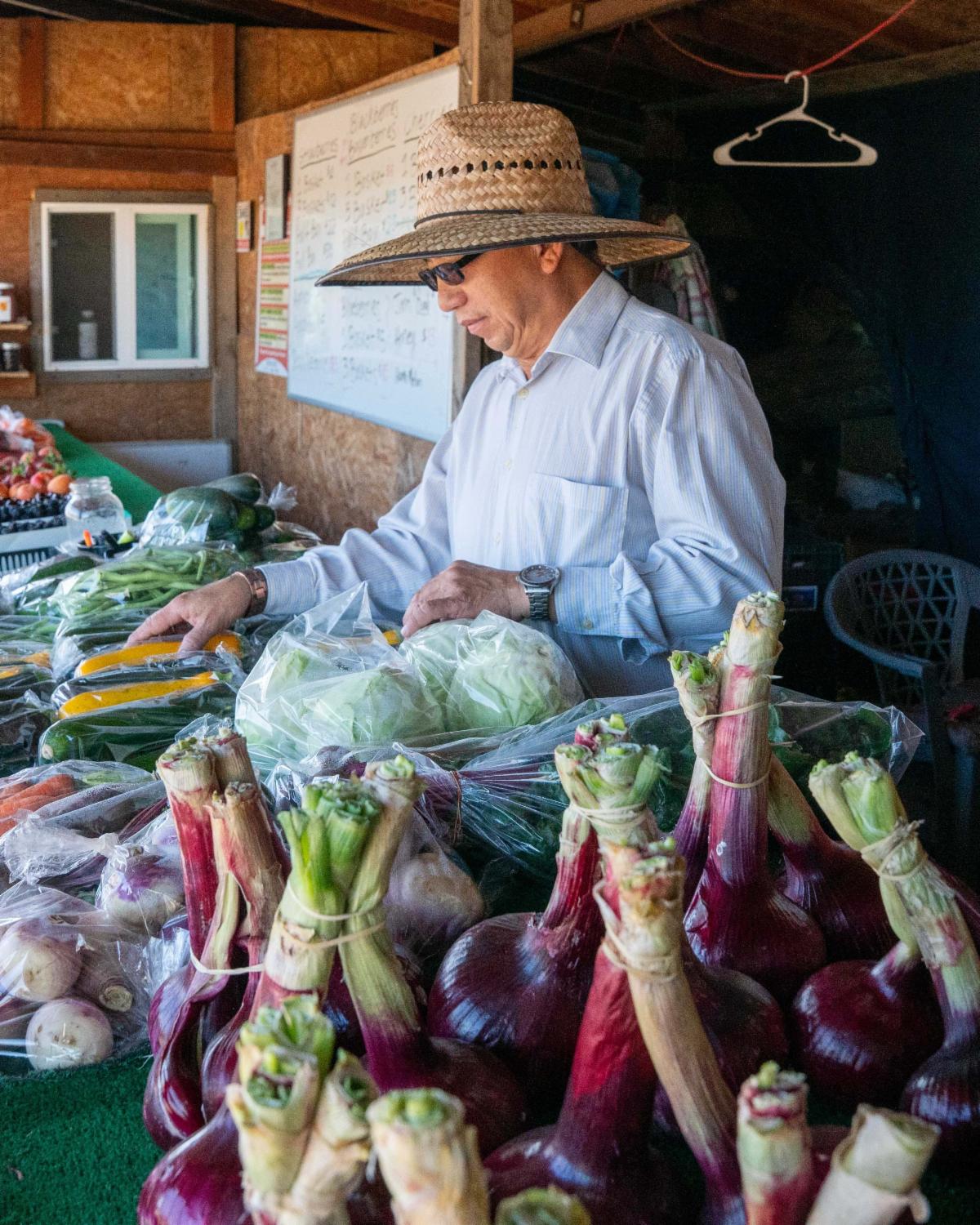
Farmer checks his produce at a farmstand

In the News


UC ANR was featured in stories on small farmers and SGMA, extreme weather this summer, El Niño and Bay Area, building density and fires, weather app flaws, fusarium stem rot in tomato, chicken coop advice, temps in rental units, gene editing and dogs, optimizing fitness testing, declining wine demand, risk of bigger climate events, need for flood insurance, fire on rural lands, new landscaping rules, studying agave in Central Valley, figeater beetles in L.A., cyclospora fallout, pests and disease outbreaks, upcoming winter dangers, San Diego County salmonella, ag-tech field day, evolution of school foods, testing of avocado oil items, lessons from Caldor Fire, plans for The Plant, control of rats in L.A., school recess policies, tariffs and dairy industry, fire risk in Solano County and more.

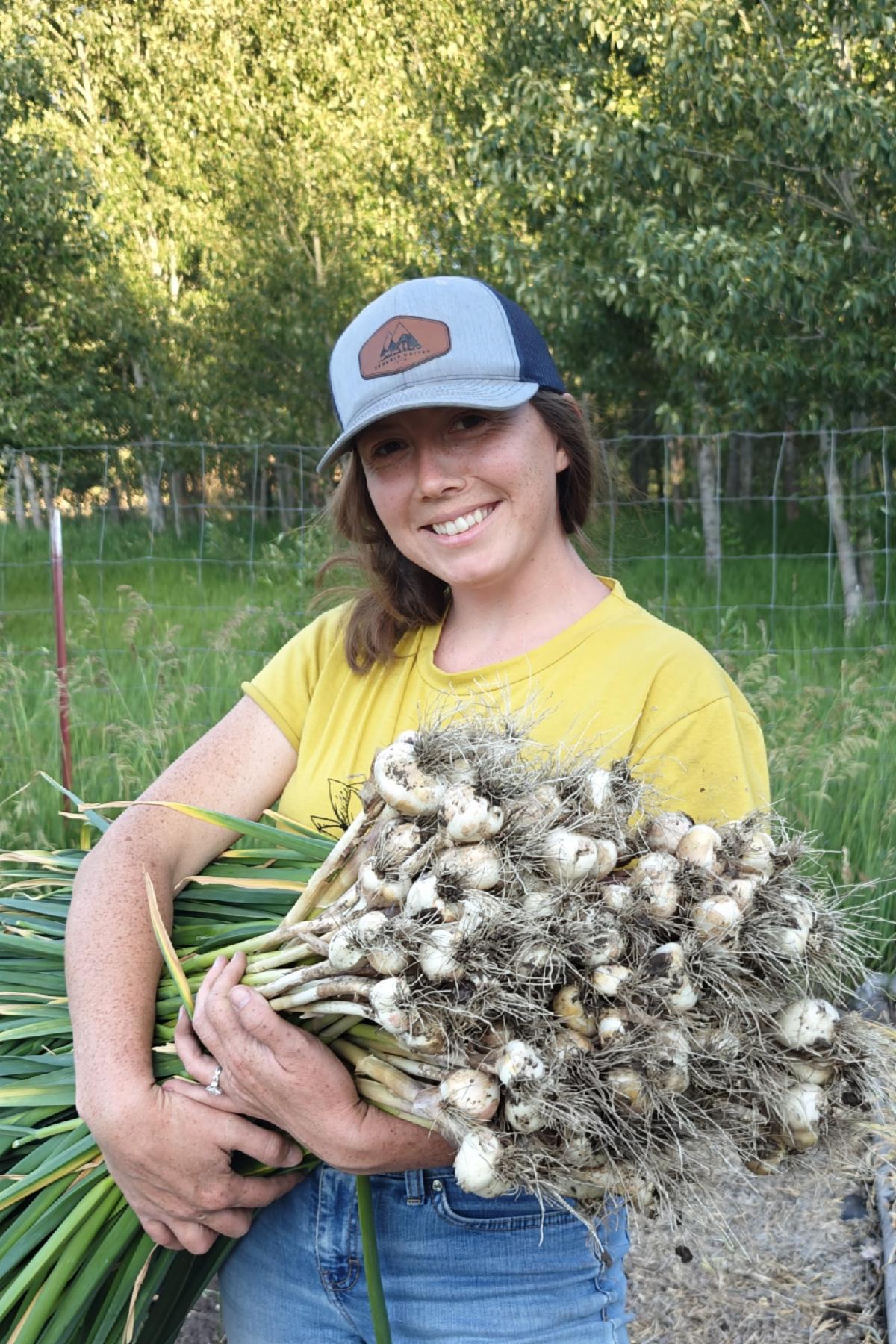
Ary West holds a freshly harvested armful of garlic at Trouble Valley Farm

UC ANR news stories


In remote Modoc County, women form ‘backbone’ of agriculture


Free business skills training offered to farmers, ranchers and food vendors


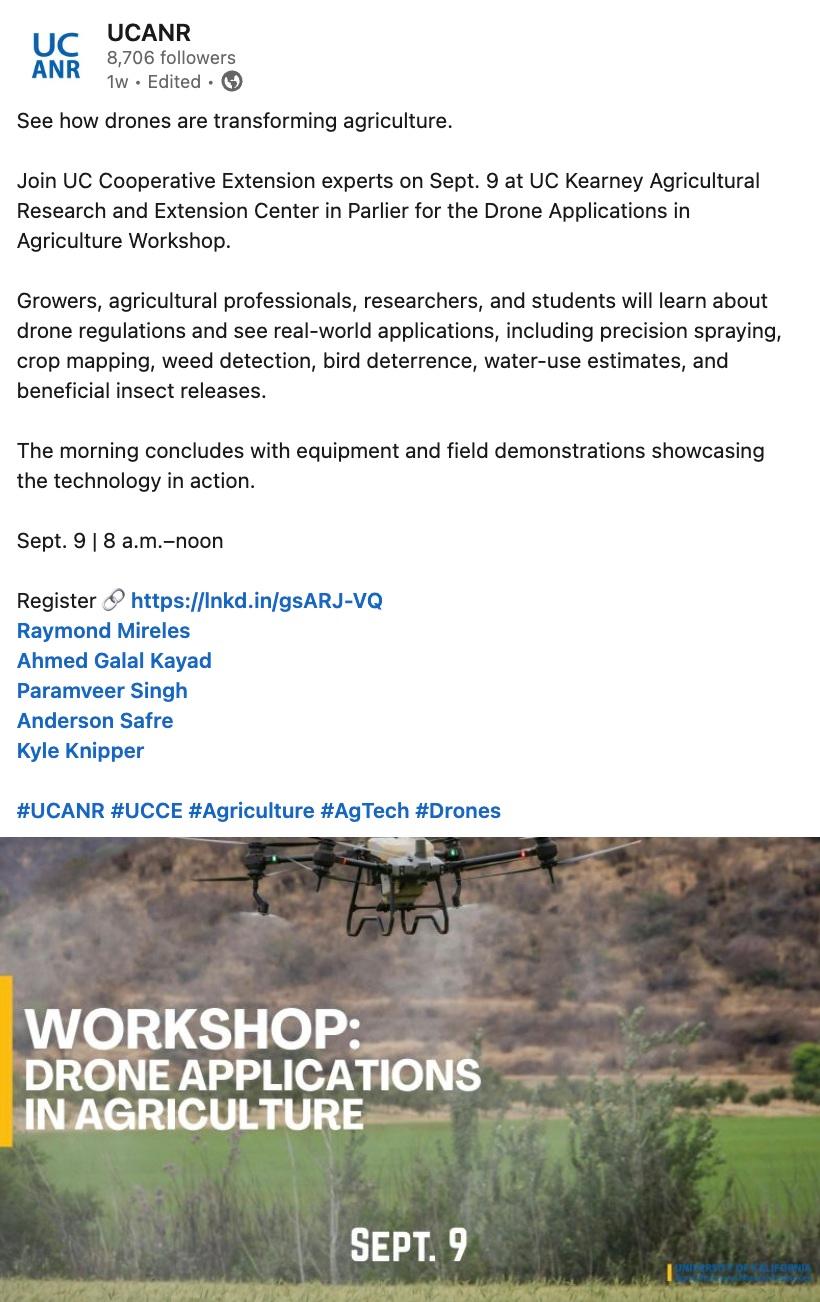
Discover how drones can enhance farming on Sept. 9 in Fresno County


UC ANR Connect seeks commercially ready ag tech for California crops


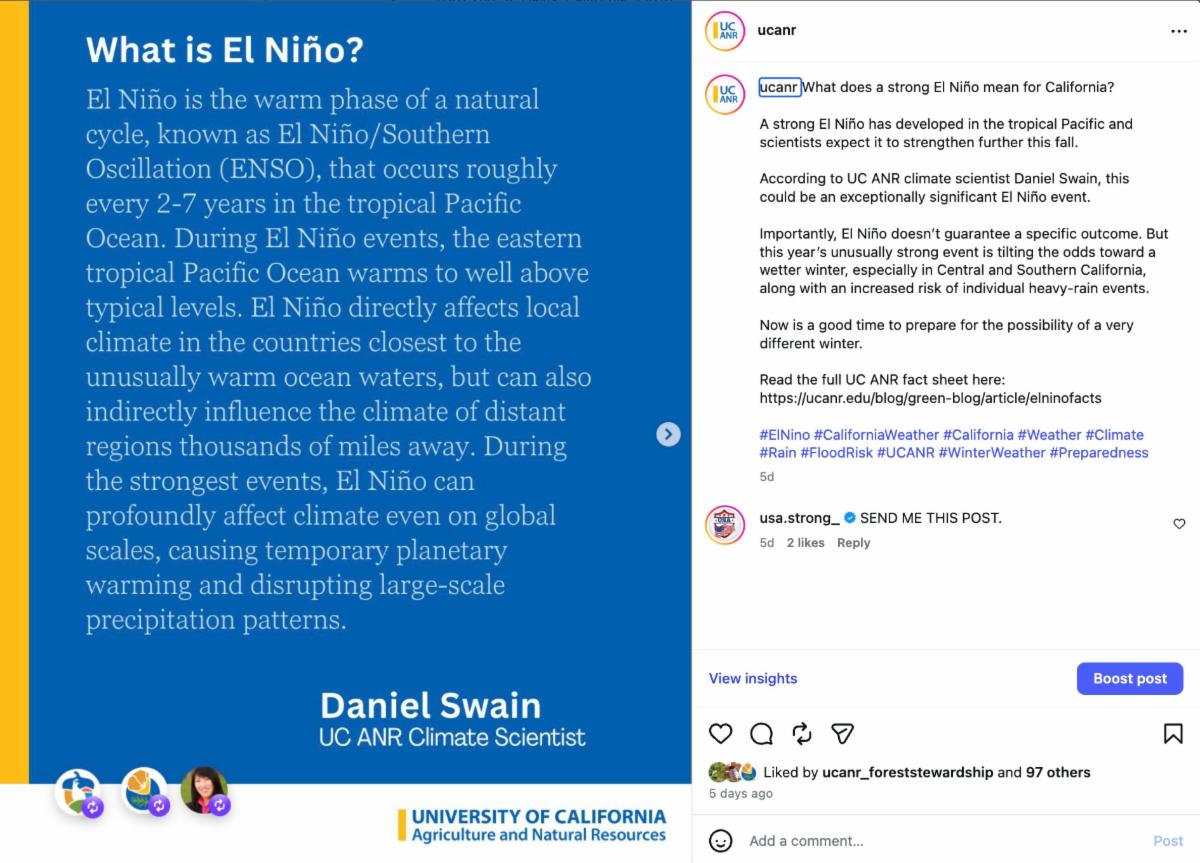
What is a strong El Niño and what does it mean for California?


South Coast REC apiary celebrates 10 years of sweet success


Capital Region secures $7.3 million to launch regional biomanufacturing initiative


Art exhibit sends message of shade and hope


More news stories


Spotlight on Practical Resources

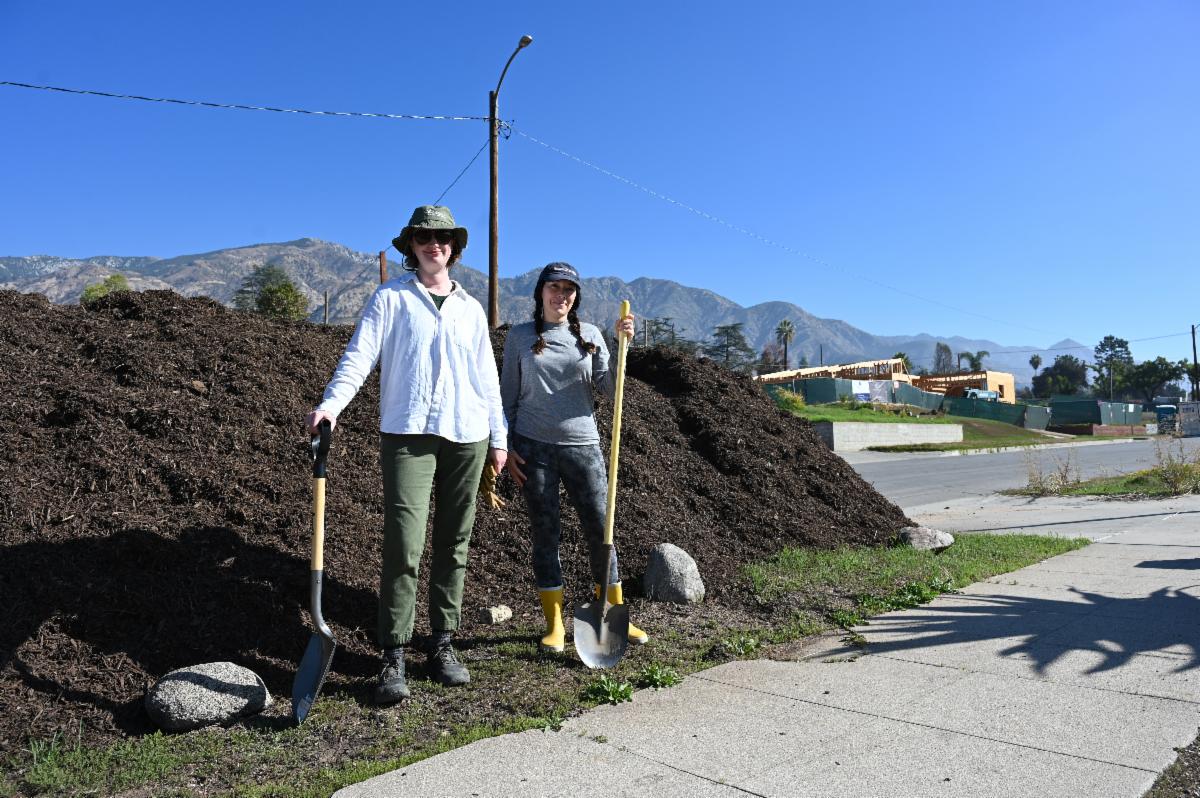
Lydia Whitlock (left) and Natalie Levy (right) stand next to a pile of composted mulch used to cap the soil on multiple Altadena properties

As El Niño looms, scientists raise concerns about erosion in Altadena burn scar

In January 2025, the Eaton Fire wiped out trees and other vegetation whose roots hold soil in place, leaving the topsoil more vulnerable to getting washed away during strong storms. Further testing confirmed heavy metals like lead still remain on some properties, and erosion risks carrying those chemicals into waterways. Given the likely wet winter ahead, scientists and UC Master Gardeners are raising awareness about the benefits of applying compost in burn zones. The idea is that covering contaminated soil reduces opportunities for it to become airborne or transported by rainfall. Read more and watch the how-to video.


Notes from the Field

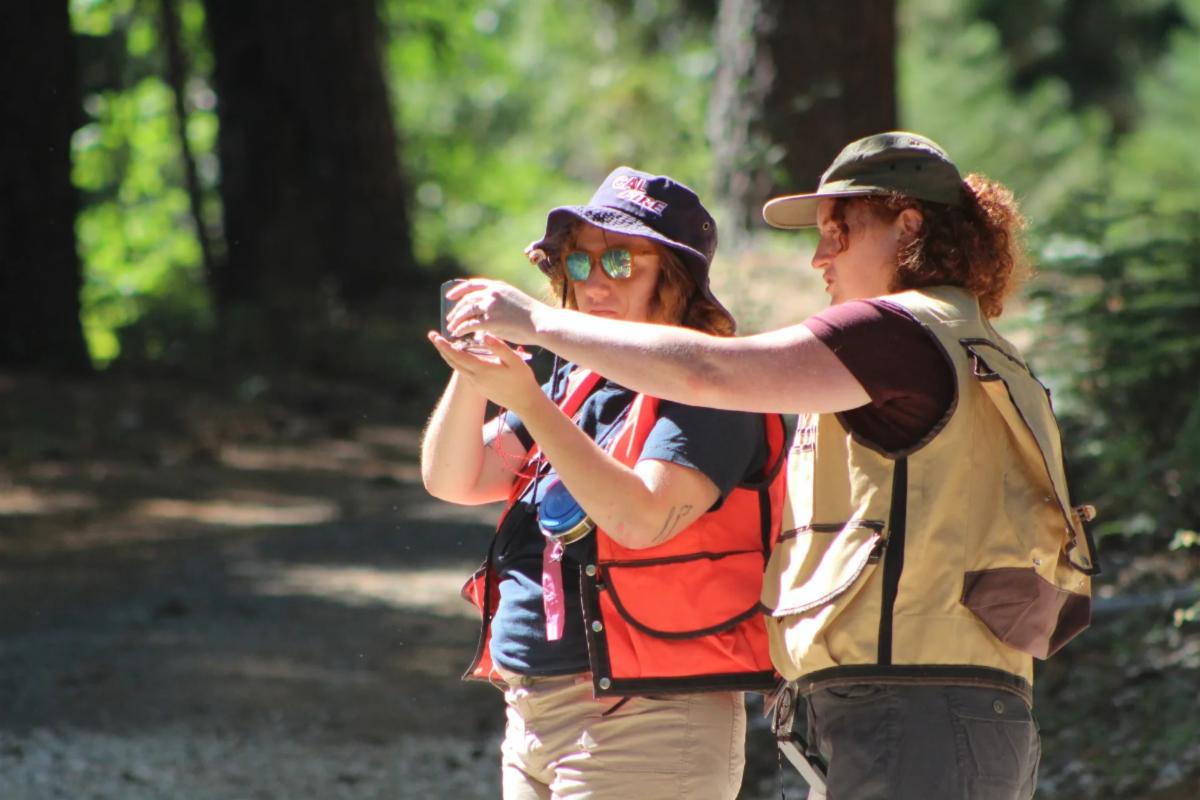
Katie Reidy (right) helps a student with forest orienteering skills during Forestry Mini Camp

California students get their footing in forestry with help from UC Cooperative Extension

Though progress has been made to increase the pace and scale of forest management in California, a shrinking forestry workforce may stall the state’s progress. To help address this, Susie Kocher, a UCCE forestry advisor, joined a federally funded collaborative that encourages community college students to enter the forestry field. A forestry “mini camp,” offered in partnership with UC Berkeley’s Berkeley Forests team, is one result of the collaboration. At the mini camp in July, community college students from across the state gathered to learn about forest ecology, forest management and forestry careers. Learn more about the program.

 
Productive Partnerships
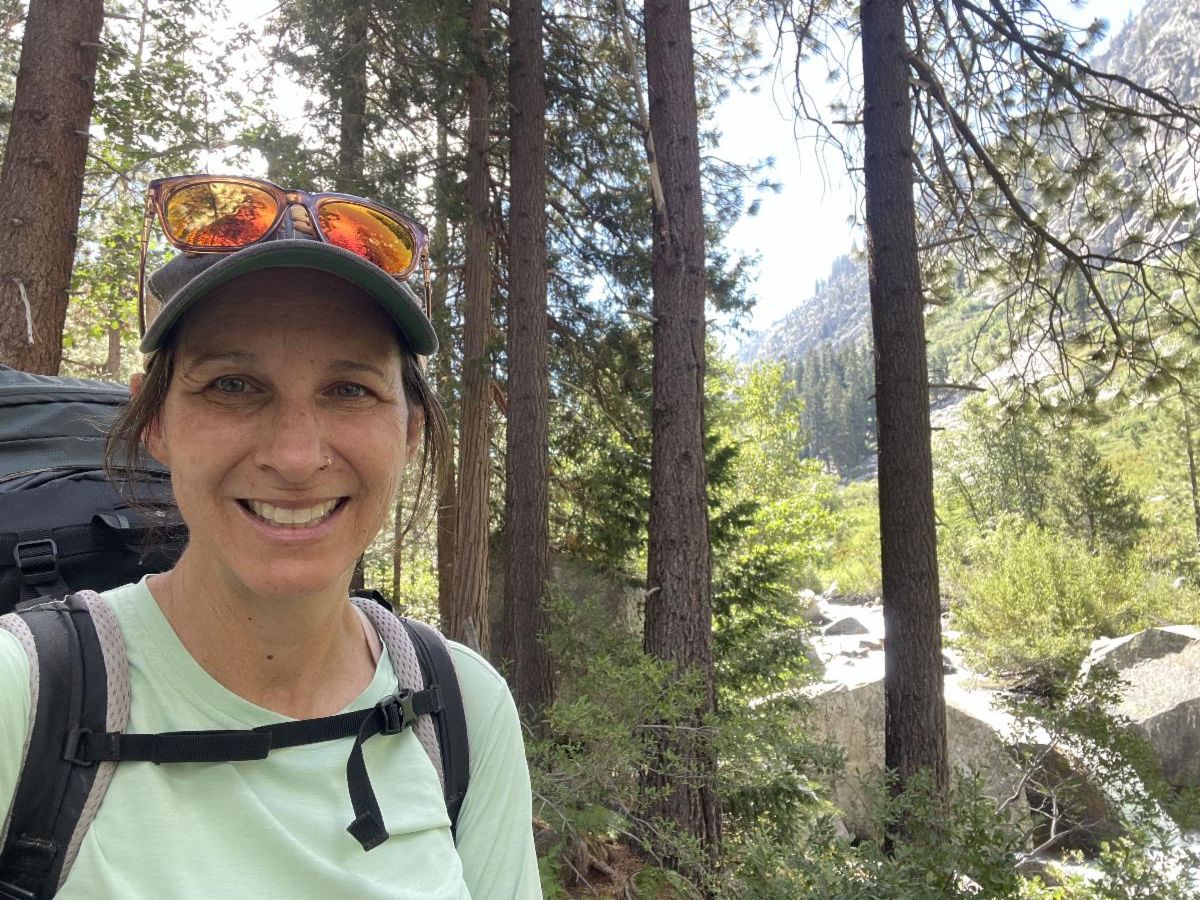
Kristin Polidoro (right) shares knowledge and a laugh while tabling for Santa Clara Valley Open Space Authority

Certified California Naturalist finds fulfillment pivoting from tech sector to conservation

Attending the UC California Naturalist conference in 2022 helped changed the direction of Kristin Polidoro’s life. Though the Cupertino resident had never been involved with the program before, she took a chance and went to the conference anyway. The people she met there inspired her to pursue a California Naturalist certification through program partner West Valley College. And that opened doors to a new career in the conservation sector. Read Kristin’s story and register for the upcoming UC Environmental Stewards conference (Oct. 9-11).

 
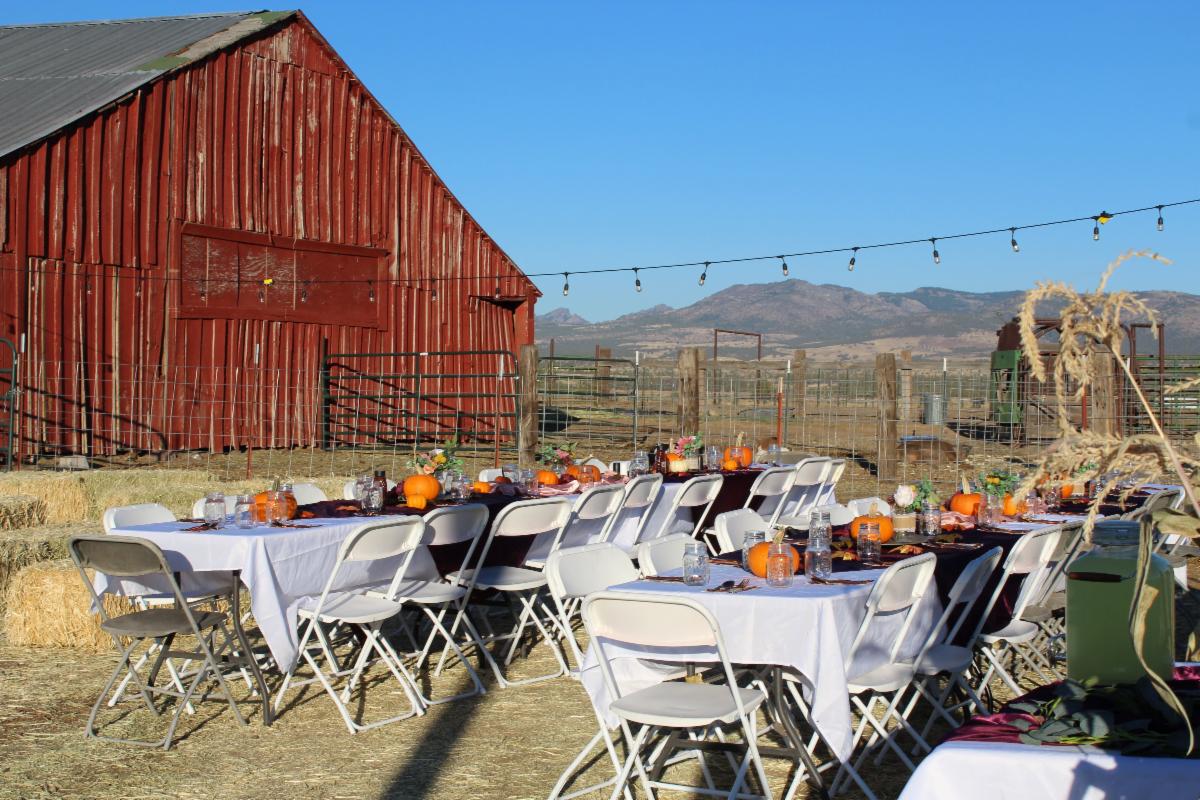
Tables are set at a farm-to-table agritourism event next to a red barn with mountains in the distance

Central Valley Agritourism Intensive Training

Begins Sept. 8

Fresno County Agricultural Commissioner Office

1720 S. Maple Avenue, Fresno, CA 93702

UC SAREP is partnering with F3 Local to provide participants with an introduction to agritourism and a supportive network to explore diversification through the development or expansion of an agritourism enterprise. The goal is to give participants a comprehensive understanding to make informed decisions about how to strengthen the resiliency and viability of their businesses. These in-person trainings will take place every Tuesday in September from 10 a.m. to noon. Register for training.


Central Coast Organic Agriculture Conference

Sept. 16, 8:45 a.m.-4 p.m.

The Octagon Barn

4400 Octagon Way, San Luis Obispo, CA 93401

Join the UC Organic Agriculture Institute and partners for a full day of insightful conversations, practical learning and collaborative problem-solving focused on organic agriculture on California’s Central Coast. This event brings together farmers, regional support providers, industry experts and community leaders to explore the unique challenges and opportunities facing Central Coast organic agriculture. Pre-conference farm tours will take place Sept. 15. Register for conference and tours.


Field Day at Sierra Foothill Research and Extension Center

Sept. 26, 8:30 a.m.-3 p.m.

Sierra Foothill REC

8279 Scott Forbes Road, Browns Valley, CA 95918

Join UC Cooperative Extension advisors and specialists for a day in the field, where we will tour the center and hear from researchers about their projects and findings. Topics include oak trees, beef cattle, climate change and soil amendments. Additional details will be emailed the week of the event. Learn more and register.


UC Environmental Stewards Conference

Oct. 9-11

Corwin Pavilion, UC Santa Barbara

6085 UCEN Road, Isla Vista, CA 93117

The UC Environmental Stewards program, which encompasses California Naturalists and Climate Stewards, welcomes everyone to join an inspirational and safe setting to learn to be better stewards of our environment. Engaging presentations, hands-on workshops and field trips will highlight local natural history, culture and the environment, with a focus on climate change and climate resilience work in California and participatory science, equity, inclusion and justice in conservation efforts. Learn more and register for conference.


See more UC ANR events


Social Media Posts of the Month
 
Screengrab of LinkedIn post about a workshop on drone applications with a photo of a hovering drone at the bottom
Screengrab of Instagram post with a blue explainer graphic about El Nino quoting climate scientist Daniel Swain
 

Follow us on Bluesky, X (Twitter), Facebook, Instagram, YouTube and LinkedIn

for more UC ANR highlights!


Subscribe to our Food blog, Green blog and Healthy Communities blog.


It is the policy of the University of California (UC) and the UC Division of Agriculture & Natural Resources not to engage in discrimination against or harassment of any person in any of its programs or activities.Inquiries regarding nondiscrimination policies may be directed to UC ANR, Affirmative Action Compliance & Title IX Officer, University of California, Agriculture and Natural Resources,
2801 Second Street, Davis, CA 95618, (530) 750-1280, tljordan@ucanr.edu.
 
University of California Agriculture and Natural Resources
2801 Second Street
Davis, CA 95618
Website: ucanr.edu
STAY CONNECTED
Facebook  X  Instagram  Linkedin  Youtube