|
Henrico Rec & Parks | (804) 501-PARK
| |
|
Henrico History
in Progress
| | |
Table of Contents:
- A Letter from Our History Team
- From the Collection
- Brook Road Revisited
- Henrico 250 Programs Spotlight
- Art in the Park
- Staff Spotlight
- Revolutionary Reminiscences: DuVal Family
- Down on the Farm
- Henrico County Historical Society
| | A Letter from Our History Team | | |
Welcome to the Spring 2026 edition of the Henrico History Newsletter!
Whether you're a longtime reader or joining us for the first time, thank you for your interest in Henrico County's rich and fascinating past. Over the past year, we've been thrilled to see growing enthusiasm for local history, both through this newsletter and at our in-person programs and exhibits. From lectures and special events to tours and community partnerships, your attendance, engagement, and feedback have been incredibly encouraging. It's gratifying to see so many people eager to learn more about the stories, places, and people that have shaped our county.
This issue offers another diverse collection of stories from Henrico's past and present. We continue our exploration of one of the county's most important transportation corridors with Part Two of “Brook Road Revisited.” We also take a closer look at Samuel DuVal and his family, whose contributions helped shape Henrico during the Revolutionary era and beyond.
As communities across Virginia continue to commemorate the 250th anniversary of the American Revolution, we provide updates on our upcoming summer Henrico 250 programs and events. You'll also get a first look at an exciting new mural project that will soon bring history and public art together at one of our parks.
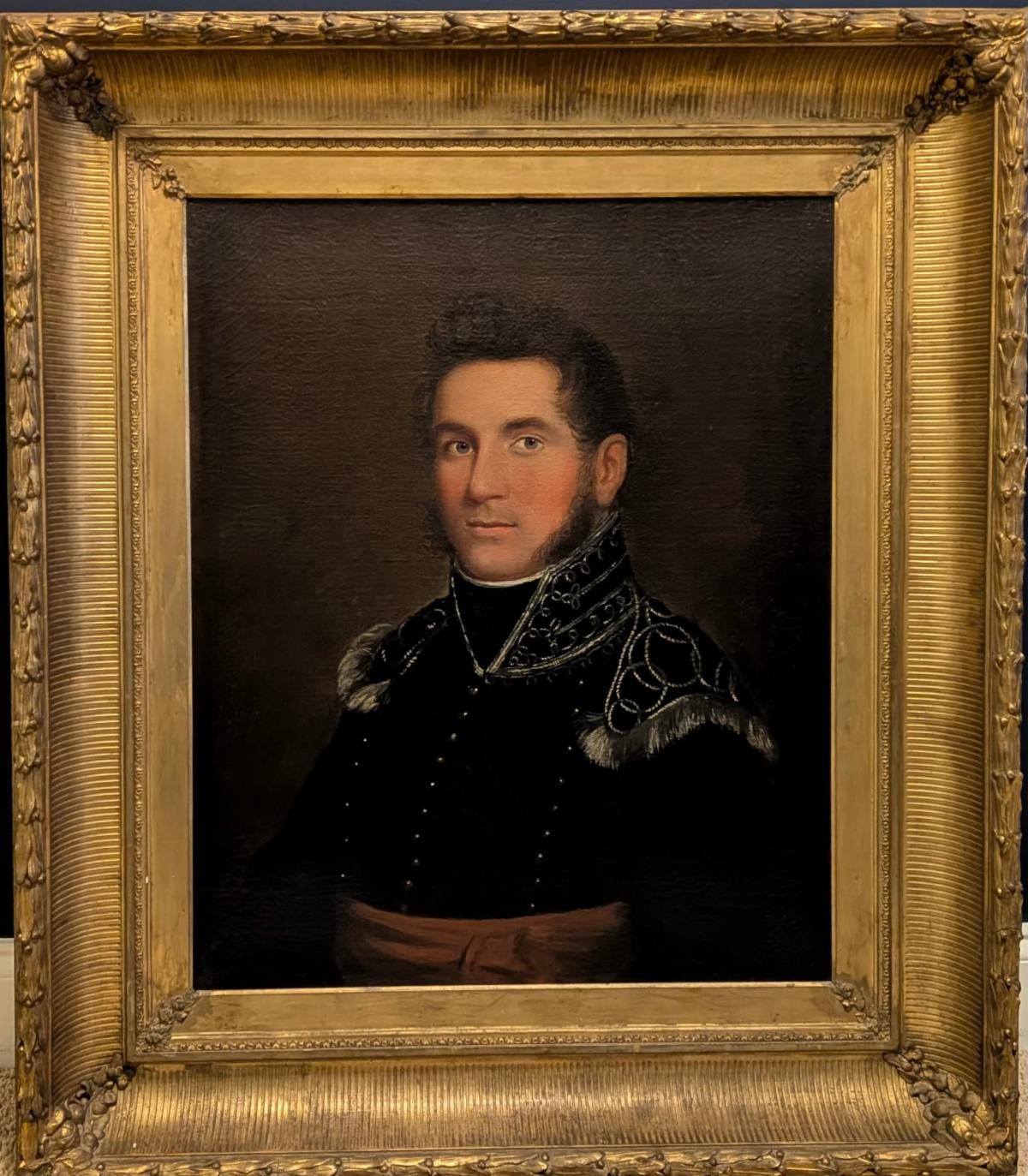
In our "From the Collection" feature, we highlight a remarkable recent acquisition and share the story of the individual depicted in the portrait, offering another glimpse into the people who helped shape our region's history. Of course, no issue would be complete without an update from one of the beloved residents of Meadow Farm.
As always, we hope these stories inspire you to explore, discover, and connect with Henrico's past. Thank you for being part of our growing community of history enthusiasts, and we look forward to seeing you at a future program or event.
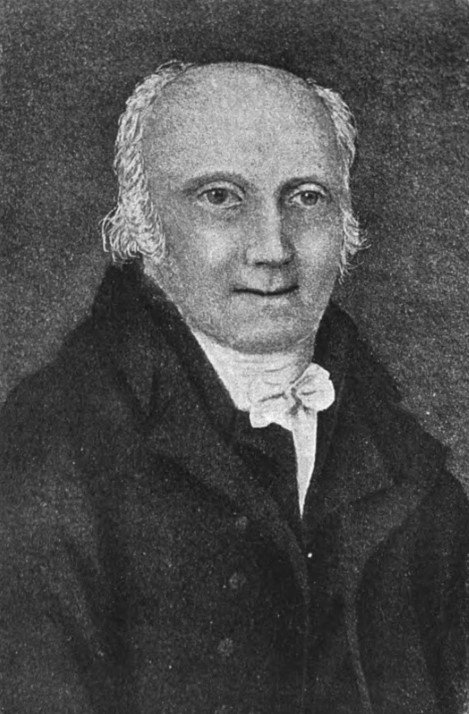
| | By Bryce Stanley and Joanna Hewitson | | One of the highlights of the spring for our collections team was the donation of a portrait of Lieutenant Beverly Turpin, a veteran of the War of 1812. Born in Varina in 1786, Turpin was the son of John and Hannah Turpin, proprietors of Turpin’s Tavern, once located along New Market Road in Henrico County. | | |
Following the death of their parents, Turpin and his siblings relocated to the Augusta, Georgia area, where they operated a tavern. In 1812, he was commissioned as a lieutenant in the United States Army’s Second Regiment of Light Dragoons. Units raised in Georgia served primarily in coastal defense against potential British incursions, while also protecting the frontier from Native American groups allied with the British.
While visiting family living at Warwick in Chesterfield County in 1818, Turpin died suddenly of a brief illness. In a letter relaying his death to Turpin’s sister, the author wrote “About two o’clock, he again went to his bed, became speechless, and in about 15 minutes, paid his Debt to nature without a struggle, or apparent pain.”
In January of 2026, a descendant of Lt. Turpin, currently living in South Carolina, contacted Henrico County Recreation & Parks about donating her ancestor’s portrait, stating that she "thought it appropriate that he be returned to his birthplace.” The portrait serves as one of the few pieces in the collection related to the War of 1812 to be used for future possible exhibits.
The New Market Road structure referred to as “Turpin’s Tavern” was located where the current Varina Library now stands, just south of the intersection with Pocahontas Parkway. While there is no documentary evidence that the building served as a tavern, the Turpin family did own the property as early as 1687.
By the time the building was first surveyed in 1937, it had already been significantly altered to the point that verifying its construction date was left to conjecture and local lore. The fact that Beverly Turpin verifiably ran a tavern after moving to Georgia lends credence to the fact that his father may have done the same here in Henrico.
| | Brook Road Revisited, Part 2 | | |
Our previous journey exploring the quarter mile of Brook Road near Wilmer Avenue and Azalea Avenue focused on the 19th century history of the prominent Stewart family and the development of a community, including Emmanuel church and Brook school. The 20th century development along this same stretch of Brook Road changed as the population eagerly accepted the automobile, the travel it offered and the need for places to eat, sleep, and shop.
The U. S. Highway system dates back to 1926 when “the Bureau of Public Roads launched the nation’s first Federal highway system.”i Historic Route 1 is the oldest highway serving the East Coast. In 1913, The United Daughters of the Confederacy (UDC) conceived the Jefferson Davis Highway along the same series of roads in Virginia that U. S. Route 1 later followed. The Jefferson Davis Highway in Virginia was added to the state highway system in 1918 as State Route 1. The Virginia General Assembly officially designated the UDC’s route as the Jefferson Davis Memorial Highway in 1922. There is a UDC stone marker in the median past Belmont Park and Upham Creek on Route 1. By the late 1970s, most of I-95 had been completed, superseding U. S. Route 1 as the main East Coast transportation corridor and relegating most of the older highway to local road status. Through the early years, “as the highway became busier, the roadbed received improvements, and the infrastructure of support businesses - especially those offering fuel, lodging, and food that lined its right of way - expanded.”ii
| | |
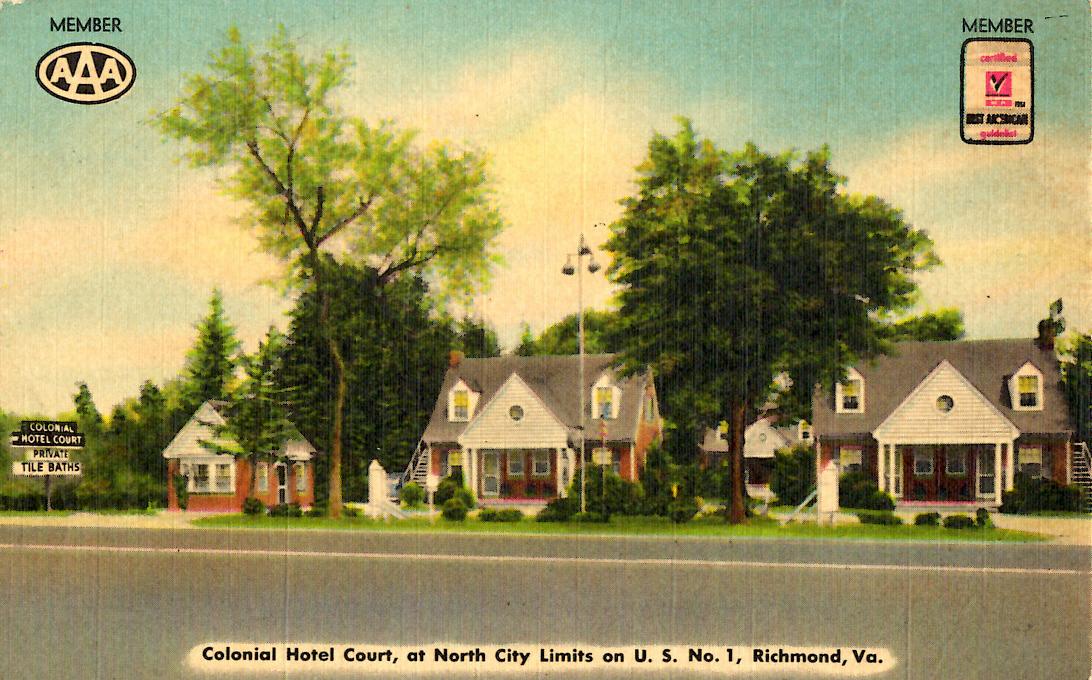
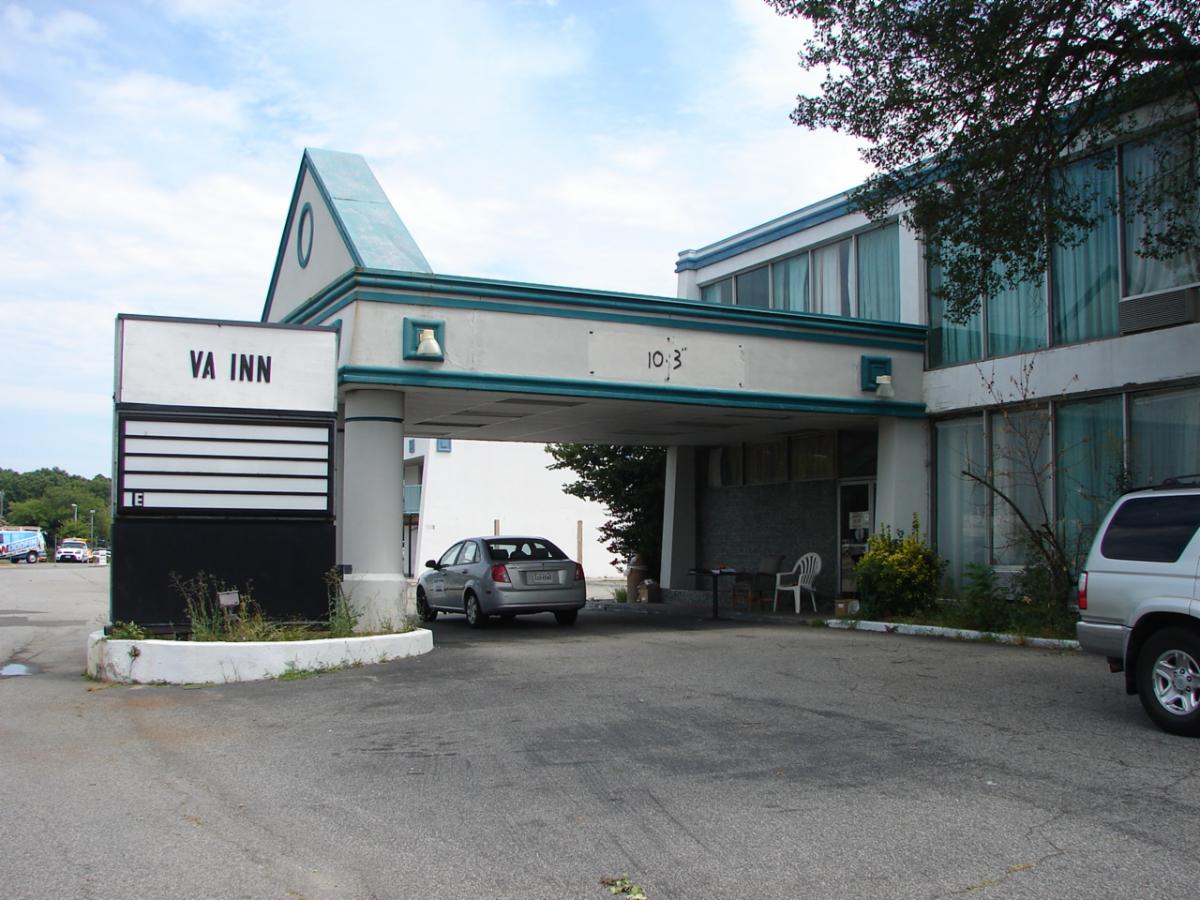
Hotels and gas stations cropped up along Washington Highway, as it later became known, filling the need for the travelers on the first north/south route on the east coast. Among those located in this stretch of Brook Road were Standard Oil gas stations, tourist camps and Holiday Courts. The Colonial Auto Court, Holiday Inn North, and the Virginia Inn were once located in the area of the now empty Walmart Neighborhood Market and the new Popeyes. Locals would frequent the Brookside Seafood restaurant that replaced C. C. Chicano’s adjoining the Holiday Inn North.
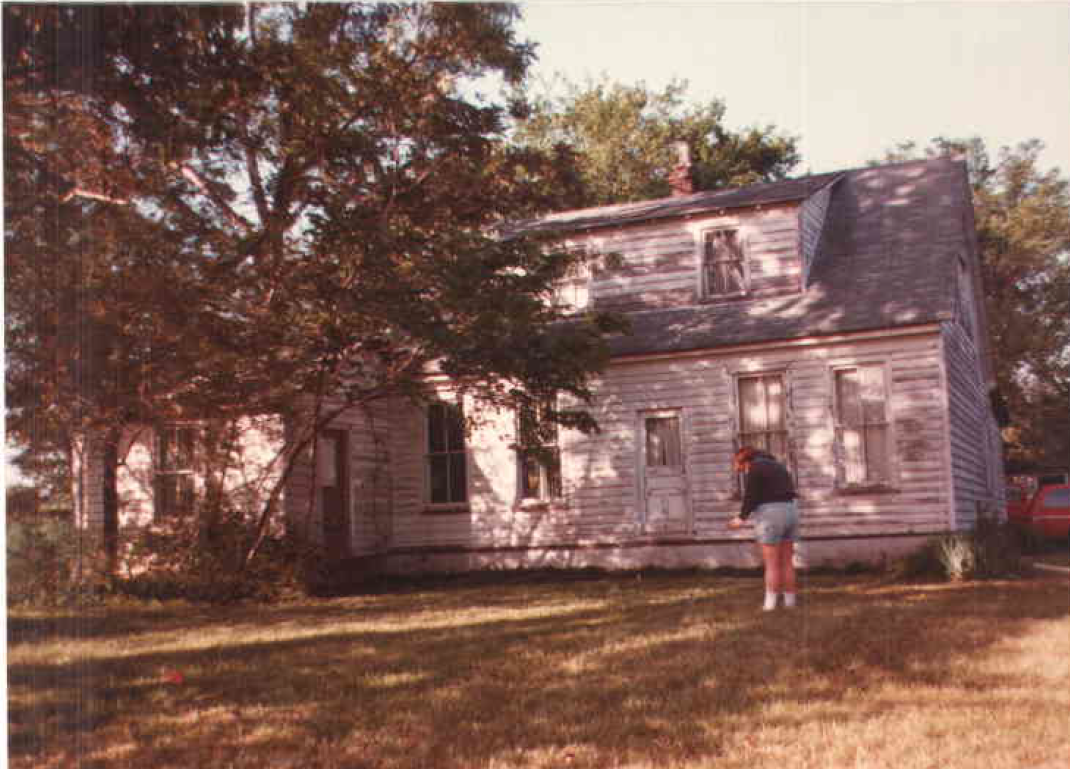
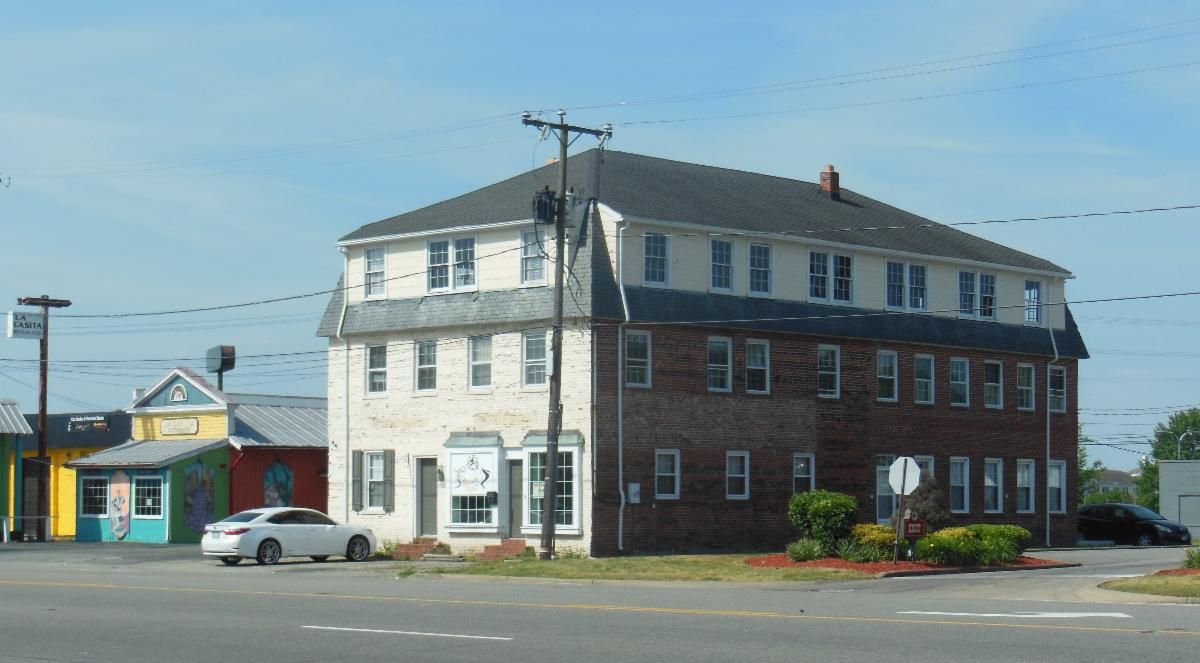
A prominent three-story building at 5208 Brook Road, now home to Nzure Beauty Bar, has a long and colorful history shaped by several notable owners and businesses. In the early 1920s, carpenter and contractor Vivian Thomas Dudley (1895–1966) purchased the property and began construction on the building. He and his wife, Lennie, later opened the Green Lantern Inn, a small restaurant and gathering place. In 1935, the Dudleys became entangled in enforcement efforts tied to Virginia’s newly established Alcoholic Beverage Control (ABC) system, when state authorities raided several establishments accused of competing with state liquor stores. During the raid, officers confiscated a half gallon of whiskey and arrested Lennie Dudley. The couple later operated a boarding house on the property before selling it to Madison and Lucille Shamburger in 1954. Vivian Dudley, a World War II veteran, and his wife were later buried at Fort Harrison National Cemetery.
| |
Shamburger Antiques and Reproductions (operated 1953-2018) was a family business started by Madison E. Shamburger II (1898-1972). He came to Richmond during the Depression after having been owner of a mercantile store, part owner of an Oldsmobile dealership, and part owner in a chair manufacturing company in Zebulon, NC. When the Depression hit, he loaded his truck with bent wood kitchen chairs and traveled as far south as Florida selling his chairs for 35 cents apiece. Returning to Zebulon, he again loaded his truck and headed north. When he arrived in Richmond, he found it less affected by the Depression and decided to stay and continue in the furniture business.
One day a former Navy cabinet maker, down on his luck, was offered a meal and in return was asked to repair some chairs as payment. “Sham” found the cabinet maker could both make and repair furniture. This, along with considering that Richmond families could afford better furniture, gave him the incentive to start “Shamburger’s” and he found good craftsman to apply the styles of Hepplewhite, Chippendale, and others to household furniture. His wife, Lucille, predeceased her husband and the property passed to his two children, Madison E. Shamburger III and Elizabeth Shamburger. His daughter sold the property in 2018.
| | |
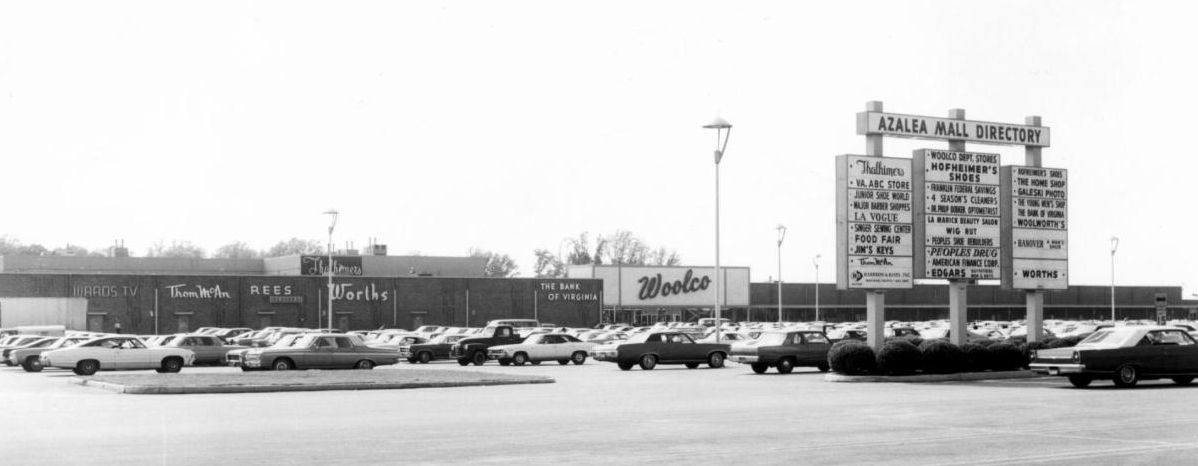
The former Azalea Mall occupied a 48-acre site bordered by Brook Road, Dumbarton Road, and Westbrook Avenue. Most of the property lay within Henrico County, while a portion extended into the City of Richmond. Opened in 1962, the mall operated for more than three decades before permanently closing in 1995. The structure was demolished in 1999, although a garden center continues to operate on part of the site today.
Azalea Mall originally featured two anchor stores: Thalhimers and one of the first Woolco locations in the country. Other early tenants included Food Fair, F.W. Woolworth, Peoples Drug, Hofheimer’s Shoes, The Home Shop, and Wards TV, which later became Circuit City. An adjacent bowling alley also served as a popular community gathering place.
The mall’s decline began after May Department Stores, the parent company of Thalhimers, announced the closure of its Azalea Mall location. Other retailers soon followed, accelerating the mall’s deterioration and eventual closure.
| | |
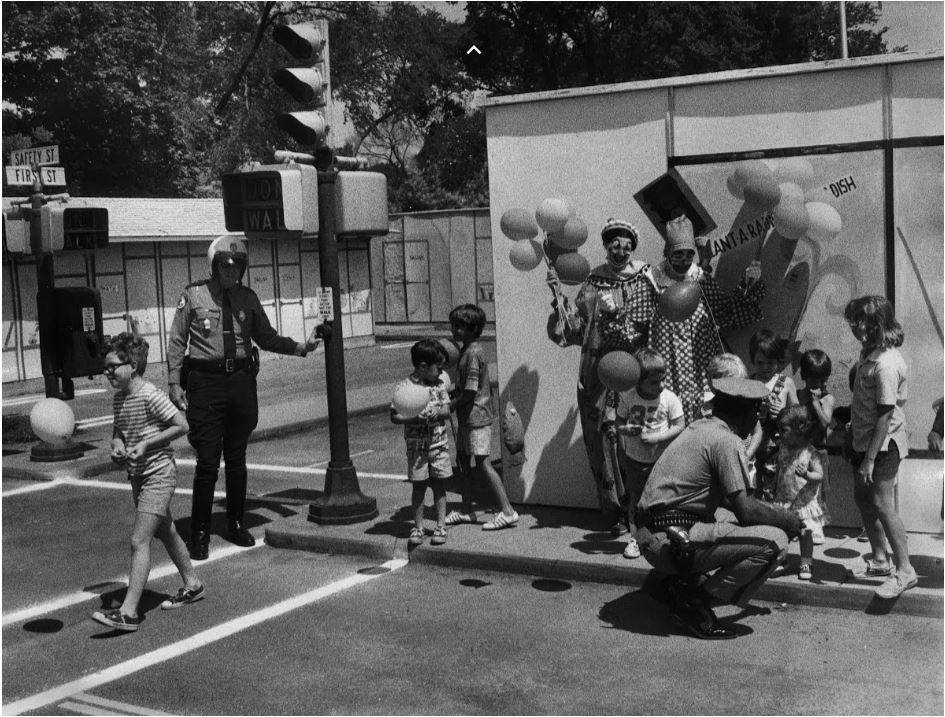
The mall property also housed "Safetytown," which was a child-sized village set up to teach school children how to cross the street safely as well as other safety tips. In recent years, Westminster Canterbury Richmond, established in 1975, has been expanding its physical campus, including purchasing land from the former Azalea Mall property to build additional independent living residences. Most of the property now stands vacant.
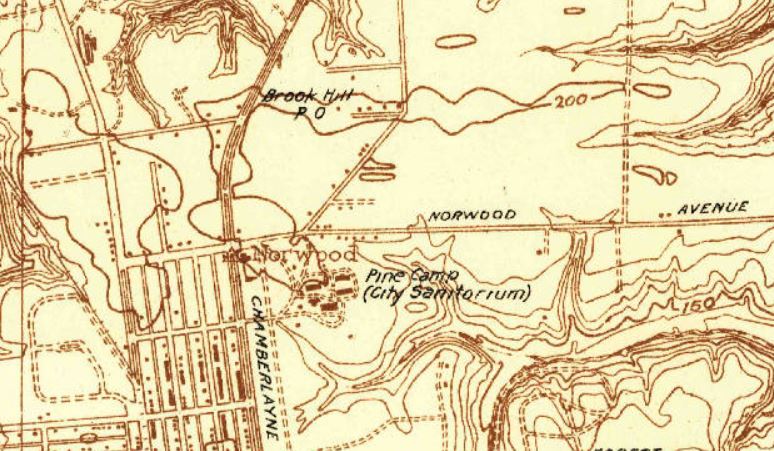
At the intersection of Brook Road near the Henrico–Richmond line is Azalea Avenue, which takes its name from the former Azalea Mall. In the 18th century, however, the roadway was known as Scott’s or Storrs Road, referencing early families who lived along the route east toward Meadow Bridge Road. By the time of the Civil War, the road had become widely known as the “Military Road.”
Evidence of this usage appears in a letter written by Major James E. Robertson of the 20th Virginia Battalion Heavy Artillery on May 18, 1864, and published in the May 20 edition of the Richmond Semi-Weekly Enquirer. In describing military action near Brook Church, Robertson wrote, “Skirmishing commenced and the enemy was driven back until he reached the military road opposite Brook church.” In another passage, he noted, “The enemy gave way, moving down the military road towards the Meadow Bridge…” Numerous Civil War accounts and later local histories similarly referred to this route as the Military Road.
| |
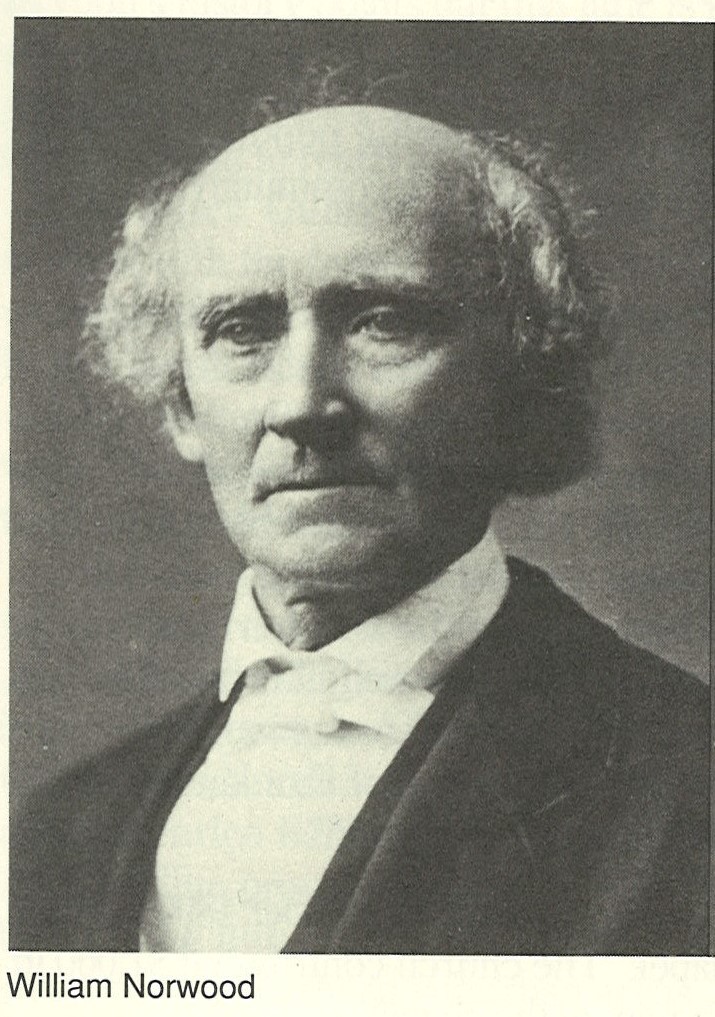
In the early 20th century, Azalea Avenue was known as Norwood Avenue, named for the Rev. William Norwood. A native of North Carolina, Norwood served as the fourth rector of Emmanuel Church. While serving as assistant rector of Monumental Church in 1837, he became acquainted with John and Daniel Kerr Stewart of Brook Hill and officiated the wedding of John Stewart and Amanda Williamson.
During his career, Norwood served at several prominent Virginia churches, including as the first rector of St. Paul's Church from 1845 to 1849. He also ministered at Old Church in Hanover County, now known as Immanuel Church, and at St. Peter's Church Richmond. During part of the Civil War, he served at St. John's Church before coming to Emmanuel Church on Brook Road in 1868.
In addition to his ministry, Norwood operated a school for boys and girls known as Norwood’s University School for many years. Although he resigned from Emmanuel Church in 1885, he remained in Richmond, living next door to historic St. Paul’s Church until his death in 1887.
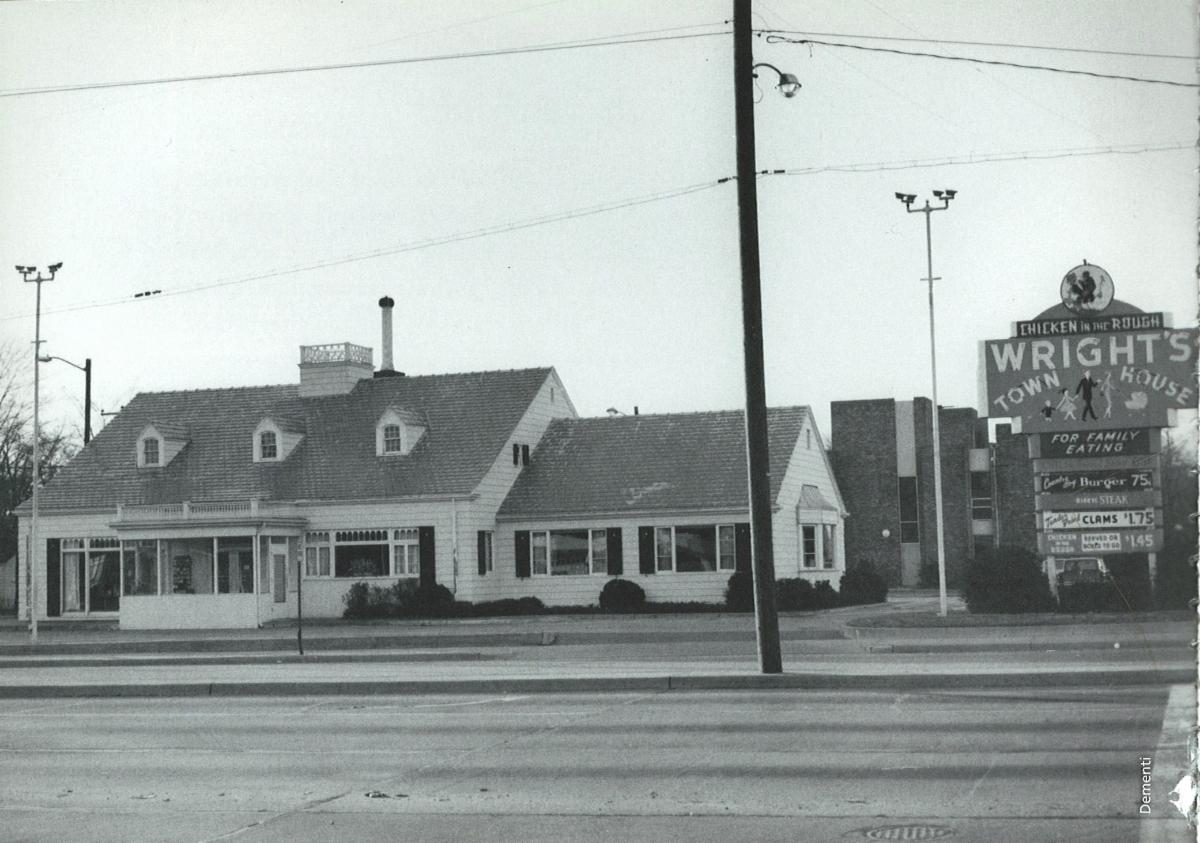
| | One last landmark not to be left out is Wright’s Town House Restaurant known for its country décor and home cooking. The “Chicken-in-the-Rough” being the signature meal. Arthur and Pearl Wright operated several locations, one of which was originally in downtown Richmond until the business moved to Azalea Avenue and Brook Road. The building was originally a Howard Johnsons restaurant until it was converted in 1962 into Wright’s Townhouse. The building was razed for a Walgreens, and the site is presently occupied by an Orange Beauty supply store. | | Travelers still make their way north and south on Route 1, finding an ever-changing landscape of business, restaurants, shops, and gas stations reflecting the 21st Century. | |
Sources:
i "Route" 66 Overview," National Park Service, accessed 25 March 2026
ii Ibid
ii Richmond Times Dispatch 1935_01-22_15 ABC Liquor Raids Net Five Arrests
"Emmanuel Church-Brook Hill 1860-1985 A Parish History" by Stephen E. Row and The Emmanuel Church History Committee Richmond 1988
| | Henrico 250 Programs Spotlight | | |
By Joe Rizzo
Our history team has developed a variety of fascinating research projects and programs related to the 250th anniversary of the American Revolution, and we are thrilled by the growing enthusiasm and interest in 250th-themed programming throughout our community.
This spring, we hosted a history-themed 5K at Osborne Landing, the site of a Revolutionary War naval engagement; welcomed a first-person portrayal of Lord Dunmore; highlighted the remarkable story of London Pleasants, who gained his freedom by joining the British during the war; and continued our outreach efforts through a 250th-themed Historians on Tap program in partnership with the American Battlefield Trust at The Veil Brewing Co.
The focus on the 250th anniversary of the Declaration of Independence will continue this summer with Henrico’s Independence Day celebrations. Festivities begin on July 3 at Dorey Park with fireworks and a concert, followed by our annual July 4th celebration at Crump Park featuring the Richmond Symphony, a laser light show, and our popular History Zone, where visitors can interact with reenactors and costumed interpreters.
The commemoration of America’s 250th anniversary does not end with Independence Day, however. We are excited to continue offering diverse programs that explore the people, events, and ideas that shaped the Revolutionary era. Upcoming programs include a look at the life and legacy of the infamous “Bloody Ban” Tarleton, a book club discussion of David McCullough’s 1776, and the return of our Real to Reel series at Henrico Theatre. This will feature the musical 1776 along with discussion by historian Maureen Santelli, who will examine the production through a historical lens. We will also have the Virginia Museum of History & Culture’s traveling exhibit, We The People, on display at our Rec Centers from July 6 to August 17. This powerful exhibit presents the deeply personal narratives of individuals born across the world who sought freedom, opportunity and refuge by immigrating to the United States. The full schedule of its locations is in our summer program guide and on our website.
As the nation approaches July 4, 2026, our history division remains committed to sharing the stories of our community’s role in the American Revolution and helping residents connect with this once-in-a-generation commemoration. We hope to see you this summer!
| | |
Spring has sprung and we’re already staring at two of our department’s largest events right in the teeth: Juneteenth and July 4th! It is no coincidence that these two events are steeped in history and traditions. Juneteenth is arguably one of our country’s oldest holidays, having been celebrated regionally since 1865. But this year’s July 4th has a very special meaning. It is the 250th anniversary of the signing of the Declaration of Independence and we are celebrating this semiquincentennial right! Not only are we hosting our annual July 4th celebration at Crump Park on July 4, we’re hosting a July 3 “pre-party” at Dorey Park! A celebration too big to be contained to one day! But I digress…
In honor of the 250th, as a department, we sought and were awarded a grant through Virginia Tech and the Virginia Association of Museums (VAM) Public Exhibitions, Displays, Art, and Logos (PEDAL) program. This initiative awarded us funds for an exhibit to call attention to regional and local features along the Bike 76 trail, which runs through Henrico County. The Bike 76 trail was created in 1976 for the nation’s bicentennial and has effectively been known as “Bikecentennial!”
The site chosen for this exhibit was Four Mile Creek, the Capital Bike Trail’s busiest trailhead out in Varina on New Market Road (Route 5). For a number of reasons, it was important to engage in this park. First, because of the large user group there. Second, it is a county park which has a history of Revolutionary War. Third, there is proximity access to interstate 295. Lastly, but most important, this park is closely located to heavy American Revolution activity, and a lot of stories of the area. One of the most prominent stories comes after the war, the landmark Pleasants v. Pleasants court case of 1799 in which Robert Pleasants took his family members to court to honor the stipulations of his father John Pleasants’ will of 1771, stipulating that his enslaved workers be freed upon his death. The resulting verdict resulted in the creation of the free black community of Gravel Hill.
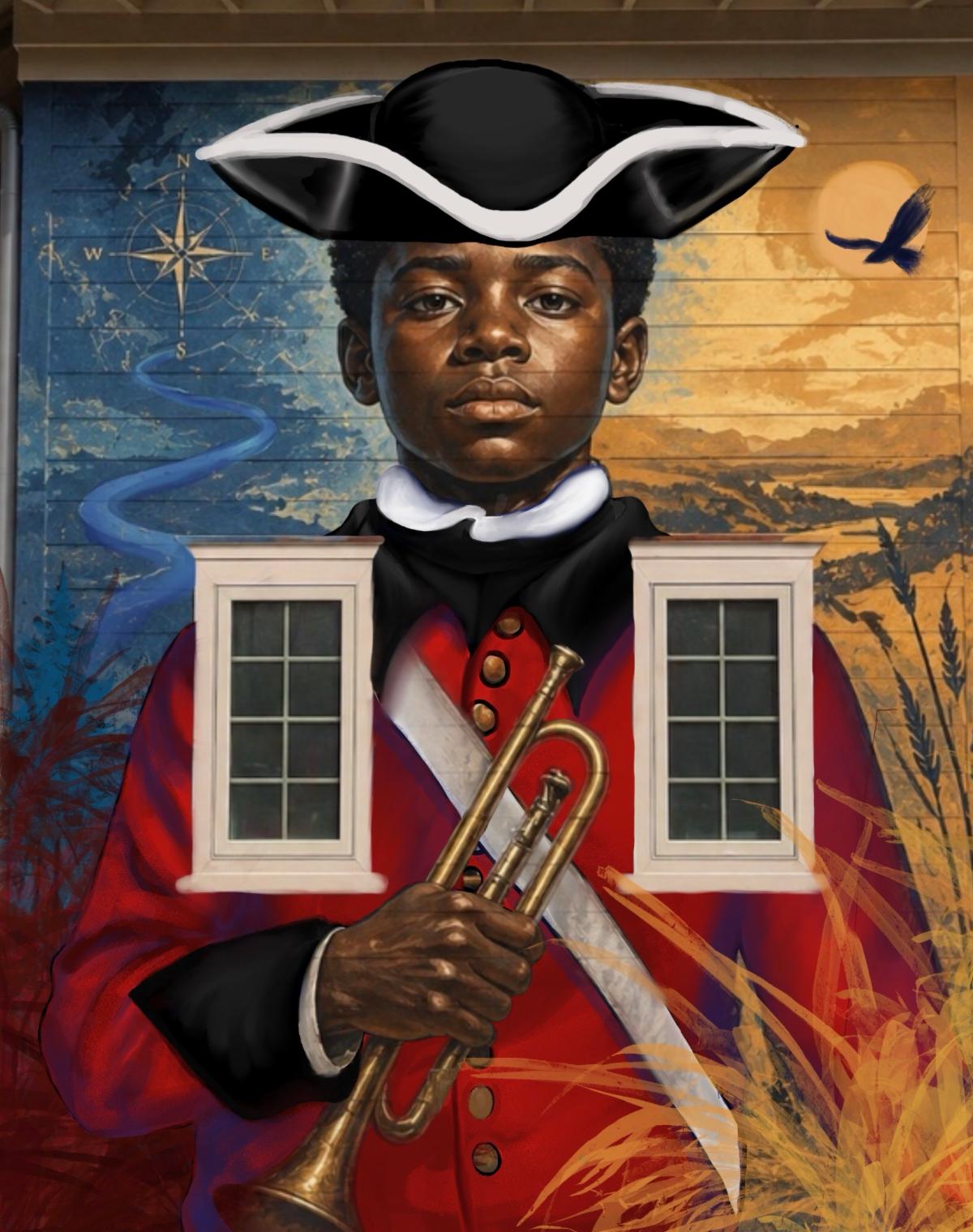
But a story that is closely linked to the Pleasants family is probably one you haven’t heard before. In January 1781, Benedict Arnold (yes, that Benedict Arnold) crossed through Henrico County headed for Richmond, trying to capture Governor Thomas Jefferson. Along the way, Arnold’s troops raided Pleasants’ Curles Neck Plantation, and in addition to supplies, Arnold also gained more troops from Pleasants enslaved population. Among them was 14-year-old London, enslaved to Robert Pleasants. London self-emancipated from the Pleasants family, enlisting to Arnold’s “American Legion,” an entire battalion of American-born loyalists joining the “winning side.” London served as a trumpeter, no doubt signaling troop maneuvers, marching orders, general orders, and such. London would serve alongside Arnold’s division through the end of the war, being noted in New York City on September 18, 1783, boarding the ship Elizabeth bound for St. John’s (Newfoundland). So London found his own route to freedom.
Yet London’s story in Henrico County is being brought back to the forefront through a public mural at Four Mile Creek, adding to the amenities of the park, and giving those who aren’t riding bicycles “cause to pause” and stop in to visit the park. After receiving numerous proposals from a number of local artists, we selected Jowarnise Caston as the muralist. Jowarnise is working diligently on the concept, and will no doubt deliver a superior experience at Four Mile Creek.
| | Staff Spotlight: Kim Schmidtmann | | |
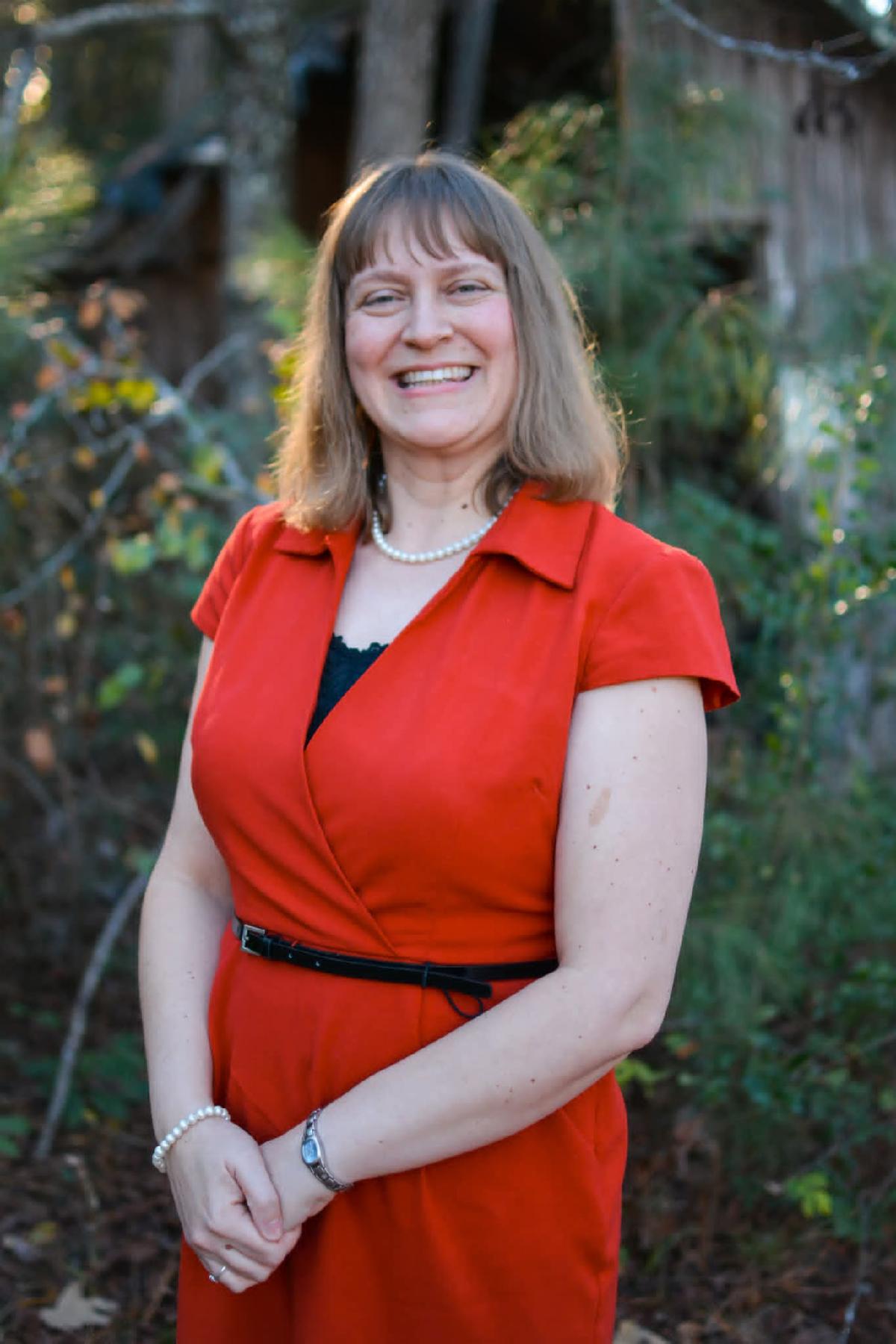
Hi everyone! My name is Kim Schmidtmann and for the last three years, I’ve been the history facility coordinator with Henrico Recreation and Parks. This title probably doesn’t tell you anything about what my day to day job is, but I do everything from scheduling tours, field trips, and outreaches to overseeing staff to setting up tents, tables, and chairs to managing rentals at Armour House and Antioch School Community Center to translating animal language to English for our newsletter to creating and running programs - have you been to my book club that I hold every other month?
I grew up outside the small town of Chatham, about halfway between the cities of Lynchburg and Danville, in south central Virginia. I have always loved history and initially thought I would be a university professor. I discovered quickly that path was not for me though and decided to go into the museum field instead. I’ve worked in museums for almost twenty years and started my career down Route 5 at Shirley Plantation. I’ve done a bit of everything in my career from collections management to programming to visitor services.
I live in the country with my husband, Scott, my son, Sirius, our dog, Celeste, and three cats, Piper, Bumi, and Tenzin. When I’m not working, you’ll find me reading with a cat in my lap.
| | Revolutionary Reminiscences: DuVal Family | | |
Seeking Freedom
Seventy-five years before the American Revolutionary War began, Daniel DuVal boarded a ship bound for the New World. His ship was part of a fleet of four vessels sailing with about 200 French Protestant refugees seeking freedom to worship and to escape King Louis XIV’s harsh policies. Coming ashore on the York River, Daniel started his new life in Gloucester County as an architect and joiner where he quickly rose in status in the community. Eventually, Daniel married another French Protestant, Philadelphia Dubois and they began a new American generation with four sons and one daughter.
Planting Henrico Roots
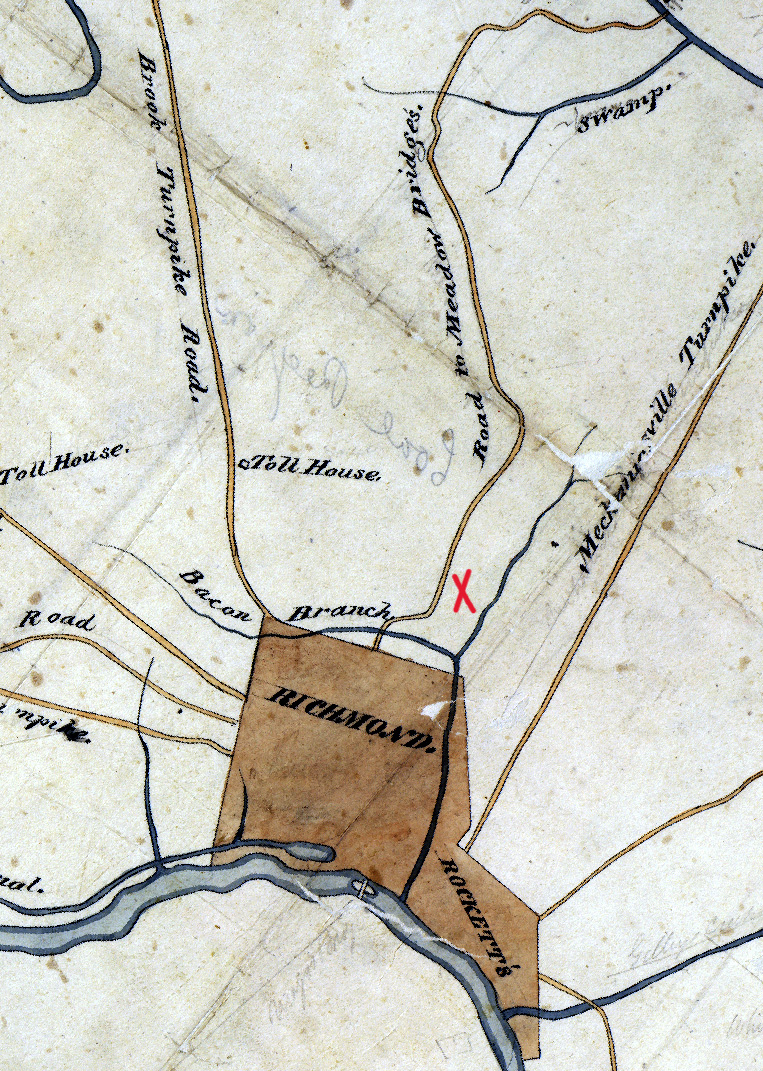
Daniel must have instilled a strong sense of purpose into his children – a commitment for liberty, a drive to take advantage of the many opportunities the Colony of Virginia had to offer, and a savvy business sense. Two of his sons left Gloucester County, where they were born and raised, seeking new opportunities to the west. In 1745, Samuel bought 300 hundred acres along Shockoe Creek in what is today the neighborhood of Chestnut Hill in the City of Richmond.
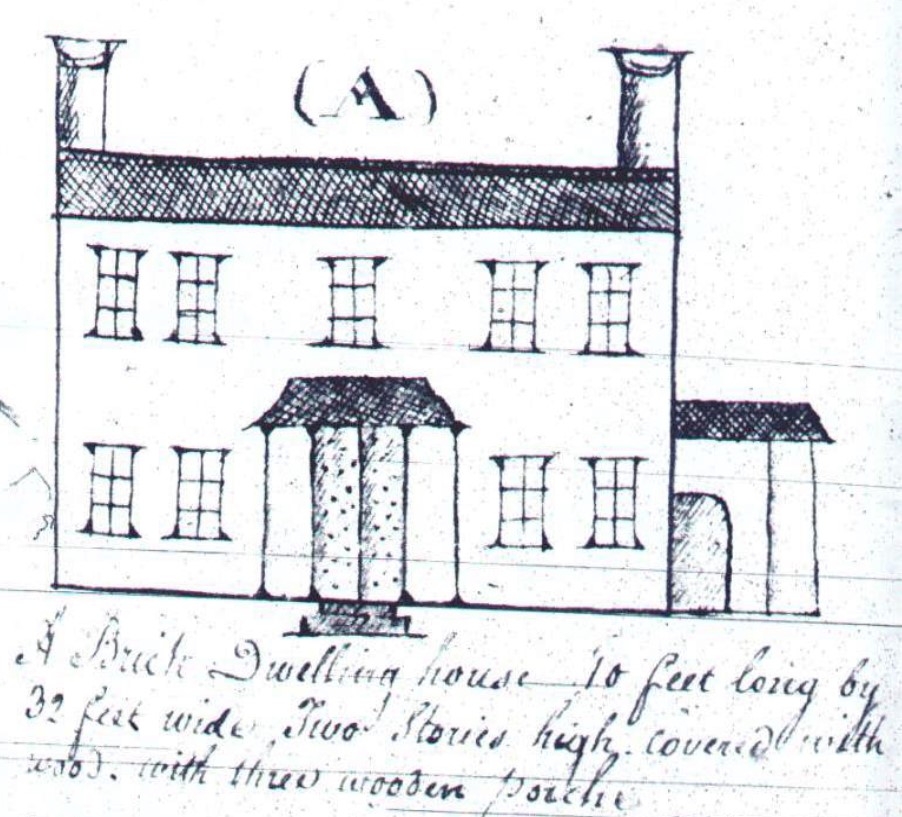
| | The "X" shows the approximate location of Mount Comfort on the 1819 Wood's Map of Henrico (above); Sketch of the main dwelling from the Mutual Assurance Society (below). Both images from the Library of Virginia. | | |
In the 1750s, Samuel continued to acquire land, buying hundreds of acres in New Kent, coal pits in Chesterfield near Falling Creek, lots in the town of Richmond, plus 1,250 acres in Lunenburg County. Samuel added another 100 acres to his main farm, naming it Mount Comfort. He also acquired about 1,400 acres in western Henrico around the Deep Run area, which included coal pits. In addition, he continued to diversify his business dealings by building houses and wharves at Rockett’s Landing and renting out a blacksmith shop, tailor’s shop, and tavern at Westham. When Henrico moved its court from Varina to Richmond in 1752, DuVal was one of the trustees.
In 1757, Samuel’s brother, Benjamin, joined him in Henrico. Benjamin purchased 380 acres along Henrico’s western border on Tuckahoe Creek. The county appointed Benjamin as an official surveyor in 1764 and as a county justice the following year. Benjamin’s wife, Anne, gave birth to at least eight children between 1745-1766. Anne does not appear in documents, so it is possible she died soon after the birth of her last child and little is known about most of his children, with some most likely not living to adulthood. Benjamin Jr. was only five years old when his father died in 1770 and his uncle Samuel and cousin William assumed guardianship. Another son, Joseph, was about 25 years old at the outbreak of fighting in 1775, but it doesn’t appear that he joined the military. Joseph’s contribution to the American cause appears in a claim for 20 bushels of wheat to the Continental Army dating to about 1781. Benjamin’s family line would make many contributions to growing Henrico and Richmond after the war, but that’s a story for another time.
Protests Pave the Way
Henrico held an election for representatives to the Virginia General Assembly in 1771. Initially, Richard Adams and Richard Randolph were declared the winners. However, Samuel Sr. contested the election and petitioned the General Assembly. The original election date had to be postponed due to bad weather and many voters were absent. The committee on elections agreed with DuVal and rescheduled the election for March 10, 1772. DuVal’s protest paid off and won him a seat to represent Henrico in the General Assembly. Little did DuVal know that a protest on a much bigger scale was coming.
1774: Brewing a Revolution
In May 1774, Samuel DuVal traveled to Williamsburg to attend the House of Burgesses. Outrage over Parliament’s Coercive Acts, passed in response to the Boston Tea Party, led several Burgesses, including Patrick Henry and Thomas Jefferson, to propose a day of fasting and prayer as a political protest. After the measure passed, Governor Lord Dunmore dissolved the assembly. Days later, DuVal joined other Virginia leaders at Raleigh Tavern, where they signed an association protesting British taxation, supporting a boycott of British goods, and calling for a continental congress.
Back in Henrico, local freeholders met at the courthouse on July 15 and approved a set of resolutions condemning Parliament’s actions. Richard Adams and Samuel DuVal were re-elected as the county’s representatives, and the Henrico Resolves appeared in the Virginia Gazette later that month.
In August, DuVal attended Virginia’s First Convention, which selected delegates to the First Continental Congress and endorsed a colony-wide boycott of British goods. To enforce the boycott, counties established local committees. On November 17, Henrico voters elected DuVal to serve on the county’s committee, which monitored compliance with the association and helped organize Virginia’s growing resistance to British authority.
1775: Revolution Ramps Up
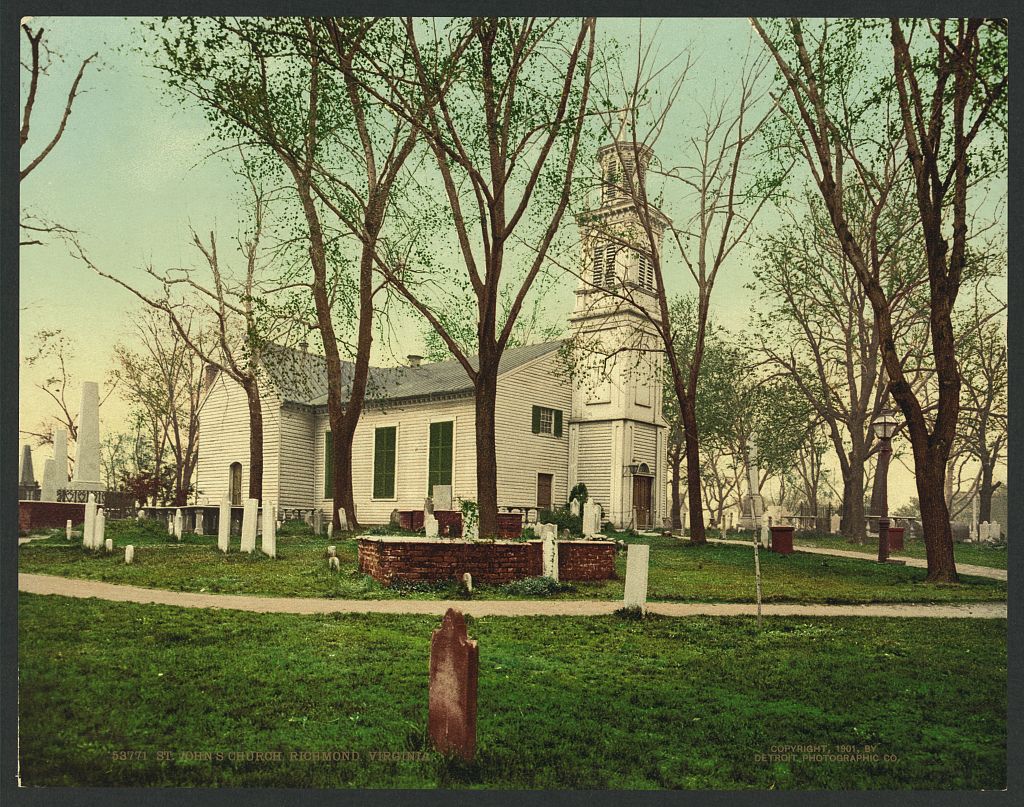
Colonists welcomed the new year which would bring the revolution into reality, changing words into actions. Throughout January, Samuel DuVal sat in a committee meeting with other elected Henrico representatives to discuss the fate of goods that recently arrived in several ships. A subcommittee, which included Samuel, was appointed to oversee the sale of bushels of salt at public auctions. Salt was critical to the colony and leaders wished to prevent hoarding and control inflation. On March 20, Samuel had less miles to travel to attend Virginia’s Second Convention. The Henrico Parish Church, now known as St. John’s, hosted delegates for a week. This convention explored many different topics. They drafted a resolution to thank soldiers and Governor Dunmore for their service in his war with indigenous tribes to the west whilst also authorizing defense preparations against Britain. Given DuVal’s personal business interests in coal, he probably eagerly voiced support for investigating new ways to encourage Virginia industry. Most likely, he was present for the most famous day of the convention on March 23 when Patrick Henry delivered his renowned speech.
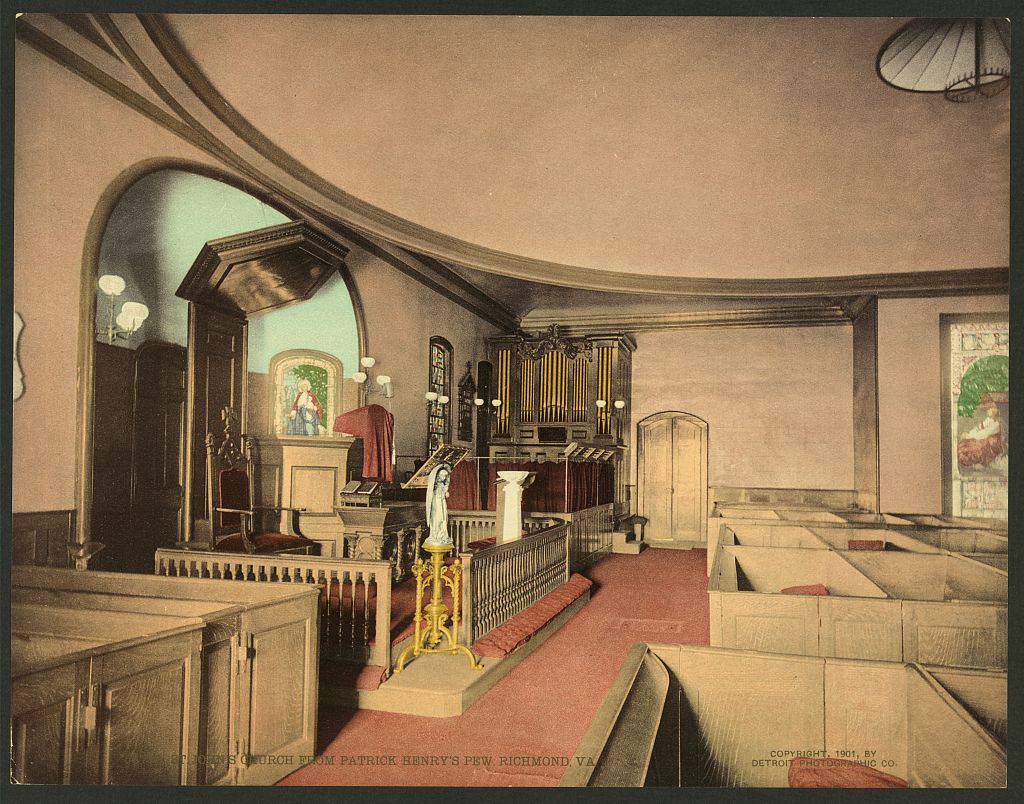
| | This exterior view of St. John's Church (left) and interior view's from the front pew (right) are from 1901 photochrom prints in Library of Congress' collection. | | |
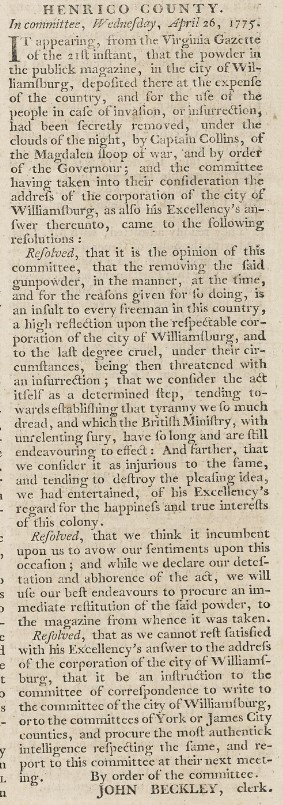
Massachusetts colonists clashed with British troops in the first outbreak of fighting at Lexington and Concord on April 19. News of the clash did not reach Virginia until early May. Two days after the battles, Virginia’s Governor Dunmore ordered gunpowder seized from the colony’s magazine in Williamsburg. Five days later, Henrico’s committee met and crafted a response to the gunpowder incident which Purdie’s April 28 edition of the Virginia Gazette printed.
Delaying his journey to Philadelphia to attend the Second Continental Congress, Patrick Henry met with Hanover County’s committee and militia to discuss a plan. Nearly 150 men from Hanover and neighboring counties gathered, including Samuel DuVal’s oldest son, William. They marched to Doncastle’s Ordinary in James City County. On May 3, William was encamped there awaiting negotiations over the seized gunpowder. The next day, payment for the gunpowder arrived and Henry dismissed the men. William’s eight to nine days in service proved more exciting as a tense political duel than military action.
The Henrico Resolves, The Virginia Gazette, supplement, 28 April 1775, page 5.
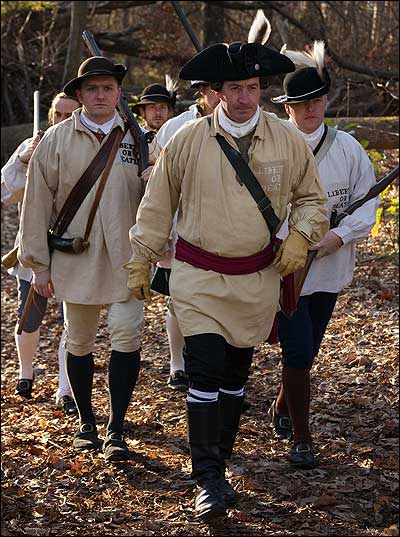
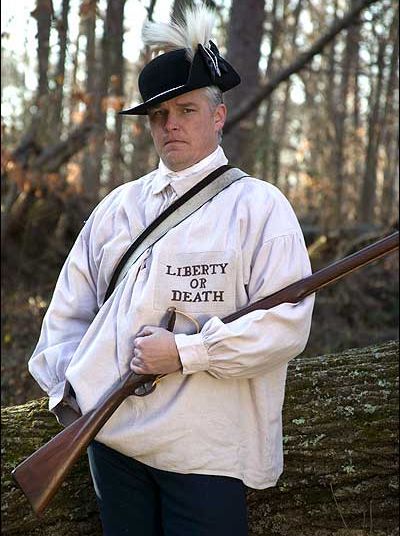
| | Reenactors at Colonial Williamsburg portray Patrick Henry and the militia. William may have worn a similar outfit with the "Liberty or Death" slogan on his shirt. Click here for image source. | | |
Lieutenant William DuVal would barely be home a month before he was sent with the Henrico militia to Williamsburg to monitor British movements for June and July. The Third Virginia Convention met in Henrico from July 17 to August 26. However, this time Samuel DuVal was not re-elected to continue representing Henrico. He was replaced by his long-time rival, Richard Randolph. The convention approved the creation of two regiments. William was appointed to the rank of captain of a battalion which included men from Henrico, Hanover, Louisa, and Goochland. From fall 1775 to spring 1776, William’s company served near Hampton.
The Homefront: 1776-1780
While Daniel DuVal’s wartime activities increased with American military actions, William’s military service remained quiet for the next four and a half years. Samuel DuVal Sr. lessened his role in public life. Samuel placed multiple advertisements seeking colliers to work his Deep Run coal mines. His mines supplied fuel to make cannon, ammunition, and other war materiel’s at Westham Foundry. When the Virginia General Assembly voted to move the capital to Richmond in 1779, Samuel was one of a small group appointed to locate and prepare temporary offices for the legislators and court. The following year, he served as one of nine directors of public buildings to help enlarge Richmond.
Five Years of Fighting
Of Samuel DuVal Sr.’s sons, Daniel served the longest in the American military. At approximately twenty years of age, he joined the 5th Virginia Regiment as an ensign in February 1776. His company was commanded by Captain John Pleasants, and the regiment participated in many of the war’s most significant campaigns in New Jersey and Pennsylvania. Daniel likely took part in George Washington’s crossing of the Delaware River and the subsequent victories at Trenton and Princeton during the winter of 1776–1777.
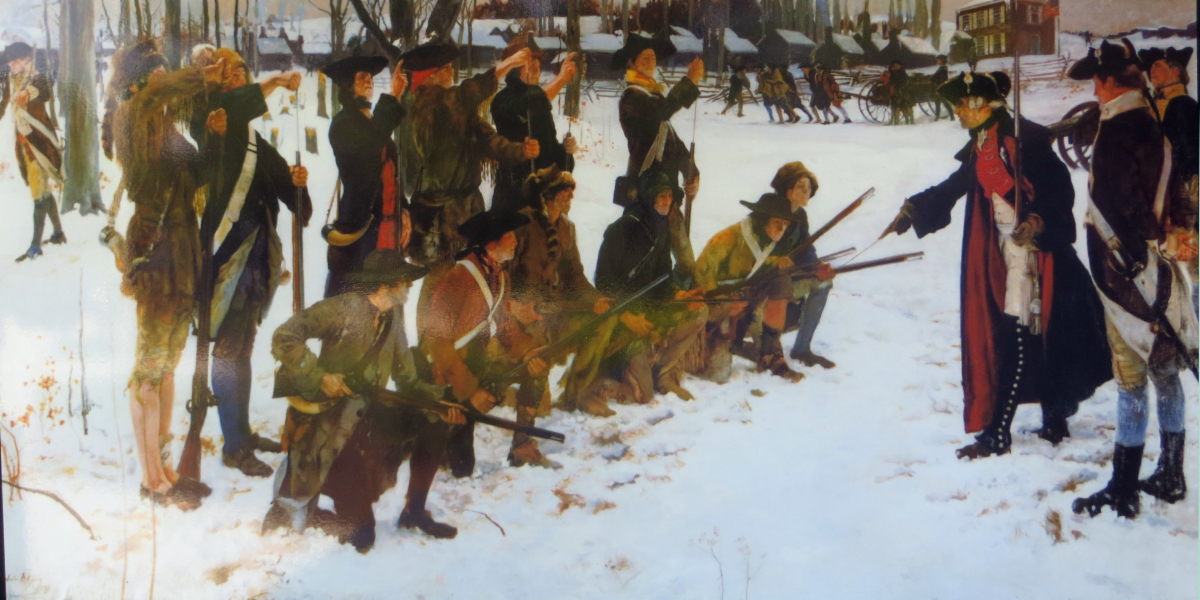
As the war continued, Daniel advanced steadily through the ranks, serving as a lieutenant and later a captain while fighting in the Philadelphia Campaign, including the battles of Brandywine and Germantown. In February 1778, while encamped at Valley Forge, he was promoted to brigade major. Shortly thereafter, he became an aide-de-camp to Baron von Steuben, the Prussian officer whose training reforms helped transform the Continental Army. In 1779, Daniel received command of a company of sappers and miners, serving as an engineer officer until 1781.
| Baron de Steuben with his aides drilling Continental troops at Valley Forge by Edwin Abbey. | | |
The War Arrives
In January 1781, British General Benedict Arnold targeted Richmond with an eye on destroying Westham Foundry. William rallied men from Hanover and marched them to Richmond but arrived too late. Local militia proved unable to stop the British force of more than 1,000 men pillaging and destroying whatever they could. Richmond’s homes and warehouses were set ablaze, Henrico’s deeds and wills became ashes, and Westham Foundry transformed into ruined piles of brick, wood, and metal. William and his troops followed Arnold’s men on their retreat east, encamping at Malvern Hill. While Samuel Sr. had placed ads to sell his Deep Run coal pits the year before the British came, it did not sell. Now that a huge source for his coal was gone, it would prove more challenging to find a buyer. Upon seeing his home state invaded by the British, Daniel requested Steuben appoint him as a major then lieutenant colonel of the militia. DuVal and his militia followed British General Cornwallis east down the peninsula. At some point in 1781, Daniel’s other brothers – Samuel Jr., Phillip, and Claiborne – joined the militia. Now, four of the five brothers gathered as part of American and French forces to corner Cornwallis at Yorktown.
| | |
A New Nation for the Next Generation
Samuel Sr. just barely lived to witness the war conclude and the beginnings of a new nation. He died in 1784 and was interred somewhere on the grounds of Henrico’s Parish Church. Two of his sons, Samuel Jr. and Claiborne, sought new opportunities for their growing families out west in Kentucky. Daniel married once the fighting concluded. He remained in Virginia until his death in 1795, leaving his widow, Maria, to care for two young children. With the help of her brother-in-law, Philip, Maria petitioned Congress in 1832 for a pension. William became a prominent lawyer working with others like George Wythe and John Marshall to create a new nation. In addition, he served as Richmond’s mayor from 1805-1806. William divided his time between his Richmond home and his plantation in Buckingham County until his death in 1842 at 94 years of age.
| | |
William DuVal, miniature, from The DuVal Family of Virginia by Bessie Grabowskii.
| | |
Hello everyone!
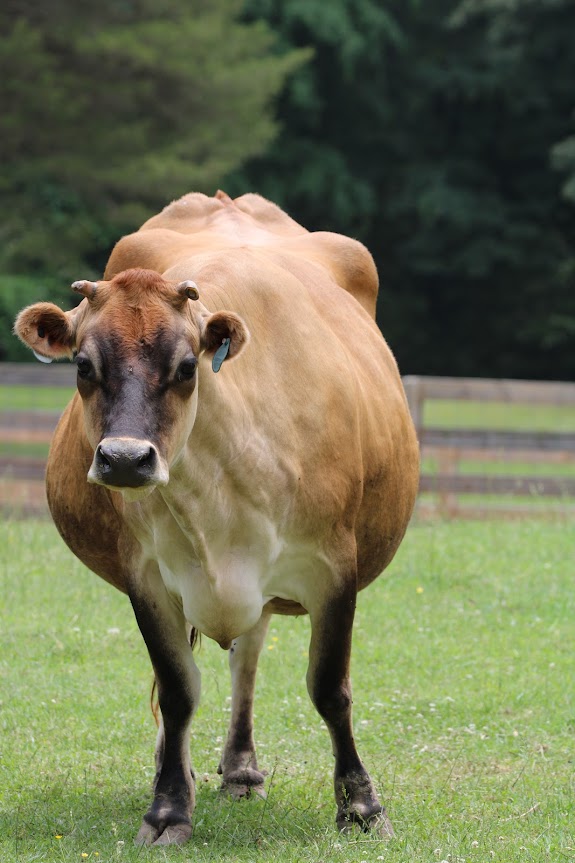
My name is Emily and I’m one of the legen-dairy Jersey cows that live at Meadow Farm. Marigold and I are usually chewing the cud in the pasture to the right of the farm house or behind the garden.
Spring is always such a busy time on the farm. From field trips to programs to park walkers, there’s always moo-ving and shaking going on around here. We got a double feature of moo-vies in April. With the new LED screen, we can show outdoor moo-vies during the day! At the end of May, I saw a bunch of inflatables in the field in front of the Parsons Community Center. There were a lot of people who enjoyed something called National Bounce House Day. I was upset that I didn’t get a turn, but apparently there’s a weight limit.
4th of July is right around the pasture and I am definitely ready to demonstrate my dance moooo-ves to the music. 2026 is the 250th anniversary of America apparently, so there is a double celebration: on July 3 at Dorey Park and July 4 at Crump Park. I sorry that the people going to the Dorey celebration won’t get to see me, but I hear there will be fireworks there. Though fireworks are apparently beautiful, we animals don’t like the loud and unexpected noises they make, so I’ll stay here and enjoy the laser light show instead.
There are a lot of other great history programs around the county this summer. We have some fun hands-on programs including “Hands-on History: Making Kuba Cloth” and “Learn to Play Riichi: Japanese Mahjong.” I hear about some great lectures in a wide variety of topics from “The Wildcat: Sparring in the Jim Crow South” to “The Legend of Julie d’Aubigny: Operatic Swordswoman” to “The History of African American Folk Art”.
I do have a hoof to paw with a program about “Famous Virginia Horses,” though. What about famous Virginia cows, hmm? Featuring me and Marigold, of course! Even our own animal care staff have turned their backs on us, hosting a “Pig-sicle Party” and a “Hoggin’ the Cookies” program, but no “Cowabunga Celebration” or “Udderly Cheesy Treats” program. This is simply un-bull-ievable. I suppose I will have to hold out for the “Trough or Treat” program happening in October. What’s that? Kim says that program will have treats for humans. Hmmph.
Even though we aren’t the star attraction in any upcoming programs, be sure to hoof it over to Meadow Farm to check out all the history and, of course, the udder-ly delightful animals.
| | | |  | |
I hope to see you at Meadow Farm soon!
Emily the Cow
(Translation courtesy of Kim Schmidtmann)
| | Henrico County Historical Society | | The Henrico County Historical Society was founded in 1975 as part of Henrico’s upcoming bicentennial commemoration of the American Revolution. The society meets quarterly, the first Sunday of the month. Due to the first Sunday in September falling on Labor Day weekend, the next meeting will be on September 13. Locations vary, meeting location TBA. | |
The speaker will be Chris Yohn, the past president of the Richmond Chapter Sons of the American Revolution and author of the historical novel Liberty’s Land, a true story of the patriots on the Pennsylvania frontier. Please join us; you do not need to be a member to attend. Contact Sarah Pace, president, for details: 804-839-2407.
| | |
Henrico Rec & Parks | (804) 501-PARK
| |
| | | |