Message from Mayor Kapszukiewicz |
|
This week’s newsletter comes to you one day earlier than the usual Friday afternoon it arrives in your inbox, so I can highlight our Independence Day fireworks celebration, and everyone can plan to attend the show, which will happen tomorrow night, July 2.
Join us downtown for "Fireworks in the 419" beginning at roughly 10 p.m. tomorrow. I am thrilled we are able to have a fireworks display. True, we are not having it on July 4, which is our usual date, but after a year of COVID-19, I know throngs of Toledoans will enjoy the show.
There will be food trucks and you can also get a free COVID-19 vaccine earlier in the day. You can find all of the information you need at this link. I hope to see you there!
|
|
The City of Toledo is receiving $180 million from the federal government through the American Rescue Plan Act, and all Toledoans will be asked to share their thoughts on how that money should be spent. We will soon announce the details of several in-person and virtual public meetings to solicit input on the “Toledo Recovery Plan.”
We have a great opportunity with the American Rescue Plan Act. We already know there will be infrastructure improvements funded with the money, including a lead line replacement program. But we have already started to hear interesting ideas from leaders in the community.
One interesting idea is the possible creation of a Centralized Career Tech Education Center, which is an idea that has been proposed by the Toledo Federation of Teachers. As you will learn by clicking on the above link, the TFT is proposing that a centralized Career Tech Education Center be built for the skilled trades. Not only could such a facility improve the lives of countless students for years to come, but it would also strengthen our economy by creating thousands of construction jobs.
These are the sorts of creative ideas we are interested in learning more about as we go through this process. When it comes to education, no one understands what is needed better than teachers, and so their ideas carry significant weight.
As we embark upon a summer of discussion, if you have interesting ideas, please let us know. We will also have a survey on our website soon and provide other ways to offer suggestions.
|
|
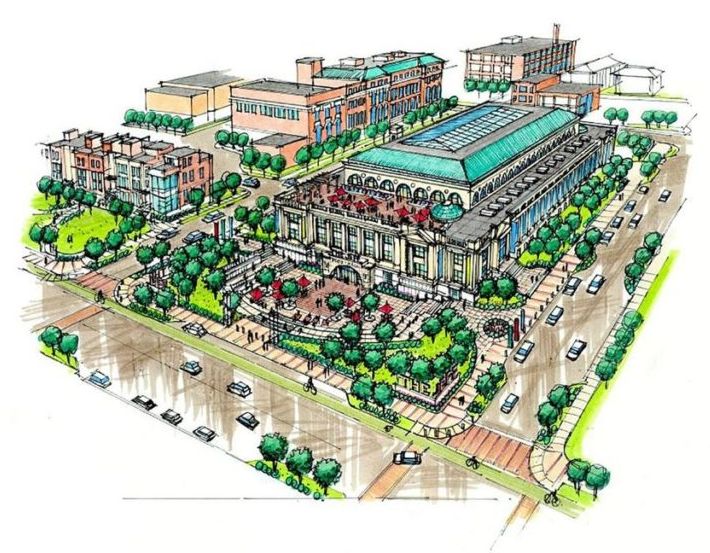
I was excited yesterday to join the Ohio Development Services Agency, the State Historic Preservation Office, ProMedica, and Bitwise Industries to celebrate the new Ohio Historic Preservation Tax Credit awards at the Jefferson Center – a historic building on the edge of downtown that will once again contribute to the vibrancy of Toledo.
Built in 1911, the former Jefferson Center building — which was Toledo’s central post office before it became the school district’s alternative school — has new life. It will become an innovation center thanks to the partnership between ProMedica and Bitwise, a California-based technology company. The historic preservation tax credits announced yesterday help make that possible.
Preserving these historic buildings help revitalize our downtown and attract other businesses and jobs to the area. Partnerships make these projects work. The city has worked with Lucas County, the State of Ohio, developers, and others to preserve our history for future generations.
Some of the other projects already completed in Toledo that received the same credit include the Ohio Theatre, the Berdan Building, Hensville, the former Fiberglas Tower, the ProMedica Downtown Campus, Vistula Heritage Village, and the S. Metzger Produce Building.
|
|
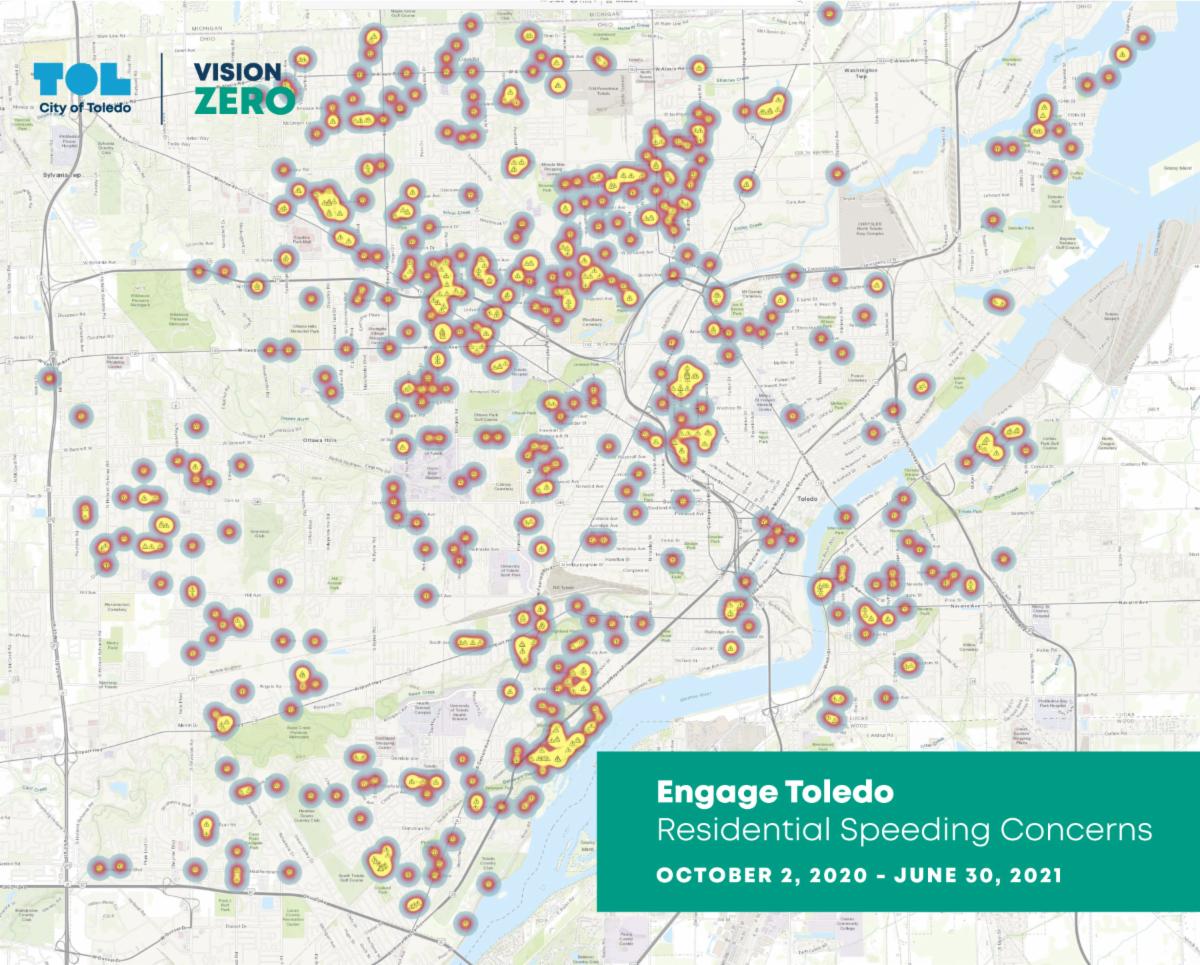
The City of Toledo has launched a community-wide initiative to eliminate traffic and pedestrian deaths, Mayor Wade Kapszukiewicz, Council Member Sam Melden, and Commissioner of Transportation Sean Burnett announced Wednesday. |
|
“Successful cities make sure they are walkable, safe for pedestrians, and bike-friendly,” Mayor Kapszukiewicz said. “We are starting an effort to shape our transportation strategies and infrastructure around safety and wellbeing for every person in Toledo, and an important part of that is to prioritize safe street design.”
Like other cities across the nation, Toledo is now committed to Vision Zero, an initiative to eliminate traffic fatalities, promote multi-model travel, and increase safety, the mayor said.
|
|
The yard signs are available free at the city's transportation building, 110 North Westwood Ave., and will be at other locations. |
|
“We want to hear from motorists, pedestrians, public transit users, and bicyclists in a community survey running on our website, and we are also asking Toledo residents to promote safe driving by placing one of our ‘slow down’ yard signs in their front yards,” the mayor said.
Toledo is committed to achieving Vision Zero status, Mr. Melden said.
“This is a community-wide problem, which is faced by many other cities, and it will take a community-wide solution,” Mr. Melden said. “This is a call to action for all Toledoans to make our streets safer. I am asking all Toledoans to take the pledge to reduce the number of deaths of our neighbors, family members, and friends to zero by 2031. In order for this to be successful, our efforts must be collaborative and proactive. Everyone needs to be a part of this, including public service, law enforcement, and our residents, who I know want to reduce the number of roadway fatalities.”
Mr. Burnett said traffic fatalities are on pace this year to double the city’s annual average.
“An average of 26 people lose their lives in traffic crashes in Toledo every year,” he said. “Vision Zero is not just about more bike lanes or lowering speed limits. At its core, it is a fundamental reorientation of how transportation is approached in both policy and built environmental design. Where traditional traffic engineering maintains acceptable risk thresholds, Vision Zero is a decision to hold so-called acceptable risk to zero.”
|
|
Search the full list of things to do to find just the right activity for your child.
|
|
Ozone Treatment Begins at
Collins Park Water Treatment Plant
|
|
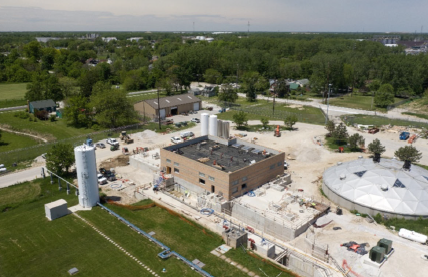
The ozone treatment facilities for the City of Toledo Collins Park Water Treatment Plant began service on June 24, and have been continuously treating the settled water with ozone since that date.
“Ozone treatment at the Collins Park Water Treatment Plant is another critically important step we have taken toward making it the most efficient and modernized water treatment plant in the nation. It is the most advanced technology available to continue our fight against toxic algal blooms,” Mayor Wade Kapszukiewicz said. “Algae blooms are a recurring scourge in Lake Erie and Toledo has adapted to deal with this issue. While we are successfully treating this problem on our end, it is no secret that the root cause of the problem is pollution from farms and other sources that run off into waterways, forming harmful algal blooms in our source water. Cities like Toledo have dramatically slashed the release of algae-feeding phosphorus into waterways, but we need farmers to do the same.”
Ozone provides additional measures of protection for the pretreatment and mitigation of the effects of harmful algal blooms within Lake Erie to further protect the city’s drinking water supply. This process, in concert with recently completed phases of the filter improvements projects, improves our water quality and provides another treatment barrier to harmful algal blooms. The work includes upgrades to potassium permanganate and powder activated carbon feed systems at the city’s low service pump station, and the addition of powder activated carbon storage and feed systems, new ozonation facilities, and filter upgrades at the Collins Park Water Treatment Plant.
Project completion dates:
- March 2020: Basins 7 and 8, filters 31 - 40 (granular activated carbon ready to act as biologically active filters once ozone is online)
- March 2021: Refurbishment Basins 5 and 6 and rebuild of filters 21 - 30 (granular activated carbon ready to act as biologically active filters once ozone online)
- June 2021: Ozonation facilities regular use begins.
- March 2022: Refurbishment Basins 3 and 4, rebuild of filters 11 - 20
- March 2023: Refurbishment Basins 1 and 2, rebuild of filters 1 - 10
|
|
Members of the Toledo Fire & Rescue Department including Assistant Chief John Kaminski, Pvt. Jamie Morelock, and Pvt. Jake Hoffman are being deployed as part of the Ohio Task Force 1, FEMA Type-1 Urban Search and Rescue Task Force.
The team is currently being deployed from Vandalia, Ohio and will travel to Florida in support of the search and rescue efforts involving the structural collapse of the Champlain Towers, South Condominium Building in Surfside, Florida.
The three Toledo Firefighters are highly trained in many disciplines including structure collapse and urban search and rescue, and are valued members of OHTF1.
|
|
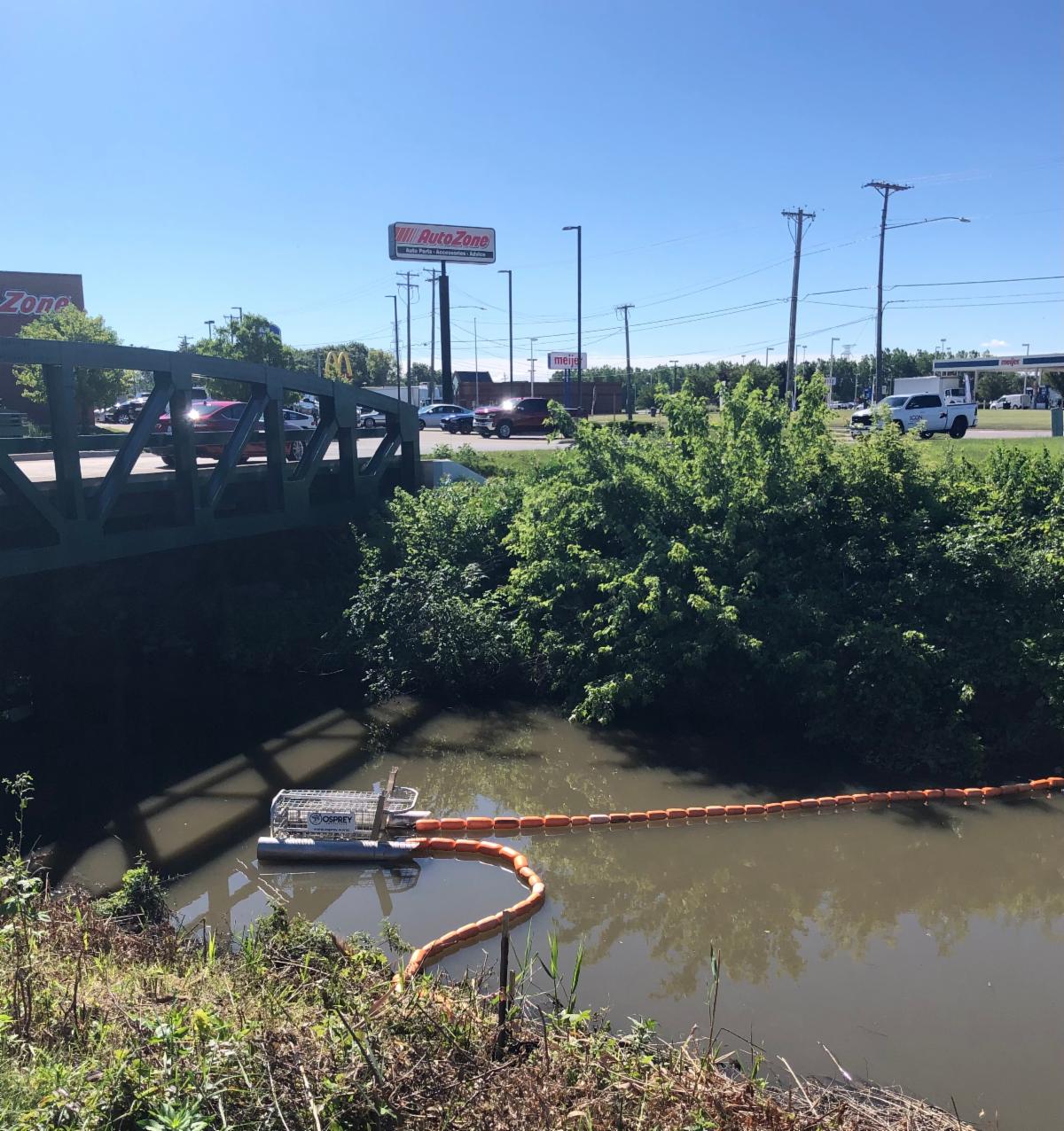
First Trash Capture Device Installed in Toledo Waterway |
|
The City of Toledo received nearly $415,000 in federal grant funding to install seven trash capture devices in waterways within five miles of Lake Erie. Part of the money will also be used to improve educational and outreach activities and events about the negative impact trash has on our health and the local economy.
A trash capture device, also known as a trash trap, is a mechanical system consisting of a floating boom and net that funnels and gathers floating debris before it can reach primary waterways like streams, rivers, lakes, and oceans.
|
|
|
Join us for a movie night in the park. We will show Jumanji at 7:30 p.m., Thursday, July 8 at Navarre Park, 1001 White St.
Bring blankets and lawn chairs.
|
|
By The Numbers
(year-to-date)
|
|
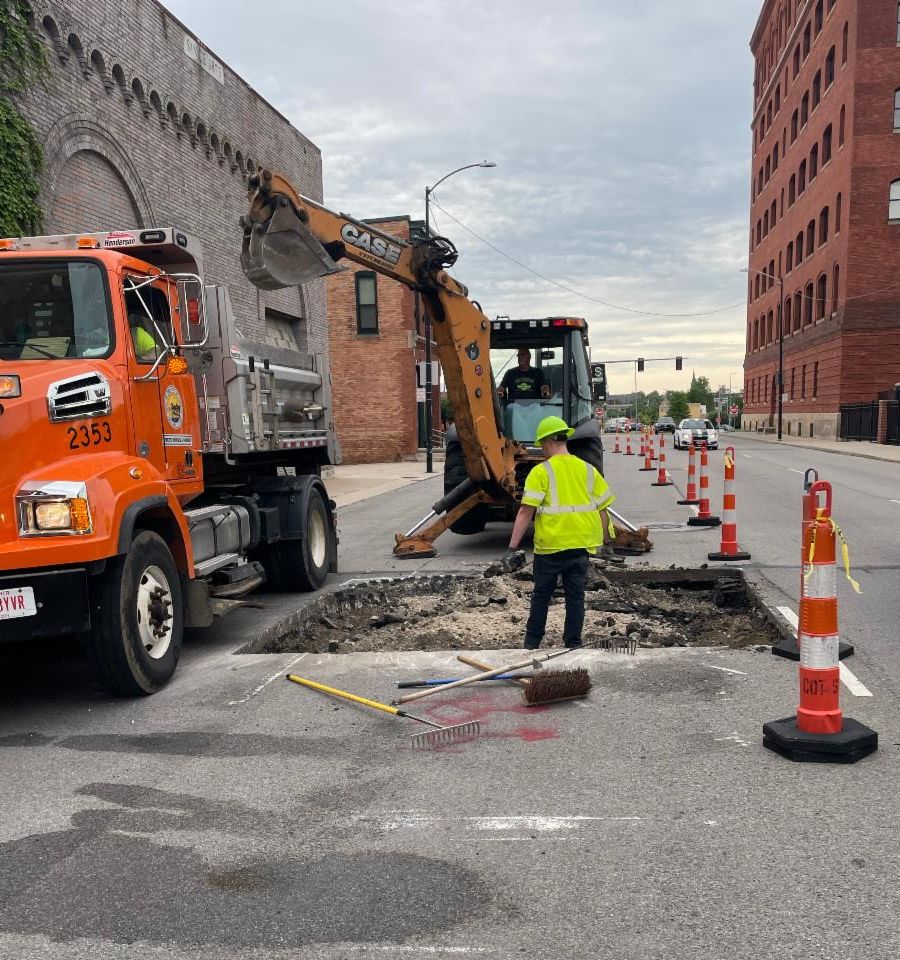
45,110 potholes filled
277 water main breaks repaired
911,782 feet of sanitary sewers cleaned
11,252 feet of storm sewers cleaned
2,316,939 pounds of debris cleaned from streets with street sweepers
1,831,670 pounds of debris removed from alleys
1,399,623 pounds of debris removed by the Clean Toledo blight team
2,474 tires collected by the Clean Toledo blight team
1,102 trees trimmed
762 illegal signs removed
26,628 EMS runs
3,135 fire runs
|
|
In just the past few years, Historic South Initiative has gradually given a face-lift to one of Toledo’s oldest neighborhoods. The group's newest project aims to further preserve the area's historic nature. The Historic South End has homes that are up to 100 to 130 years old. The streets of Crittendon, Walbridge, Eastern, and Western already have 80 homes that have been fixed up. In some cases, all the historic houses required was a new roof or siding.
|
|
|
|
|
|
|