Coast Posts
- A Newsletter From FEC
| |
News from Future Earth Coasts International Project Office
Shanghai | East China Normal University
| | |
Highlights:
- Join the “Tour de Coasts” Panel Discussion at SRI 2025: Advancing Global Coastal Sustainability
- Kickoff Meeting Launches Future Earth Cross-cutting Initiative “Building Future Leadership: A Coastal Sustainability Value Chain”
- FEC Dialogue with Anthropocene Coasts
- FEC Launches New Project Website: “Building Future Leadership: A Coastal Sustainability Value Chain”
- Exploring the Future of Ocean Forecasting: Predicting Phytoplankton Blooms Two Months in Advance
- Futuros Territoriales Joins FEC as an Affiliated Working Group
- Call for Expressions of Interest: Co-Chairs for FEC
- Ocean Literacy Event on UN World Oceans Day 2025
- Anthropocene Coasts: Call for Papers – Tour de Coasts
- FEC New Publication | Profiling dynamics of the Southeast Asia’s largest lake, Tonle Sap Lake
- FEC New Publication | Spatiotemporal dynamics of coastal dead zones in the Gulf of Mexico over 20 years using remote sensing
- FEC New Publication | Examining the perceptions and attitudes toward Women's employment and leadership in the blue economy: A case study of India
- Updates from FEC Affiliated Projects: Resilient Lagoon Network
- Updates from FEC Supported Networks: Decade Collaborative Center for Coastal Resilience
| | Join the “Tour de Coasts” Panel Discussion at SRI 2025: Advancing Global Coastal Sustainability | | |
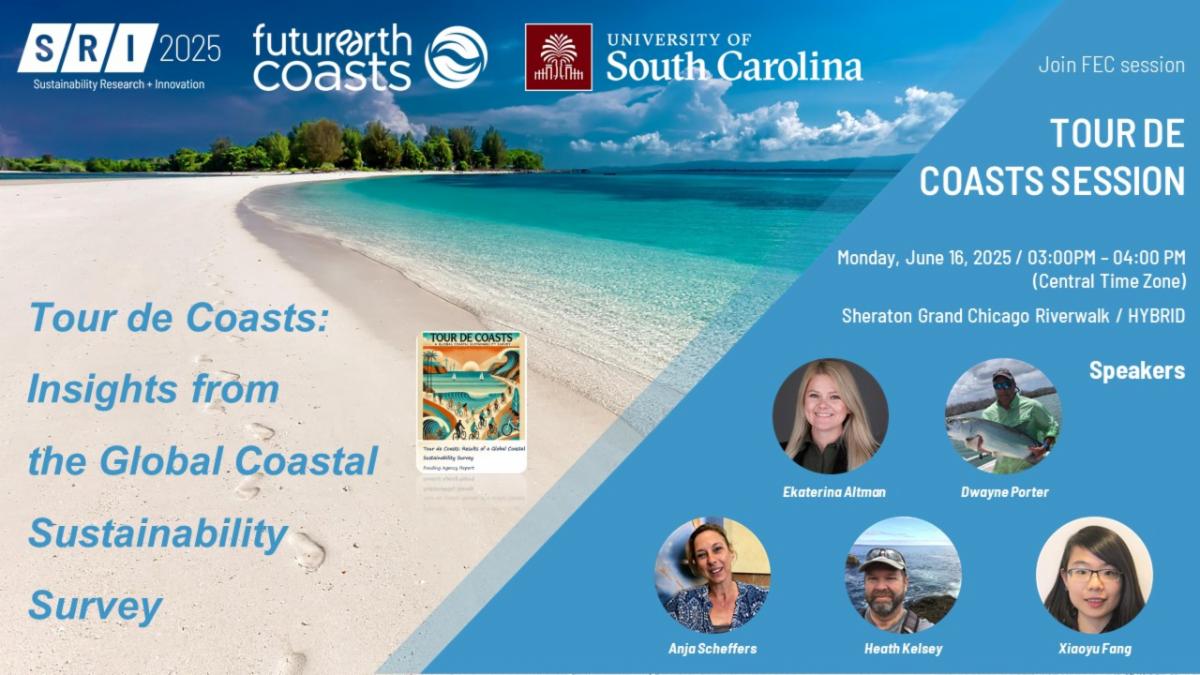
Future Earth Coasts invites researchers, policymakers, and sustainability leaders to attend a pivotal panel discussion at the 2025 Sustainability Research and Innovation Congress (SRI 2025). Marking its fifth anniversary—and its inaugural U.S. convening—SRI 2025 will take place in Chicago, Illinois, from June 16–19, 2025, fostering action-oriented and inclusive sustainability solutions.
Event Details:
📅 Date & Time: Monday, June 16 | 3:00–4:00 PM (Central Time Zone)
📍 Location: Sheraton Grand Chicago Riverwalk, SRI 2025, Chicago, Illinois (Hybrid)
🌊 Session Title: Tour de Coasts: Insights from the Global Coastal Sustainability Survey
Coastal regions worldwide confront escalating threats, including sea-level rise, ecosystem degradation, governance disparities, and socioeconomic inequities. Launched in 2024 by Future Earth Coasts and the University of South Carolina, the Tour de Coasts initiative examines these challenges through a comprehensive, global lens. Drawing on insights from over 200 experts across 79 countries, this session will present key findings from the Global Coastal Sustainability Survey and spotlight community-driven resilience strategies.
Why Attend?
- Gain a global perspective on pressing coastal sustainability issues.
- Explore integrated solutions combining local knowledge, scientific research, and policy innovation.
- Engage in interactive dialogue with researchers, practitioners, and policymakers shaping coastal futures.
Click here to read more.
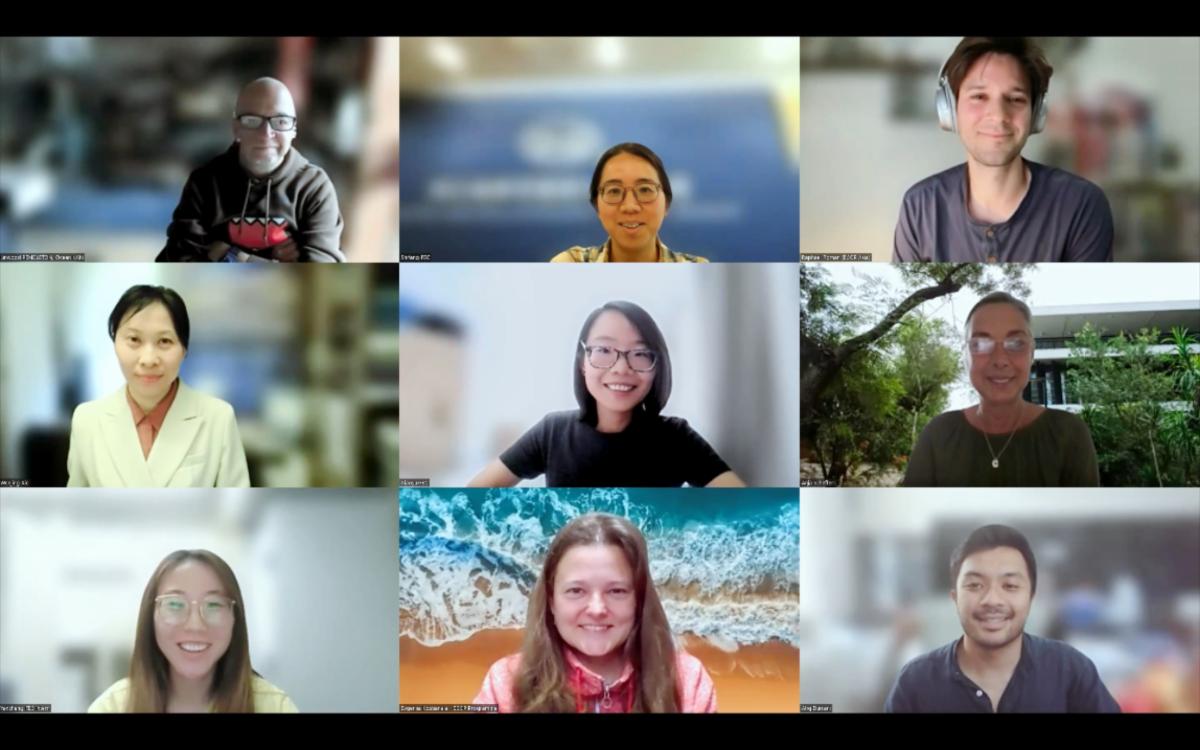
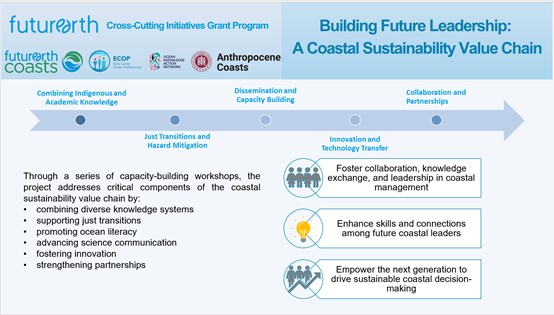
| | Kickoff Meeting Launches Future Earth Cross-cutting Initiative “Building Future Leadership: A Coastal Sustainability Value Chain” | | On April 29, 2025, the global, transdisciplinary initiative Building Future Leadership: A Coastal Sustainability Value Chain officially launched with a virtual kickoff meeting. This gathering brought together key representatives from a diverse consortium of institutions and knowledge holders. Led by Future Earth Coasts (FEC) in collaboration with Ocean Knowledge Action Network (Ocean KAN), the UN Ocean Decade-endorsed Early Career Ocean Professionals (ECOP) Programme, and the journal Anthropocene Coasts, the project unites a powerful alliance committed to advancing inclusive and resilient coastal development. | | The kickoff meeting laid the groundwork for a three-year journey focused on combining academic and Indigenous knowledge systems, advancing just transition, and fostering capacity development among Early Career Ocean Professionals (ECOPs). Key discussions included project governance, workshop planning, cross-workstream collaboration, and communication strategies. | | | | |
As the meeting concluded, partners agreed on key first-year milestones, including the launch of the initial workshop module, development of the project website (hosted by FEC), the rollout of ECOP special collections, the launch of the FEC Dialogue interview series, and several other collaborative initiatives to follow. With strong foundations and a collaborative spirit, the project moves forward with momentum and a clear mission: to empower the next generation of coastal leaders worldwide.
Click here to read more.
| |
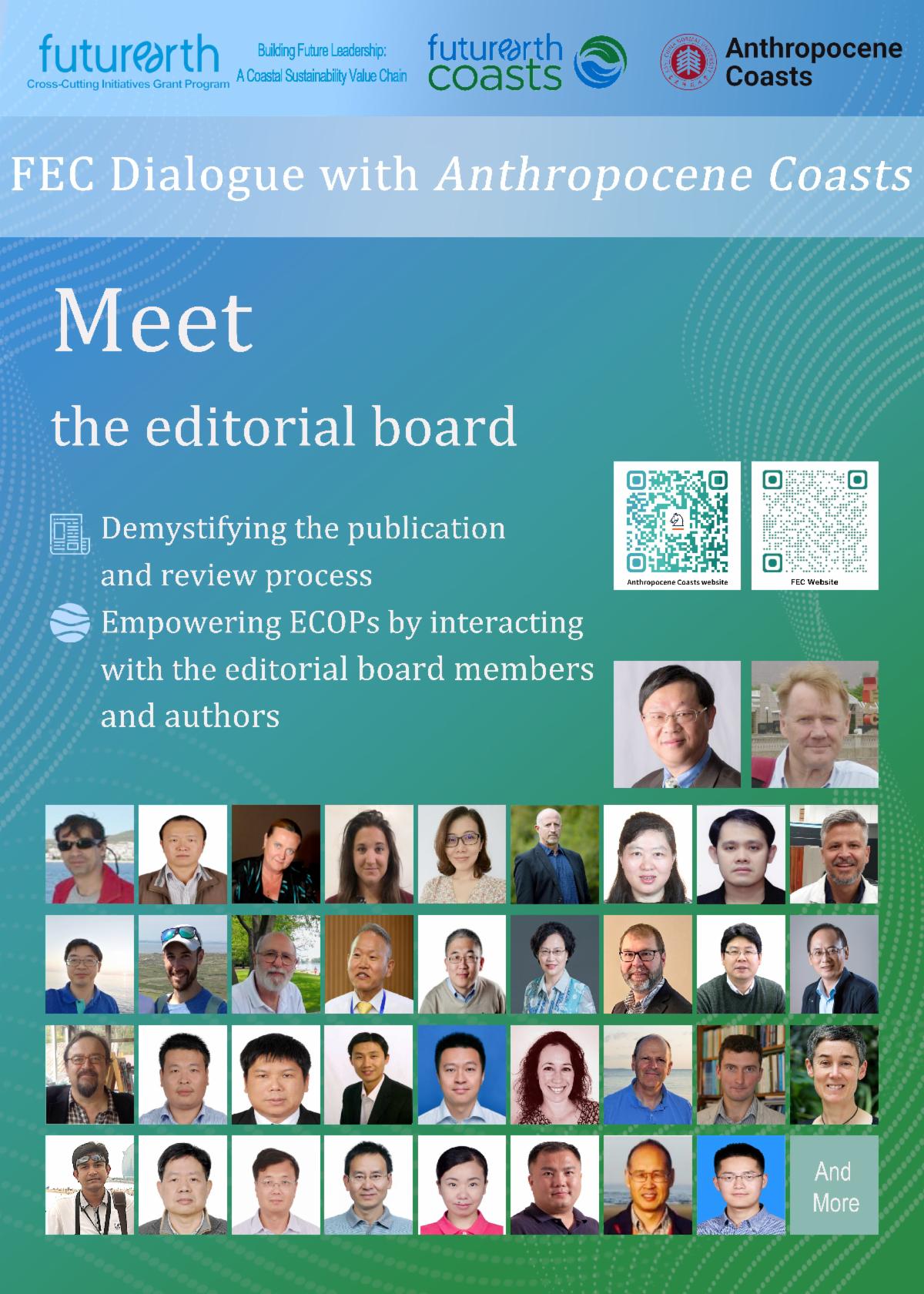
FEC Dialogue with Anthropocene Coasts
| | Future Earth Coasts (FEC) is thrilled to announce the launch of our new interview series, “FEC Dialogue with Anthropocene Coasts.” This initiative aims to empower Early Career Ocean Professionals (ECOPs) by creating a platform for direct interaction with the Editorial Board members and authors of FEC’s official journal, Anthropocene Coasts. Our goal is to demystify the publication and review process, making the journal more accessible and transparent for the next generation of scientists. | | |
The Anthropocene is the current epoch in which human activities are having a marked impact on the Earth. Coasts embrace all aspects of the land–sea interface. Anthropocene Coasts focuses on documenting and understanding the impact of human activities on contemporary coastal processes, including physical, biological, and chemical interactions across the land-sea boundary, and their broader social, economic, and legal implications.
Through engaging conversations with established researchers and journal editors, ECOPs will gain a deeper understanding of the peer review process, manuscript preparation, and publication criteria. We aim to build their knowledge and confidence, empowering them to advance their careers and contribute innovative research on coastal processes in the Anthropocene era.
Click here to read more.
| | FEC Launches New Project Website: “Building Future Leadership: A Coastal Sustainability Value Chain” | | |
Future Earth Coasts (FEC) is excited to announce the official launch of the “Building Future Leadership: A Coastal Sustainability Value Chain” project website – a new digital hub dedicated to fostering the next generation of coastal sustainability leaders around the globe.
Click here to read more.
| | | Exploring the Future of Ocean Forecasting: Predicting Phytoplankton Blooms Two Months in Advance | | |
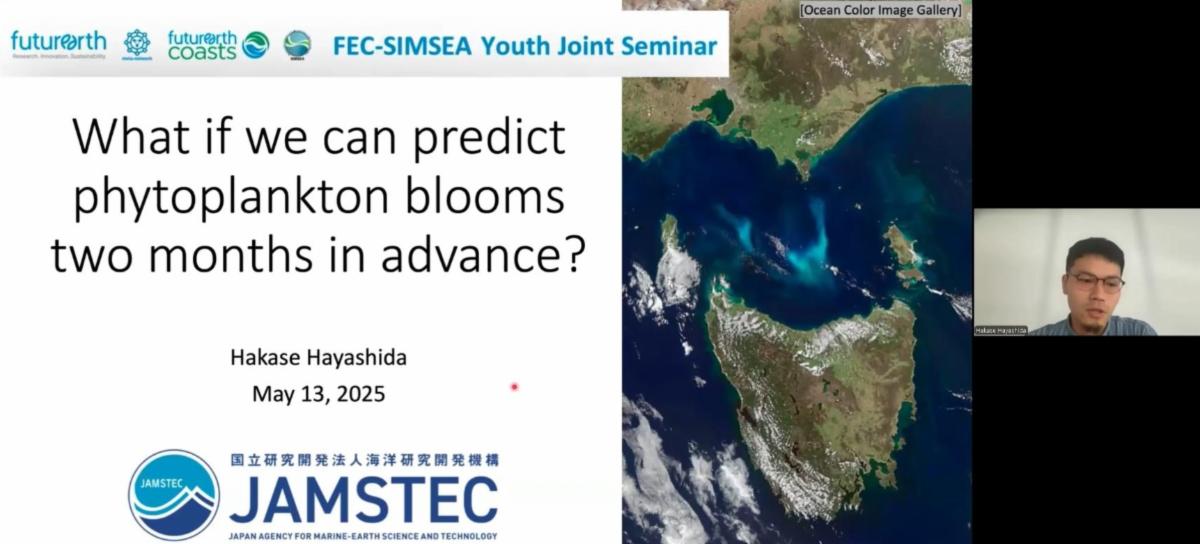
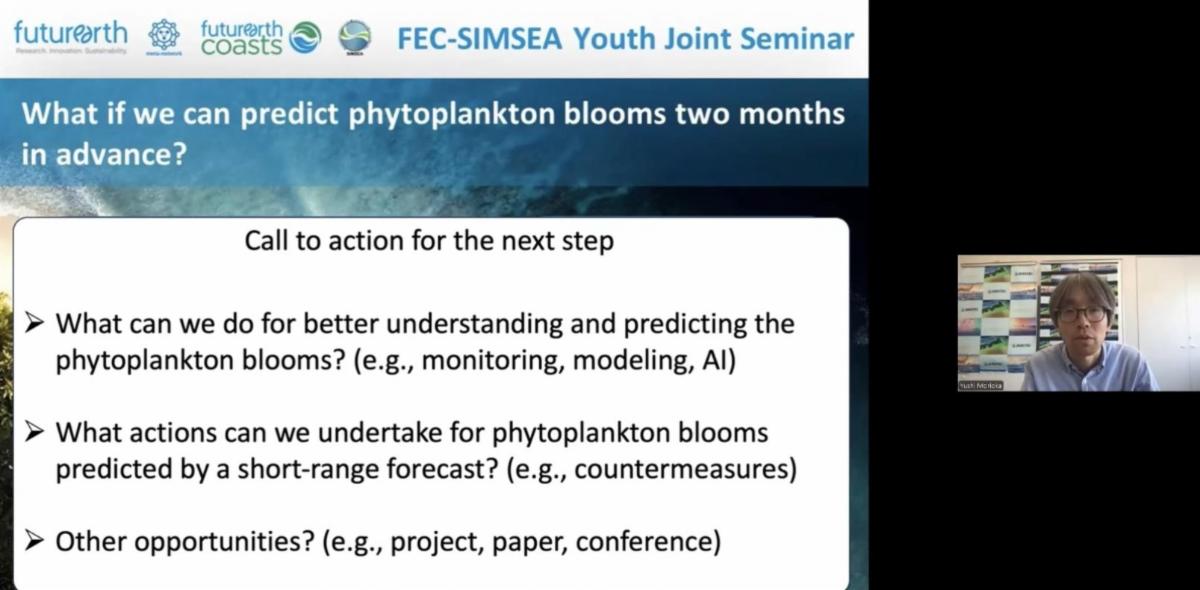
On May 13, 2025, the FEC-SIMSEA youth joint seminar featured Dr. Hakase Hayashida from JAMSTEC, who delivered an insightful presentation on the potential for short-range forecasting of phytoplankton blooms using operational ocean models. As part of the Future Earth Coasts and SIMSEA Meta-Network youth seminar series, this session spotlighted cutting-edge efforts to integrate marine biogeochemistry into ocean prediction systems.
Dr. Hayashida introduced the Japan Coastal Ocean Predictability Experiment (JCOPE), an operational system that has been providing two-month forecasts of temperature, salinity, and ocean currents in the northwest Pacific since 2001. He outlined how JCOPE assimilates real-time data from satellites, ships, and Argo floats to produce high-resolution predictions that support ship navigation, fisheries, and aquaculture industries.
| | The seminar concluded with a call for collaborative actions, including joint monitoring projects, review publications, and broader stakeholder engagement. One suggestion from the audience was made to connect with blue economy initiatives in Australia and the wider Kuroshio current region. The session underscored the growing relevance of biogeochemical forecasting for both research and real-world applications, and reaffirmed the importance of linking predictive science with end-user needs in the region. | | Future Earth Coasts (FEC) welcomes Futuros Territoriales as its newest affiliated working group. This science-based initiative is dedicated to supporting territorial planning and adaptive management, bringing critical expertise to our global network. Through this collaboration, we aim to advance coastal sustainability, climate adaptation, and marine spatial planning through shared knowledge and collaborative innovation. | | | By affiliating with FEC, Futuros Territoriales strengthens its contribution to global knowledge-sharing and best practices for coastal sustainability while fostering collaboration with international experts and institutions, particularly in climate adaptation and marine spatial planning. This partnership merges FEC’s worldwide network with Futuros Territoriales’ innovative, scenario-based approaches - driving transformative change toward more sustainable and resilient futures. | | |
About Futuros Territoriales
Futuros Territoriales is a scientific initiative that develops tools and knowledge to explore the future of regional socio-ecological systems. It aims to support evidence-based decision-making in both marine and terrestrial planning by integrating numerical modeling with qualitative analysis.
The initiative combines medium- and high-complexity models to simulate interactions among ecosystems, human populations, livelihoods, and the broader land- and marine-based economy. This interdisciplinary, multi-scale approach enables the evaluation of trade-offs and synergies among development, environmental sustainability, and social well-being.
Click here to read more.
| | Call for Expressions of Interest: Co-Chairs for FEC | | |
Future Earth Coasts (FEC) is inviting Expressions of Interest from qualified and motivated individuals to serve as Co-Chairs of its Executive Committee.
Role of FEC Co-Chairs
FEC Co-Chairs play a key leadership role in shaping the strategic direction, scientific agenda, and community engagement of FEC. As ex officio chairs of the Executive Committee, Co-Chairs are expected to actively lead and guide FEC’s strategic goals and initiatives. Working collaboratively with the FEC Vice-Chair, Co-Executive directors, and International Project Offices, the Co-Chairs help ensure that FEC continues to grow as a dynamic and influential global network.
Key responsibilities include:
- Chairing the FEC Executive Committee meetings as required
- Facilitating dispute resolution procedures, if necessary
- Maintaining strategic oversight of FEC plans and activities
- Representing FEC as a figurehead at relevant scientific and stakeholder events
- Working closely with the other Co-Chair and Vice-Chair to distribute tasks and responsibilities
- Providing support, guidance, and mentorship to the FEC Co-Executive directors
To learn more about the role, please reach out to one of the following:
Click here to read more.
| | |
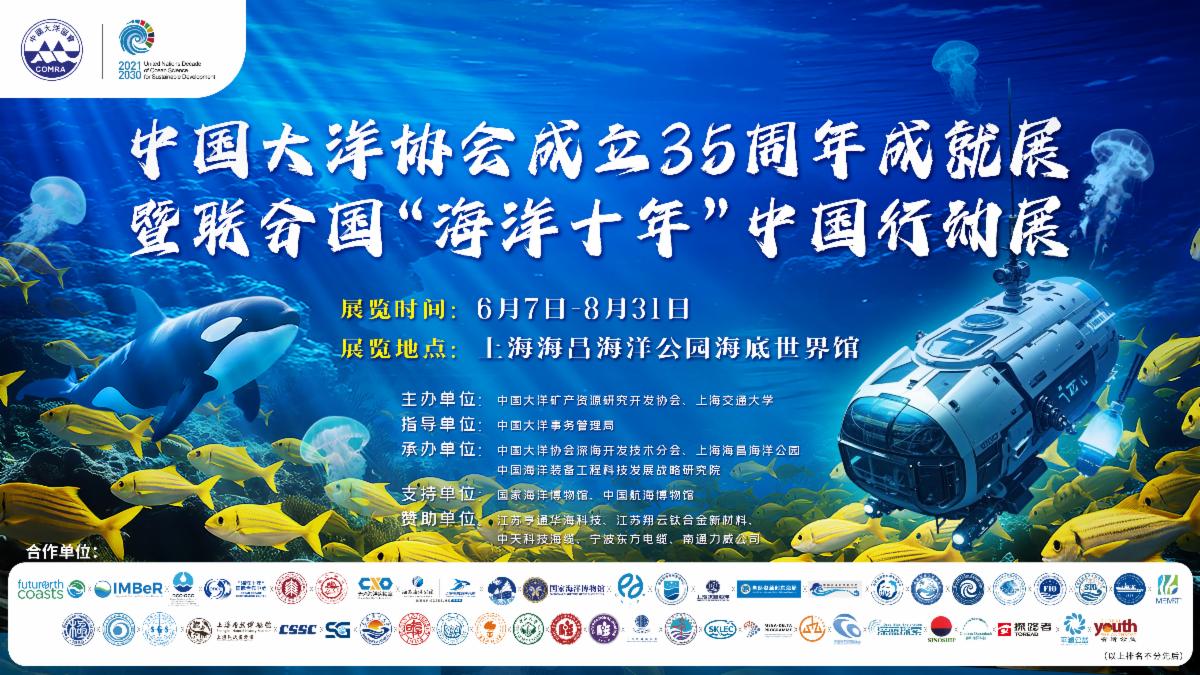
The 2025 World Oceans Day Science Outreach is coming!
🗓 June 7–8, 2025 | Shanghai Haichang Ocean Park
As the United Nations Decade of Ocean Science for Sustainable Development (“Ocean Decade”) continues to gain momentum across the globe, June 8, 2025, will mark the 17th celebration of World Oceans Day. This year’s theme, “Wonder: Sustaining What Sustains Us,” invites us to honor the ocean’s innate magic and the countless wonders it nurtures. It also calls on decision-makers to never lose sight of the ocean’s awe-inspiring beauty when shaping its future.
| |
To actively advance the vision and goals of the UN Ocean Decade, raise public awareness of ocean issues, and accelerate progress toward building a strong maritime country, China Ocean Mineral Resources R & D Association and East China Normal University—together with numerous ocean universities, research institutes, international organizations, enterprises, social groups, and domestic partners—will host a major marine science outreach event at Shanghai Haichang Ocean Park from June 7–8.
Main Event Highlights (June 8 | 9:00–12:30 | Shanghai Haichang Ocean Park):
• Grand Opening Ceremony: Deep Sea Discovery Journey
• Release of the Shanghai Initiative
• Showcase of UN Ocean Decade scientific achievements
• Ocean science lectures & youth engagement
• Launch of new deep-sea tech alliances
• Marine robotics & youth speech contest awards
• Book launch: Chasing Deep-Sea Dreams with Scientists
• Kickoff of a global deep-sea scientific expedition
| | |
Anthropocene Coasts:
Call for Papers – Tour de Coasts
| | Anthropocene Coasts is launching a new special collection titled Tour de Coasts. | | |
This special collection is supported by FEC and provides a forum for knowledge exchange about priority coastal sustainability concerns and aims to create a comprehensive understanding of coastal sustainability challenges and opportunities from a global perspective.
For this Special Collection, Anthropocene Coasts invites manuscripts of all aspects of coastal sustainability challenges and opportunities globally including but not limited to: governance; individual, cultural, community, and ecological health; effective and inclusive communication; human behavioral change; food, water, and housing security; ecological analyses; economics and financial incentives; potential for managed coastal retreat; technology and increased connectivity; coastal disease threats and health benefits; use crises to inform; and modeling.
| The submission deadline for this collection is July 21, 2025. You can access the topical collection via this link. | | Dr. Katya Altman, Bureau of Ocean Energy Management, USA | Dr. Dwayne Porter, University of South Carolina, USA | | Dr. Heath Kelsey, University of Maryland, USA | Dr. Anja Scheffers, Southern Cross University, Australia | Dr. Xiaoyu Fang, East China Normal University, China | | Profiling dynamics of the Southeast Asia’s largest lake, Tonle Sap Lake | |
Wenting Jiang, Zhijun Dai, Xuefei Mei, Chuqi Long, Nguyen An Binh, Cong Mai Van, Jinping Cheng
| | | |
Abstract
Lakes, as vital components of the Earth's ecosystem with crucial roles in global biogeochemical cycles, are experiencing pervasive and irreparable worldwide losses due to natural factors and intensive anthropogenic interferences. In this study, we investigated the long-term dynamic patterns of the Tonle Sap Lake, the largest freshwater lake in the Mekong River Basin, using a series of hydrological data and remote sensing images between 2000 and 2020. Our findings revealed a significant decline in the annual average water level of the lake by approximately 2.1 m over 20 years, accompanied by an annual average reduction in surface area of about 1400 km2. The Tonle Sap Lake exhibited episodic declines in water level and surface area, characterized by the absence of flooding during the flood season and increasing aridity during the dry season. Furthermore, the shoreline of the lake has significantly advanced towards the lake in the northwestern and southern regions during the dry season, primarily due to sedimentation-induced shallowing of the lake edge depth and decreased water levels. In contrast, lake shorelines in the eastern region remained relatively stable due to the constructed embankments for the protection of the cultivated farmland. While the seasonal fluctuations of the Tonle Sap Lake are regulated by regional precipitation in the Mekong River Basin, the prolonged shrinking of the lake can be mainly ascribed to intensive anthropogenic activities. The interception of dams along the upper Mekong River has resulted in a decrease in the inflow to Tonle Sap Lake, exacerbating its shrinkage. Moreover, there are minor impacts from agricultural land expansion and irrigation on the lake. This study highlights the driving forces behind the evolution of Tonle Sap Lake, providing valuable information for lake managers to develop strategies aimed at conserving and restoring the ecological integrity of the Tonle Sap Lake.
Click here to read more.
| |
Spatiotemporal dynamics of coastal dead zones in the Gulf of Mexico over 20 years using remote sensing
Yingjie Li, Zilong Xia, Lan Nguyen, Ho Yi Wan, Luwen Wan, Mengqiu Wang, Nan Jia,
Venkata Rohith Reddy Matli, Yi Li, Megan Seeley, Emilio F. Moran, Jianguo Liu
| | | |
Abstract
Spreading marine dead zones (or hypoxia) are threatening coastal ecosystems and affecting billions of people's livelihoods globally. However, the lack of field observations makes it challenging to estimate dead zones with spatial precision and across large scales. While satellites offer great potential for detecting environmental changes through large-scale and temporal consistent data, they have yet to be fully integrated into the spatio-temporal dynamic mapping of hypoxia. To address this limitation, we integrated satellite imagery with field observations in random forest models on the Google Earth Engine platform to characterize dead zone dynamics from 2000 to 2019. We applied the workflow to the Gulf of Mexico, which has the largest dead zones in North America. Our model explained 64 % (± 5 %) of the variance in predicting dead zones using satellite data. The analysis revealed that dead zones in the Gulf peaked in 2009 (17,699 ± 679 km2) and contracted afterward in terms of both size and persistence (% days with hypoxia). Despite this contraction, the average size between 2010 and 2019 was twice that of the coastal reduction goal (< 5000 km2) set by the Gulf of Mexico Hypoxia Task Force. Furthermore, dead zones occurred more frequently in the western Gulf, and nearly half of the western region experienced dead zones annually. In addition to inter-annual changes, our analysis highlighted the intra-annual dynamics of this phenomenon. Notably, dead zones expanded in June, peaking in size from mid-August to early September. The high temporal and spatial resolution of this dataset allows policymakers to develop targeted management plans and environmental policies. Our approach, which incorporates remote sensing for long-term monitoring of coastal dead zones, can be applied to worldwide monitoring initiatives when paired with local field observations.
Click here to read more.
| |
Examining the perceptions and attitudes toward Women's employment and leadership in the blue economy: A case study of India
Baker Matovu, Raimund Bleischwitz, Isaac Lukambagire, Meltem Alkoyak-Yildiz, Rashed Tarek, LindaA. Etta, Ming-An Lee, Mubarak Mammel, Yu-Ling Hsie
| | | |
Abstract
The blue economy (BE) is a bedrock towards sustainable ocean transitions, coastal women's empowerment (WE), and sustainable development. However, in most coastal regions, empowerment challenges for vulnerable people, especially coastal women, have remained prevalent. With the increasing appetite for BE resources, concerns have been raised about whether women's exclusion in BE sectors will not perpetuated, amidst the masculine domination of employment and leadership opportunities in the BE sectors. A case study of India is utilized to explore the literature and understand the perceptions and attitudes towards women's employment and leadership in the BE. This study sourced literature and utilized a bibliometric analysis technique to analyze 1768 articles. The aim was to: (i) explore research trends, (ii) scientifically map literature, key themes, and networks, and (iii) highlight perceptions and attitudes towards women's employment and leadership in the BE of India. Findings revealed that research on the BE and gender issues increased. Research citations and impact are low or have plummeted. Most publications on women-related issues in the BE are in low-impact journals. Publishing gender-specific research in top journals increases the authors'/research's impact and visibility. Multi-country collaborations on WE in the BE are low. Historical gender stereotypes and negative attitudes are critical in determining women's employment and leadership in BE sectors. Themes/concepts that promote sustainable avenues for WE in the BE, such as sustainable development, blue equity and justice, uplifting of women's status, shared gender roles, and gender relations, are just emerging or declining. Socioeconomic empowerment through financial literacy is considered critical to WE in the BE. Promoting coastal WE requires grounded transdisciplinary research approaches/techniques. Positive indicators for women's employment are emerging, mostly in service sectors, some coastal nearshore and onshore activities. Employment opportunities are enormous in long-established sectors, but social sexism on gender roles persists. Institutional mechanisms, targeting WE and gender equity in the BE, are being streamlined. Emphasizing women's studies, community participation, and WE, especially in vulnerable regions like the Bay of Bengal, are recommended strategies. Although policy and research efforts to empower women in decision-making are increasing, women's input/relevance in decision-making is abysmal. Transformative indicators have hardly translated into holistic women's employment and leadership. A simplistic women empowerment pathway (WEP) (comprising five steps) has been developed to aid WE in the BE. Holistic WE could only be achieved in a phased and continuous manner. This should begin by redefining what WE in the BE must entail. This can help generate micro-level vulnerabilities, viable WE opportunities, and holistic inclusion mechanisms that could be replicated in other jurisdictions.
Click here to read more.
| |
Updates from FEC Affiliated Projects
| | | | |
Prof. Sian Davies-Vollum, Principal Investigator of the FEC-affiliated project “Resilient Lagoon Network,” has been invited to join the Marine and Coastal Science Steering Group of the Institute of Environmental Sciences (IES). The IES is a professional organisation representing the full spectrum of environmental disciplines in the UK. IES | www.the-ies.org
Congratulations to Prof. Sian Davies-Vollum on this well-deserved recognition!
| | |
Updates from FEC Supported Networks
| | Decade Collaborative Center for Coastal Resilience | | | | | DCC-CR and its Partner Alliance Network will take part in the third United Nations Ocean Conference (UNOC-3) in Nice (9–13 June 2025), contributing to high-level sessions and side events. Highlights include a roundtable on solution-driven research aboard RV Meteor, a side event aboard the Staatsrad Lehmkuhl vessel, and a session on coastal digital twin technologies at the European Digital Ocean Pavilion. Click here to read more. | | |
DCC-CR at ECCA 2025
From 16–18 June, DCC-CR will participate in the ECCA 2025 Conference in Rimini to promote integrated forecasting and co-designed solutions for coastal resilience. The Centre is involved in thematic sessions linking climate adaptation and ocean prediction.
| | |
Youth and the #GenOcean Campaign
As part of the IOC #GenOcean campaign, DCC-CR supported high school projects and the participation of Early Career Ocean Professionals (ECOPs) through the “Co-Growth” course. Students and young professionals will be featured in upcoming IOC communications with videos and articles about youth involvement in ocean protection.
| | |
Co-Growth Course Report – DCC-CR School on Coastal Resilience
The first edition of the “Co-Growth: Co-Design for Coastal Resilience” course (Jan–Apr 2025) brought together early-career professionals in a hybrid training model, combining online modules with a field workshop in Italy. The program fostered interdisciplinary learning and will result in a joint article in the ICES Journal of Marine Science.
Click here to read more.
| | |
New Training on Mariculture and Fisheries
DCC-CR will soon launch a new course on Mariculture and Fisheries, aiming to strengthen knowledge and governance capacity among stakeholders in fisheries-dependent coastal communities. The training is part of the DCC-CR School on Coastal Resilience and aligns with the Centre’s mission to foster inclusive and science-based solutions.
| | | New FEC Publications (Since April 2024) | | |
○ Matovu, B., Bleischwitz, R., Lukambagire, I., Alkoyak-Yildiz, M., Tarek, R., Etta, L., ... & Hsieh, Y. L. (2025). Examining the perceptions and attitudes toward Women's employment and leadership in the blue economy: A case study of India. Social Sciences & Humanities Open, 11, 101537.
https://doi.org/10.1016/j.ssaho.2025.101537
○ Elrick-Barr, C. E., Smith, T. F., & Thomsen, D. C. (2025). Practitioner perspectives of wellbeing in rapidly changing Australian coastal communities. Ocean & Coastal Management, 266, 107668.
https://doi.org/10.1016/j.ocecoaman.2025.107668
○ Genchi, S. A., Vitale, A. J., & Perillo, G. M. (2025). Coastal cliff erosion: a bibliometric analysis and literature review. Anthropocene Coasts, 8(1), 1-18.
https://doi.org/10.1007/s44218-025-00072-2
○ Li, Y., Robinson, S. V., Nguyen, L. H., & Liu, J. (2023). Satellite prediction of coastal hypoxia in the northern Gulf of Mexico. Remote Sensing of Environment, 284, 113346.
https://doi.org/10.1016/j.rse.2022.113346
○ Li, Y., Xia, Z., Nguyen, L., Wan, H. Y., Wan, L., Wang, M., ... & Liu, J. (2025). Spatiotemporal dynamics of coastal dead zones in the Gulf of Mexico over 20 years using remote sensing. Science of The Total Environment, 979, 179461.
https://doi.org/10.1016/j.scitotenv.2025.179461
○ Ogier, E. M., Pecl, G. T., Hughes, T., Lawless, S., Layton, C., Nash, K. L., & Morrison, T. H. (2025). Novel marine-climate interventions hampered by low consensus and governance preparedness. Nature Climate Change, 1-10.
https://doi.org/10.1038/s41558-025-02291-4
○ Ogier, E. M., Pecl, G. T., Hughes, T., Lawless, S., Layton, C., Nash, K. L., & Morrison, T. H. (2025). Enhance responsible governance to match the scale and pace of marine–climate interventions. Nature Climate Change, 1-2.
https://doi.org/10.1038/s41558-025-02292-3
○ Valiela, I., Chenoweth, K., & Day, J. (2025). Meta-analysis of vegetation responses to experimental nitrogen enrichments done in salt marshes under different sea level rise regimes reveal interaction of N supply and sea level rise. Science of The Total Environment, 975, 179198.
https://doi.org/10.1016/j.scitotenv.2025.179198
○ Zhao, X., Kaniewski, D., Wang, Y., Marriner, N., Salem, A., Alassal, S. E., ... & Chen, Z. (2025). On the long and winding road: unravelling the late emergence of Neolithic agriculture in the Nile Delta. Quaternary Science Reviews, 359, 109368.
https://doi.org/10.1016/j.quascirev.2025.109368
| | FEC Publications (April, 2024 - March, 2025) | | |
○ Anthony, E., Syvitski, J., Zăinescu, F., Nicholls, R. J., Cohen, K. M., Marriner, N., ... & Maselli, V. (2024). Delta sustainability from the Holocene to the Anthropocene and envisioning the future. Nature Sustainability, 1-12.
https://doi.org/10.1038/s41893-024-01426-3
○ Backler, S., Davies-Vollum, K. S., & Raha, D. (2025). An evaluation of coastal resilience policies in Anglophone West Africa through a regional comparative analysis. Marine Policy, 176, 106648.
https://doi.org/10.1016/j.marpol.2025.106648
○ Baker, M., Bleischwitz, R., Lukambagire, I., Etta, L. A., & Lutalo, B. (2025). Decomposing sand mining complexities to chart ocean sustainability narratives and pathways in the coastal zones of Africa. The Extractive Industries and Society, 23, 101646.
https://doi.org/10.1016/j.exis.2025.101646
○ Banerjee, S., Lahiri, R., Choudhury, A. K., Mondal, A., Kim, J. W., MubarakAli, D., & Satpati, G. G. (2024). Unraveling the potential of cyanobacteria as food and investigating their production and nutritional properties. Biocatalysis and Agricultural Biotechnology, 103421.
https://doi.org/10.1016/j.bcab.2024.103421
○ Day, J., Anthony, E., Costanza, R., Edmonds, D., Gunn, J., Hopkinson, C., ... & White, J. R. (2024). Coastal Wetlands in the Anthropocene. Annual Review of Environment and Resources, 49.
https://doi.org/10.1146/annurev-environ-121922- 041109
○ Day, J. W., Xu, Y. J., Keim, B. D., Brown, V. M., Giosan, L., Mann, M. E., & Stephens, J. R. (2024). Emerging climate threats to the Mississippi River Delta: Moving from restoration to adaptation. One Earth.
https://doi.org/10.1016/j.oneear.2024.03.001
○ Elegbede, I. O., Al Jufaili, S. M., Jolaosho, T. L., Tesleem, B., Adekunle, A. F., Modupe, O. O., ... & Halimat, A. A. (2025). Health-related dimensions of fishers for sustainable commercial fisheries in the Atlantic Gulf of Guinea: Ecological and social assessments. One Health, 20, 100972.
https://doi.org/10.1016/j.onehlt.2025.100972
○ Eriksen, S. H., Simpson, N. P., Glavovic, B., Ley, D., Carr, E. R., Fernández-Carril, L., ... & Degvold, F. (2024). Pathways for urgent action towards climate resilient development. Nature Climate Change, 1-4.
https://doi.org/10.1038/s41558-024-02190-0
○ Fivash, G. S., Stoorvogel, M. M., de Smit, J. C., van Rees, F., van Dalen, J., Grandjean, T. J., ... & van Belzen, J. (2024). Abiotic origins of self‐organized ridge‐runnel patterns on tidal flats. Limnology and Oceanography, 69(6), 1378-1389.
https://doi.org/10.1002/lno.12581
○ Harvey, N and Thom, B (2024) Coastal Governance in Federated Countries. In: Baird, Daniel and Elliott, Michael (eds.) Treatise on Estuarine and Coastal Science, 2nd Edition, vol. 7, pp. 307–326. Oxford: Elsevier.
https://doi.org/10.1016/B978-0-323-90798-9.00098-6
○ Issifu, I., Dahmouni, I., & Sumaila, U. R. (2025). Assessing the ecological and economic transformation pathways of plastic production system. Journal of Environmental Management, 374, 124104.
https://doi.org/10.1016/j.jenvman.2025.124104
○ Khalifa, A., Meselhe, E., Hu, K., Day, J., & Allison, M. (2025). The Great Mississippi River Flood of 1927: Morphodynamic Analysis of The Caernarvon Crevasse Event. Estuarine, Coastal and Shelf Science, 109234.
https://doi.org/10.1016/j.ecss.2025.109234
○ Leyva Ollivier, M. E., Newton, A., & Kelsey, H. (2024). Assessment of the Chesapeake Bay watershed socio-ecological system through the Circles of Coastal Sustainability framework. Frontiers in Water, 6, 1269717.
https://doi.org/10.3389/frwa.2024.1269717
○ Liu, P., Zhang, J., Liu, Y., Sun, Q., Zhang, D., Li, Y., ... & Chen, J. (2024). Sediment source-to-sink patterns along the Southeast China coast during the late quaternary: New insights from sediment geochemistry and OSL ages in the Ningde Bay. Palaeogeography, Palaeoclimatology, Palaeoecology, 112577.
https://doi.org/10.1016/j.palaeo.2024.112577
○ Liu, S., Hu, Z., Grandjean, T. J., Wang, Z. B., van Zelst, V. T., Qi, L., ... & Bouma, T. J. (2025). Dynamics and drivers of tidal flat morphology in China. Nature Communications, 16(1), 2153.
https://doi.org/10.1038/s41467-025-57525-y
○ Maire, E., Robinson, J. P., McLean, M., Arif, S., Zamborain-Mason, J., Cinner, J. E., ... & Hicks, C. C. (2024). Managing nutrition-biodiversity trade-offs on coral reefs. Current Biology.
https://doi.org/10.1016/j.cub.2024.08.031
○ Matovu, B., Bleischwitz, R., Lukambagire, I., Etta, L. A., Alkoyak-Yildiz, M., Tarek, R., ... & Suresh, A. S. (2025). Linking the blue economy to Women's empowerment to create avenues for the realization of ocean sustainability targets in the global south. Ocean & Coastal Management, 262, 107582.
https://doi.org/10.1016/j.ocecoaman.2025.107582
○ Matovu, B., Lee, M. A., Mammel, M., Lukambagire, I., Lutalo, B., Mwangu, A. R., ... & Muhoozi, Y. (2024). Mobilizing Evidence-based Knowledge for Sustainable Wetlands Co-management and Co-governance amidst increasing Anthropogenic and Environmental Stressors: Key Lessons from Mityana District, Uganda. Environmental Challenges, 17, 101014.
https://doi.org/10.1016/j.envc.2024.101014
○ Perillo, G.M.E., Piccolo, M.C., 2024. Global variability in estuaries and coastal settings. En: Whitfield, A.K., Elliott, M. (eds.) Treatise on Estuarine and Coastal Science, 2nd Ed. Vol.1 18-24 Elsevier.
DOI 10.1016/B978-0-323-90798-9.00038-X
○ Perillo, G.M.E., Gao, S., Cuadrado, D.G., 2024. Tidal flats: geomorphology and dynamics. En: Uncles, R.J., Mitchell, S., French, J. (eds.) Treatise on Estuarine and Coastal Science, 2nd Ed. Vol.2 809-842 Elsevier
DOI10.1016/B978-0-323-90798-9.00034-2
○ Politi, E., Brito, A. C., Gomes, M. R., Lebreton, C., & Falcini, F. (2024). Listening to stakeholders: Development of water quality indicators for transitional environments using satellite data. Ocean & Coastal Management, 253, 107140. https://doi.org/10.1016/j.ocecoaman.2024.107140
○ Raha, D., Davies-Vollum, K. S., Hemstock, S. L., Boateng, I., Islam, M. T., & Pierce, C. A. (2024). We need collaboration and co-creation to address challenges facing coastal communities. Nature Human Behaviour, 1-9.
https://doi.org/10.1038/s41562-024-01875-y
○ Scordo, F., Seitz, C., Abasto, B., Spetter, C. V., Cintia Piccolo, M., Buria, L., & Perillo, G. M. (2024). Nutrients limiting the growth of planktonic and benthic-littoral primary producers in Patagonian Andean Lakes. Inland Waters,1-31.
https://doi.org/10.1080/20442041.2024.2418681
○ Scordo, F., Seitz, C., Buria, L., Piccolo, M. C., & Perillo, G. M. (2025). Climatic and human impacts on Patagonian terminal lakes. Science of The Total Environment, 966, 178714.
https://doi.org/10.1016/j.scitotenv.2025.178714
○ Stoorvogel, M. M., de Smit, J. C., Wiesebron, L. E., van Belzen, J., van de Koppel, J., Temmerman, S., & Bouma, T. J. (2025). Plant species, inundation, and sediment grain size control the development of sediment stability in tidal marshes. Ecological Applications, 35(1), e3078.
https://doi.org/10.1002/eap.3078
○ Stoorvogel, M. M., van Belzen, J., Temmerman, S., Wiesebron, L. E., Fivash, G. S., van IJzerloo, L., ... & Bouma, T. J. (2024). Salt marshes for nature-based flood defense: Sediment type, drainage, and vegetation drive the development of strong sediment beds. Ecological Engineering, 207, 107335.
https://doi.org/10.1016/j.ecoleng.2024.107335
○ Stoorvogel, M. M., Willemsen, P. W., van Belzen, J., Temmerman, S., de Jonge, J. M., van de Koppel, J., & Bouma, T. J. (2025). Nature-based mitigation of shoreline erosion risks in tidal marshes created by managed realignment vs. sediment nourishment. Ecological Engineering, 210, 107439.
https://doi.org/10.1016/j.ecoleng.2024.107439
○ Valderrama-Landeros, L., Flores-de-Santiago, F., Ávila-Flores, G., Flores-Verdugo, F., Alcántara-Maya, J. A., Troche-Souza, C., ... & Suarez, E. (2024). IUCN Red List of Ecosystems, Mangroves of the Warm Temperate Northeast Pacific.
https://doi.org/10.32942/X2B03V
○ van Belzen, J. (2024). Ragworms Anecdotes. Journal of Trial and Error.
https://doi.org/10.36850/d17f-489b
○ Velilla, E., Snethlage, J., Poelman, M., van der Meer, I. M., van der Werf, A., Deolu‐Ajayi, A. O., & van Belzen, J. (2025). Too salty to farm: rethinking coastal land use in response to soil salinization. Restoration Ecology, e70006.
https://doi.org/10.1111/rec.70006
○ Venevsky, S., Berdnikov, S., Day, J. W., Sorokina, V., Gong, P., Kleshchenkov, A., ... & Giosan, L. Don River Delta Hydrological and Geomorphological Transformation Under Anthropogenic and Natural Factors: Century and Decadal Perspectives. Available at SSRN 4474057.
https://doi.org/10.1016/j.ocecoaman.2024.107364
○ Wolanski, E., & Kingsford, M. J. (Eds.). (2024). Oceanographic processes of coral reefs: Physical and biological links in the Great Barrier Reef (2nd ed.). CRC Press.
https://www.routledge.com/Oceanographic-Processes-of-Coral-Reefs-Physical-and-Biological-Links-i/Kingsford-Wolanski/p/book/9781032340746
○ Xue, L., Li, T., Li, X., Bi, Y., Su, L., Song, Y., ... & Shi, B. (2024). Short-term evolution pattern in salt marsh landscapes: the importance of physical constraints. Landscape Ecology, 39(5), 1-16.
https://doi.org/10.1007/s10980-024-01898-w
○ Zhang, W., & de Vriend, H. (Eds.). (2024). Delta sustainability: A report to the Mega-Delta Programme of the UN Ocean Decade. Springer Singapore.
https://doi.org/10.1007/978-981-97-7259-9
○ Zhao, Y., Peng, Z., Chen, X., Fang, D., Liu, S., Wang, X., & He, Q. (2024). Parameterisation and evolution of non-breaking wave nonlinearity over flexible vegetation. Coastal Engineering, 192, 104543.
https://doi.org/10.1016/j.coastaleng.2024.104543
○ Zhou, Z., Grandjean, T. J., de Smit, J., van Belzen, J., Fivash, G. S., Walles, B., ... & Bouma, T. J. (2024). Sediment dynamics shape macrofauna mobility traits and abundance on tidal flats. Limnology and Oceanography, 69(10), 2278-2293.
https://doi.org/10.1002/lno.12669
○ Zhu, Q., Xing, F., Wang, Y. P., Syvitski, J., Overeem, I., Guo, J., ... & Gao, S. (2024). Hidden delta degradation due to fluvial sediment decline and intensified marine storms. Science Advances, 10(18), eadk1698.
https://doi.org/10.1126/sciadv.adk1698
|
| |
Anthropocene Coasts
special column
| | | | |  | |
Anthropocene Coasts, the official journal supported by Future Earth Coasts, is archived by 17 databases, such as Emerging Sources Citation Index (ESCI), SCOPUS, Google Scholar, Catalogue of Chinese High-Quality Sci-Tech Journals (Geosciences), CLOCKSS, CNKI, Wanfang, CNPIEC, Dimensions, EBSCO Discovery Service, Naver, EBSCO Discovery Service, OCLC WorldCat Discovery Service, Portico, ProQuest-ExLibris Primo, ProQuest-ExLibris Summon, TD Net Discovery Service.
Official Website:
https://www.springer.com/journal/44218
Submission system:
https://www.editorialmanager.com/anth/default1.aspx
| | |
Anthropocene Coasts Seeks Associate Editors
| | |
Anthropocene Coasts, Future Earth Coasts' first official journal, is a Green Open Access journal hosted by East China Normal University. The journal publishes multidisciplinary research addressing the interaction of human activities with our estuaries and coasts.
To help build on the success of Anthropocene Coasts and to explore more exciting international opportunities representing the journal, we’re seeking more international Associate Editors who will recruit high-quality papers and increase the journal’s impact. Candidates will also be expected to coordinate with the Editors-in-Chief, Prof. Shu Gao and Prof. Ian Townend, to oversee manuscript review and make recommendations for manuscript reviewing.
Main responsibilities:
- Secure high-quality journal content. Actively support the journal during your term of office by soliciting submissions to the journal, leading or encouraging others to lead special collections and promoting the journal to peers, colleagues, and the wider coastal research community.
- Raise the journal’s profile in your country and internationally.
- Safeguard the integrity of the peer review process. Ensure it is rigorous, timely, unbiased, and confidential.
- Attend our editorial board webinars and work with the Editors-in-Chief to help journal develop.
Click here to read more.
| |
Special Collection: Coastal governance in the Global South
GUEST EDITORS:
Professor Sian Davies-Vollum
Dr Debadayita Raha
Dr Steve Puttick
For this Special Collection, Anthropocene Coasts invites manuscripts of all aspects of coastal governance and management in the Global South including but not limited to: coastal policy, governance for sustainable development, resource management, managing climate change (adaptation and mitigation), human-centred and community led governance, strategies for sustainable coastal livelihoods, health and wellbeing, and studies generating primary data that can inform coastal management.
Anthropocene Coasts is especially interested in studies that bridge basic theoretical research and management sciences. We encourage submissions from the Global South.
Update Milestones:
- August 30, 2024: Open call for abstracts closes; submit MS for 2x independent review
- 30 June 2025: Manuscript submission deadline
Click here to read more.
| |
Topical Collection: Contaminants and sediment transport in estuaries and deltas
GUEST EDITORS:
Prof. Sergey Chalov
Dr. Evgeniya Panchenko
Prof. Michal Habel
Estuaries and deltas are vulnerable to environmental changes caused by economic activities and climate change. Sediments and a significant portion of contaminants transported as particulates are delivered to the deltas throughout the catchment. Some of the contaminants from rivers pass through estuaries into coastal waters and affect the highly productive marine ecosystem. Many deltas serve as secondary sources of sediment and pollutants. The study of sediment and contaminant transport is therefore essential for understanding the impacts on estuarine biodiversity. Research and monitoring of contaminant transport is crucial for the development of effective management strategies to maintain ecosystem sustainability.
For this Special Collection, Anthropocene Coasts invites manuscripts that focus on the protection and restoration of estuarine ecosystems and biodiversity, modern methods of pollution monitoring and sustainable management, physical and chemical mechanisms of sediment and contaminant transport, impacts of human activities and climate change on water quality and dynamics of sedimentation in estuaries and deltas.
Submission deadline: 17 October 2025
Click here to read more.
| | "World Large River and Delta Systems Source-to-Sink Online Talk Series" continue to update! | | Most of our subscribers are coasts-related researchers. If you would like to put some recruitment information or share some latest news about coastal research in FEC monthly newsletter, please feel free to contact us through fecchina@ecnu.edu.cn. | | | | |