Backyard Buoys All-Hands Meeting |
|
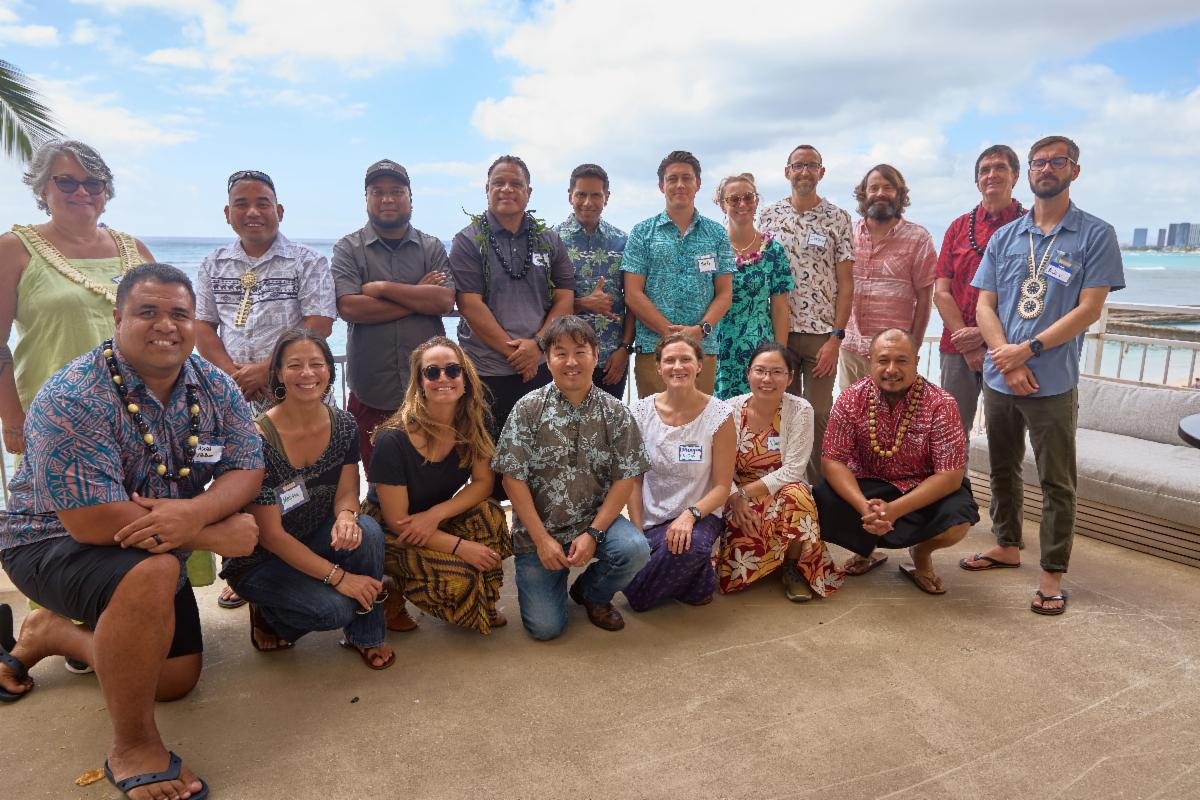
The Backyard Buoys project aims to integrate traditional Indigenous wisdom from coastal communities with ocean data from low cost instrumentation (e.g., Sofar Spotter Buoys and Smart Moorings) to support and enhance ocean safety and knowledge. Project partners from PacIOOS, the Northwest Association of Networked Ocean Observing Systems (NANOOS), the Alaska Ocean Observing System (AOOS), the Quileute Tribe, Quinault Indian Nation, Alaska Eskimo Whaling Commission, American Samoa, the Republic of the Marshall Islands, Sofar Ocean, South Seas Consulting, and more convened in Honolulu in February to strengthen our bonds as collaborators. Participants shared success stories and lessons learned, and worked together on plans for upcoming Backyard Buoys efforts. A beta version of the new Backyard Buoys website was launched; the site will become a portal for buoy tutorials, links to regional data portals, news, and more. Backyard Buoys is funded through the NSF Convergence Accelerator Program.
[Photo: Backyard Buoys collaborators from the Pacific Islands. Credit: Lloyd Pikok, Jr.]
|
|
Ciguatera Workshops in the Republic of the Marshall Islands and Hawai‘i |
|
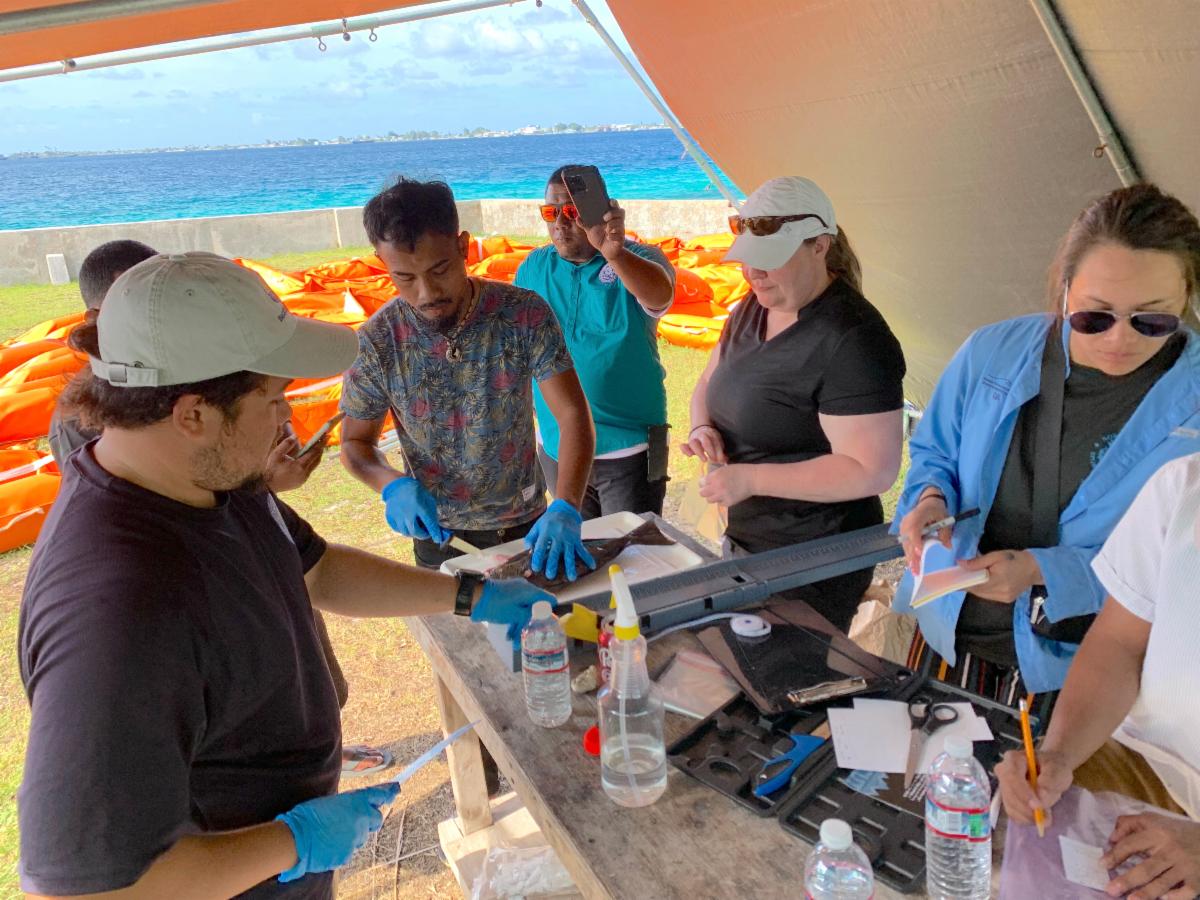
Dr. Eileen Nalley, an Ocean and Coastal Health Specialist at Hawaiʻi Sea Grant working with PacIOOS and NOAA, facilitated a ciguatera training workshop in the Republic of the Marshall Islands (RMI) in collaboration with Andrew McInnis (Hawai‘i Sea Grant and PacIOOS) and Dr. Alison Robertson (with a team from Dauphin Island Sea Lab, Woods Hole Oceanographic Institute, and Cawthron Institute). The week-long workshop in Majuro marked the first in-person event for the Pacific Ciguatera Network. Participants included partners from the Marshall Islands Marine Resources Authority, the Marshall Islands Ministry of Health and Human Services, the Marshall Islands Environmental Protection Agency, and the Marshall Islands Conservation Society. Attendees shared experiences, engaged in reciprocal learning, identified priorities, explored future capacity, gained experience in field collections and lab analyses, strengthened partnerships, and discussed next steps for addressing ciguatera issues in the RMI and throughout the Pacific.
A second, condensed workshop was held on O‘ahu at the Hawai‘i Institute of Marine Biology. Participants benefited from similar opportunities for learning about field collections and laboratory analyses thanks to Dr. Robertson and her team.
We hope that both workshops help to catalyze new relationships and connections for the Pacific Ciguatera Network. [Photo: PacIOOS liaison Voneric Boktok (center) dissects a fish while the rest of the team prepares for sample collection]
|
|
Mahalo to 500 Sails for Buoy Storage |
|
We’d like to extend a big mahalo to 500 Sails, one of our partners in Saipan, Commonwealth of the Northern Mariana Islands. They have generously stored the PacIOOS Tanapag wave buoy and mooring supplies multiple times over the last year as equipment has awaited deployments and maintenance. This includes several pallets of heavy equipment taking up valuable space in their warehouse. PacIOOS relies on countless behind the scenes gestures and support from partners in order to maintain our programs across the region. We really can’t do our work without partners like 500 Sails.
500 Sails seeks to “revive, promote, and preserve the maritime cultural traditions of the Mariana Islands through community engagement in canoe culture and activities.” Check out their Facebook page for photos and videos of their craftsmanship, educational efforts, and traditional stewardship!
|
|
King Tides in the Pacific |
|
By Eric White, National Ocean Service.
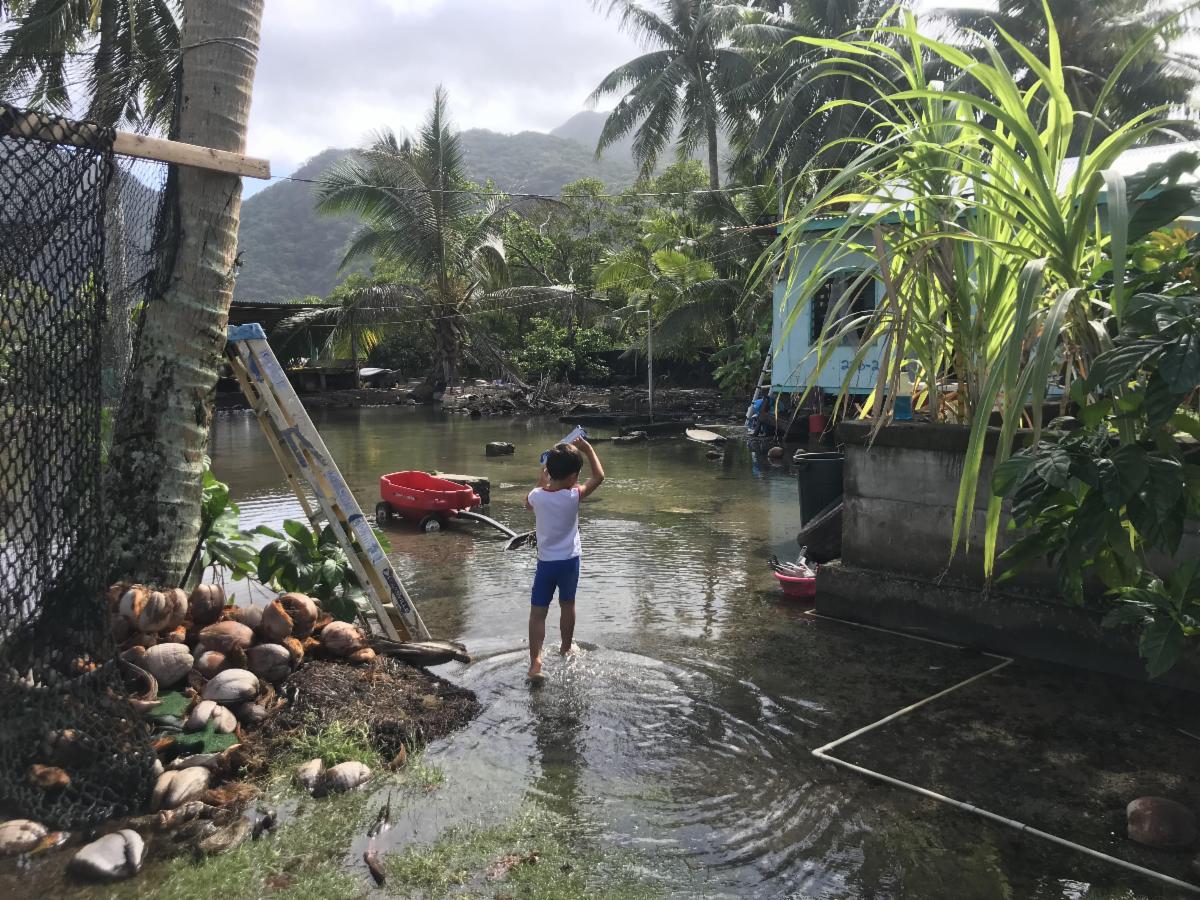
The new moons of February, March, and April 2024 bring a time in the moon's orbit around the earth when it is at one of its closest distances to earth and aligned with the sun, creating what are commonly called King Tides. These higher than normal high tides may cause high tide flooding (HTF) in some locations. March 10 is the closest the moon will be to the earth in 2024 (lunar perigee), but we will also see King Tides during the new moons of February 10 and April 7, and during the full moons of September 18 and October 17. King Tides occur not only on the night of the full or new moon, but for a day or two before and after. NOAA's Tides and Currents web page has a new feature showing the Monthly High Tide Flooding Outlook where you can find a station near your location and see if high tide flooding is unlikely, possible, or likely. For predicted water levels during the King Tides of 2024, please see NOAA’s Tide Predictions, select your area and find the nearest station. The University of Hawai'i Sea Level Center has high tide flooding information throughout the Pacific and in areas outside of NOAA's network in the Pacific Islands. Weather and climate play a huge role in either adding to, or taking away from the tides, so these dates are for your awareness. Please plan ahead for activities in your area, and monitor the weather and swell forecast.
Check out the PacIOOS wave run-up and 6-day high sea level forecasts. To participate in the Hawaiʻi and Pacific Islands King Tide project, and submit photos from your region during the King Tide dates, click here.
[Photo: King Tide flooding in American Samoa. Credit: Kelly Anderson Tagarino]
|
|
PRiMO Conference in Saipan |
|
The annual Pacific Risk Management ʻOhana (PRiMO) conference was held this month in Saipan, Commonwealth of the Northern Mariana Islands (CNMI). Hosted by PRiMO and the CNMI Division of Coastal Resource Management, the theme of this year's conference was “Resilience in Action.” Attendees included heads of state, business representatives, emergency response organizations, nonprofits, universities, government agencies, and local planning institutions. Workshops highlighted green growth initiatives and the Local2030 Islands Network, as well as biosecurity threats to corals and the need for water quality data throughout the region. Also discussed was the desire to modify the scientific terminology used in research and products so that it is accessible to communities, and to work towards sharing main ideas and takeaways in local languages.
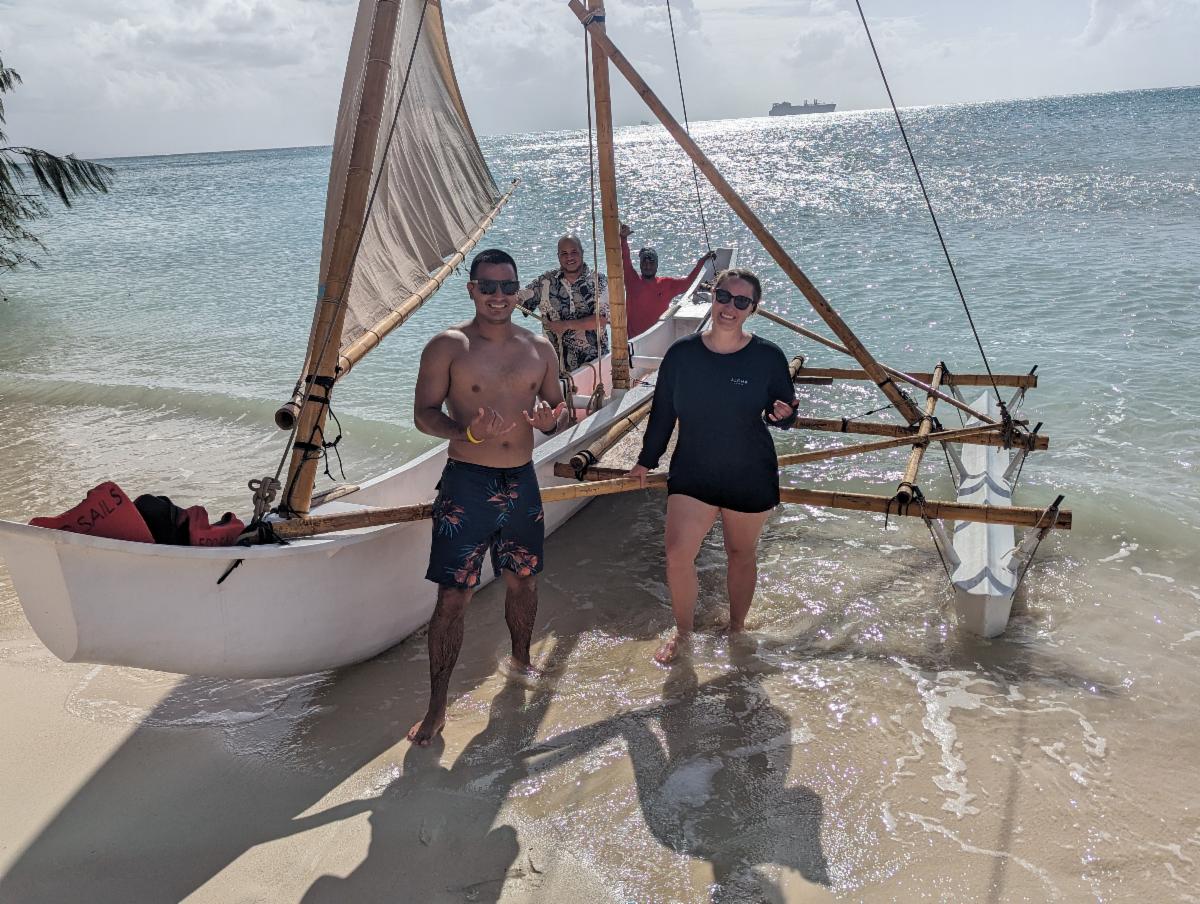
[Photo: PacIOOS Data Management Specialist Lauren Kaiser attended PRiMO, and sailed on a Chamorro Proa canoe with 500 Sails Master Navigator Jun]
|
|
Meet PacIOOS’ New Ocean Physical Data Specialist, Uggo Ferreira De Pinho! |
|
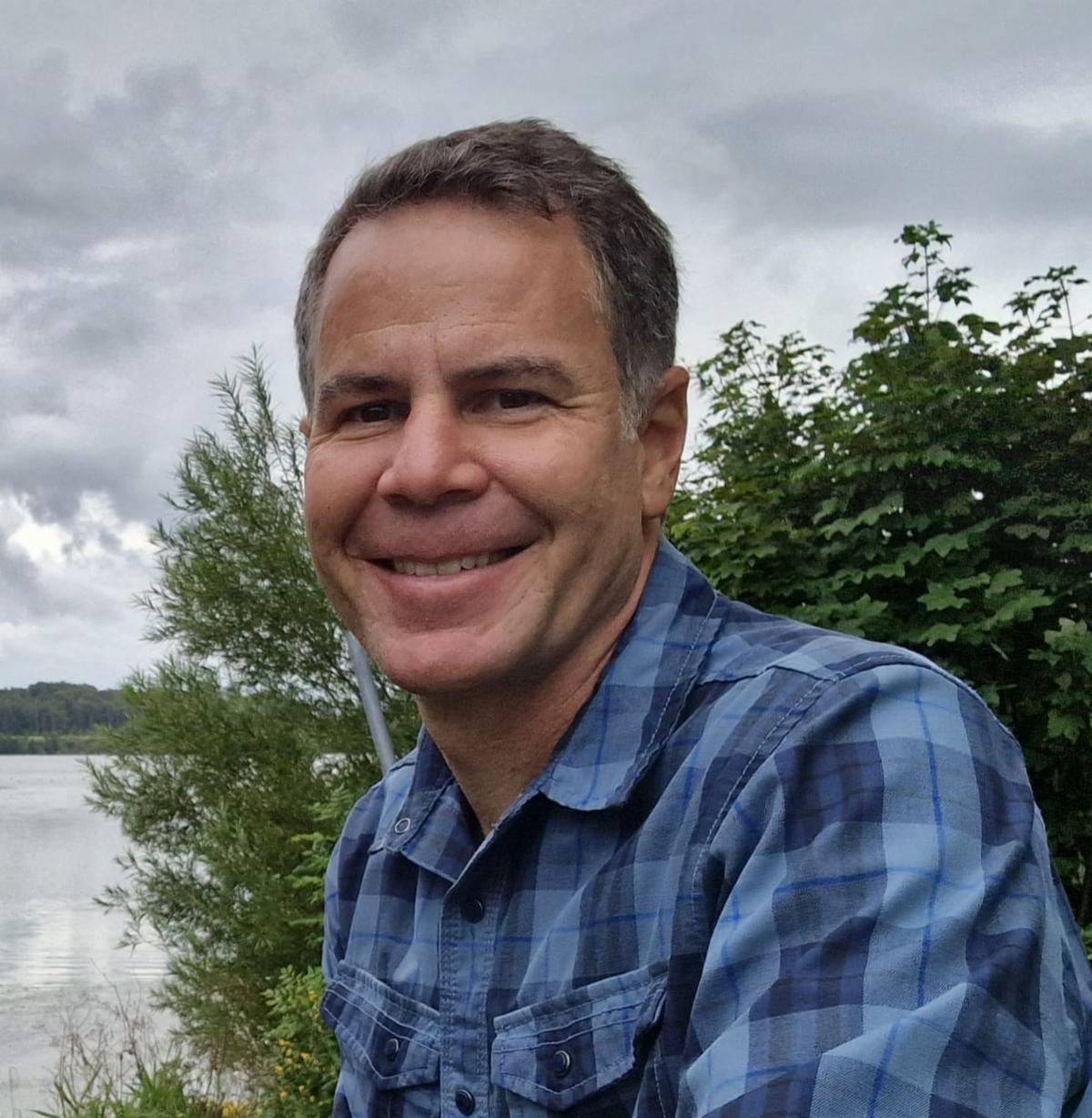
Dr. Uggo Ferreira De Pinho joins our Coastal Hazards Group as an Ocean Physical Data Specialist, bringing both technical expertise and a passion for the ocean. In this role, he will be responsible for acquiring, analyzing, and presenting physical oceanographic data from our long-duration coastal program. This includes tasks such as sensor deployments and recoveries, instrument maintenance, and data editing, processing and visualization, contributing to the program's vital research and outreach efforts.
Uggo's passion for the ocean extends beyond the technical realm. As a dog lover, he understands the joy the coast brings to many, including canine companions! Uggo is eager to use both his technical skills and environmental interests to contribute to the program's goals. We are thrilled to welcome him to the team and look forward to his contributions to our understanding and appreciation of the ocean and its moods. [Photo: Uggo in Stavanger, Norway. Credit: Cecilia Mauriel]
|
|
|
|
|
|
|