Crowley Calls for Strategic Transportation Investment at TDA Annual Meeting | |
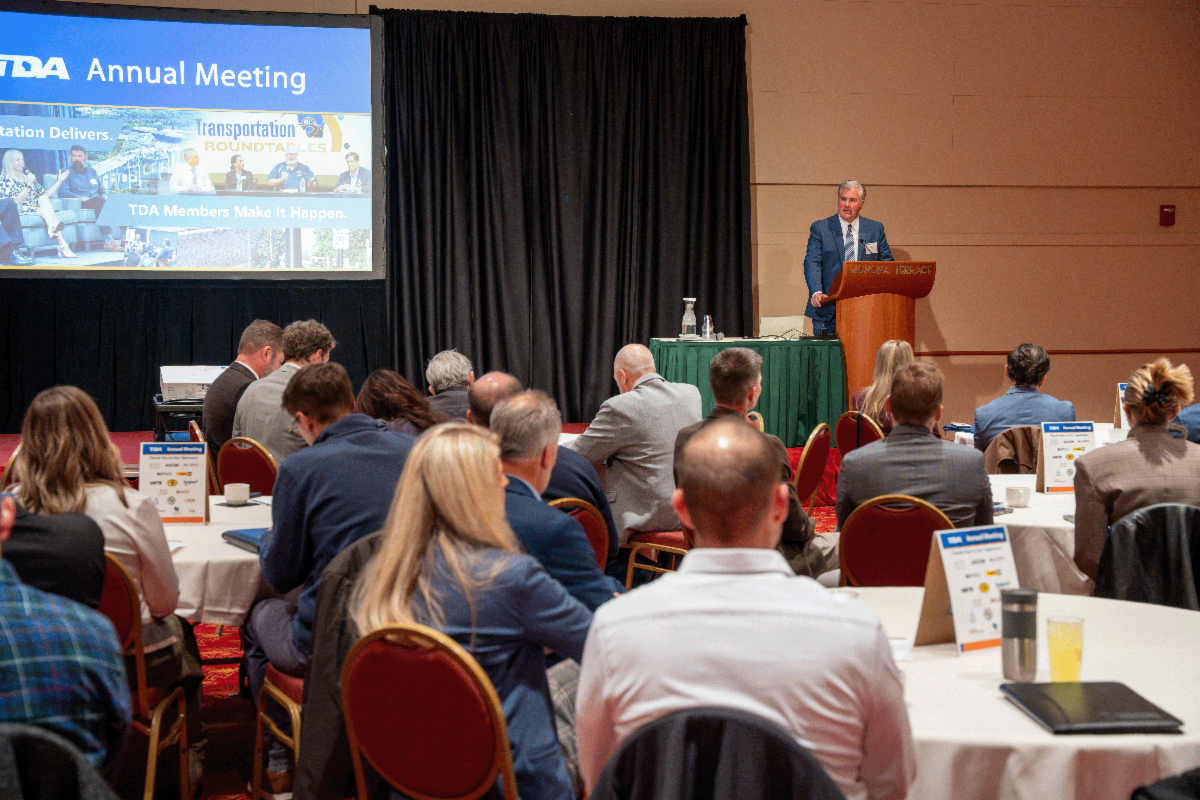
Last week, more than 80 transportation stakeholders from across Wisconsin gathered for the TDA Annual Meeting. With the Nov. 3 election concluded, attendees heard from distinguished speakers about the results and discussed how those outcomes will reshape the political landscape and create new opportunities for transportation funding and policy.
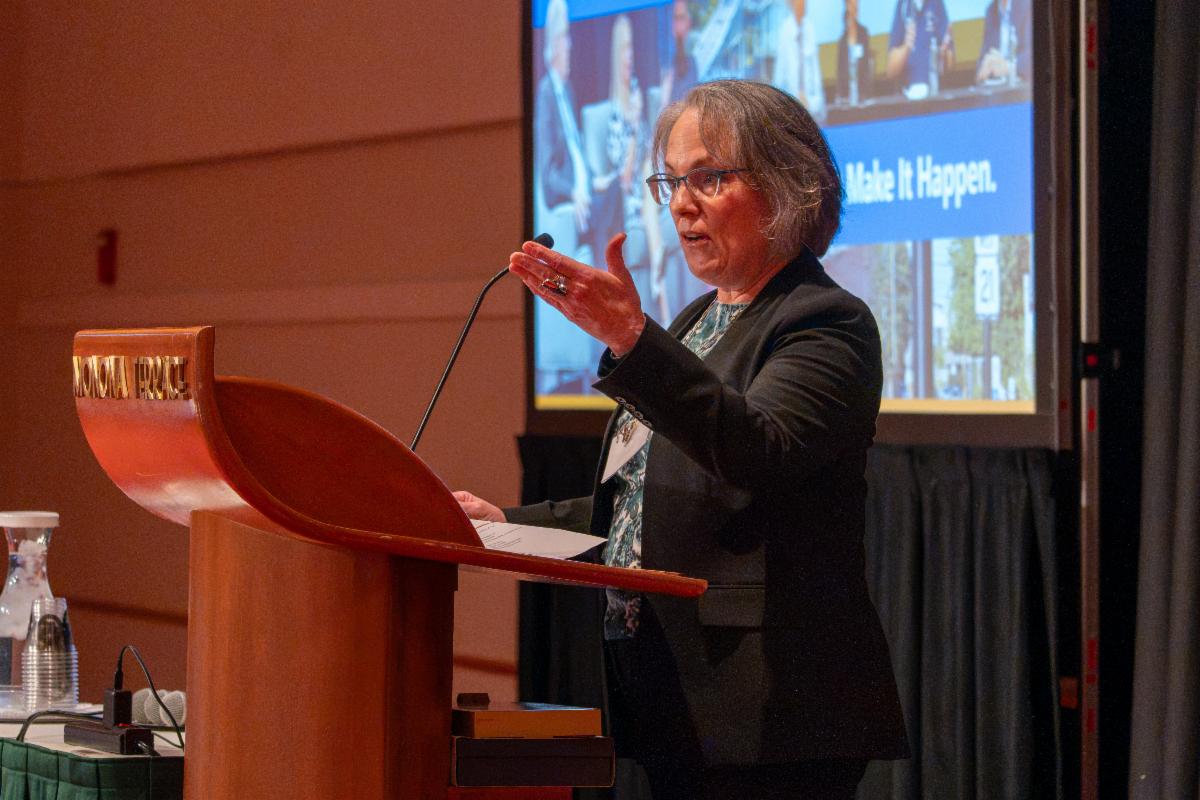
The highlight of the event was remarks by Governor-elect David Crowley. He emphasized the transportation system’s importance to economic development and safety, along with the challenges Wisconsin faces in delivering investments to communities of all sizes. He also called for moving beyond short-term approaches and pursuing intentional, strategic investment.
Following his remarks, Crowley spent time with attendees, who had the chance to introduce themselves and congratulate him on his election as Wisconsin’s next governor.
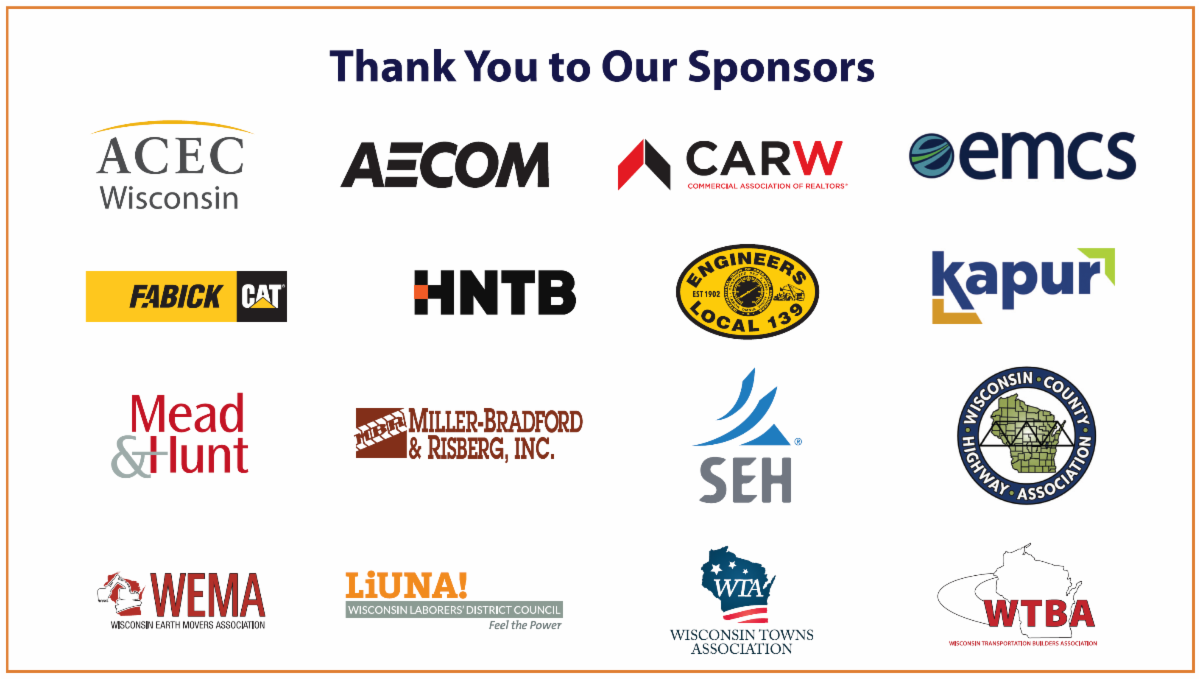
Thank you to all attendees, speakers, and sponsors for making this event a success.
Click here to view presentations and event photos.
| | WisDOT Revised Budget Request Includes New Revenue, Highlighting Funding Shortfall | | |
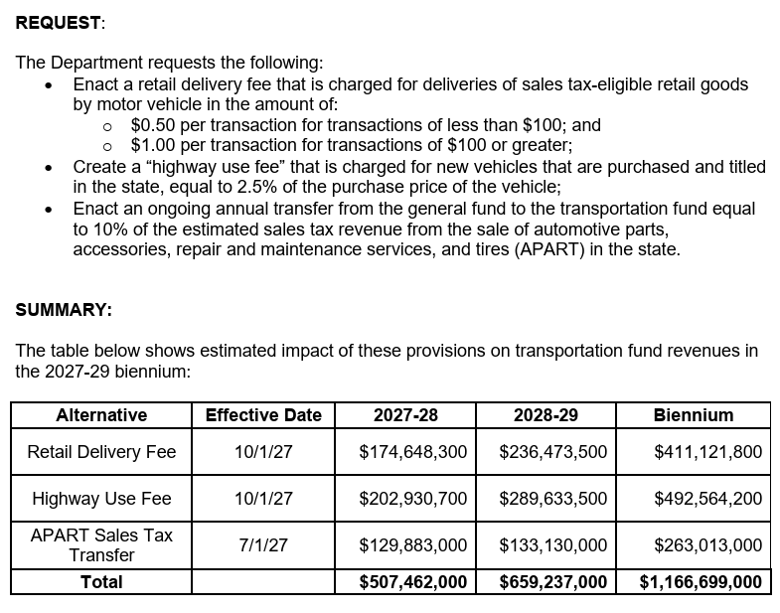
A few months ago, the Wisconsin Department of Transportation (WisDOT) submitted a partial budget request for the 2027-29 biennium. As in past years, the department held off on a complete request while waiting for clearer direction on federal funding. Congress still has not acted on a surface transportation reauthorization bill or a federal fiscal year (FY) 2027 appropriations bill, so uncertainty continues about future federal funding levels and priorities. In a revised request submitted late last week, the department highlighted the growing gap between projected revenues and the funding needed to maintain and improve Wisconsin’s transportation system. WisDOT proposed three new revenue options that could generate more than $1 billion over the biennium.
Highlights from WisDOT’s submittal follow.
Revenue
The challenges facing the state’s transportation fund have been known for decades. While modest user fee increases have been enacted, the shortfall has mainly been covered in recent budgets with larger helpings of general purpose revenues (GPR). This approach has relied on historically large surplus balances related to COVID, which may be exhausted before the 2027-29 budget deliberations begin in earnest.
Excerpt from page 114 of the WisDOT budget request.
| |
Significant Investments
-
General Transportation Aids: Provide a 3% increase in funding each year—$17.3 million SEG in FY 2028 and $17.8 million in FY 2029—to the calendar year general transportation aid distribution for municipalities and counties and fully fund the calendar year 2027 increase provided in 2025 Wisconsin Act 15.
-
Local Road Improvement Program – Supplemental: Provide $45 million SEG in FY 2028 and $50 million in FY 2029, specifying that the money be allocated in the current percentages: 35.6% counties; 39.0% towns; and 25.4% villages and cities.
-
Agricultural Road Improvement Program (ARIP): Provide $70 million SEG in FY 2028. Note: There is no mention of the Local Small Structure Program, so it is unclear how the department proposes to fund the replacement of aging small structures.
-
SE Wisconsin Freeway Megaprojects (I-94 East-West): Propose a biennial total of $615 million, with most of the new funding coming from $496 million in General Obligation (GO) bonding. Debt service for this GO bonding would be paid from the General Fund. Moving I-94 East-West project dollars into the 2027-29 biennium would keep it on schedule, preventing a two-year delay.
-
Routine Maintenance: Raise funding for the Routine Maintenance program by $30.5 million SEG in FY 2028 and $41.9 million SEG in FY 2029. This request increases the Routine Maintenance Agreement (RMA) budget to 69% of the level of service (LOS) model in FY 2028 and 73% in FY 2029.
-
Highway System Management and Operations: Increase funding in the highway system management and operations program—$10.5 million SEG in FY 2028 and $13.5 million in FY 2029—to fund road salt and inflationary increases for maintenance activities.
-
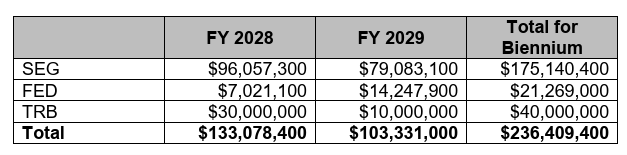
Major Highway Development Program: Maintain purchasing power in the Majors program with an additional $133 million in FY 2028 and $103 million in FY 2029. The increase would come from SEG, FED, and transportation revenue bonds (TRBs).
|
-
State Highway Rehabilitation (SHR): Maintain the purchasing power in the SHR program with an increase of $35.9 million in FY 2028 and $71.6 million in FY 2029, comprising SEG and federal funds.
-
Passenger Rail Operations: Request $1.25 million SEG in FY 2028 and $1.5 million SEG in FY 2029 to support operations of the Hiawatha and Borealis passenger rail services and the continued expansion of passenger rail services in Wisconsin.
-
Passenger Rail Capital: Authorize $52 million in GO bonding for the Hiawatha West extension, which would provide passenger rail services between Chicago, Milwaukee, and Madison.
-
Freight Rail Preservation Program: Provide $12.5 million in GO bonding.
-
Harbor Assistance Program: Provide $14 million in GO bonding.
The department also proposes increased funding for state-owned lift bridges (pages 188-194), local program administration (pages 209-216), MPO/RPCs (pages 217-223), state patrol, emissions testing, and other departmental functions.
In addition, the submittal includes a proposed public transit funding reallocation and requests clarification that state funding tiers are defined by the most recent decennial census rather than the 2010 census. It also proposes updating the statutory definition of Tier A‑1 (Milwaukee) to an urban mass transit system with operating expenditures of $100 million or more, and Tier A‑2 (Madison) to an urban mass transit system with operating expenditures between $30 million and $100 million, reflecting projected budgets for these systems (pages 124-131).
Agency budget requests are the first step in the process and reflect agencies’ priorities. They do not necessarily match what an administration—especially a new one—will propose early the following year or what the legislature will prioritize.
| | Transportation Issues Face Tight Timeline in Lame-Duck Session | | |
Members of Congress returned to Washington last week for a lame-duck session and organizational meetings for the 120th Congress. With control of both chambers set to change on Jan. 3, the session is expected to focus primarily on must-pass items. Republicans’ narrow majority has already limited their ability to advance major legislation, and that challenge has grown since the election. Democrats, meanwhile, have little incentive to negotiate significant deals before they take control in January.
A few transportation-related items still need attention before the target adjournment date of Dec. 18:
1) FY 2027 Appropriations
A stopgap measure funds government at FY 2026 levels through Dec. 11. Congress has three main options: an omnibus package, another continuing resolution into next spring, or a CR through the end of the fiscal year on Sept. 30. An omnibus covering all 12 appropriations bills may be unlikely given the status of the bills in each chamber. Industry partners in Washington are working to ensure that any measure—short-term or full-year—includes Infrastructure Investment and Job Act advanced appropriations transportation funding. You can help out by completing this Transportation Construction Coalition call to action.
2) Surface Transportation Authorization Extension
The current surface transportation authorization extension also expires on Dec. 11. A completed reauthorization bill would be a heavy lift this year, leaving another short-term extension or one through the end of the fiscal year as the realistic options.
3) Water Resources Development Act
The House and Senate made significant bipartisan progress earlier this year on legislation supporting waterway, port, and navigation improvements, increasing the likelihood that a new two-year WRDA bill will advance in the lame-duck session. The House passed H.R. 9497 on Sept. 16 by a vote of 415–9. The Senate Environment and Public Works Committee reported S. 4949 on July 15, though the bill has not yet reached the Senate floor. The two chambers are expected to negotiate a compromise and attempt to pass it before adjournment.
4) Permitting Reform
The Senate is expected to take additional votes this week on the Bipartisan American Affordability and Jobs Act, which aims to improve project delivery. If the Senate passes the bill, it will go to the House, which could approve it as written or amend it and send it back to the Senate for further consideration. House Speaker Mike Johnson told reporters last week that he believes the House has the votes to pass the Senate version.
The lame-duck agenda is expected to stay limited, with Republicans focused on government funding, the National Defense Authorization Act, additional defense spending, and judicial and executive confirmations. Floor time for other measures will be tight. The transportation items above are among the better candidates for action because of the Dec. 11 deadline or existing bipartisan support.
| |
November
Project Spotlight
| | $218 Million Federal Grant to Advance Hiawatha Passenger Rail Extension to Madison | | |
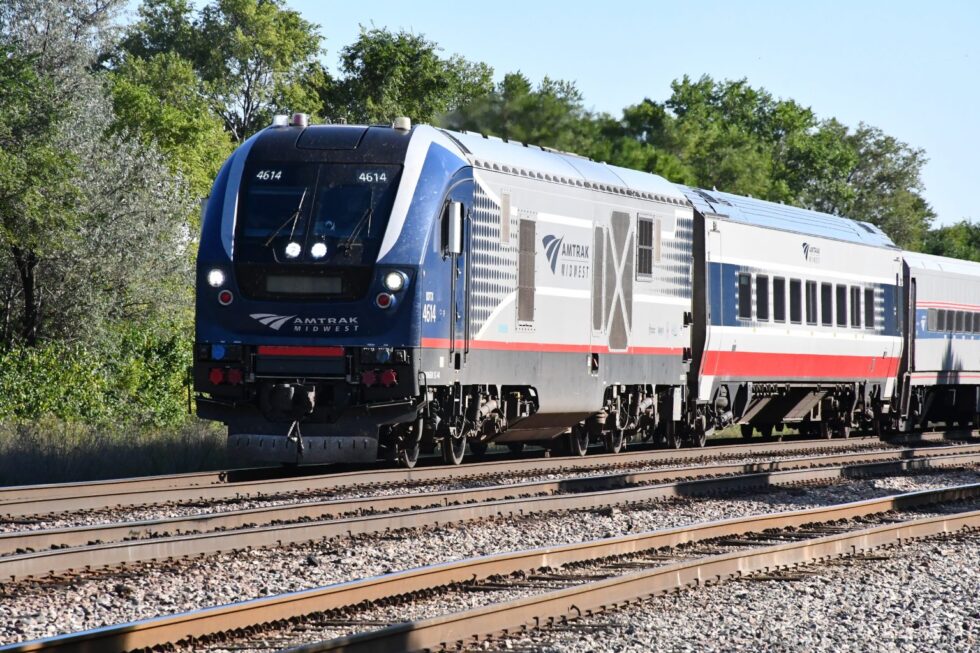
Amtrak’s Hiawatha service connects Milwaukee and Chicago, providing an established passenger rail connection between the two cities.
The Hiawatha West project would extend two daily Hiawatha round trips from Milwaukee to Madison, with additional stops in Pewaukee and Watertown. Passengers could travel between Madison and Chicago through Milwaukee on the extended service.
WisDOT has been awarded more than $218 million through the Federal Railroad Administration’s Consolidated Rail Infrastructure and Safety Improvements (CRISI) program. The grant will cover approximately 80% of the Hiawatha West project’s final design and construction costs.
Wisconsin must secure the required matching funds and operating support before advancing final design and construction.
Read more.
| | Ron Chamberlain TDA's 2026-2027 President | |
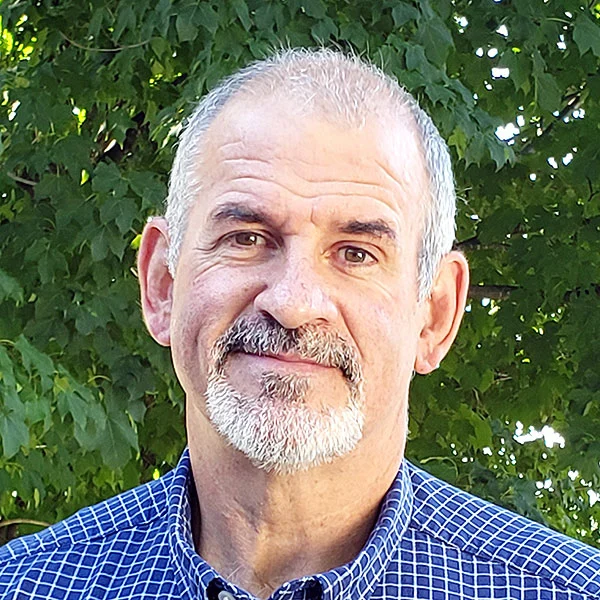
Ron Chamberlain was elected the 50th president of the Transportation Development Association at the Annual Business Meeting earlier this month. He will serve a one-year term.
Chamberlain is the business development manager at SEH. He first joined the TDA board in 2019, representing the Wisconsin County Highway Association.
Other members of the 2026-27 TDA Executive Committee include:
-
1st Vice President: Brandon Strand, Walbec Group
-
2nd Vice President: Andy Kowske, HNTB
-
Secretary: Melissa Kraemer Badtke, East Central Wisconsin RPC
-
Treasurer: Tim Peterson, James Peterson Sons, Inc.
-
Past President: Robb Kahl, Construction Business Group
Thanks to all for their service.
| TDA Presents Sheldon Johnson with the Transportation Service Award | |
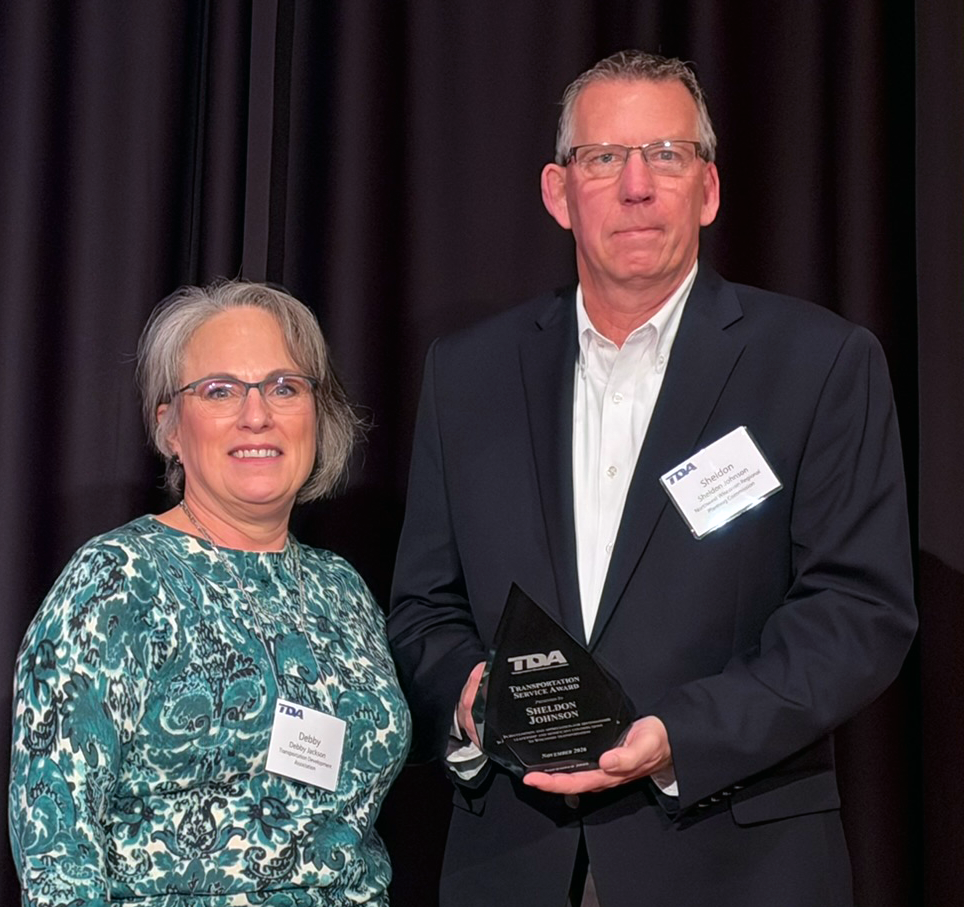
TDA Executive Director Debby Jackson presented Sheldon Johnson with the prestigious Transportation Service Award at TDA’s Annual Meeting, recognizing his outstanding leadership and commitment to advancing Wisconsin’s transportation system.
Johnson, executive director of the Northwest Regional Planning Commission, is retiring after more than three decades of service. He has also served on TDA’s Board of Directors for 29 years.
TDA thanks Johnson for his many years of dedication to Wisconsin’s transportation community.
| Thank You to Our 2026 Organizational Sponsors | | Transportation Reception at TRB, Sponsorship Opportunities | |
The 2027 Transportation Research Board Annual Meeting in Washington, D.C., is quickly approaching. The Wisconsin Transportation Reception offers a valuable opportunity to connect with Wisconsin transportation professionals, celebrate the state’s contributions to the industry, and strengthen professional networks.
Sunday, Jan. 10, 2027
5:00 - 7:00 p.m.
Yard House
812 7th Street NW
Washington, D.C. 20001
Please consider sponsoring this event and help bring together our state's transportation professionals by providing a $1,000 contribution. If interested, contact TDA's Luke Pearson for more information and to arrange sponsorship payment. Submit your company logo to Carlyn Ross at UW-Madison.
This event is hosted by the University of Wisconsin-Madison Department of Civil and Environmental Engineering and the Transportation Development Association of Wisconsin.
| | |
The Wisconsin Asphalt Pavement Association (WAPA) 67th Annual Conference & Business Meeting will be held Dec. 1-2, 2026, at the Kalahari Resort in Wisconsin Dells.
It's not too late to register. Visit the event page for more details.
| | |
The Wisconsin County Highway Association Winter Conference takes place Jan. 12-14, 2027, at the La Crosse Center.
Looking to register? Visit the event page for details.
| |
The 2027 WCPA Annual Concrete Pavement Conference will take place Feb. 10-12, 2027, at the Oshkosh Marriott Waterfront Hotel & Convention Center.
The conference will feature several exhibitors and speakers, and Professional Development Hours (PDH) will be available.
Registration is open. See the event page for more details.
| | If you would like TDA to consider including your organization's update or event in an upcoming newsletter, please forward information to Luke Pearson at luke.pearson@tdawisconsin.org. | |
Transportation Development Association of Wisconsin10 East Doty Street, Suite 201 | Madison, WI 53703
(608) 256-7044 | general@tdawisconsin.org
| |
| | | |