Haglid Engineering & Associates, Inc.® has been around for 20+ years delivering the highest quality services in significantly reducing energy consumption. Sister company Building Performance Equipment, Inc.® manufactures Energy Recovery Ventilator systems with superior efficiency.


Facebook  X  Instagram  LinkedIn

In this Issue:

  • Field Adjustment of ERV Duct Dimensions
  • How Our ERVs Work and What They Can Do
  • Quick Quiz: Do you remember the equation?
  • Case Study: Warehouse Wisdom--Super High-Efficiency HVAC is the Way to Go!


Field Adjustment of ERV Duct Dimensions

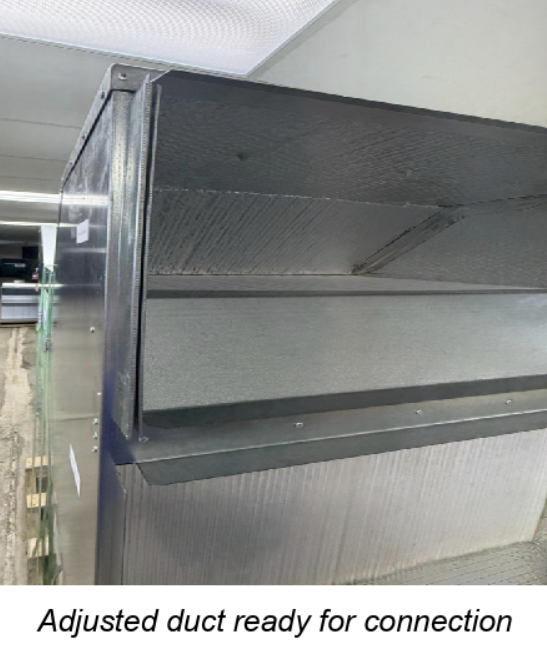
Condition: Duct opening dimensions are slightly out of tolerance and need to be adjusted to mate with connecting ductwork or the ERV cabinet.


Action: Explanation of two field-adjustment methods: (1) installing z-clips to gain or lose approximately 1/8" per clip, and (2) using a hand seamer to shift the duct wall in or out to dial in the final dimension.

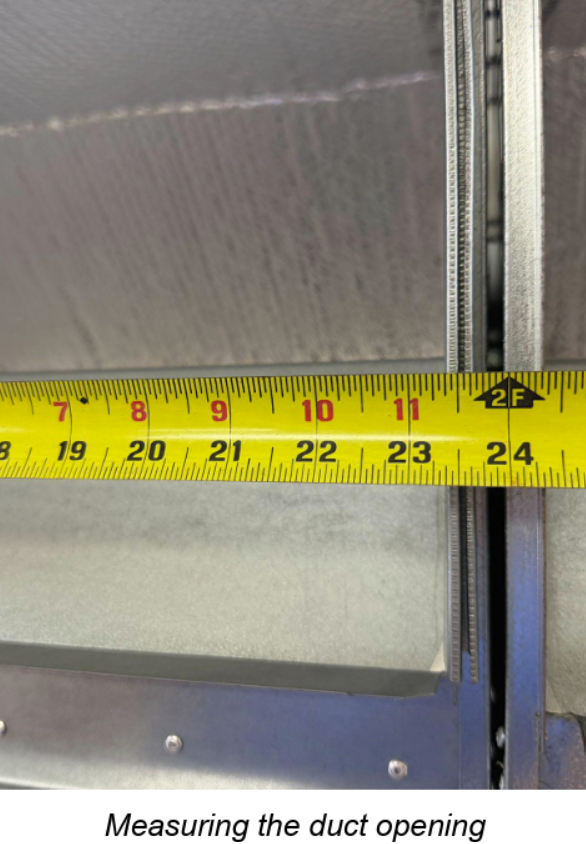
1) Before connecting ductwork to the ERV or to adjoining sections, measure the duct opening on both the width and height axes to verify it matches the mating part.


Sheet metal fabrication tolerances will cause finished duct openings to vary by approximately ±1/8" to ±1/4" from nominal.


Tip: Measure at both ends of the opening (not just one) — duct openings can be slightly out of square.

2) Method 1 — Z-clip (for ~1/8" adjustments per clip):

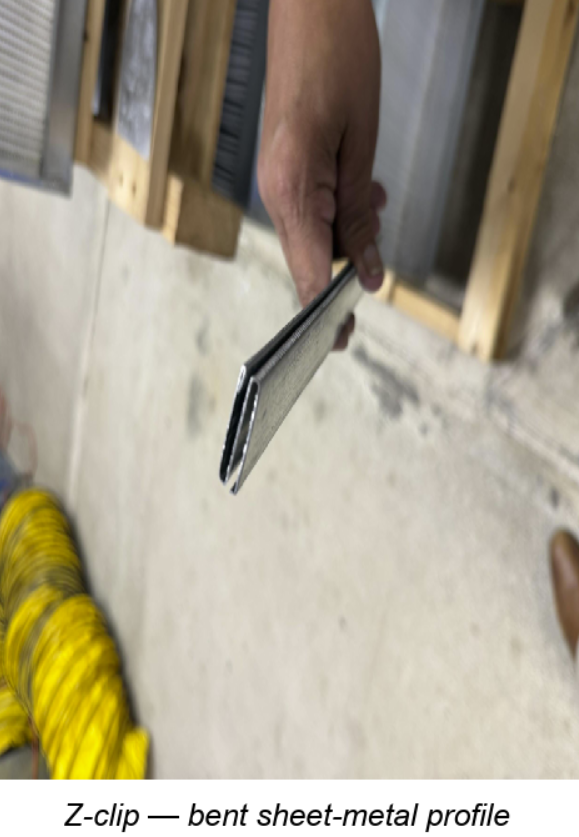
A z-clip is a small piece of bent sheet metal that slides into the duct seam. Each clip adds or subtracts approximately 1/8" to the duct dimension at the point of insertion.


To install:

a) Identify the duct seam on the side you need to widen or shorten.

b) Slide the z-clip into the seam from the open end, with the bent leg facing inward or outward.

c) Seat the clip flush against the seam edge.

d) Re-measure the opening to confirm the gain.


Note: Multiple z-clips can be stacked along the same seam if more than 1/8" of change is required, up to roughly 1/4" before the seam needs reworking.

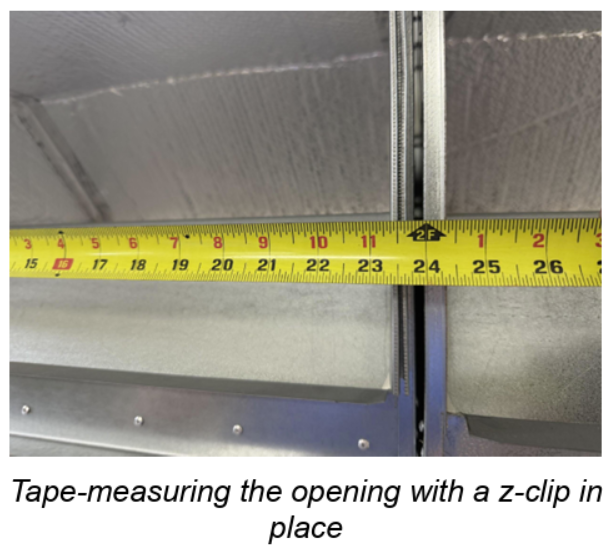
2a) Once installed, the z-clip captures the seam and holds the wall position. Verify the clip is fully seated with no gap between its bend and the seam edge.


Re-measure the opening with a tape across the adjusted axis. The reading should increase by approximately 1/8" per clip installed.

3) Method 2 — Hand seamer (for shifting the duct wall):

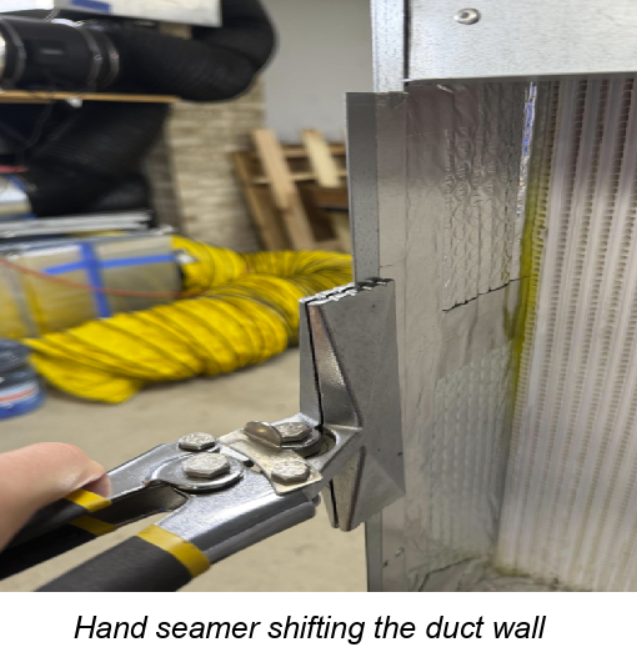
When a finer or larger adjustment is needed than a z-clip can provide, use a hand seamer (sheet metal tongs) to physically shift the duct wall in or out to dial in the dimension.


To adjust:

a) Clamp the hand seamer onto the duct edge at the point where adjustment is needed.

b) Lever the seamer outward to push the wall outward (gain dimension), or inward to pull the wall in (lose dimension).

c) Work in small increments — re-measure after each pull and adjust further if needed.

d) Move the seamer along the length of the seam in 4"–6" intervals to keep the wall straight and avoid kinks.


Caution: Avoid over-bending in any single spot — this can permanently kink the duct wall or break the seam.

4) After any adjustment, re-measure the opening on both axes at both ends to confirm the new dimension matches the mating part within tolerance.


Test-fit the mating duct or ERV connection before fastening. The two parts should slide together with light pressure — neither forced nor loose.


Final check: Confirm the duct is still square (diagonals equal) after adjustment. A heavy push from a seamer on one side can knock the duct out of square.

Adjusted


How Our BPE ERVs Work and What They Can Do

Want to share how BPE ERVs can help your clients, fellow building industry professionals, friends, and relatives to better human health indoors, save money, and lower CO2 emissions? Share the following links!


Quick Quiz: Do You Remember?


In our last issue, we talked about using Absorbable Power Versus Nominal Power to test efficiency accurately.


Do you recall the equation we used?


Stumped? See Test Efficiency Accurately Using Total Absorbed Power.


The BPE-SC-UNI-2000 in a testing setup

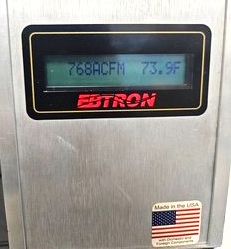
Our setup using a BPE-SC-UNI-2000 to test our success for achieving 0.2 Watts per CFM (the toughest standard to achieve in the United States) while also attaining a minimum of 80% sensible efficiency. Do our ERV systems pass the test? A resounding YES!


Warehouse Wisdom

Super High-Efficiency HVAC is the way to go!

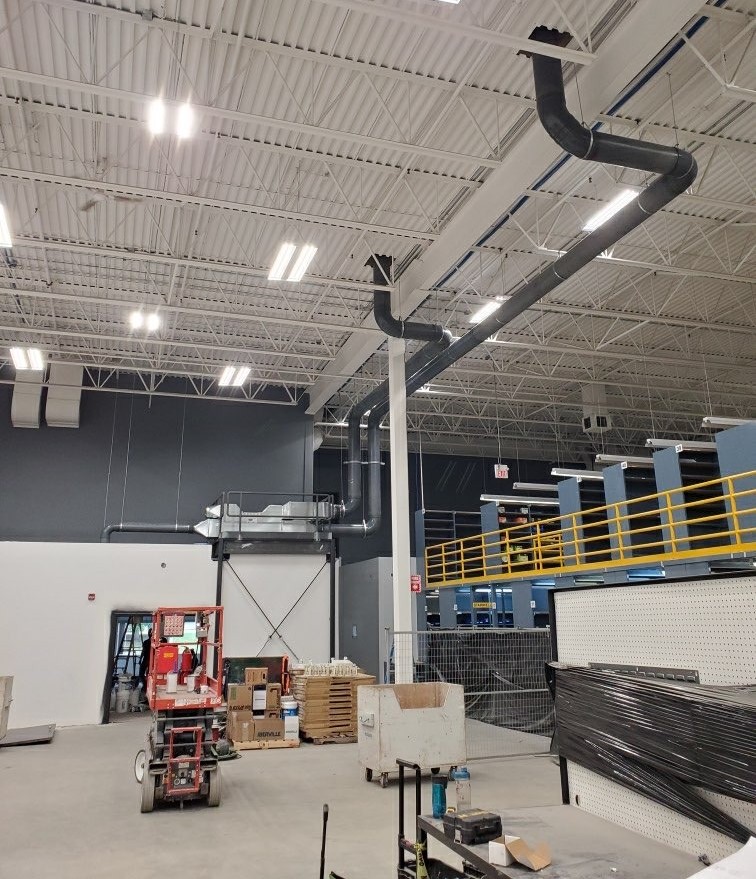
Grainger Warehouse

Safety Equipment Supplier

Sherwood Park, Alberta


CHALLENGE

All warehouses need high-quality indoor air and thermal comfort, but it’s easy to fall short of healthy levels in such structures. Warehouses are typically large, open spaces with limited natural ventilation thanks to lack of windows and doors causing dust, particles, chemicals, and emissions to accumulate.


And temperatures? Winters in Alberta are known to dip below -30 degrees Celsius and even into the -40s. To accommodate winter (and summer) extremes, HVAC systems use a lot of (expensive) energy to warm employees.


Grainger wanted to improve staff health and comfort without suffering worse energy bills, so any solutions would require super high efficiency.

SOLUTION

Grainger hired HVAC Systems and Solutions of Alberta, which prides itself on providing the right HVAC products for the right application. HVAC Systems drew up a plan incorporating....


Have you worked with us before?

If so, we'd love a review!

And don't forget to add BPE, Inc. to your social media feeds!

Facebook      Instagram      LinkedIn
Haglid Engineering & Associates, Inc.®
201.722.1233  | klas@haglidengineering.com |  www.haglidengineering.com

Building Performance Equipment, Inc.®
201.722.1414 | klas@haglidengineering.com |  www.bpequip.com

Edited by Kim Perrone