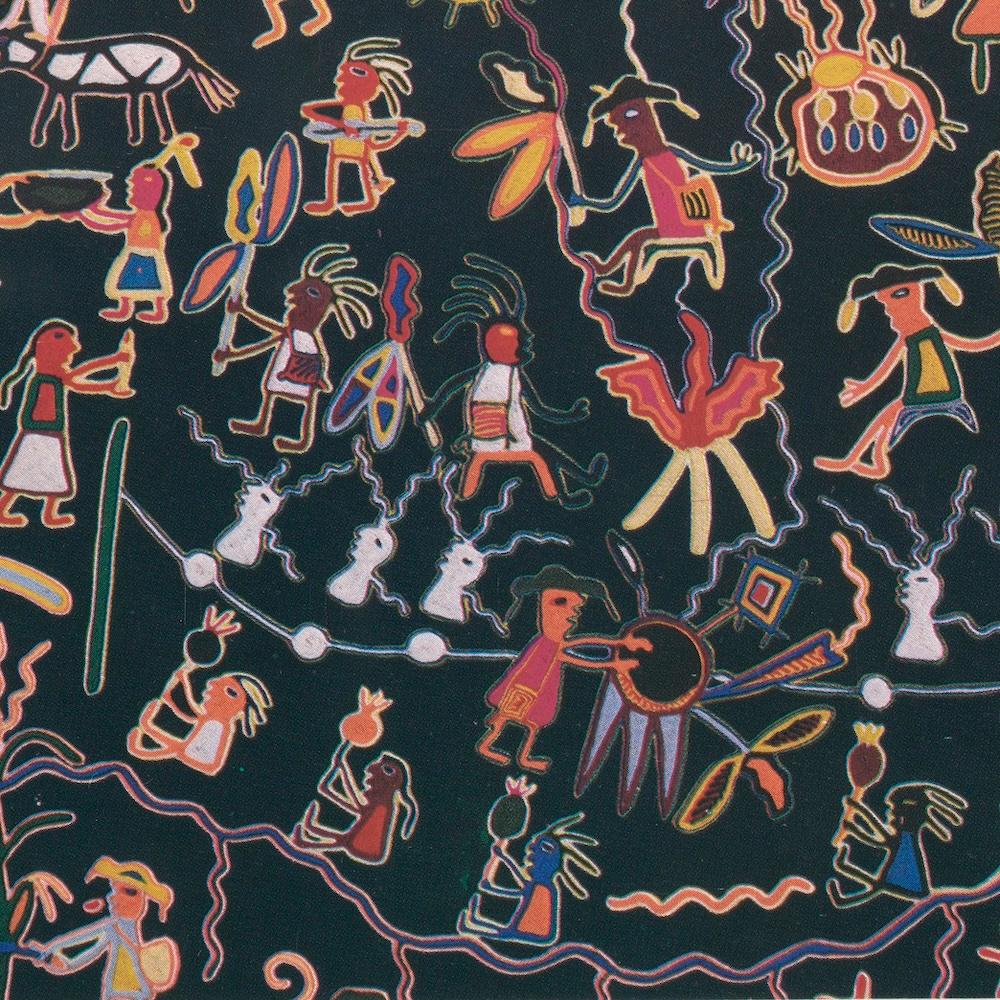
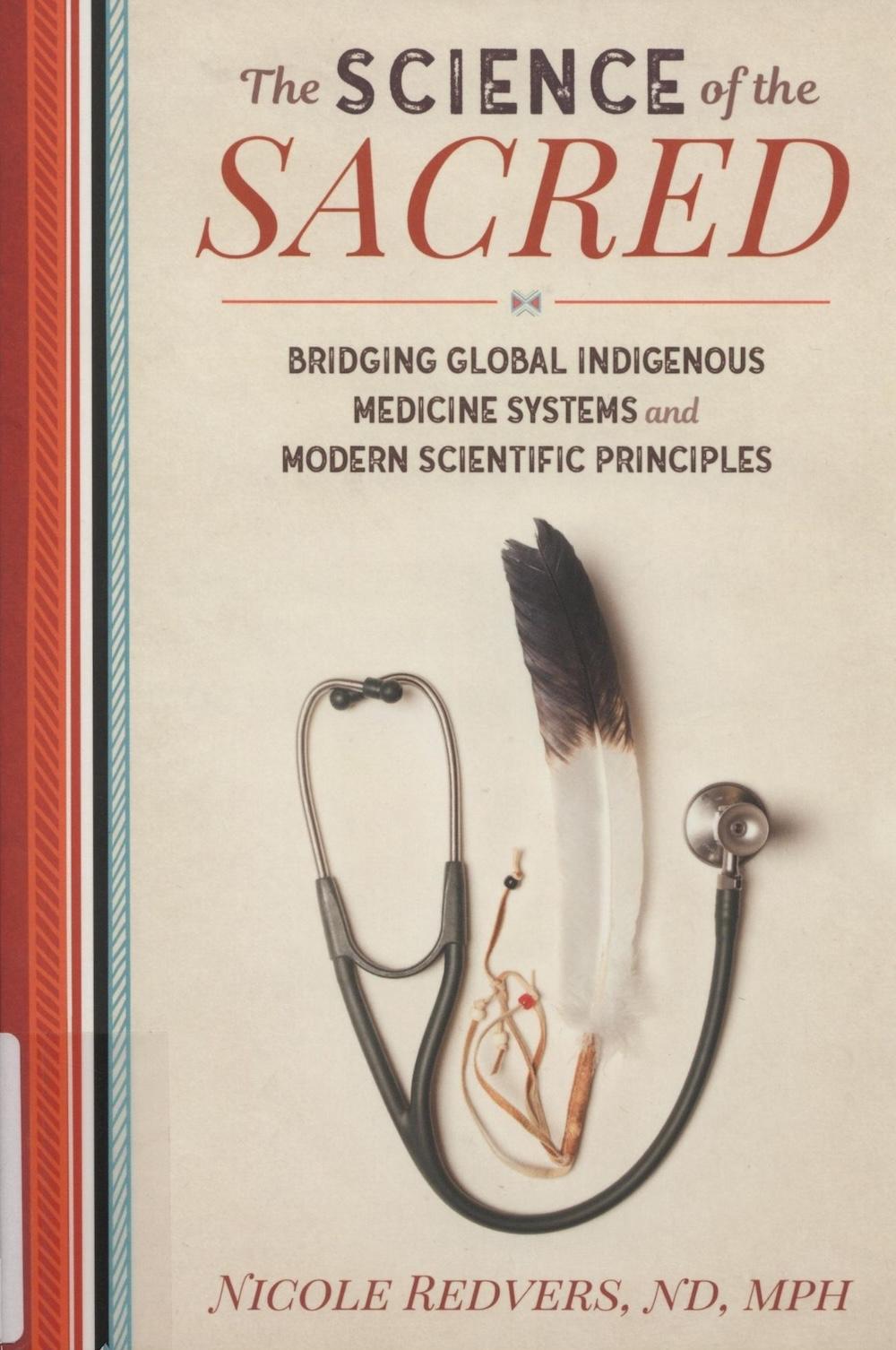
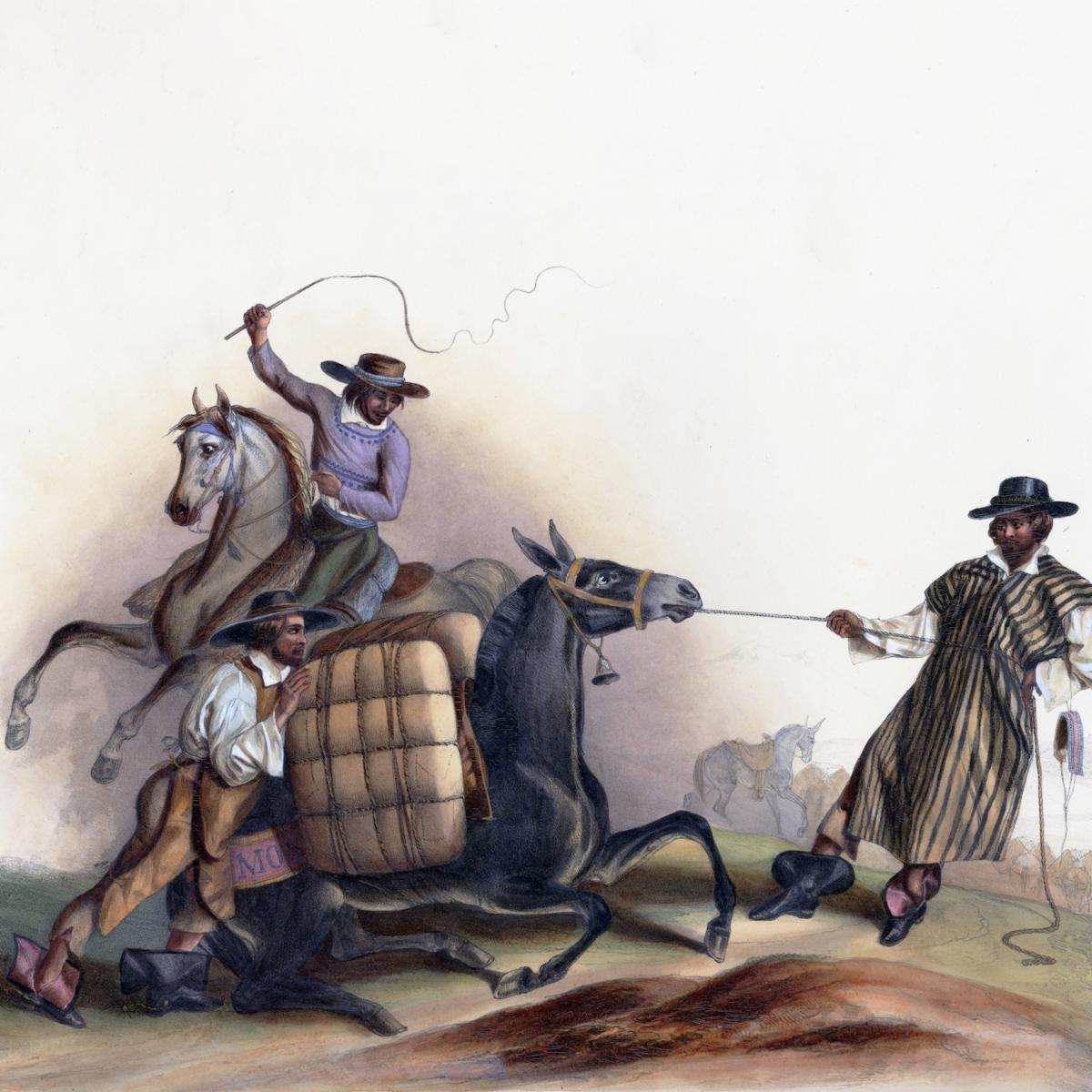
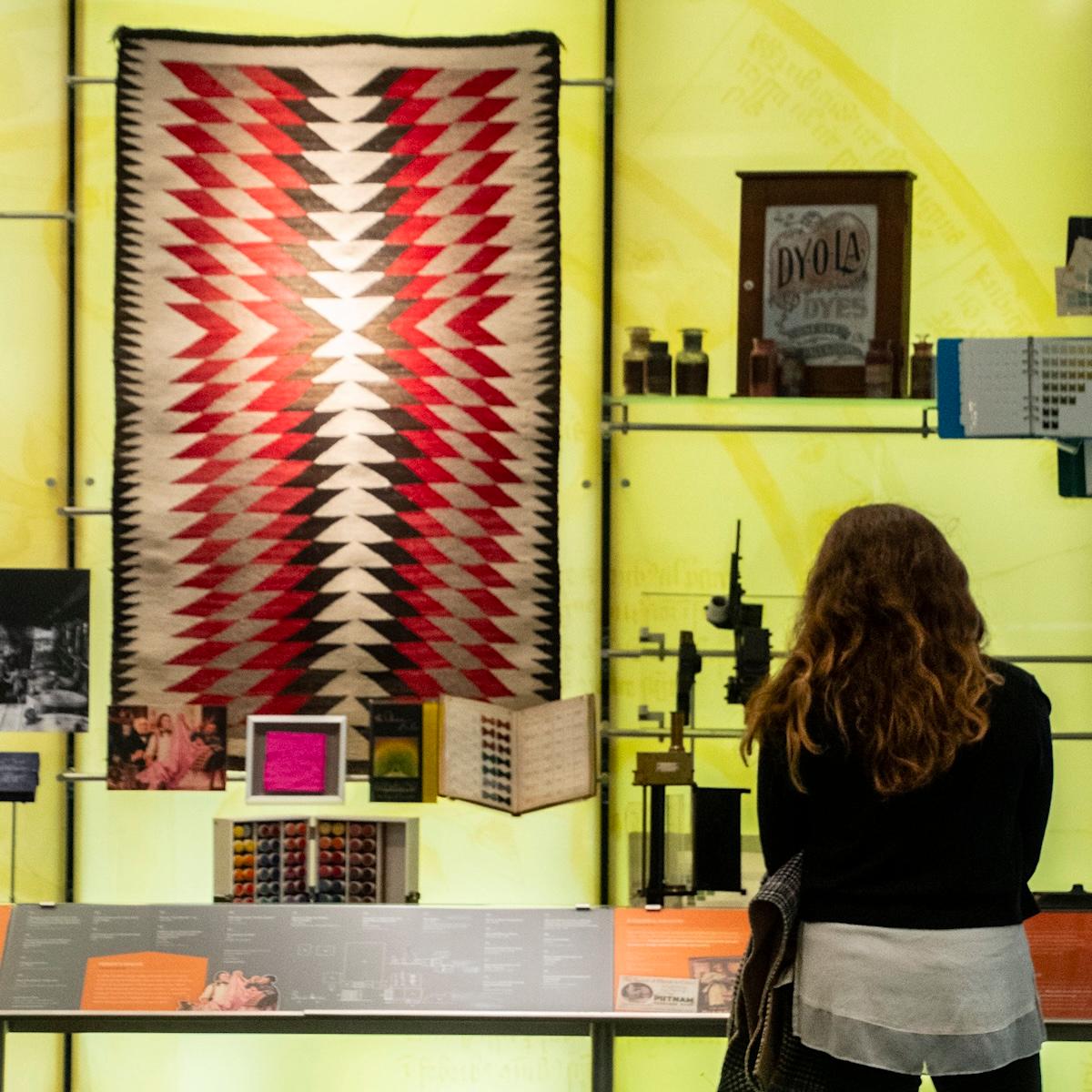
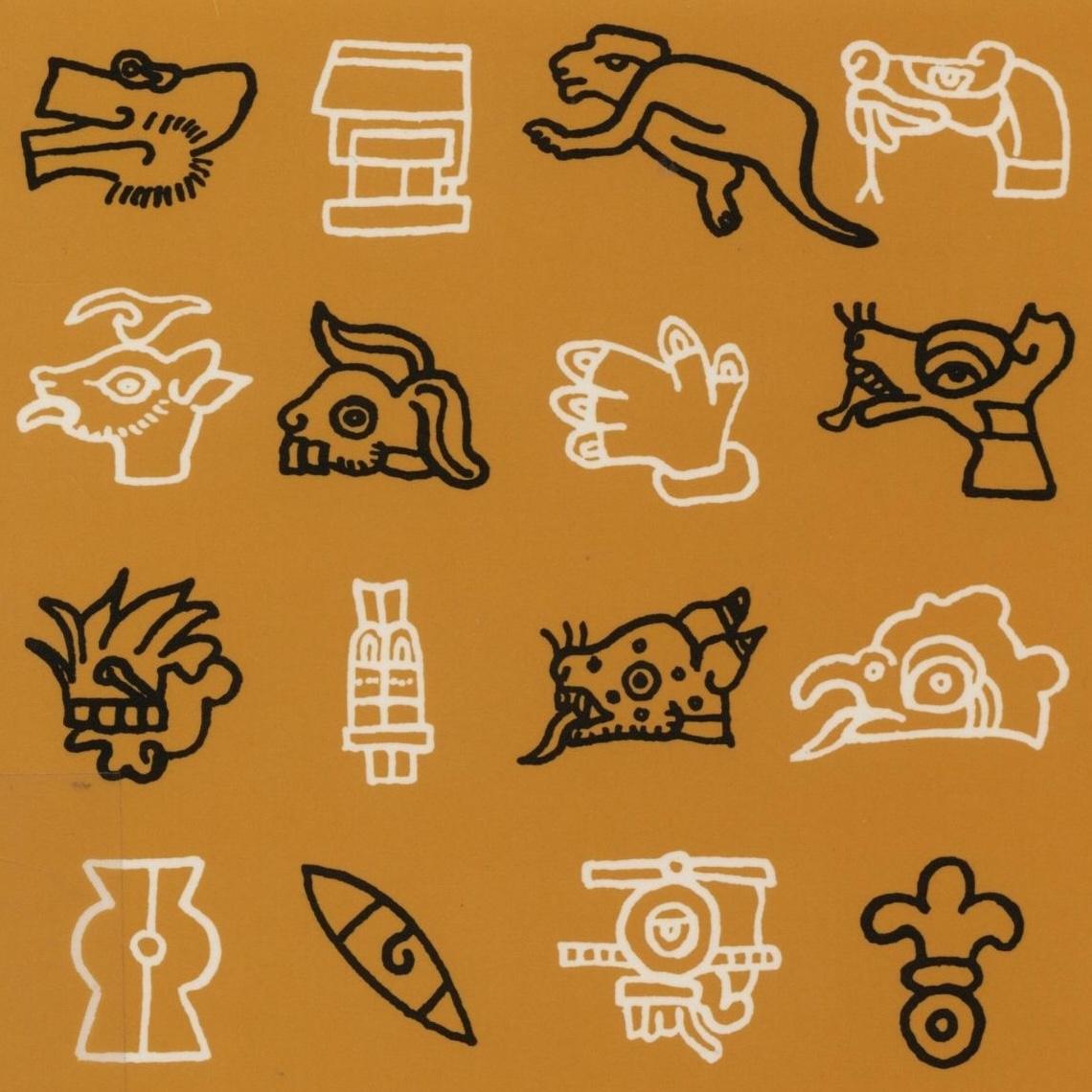
Detail of the cover of Myths and Rituals of the Huichol Indians (1981), pamphlet showcasing the art of Emeteria Ríos Martínez, a Huichol Indian who created murals and yarn paintings across two decades for the Institute for Scientific Information in Philadelphia. 📷 Science History Institute | | November is Native American Heritage Month, but we’re expanding our celebration to include other Indigenous peoples, like Huichol artist Emeteria Ríos Martínez. Check out these books found in our Othmer Library: The Science of the Sacred (2019), Native American Mathematics (1996), Navajo Native Dyes (1940), and Chemical Arts and Technologies of Indigenous Americans (2016). Next, learn about Maria Sibylla Merian, an entomologist and scientific illustrator who collaborated with the Indigenous people of Suriname in the late 1600s and early 1700s, then read “Mule Power,” an article about Afro-Indigenous arrieros, or muleteers, in colonial Mexico. You can also visit our museum to see the Navajo rug on display in our permanent exhibition, but don’t forget to bring a few items for our food drive with you. | | |
|
Museum Holiday Hours
Please note: The Science History Institute will be closed for the Thanksgiving holiday on the following days:
- Thursday, November 26
- Friday, November 27
- Saturday, November 28
Our regular museum hours are Wednesday through Saturday, 10am to 5pm, and will resume on Wednesday, December 2. Admission is always FREE.
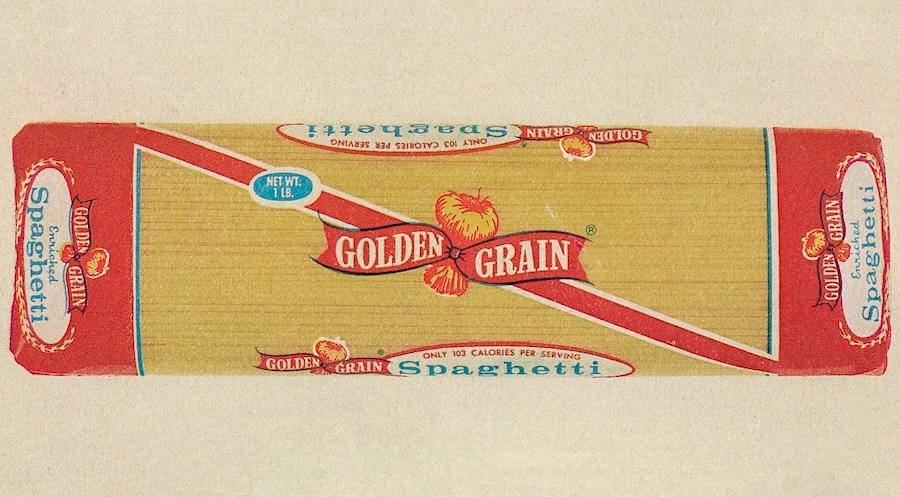
| | Detail of Smart Arithmetic: Dobeckmun, advertisement for polyethylene film manufactured and sold by the Dobeckmun Company, after 1957. 📷 Science History Institute | | |
Science History Institute Hosts Food Drive to Support The NeighborHub
The Science History Institute is hosting a food drive in partnership with The NeighborHub (formerly Old Pine Community Center), a Philadelphia-based nonprofit that provides weekly grocery care packages and hot meals on weekends for families experiencing food insecurity. From now through Friday, December 18, you can drop off non-perishable goods in our lobby when you visit our museum, which is open Wednesday through Saturday, 10am to 5pm (see Thanksgiving holiday closure dates above). Most-needed items include pasta, pasta sauce, tuna, soup, cereal, peanut butter, jelly, oil, broth, and spices, but all food is appreciated. Pull-tab cans and plastic containers are preferred. No expired food, please. Donors receive 5% off all items in our gift shop.
| | All events are free and take place online or at the Science History Institute at 315 Chestnut Street in Old City Philadelphia unless otherwise noted. | | |
Library Programs & Activities
Othmer Library Tours
| | |
Guided Tours
Alternating Wednesdays
November 18; December 2, 16, 2026
January 13, 27; February 10, 24, 2027
12pm–12:45pm EST
| | | |
Drop-in Tours
First Fridays*
December 4, 2026
4:15pm–5pm EST**
February 5, 2027
5:15pm–6pm EST
*Please note there is no First Friday in January.
**Please note special time for this tour.
| | | Curious about the other half of the Science History Institute? Step into the Othmer Library of Chemical History! Explore the reading room on a guided tour, learn how our collection has grown, and discover one of the most comprehensive rare book collections on chemistry and its alchemical roots. Registration is required for tours on Wednesdays. | | |
Joseph Priestley Society Virtual Lecture Series
The Electrical Grid in Flux
| | |
Thursday, November 19, 2026
1pm–2pm EST
| | | What are the operational and economic limitations to installing alternative generation technologies, such as solar, wind, geothermal, and nuclear? What are the political and social constraints? And how do large-scale storage technologies and data centers affect the needs of the electric grid? Energy engineer Dave Walter, the current director of marine operations at the University of Delaware’s College of Earth, Ocean and Environment, will address these questions and more. Registration is required for this virtual event. | | |
Museum Programs & Activities
Stories of Science
| | |
Saturdays*
November 21; December 5, 12, 19, 2026
10am–5pm EST
*Please note there is no tour on November 28 or December 26.
| | | Join us in our museum EVERY SATURDAY for a family-friendly program that highlights the many strange and surprising stories from the history of science. Our fun, interactive activities are designed for science lovers of all ages. We’re Feasting on Chemistry in November and enjoying a Cuppa Chemistry in December! Admission is free and reservations are not required. | | |
Museum Programs & Activities
Drop-in Tours
| | |
25-Minute Highlights Tours
Every Saturday*
November 21; December 5, 12, 19, 2026
11:30am EST
*Please note there is no tour on November 28 or December 26.
| | | Join our museum’s Gallery Guides every Saturday for one of our Stuff from Your House, Forensics, Unwell Waters, or From Nature to Nylons highlights tours. Our shorter tours are designed to highlight artifacts in our collection with unique stories. These tours last approximately 25 minutes and offer visitors an intriguing introduction to the history of science. Drop-in tours are free and no reservations are necessary. | | |
50-Minute Tours
Alternating Saturdays*
December 12, 2026; January 9, 23, 2027
2pm EST
*Please note there is no tour on November 28 or December 26.
| | | |
Join our museum’s Gallery Guides every other Saturday for one of our Science & Activism, Women in Chemistry, or Fireworks tours. Our longer tours are designed to offer visitors a comprehensive exploration of artifacts in our collection with unique stories. These tours last approximately 50 minutes and provide a deeper understanding of how science history and the present day are linked.
Drop-in tours are free and no reservations are necessary.
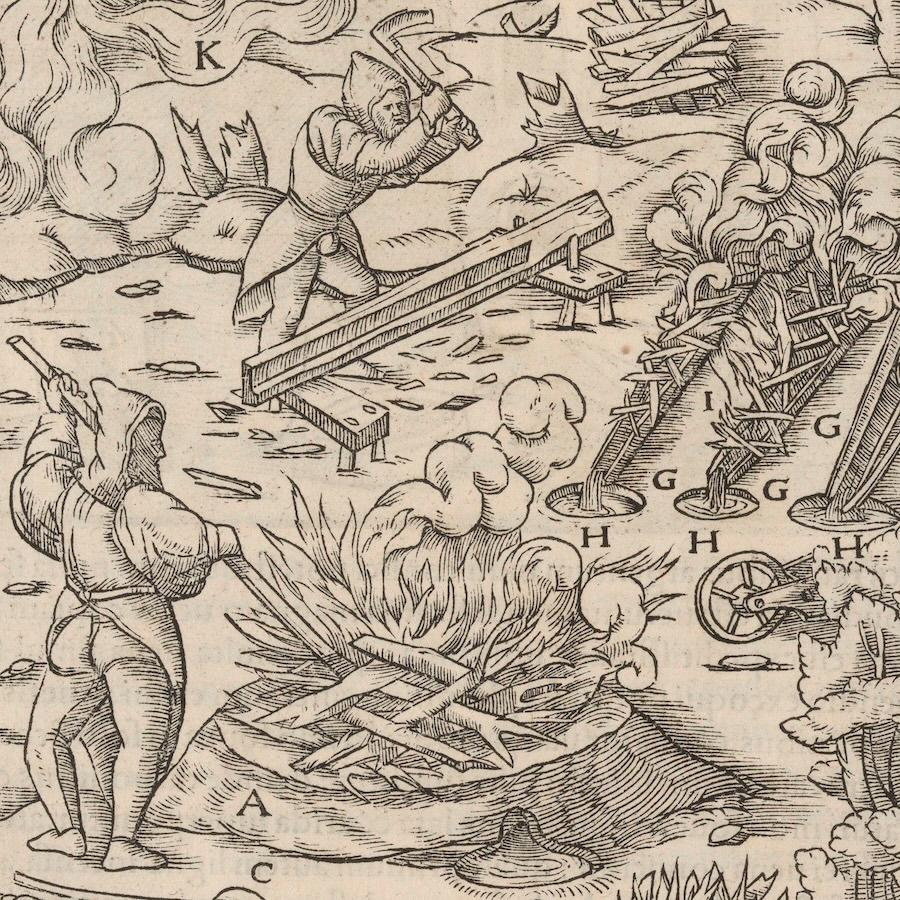
| | Detail of a woodcut illustration from De re metallica [On the Nature of Metals] (1556), an authoritative text on mining featured in our Fire and Gold exhibition. 📷 Science History Institute | | |
Museum Programs & Activities
Art of Alchemy Self-Guided Visit
| | |
Alternating Saturdays*
November 21; December 5, 19, 2026
January 2, 2027
2pm–3pm EST
*Please note there is no visit on November 28 or December 26.
Alternating Thursdays*
December 10, 2026; January 7, 2027
1pm–2pm EST
*Please note there is no visit on November 26 or December 24.
| | | Step into the “age of alchemy” and explore remarkable paintings and rare books in the Science History Institute’s new permanent exhibition, Fire and Gold: The Art of Alchemy (1450–1850). This self-guided visit will take you on a journey from underground mines into the alchemist’s laboratory, where they experimented with metals and minerals, attempted to transform matter, and worked to uncover nature’s secrets. Guests under 18 years of age must be accompanied by an adult. Registration is required. | | |
First Friday
Start Talking Science
| | |
Friday, December 4, 2026
5pm–7pm EST
| | | Our December First Friday features dozens of researchers from local universities who will present their innovative projects and answer your questions live. Stop by our museum to explore the history of science education and try out cool, quirky, and engaging science toys and games. Indulge your inner nerd, bring your curiosity, and join us for a fun-filled evening of everything STEM! Start Talking Science is presented in partnership with Drexel University and the Children’s Hospital of Philadelphia Research Institute. | | |
Museum Programs & Activities
From Nature to Nylons: A Touch-Based History of Textiles
| | |
Second Tuesdays
December 8, 2026; January 12, 2027
10:30am–12pm EST
| | | Specifically designed to engage with guests who are blind and visually impaired, this touch-based tour offers a private learning experience that combines a personally guided exploration of select gallery exhibits and a hands-on study of objects from our collections. Visitors will learn how fibers like wool, nylon, and Gore-Tex changed our world. Touch tours are free, but registration is required. | | |
Science on Tap
Rukh or Aepyornis: Mythical Birds, Extinction, and the Creation of Knowledge
| | |
Monday, December 14, 2026
6pm–7pm EST
National Mechanics
22 South 3rd Street
Philadelphia, PA 19106
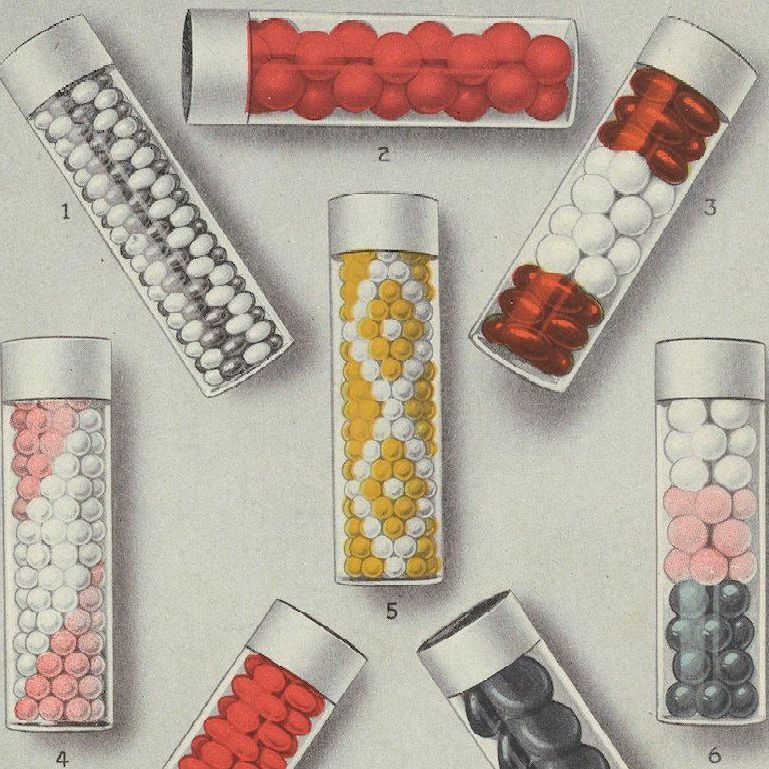
| | | How did mythical birds help shape our scientific understanding of the natural world? Our December Science on Tap talk features Science History Institute Allington Fellow Jessica Hogbin, who will tell the story of the rukh, a mythical raptor that scientists once endeavored to connect to the extinct elephant bird. This event is free and no reservations are required. Seating is on a first-come, first-served basis. | | Detail of an illustration of “Lilly Pills,” part of Eli Lilly & Company’s Hand Book of Pharmacy and Therapeutics, ca. 1919. 📷 Science History Institute | | |
Science and Society | Joseph Priestley Society
Pain and Its Killers: What a New Class of Non-Opioid Pain Medicine Could Mean for Society
| | |
Wednesday, December 16, 2026
6pm–8pm EST
| | | Join pharmaceuticals and drug policy historian David Herzberg, Institute fellow and professor Lucas Richert, and freelance science writer Marla Broadfoot, who will bridge history, science, and society to explore whether a new painkiller can bring relief to people without the risk of addiction. Moderated by the Institute’s Alexis Pedrick, this essential conversation is part of both our Science and Society and Joseph Priestley Society speaker series. The talk begins at 6pm; a reception follows at 7pm for in-person attendees, who can also visit our museum after hours from 5pm to 6pm. | | |
Classes & Workshops
Oral History Training Institute
| | |
Monday, January 4, 2027–
Thursday, January 7, 2027
10am–1pm EST
| | | The Science History Institute’s Center for Oral History is proud to provide training to scholars and researchers interested in learning oral history and research interview methodologies. This online workshop will introduce attendees to all aspects of the interview process, including general oral history theory and methodology, in-person and remote interviewing techniques, legal and ethical issues, transcription practices, archiving, recording equipment and its use, data management, and other relevant topics. Registration: $75 for the general public, $50 for students. | | Arrieros, lithograph by French artist Pierre-Frédéric Lehnert, after a drawing by German engineer and writer Carl Nebel, 1836. 📷 Wikimedia Commons | | |
Distillations Magazine
Mule Power
Unpacking empire and diaspora in Mexico and the United States.
| | | |
NEW: Distillations Magazine
Starved for Purpose
The conscientious objectors who braved heatstroke, hepatitis, and hunger during World War II.
| | | |
NEW: Distillations Podcast
Making Things Explode
Who should have control of the fire?
| | | |
NEW: Collections Blog
Utopian Scholastic
The optimism of science education at the turn of the millennium.
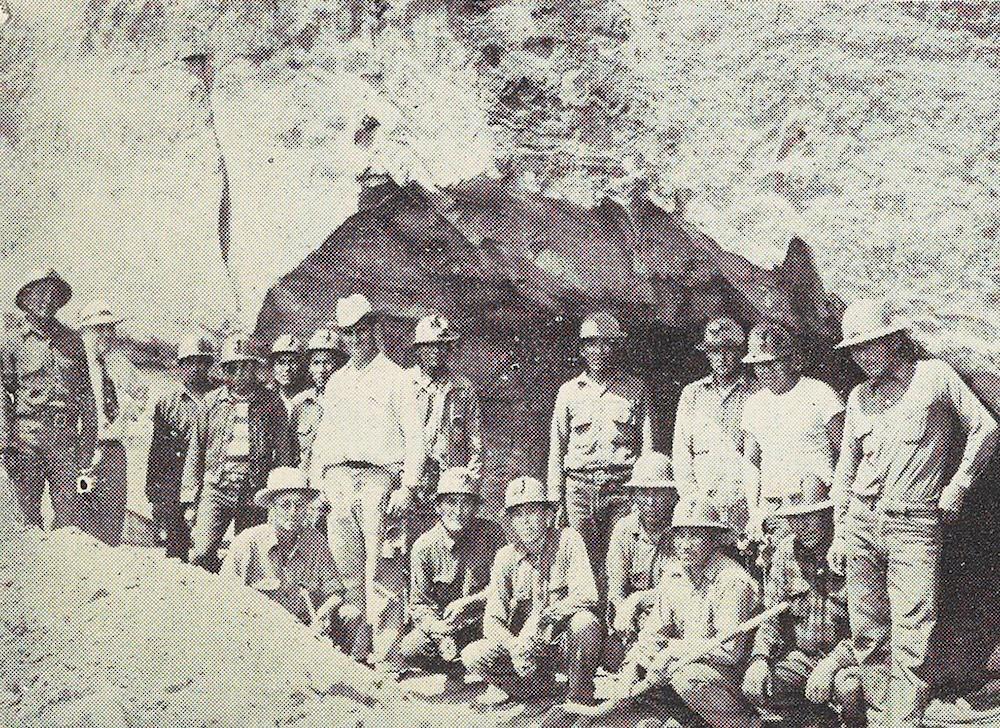
| | | Photograph of a Navajo Indian mining crew from The Vancoram Review, a newsletter issued by the Vanadium Corporation of America, 1949. 📷 Science History Institute | | The Science History Institute Digital Collections house more than 15,900 curated items, including rare and modern books, scientific instruments, letters, photographs, advertisements, videos, oral histories, and more: | | |
-
Girl Holding a Board, photograph of a Huichol girl holding a board that has been prepared for yarn painting, 1982.
-
Badische Anilin & Soda-Fabrik Dye Label, dye label featuring two Indigenous male figures in a mountainous landscape, possibly depicting the Andes Mountains and the early indigo trade in Peru, ca. 1900
-
Emeteria Ríos Martínez Yarn Painting, photograph of the Huichol artist demonstrating yarn painting during “Art Day” at the Institute for Scientific Information in Philadelphia, 1985
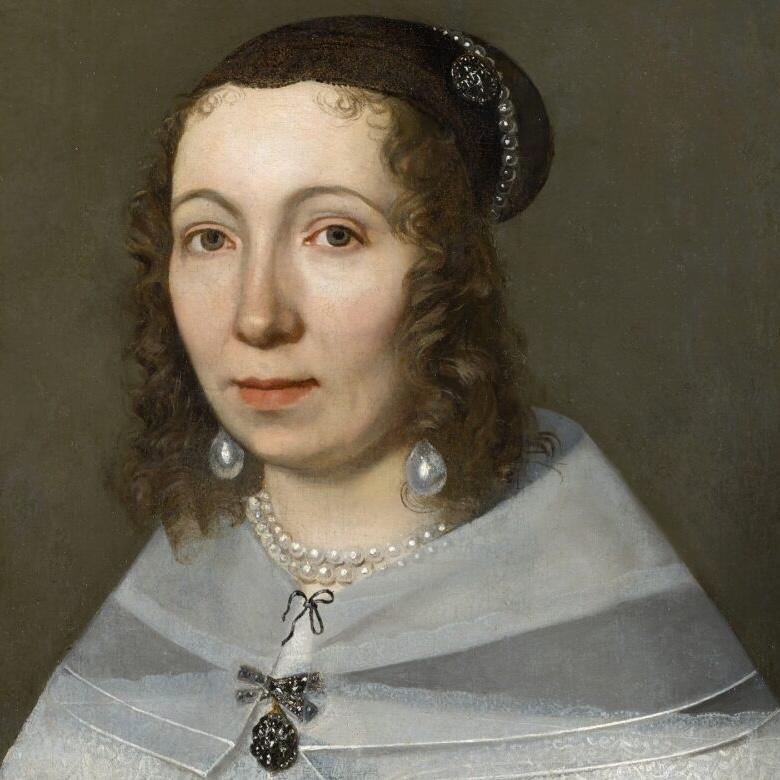
| | Portrait of Maria Sibylla Merian, painting by Jacob Marrel, 1679. 📷 Kunstmuseum Basel | | |
Maria Sibylla Merian
1647–1717
| | | Trained as a painter in her stepfather’s workshop, German-Dutch entomologist and naturalist Maria Sibylla Merian collected, researched, wrote, and illustrated books on insects and their transformations. A keen observer of butterfly metamorphosis, she undertook a self-financed expedition to the Dutch colony of Suriname in South America, resulting in her most famous work, Metamorphosis Insectorum Surianmensium (1705). Merian’s time in Suriname not only highlights her independence, scientific curiosity, and entrepreneurialism during a time when women were restricted in their work, but it also points to a more complicated legacy. She notes in several places in Metamorphosis that she was supported by Indigenous people from the area. Some historians argue that these references are evidence that Merian respected her Indigenous collaborators; others point to her language use and the fact that she brought one Native person back to Amsterdam as evidence that she participated in the exploitation of Surinamese people. | | The Science History Institute Museum is open Wednesday through Saturday, 10am to 5pm. Admission is free. | | |
HACH GALLERY
HORIBA EXHIBIT HALL
DU PONT LOBBY
FISHER GALLERY
BUILDING FAÇADE
MUSEUM MEZZANINE
DU PONT GALLERY
| | Detail of the cover of Native American Mathematics (1996), a book on Native American number systems found in our Othmer Library. 📷 Science History Institute | | We’re counting on supporters like you to help us tell the stories behind the science. | | | | | |