|
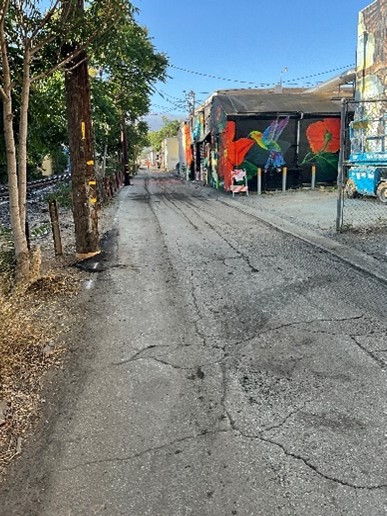
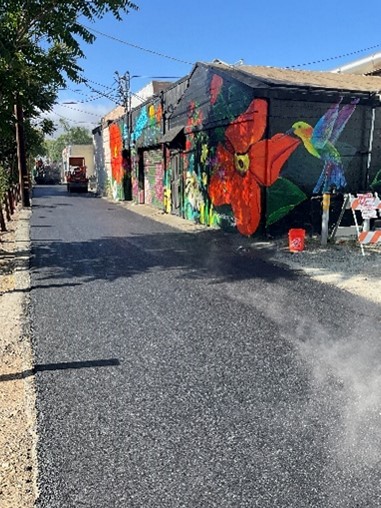
The selection of which streets become part of a given year’s rehabilitation schedule is not a simple one. It is based on a Pavement Management Program (PMP) developed by the Metropolitan Transportation Commission (MTC) and the dollars allocated by the City Council. The PMP provides recommendations that stretch our funding dollars the farthest, balancing the comprehensive need for pavement maintenance throughout the City, and considering that levels of traffic usage and levels of deterioration can vary greatly from street to street. We can’t necessarily afford to do the worst streets first because they would consume all of that year’s funding (and in some cases still need more) while putting more streets at risk of getting to where resurfacing alone won’t help. Streets already in very poor condition have to be worked into the repair schedule gradually, based on available funding over the 5-year street repair program.
Budgeting for all of the city’s departments is the subject of many meetings and compromises that land on the majority vote of the 7-member elected City Council, and not all necessarily agree that essential city services, which include maintaining our streets, should be funded before considering discretionary spending. Thus far, however, the City Council has approved four years of increased investment in our streets over two budget cycles (2022 and 2023; and 2024 and 2025). Hurray for our streets!
lt is important that all of us understand and distinguish between which jurisdiction has the authority and responsibility to maintain which roadways. In Gilroy, we have city streets and alleys that we are responsible for maintaining, but we also have streets that are the responsibility of the County or the State. To report a problem with a street or pothole outside of the City’s jurisdiction (such as the freeway and/or its on/off ramps, or parts of Santa Teresa Blvd or Leavesley Road east of the Outlets, for examples), contact Caltrans Maintained Roadways at “csr.dot.ca.gov”, or County Maintained Roadways at “countyroads.sccgov.org”. City staff also work to make Caltrans, Santa Clara County, Union Pacific and Valley Water aware of needed repairs and/or cleanup within their jurisdictions in Gilroy.
Sidewalk Repair Program
By state law, the property owner is responsible for maintaining the sidewalk, curb and gutter, and parkstrip area, even though these are all public facilities within the City’s right-of-way. Maintenance responsibility includes repair or replacement of damaged or displaced concrete, abatement of weeds or debris, and trimming of shrubs to keep the area free of hazards. When it comes to liability, personal injury suits can be filed against both the property owner and the City. Under state law, repairs are required when the sidewalk, curb and gutter, and parkstrip are in a condition that could endanger persons or property and interfere with the convenient use of the area. Property owners are not exempt from having to make required repairs even if the damage may have been caused by trees in the public right-of-way.
Under the existing Sidewalk Replacement Program that we’ve had for years, the property owner makes all necessary repairs (either themselves or by hiring a contractor) and is responsible for paying upfront for all improvements. Following completion of the work, the City reimburses the property owner for 50% of the cost of sidewalk repair if caused by a public tree, and for 100% of repairs to the curb and gutter, pavement repair, and public tree removal and replacement, if necessary.
Improvements planned for the Sidewalk Replacement Program will eliminate the up-front out-of-pocket costs by the property owner and the City will fund all project repairs using a qualified contractor, then invoice the property owners for only their share of the work (capped at a dollar amount equal to 50% of the cost of sidewalk repair resulting from a public tree). The City will take the lead on coordinating the project, the bids and the construction. The only work for the property owner is to pay the invoiced payment share. It should also be noted that the City is considering a payment arrangement option that would allow property owners to pay over time. Additional provisions are also being planned to minimize or eliminate the cost share of owner-occupied residences if the owner qualifies for the PG&E Care and other public assistance programs.
Identification of the necessary sidewalk repairs will be carried out by City staff in an equitable manner throughout the city taking into account the existing levels of deficiency, served traffic generators such as schools, reported concerns by community members, and other rating factors. This process improvement is expected to increase overall efficiency, thereby increasing the amount of work performed annually and bringing us closer and more quickly to our goal for a safely walkable and accessible street system.
|