Cancer News Digest, February 2025

Visit our website

CFC #11967

We're Speaking Out

We urge the FDA to improve their standards for evidence


For serious and life-threatening diseases such as many advanced cancers, there may be no good treatment options available. To try to fix this, the FDA created the Accelerated Approval pathway, which does not require proof of effectiveness but instead requires evidence that the drug may work (based on surrogate endpoints). Examples are when the FDA approves a cancer drug based on how well it shrinks a tumor, but not on how long a patient lives. Using surrogate endpoints gets a drug approved more quickly, but some of those drugs do not actually have a meaningful benefit, such as living longer or having a better quality of life. They also may have debilitating or deadly side effects. This can lead to the FDA approving very expensive drugs that do more harm than good. 


The FDA recently asked the public for their suggestions about Accelerated Approval, so NCHR's written response encouraged the FDA to strengthen their standards for evidence so that the drugs are proven to be safe and effective. We also told the FDA that they should make sure that drugs that are approved via Accelerated Approval provide the required "confirmatory" clinical trial evidence after they are on the market, and rescind approval if those studies find evidence that the drug is not proven safe and effective. Improving these standards for evidence is necessary to ensure that new cancer treatments really benefit patients and don't cause unnecessary harm.


Read our comment here.

We're in the News

Important FDA Webpages removed


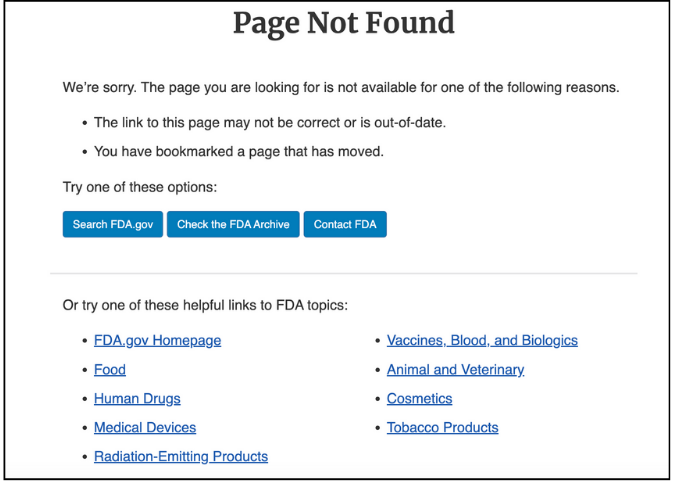
FDA webpages about clinical trial diversity and other topics were taken down as part of the Trump Administration's efforts to remove content from government webpages about diversity and 'gender ideology.' Some government webpages that were initially deleted have been restored, due in part to a federal judge's order, but a number of FDA guidances on gender, diversity, and sexuality in clinical trials are still unavailable. 


Everyone knows that the Trump Administration opposes Affirmative Action, so we want to make it clear that diversity in clinical trials is not Affirmative Action. Conducting a clinical trial on patients that represent the patient population is scientifically necessary to ensure that medical products are proven safe and effective for all patients, regardless of gender, age, or race. Clinical trials that represent all types of patients are important for all types of drugs and devices, including cancer treatments. For example, the lack of Black women in breast cancer studies decades ago resulted in treatments that were not effective for some of the types of breast cancer that Black women are more likely to get. Dr. Diana Zuckerman told MedTech Dive about her hopes that someone in the administration understands the importance of diversity in clinical trials and continues to make sure that agencies support it.


Read the article in MedTech Dive here.

Info You Can Use

Our updated article on DCIS and breast cancer treatment


DCIS is also called "Stage zero breast cancer" but it is often treated as aggressively as breast cancer. It usually shouldn't be. For example, sentinel lymph node biopsy has been a standard of care to test for the possible spread of breast cancer. The biopsy removes a few lymph nodes from under the arm to check if cancer has spread there. It is less invasive than other types of lymph node biopsies, but like those more invasive biopsies, it leaves a scar near the armpit that can be painful for several months or sometimes much longer. 


Research shows that lymph node biopsies are rarely needed for DCIS since DCIS is not invasive and is therefore not expected to spread to lymph nodes. And yet, many women are urged to have this unnecessary procedure. Meanwhile, in recent years, the need for SLNB has also been questioned for some very small Stage 1 breast cancers. Read our article to learn about the evidence that lymph node biopsies are not reducing recurrence or saving lives for most DCIS patients or women with very tiny (less than 3/4 of an inch) stage 1 breast cancers.


Read our article here.

News You Can Use

Microplastics in our brains?


We knew that microplastics were entering our bodies, but a new study in the scientific journal Nature Medicine found that these tiny plastic particles are passing through the blood-brain barrier and accumulating in our brains. Microplastics are pieces of plastic that are smaller than 5mm. In recent years, microplastics have been found in even the most remote places on Earth, but researchers are still working to understand their impact on human health. The research published in Nature Medicine found that the amount of microplastics in human brains has increased over the last few years, but they also reported that the brains of people with dementia had 3-5 times more microplastics than those who did not. 


Other studies of microplastics have found they can increase the chances of developing many types of cancer. In addition to issues caused by the plastic particles themselves, they can also expose us to endocrine disrupting chemicals (EDCs) like PFAS and phthalates. EDCs have been linked to a higher risk of hormone-sensitive cancers like breast and prostate cancer. More research is needed to fully understand all of the health problems that microplastics cause, but it is clear that their impact is widespread. We suggest avoiding plastic water bottles and food storage containers as a good place to start, and avoid heating food in a plastic container.


Read more about microplastics and the brain here.

More younger women diagnosed with cancer


A recent report found that the trend of cancer diagnoses is shifting towards younger people and from men to women. Data from the CDC, the National Cancer Institute, and the North American Association of Central Cancer Registries show that young women are now almost twice as likely as young men to be diagnosed with cancer. One reason is the increase in diagnoses of breast and thyroid cancer in women under 50.


Fortunately, the report confirmed that the overall number of cancer deaths is continuing to decrease. Thanks to advancements in treatment and early detection and a decrease in smoking, it is estimated that cancer mortality has dropped by nearly 34% over the last 30 years.


Read the report here.

Follow Our Instagram!

Check us out!

Did you know that artificial turf and rubber playground surfaces contain carcinogens? Are your children or grandchildren getting exposed when they play? Follow us @safe.to.play
Instagram  
@safe.to.play
 

Connect With Us!
 

Cancer Prevention and Treatment Fund

Facebook: @CancerPreventionAndTreatmentFund


LinkedIn: www.linkedin.com/showcase/cancer-prevention-&-treatment-fund/

Facebook
729101_linkedin_icon image
Donate

Your Contribution Can Make a Difference


We do not accept any funding from drug companies, device companies, chemical companies, or other sources that could influence our work and compromise our integrity. That's why so many people turn to us when they need help. Donations of any size are greatly appreciated (and tax deductible.)


Please consider giving to the Cancer Prevention and Treatment Fund online or by mail to the address below.

To sign up for these monthly updates, click here.
Cancer Prevention and Treatment Fund | 1001 Connecticut Ave NW, Suite 1100  
Washington, DC 20036 | www.stopcancerfund.org
CFC# 11967