The Season of Summer Waves | | |
In this issue:
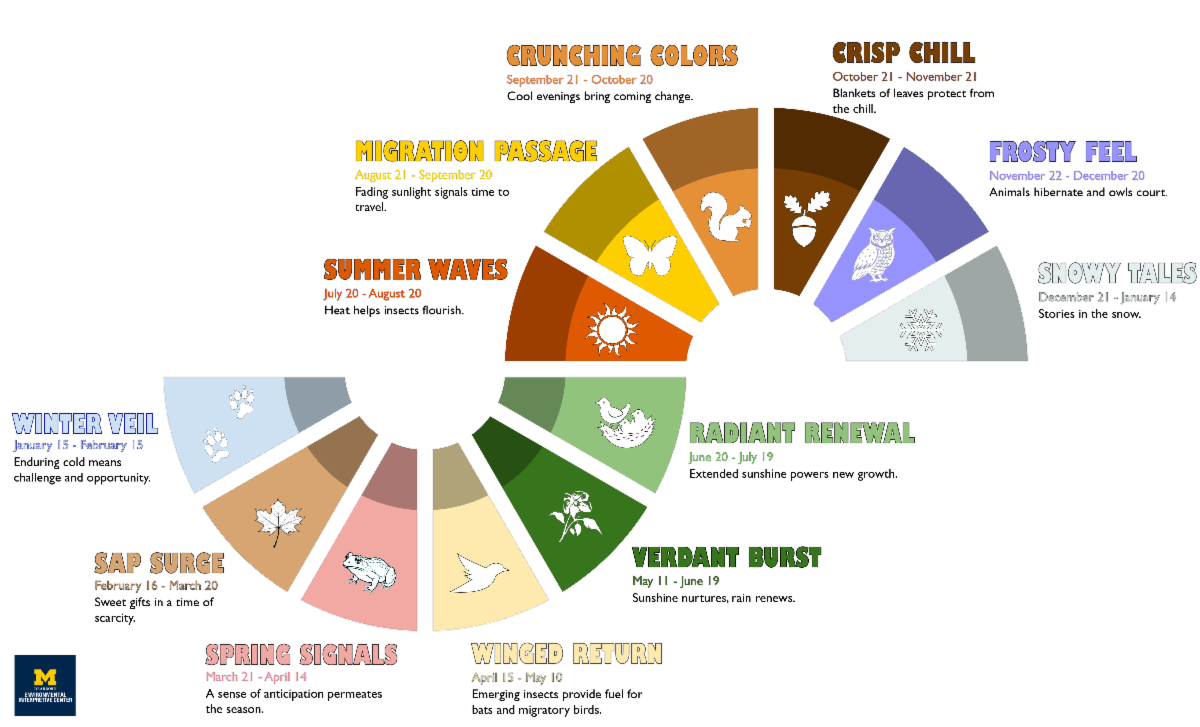
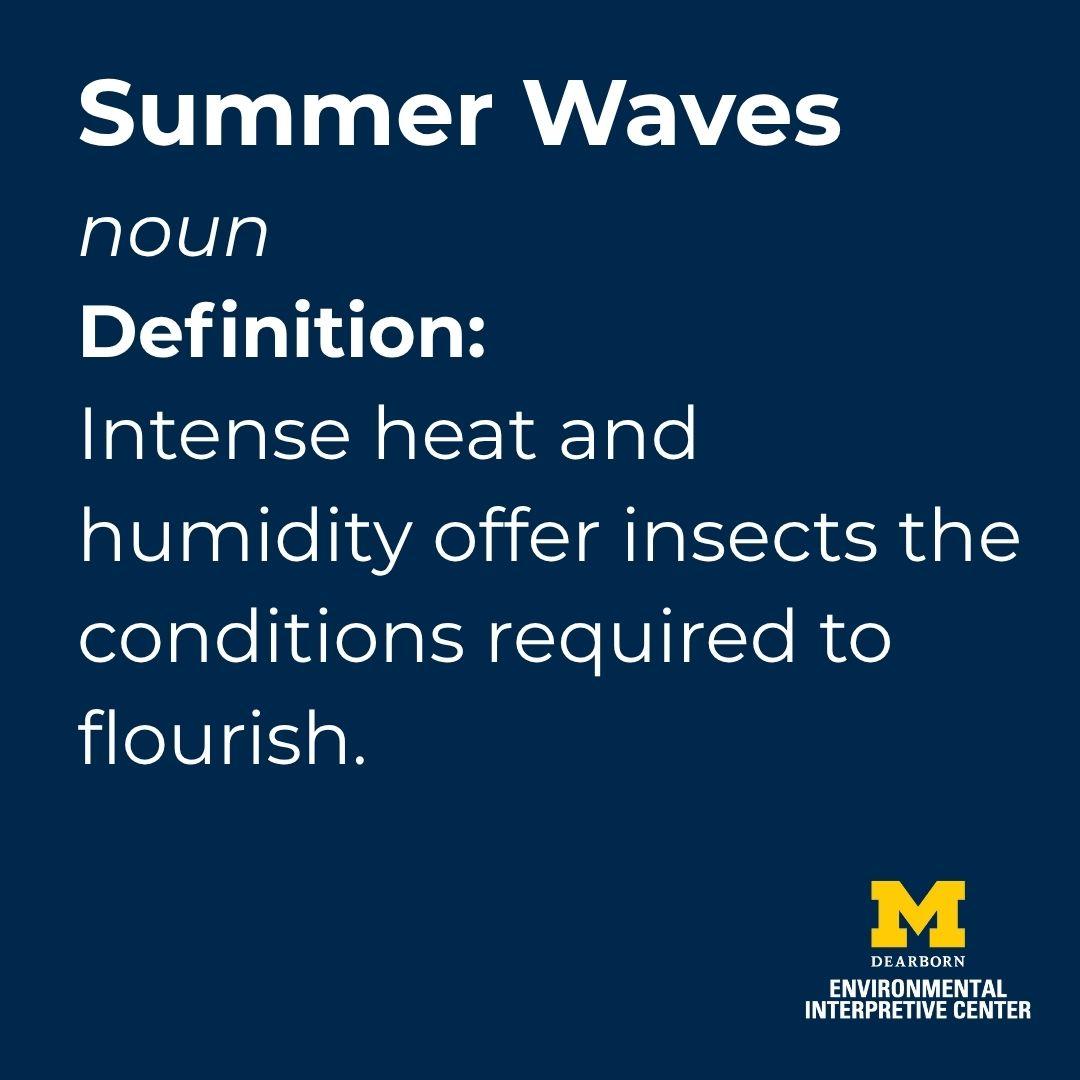
- Microseason: "Summer Waves"
- Help Us Reach Our "25 for 25" Goal!
- EIC Programs & Research
- Pollinator Photo Contest 2026
-
Tales From the Trails: "Pearls" of Wisdom
- Greenways: "Bucket of Doom"
- Save the Sibley Prairie!
| | Microseasons Illustrated: | | |
In celebration of the EIC's 25th Birthday, we are working toward our "25 for 25," to earn $25,000 by year's end. There is still time to help push us over the goal. Just click on the Giving Portal below.
| | Our "EIC Store" is also open, featuring our Microseason guide to seasonal changes and several prints made by Indigenout artist Hadassah GreenSky. Continue the 25th Birthday celebration with gifts for yourself! These items must be picked up in person at the EIC. | | Upcoming Programs and Partner Events | |
A Little Night Music?
Friday, August 28
7:30-9:00 p.m.
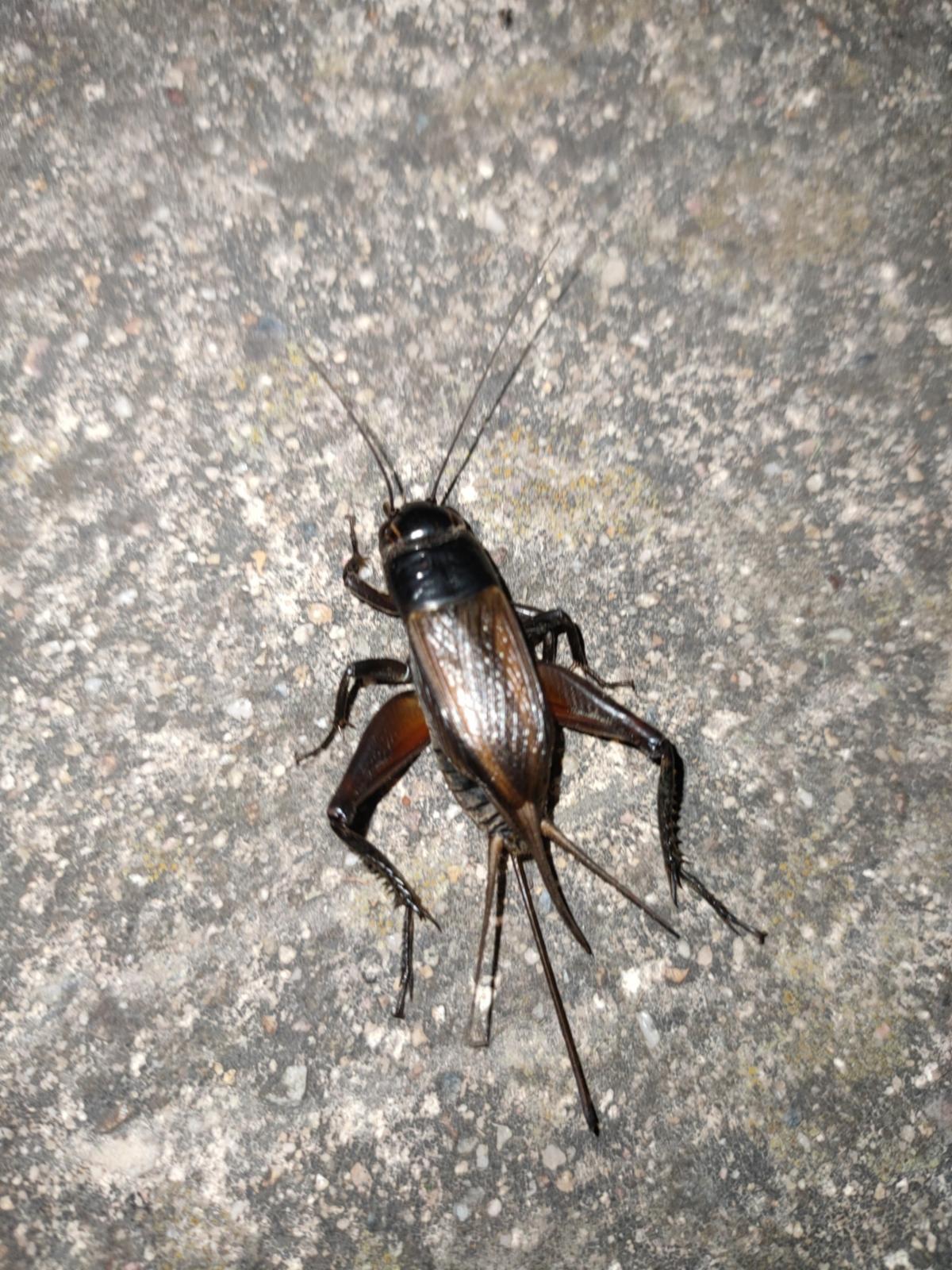
As daylight hours decrease, why not enjoy an evening concert on the Interpretive Trails? The cicadas have already begun their daytime calls, but the evening songs of crickets and katydids, among others, signal the change in season with their evening music. Perhaps some moths will pollinate by moonlight... Bug repellant is recommended. ("field crickets" by James Ray is marked with CC0 1.0.)
| | | |
Autumn Bird Walks
September 5, 12, 19, and 26
9:00-11:00 a.m.
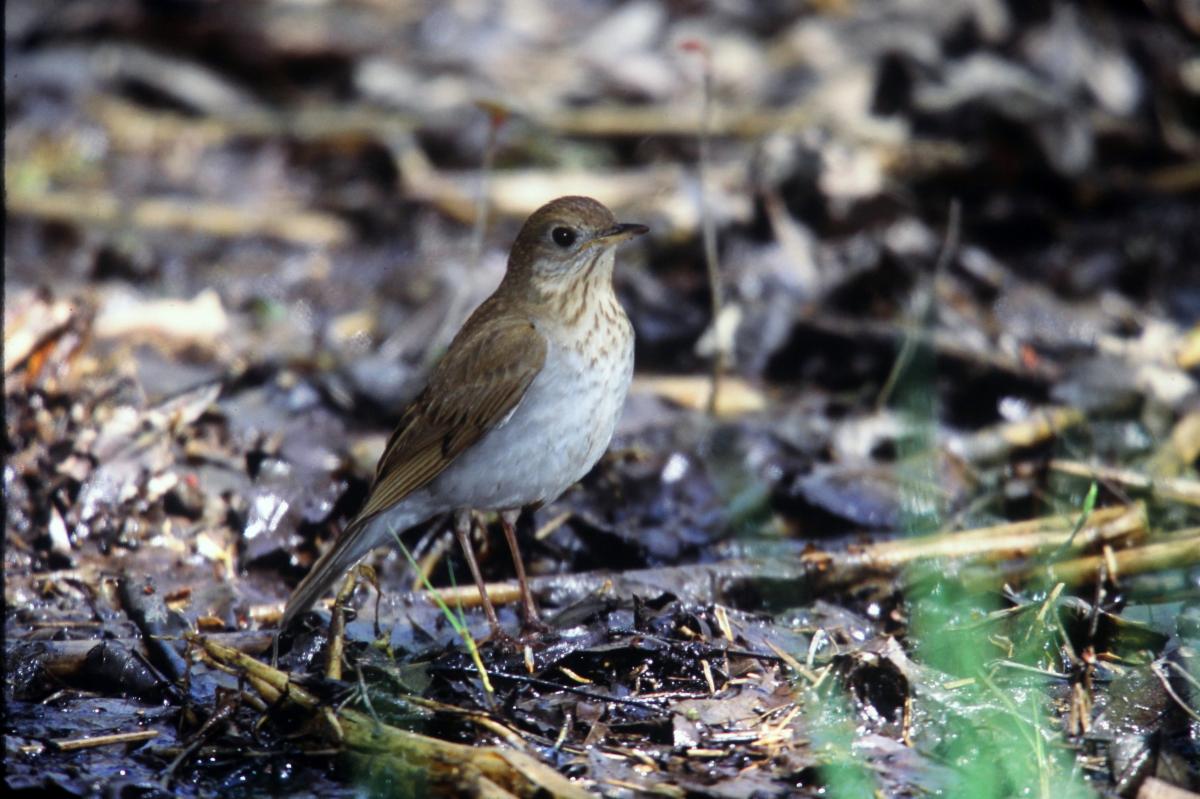
Enjoy these weekly, leisurely-paced bird walks with EIC interpretive naturalist Rick Simek. We'll search for both resident and migratory bird species along the Interpretive Trails. Attend any number of walks you wish. Bring binoculars. Ages 12 and older. (Gray-cheeked Thrush photo by Jim Simek)
Take Some Snaps & Share'em! *
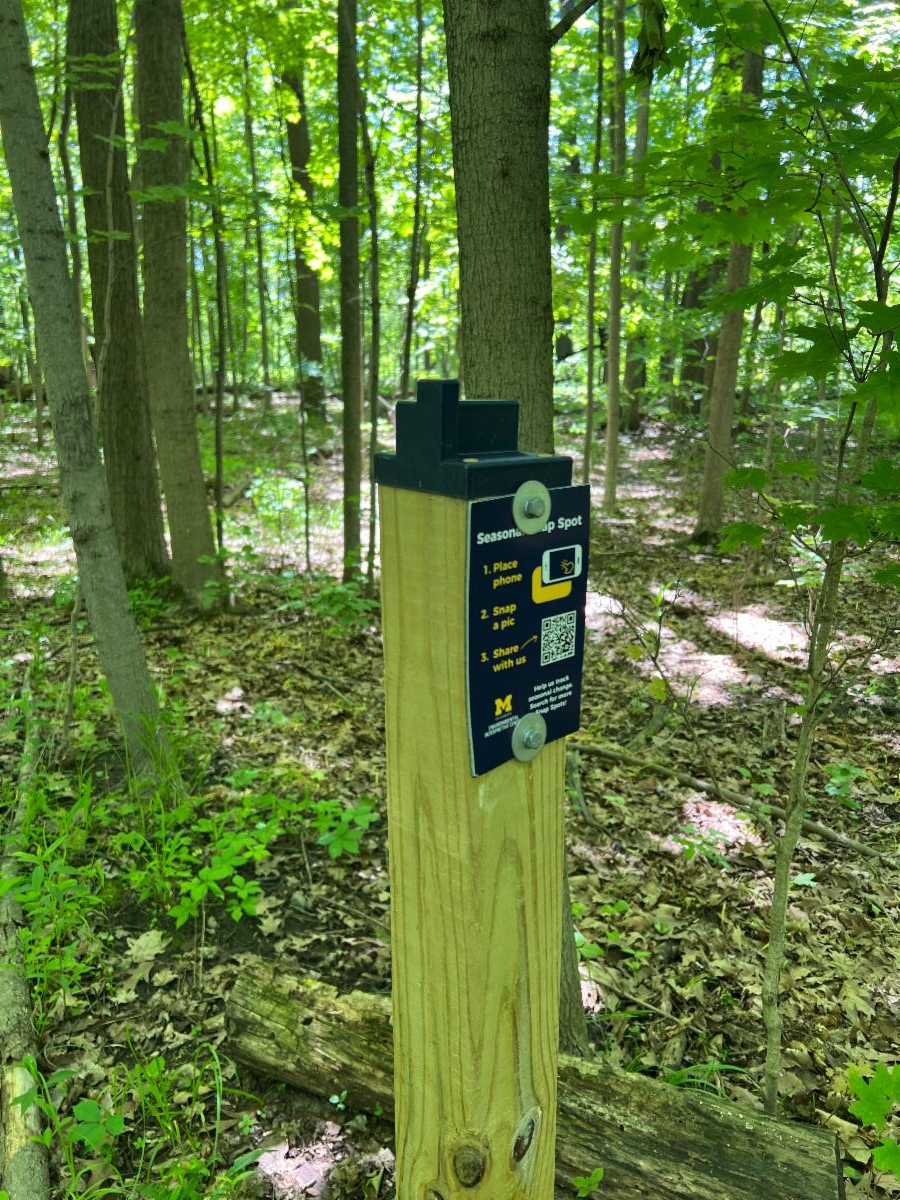
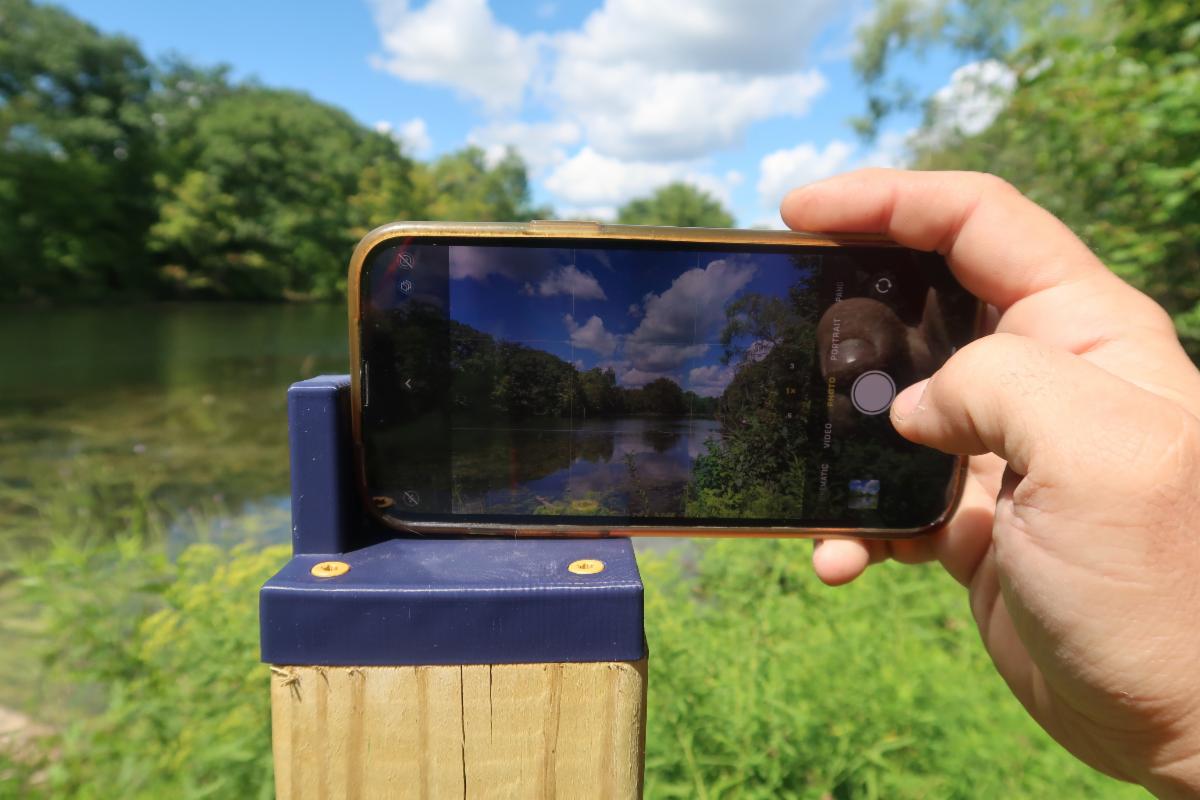
While you're out on the Interpretive Trails, take some time to snap a pic at one of the 10 "Seasonal Snap Spots," an Eagle Scout project to encourage visitors to share photos of the Study Area with the EIC. Use the QR code on the instructions sign to send us your "snaps."
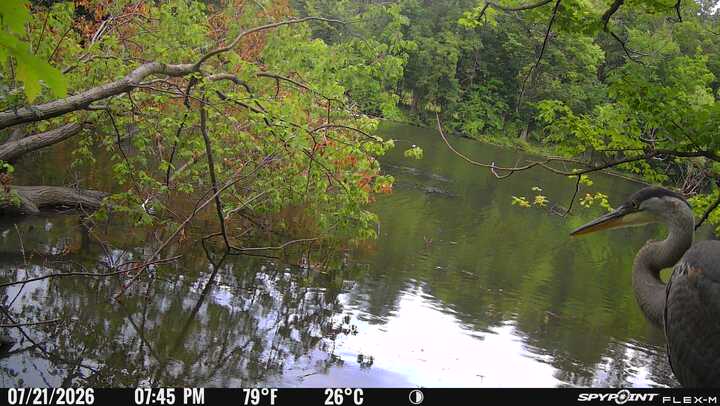
Look closely below to find who's photo bombing the "beaver cam!"
(Snaps of SnapSpots & "beaver cam" by Mike Solomon)
*Don't forget--you can submit any pollinator photos to the Pollinator Photo Contest.... (see below)
| |
Urban Watershed Science
This summer, UM-Dearborn launched its new National Science Foundation-funded Urban Watershed Science program to immerse undergraduate students in critical freshwater research.
(Photo by author)
| | | Working directly along the Rouge River, these student researchers are investigating local water quality, biodiversity, and green infrastructure to help protect and restore our shared local ecosystems. (Find out more at the REU website.) -Dr. Jacob Napieralski | | Pollinator Photo Contest 2026! | | |
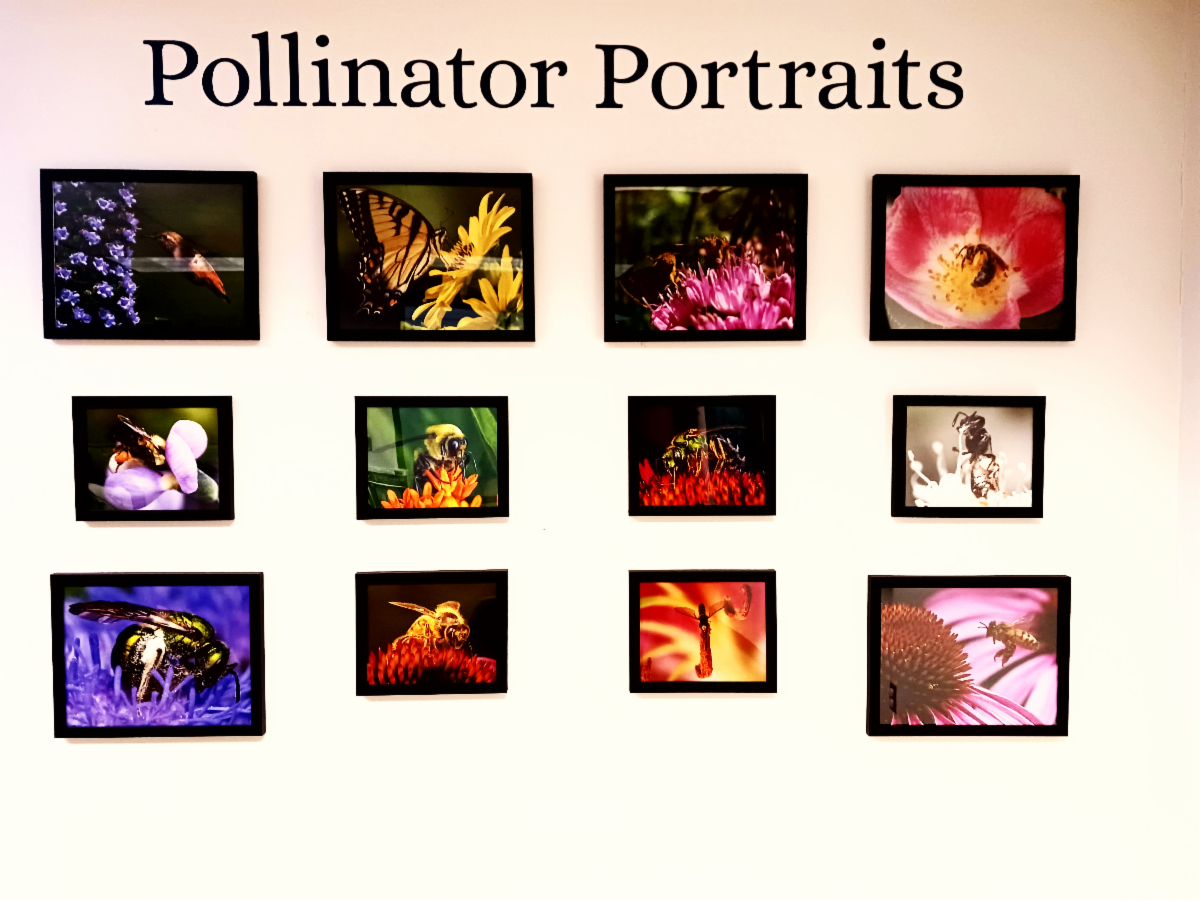
Catch those late summer pollinators in action! The Environmental Interpretive Center and UM-Dearborn Bee Campus USA are accepting entries in the 7th annual Pollinator Photo Contest! (EIC photo)
To learn more about the photo contest and to see some photographs taken over the history of the contest, including those portraits above, visit the photo contest website.
| | |
"Pearls" of Wisdom
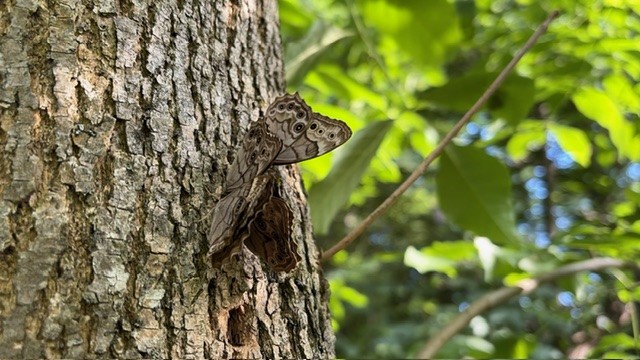
This group of four well camouflaged Northern Pearly Eye butterflies (Enodia anthedon) were recently seen imbibing sap from a tree wound along the Old Field Trail.
Formerly scarce in the Environmental Study Area (ESA), we are seeing more and more of this woodland butterfly species every summer. I have counted more this summer than the total number I have observed in the past 30 years! (Photo by the author)
| | |
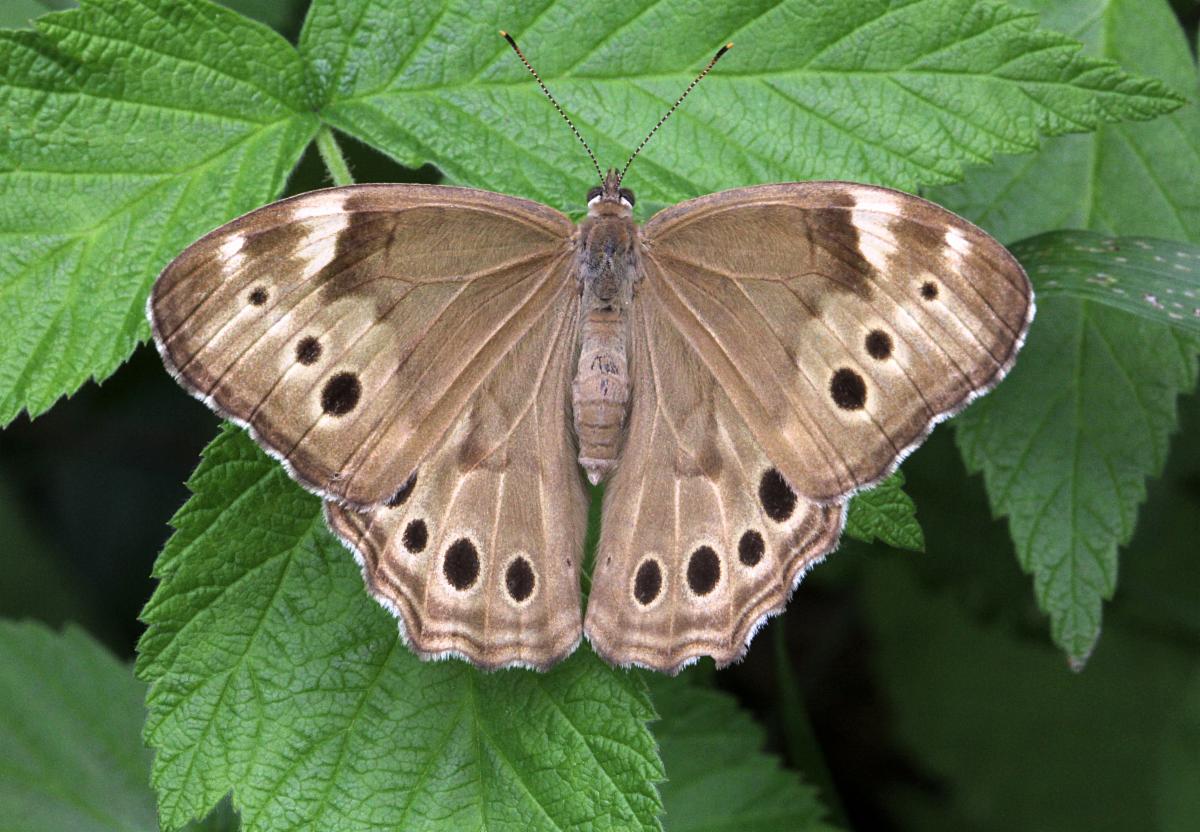
This was a hoped-for development related to the EIC's habitat management efforts. Since around 2015, we have been establishing a great deal of one of this butterfly's larval host plants, the native Bottlebrush Grass (Elymus hystrix) in many areas where invasive woody plants, such as Amur Honeysuckle and European Buckthorn, had been removed. This grass is great at establishing dense clumps in open woodlands, which suppresses the reestablishment of the invasives. (Female Pearly Eye By khteWisconsin - Today's Holocene Mass Extinction, Public Domain, https://commons.wikimedia.org/w/index.php?curid=109282944)
| | |
Several years ago, I wrote a piece in the EIC newsletter indicating that establishing more of this grass, so named for its resemblance to this kitchen utensil, in the ESA might invite and "re-stitch" this butterfly species into the ESA. Success!!
This is but one example of how managing for native habitat is helping to increase abundance of native fauna in the ESA.
(Photo by the author)
Many thanks to EIC Stewardship Saturday volunteers and others who have helped to make that happen. Let's keep it going!
-Rick Simek, EIC Natural Areas Manager
| |
"Bucket of Doom"
The “dog days” of summer are here and our mosquito populations are reaching their annual peak. In summertime, it can be a challenge to enjoy the cool evening air when it’s punctuated by the persistent bites of these buzzing bloodsuckers.
| | |
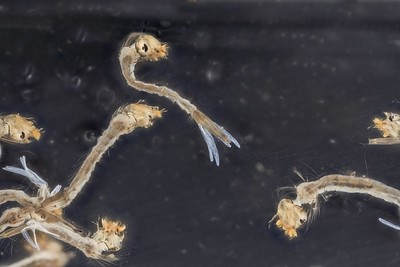
Not all mosquitoes suck blood; usually, it’s the females take a blood meal to nourish their batch of eggs. After helping themselves to a bit of blood, they seek out a body of water rich in microorganisms and decaying plant matter, and lacking in predators. This is usually stagnant water. It doesn’t take much, some mosquitoes can successfully mature in as little as a teaspoon-full of water!
("Mosquito, NPSPhoto" by evergladesnps is marked with Public Domain Mark 1.0.)
| | | |
When the bloodsuckers come a-buzzing, many Michiganders often reach for industrially-produced insecticides, or even arrange for “yard fogging” services to treat large areas. These treatments are often billed as “mosquito control.” Unfortunately, treatments like fogging use insecticides that kill not only mosquitoes, but are a cloud of doom for nearly all insects! Over time, this reduces local populations of native species, including those that help keep mosquito populations in check. However, a “bucket of doom” may be the answer…
("Trinidad mosquito control" by Jan Pešula is marked with CC0 1.0.)
| | | |
With a little bit of planning, you can set up a simple trap in your yard that selectively eliminates mosquitoes in their larval stage. Using the bacterium Bacillus thuringiensis var. Israelensis (BTi), a bacterium that prevents mosquito larvae from maturing, along with a little bit of habitat know-how, you can specifically target mosquitoes and keep the rest of your many-legged friends safe! ("mosquito in quartz sanitizer photoshopped" by Sam Droege is marked with Public Domain Mark 1.0.)
| | |
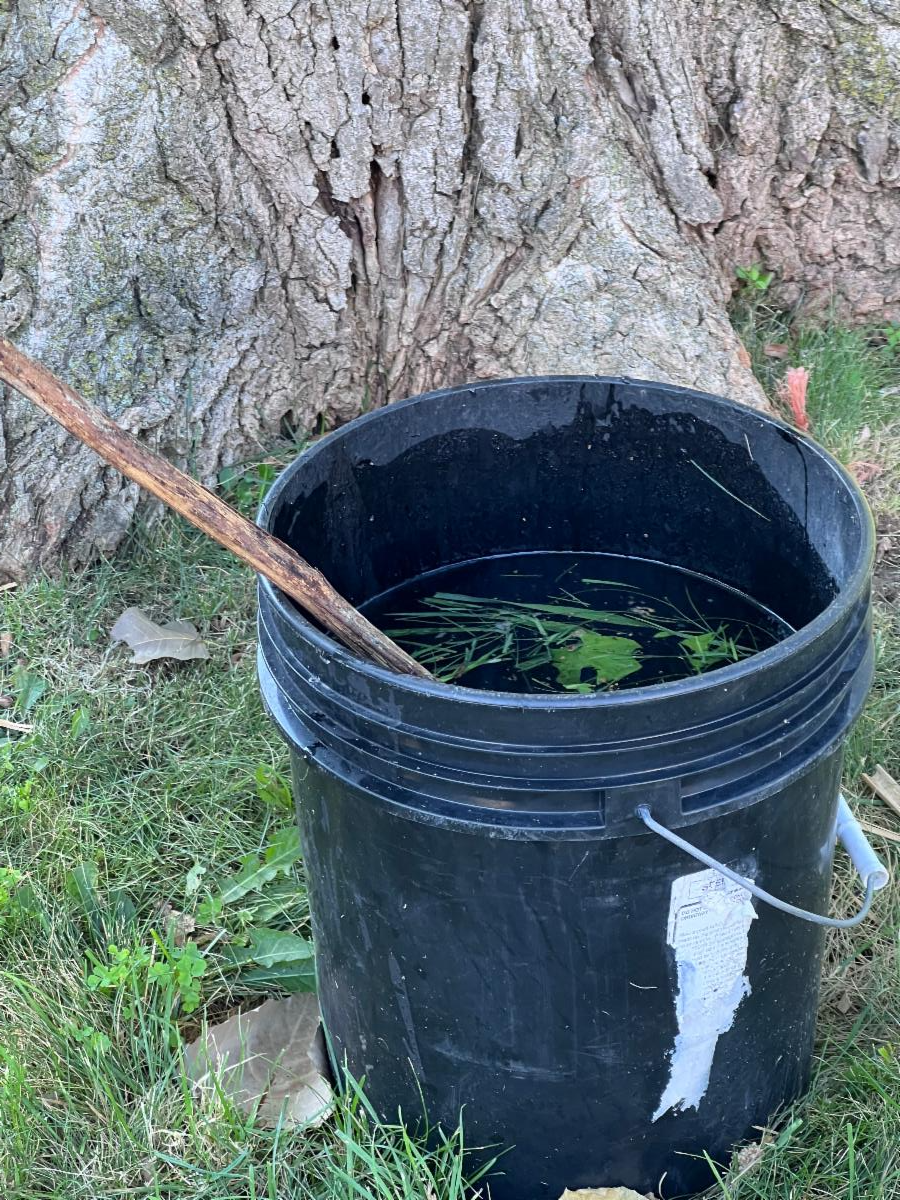
The easiest, and most common way to use “BTi” to control mosquitoes is known by many as constructing a so-called “Bucket of Doom.” The trick is to create an irresistible breeding ground for mosquitoes filled with a bacterium that eliminates the larvae. To start, fill a dark-colored, plastic bucket about halfway with water, and add a small stick or piece of netting as an escape route for other animals. Let the bucket sit out for a day or two, to evaporate out any chlorine. If you’re using rain water, you can skip this step.
(Photo by the author)
| | | Add a handful or two of grass clippings to the bucket; this grass will break down and support the growth of micro-organisms mosquito larvae feed on. After the bucket has “matured” for a couple of days, add your “BTi.” This bacterium is sold at most garden and hardware stores, in different formulations. I use “Mosquito Dunks” for my “Buckets of Doom.” The “dunks” are compressed rings of pellets containing the BT bacteria that dissolve over time in water. For more in-depth instructions on how to build your “Bucket of Doom”, see this handy how-to guide from Homegrown National Park, a grassroots organization dedicated to preserving biodiversity in residential areas. | | After you add your BTi to the water, the trap is set. Place your bucket in a shaded place in your yard where mosquitoes are a nuisance, and let it work its magic. It’s important to replace the mosquito dunk once a month or so, to keep the bacteria fresh and active. | | |
I’ve had great success tackling explosive mosquito populations in my own yard using these buckets. You won’t get rid of them all, but it will be easier to enjoy fireflies, bees, and other interesting insects paying your yard a visit.
-Mike Solomon, EIC Staff Naturalist
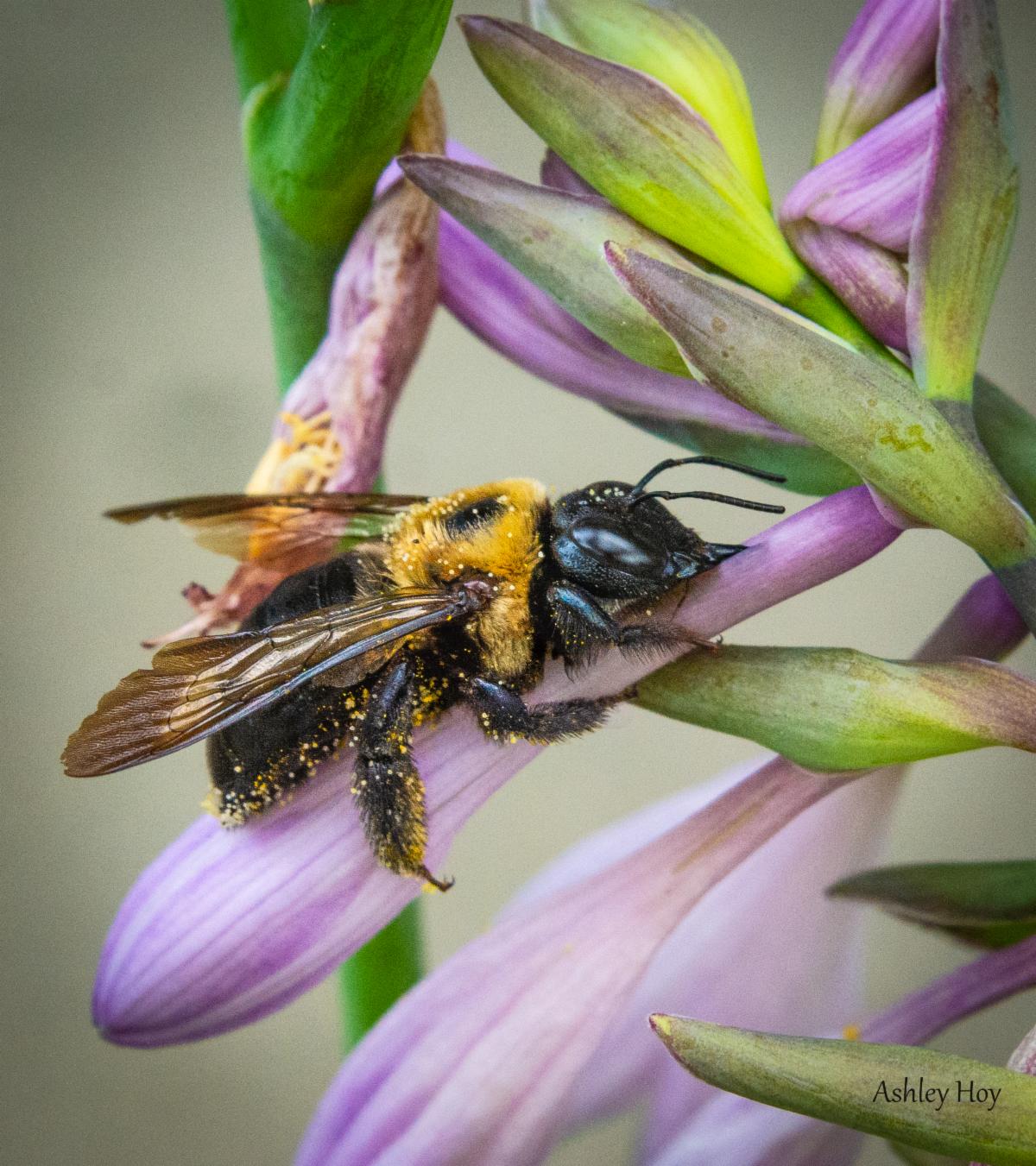
(Photo right, entitled "Soft Landing" by Ashley Hoy, was a winner in the 2025 Pollinator Photo Contest! )
| | |
For example, Save Sibley Prairie Coalition is a community group formed to advocate, fundraise, and inform the public about Sibley Prairie. The Prairie is a ~400-acre remnant of lakeplain prairie habitat, the largest remnant of its kind in Michigan! If you’re interested in learning more about prairie ecosystems, and what makes them unique, check out this
flipbook from the Coalition’s website.
| | |
Venturing outdoors and encountering nature is good for your health. Our trails are accessible, so please visit our Environmental Study Area. Stay engaged in learning activities and check out our Remote Learning Activities & Resources page for ideas to create a “Neighborhood Nature Journal” and “Family Nature Walk” activities!
| | | We also hope to see you in person at our upcoming programs! | |
Please remember...
The EIC Environmental Study Area is open daily from sunrise to sunset. We would like to remind nature-goers that fishing on site is prohibited and to leave bikes and dogs at home because they cause disruption and stress to the EIC wildlife.
| |
| | | |