|
Q3 Apartment Market Overview
Market Fundamentals
The U.S. multifamily market demonstrated continued and exceptional demand in Q3 2024, with absorption reaching 192,649 units during the quarter, while 162,595 new units were delivered, according to CoStar. On an annual basis, the market absorbed 488,773 units against 557,842 units of new supply - a rate of delivery unseen since 1974! While robust demand still trails concurrent supply, the gap has narrowed to just above 69,000 units, the smallest margin in two years.
The national occupancy rate stood at 94.4% in Q3, down just 10 basis points from the year-ago figure. Monthly rent for market-rate apartments averaged $1,838 as of September 2024, with the national average annual asking rent growth easing to 1.1% compared to 1.2% at the end of July.
Record Absorption in Target Markets
Perhaps the most compelling story of Q3 was the record-breaking absorption in several key markets for CALCAP, including those where we own existing investments as well as target markets we are considering. Phoenix and Las Vegas, where we currently operate, along with target markets of Nashville and Salt Lake City, all posted all-time high apartment demand for the year-ending Q3 2024.
These markets have benefited from extraordinary demographic tailwinds, with population growth rates two to three times the national average since 2017. This momentum, coupled with strong job growth and below-average unemployment rates, has helped these markets digest significant new supply. Nashville grew inventory by 7%, Salt Lake City by 6.5%, and Phoenix by 5.6% over the past year. While this supply has created some near-term rent pressure, the record absorption levels suggest these markets are working through their supply pipelines more effectively than anticipated, supporting our long-term conviction in both our existing and target markets.
Construction Pipeline
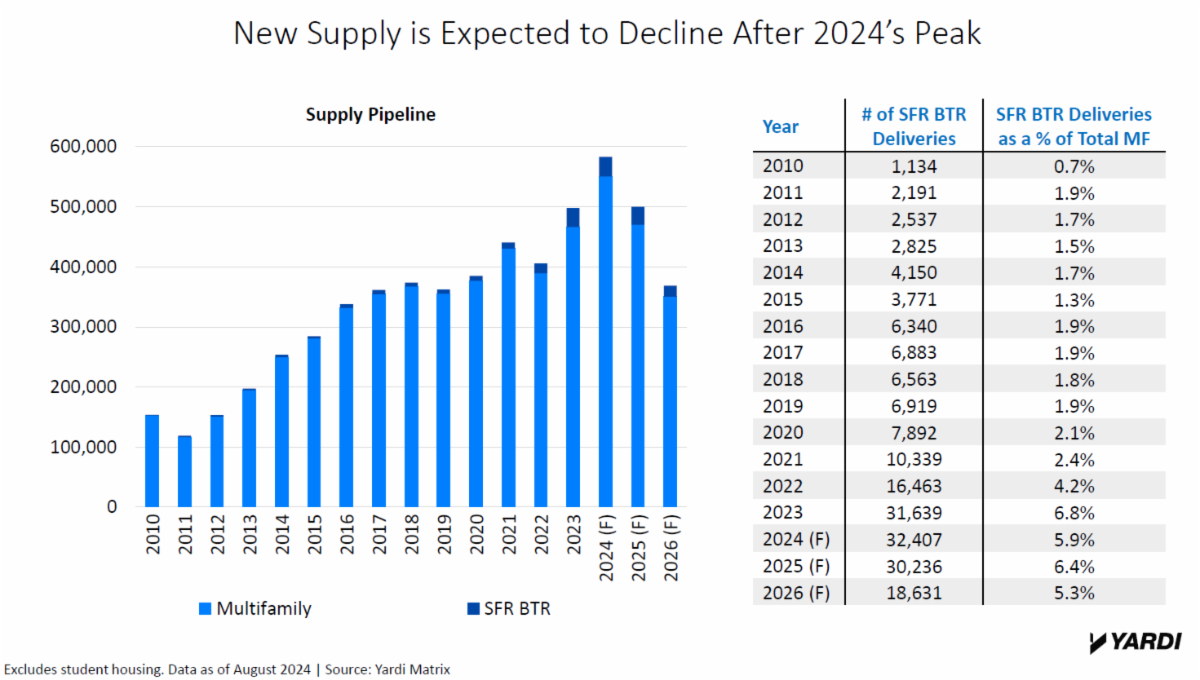
The development pipeline is emptying rapidly. Of the nearly 762,000 apartments currently under construction in the U.S., about 550,000 units are expected to come online in the year-ending Q3 2025. However, new starts have slowed dramatically, with less than 40,000 units beginning construction in Q3 2024, translating to fewer than 210,000 units scheduled for delivery in 2027.
|