Super solvers make everybody winners
According to a 2020 study by USDish, Super Bowl Sunday is the most popular and anticipated Sunday of the year. It certainly ranks as the most-watched television event--greater than the Olympics or even the Academy Awards--but surprisingly, this was not the most interesting point. The study also found that Americans who were ages 54 or older said they were more likely to watch the 2020 election coverage than the Super Bowl.
Personally, I cannot decide whether preferring election coverage over the Super Bowl is a good thing or not. On the one hand, I firmly believe increased citizen participation strengthens our democracy, so I am happy to see more people engaged in our elections.
You may wonder, then, what could possibly be the downside? My fear is that elections have actually become more like the Super Bowl--a game between rival teams. If you think about it, the two events bear a striking resemblance to one another: both are high-stakes spectacles with invested "fans" watching two teams duke it out toward victory, with one team winning and other losing.
This notion of winners and losers was discussed in today's Denver Post, by columnist Seth Masket who questioned whether bipartisan lawmaking was worth it anymore. He talked about the benefits of bipartisanship and working together in prior years, but noted how "Today that's no longer the case; the parties are sharply divided into ideological camps. Working with people across party lines involves significant changes in policy, to the point that your own party might punish you for doing it."
I have become increasingly worried about this winners and losers approach to policymaking. For example, last week I polled readers on your opinion about administering CMAS tests in schools this spring. (I've written about the results of the poll below.) The response to that poll, and subsequent media stories, were highly emotional and seemed to play out much more like rival teams in a big game than policymakers trying to solve a problem. Whichever way we land, I hope both sides will acknowledge each other's concerns and find ways to address them, because our children's education is not a game, and they cannot afford a Super Bowl Sunday approach to this issue.
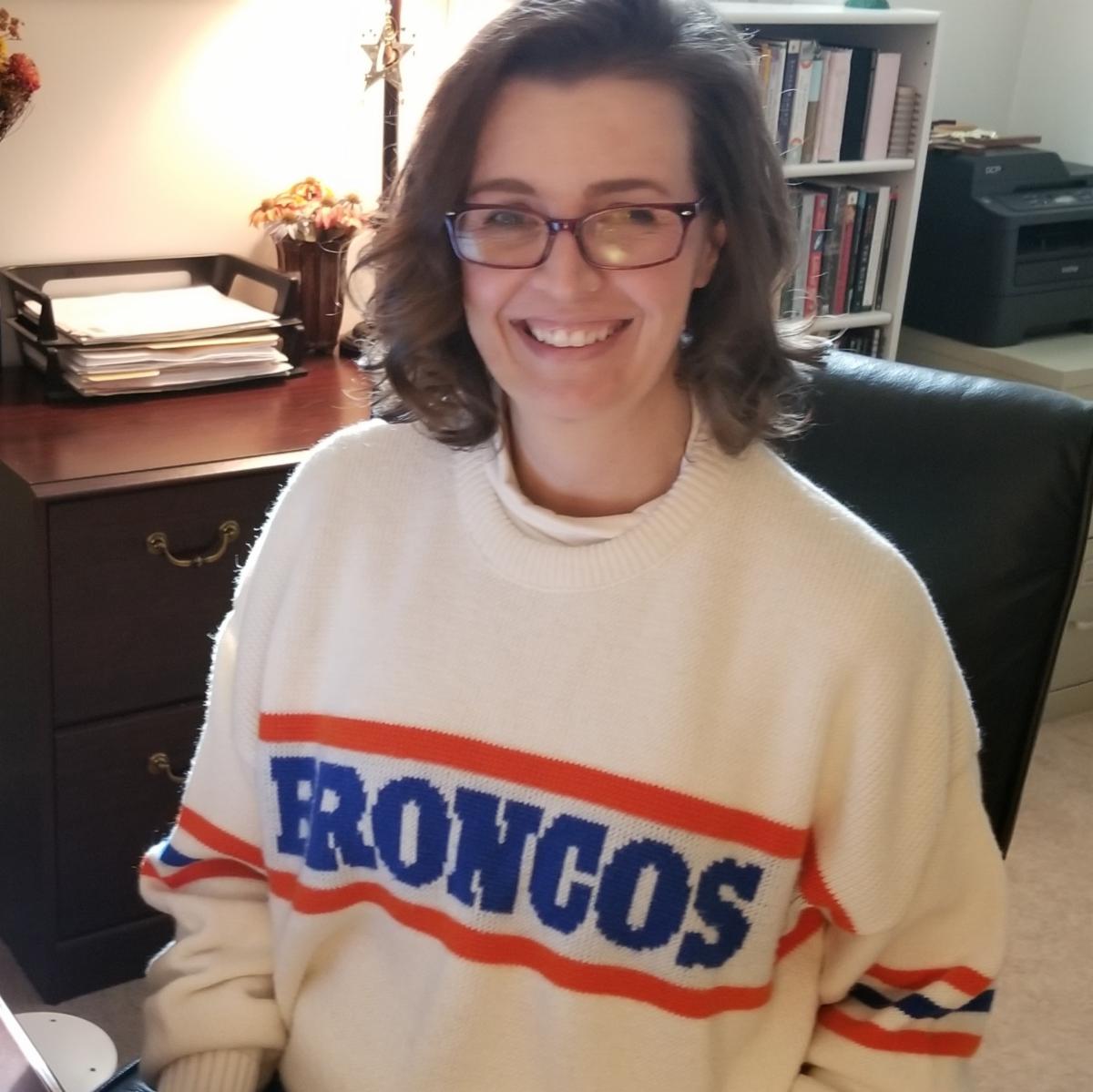
Enjoy the game! (And yes, I know the Broncos are not in the Super Bowl, but I can't bear to cheer for any other team!)
|
|
CMAS Poll Results
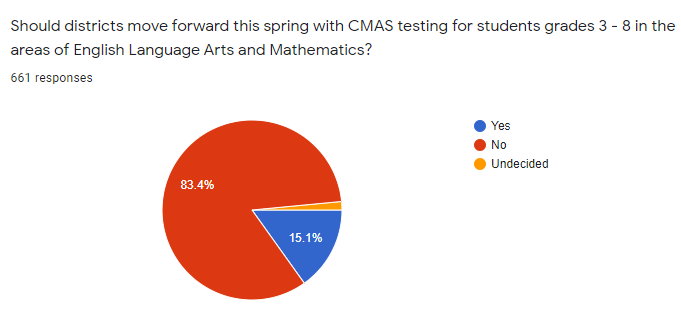
I really appreciated the large number of people who responded to the poll on whether or not to move forward with CMAS testing this spring. Here is a breakdown of the results:
- There were a total of 661 responses
-
83.4% said NO we should not administer CMAS tests this spring
-
15.1% said YES we should move forward with CMAS this spring
- 1.5% were Undecided
- Among Parents of 3-8 graders, 47 said YES and 130 said NO
- Among Current Educators, 20 said YES and 354 said NO
- Among Community Members, 29 said YES and 60 said NO
-
630 of the respondents indicated a reason for their choice!
Here are a few of the written responses:
"This year has already been the most stressful year for teachers and students alike. Since CMAS won’t be used for any high stakes purposes anyway, it doesn’t make sense to put students and teachers through the stressful process. It also cuts into our already reduced in person instructional time. Time that we can use to instruct our students and try to make the best out of a year that has been so difficult."
"My 2 children are so obviously falling behind and I need to know where they stand."
"While CMAS testing could provide important feedback to educators on areas of student deficit that have arisen from COVID, results are not available soon enough for a meaningful curriculum adjustment for this year. I am supportive of District-level testing for providing this important feedback."
"In a year no one could have predicted, our students are working through some very heavy things. Adding testing to this time of fear and uncertainty for them is unnecessary. There is very little these test can show us that we don't already know. Students will be behind because they have had to pivot back and forth between remote learning, in person learning, and a hybrid learning style. Nothing about this time has been "normal" for our educational systems. Why would we test as if they were?"
"It seems like this would be informative in figuring out how to catch students up after almost a year of pandemic/remote learning."
|
|
COVID-19 vaccination update
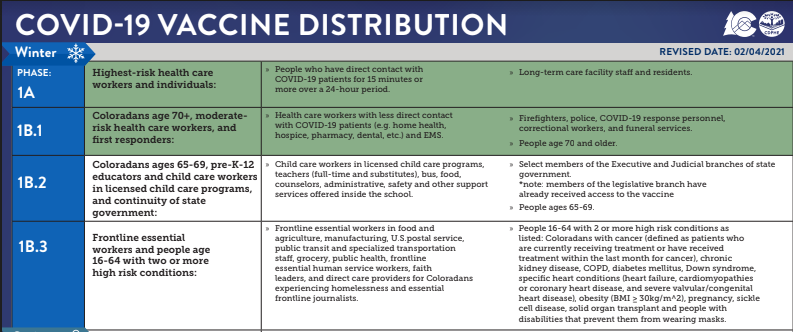
The Jeffco Public Health department sent out a press release last week announcing that they will be opening up its vaccination clinic to adults age 70+ in hopes of increasing that population's vaccination rate. So far, JCPH has focused its efforts on healthcare workers and first responders. Jeffco must reach a 70% vaccination rate of people 70+ before they can open up appointments for the vaccine to the next group, such as people 65+ and educators.
According to the release, "JCPH will begin offering vaccine in limited quantities to adults 70 and older at our clinic at the Arvada Fire Protection District Training Center, 6651 Indiana Street, beginning on February 3, 2021. This clinic is hosted with support from the Arvada Fire Protection District, Arvada Police Department and volunteers from organizations around the county. The vaccine will also continue to be available to those classified by CDPHE in Phase 1A and 1B.1."
Please note that vaccines will only be available to those who are in these phases and by appointment only. Please sign up for an appointment at the JCPH COVID-19 Clinics webpage. For additional information, visit COCOVIDVaccine.org or call 1-877-CO VAX CO (1-877-268-2926).
|
|
Senate Transportation & Energy Committee Sunset Hearing for the Office of Consumer Counsel & Utility Consumers' Board
During our month-long recess, the State Senate has moved forward with several sunset hearings for various programs and/or agencies. The General Assembly sets specific dates that a particular agency, board, or function of government will terminate unless the legislature passes new legislation to continue.
Last week, the Senate Transportation and Energy Committee reviewed recommendations on the Office of Consumer Counsel and Utility Consumers' Board. These recommendations come from a sunset review process administered by the Department of Regulatory Affairs (DORA). Here is a copy of the sunset review report and the recommendations. The committee chose to adopt all the recommendations and move forward with the proposed bill draft. The next step will be to hear the bill in committee when the legislature resumes. |
|
Jeffco moves to Yellow on the COVID dial
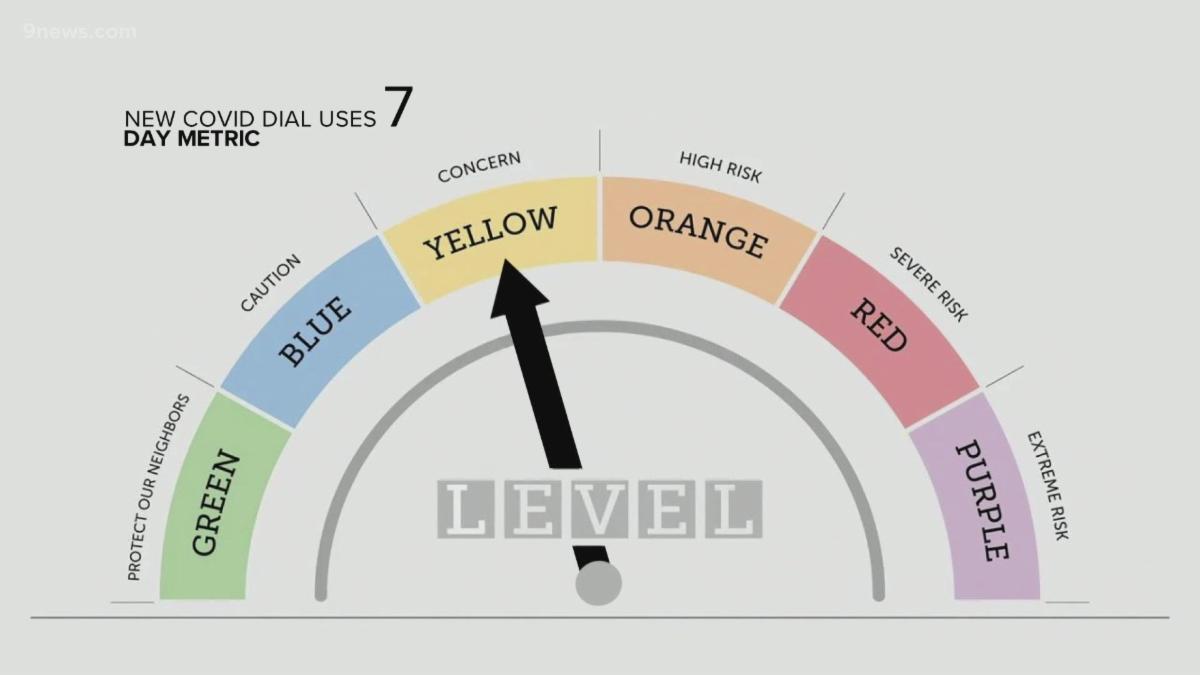
Last week, Governor Polis and the Colorado Department of Public Health and Environment (CDPHE) announced changes to the Dial Framework used to measure a county's level of openness in response to the number of COVID cases.
The new dial framework, called Dial 2.0, includes several changes including:
- Using 7-day metrics, rather than 14-day metrics, to measure incidence rates, percent positivity and hospitalizations for counties.
- Higher caps on the metrics for each level.
- County hospitalizations, rather than hospital capacity, will be used as a metric.
- Under Level Yellow, restaurants can now operate with up to 50% capacity up to 50 people, or up to 150 people using the state's Social Distancing Calculator.
According to the new criteria, Jeffco will move to Yellow down from Orange on the Dial 2.0 framework. The new dial went into effect yesterday. To learn more about what Level Yellow means for Jeffco, visit CDPHE's Dial webpage. |
|
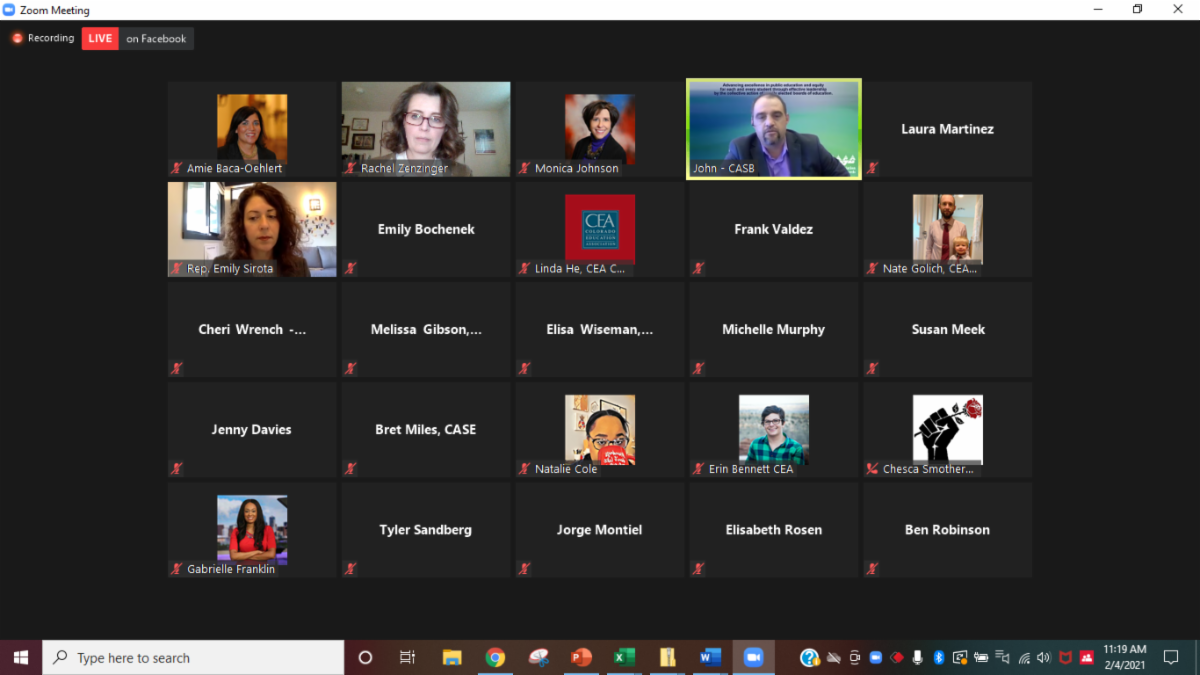
On Monday... I attended a CDLE briefing on the Unemployment Insurance system... I hosted an education stakeholder meeting to discuss upcoming legislation... I met with officials from the Colorado Department of Higher Education... On Tuesday... I met with Jefferson County Public Schools to discuss the vaccine rollout for educators... I received a briefing from PEBC and the Keystone Policy group on the Education System Resiliency and Innovation Initiative taskforce and recommendations report... On Wednesday... I met with a constituent and representative of Recycle Colorado... I attended a county briefing about the vaccine rollout... I met with a constituent and employee of the Department of Public Safety Criminal Justice Division... I met with proponents of pausing CMAS testing... I attended the Early Childhood Leadership Commission's legislative reception and annual report release... I attended the Blue Ribbon Restaurant Reception... On Thursday, I attended a CEA press conference on CMAS testing... I attended the SIPA Board of Directors meeting... I met with representatives of Stand For Children... I met with a representative of JLH Consulting and Public Affairs... On Friday, I attended the sunset hearing for the Office of Consumer Counsel... I attended the Colorado Commission on Higher Education business meeting... On Saturday, I attended the Arvadans for Progressive Action's presentation on Affordable Housing. |
|
Next Legislative Town Hall Meeting: Saturday, February 20 at 10:30 am
Mark your calendar for our next virtual town hall meeting! We will be presenting a legislative preview and giving an overview of the legislative process. We will cover topics such as how a bill becomes a law, what bills we plan to carry, and how you can participate. Click here for details!
|
|
About Senator Rachel Zenzinger |
|
Rachel Zenzinger was re-elected to a second term in the Colorado State Senate, representing District 19, in November 2020. Previously she served on the Arvada City Council.
Senator Zenzinger is the Chair of the Senate Education Committee, Vice Chair of the Statutory Revision Committee, and a member of the Senate Transportation and Energy Committee.
200 East Colfax, Denver, CO 80203
SenatorRachelZ@gmail.com
303-866-4840 office
303-748-0770 cell
|
|
|
|
|
|
|