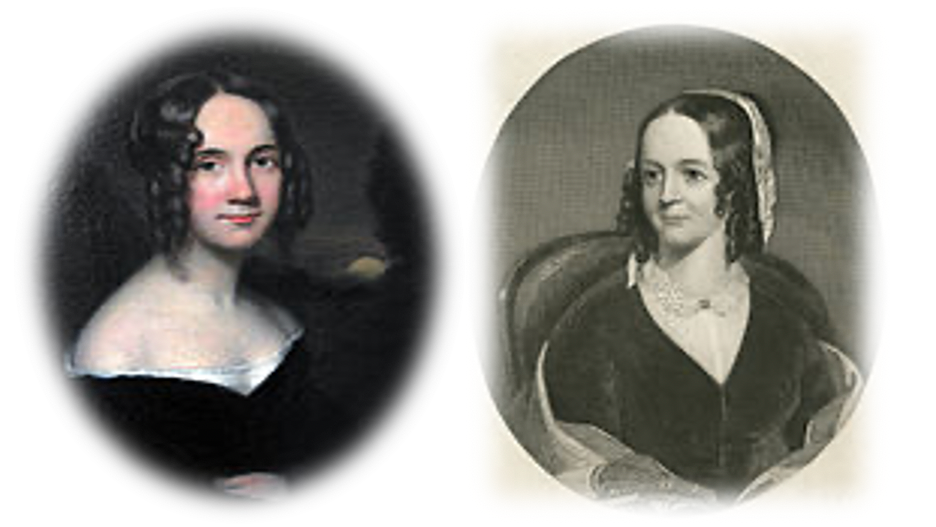
March is Women’s History Month. Established by law in 1987, it was first designated on February 28, 1980 by President Jimmy Carter as “Women’s History Week” celebrating women’s contributions to American history. In his 1980 proclamation, Carter cited Dr. Gerda Lerner, who said, “Women’s history is women’s right – an essential, indispensable heritage from which we can draw pride, comfort, courage, and long-range vision.” [1] In that spirit, Carter asked his “fellow Americans to recognize this heritage with appropriate activities … (focusing) their observance on the leaders who struggled for equality – Susan B. Anthony, Sojourner Truth, Lucy Stone, Lucretia Mott, Elizabeth Cady Stanton, Harriet Tubman, and Alice Paul.” [2]
So, as March unfolds, we will revisit two major threads in The American Tapestry Project – “Freedom’s Faultlines: Tales of Race and Gender” and “The Immigrant’s Tale.” On March 17, we will examine America’s favorite ethnic holiday – St. Patrick’s Day – in which 19th century Irish immigrants pushed back against nativist bigotry. Heeding Carter’s advice, we’ll also celebrate several 19th century women who fought back against America’s embedded gender discrimination by appealing to America’s foundational values. We’ll meet three women who were instrumental – one might say definitive – in, as Melanie Kirkpatrick phrases it regarding Sarah Josepha Hale, “the making of the modern American woman.” [3]
Rather than the usual luminaries, most of whom I suspect you know, or at least know their names – Margaret Fuller, Susan B. Anthony, Lucy Stone, Lucretia Mott, and Elizabeth Cady Stanton – we’ll meet three I suspect you might never have heard of, or if you have, about whom you might know very little. This week we’ll examine the life and career of Sarah Josepha Hale, the most influential woman of mid-19th century America. Hale fought tirelessly for women’s rights from her position as editor (she’d have said “Editress”) of Godey’s Lady’s Book. On March 24, we will meet Lydia Maria Child, who used her pen to champion abolition, women’s rights, Native American rights, and to oppose the Mexican War and American expansionism. Lastly, on March 31, we will encounter Margaret Fuller, Lucy Stone and Frances Willard.
So, who was Sarah Josepha Hale?
We met her briefly in Book Notes #36 discussing how Thanksgiving Day became a national holiday. It can be found here.
As the editor of the most significant woman’s magazine of the era, Hale changed American society and woman’s role within it. With sections on housekeeping, recipes, women’s high fashion, cutting-edge literary submissions from America’s leading authors, and Hale’s persuasive editorials, Godey’s Lady’s Book combined aspects of Martha Stewart’s Living, Good Housekeeping, Oprah Winfrey’s O, The Oprah Magazine, and The New Yorker.
Her accomplishments range from minor cultural signifiers, like why do brides wear white wedding gowns, which previously came in all hues? Because Hale promoted the idea in America after Queen Victoria wore white at her wedding. To intermediate cultural notions, like Christmas trees in the home, which in her pursuit of creating a common culture Hale made a defining characteristic of an American Christmas – to the establishment of major cultural traditions, such as a national observance of Thanksgiving Day as a day of national cultural unity. It was a cause for which she labored for more than 35 years before convincing President Abraham Lincoln in 1863 to proclaim the last Thursday in November a national day of Thanksgiving.
Although it is hard to say more importantly than creating Thanksgiving Day, of which Hale is sometimes called the “Mother,” her major accomplishments fall into two baskets. First, in creating common cultural signifiers like Christmas trees and holidays and promoting American writers over foreign imports in the magazines she edited, Hale was a major force in the early and middle 19th century for creating a common American culture.
Her greatest accomplishment, however, was her passionate and decades-long advocacy and fight for women’s rights. She relentlessly promoted a woman’s right to an education equal to a man’s, a woman’s right to work and to equal pay, and a woman’s right to own and manage her own property. When Sarah Josepha Hale began her career, women possessed none of these rights.
When not working as an author and editor, Hale also invented the modern concept of philanthropy and fundraising through the organizations for which she raised money, advised, or founded.
In some ways, she was a one-woman cultural revolution; in others, not so much.
Hale did not support women’s suffrage, for which her reputation has suffered. She was a complicated woman. In certain fundamental respects, she was a very conventional woman who by the example of her very unconventional life set in motion forces, not all of which she approved, that forever altered what it meant to be a conventional woman. A 19th century liberal, Hale was what in the 21st century we once called a conservative. Hale valued individual freedom within a common American culture and she believed in private property and economic opportunity for all. She rarely expressed opinions about government itself. As an apostle for creating a common American culture, Hale believed ardently in the 19th century notion of the idea of Home as American culture’s touchstone and anchor.
Home to an early 19th century liberal was the great engine of assimilation, which would make “Americans” of the disparate peoples peopling the new republic: native born of multiple ethnicities, the conquered indigenous people, freed Black Americans and immigrants. The idea of Home was white, gendered, and Christian. As Richard White writes in The Republic for Which It Stands, “it contained manly men and womanly women united in monogamous marriage to reproduce families.” [4] The heart of Home was woman, who, morally superior to man, tamed his baser instincts, creating the values upon which society rested. Hale opposed women’s suffrage because she believed it would compromise women’s moral superiority and the power it gave them. Like Frances Willard, Hale understood that women in their “invoking of the gendered home involved seizing a weapon of considerable power.” [5] Willard seized that power to create the World Woman’s Christian Temperance Union. Although she opposed women’s suffrage, Hale, by the force of her life’s work for women’s rights, ironically undermined that notion of Home she cherished.
Sarah Josepha Buell was born on October 24, 1788 on her family’s farm in Newport, New Hampshire. She was a member of a hardworking farm family that was instrumental at the local level in the creation of the new republic. Her family believed in education and the need to create a common American culture distinct from Britain, with whom they had just severed relations.
Relatively little is known about Buell’s childhood, for as Melanie Kirkpatrick writes, “of the millions of words that Sarah Josepha Hale wrote over the course of her long life, few were about her childhood … or for that matter her personal life … she would not have been comfortable in the me generation.” [6] Hale’s parents Gordon Buell, a Revolutionary War veteran, and Martha Buell believed in equal education for their children. She and her brother Horatio were home-schooled by their mother and when Horatio went off to Dartmouth College he supplied his sister with his textbooks and course material so that she might learn what he was learning. Largely self-taught, she absorbed Horatio’s classical education making her one of the most educated women of her time. Out of this grew her lifelong commitment to the education of women.
At 18, wanting to use the knowledge she was accumulating and realizing that life on the farm was not for her, she opened a school. It was probably what was known as a “dame school” for young children run by a woman. At the time, teaching was a man’s profession; women were thought unfit to teach older students. “Miss Buell’s School” departed from the usual format of students learning by rote and then in a group “blabbing” back the lessons to the teacher. Buell abolished that practice. She intuitively understood that children learn best if permitted to learn at their own pace and to recite individually. [7]
In 1813, Sarah Josepha Buell married young lawyer David Hale. For nine years, they experienced an almost idyllic marriage. They were partners. They shared everything. They in quick order had five children – three sons and two daughters. David Hale was his wife’s greatest supporter in her fledgling efforts at writing poetry and children’s literature. Every evening after the children were asleep, they would read, write, and study together. Their marriage was not without its trials. In 1818, Sarah Hale contracted consumption, which at the time was usually a fatal disease.
As she later told her granddaughter, her husband refused to let her die. Placing the children with relatives, he took her on a months-long journey through the countryside absorbing fresh air and eating abundant grapes. He had heard of a grape cure. Whether the grapes had any impact is not known, but David Hale’s decision to take his wife into the country was a brilliant stroke, for it anticipated by 70 years or more the adoption of the fresh-air cure as the best treatment for tuberculosis. Sarah Hale survived. [8]
Then in 1822, David Hale died leaving Sarah Hale a widow at 33 with five children. The only options open to her were to remarry or to figure out how to earn her own living. She made two decisions. She would wear black for the rest of her life as a sign of perpetual mourning for David Hale, and she would earn her living as a writer. Dedicated to her children, she sought to prove the truth of a quotation she found years later from the German poet Goethe: “The excellent woman is she, who, if the husband dies, can be a father to the children.” [9]
Two observations come to mind about those decisions. First, Sarah Hale’s decision to never remarry almost certainly grew out of her love for David Hale and the recognition that she was unlikely to find another like him. It also, however, reflected women’s precarious legal position at the time. Because of the law of coverture, women were not permitted to own property or make decisions for themselves. A woman was legally bound by the authority of her father or husband. There was one exception – widows. A widow could own property and manage her own money. Widows were accorded a measure of respect and independence.
Sarah Hale chose independence.
Since there were few professional writers and no professional women writers in early 19th century America, Sarah Hale needed an intermediate source of income until she could earn money from her writing. Since all professions at the time were closed to women, she had only one option – sewing and needlework. She and her sister-in-law Hannah opened a millinery store. The business flourished, but it instilled in Hale, who hated it, a life-long contempt for fashion. It, however, provided her the breathing space to begin to write. She wrote poetry, publishing with the help of some of her husband’s friends a book of poems in 1823 titled The Genius of Oblivion.
Sarah became an accomplished author of children’s literature. One of her poems for children is an enduring American classic, one I am certain you know but probably without ever knowing who wrote it. It’s “Mary had a little lamb” or, in a slightly different version, “Mary’s Lamb.” You probably automatically recited its opening verse to yourself hearing the title, it’s so ingrained in the American psyche. It goes:
Mary had a little lamb,
Its fleece was white as snow;
And everywhere that Mary went
The lamb was sure to go. [10]
In 1826, she published her first novel, Northwood: A Tale of New England. As Melanie Kirkpatrick notes, it is important in American literature for three reasons: 1) it was one of the first novels written by a woman; 2) it was one of the first novels written by anyone to confront the issue of slavery, which Hale adamantly opposed; and 3) it depicted in vivid detail an authentic portrait of New England lifestyles and values, including a lengthy description of a classic New England Thanksgiving dinner that became the archetypal American Thanksgiving dinner. [11]
It also attracted the notice of the Rev. John Lauris Blake, who invited Hale to move to Boston and become the editor of his Ladies’ Magazine. Taking this job was risky for two reasons. First, it required Hale to place her children with relatives while she moved to Boston with her youngest son. Regarding her family, given the communications challenges of the era, Hale managed to keep her family “united” in spirit if not in fact. Her long-distance parenting with the help of dedicated relatives, in particular her brother Horatio, somehow worked. Her children all succeeded, as Hale lived up to Goethe’s admonition. Hale, however, paid a price in the disapproval, if not scorn, she received from friends and relatives in New Hampshire for her “modern” ways.
Additionally, ladies magazines were precarious enterprises, failing regularly. Hale was not the first woman to edit a magazine, but she was the first to succeed at it. From the beginning, her editing of the Ladies’ Magazine advocated for her three main causes – women’s right to an education, the need to build a common culture by publishing American writers, and women’s leadership in charitable causes. [12] Her work at the Ladies’ Magazine drew the attention in 1837 of publisher and promoter Louis Antoine Godey of Philadelphia, who offered her the job as editor of his Godey’s Lady’s Book. She accepted, eventually moved to Philadelphia, held the position for 40 years and in the process changed American culture.
She did it as a writer and editor championing women’s rights and the need to create a common American culture. She would have understood The American Tapestry Project. A list of her accomplishments is daunting. She wrote one of the first American novels on American cultural themes, themes and ideas that she then promoted at both the Ladies’ Magazine and Godey’s Lady’s Book. In working to create an American culture, she promoted American literature and American writers. The list of authors she published includes Lydia Sigourney, the foremost woman author of her day; Lydia Maria Child; Edgar Allan Poe; Nathaniel Hawthorne; and John Greenleaf Whittier.
Hale’s fame, however, should rest upon her championing of women’s rights.
She was a tireless and passionate advocate for women. For her time, what Hale proposed was radical and groundbreaking. She took great risks, but she did it tactically and under the guise of a “women’s magazine.” In her time, perhaps only a “lady” editing a “lady’s” magazine could have done what she did. Hiding in plain sight, she advocated for women’s right to an education, which most opposed. She not only wrote about it, but she also took action to make it happen. Either directly or indirectly, she was involved in the founding of infant schools, what we would call daycare centers for the children of working women, and dame schools for young children, what we would call pre-school. She also advocated for women’s right to a higher education. The Vassar College’s website credits Sarah Josepha Hale for encouraging, advising, and supporting Matthew Vassar in the founding of Vassar College for Women, which is now simply Vassar College. [13]
Having experienced the privation of widowhood, Hale was relentless in her advocacy of women’s right to work in order to support their families. She fought for women’s right to become teachers at schools above the “dame school” level. At first, being a practical politician, she argued this would be smart for communities to do because women would work for less money. Later, she pivoted and insisted upon equal pay for equal work. She fought for women’s right to keep the money they earned and to own property. She was instrumental in generating the public momentum creating the political will to abolish coverture.
She extended her campaign for women’s right to work to include other professions, such as nursing, cooking, and medicine, all of which were closed to women. She championed women in medical school, particularly Elizabeth Blackwell, who in 1849 became the first woman to earn a medical degree. She advocated for Blackwell again in 1857 when she founded the first hospital for indigent women and children in New York City. She also fought against the intrusion of men into midwifery, which she thought ought to remain the province of women caring for women. [14]
An abolitionist, Hale was a vehement opponent of slavery, but stopped short of envisioning full integration into American society for the freed slaves. Like many in the early and middle-19th century, she supported the colonization movement to relocate the freedmen to either the Caribbean or to Africa. It was not her finest moment.
Similarly, her reputation has suffered because, although she prepared the way for the Women’s Rights Convention in Seneca Falls, New York in 1848, she opposed women’s suffrage. She feared if women entered directly into the political arena it would compromise the superiority of their moral position above men. She believed in “republican motherhood” – that women’s power derived from their position in the Home.
Hale was a major advocate for the role of women in charitable causes. One could argue that she invented the American way of philanthropy and fundraising. Her very first issue of the Ladies’ Magazine supported the role of women helping other indigent women and their children. She knew how important this was because she had lived it. She set in motion a movement that lasted well into the 20th century of wealthy and middle-class women founding, leading, and managing charities to help the emerging urban poor. You see a vestige of that legacy in Erie, Pennsylvania in the Sarah Reed Home. In 1831, Hale founded the Seaman’s Aid Society in Boston to support the wives and children of seamen “who often endured terrible privations when the family breadwinner was away at sea.” [15] It was here that she began to strenuously argue for women’s inclusion in the various occupations and their right to fair pay. It was also this work on behalf of widows of seamen that led her to fight against the law of coverture prohibiting women from owning property. Since working women needed care for their children, it was Hale who convinced the society to create a center for working women’s children. The Seaman Society’s “day nursery was the first day care center for the children of working women in the United States.” [16]
Hale was also instrumental in raising the funds for two of America’s great monuments: the Bunker Hill Memorial in Charlestown, Massachusetts and the restoration of George Washington’s home at Mount Vernon. The Bunker Hill Memorial was languishing from a failure to raise adequate funds and because certain real estate developers opposed the use of valuable property for a non-productive monument. Hale negated the latter by solving the former. When the promoters of the project failed to raise the necessary funds, she advocated for letting the women do it. Hale and her women supporters at first failed, but then Hale hit upon the idea of a massive fundraising fair at the Quincy Market to which the women of New England would donate crafts and other valuables. Today we would call it event fundraising, but in 1840 it was “a conceptual blockbuster of an idea.” At their fair, Hale and her legion of women raised, after expenses, $30,000 to complete the monument. [17] To modern ears that does not sound like a lot of money. Adjusting for inflation across the centuries is a dicey thing, but Hale’s $30,000 equates to approximately $3 million in 2022 dollars.
Hale’s role in restoring Mount Vernon was more indirect. In 1853, when Louisa Cunningham first thought of restoring Mount Vernon, her daughter Ann Pamela Cunningham advised her to unite a group of women to do it just as Sarah Josepha Hale had done at Bunker Hill. So, Cunningham founded the Mount Vernon Ladies Association and the preservation of an American treasure. Louisa and Ann Pamela Cunningham consulted with Hale, who advised them about how to structure their organization, recruit women to staff it, and how to raise funds to fuel it. The Mount Vernon Ladies Association is frequently used as the example of the first women-led American philanthropy, but clearly it came after Sarah Josepha Hale at Bunker Hill. [18]
We’ve already mentioned Hale’s role in brides wearing white and her involvement along with Washington Irving, Clement Clarke Moore, and Thomas Nast in creating the American way of Christmas by her urging placing Christmas trees in every American home as a symbol of the season. Her most noteworthy accomplishment in culture creation, however, began with her description of a classic New England Thanksgiving Dinner in her novel, Northwood. It then extended across the next almost 40 years during which Hale lobbied governors, senators, members of the U.S. House of Representatives, and presidents until, in 1863, in response to a letter from Hale urging a holiday of national unity, President Lincoln issued a proclamation creating Thanksgiving Day. It has lasted 159 years and shows no signs, even in these fractious times, of going away.
If you had told Hale she was reinventing a Pilgrim holiday, she would have looked at you with bewilderment. The now famous 1621 Pilgrim holiday was unknown until late in the 19th century when William Bradford’s journals were discovered. But a day of thanksgiving, an English Puritan custom, had been a New England fall festival tradition since the late 17th century. Hale codified it in Northwood and then sold it as the quintessential American holiday. If anyone invented Thanksgiving Day, it was Sarah Josepha Hale.
So, given all of that, why don’t you know Sarah Josepha Hale? Well, in part, because she was both a woman of her times and a woman far ahead of her times. An abolitionist, she did not go as far as Lydia Maria Child, who was an abolitionist but also an advocate for Black and Native American rights. Hale championed women’s rights and arguably did as much for women’s welfare as anyone in American history, but rooted in her time and its notions of Home, she opposed women’s suffrage.
A complicated woman, she was also a great woman. Her story sheds some light on the challenge of our current culture wars and the need for nuance and sophistication in appraising figures from the past. Almost no one in human history was perfect, so in reexamining the past we need to accept that sometimes good people fighting the good fight don’t get it entirely right.
In a long career – she retired at 89 – Sarah Josepha Hale got it far more right than wrong. In doing so, this most conventional of women, who led the most unconventional life as a dominating presence in the male world of publishing, publicity, and philanthropy, set in motion forces that undermined the conventional notion of a woman’s role leading to the 21st century and the modern American woman.
Sarah Josepha Hale – you need to know her.