Live, Interactive Webinar Wednesday, December 2, 2020
10:00 AM PST - 12:00 PM CST - 1:00 PM EST
Identifying Patients at Risk for Hereditary Cancer
Meeting the Challenge in the Era of COVID 19:
Transforming Care in the Imaging Setting
Objectives:
  • Gain an awareness of the need for breast cancer risk stratification through risk assessment programs and genetic testing.
  • Understand how knowing a patient’s breast cancer risk can impact care.
  • Identify basic red flags for breast cancer genetic testing.
  • Recognize the impact of delayed screening due to the COVID 19 pandemic.
  • Explore innovative ways in which risk assessments and genetic testing can be offered to patients in the COVID 19 era.
  • Understand the value of having a comprehensive risk assessment program, to include financial impact, marketing and physician recruitment.
  • Begin synthesizing a plan to operationalize and leverage a risk program in an Imaging department.
Webinar sponsored by Myriad®
Target Candidates:
Breast Healthcare providers such as:
MD's • RT's • NP's • RN's • Genetic Counselors • Navigators • PA’s
Webinar presenters:

Kevin L. Pope, MD
Radiologist, Co-Founder,
Medical Director
The Breast Center of Northwest Arkansas-a MANA Clinic, Fayetteville, Bentonville and Harrison, Arkansas

Former Breast Program Director
Arkansas Breast Cancer Specialists –an Accredited Center, National Accreditation Programs for Breast Centers (NAPBC)

Disclosure: Speaker honorarium from Myriad
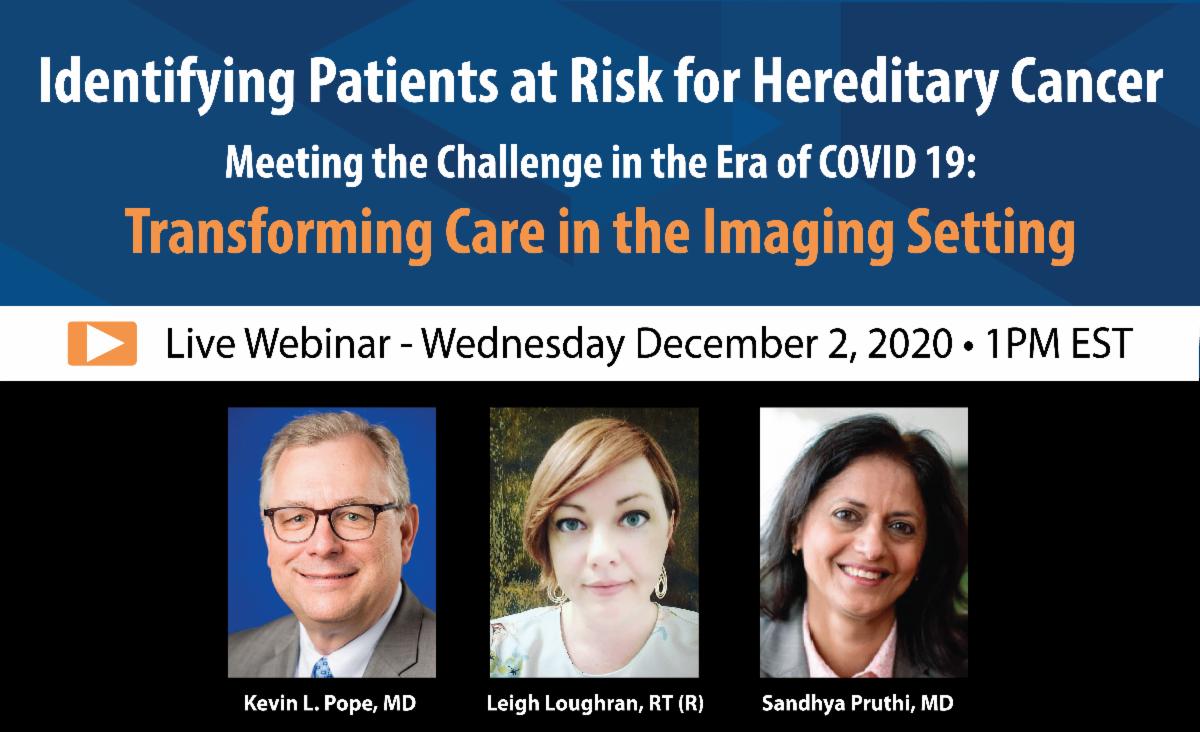


Leigh Loughran, RT (R) 
Operations Manager, Medical Imaging
Personalized Medicine Program Director
Rome Memorial Hospital
Rome, New York

Disclosure: Speaker honorarium from Myriad

‌
Sandhya Pruthi, MD, Moderator
President, NCBC
Consultant Breast Diagnostic Clinic
Professor of Medicine
Mayo Clinic
Rochester, MN

Moderator
No financial disclosures.
Live, interactive webinar - Wednesday, December 2, 2020 1:00 PM EST
Interact with the presenters and ask questions during the webcast.
Watch from your smart phone or computer.

Webinar hosted by
Advocating for Excellence in Breast Health Care