|
The objective
Substance use disorder (SUD) affects 17% of adults in the United States and is a leading cause of preventable death and disability. Despite effective, evidence-based options, only 4% of people with SUD receive treatment. In partnership with the ACT Center, Kaiser Permanente Washington leaders in Mental Health and Wellness (MHW) are aiming to close this gap through a new, proactive approach to connecting patients with SUD to treatment. In addition to improving member experience, the team prioritized improving HEDIS quality metrics related to SUD treatment.
The work
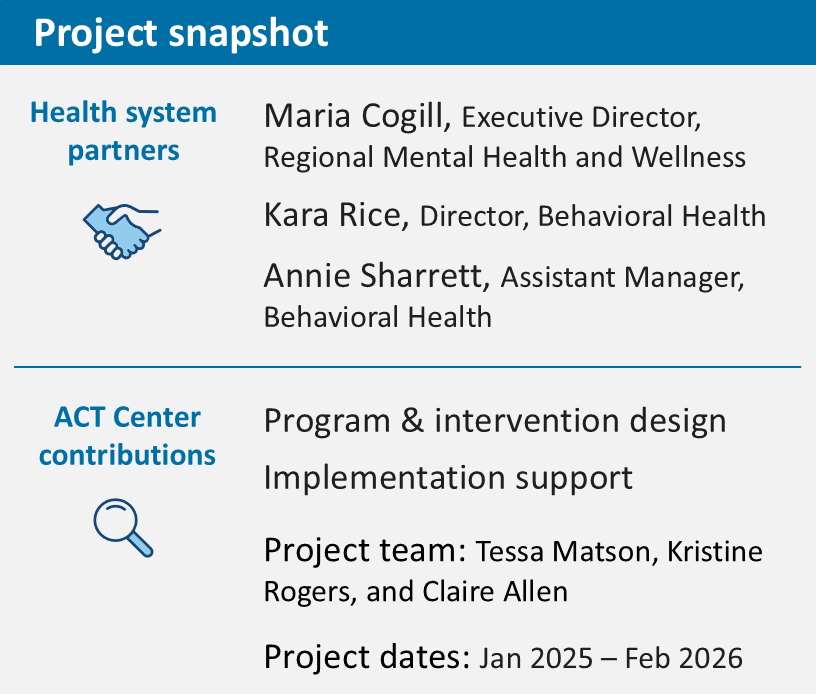
ACT Center experts in SUD and clinical implementation worked with MHW leaders to:
- Map evidence-based workflows to support outreach and follow-up with 4 high-priority patient populations
- Build and implement an Epic registry for identifying priority patients, following up with them, and tracking their progress
- Provide training and implementation support for the registry, including creating huddle cards, job aids, and non-stigmatizing scripts to facilitate outreach to patients
- Develop Epic reports for MHW leaders to track and monitor program outcomes
What we learned
To align program goals with HEDIS metrics, the team started by better defining the intervention approach and determining what operational and technical supports were needed. Historical data highlighted key gaps in follow-up care — particularly after emergency department visits — and identified opportunities to improve timely treatment initiation. At the same time, changes in addiction service delivery at Kaiser Permanente Washington made it more urgent to build a coordinated, system-wide approach to connecting patients to care.
What we've done to improve clinical care
The team launched a new Behavioral Health Outreach Team supported by the standardized workflows, Epic registry, and real-time reporting tools co-developed with the ACT Center. This gives Kaiser Permanente Washington a sustainable, evidence-based infrastructure for delivering more timely, coordinated, and patient-centered SUD care — laying the foundation for ongoing improvements in treatment initiation and engagement.
|