|
San Mateo, CA (Dec. 12, 2025) — The City of San Mateo has initiated development of its Climate Adaptation Plan for Sea Level Rise, launching a multi-year planning effort to understand vulnerabilities along the City’s shoreline and identify long-term strategies to address increasing flood and shoreline risks. The initiative is supported by funding from the California Department of Transportation (Caltrans) Sustainable Planning Grant Program and will meet new regional requirements for shoreline resilience planning.
The plan advances priorities in both the Strive San Mateo General Plan 2040 and the City Council Strategic Plan, which call for bold action to maintain public safety, protect infrastructure, and prepare for climate change impacts.
A City Committed to Long-Term Resilience
The plan will align with the region-wide framework established by the San Francisco Bay Conservation and Development Commission (BCDC). Under state law, BCDC requires Bay Area cities to prepare shoreline adaptation plans that follow its Regional Shoreline Adaptation Plan (RSAP) Guidelines. San Mateo’s effort is one of the first to begin this compliance process.
“The cost of doing nothing is too high,” said City Manager Alex Khojikian. “This plan helps us protect essential infrastructure and billions in property while coordinating with our neighboring cities under BCDC’s regional framework. Sea level rise is a shared challenge, and working together is the smartest and most effective way to build long-term resilience.”
San Mateo County: California’s Most Vulnerable to Rising Seas
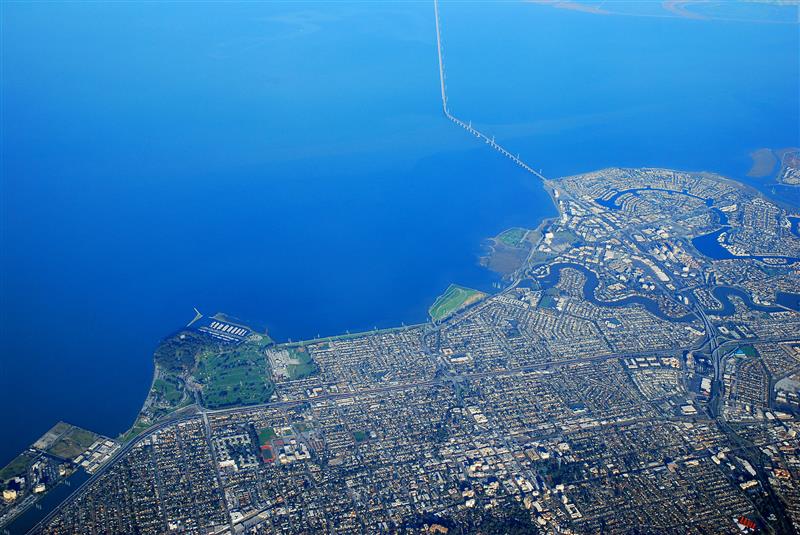
San Mateo County is considered the most vulnerable county in California to sea level rise due to its extensive Pacific and Bay shoreline and the concentration of homes, jobs, and infrastructure in low-lying areas.
According to the City’s Safety Element and regional studies:
- Sea levels along San Mateo’s shoreline are projected to rise 1.1 to 2.7 feet by 2050, and 3.4 to 10.2 feet by 2100.
- The assessed value of parcels exposed to present-day flooding exceeds $1 billion.
- Long-term exposure (50–100 years) to coastal flooding and erosion encompasses roughly $39.1 billion in assessed property value.
Among the First Cities Advancing a State-Compliant Shoreline Plan
Under Senate Bill 272 (SB 272), the Bay Conservation and Development Commission (BCDC) adopted the Regional Shoreline Adaptation Plan (RSAP) in December 2024, establishing required Guidelines for local governments. These guidelines ensure Bay-wide coordination in how jurisdictions prepare for sea level rise.
San Mateo is among the first cities in the region—along with the City of Alameda and Solano County—to formally initiate a plan aligned with RSAP requirements. BCDC has issued an Initiation Notice recognizing the City’s effort.
Funding, Consultant Selection, and Project Timeline
Key milestones to date include:
- February 2025: City acceptance of a Caltrans Sustainable Planning Grant to support plan development.
- March 2025: Release of a competitive Request for Proposals for technical consulting services.
- July 2025: City Council approval of a consultant agreement with Environmental Science Associates (ESA), selected for their extensive regional experience in sea level rise and shoreline resilience planning.
Building on Existing Climate-Resilient Investments
The Climate Adaptation Plan complements other major City initiatives already integrating climate change considerations:
- Wastewater Treatment Plant Modernization: The largest upgrade since the 1970s, enabling capacity for 78 million gallons per day during storm events and producing higher-quality treated water to protect the community and the bay.
- Stormwater Master Plan Update: A comprehensive roadmap to prioritize storm drainage system improvements and establish sustainable long-term funding for flood protection.
What the Climate Adaptation Plan Will Focus On
The planning effort will include:
- Existing Conditions Analysis
- Vulnerability Assessment
- Adaptation Strategies and Pathways Development
- Draft and Final Plan Preparation
Community Engagement and Regional Collaboration
Community input will guide each phase of the project. Planned engagement includes:
- Workshops and public meetings
- Presentations to the Sustainability and Infrastructure Commission, Planning Commission, and City Council
- A Technical Advisory Council including neighboring cities to reinforce regional coordination
- Equitable outreach prioritizing outreach efforts in vulnerable communities
More Information
For project updates, visit: https://www.cityofsanmateo.org/adaptation.
For media inquiries:
Jeanne Sullivan
Communications Consultant
City of San Mateo
Phone: 415-735-0511
Email: jsullivan@cityofsanmateo.org
|