|
Thank you for your attention and participation in various activities in protecting medical practices!
We want to bring to your attention critical issues affecting patients across the United States, including those covered by Medicare, Medicare Advantage, Medicaid, and commercial insurers.
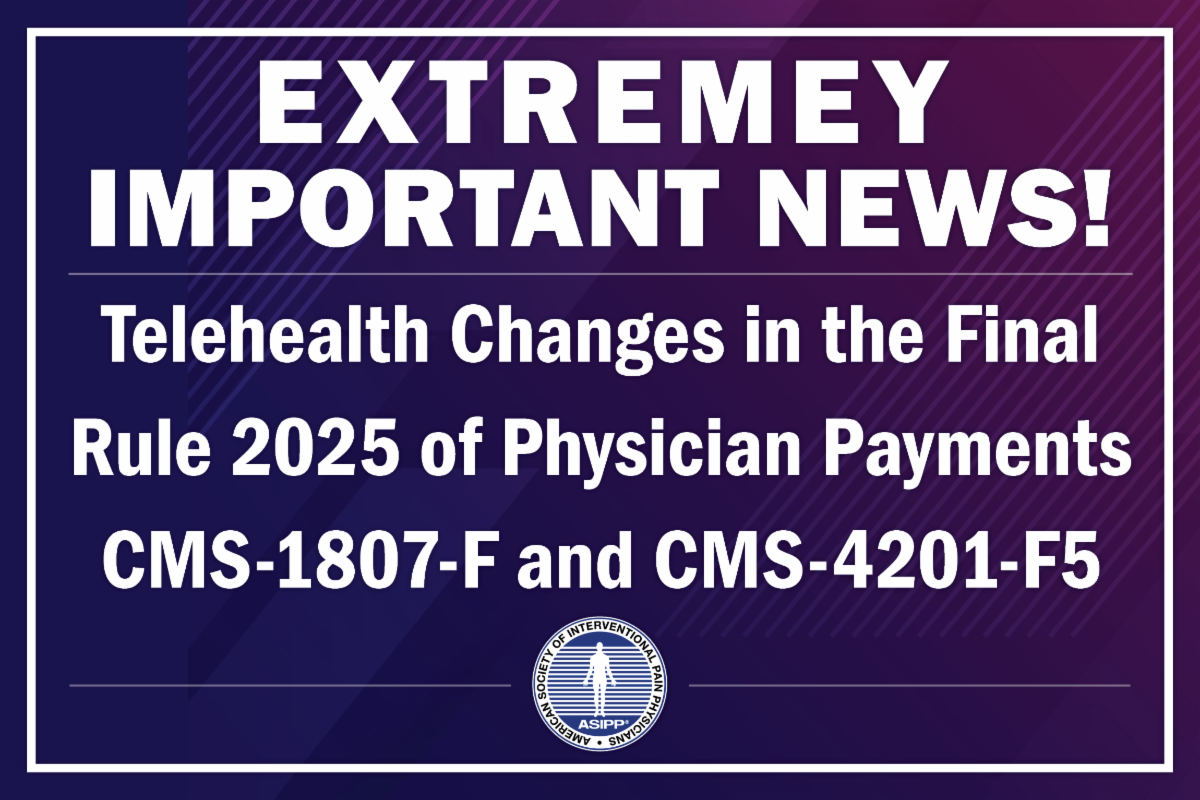
The Medicare Final Rule has significantly changed the provision of telehealth services. Starting April 1, 2025, most telehealth services will require patients to be physically present in an office or medical facility located in a rural area. This restriction excludes patients in non-rural areas from accessing telehealth services altogether. Even for those in rural regions, traveling to a designated facility can be extremely difficult, undermining one of telehealth’s primary benefits—providing care from the patient’s home. These changes will impose substantial transportation costs, create burdens for elderly patients who cannot drive, and disrupt the working population that relies on telehealth for accessible care. Currently, approximately 20% of patients depend on telehealth services.
Furthermore, if this rule remains in place, Medicare Advantage, Medicaid, and commercial insurers are expected to adopt similar policies, likely with reduced reimbursements. This will effectively dismantle telehealth services, severely limiting patient access to essential health services.
This issue is crucial for millions of patients across the country, and we hope you will take action to help preserve access to these vital services. We urgently request you to contact CMS and members of Congress (House and Senate).
| |
There has been increasing pressure at safety net hospital to do more with less, physician says
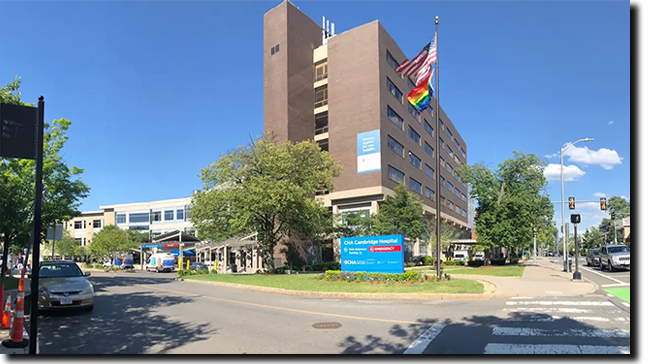
More than 230 clinicians at Cambridge Health Alliance (CHA) in Massachusetts won their union election and have received certification through the state Department of Labor Relations.
About half of the group's members are physicians, including primary care doctors, psychiatrists, and hospitalists; members also include physician assistants (PAs) and psychologists, according to SHARE CHA/AFSCME, the union representing the group.
Jeremy Stricsek, MD, a primary care physician at CHA, told MedPage Today that collective discussions about ways to improve working conditions and patient care began several years ago, some of which were spurred by the pandemic. However, in the summer of 2022, organizing efforts became more serious as the group recognized that physicians and other healthcare professionals would need to unionize in order to "better advocate" for themselves and patients. Overall, there has been concern over "increasing pressure to do more with less," he said.
Read More
| |
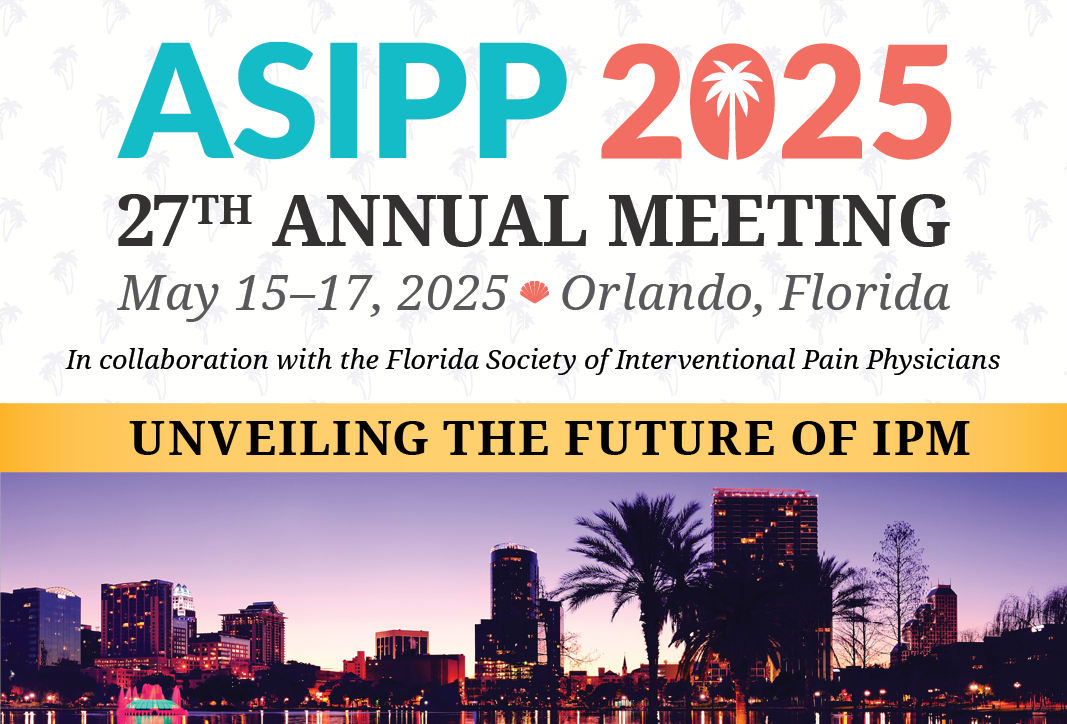
Registration is open for
ASIPP's 2025 Annual Meeting
We would love it if you would register and join us in Orlando!
| |
Attention Fellows and Residents! | |
|
ASIPP is pleased to announce a scholarship to help fellows and residents participate in the 2025 ASIPP Annual Meeting. Recipients of this scholarship will receive reimbursement for up to three nights stay at the host hotel at the official ASIPP single-occupancy room block rate. This includes room block room rate and tax.
The number of scholarship recipients will be limited so it is important to apply soon!
| |
Abstract submissions are open for
ASIPP's 2025 Annual Meeting!
The abstract submission deadline is March 10, 2025.
Don't miss this opportunity to share your insights
and help shape the future of pain management.
| |
Judge agreed to temporary restraining order requested by the Doctors for America advocacy group
A federal judge on Tuesday ordered government agencies to restore public access to health-related webpages and datasets that they removed to comply with an executive order by President Trump.
U.S. District Judge John Bates in Washington agreed to issue a temporary restraining order requested by the Doctors for America advocacy group. The judge instructed the government to restore access to several webpages and datasets that the group identified as missing from websites and to identify others that also were taken down "without adequate notice or reasoned explanation."
On Jan. 20, his first day back in the White House, Trump signed an order for agencies to use the term "sex" and not "gender" in federal policies and documents. In response, the Office of Personnel Management's (OPM's) acting director required agency heads to eliminate any programs and take down any websites that promote "gender ideology."
Read More
| |
|
Physicians respond to proposed legislation, saying the technology isn't there yet
Artificial intelligence (AI) could be used to prescribe medications to patients -- if a new bill makes its way through Congress.
The proposed legislation, sponsored by Rep. David Schweikert (R-Ariz.), would amend the Federal Food, Drug, and Cosmetic Act to clarify that AI and machine learning technologies can qualify as a practitioner eligible to prescribe drugs if authorized by the state involved and approved by the FDA.
The bill was introduced in the U.S. House of Representatives and referred to the House Committee on Energy and Commerce in January.
Read More
| |
|
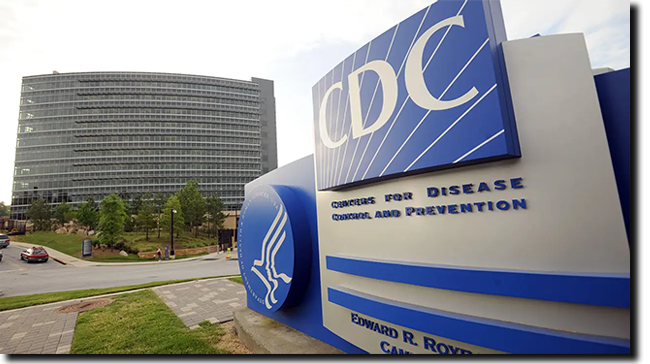
CDC spokesperson says papers are still in MMWR pipeline, but timeline is uncertain
The CDC's Morbidity and Mortality Weekly Report (MMWR) resumed publishing after an unprecedented 2-week hiatus, but without the three H5N1 avian influenza papers that were slated to publish on Jan. 23.
A CDC spokesperson told MedPage Today that these papers "are still in the pipeline" but they did not have a confirmed publication date.
One of the studies discussed whether veterinarians who have been treating cattle infected with the virus became infected themselves, according to KFF Health News. Another documented cases of people with the virus potentially infecting their pet cats, the outlet reported.
Read More
| |
|
What a long, strange trip it’s been. Once used solely for spiritual and religious purposes and, over time, in recreational settings, psychedelics like lysergic acid diethylamide (LSD) and psilocybin are increasingly becoming part of the toolbox for the rapidly growing self-treatment movement of microdosing.
Microdosing is the practice of taking repeated small doses of psilocybin or LSD, sometimes in combination with other substances like lion’s mane mushrooms, niacin, and/or N,N-dimethyltryptamine. Data from a cross-sectional survey of more than 8000 respondents in 84 countries showed that more than 50% of people who microdosed psilocybin reported “stacking” with other supplements to enhance its overall effects, especially creativity and learning.
With the exception of the Netherlands, where psilocybin truffles can be purchased legally over the counter, microdosing is unregulated and illegal across the European Union. However, this has not stopped people who swear by its benefits and who rely on Reddit forums and trusted friends to guide them through practicalities like sourcing, dosage, and regimens.
Read More
| |
|
New 2025 Dates
Mark your calendars!
March 1, March 29, April 26,
May 31, & June 28
Four (4) hour virtual exam
- ABIPP Path – Combined CCPM/ CSM Exam
For those with subspecialty in Pain Medicine
Two (2) hour virtual exam
- ABIPP Competency Exam in IPM
For those without primary board certification
Two (2) hour virtual exam
- ABIPP Competency Exam in Regenerative Medicine
Two (2) hour virtual exam
- Controlled Substance Management Competency Exam
Two (2) hour virtual exam
- Documentation, Coding, Compliance, Practice Management Competency Exam
Two (2) hour virtual exam
| |
|
Opioid prescribing in hospitals’ emergency departments (ED) is not risk-free, but the likelihood that these prescriptions will result in harm to patients is low, new research suggests.
ED physicians are under pressure to reduce opioid prescribing because of the potential for misuse of the drugs. At the same time, they face the challenge of treating severe pain. Often, emergency physicians treat opioid-tolerant patients whose physicians have stopped prescribing opioids for them. A lack of opioid prescribing guidelines complicates prescribers’ choices.
A study of administrative data for more than 13 million ED visits indicates that the level of risk to patients when ED physicians prescribe opioids “is much lower than people think it is, and the downsides of prescribing opioids for acute pain are probably much less than the downsides of not treating acute pain,” study coauthor Grant Innes, MD, professor of emergency medicine at the University of Calgary’s Cumming School of Medicine, Calgary, Alberta, Canada, told Medscape Medical News.
Read More
| |
- ASIPP Members Only Site Information - | |
-
To log in for the first time you will need to click “forgot password” at the bottom of the login window.
- Check your email and then log in as directed.
-
If you have problems logging into your account, click here.
| |
|
Detecting soluble tau assemblies early may improve Alzheimer's treatment outcomes
A cerebrospinal fluid (CSF) biomarker test detected tau protein in Alzheimer's disease years before it formed into pathologic fibrillary tangles.
In neuropathological assessments, antibodies against tau phosphorylation sites serine-262 (p-tau262) and serine-356 (p-tau356) within a soluble tau assembly core almost exclusively indicated prefibrillar tau aggregates, reported Thomas Karikari, PhD, of the University of Pittsburgh School of Medicine, and co-authors in Nature Medicine.
Neurofibrillary tangle formation can be prevented by targeting intermediate soluble tau assemblies, Karikari and colleagues pointed out, but biomarkers are lacking.
Read More
| |
|
The use of medication for opioid use disorder (MOUD) in older adults has increased over the years, yet disparities persist across patient subgroups, with men, Black and Hispanic individuals, rural area residents, and those with comorbidities such as chronic pain and arthritis being less likely to receive treatment.
METHODOLOGY:
- Researchers examined the characteristics of the use of MOUD among adults aged > 65 years diagnosed with OUD from 2017 to 2022 who were identified using national Medicare data.
- A total of 69,380 patients with OUD (60.7% women; 85.8% White individuals) were included in 2022.
- Patient characteristics such as age, sex, race or ethnicity, original entitlement (disability or old age), dual Medicaid coverage, and rural or urban area residence were considered.
Read More
| |
Upcoming ASIPP State Society Meetings | |
Join the Louisiana Society of
Interventional Pain Physicians (LSIPP)
2025 Annual Meeting on February 20
6 pm (CST) at Juban's Restaurant in Baton Rouge, LA
| |
|
Pain Medicine Case Reports (PMCR) and Editor-in-Chief Alaa Abd-Elsayed, MD, PhD would like to invite you to submit case reports and case series to the PMCR journal. Your article will be published free of charge.
Open access journals are freely available online for immediate worldwide open access to the full text of published articles. There is no subscription fee for open access journals. Open access journals are no different from traditional subscription-based journals: they undergo the same peer review and quality control as any other scholarly journal.
Interested in becoming a member of the PMCR Editorial Board?
Editorial board members are asked to review 2-6 manuscripts per year. Please submit your most up-to-date CV to sgold@asipp.org for consideration.
For more information or to submit your articles, click here.
| |
|
Steven Kim, MD, Maryam Hosseini, MD, and Hesham Elsharkawy, MD
Abstract
BACKGROUND: Occipital neuralgia (ON) is a common headache syndrome characterized by sharp, shooting pain affecting the posterior head in the distribution of the occipital nerve. It is associated with debilitating symptoms that can severely impact a patient’s quality of life. We report the use of peripheral nerve stimulation (PNS) for ON with a nonconventional, parallel technique.
CASE REPORT: A patient in their late 20s presented with persistent headaches and ON after a posterior occipitocervical fusion secondary to a C2 burst fracture because of a motor vehicle accident. Multiple modalities for pain treatment were tried without relief. Patient was considered a candidate for PNS. The patient first underwent a trial implantation. Using ultrasound and fluoroscopy, an 8-lead, Curonix stimulator lead was placed parallel to the nerve, entry from caudal to cranial. At follow-up, the patient reported nearly 100% pain relief. Patient proceeded with a 4-tined leads permanent PNS implant. Patient reported near absence of pain at 3-month, 6-month, and one-year follow-ups.
CONCLUSIONS: We demonstrate a unique approach of peripheral nerve implantation for the treatment of ON, specifically with the stimulator lead parallel vs commonly used perpendicular to the occipital nerve. This case demonstrates why a parallel technique may be a feasible method with better outcomes.
KEY WORDS: Occipital neuralgia, greater occipital nerve, lesser occipital nerve, peripheral nerve stimulation, activities of daily living
Read More
| |
RANDOMIZED CONTROLLED TRIAL | |
|
Masoud Hashemi, MD, Sina Hassannasab, MD, Payman Dadkhah, MD, Mohammad E. Majd, MD, and Sogol Asgari, MD
Abstract
BACKGROUND: This study introduces a new fluoroscopy-guided intradiscal radiopaque gelified ethanol injection technique using the antero-posterior view and compare it to conventional oblique view. Intradiscal procedures, are minimally invasive techniques that aim to reduce pain associated with lumbar disc herniation by modifying the disc material and decreasing pressure on surrounding nerves.
OBJECTIVES: This study introduces a new fluoroscopy-guided intradiscal radiopaque gelified ethanol injection technique using an anteroposterior view compared to the conventional oblique view.
STUDY DESIGN: This is a double blind, randomized trial.
SETTING: A tertiary care center.
METHODS: Patients with radicular leg pain were randomly assigned to receive a radiopaque gelified ethanol injection via an anteroposterior view or oblique view.. The primary outcomes were procedure time, complication rates, and radiation exposure.
RESULTS: A total of 70 patients were randomized to each group (35 for each group). There were no serious complications in either group. Radiation exposure was significantly lower in the anteroposterior view group (36.92 vs 50.46 µGray/m2 [µGy/m2; P = 0.007). The procedure time was also significantly lower in the anteroposterior group (171 vs 287 seconds; P = 0.001).
LIMITATIONS: Limitations of our trial include the relatively small sample size, the single-center nature of the study, and the short follow-up period. We were also limited in only including patients with moderate body habitus, and patients with only L3 or L4 disc herniation, which might restrict the generalizability of the findings.
CONCLUSION: An anteroposterior view radiopaque gelified ethanol injection is a promising alternative to the conventional oblique view technique for radicular leg pain management. This novel approach offers a safer and more efficient treatment option, reducing radiation exposure and procedure time without compromising clinical outcomes. Its potential to minimize patient discomfort and enhance overall management of radicular leg pain warrants further investigation and widespread adoption.
KEY WORDS: Fluoroscopy, Absolute gel, anteroposterior, oblique, radicular, sciatica, intradiscal, injection technique
Iranian Registry of Clinical Trials registration number: IRCT20180603039966N3
Ethics committee reference number: IR.SBMU.RETECH.REC.1402.454
Read More
| |
RANDOMIZED CONTROLLED TRIAL | |
|
Mohammad Fouad Algyar, MD, Ahmed Mohammed Abdelghany, MD, Sherif Kamal Arafa, MD, and Amir Abouzkry Elsayed, MD
Abstract
BACKGROUND: Sevoflurane causes emergence agitation (EA) in up to 80% of pediatric patients.
OBJECTIVES: Using midazolam, dexmedetomidine (DEX), and gabapentin, this work aimed to assess the prophylactic effect of oral premedication on EA incidence experienced by pediatric patients during recovery from sevoflurane anesthesia.
STUDY DESIGN: Randomized controlled trial.
SETTING: Kafrelsheikh University, Kafrelsheikh, Egypt.
METHODS: This study was performed on 240 men and women aged 3 to 10 years who were scheduled for adenotonsillectomy. Patients were randomized into 4 equal-sized groups. Thirty minutes before general anesthesia, oral premedication was applied in the form an apple-flavored sugary fluid plus 0.5 mg/kg of midazolam in Group M, 4 µg/kg of DEX in Group D, 10 mg/kg of gabapentin in Group G, or no drugs whatsoever in Group P (placebo).
RESULTS: The incidence of EA was reduced more greatly in the M, D, and G groups than in the P group, and the D group’s incidence of EA was lower than that of the M or G groups. The severity of EA exhibited a more significant reduction in the M, D, and G groups than in Group P. Similarly, the time until extubation was more prolonged in the M, D, and G groups than it was in the P group. Hemodynamics measurements were significantly lower in Groups M, D, and G than in Group P, and the D group had a lower hemodynamics measurement than did the M or G groups. Sedation scores were greater in the D and G groups than in the P group, and the D group had a higher sedation score than did Group M.
LIMITATIONS: This study used a small sample, took place at a single center, and had a short follow-up period.
CONCLUSION: Premedication using oral midazolam, DEX, or gabapentin reduced the incidence of EA, and DEX provided the best sedation and hemodynamics of all.
KEY WORDS: Dexmedetomidine, emergence agitation, gabapentin, midazolam, sevoflurane
Read More
| |
|
ASIPP is now in collaboration with Curi Medical Liability Program
Since this malpractice insurance program officially launched in November 2018, ASIPP has signed up hundreds of providers with an average savings of 30%. This is professional liability insurance tailored to our specialty and will stand up for us and defend our practices.
Curi is a full-service advisory firm that serves physicians and their practices. Their valued advice is grounded in your priorities and elevated in your outcomes. They are driven by a deep understanding of your specific circumstances in medicine, business, and life. To read a few important points to keep in mind about the program, including discounts, administrative defense, cyber coverage, aggressive claims handling, and complimentary risk management CME activities, visit our website.
| | |
|
Group Purchasing Organization Offer Better Pricing and Creates Added Value
ASIPP has formed a partnership with Henry Schein and PedsPal, a national GPO that has a successful history of negotiating better prices on medical supplies and creating value-added services for independent physicians. Working with MedAssets, PedsPal provides excellent pricing on products like contrast media that alleviate some of the financial pressures you experience today.
Learn More
| |  |
|
ASIPP, Fedora Healthcare Solutions Partnership
ASIPP offers our members the benefit of a unique revenue cycle management/ billing service.
We have received a tremendous amount of interest in the ASIPP billing and coding program.
Click here to learn more about the negotiated rate for practices and more!
| |
|
Like and follow ASIPP® on Facebook, X, and LinkedIn for the most
up-to-date news related to you, your practice, and your patients!
| | | | |