123rd Annual Spring Scientific Convention
registration is open!
|
The 123rd Annual Spring Scientific Convention will once again be held in Southfield Michigan. Registration is open! MOA members be sure to login to receive your MOA Member Discount.
Highlights include:
Osteopathic Manipulative Medicine • COVID-19 Update • Cardiology
Physician & Patient Protection Series • Lifestyle & Functional Medicine
Infectious Disease • Oral Health • Scientific Research Presentations
Michigan & Florida Re-Licensure Requirements • Business of Medicine
Hotel Information:
The Westin Southfield Detroit - 1500 Town Center, Southfield, MI, 48075 (Map)
Reservations: Call 888-627-8558, mention MOA Convention for discounted rate of $140.00.(subject to availability). For discounted rate, reservations must be made by April 18, 2022.
For questions regarding sessions, hotel, CME or more, call: 517/347-1555
|
This will be the MOA's first in-person CME event since the COVID-19 pandemic. Protocols will be in place and the speaker sessions will be posted in the MOA Learning Center after the event for members who prefer the online option. |
|
|
|
CME Requirements
Michigan Department of Licensing & Regulatory Affairs
State of Michigan Osteopathic Physician Requirements
If licensed during the full 3-year renewal cycle:
- 150 hours of continuing education in activities approved by the board of which a minimum of 60 hours of the required 150 hours must be earned through MI LARA Category 1 programs, and a minimum of 40 of the 60 hours must be AOA Category 1-A.
- A minimum of 3 hours of continuing education earned in the area of pain and symptom management. At least 1 of the 3 hours must include controlled substance prescribing.
- Recognizing victims of human trafficking (one-time requirement).
- A minimum of 1 hour of continuing education earned in the area of medical ethics.
- New! Beginning June 1, 2022, 1 hour implicit bias training for each year of cycle. FAQs for implicit bias training.
MOA provides relevant, timely and highly qualified educational activities that address gaps in knowledge to help improve patient care. Courses are available to help physicians meet State of Michigan licensing requirements and a wide range of other compelling topics.
For questions regarding CME or LARA requirements,
|
|
Spring 2022 Scientific Research Exhibit Competition |
|
Submissions for the Spring 2022 Scientific Research Exhibit competition are now being accepted!
The MOA Spring SRE competition will be held on Friday, May 20, 2022 at the Westin Southfield Detroit from 7:30 am-12 pm.
|
|
The Michigan Osteopathic Association House of Delegates (HOD) will take place Saturday, April 30, 2022. The HOD will be virtual and has been moved from the traditional Spring Convention in order to adhere to the American Osteopathic Association's HOD timeline of submitting resolutions to their HOD.
Resolutions must be submitted by February 18, 2022
The MOA relies on the support and participation of its members in shaping the health policy of tomorrow. Submitting resolutions for action directly influences the MOA advocacy agenda.
Delegates to the MOA HOD must be submitted by February 18, 2022
Even if you have never served as a delegate before, the MOA welcomes you to join at this most important event. Contact your component society to learn more about how you can be a delegate or submit resolutions.
Who Can Author and Introduce Resolutions?
Any MOA member in good standing may author a resolution; however, introduction of resolutions to the House of Delegates is limited to delegates, alternate-seated delegates, component associations, MOA Departments, Councils, or Board of Trustees. Non-delegate status members in good standing should contact their component association for assistance in identifying an appropriate channel for resolution introduction.
|
|
Michigan hospitals are asking state senators for support through House Bill (HB) 5523, which will provide critical staffing resources to hospitals and other providers.
Tell your elected officials that the needs of our healthcare providers and their workforce must be prioritized and how important it is to immediately appropriate this funding upon their return from holiday break. This funding is critical to hospitals across Michigan who continue to battle this COVID-19 surge.
|
|
LARA Update:
Electronic Prescriptions
The Michigan Licensing and Regulatory Affairs (LARA) has released an FAQ regarding the requirement for Electronic Prescriptions. The 3-page PDF file offers answers to common questions—including when the requirements take affect—and contact information in case physicians need further clarifications.
|
|
MDHHS Update:
Opioid Home Health
Under Section 2703 of the Patient Protection and Affordable Care Act of 2010 (ACA), the Health Home service model is meant to help chronically ill Medicaid and Healthy Michigan Plan beneficiaries manage their conditions through an intensive level of care management and coordination. The Opioid Health Home is centered on whole-person, team-based care, with peer recovery coaches at the center of care.
Program objectives
Opioid Health Home providers are also required to utilize health information technology to coordinate the care of Opioid Health Home patients. Through the delivery of the core health homes services, Opioid Health Home has the following objectives:
- Improve patient outcomes and long-term recovery
- Provide efficient, coordinated, and integrated behavioral and physical healthcare
- Increase access to healthcare
- Increase hospital post-discharge follow up
- Create a continuum of care
- Reduce healthcare costs
- Reduce unnecessary hospital admissions and re-admissions
- Reduce unnecessary emergency room visits
- Increase the use of health information technology
|
|
The AOA is pleased to announce that the 2022 research grant application cycle is now open. Research funding is available to DO and PhD researchers conducting studies that address one of four Request for Applications (RFAs) in three overall areas of foci approved by the AOA Board of Trustees. Grants are also available for new investigators, residents and medical students.
The AOA will support the development of research projects grounded in osteopathic medicine that have the most promising potential to impact individual patient outcomes and evidence-based medicine, facilitate collaboration within and outside the osteopathic community and enhance the visibility of the osteopathic profession.
PLEASE NOTE: Under direction from the AOA Board of Trustees, the AOA will no longer fund basic science research projects. AOA-funded research will address the tenets of osteopathic medicine and advance the distinctiveness of the osteopathic profession through patient-focused research projects.
The four RFAs include:
- Osteopathic Manipulative Medicine and Osteopathic Manipulative Treatment (OMM/OMT).
- Acute and Chronic Pain Management.
- The Impact of the Osteopathic Approach on Chronic Disease and Elderly Care.
- Osteopathic Manipulative Medicine (OMM) Observational & Explorative Focused Hypotheses Research Studies which address one of 14 research hypotheses designed to investigate the successful effects of OMM on specific diseases.
Application Submission Timeline
-
Monday, January 31, 2022, by 11:59 p.m. CST: Deadline for submission
- June 2022: Awards will be announced
Applying for a Grant:
-
For more information regarding the available grants, downloading the necessary instructions and applying for a grant, please click the following link: Apply for a Grant:
-
Please review the Applicant Tutorial for instructions on accessing the grant portal.
Technical Assistance/Questions:
|
|
Beaumont Health HouseCall Podcast
The Omicron Variant episode
The Omicron variant has become the main topic of conversation surrounding COVID-19. Beaumont Drs. Gilpin and Shajahan share the latest information regarding symptoms, transmission and more.
|
|
Michigan Health Council Update:
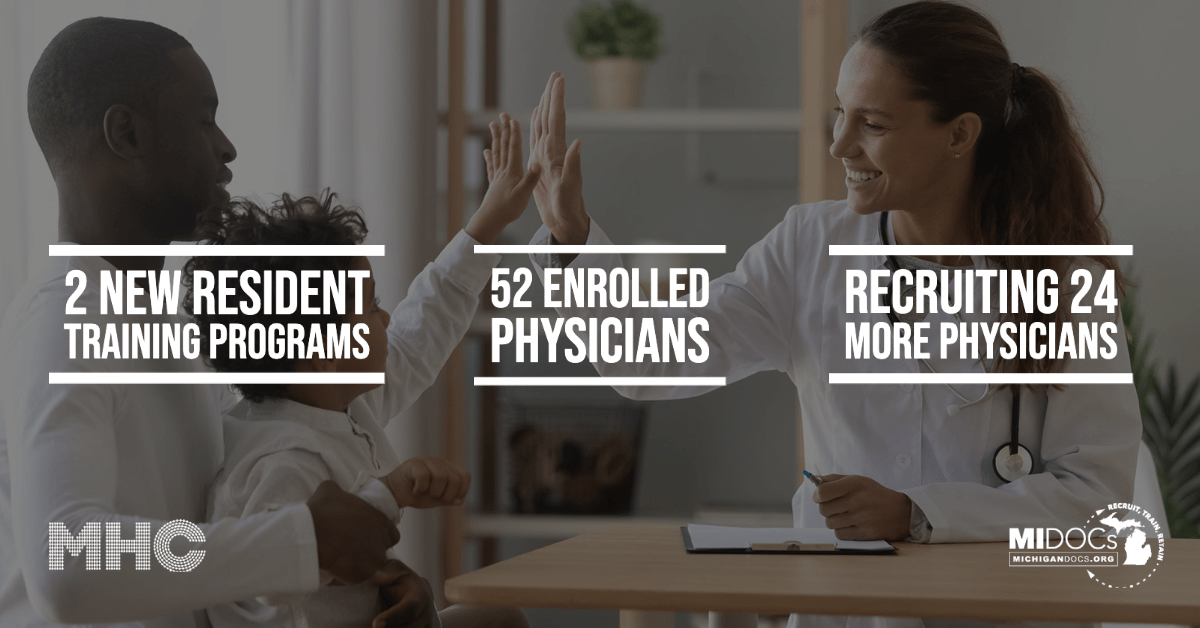
MIDOCs Continues To Increase Resident Training Programs and Participating Physicians
MIDOCs, a program that aims to recruit, train and retain providers in rural and urban underserved communities of Michigan, has continued to show incredible growth in both the number of enrolled physicians and the number of training programs in the state.
|
|
Scope of Practice Legislation:
MOA, joins efforts to protect physician-led, Team-based care with MiAACT
Trained experts. Compassionate caregivers. A true team of individuals, each playing an essential role and doing their part—with the patient at the center of it all.
It’s the kind of care Michigan patients expect for themselves and their loved ones. And frankly, we believe it’s the kind of care they all deserve.
With that in mind, we’re excited to announce we’ve joined a new coalition— Michigan for Advancing Collaborative Care Teams (MiACCT) that solely focused on preserving and strengthening the health care teams we all rely on for our care. And we believe it’s a coalition that couldn’t have come at a better time.
David Best, DO, the president of the Michigan Osteopathic Association (MOA) said ”Patients trust the Team-based health care where doctors supervise and collaborate on direct care and prescribing medications. Senate Bill 680 would authorize nurse practitioners to make decisions, formerly made by physicians, without additional training.”
Every day, across the country, powerful special interest groups work to undermine the team-based approach to health care all in the interest of making a buck. The policies they promote take physicians, away from their patients and jeopardize the patient care and safety in the process.
Thankfully, MiACCT is here to fight back.
Made up of a growing number of health care providers and patient advocacy organizations united and committed in the belief that the time-tested, physician-led, patient-centered model of care is the very best way to increase health care access without compromising patient safety or quality of care, MiACCT exists to fight for what’s best for Michigan’s patients. That’s what they need. That’s what they deserve. And we’re happy to be a part of it.
The MOA also enlisted support from the Ingham County Osteopathic Association, Wayne County Osteopathic Medical Association, the Oakland County Osteopathic Medical Association and the Macomb County Osteopathic Medical Association.
|
|
Make sure your Senator knows Nurse Practitioners should be part of the care team, not independent from it and to vote NO on Senate Bill 680
Senate Bill 680 was recently introduced in the Michigan Senate that will allow for full independent practice for nurse practitioners (NPs). Under the bill, not only would NPs be allowed to provide direct care without physician supervision or collaboration, they would also be allowed to prescribe opioids and other controlled substances. Further, the bill wouldn’t even require additional training or education for NPs.
We know this isn’t what’s best for patients. They want and deserve a robust care team that collaborates for their best interest. The way to do that is NOT creating silos of care. It’s NOT putting those with less training and experience in charge of their care. Let your Senator know this isn’t the right plan for Michigan’s patients.
|
|
MOA Advocacy
Medicare Multi-Cancer Early Detection Coverage Act 2021
Along with more than 300 leading cancer advocacy organizations across the country, and nine here in Michigan including the Michigan Osteopathic Association, we’re proud to support the Medicare Multi-Cancer Early Detection Screening Coverage Act of 2021. This legislation has received strong bipartisan support from Michigan Senators Debbie Stabenow and Gary Peters, as well as Representatives John Moolenaar, Fred Upton, and Dan Kildee. This important bill would support coverage of a new category of cancer screening for Medicare recipients - known as multi-cancer early detection (MCED) – as soon as the technologies are approved by the Food & Drug Administration. New detection technologies represent a monumental change in the way providers and patients could combat cancer. MCED can detect dozens of cancers, early before patients show symptoms, and can identify the cancer and its location in the body.
The bill has received broad support by more than 140 Democrat and Republican Members of Congress who have agreed to cosponsor the legislation. MCED could be the breakthrough needed to completely change the landscape in the War on Cancer, and this legislation would ensure that Medicare patients and providers can utilize these innovative technologies as soon as possible – which could help save countless lives. The Michigan Osteopathic Association thanks Michigan’s representatives for adding their support behind this legislation, and we hope that Congress will take this important opportunity to play a role in ending the threat of cancer as we know it.
For more information, click HERE.
|
|
Coalition Newsletter for January 6, 2022 |
|
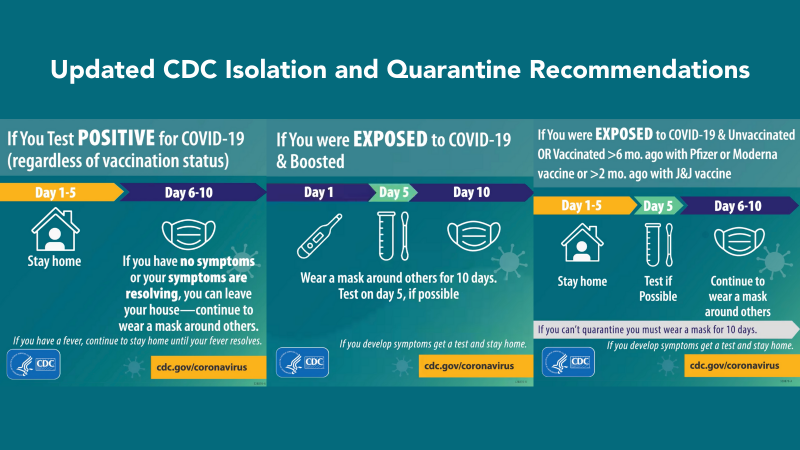
CDC, State of Michigan update isolation and quarantine recommendations |
|
Notably, the CDC recommends a shortening of the quarantine and isolation duration for those who aren’t vaccinated or haven’t received their booster to five days followed by an additional five days of wearing a well-fitting mask around others. The updated guidance is specific to the general public and does not change the current guidance recommendations for congregate settings, early childcare or K-12 settings – these settings should continue to use existing guidelines and policies regarding quarantine and isolation. Guidance will continue to evolve as more information is learned from CDC.
|
|
State of Michigan receives initial limited supply of new oral COVID-19 medications
MDHHS issues eligibility criteria and prescribing requirements to reach those most at-risk; continues to urge vaccination and boosters
LANSING, Mich. – Michigan has received its first shipment of new oral medications to treat COVID-19, paxlovid and molnupiravir, following the recent emergency use authorization by the FDA.
These antivirals are designed for the outpatient treatment of mild to moderate COVID-19. Both medications may only be prescribed for a patient by physicians, advanced practice registered nurses and physician assistants.
When administered to non-hospitalized patients within five days of symptom onset, these antivirals may reduce symptoms and the risk of hospitalizations and emergency room visits associated with the virus.
“The authorization of these new medications provides another important tool to help fight the virus,” said Elizabeth Hertel, MDHHS director. “Due to limited availability of these antivirals, health care providers will need to determine the best course of treatment for their patients based on eligibility criteria. We ask Michiganders to be patient as providers will prioritize people at highest risk for developing serious illness from the virus. We are committed to distributing these pills equitably across the state, and access will increase as Michigan receives more allocations from the federal government.”
Priority Eligibility Criteria for therapeutics, including antiviral medication and monoclonal antibody therapy (mAb), will remain in effect until supply is able to meet demand and will be periodically reviewed as appropriate.
MDHHS continues to strongly recommend getting vaccinated and boosted for the best protection against the virus.
“It’s important to remember these drugs are not a substitution for protecting yourself by getting vaccinated and wearing a mask in public places,” said Dr. Natasha Bagdasarian, MDHHS chief medical executive. “Getting vaccinated continues to be the best protection against severe illness and hospitalization, and we urge all Michiganders over age 5 to get vaccinated as soon as possible. Continue to wear well-fitting masks over your nose and mouth, test and social distance to prevent the spread of COVID-19, avoid large gatherings and get vaccinated and boosted if you haven't already."
Treatment with mAb continues to be an important therapy for mild to moderate COVID-19 infection and is preferred over treatment with molnupiravir whenever it can be readily accessed. Based on current evidence, mAb therapy is also a comparable alternative to paxlovid for patients who do not have access to the oral medication, have contraindications to the medication (e.g., pregnancy), or are beyond five days (but within 10 days) of symptom onset. Treatment with mAb should be considered for patients who are in eligible lower risk tiers in the Priority Eligibility Criteria.
Paxlovid is indicated for the treatment of mild-to-moderate COVID-19 in patients 12 years of age and older who are at high risk for progression to severe COVID-19, including hospitalization or death, and who meet the current Priority Eligibility Criteria.
Paxlovid currently has limited availability through the following sites:
- Selected Federally Qualified Health Centers and Tribal Health Centers.
- Selected Meijer Pharmacies in southeast and east central Michigan.
Molnupiravir is indicated for the treatment of mild-to-moderate COVID-19 in adults ages 18 and older who are at high risk for progression to severe COVID-19, including hospitalization or death, and only when alternative COVID-19 treatment options authorized by FDA are not accessible or clinically appropriate and who meet the current Priority Eligibility Criteria.
Molnupiravir currently has limited availability through the following sites:
- All Meijer Pharmacies (based on supply).
- Selected retail pharmacies in areas not served by Meijer (based on supply).
Additional information on oral antiviral medications and monoclonal antibody therapy, including priority eligibility criteria based on MDHHS scare resource allocation principles is available at Michigan.gov/COVIDTherapy.
|
|
Strategic Partner Career Opportunity Spotlight:
McLaren Health
Team McLaren
Headquartered in Grand Blanc, Michigan, McLaren Health Care is a fully integrated health network committed to quality, evidence-based patient care with locations in Michigan, Indiana and Ohio.
|
|
The MOA has developed an online Learning Center to deliver CME in a virtual format. Our Spring and Autumn sessions were a tremendous success with over 900 attendees. These sessions can still be accessed, along with other CME sessions, all qualifying for AOA Category 1-A CME credits.
These sessions can be accessed at any time by clicking the link below. Evaluations are within the system and can be taken after you have viewed the program.
On Demand CME programs
Single session CME Credits
|
|
September 4, 2021, saw the passing of Charles H. Franckowiak, DO
August 26, 2021 saw the passing of Richard B. Omel, DO
August 13, 2021, saw the passing of George G. Carothers, DO
July 7, 2021, saw the passing of Howard D. Proctor, DO
July 3, 2021, saw the passing of Joseph Richert, DO
June of 2021, saw the passing of Ronald W. Wadle, DO
An obituary is unavailable at this time
May 19, 2021, saw the passing of John Bodell, DO
|
|
|
|
|
|
|